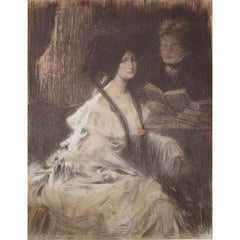
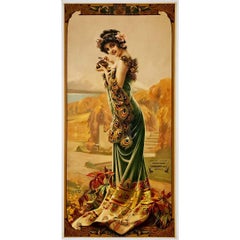
La Toilette
Located in Fairlawn, OH
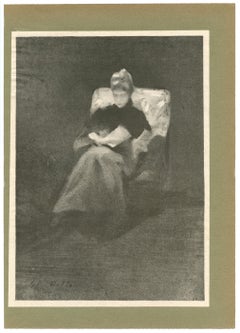
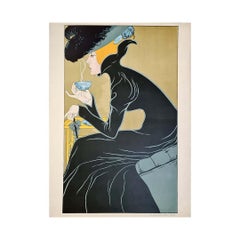
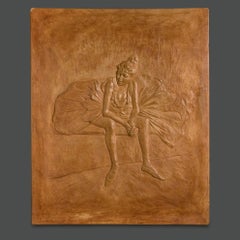
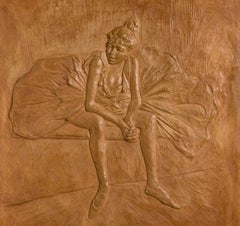
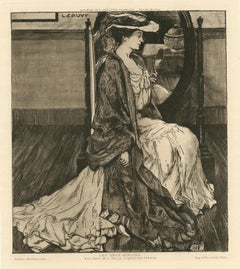
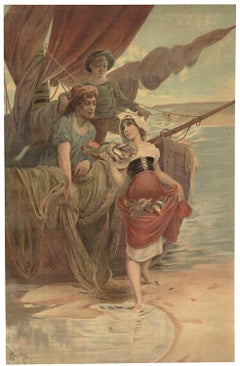
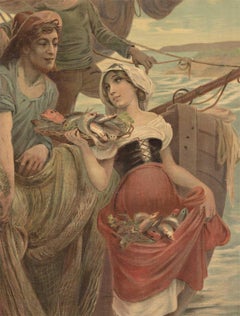
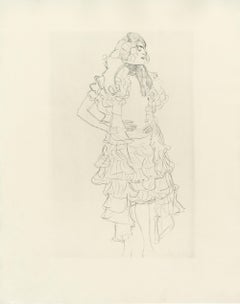
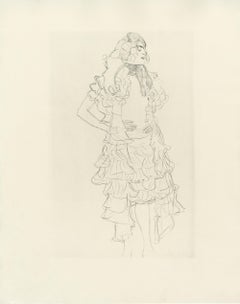
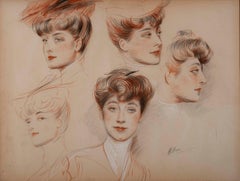
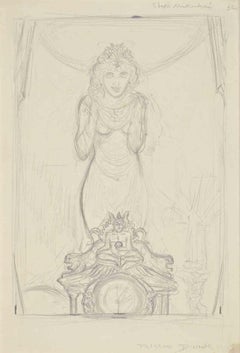
La Toilette Drypoint, 1908 Signed and numbered in pencil by the artist (see photos) Edition: 65 this state (35/65) Published by Gustave Pellet (1859-1919),...
Art Nouveau Early 1900s Art
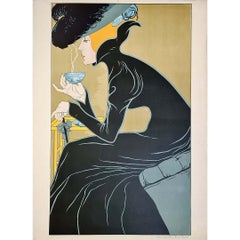
Drypoint
La Toilette
Located in Fairlawn, OH
La Toilette Drypoint, 1908 Signed and numbered in pencil by the artist (see photos) Edition: 65 this state (35/65) Published by Gustave Pellet (1859-1919),...
Drypoint
$14,000
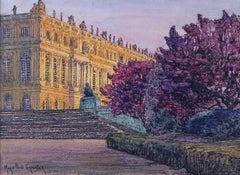
Henri-Joseph Harpignies (French, 1819) L’Ete Dans La Saint Martin
Located in Dallas, TX
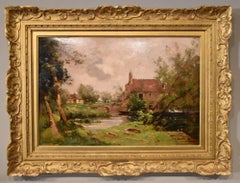
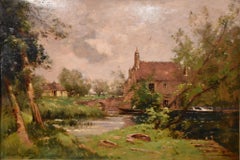
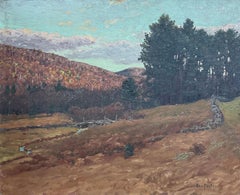
Henri-Joseph Harpignies (French, 1819) Paysage D' Ete de la Saint-Martin Oil on canvas Portraying a landscape scene in summer outside of Paris on a subsidiary of the Seine River o...
Paint
Three Horses and a Foal, Victorian Oil Painting, Framed by Wright Barker C.1900
Located in St. Albans, GB
Wright BARKER 1864 - 1941 Canvas Size: 27 x 40" (69 x 102cm) Outside Frame Size: 33 x 46" (84 x 117cm) Oil on Canvas Free Shipping Exhibited : 1885 - 1935 He was a figure and animal painter who was based originally in Bradford, where he lived until 1885, when he moved to Edwinstowe, near Mansfield, Nottingham. In 1901 he moved to Hampstead and then back north to Harrogate where he stayed until his death. In his later years he became a picture dealer, but in his will he referred to himself as ‘animal painter’. Barker became a member of the Royal Society of British Artists in 1896. Although he called himself an animal painter he is also known to have painted ‘Roman Maidens...
Oil
Mistinguett au Moulin Rouge Fan Design, Gouache on Paper, Circa 1908
Located in PARIS, FR
Cecil de Blaquière Howard, known as Cecil Howard (Clifton, Canada, 1888 - New York, 1956) Mistinguett and Max Dearly dancing the waltz at the Moulin Rouge Fan design Circa 1908 Gouac...
Gouache
La Negresse (The Negress)
Located in Fairlawn, OH
La Negresse (The Negress) Etching & drypoint, 1909 Unsigned (as issued in the portfolio) From the album "Les Bars" (8 plates plus cover illustration) Editi...
Etching
Fruit and Porcelain
Located in Sheffield, MA
William Merrit Chase American, 1849-1916 Fruit and Porcelain Signed "Wm M Chase." l.l., identified on labels from the Corcoran Gallery of Art, B...
Oil
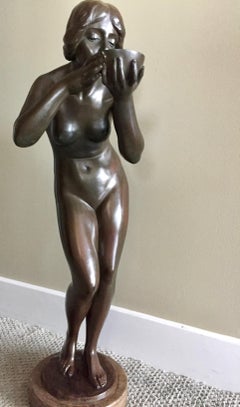
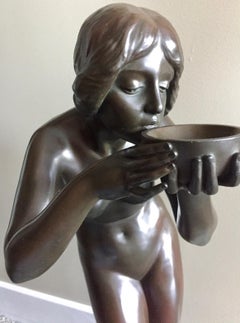
Diosa Original bronze multiple. Esculpture Modernist
Located in CORAL GABLES - MIAMI, FL
Diosa. Original bronze multiple. Esculpture Modernist Julien Caussé (also given as Cadet-Julien Caussé, Cadet Julien Caussé and Julien Cadet Caussé) (1869–1914) was a prolific French...
Bronze
Belle Époque original poster by Albert Guillaume - La nouvelle chasse à courre
Located in PARIS, FR
In the golden age of Belle Époque Paris, the world of art and satire converged with a vibrant energy, encapsulating the spirit of the era. Among the luminaries who illuminated this p...
Linen, Paper, Lithograph
"The Sun-Cloud" printed in 1905
Located in Henderson, NV
Medium: offset lithograph (after the painting). Published in London by The Studio in 1905 for a rare deluxe portfolio. Printed on smooth wove paper, the image measures 4 1/2 x 8 inch...
Offset
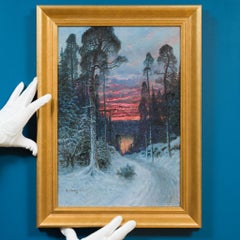
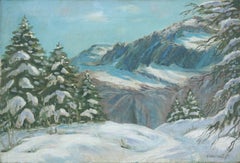
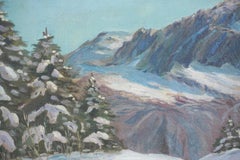
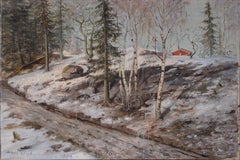
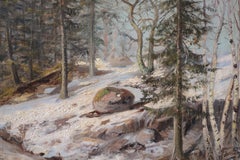
Late 19th Century Landscape - "After The Snow"
By Constantin Aleksandrovich Westchiloff
Located in Soquel, CA
Gorgeous late 19th-century snowscape titled "After the Snow," by artist Constantin Alexandrovitch Westchiloff (1877-1945) Signed on the bottom right corner and titled on edge (the color differences in the signature letters are original to the painting prior to cleaning, and have not been modified or augmented). Unframed. Image size: 14.25"H x 20.25"W Westchiloff is an American-Russian artist. He was born in Russia in 1877, and studied at the Academy of Fine Arts in St. Petersburg; as an artist, he traveled extensively in Europe and in the USA. He finally settled in New England, where he died in 1945. He is probably best-known for seascapes (particularly of the New England coastline) but was also well regarded for his landscapes, portraits and figures, and genre subjects. His work, especially after his travels in Europe and then in America, is closest to Impressionist in style. His favored medium was oil, which was well suited to his confident and strong technique. This, in turn, imbued his paintings of the rugged landscapes and seascapes of New England...
Oil, Canvas
$6,406Sale Price|20% Off
Peacock Vase
Located in PARIS, FR
Peacock Vase by Léopold SAVINE (1861-1934) A rare vase made in gilded bronze in form of two peacocks with their raised plumage. Signed on the base " L....
Bronze
La Colline Saint Catherine - Post Impressionist Landscape Oil by Robert Pinchon
Located in Marlow, Buckinghamshire
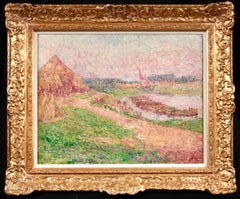
Signed fauvist oil on canvas riverscape circa 1908 by French post impressionist painter Robert Antoine Pinchon. This very fine large example was painted by Robert Pinchon around 1907...
Canvas, Oil
'Spring in the Soana Valley, ' Dolomites, Piedmont, Gran Paradiso National Park
Located in Santa Cruz, CA
Incised signature lower left, 'A. Sacerdote' for Anselmo Sacerdote (Italian, 1868-1923), titled, lower right, 'Val Soana' and dated August, 1903. Anselmo Sacerdote was born in Turin...
Oil, Wood Panel
$2,200
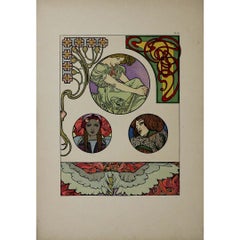
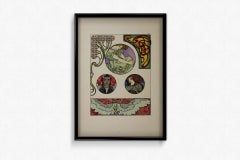
Alphonse Mucha's "Figures Decoratives" 1905 Art Nouveau Lithograph, Plate 37
Located in Chicago, IL
Plate 37 from Alphonse Mucha's Figures Decoratives, a folio of forty color lithographic plates published by Librairie centrale des beaux-arts in 1905. Issued during a period of incr...
Lithograph
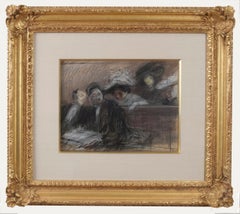
Artist and Model
Located in Fairlawn, OH
Artist and Model Conte crayon on tan paper, mounted to board, c. 1906 Unsigned (signature hs faded over time) Condition: slightly toned, mounted to board for support Image/Sheet size...
Crayon
Coast Guard Cutter with Cannons Spanish-American War Maritime Original Oil
Located in Soquel, CA
Turn of 20th Century Spanish-American War Coast Guard Cutter with Cannons Original Oil Painting A fine example of maritime ship portraiture oil painting of a Coast Guard Cutter with cannons under sails during the Spanish American War by renowned Nautical British/American painter Captain William Lindsay Challoner (British/American 1852-1901), 1901. Auction values Luminous and striking painting with seaman unfurling sails heading into rough waters. Challoner served as captain of a naval vessel (Coast Guard Cutter) during the Spanish-American War. Here he is depicted on the deck of the ship while seamen scramble aloft on the rigging during a gale. The captain stands tall before the cannons at the ready to fend off intruders. His paintings are rare and highly prized by museums and Nautical collectors alike. Signed: Lower right corner "W. Challoner" Not framed Dated: "1910" Provenance: A local Monterey Bay area estate find. Condition: Professionally restored (conservation report available) Image size: 27.75"H x 47.38"W William Lindsay Challoner lived the peripatetic life of a mariner, spending much of his time at sea, and in ports such as New Orleans and San Francisco, California. He was born in Bedminster, England, and attended the York Naval Academy. In 1880, Challoner married Mary Cadogan. That same year, the couple immigrated to Argentina and then New Orleans. They had one son, William Lindsay Challoner, Jr. Lloyd’s Lists record Challoner as master aboard J.P. Macheca, a “Clipper Schooner” running bananas from Jamaica during the mid-1880s. The clipper also raced at the Southern Yacht Club in New Orleans. As is often the case, Challoner’s middle name is misspelled as “Lindsey” in J.P. Macheca & Co. records. He is also said to have served as captain for vessels in the Morgan Line. Painting was at first an avocation for Challoner, but his draftsmanship and handling of paint suggest academic training. He may also have learned to make precise topographical drawings at the York Naval Academy. Many of his ship portraits are in the English tradition, notably followers of Samuel Walker, a leading English maritime artist in the 1850s. Like his Liverpool counterparts, Challoner used receding linear and atmospheric perspective to focus on the crisp portraits of specific ships. At their best, his canvases are highly finished, a style that imitates the Venetian tradition of topographical city views associated with Giovanni Antonio Canal, also known as Canaletto. However, Challoner’s restrained bravura paint handling also may bear witness to the influence of the French Impressionists. Challoner seems to have arrived in New Orleans about 1880. He advertised in the press and exhibited at the Creole Art Gallery and Grunewald’s Music Store in New Orleans. In 1887, Challoner moved to San Francisco, where he exhibited his maritime scenes at the Mechanic’s Institute and became a U.S. citizen. He may have been back in New Orleans after 1891, and served as captain of a naval vessel during the Spanish-American War. His art clients tended to be men involved in the shipping industry—ship owners and commission merchants, along with professional clubs and maritime benevolent societies. Challoner’s principal competition in New Orleans was August Norieri, a talented ship portraitist and painter of marines. While Norieri lived hand-to-mouth, Challoner drew a handsome salary working as a ship captain, presumably until shortly before his death at the age of 49. Securing the commission for painting the newly founded New Orleans Yacht Club suggests that Challoner was held in higher regard as an artist than Norieri. The two artists together met the market demand for ship portraiture and marine views in the port city, as had Edward Arnold and James Guy...
Linen, Oil, Stretcher Bars
$847
Albert Paul Guilmet (1879-1922) Portrait of a man, signed drawing
Located in Paris, FR
Albert Paul Guilmet (1879-1922) Portrait of a man, signed upper left charcoal on paper 26.5 x 33,8 cm Framed : 43.5 x 52 cm Little is known about Abert Paul Guilmet, apart from th...
Charcoal
Alphonse Mucha's 1902 Documents décoratifs - Planche 22
Located in PARIS, FR
Alphonse Mucha's name shines like that of a visionary artist who left an indelible mark on the aesthetics of the early 20th century. The year 1902 saw the publication of "Documents d...
Paper, Lithograph
$3,820
James Joshua Guthrie - The Sower, Early 20th Century British Watercolour
Located in London, GB
JAMES JOSHUA GUTHRIE (1874-1952) The Sower Signed with monogram l.r., inscribed with title l.c. Watercolour, bodycolour and pen and ink on paper 21 by 15.5 cm., 8 ¼ by 6 in. (frame size 39.5 by 33 cm., 15 ½ by 13 in. Provenanace: Pickford Waller...
Watercolor, Paper
Theater : Sarah Bernhardt with Flowers - Original Watercolor, Handsigned
By Georges Jules Victor Clairin
Located in Paris, IDF
Georges Clairin Sarah Bernhardt with Flowers Original watercolor with tempera Signed bottom right On paper 47 x 25 cm at view (c. 19 x 10 in) Presente...
Tempera, Watercolor
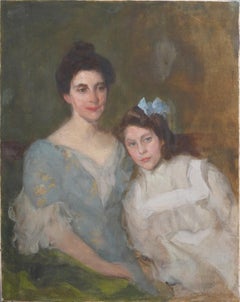
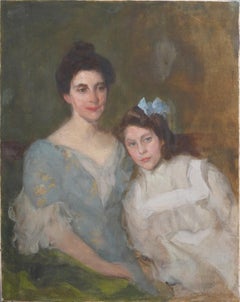
Le Chapeau Epingle or La fille de Berthe Morisot et sa Cousine (1e planche)
Located in Fairlawn, OH
Le Chapeau Epingle or La fille de Berthe Morisot et sa Cousine (1e planche) Etching with drypoint, 1904 Signed in the plate (see photo) This is the first etched version of "Pinning the Hat" Depicts Julie Manet and her cousin Jeanne. Exceptional impression printed with burr and selective inking with plate tone. Very rare. Published in 1910 in the first edition of Druet, "Manet annd the French Impressionists" A lifetime impression, printed prior to 1912. The etching comes with the original Herman Wunderlich & Co. (Kennedy Galleries label), which dates this impression to 1912 when Wunderlich changes names to Kennedy Galleries. Very rare image in an early lifetime impression. Printed with plate tone With pencil inscription stating first printing in French (see photo) Condition: very good No issue as seen from the front Soft horizontal creases visible from reverse Provenance: Kennedy Galleries, NY Reference: Stella 4, prior to Druet edition Delteil 4, published state Pierre-Auguste Renoir was a famous French painter whose paintings are some of the most popular, well-recognized, and frequently reproduced images in the history of art. His work presents a vision of a forgotten world, full of sparkling color and light. He once said: “Why shouldn’t art be pretty? There are enough unpleasant things in the world.” Born at Limoges on February 25, 1841, Renoir died at Cagnes-sur-Mer on December 17, 1919. When he was 13, Renoir entered a Paris porcelain painter’s workshop as an apprentice and developed a fine brush technique and facility with color. At 21, he attended courses at the École des Beaux-Arts and subsequently at Glyre’s. He made friends with Cezanne, Pissarro, Sisley, Monet, Bazille, and Diaz. In 1873, the artists Durand Ruel, Caillebotte, and Duret took an interest in his work. Renoir was involved in “The Society of Painters, Engravers and Sculptors,” which was founded in 1874, and witnessed the birth of Impressionism. From there, Renoir was immersed and able to spend time with his fellow artists of the day. He did not take up original printmaking until he was 50 years old, first with two small soft-ground etchings after his painting, “The Rustic Ball,” followed by an etching of Venus for the frontispiece of Mallarme’s Pages. Most of his engravings were done after his own pictures. In 1892, he did his first lithograph – a portrait of his son Pierre. In 1894, he met Ambroise Vollard, who played an important part in the production of Renoir’s and Cezanne’s lithographs...
Etching
IN THE WOOD - Italian landscape oil on board painting, Raffaele Tafuri
Located in Napoli, IT
IN THE WOOD - Italian oil on board framed painting, Italy, xx sec, Raffaele Tafuri. External measurement cm.66x59 Raffaele Tafuri (1857-1929) was an I...
Oil, Board
$2,400
"Women Sleeping Face Down" by Gustav Klimt - Original Print from Courtesan Folio
By Gustav Klimt
Located in Palm Beach, FL
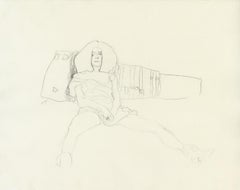
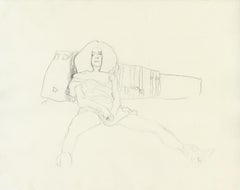
Plate #12 from Gustav Klimt's 1907 "Dialogues of the Courtesans" portfolio, consisting of 15 collotypes on cream japon paper. The drawings in this folio are said to be studies for Klimt's well-known Water Serpents paintings...
Paper
'Log Cabin', New York Armory Show, Ashcan School, ASL, NYMOMA, AIC, LACMA
Located in Santa Cruz, CA
Estate stamped, lower right, 'Arthur B. Davies' for Arthur Bowen Davies (American, 1862-1928) inscribed, 'Per NMD' and created circa 1900. Born in Utica, New York, Arthur Davies att...
Paper, Charcoal, Graphite
Dam at Genetin - Impressionist Oil, Winter Riverscape by Armand Guillaumin
By Jean Baptiste-Armand Guillaumin
Located in Marlow, Buckinghamshire
Signed and dated impressionist landscape oil on canvas by French painter Jean Baptiste Armand Guillaumin. This simply stunning piece de...
Canvas, Oil
El cacharrero (Según Francisco de Goya) - Tapiz pintado a mano
Located in Sant Celoni, ES
Va sin firmar Se presenta enmarcado (el marco presenta algunas faltas) Medidas de la obra: 94 cm altura x 104 cm ancho. Medidas del marco: 102 cm altura x 112 cm ancho. Estado ta...
Mixed Media
Edwardian Portrait of a Young Girl - Scottish 1909 art portrait oil painting
Located in Hagley, England
This lovely Scottish Edwardian portrait oil painting is by noted artist William Alexander Cuthbertson. It was painted in 1909 before Cuthbertson left Scotland on a travel scholarship...
Oil
Norwegian Pine Grove - The inner glow of the trees -
Located in Berlin, DE
Themistokles von Eckenbrecher (1842 Athens - 1921 Goslar), Norwegian pine grove, 1901. Watercolor on blue-green paper, 30 x 22 cm. Signed, dated and inscribed in his own hand "TvE. Fagermes [i.e. Fagermes]. 26.6.[19]01." - Slight crease throughout at left margin, otherwise in good condition. About the artwork Themistokles von Eckenbrecher often traveled to Norway to study the nature that fascinated him there. On June 26, 1901, near the southern Norwegian town of Fagernes, in the summer evening sun, he saw a small pine grove, which he immediately captured in a watercolor. He exposed the trees growing on a small hill in front of the background, so that the pines completely define the picture and combine to form a tense motif. The tension comes from the contrast of form and color. The trunks, growing upward, form a vertical structure that is horizontally penetrated by the spreading branches and the pine needles, which are rendered as a plane. This structural tension is further intensified by the color contrast between the brown-reddish iridescent trunks and branches and the green-toned needlework. Themistokles von Eckenbrecher, however, does not use the observed natural scene as an inspiring model for a dance of color and form that detaches itself from the motif and thus treads the path of abstracting modernism. Its inner vitality is to be brought to light and made aesthetically accessible through the work of art. It is precisely in order to depict the inner vitality of nature that von Eckenbrecher chooses the technique of watercolor, in which the individual details, such as the needles, are not meticulously worked out, but rather a flowing movement is created that unites the contrasts. The trees seem to have formed the twisted trunks out of their own inner strength as they grew, creatingthose tense lineations that the artist has put into the picture. The inner strength continues in the branches and twigs, culminating in the upward growth of the needles. At the same time, the trunks, illuminated by the setting sun, seem to glow from within, adding an almost dramatic dimension to the growing movement. Through the artwork, nature itself is revealed as art. In order to make nature visible as art in the work, von Eckenbrecher exposes the group of trees so that they are bounded from the outside by an all-encompassing contour line and merge into an areal unity that enters into a figure-ground relationship with the blue-greenish watercolor paper. The figure-ground relationship emphasizes the ornamental quality of the natural work of art, which further enforces the artwork character of the group of trees. With the presentation of Themistokles von Eckenbrecher's artistic idea and its realization, it has become clear that the present watercolor is not a study of nature in the sense of a visual note by the artist, which might then be integrated into a larger work context, but a completely independent work of art. This is why von Eckenbrecher signed the watercolor. In addition, it is marked with a place and a date, which confirms that this work of nature presented itself to him in exactly this way at this place at this time. At the same time, the date and place make it clear that the natural work of art has been transferred into the sphere of art and thus removed from the time of the place of nature. About the artist Themistocles' parents instilled a life of travel in their son, who is said to have spoken eleven languages. His father, who was interested in ancient and oriental culture, was a doctor and had married Francesca Magdalena Danelon, an Italian, daughter of the British consul in Trieste. During a stay in Athens - Gustav von Eckenbrecher was a friend of Heinrich von Schliemann and is said to have given him crucial clues as to the location of Troy - Themistokles saw the light of day in 1842. After an interlude in Berlin, where Themistokles was educated at the English-American School, the journey began again. From 1850 to 1857 the family lived in Constantinople, after which the father opened a practice in Potsdam, where Themistokles, who wanted to become a painter, was taught by the court painter Carl Gustav Wegener. In 1861 the von Eckenbrechers left Potsdam and settled in Düsseldorf. There Themistokles received two years of private tuition from Oswald Aschenbach, who greatly admired the talented young artist. After his artistic training, he undertook extensive travels, often accompanied by Prince Peter zu Sayn-Wittgenstein, which took him to northern and eastern Europe, but above all to the Middle East and even to South America. The paintings that resulted from these journeys established his artistic reputation and led to his participation in large panoramas such as the 118 x 15 metre Entry of the Mecca Caravan into Cairo, painted for the City of Hamburg in 1882. 1882 was also the start of a total of 21 study trips to Scandinavia, most of them to Norway, and the unique Norwegian landscape with its rugged fjords became a central motif in his work. Along with Anders Askevold and Adelsteen Normann...
Watercolor
"Serene Village"
By Samuel R. Chaffee
Located in Southampton, NY
Circa 1900 Signed lower right Sight size 12 x 18 in Overall size matted with period gold leaf frame 22 x 27.5 in
Watercolor, Paper
$2,800Sale Price|20% Off
Wren's City, by Joseph Pennell
Located in Palm Springs, CA
WREN'S CITY (Wuerth. 504) by Joseph Pennell (1857-1926) . Mezzotint, 1909, signed and inscribed imp. in pencil, edition of approximately 75. Fine rich impression and condition, trimm...
Mezzotint
“Figure in a Landscape”
Located in Southampton, NY
Original oil painting on mahogany wooden panel attributed to the hand of Ella Buchanan. Signed indistinctly lower right . Condition is good. Circa 1900. Presently unframed. Frami...
Oil, Board
Original Metz vintage lithographic vintage travel poster
Located in Spokane, WA
Original vintage travel poster: METZ (France), artist: Alfred Pellon, signed A. Pellon. Size 34.75" x 36". Year: c 1906. Stone lithograph. ...
Lithograph
Original 1900 travel poster by Louis Lemoine-Maudet - Paris to London via Dieppe
Located in PARIS, FR
This original 1900 travel poster by Louis Lemoine-Maudet promotes the rail and ferry connection linking Paris to London via Dieppe and Newhaven, issued by the Chemins de fer de l’Oue...
Paper, Lithograph
'The Carriage' and 'The Chase', Victorian on panel paintings, signed
By A. Stone
Located in St. Albans, GB
R. STONE Oil on Panel 19th Century Both signed bottom left Painting Size: 6 x 12" (15 x 30cm) Outside Frame Size: 13 x 19" (32 x 47cm) Exhibited 1906 – 1909 Worked at the turn of ...
Oil
Art nouveau style poster by Lewis Baumer
Located in PARIS, FR
Beautiful art nouveau style poster by Lewis Baumer illustrating the seasons of Spring and Summer Lewis Christopher Edward Baumer is best known as an Engl...
Paper, Lithograph
$850
Early 20th century Austrian/German kids playing together in a landscape
Located in Woodbury, CT
Karl Feiertag (c.1874-1944) was an Austrian painter. He studied painting at the Academy of Fine Arts Vienna with Franz Rumpler, Kasimir Pochwalski, and J...
Watercolor, Handmade Paper
The Courtship, Success Magazine Cover
By Joseph Christian Leyendecker
Located in Fort Washington, PA
Medium: Oil on Canvas Signature: Signed Lower Left Sight Size 22.00" x 15.50", Framed 31.00" x 24.00" Success Magazine Cover, The Success Company, Ne...
Canvas, Oil
$200Sale Price|20% Off
Parisienne /// Art Nouveau French Lithograph Impressionist Figurative Lady Woman
Located in Saint Augustine, FL
Artist: Maurice Eliot (French, 1862-1945) Title: "Parisienne" Portfolio: Revue de l'Art Ancien & Moderne *Issued unsigned, though signed by Eliot in the plate (printed signature)...
Lithograph
$2,400Sale Price|25% Off
'After the Storm' — Coastal Brittany, Post-Impressionism
By Hayley Lever
Located in Myrtle Beach, SC
Hayley Lever, 'After the Storm', also 'Sunny Afternoon', watercolor on watercolor paper, the full sheet, the image extending to the sheet edges; in very good condition. Signed 'Hayle...
Watercolor
Dentol - 1900s - Aleandro Terzi - Print - Modern
Located in Roma, IT
Dentol is a rare colored lithograph, printed by G. Ricordi and C. Milano, Milan in 1906 in occasion of the "La Figlia di Iorio" theatrical spectacle, text by Gabriele D'Annunzio and music by Alberto Franchetti. A very beautiful vintage and advertising poster, in excellent condition except for a minor rip on the right margin at the bottom. This defect does not affect the image. This original poster representing a woman red dressed in a golden wheat field, has the dignity of an object of art, carries the signature on plate on the lower right margin of Adolfo de Karolis...
Lithograph
$64,137
The Evening of Life - Interior Portrait - British 1906 Newlyn Sch oil painting
Located in Hagley, England
This stunning, large British Edwardian Newlyn School interior portrait oil painting is by much noted and exhibited artist Walter Langley. Originally from Birmingham, Langley and his family moved to St Ives in 1881. He was one of the first artists to settle and painted the local fishermen and their families. Painted in 1906 and entitled The Evening of Life, the painting is a full length seated portrait of an elderly lady in a cottage interior. She is sat by a table on which she has a bible, jug of flowers and her sewing equipment. Across her lap she has a large patchwork quilt to mend but is lost in thought. In fact the same sitter and quilt can be seen in Memories, also painted in 1906 and in the Ferens Art Gallery, Hull. Memories includes more of the cottage interior but the sitter's head is bowed towards her hands. The Evening of Life is more vibrant and the sitters face is much more visible as are the lovely colours of the quilt. The painting has fantastic detail, great brushwork and the Newlyn school palette of colours. The provenance is excellent, having been kept in the same family ownership so fresh to market. The painting appeared in the artist's catalogue Raisonne and was also in 1997 biography by Langely's grandson, Roger Langley, entitled Walter Langley: Pioneer of the Newlyn Art Colony. This a superb example of Langley's work, a good size and composition and a pleasure to gaze upon. Signed lower left and dated (19)06. Provenance. : Ford, 1906 (£63). Long in the previous family ownership and sold by the executors of the estate. Thomas Wood and Sons label verso. Literature: Langley (R) - Walter Langley Pioneer of the Newlyn Art Colony 1997, catalogue raisonne p.170 (under 1906). Condition. Oil on canvas, 40 inches by 30 inches unframed, in good condition and unlined canvas. Frame. Housed in a gilt frame 47 inches by 37 inches and in good condition. Walter Langley (8 June 1852 – 21 March 1922) was an English painter and founder of the Newlyn School of plein air artists. He was born in Birmingham and his father was a journeyman tailor. At 15 he was apprenticed to a lithographer. At 21 he won a scholarship to South Kensington and he studied designing there for two years. The sometimes highly ornate work is mainly in gold and silver and in a Renaissance style. He returned to Birmingham but took up painting full-time, and in 1881 was elected an Associate of the Royal Birmingham Society of Artists. In the same year he was offered £500 for a year's work by a Mr Thrupp (a Birmingham photographer). With this money he and his family moved to Newlyn where he was one of the first artists to settle and began recording the life of the fishing community. Politically left wing for his era, he was noted for his social realist portrayals of working class figures, particularly fishermen and their families. He was a supporter of Charles Bradlaugh, a radical socialist politician. His own working-class background enabled him to identify with the villagers and the hardships they endured, many of his paintings reflect this sympathy with the working-class fisher-folk amongst whom he lived. One of the best known works is the watercolour For Men Must Work and Women Must Weep (1883; Birmingham Museum and Art Gallery) based on Charles Kingsley's poem The Three Fishers (1851). Another is Between The Tides (1901; Warrington Museum & Art Gallery). Although one of the first to settle in the Newlyn artists' colony Newlyn School, Langley initially benefited little from its growing fame, partly because of his working-class origins and partly because until 1892 he painted largely in watercolour rather than the more prestigious medium of oils. His early training in lithography gives his paintings a detail and texture that show his technical skills. In 1884, Langley was elected a member of the RBSA and continued to exhibit widely throughout the UK and abroad. Later in his career his reputation grew. One of Langley's paintings was singled out as "a beautiful and true work of art" by Leo Tolstoy in his book What is Art?, while in 1895 Langley was invited by the Uffizi to contribute a self-portrait to hang alongside those of Raphael, Rubens and Rembrandt in their collection of portraits of great artists. Today his work is considered "vital to the image of the Newlyn School" and "alongside Stanhope Forbes ... the most consistent in style and substantial in output". Exhibited: Royal Society of Artist Birmingham 57, Dudley Gallery 4, Dowdeswell Gallery 17...
Oil
Das Grausen - Lithograph After A. Kubin - 1903
By After Alfred Kubin
Located in Roma, IT
Das Grausen is a lithograph realized after a work by Alfred Kubin in 1903, Hand-signed and titled, plate from Faksimiledrucke nach Kunstblättern, edition H. Von Weber. Included a...
Lithograph
$2,000Sale Price|39% Off
French School Frieze me Impressionist th century Original Cat painting Indian XL
Located in Zofingen, AG
Animal Frieze me Large Portrait - Closeup of cat Technique: oil, acrylic, and ink on canvas F30 92x73cm ■■ 36,2x28,7 inch ⏩》R E A D Y -- T O -- H A N G《⏪ 🟢 → Original signed wor...
Ink, Oil, Acrylic
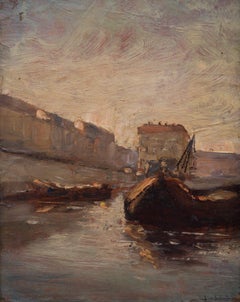
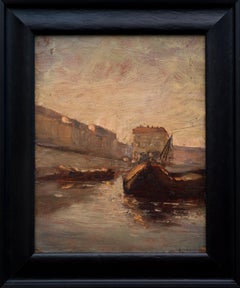
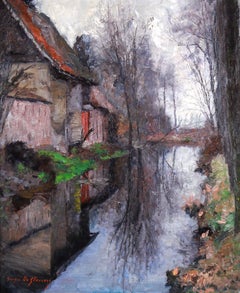
Canal Scene, Possibly Paris. Painted Early 1900s
Located in Stockholm, SE
For sale is a captivating painting by the Swedish artist, Rikard Lindström (1882-1943). Depicting a picturesque water canal, with charming houses lini...
Oil, Laid Paper
$32,973
The Return from Fishing - Oil Paint by Giovan Battista Filosa - 1908
Located in Roma, IT
The Return from Fishing (Original Title: Il Ritorno dalla Pesca), is an original oil painting realized by Giovan Battista Filosa in 1908. Some fishermen seen from behind, in the blue light of the sky, with the vesuvius in the background, are the protagonists of the painting in "Il ritorno dalla pesca" by Giovan Battista Filosa (Castellamare di Stabia 1850 - Naples 1935) student of the famous Neapolitan painter...
Canvas, Oil
$1,978
Sunset River Landscape - English Impressionist Antique Oil on Panel Painting
Located in Sevenoaks, GB
A beautiful signed and dated 1906 oil on panel depicting a sunset river landscape by the important Modern British artist Bernard Sickert. The work is in superb original condition and...
Oil, Panel
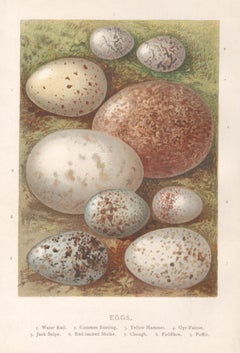
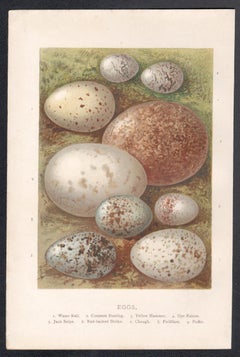
Butterflies, English antique natural history Lepidoptera chromolithograph print
Located in Melbourne, Victoria
English butterfly chromolithograph, circa 1900. Plate number top right. From an English series of illustrations of butterflies and moths. Butterflies / moths are numbered and there i...
Lithograph
H.O. Miethke Das Werk folio "Danaë" collotype print
By Gustav Klimt & K.K. Hof-und Staatsdruckerei
Located in Palm Beach, FL
Danaë, no. 2 from the fourth installment of Das Werk Gustav Klimts Danae originates from Greek mythology. She is the daughter of the King of Argos. Because a...
Paper
Two Cats Dancing, Orientalist Bronze Sculpture by Franz Bergmann
Located in Long Island City, NY
Franz Bergmann, Austrian (1861 -1936) - Two Cats Dancing, Year: circa 1900, Medium: Cold painted Bronze sculpture, Size: 2.25 x 1.5 x 1.5 in. (5.72 x 3.81 x 3.81 cm)
Bronze
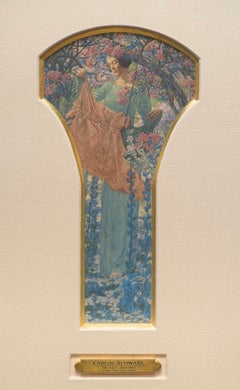
"The Fate" original Symbolist watercolor painting by Carlos Schwabe
Located in Palm Beach, FL
Signed "Carlos Schwabe" Note: Due to the size, weight, and/or value of this piece, we require shipping through 1stDibs, for its cost effectiveness, full insurance coverage, and reli...
Paper, Watercolor, Gouache, Pencil
Original aquatint engraving created in 1903 by Manuel Robbe
By Manuel Robbe
Located in PARIS, FR
This delicate composition, titled "Le Bouquet de Violettes", is a masterful original aquatint engraving created in 1903 by the French artist Manuel Robbe (1872–1936). A refined examp...
Paper, Engraving
French Pencil Drawing - Illustrated Guide of Geneva
Located in Houston, TX
Elegant pencil sketch for the cover of an illustrated guide to Geneva in French, circa 1900. Original artwork on paper displayed on a white mat with a gold border. Archival plastic...
Paper, Pencil
$1,200Sale Price|20% Off
Characterful Portrait French Man with Hat & Pipe Signed & Dated 1903 Oil Paint
Located in Cirencester, Gloucestershire
Portrait of a Man with a Hat holding a Pipe French School, signed and dated 1903 oil on canvas, unframed canvas: 21.75 x 18 inches provenance: private collection, France condition: s...
Oil, Canvas
$329Sale Price|20% Off
Escuela valenciana (XX) - Óleo sobre tabla - Paisaje con figura
Located in Sant Celoni, ES
Firmado por el artista en la parte trasera y fechado del año 1901 Se presenta enmarcada la obra con un marco de la época de la obra (algunas faltas visibles en la enmarcación) Medi...
Oil
Poster for the 17th Exhibition of the Vienna Secession by Max Kurzweil
By Max Kurzweil
Located in Palm Beach, FL
Note: Due to the size, weight, and value of this piece, we require shipping through 1stDibs, for its cost effectiveness, full insurance coverage, and reliable handling. While standar...
Lithograph
A L’Opera
Located in New York, NY
This delightful French Impressionist work by the talented period artist , Abel-Truchet, captures the drama, intrigue and era when going to the Opera was an important event to be talk...
Canvas, Oil
Sir Francis Dicksee Portrait, c. 1900
Located in New York, NY
Sir Francis Dicksee (English, 1853-1928) Untitled (Portrait of a Woman), c. 1900 Oil on canvas; period frame Sight: 13 1/4 in. Framed: 21 1/8 x 21 1/8 x 3 3/8 in. Frank Dicksee was a member of a noted artistic family, his father, brother, and sister Margaret were all well-known painters, and the family lived in the Bloomsbury area of London. He was initially trained by his father, before entering the Royal Academy schools in 1870. Amongst the visiting lecturers who trained him, were the famous senior academicians Leighton [1830-1896] and Millais [1829-1896]. Dicksee was a star student, earning many distinctions and medals. Like many other artists of the day his early career was largely spent in book illustration, as well as some stained glass window design. He started exhibiting at the RA in the mid 1870s, and also exhibited at the Grosvenor Gallery, though his real base was always the Academy. Dicksee made his reputation with Harmony, exhibited at the Academy in 1877, and bought by the Chantry Bequest. Frank Dicksee was elected ARA in 1881, and became a full RA ten years later. Many of his pictures were of dramatic historical and legendary scenes. He also was a noted painter of elegant, highly-finished portraits of fashionable women, which of course helped to bring him material success. Many of these portraits are so beautiful, it is really difficult to disapprove of them - happy was the fashionable lady whose portrait was painted by Dicksee! He also painted landscapes. Dicksee lived in St John's Wood, and remained a bachelor. He was, of course, one of the nineteenth century artists who outlived his time, and was, to his credit, very unhappy with developments in the early twentieth century. Rather surprisingly, Dicksee was elected President of the Royal Academy in 1924, fulfilling the role with panache and tact. Physically he was a tall, good-looking, patrician figure, with a charming easy-going manner. Like his predecessor but one Edward Poynter...
Canvas, Oil
Loch Eck, Scotland - Scottish Edwardian art landscape oil painting
Located in Hagley, England
This breath taking Scottish Edwardian landscape oil painting is by much exhibited landscape artist William Young RSW. Entitled Loch Eck and painted circa 1908...
Oil
$2,119Sale Price|35% Off
French School Portrait Frieze me Cat XL Impressionist th century Original MAK
Located in Zofingen, AG
Animal Frieze me Portrait - Closeup of cat Technique: oil, acrylic, and ink on canvas F30 92x73cm ■■ 36,2x28,7 inch 》》R E A D Y -- T O -- H A N G《《 ❶ → Original signed work. Cer...
Ink, Oil, Acrylic
Saint Malo - Post Impressionist Seascape Watercolor by Maurice Prendergast
Located in Marlow, Buckinghamshire
Signed watercolour on paper landscape by American post impressionist painter Maurice Brazil Prendergast. The work depicts children playing on the beach in Saint Malo, France as boats sail in the blue sea and white clouds role through the sky overhead. This work has remained in the Prendergast family for 3 generations and depicts a rare view of Saint-Malo executed during Prendergast's visit to the french coastal town in 1907 Signature: Signed lower left Dimensions: Framed: 21"x22" Unframed: 13'x14" Proveance: The collection of Charles Prendergast (1863-1948) The collection of Eugénie Prendergast-Van Kemmel (1895-1994) -wife and inheritor of the estate of Charles Prendergast The collection of Henri Van Kemmel (Lille, 1903-1963) - cousin of Eugenie Prendergast - Madame Henri Van Kemmel Maurice Prendergast came with his family to Boston in 1861. Working in a textile store, Maurice Prendergast was at first self-taught in painting, making souvenir cards and shop signs. He went to Britain in 1886, then to Paris in 1891 and registered at the Académie Julian with Jean-Paul Laurens, Benjamin-Constant, and Charles Blanc as teachers, working also with Gustave Courtois at the Académie Colarossi. More importantly he saw the Impressionists’ paintings and the Nabis at the Galerie Durand-Ruel. He returned to the United States in 1895, settling in Winchester (Massachusetts) and went frequently to New York. In 1898 he again went to Europe where he stayed until 1900, visiting Paris, Florence, Siena, Rome, Capri, and Venice, where he spent six months. Between 1907 and the beginning of World War I he went again four times to Europe but never returned there after the war. In New York where he finally settled, with William Glackens, Robert Henri, and John Sloan among others, Prendergast was one of the members ofThe Eight, gathered by Robert Henri to counter the pervading academicism. The group exhibited in 1908 at the Macbeth Galleries and took part in the Armory Show of 1913. After that Prendergast did not exhibit again with the group. In 1914 he left Boston definitively for New York. Prendergast was in his thirties before he began to devote himself to painting. In his late beginnings he painted in the open air as the Impressionists did, mainly in watercolours with clear brushstrokes and an elegant virtuosity recalling his then admiration for James Whistler and Claude Monet. Between 1892 and 1905 he carried out two hundred monotypes, a technique of which he was the undisputed master in America at that time and which expressed the influence of Japanisme. During his stays in France he painted views of Paris, but also Brittany and Normandy. In this period, in 1896, he was chosen to illustrate My Lady Nicotine by Matthew Barrie. During his third stay in Europe, from 1898 to 1900, he painted in Paris, at Saint-Malo, and mainly in Venice, where, influenced by Vittore Carpaccio he introduced brightly coloured banners into his animated compositions. In oils he painted slowly, touching up his paintings by superimposed brushstrokes, sometimes over several years. He chose to use the divided stroke in an early period, a technique which had similarities with Post-Impressionism. After his travels in Europe and his discovery of Paul Cézanne, he evolved in the direction of the neo-Impressionism of Georges Seurat, placing little dots of colours with a knife, then of the Nabis and even later Fauvism, painting large brushed surfaces in bright colours. After 1899, his Ponte della Paglia in Venice freed itself from strict divisionism, adopting the dense composition in vertically superimposed planes of the Nabis. Like the members of the group of eight, he took his subjects from the daily life of ordinary people, in scenes in the parks or on the beaches of New England, picnics or sometimes circuses. Nevertheless the happy vision that he had of the world separated him strongly from the evolution that led his companions to paint the most miserable and populous milieus, which gave them the name of The Ashcan School. His compositions are arranged in surfaces superimposed vertically, without depth; while the Impressionists and Post-Impressionists were influenced by the layout of Japanese prints, Prendergast was inspired more by Persian miniatures. The decorative elements and the build-up of characters in crowds are placed frontally, like garlands on a tapestry, particularly as he seeks a texture effect, covered entirely by the subject without any empty spaces. His attraction to colours caused him to research all the motifs that he introduced into these compositions: umbrellas, parasols, balloons, draperies. In 1911–1912, he experimented with pastel and treated new subjects, nudes and still-lifes. After 1913, in sympathy with the Symbolists, he put nude figures and everyday characters side by side in the same composition. In his last years, and above all in the watercolours, he discarded the divided stroke and applied larger brushstrokes, similar to the technique of Henri Matisse. Fidelity to the leisurely settings and elegant grooming of the period gave his works, apart from their artistic value, a charming sociological aspect. Singular, almost marginal in his time, his paintings stand out by the density of their composition, in form and colouring, characterised by the accumulation of detail, minutiae of scenery, the serried ranks of people that animate them, the chromatic polyphony of elegance, umbrellas, parasols, and flags. He is a complete painter, particularly generous, who would never be happy to provide only samples of his art. Following Whistler and Mary Cassatt, Maurice Prendergast is one of the most interesting and original Post-Impressionist American painters, and perhaps marks exactly the boundary between the 19th and the 20th centuries. He was considered to be an ‘old master’ from 1920 on, and his works appeared in very many exhibitions of modern American painting. He had his first solo exhibition in 1897 at the Chase Gallery of Boston, where his works were noticed by Madame Montgomery Sears, who made a collection, taking the advice of Mary Cassatt. In 1915 six paintings and watercolours exhibited at the Carroll Gallery of New York established his success and drew the great collectors to him, among whom were Albert Barnes and John Quinn. Group Exhibitions 1974, Ten Americans, Andrew Crispo Gallery, New York 1976, Art of Impulse and Color, University of Maryland Art Gallery, College Park (Maryland) 1982, American Impressionists, Smithsonian Institution, Washington, DC (also presented at the Musée du Petit Palais, Paris) 1999, Town and Country: American Artists, 1870–1920 (Ville et campagne: les artistes américains, 1870–1920), Musée d’Art Américain, Giverny 2002, Japonisme in America: Works on Paper, 1880–1930 (Le Japonisme en Amérique: œuvres sur papier, 1880–1930), Musée d’Art Américain/Terra Foundation for the Arts, Giverny 2007, American Impressionists: Painters of Light and the Modern Landscape, Phillips Collection, Washington, DC 2008, Coming of Age: American Art 1850–1950, Paintings from the Addison Gallery of American Art, Massachusetts, Dulwich Picture Gallery, London 2008, Portrait of a Lady: Paintings and Photographs of American Women in France 1870–1915, Musée des Beaux-Arts, Bordeaux Solo Exhibitions 1934, Maurice Prendergast Memorial Exhibition, Whitney Museum of American Art, New York 1938, Retrospective Exhibition of the Work of Maurice and Charles Prendergast, Addison Gallery of American Art, Andover, MA 1960, Maurice Prendergast, 1859–1924, Museum of Fine Arts, Boston 1990, Art Institute of Chicago 2009, Prendergast in Italy, Peggy Guggenheim Collection, Venice Museum and Gallery Holdings Andover, MA (Addison Gal. of American Art): At the Shore, St. Malo No. 1 and 2 (c. 1907, watercolour and graphite on wove paper, 2 works); Along the Cove (1910–1913, oil on canvas); seven sketches of Paris (1893, oil on wood) Chicago (AI): In the Park (1918–1919) Chicago (Terra Foundation for American Art Collection): Festa del redentore (c. 1899, monotype); The Opera Cloak...
Paper, Watercolor