Early 1900s Art

to
313
924
466
296
189
162
Overall Width
to
Overall Height
to
7,569
21,482
164,231
234,752
2,299
4,968
6,480
5,731
15,206
20,886
26,000
18,789
14,129
5,382
328
242
112
99
10
10
7
5
4
4
1
1,035
830
49
1,142
651
401
355
332
187
111
105
97
97
85
84
78
78
77
76
76
76
69
62
935
661
483
375
369
58
45
27
24
17
874
229
1,080
937
Period: Early 1900s
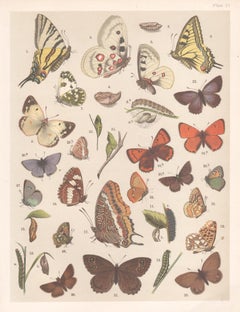
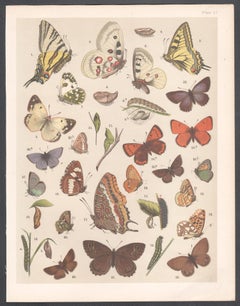
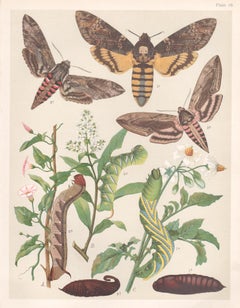
Butterflies, English antique natural history Lepidoptera chromolithograph print

Butterflies, English antique natural history Lepidoptera chromolithograph print

Located in Melbourne, Victoria

English butterfly chromolithograph, circa 1900. Plate number top right. From an English series of illustrations of butterflies and moths. Butterflies / moths are numbered and there i...

Category

Art Nouveau Early 1900s Art

Materials

Lithograph

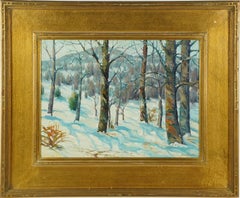
Bars of Light
Bars of Light

Bars of Light

By Walter Launt Palmer

Located in Bryn Mawr, PA

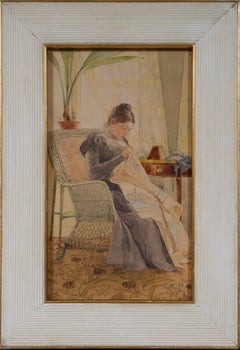
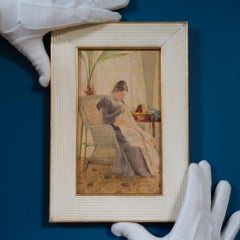
Walter Launt Palmer is best known as “the painter of the American Winter.” In Bars of Light, the cool areas of shade haphazardly crisscross and then blanket the warm sunlight on the ...

Category

American Impressionist Early 1900s Art

Materials

Watercolor, Gouache

Circa 1900 Art Nouveau advertising poster for Fumar el papel JOB

Circa 1900 Art Nouveau advertising poster for Fumar el papel JOB

Located in PARIS, FR

This circa 1900 Art Nouveau advertising poster, designed by Peruvian-born artist Daniel Hernández, is a stunning example of early 20th-century luxury brand marketing. Created for JOB cigarette rolling papers, the advertisement reflects the era’s elegant aesthetics and sophisticated lifestyle appeal. The slogan, "Fumar el papel JOB o dejar de fumar" ("Smoke JOB paper or stop smoking"), emphasizes the brand’s prestige and superior quality, making it seem indispensable for tobacco connoisseurs. The artwork features a sensual and dreamlike composition, characteristic of the Belle Époque. A radiant red-haired woman, partially draped in sheer fabric, lounges in a relaxed pose, smiling seductively as she delicately holds a lit cigarette. The soft pastels, golden hues, and fluid lines create a warm, ethereal atmosphere, reinforcing the romantic and luxurious associations of the JOB brand. The swirling wisps of smoke, artistically integrated into the design, echo the organic, flowing forms typical of Art Nouveau illustration. The ornate green decorative border further enhances the visual richness, framing the central figure like a jewel in an exquisite setting. At the turn of the century, tobacco advertising was at its peak, and brands relied on opulent, aspirational imagery to captivate consumers. JOB, a French rolling paper company founded in the 1830s, became known for collaborating with renowned artists to create highly collectible posters. This particular piece, executed with remarkable softness and luminosity, reflects Hernández’s mastery of portraiture and classical technique, which he refined during his studies in Europe. His ability to capture the sensuality and grace of the female form made him a sought-after artist for both fine art and commercial illustration. Beyond its commercial function, this poster is an important example of the fusion between fine art and advertising, a defining feature of Art Nouveau poster design. It demonstrates how companies in the early 20th century elevated advertising into an art form, commissioning celebrated painters to craft exquisite promotional imagery. Today, original JOB posters...

Category

Early 1900s Art

Materials

Paper, Lithograph

Autumn Landscape
Autumn Landscape

Autumn Landscape

By Arnold Marc Gorter

Located in Douglas, Isle of Man

Arnold Marc Gorter 1866 - 1933, was a Dutch landscape painter who preferred the calm tranquility of the Eastern Netherlands and the change of the seasons, grading light and ambience ...

Category

Early 1900s Art

Materials

Canvas, Oil

Antique American Young Girl 1900 Oil Painting Portrait Rare Framed Yellow Gold

Antique American Young Girl 1900 Oil Painting Portrait Rare Framed Yellow Gold

Located in Buffalo, NY

This compelling early 20th-century portrait depicts a young woman shown in three-quarter profile, her gaze cast slightly downward in a moment of quiet introspection. Rendered in oil ...

Category

American Impressionist Early 1900s Art

Materials

Linen, Raw Linen, Oil

'The Carriage' and 'The Chase', Victorian on panel paintings, signed

'The Carriage' and 'The Chase', Victorian on panel paintings, signed

By A. Stone

Located in St. Albans, GB

R. STONE Oil on Panel 19th Century Both signed bottom left Painting Size: 6 x 12" (15 x 30cm) Outside Frame Size: 13 x 19" (32 x 47cm) Exhibited 1906 – 1909 Worked at the turn of ...

Category

Early 1900s Art

Materials

Oil

L'Amazone, Modern Lithograph after Amedeo Modigliani

L'Amazone, Modern Lithograph after Amedeo Modigliani

By Amedeo Modigliani

Located in Long Island City, NY

Amedeo Modigliani, After, Italian (1884 - 1920) - L'Amazone, Year: of original: 1909, Medium: Lithograph, stamp signed and numbered in pencil, Edition: 101/150, Size: 30.25 x 22....

Category

Modern Early 1900s Art

Materials

Lithograph

Alphonse Mucha Figures Decoratives Plate 30

Alphonse Mucha Figures Decoratives Plate 30

By Alphonse Mucha

Located in Dallas, TX

A framed Art Nouveau lithograph collotype poster by Alphone Mucha from 1905 representing the artist’s sketches of nudes, women and beautiful ladies in blues and white pigments on vel...

Category

Art Nouveau Early 1900s Art

Materials

Paper
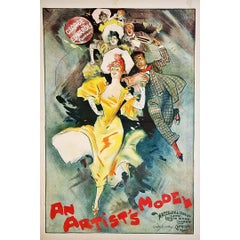
French Pencil Drawing - Illustrated Guide of Geneva

French Pencil Drawing - Illustrated Guide of Geneva

Located in Houston, TX

Elegant pencil sketch for the cover of an illustrated guide to Geneva in French, circa 1900. Original artwork on paper displayed on a white mat with a gold border. Archival plastic...

Category

Early 1900s Art

Materials

Paper, Pencil

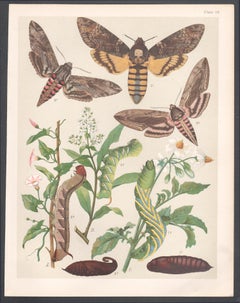
Hawk Moths, English antique natural history Lepidoptera chromolithograph print

Hawk Moths, English antique natural history Lepidoptera chromolithograph print

Located in Melbourne, Victoria

English hawk moth chromolithograph, circa 1900. Plate number top right. From an English series of illustrations of butterflies and moths. Butterflies / moths are numbered and there i...

Category

Art Nouveau Early 1900s Art

Materials

Lithograph

Flirt (Biscuits Lefevre-Utile) Lithograph Poster

Flirt (Biscuits Lefevre-Utile) Lithograph Poster

By Alphonse Mucha

Located in Palm Beach, FL

Alphonse Mucha was a painter and decorative artist best known for the sensual Art Nouveau paintings, posters, and advertisements that came to define Art Nouveau in fin de siècle Pari...

Category

Art Nouveau Early 1900s Art

Materials

Lithograph

Diosa Original bronze multiple. Esculpture Modernist

Diosa Original bronze multiple. Esculpture Modernist

Located in CORAL GABLES - MIAMI, FL

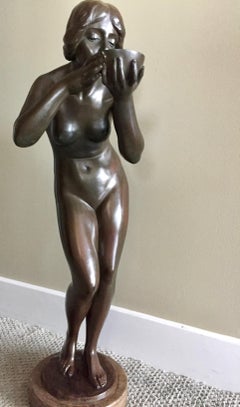
Diosa. Original bronze multiple. Esculpture Modernist Julien Caussé (also given as Cadet-Julien Caussé, Cadet Julien Caussé and Julien Cadet Caussé) (1869–1914) was a prolific French...

Category

Modern Early 1900s Art

Materials

Bronze

“The Newspaper Boy”
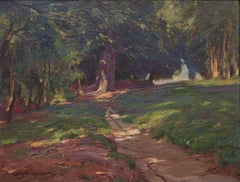
“The Newspaper Boy”
“The Newspaper Boy”
Located in San Francisco, CA

The classic hard luck, independent kid, maybe 8 or 10 years old here, selling the day’s papers out on the grubby streets of early 1900s New York City. He’s paused in a quiet spot, ap...

Category

American Realist Early 1900s Art

Materials

Canvas, Oil

Paisaje crepuscular - Óleo sobre tabla

Paisaje crepuscular - Óleo sobre tabla

Located in Sant Celoni, ES

Interesante oleo sobre tela del prestigioso artista catalán modest urgell inglada (Barcelona, 1839 - 1919) Representando un paisaje crepuscular Como pueden apreciar, la obra va fir...

Category

Impressionist Early 1900s Art

Materials

Oil

Characterful Portrait French Man with Hat & Pipe Signed & Dated 1903 Oil Paint

Characterful Portrait French Man with Hat & Pipe Signed & Dated 1903 Oil Paint

Located in Cirencester, Gloucestershire

Portrait of a Man with a Hat holding a Pipe French School, signed and dated 1903 oil on canvas, unframed canvas: 21.75 x 18 inches provenance: private collection, France condition: s...

Category

Impressionist Early 1900s Art

Materials

Oil, Canvas

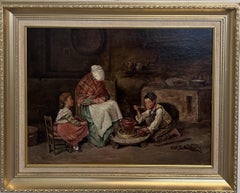
Oleo sobre tela - La profesora y la alumna - 90 x 100 cm.

Oleo sobre tela - La profesora y la alumna - 90 x 100 cm.

Located in Sant Celoni, ES

la obra va firmada en la parte inferior "roman ribera" esta obra és de aproximadamente ultimo tercio del siglo xix el estado de la obra es bueno la obra se presenta enmarcada con ...

Category

Old Masters Early 1900s Art

Materials

Oil

Fantastic View from the Windows of My Studio, 1907

Fantastic View from the Windows of My Studio, 1907

Located in PARIS, FR

Albert Nikolaievitch Benois (Saint Petersburg, 1852 – Fontenay-aux-Roses, 1936) Fantastic View from the Windows of My Studio 1907 Watercolour on cardboard 34.7 × 23 cm 48 x 37,5 c...

Category

Symbolist Early 1900s Art

Materials

Watercolor, Cardboard

Double-Sided Folk Art Painting, Oil on Canvas, Early 20th Century

Double-Sided Folk Art Painting, Oil on Canvas, Early 20th Century

Located in Cotignac, FR

Early 20th century French folk art oil on canvas, advertising M. Joquelet the dentist and Mme Irma the snake charmer. A wonderful piece of social history. At the turn of the century...

Category

Art Nouveau Early 1900s Art

Materials

Canvas, Wood, Oil

Paul Berthon - Sarah Bernhardt La Princesse Lointaine " The Faraway Princess "

Paul Berthon - Sarah Bernhardt La Princesse Lointaine " The Faraway Princess "

By Paul Berthon

Located in PARIS, FR

Paul Emile Berthon ( 1872- 1909 ), was a French decorative artist. He began studying painting in Villefranche. From 1893, he moved to Paris, where he attended the École normale d'enseignement du dessin. Among the courses taken at the time, those of the professor of decorative art Eugène Grasset had the greatest impact on him. The first works of Paul Berthon (around 1896) show a style close to that of Grasset. By freeing himself from the style of his master, his own style develops based on a palette of autumnal pastels with sharp lines and contours. This is his most famous lithograph, a portrait of Sarah Bernhardt in the title role of "La Princesse Lointaine...

Category

Art Nouveau Early 1900s Art

Materials

Linen, Paper, Lithograph

Le Chapeau Epingle or La fille de Berthe Morisot et sa Cousine (1e planche)

Le Chapeau Epingle or La fille de Berthe Morisot et sa Cousine (1e planche)

By Pierre Auguste Renoir

Located in Fairlawn, OH

Le Chapeau Epingle or La fille de Berthe Morisot et sa Cousine (1e planche) Etching with drypoint, 1904 Signed in the plate (see photo) This is the first etched version of "Pinning the Hat" Depicts Julie Manet and her cousin Jeanne. Exceptional impression printed with burr and selective inking with plate tone. Very rare. Published in 1910 in the first edition of Druet, "Manet annd the French Impressionists" A lifetime impression, printed prior to 1912. The etching comes with the original Herman Wunderlich & Co. (Kennedy Galleries label), which dates this impression to 1912 when Wunderlich changes names to Kennedy Galleries. Very rare image in an early lifetime impression. Printed with plate tone With pencil inscription stating first printing in French (see photo) Condition: very good No issue as seen from the front Soft horizontal creases visible from reverse Provenance: Kennedy Galleries, NY Reference: Stella 4, prior to Druet edition Delteil 4, published state Pierre-Auguste Renoir was a famous French painter whose paintings are some of the most popular, well-recognized, and frequently reproduced images in the history of art. His work presents a vision of a forgotten world, full of sparkling color and light. He once said: “Why shouldn’t art be pretty? There are enough unpleasant things in the world.” Born at Limoges on February 25, 1841, Renoir died at Cagnes-sur-Mer on December 17, 1919. When he was 13, Renoir entered a Paris porcelain painter’s workshop as an apprentice and developed a fine brush technique and facility with color. At 21, he attended courses at the École des Beaux-Arts and subsequently at Glyre’s. He made friends with Cezanne, Pissarro, Sisley, Monet, Bazille, and Diaz. In 1873, the artists Durand Ruel, Caillebotte, and Duret took an interest in his work. Renoir was involved in “The Society of Painters, Engravers and Sculptors,” which was founded in 1874, and witnessed the birth of Impressionism. From there, Renoir was immersed and able to spend time with his fellow artists of the day. He did not take up original printmaking until he was 50 years old, first with two small soft-ground etchings after his painting, “The Rustic Ball,” followed by an etching of Venus for the frontispiece of Mallarme’s Pages. Most of his engravings were done after his own pictures. In 1892, he did his first lithograph – a portrait of his son Pierre. In 1894, he met Ambroise Vollard, who played an important part in the production of Renoir’s and Cezanne’s lithographs...

Category

Impressionist Early 1900s Art

Materials

Etching

Vintage English Watercolor - Fareham Creek

Vintage English Watercolor - Fareham Creek

Located in Houston, TX

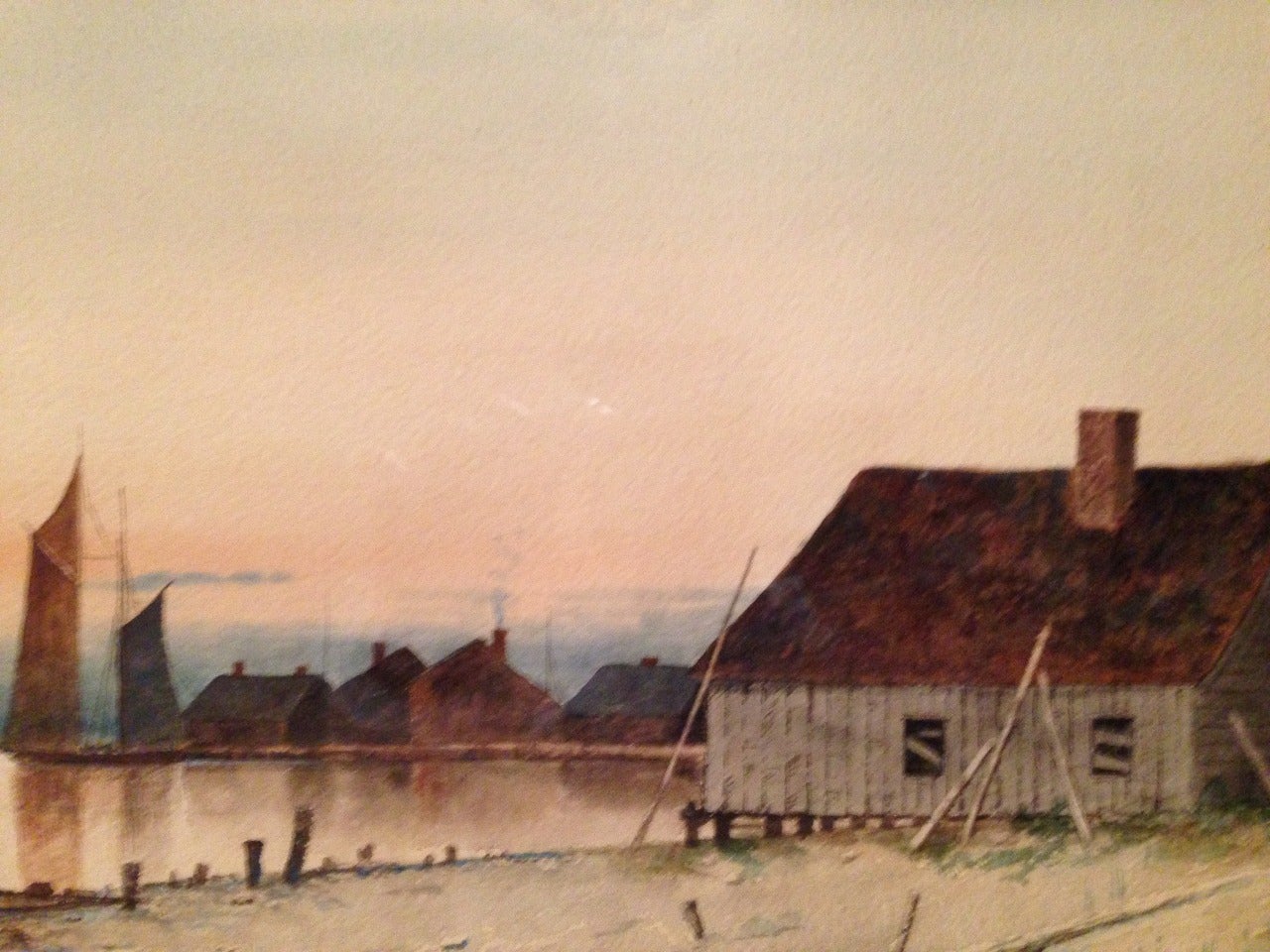
Delightful one-of-a-kind watercolor and gouache painting of boats docked along the glassy waters of Fareham creek located in England, circa 1910. Titled lower right. Original artwo...

Category

Early 1900s Art

Materials

Gouache, Paper, Watercolor

Fleurs - Neo-Impressionist Still Life Oil Painting by Beatrice Duval

Fleurs - Neo-Impressionist Still Life Oil Painting by Beatrice Duval

Located in Marlow, Buckinghamshire

Signed divisionist style still life oil on canvas by Swiss neo-impressionist painter Beatrice Duval. The work depicts a vase of flowers painted predominantly in yellows and greens an...

Category

Post-Impressionist Early 1900s Art

Materials

Canvas, Oil

German Autumn Landscape With Windmill, 1903

German Autumn Landscape With Windmill, 1903

Located in Stockholm, SE

Reinhold Grohmann (1877-1915) was a German painter who studied at the Académie Julian in Paris, a renowned art school that attracted students from all over the world. Grohmann's wo...

Category

Post-Impressionist Early 1900s Art

Materials

Canvas, Oil

Norwegian Pine Grove - The inner glow of the trees -

Norwegian Pine Grove - The inner glow of the trees -

Located in Berlin, DE

Themistokles von Eckenbrecher (1842 Athens - 1921 Goslar), Norwegian pine grove, 1901. Watercolor on blue-green paper, 30 x 22 cm. Signed, dated and inscribed in his own hand "TvE. Fagermes [i.e. Fagermes]. 26.6.[19]01." - Slight crease throughout at left margin, otherwise in good condition. About the artwork Themistokles von Eckenbrecher often traveled to Norway to study the nature that fascinated him there. On June 26, 1901, near the southern Norwegian town of Fagernes, in the summer evening sun, he saw a small pine grove, which he immediately captured in a watercolor. He exposed the trees growing on a small hill in front of the background, so that the pines completely define the picture and combine to form a tense motif. The tension comes from the contrast of form and color. The trunks, growing upward, form a vertical structure that is horizontally penetrated by the spreading branches and the pine needles, which are rendered as a plane. This structural tension is further intensified by the color contrast between the brown-reddish iridescent trunks and branches and the green-toned needlework. Themistokles von Eckenbrecher, however, does not use the observed natural scene as an inspiring model for a dance of color and form that detaches itself from the motif and thus treads the path of abstracting modernism. Its inner vitality is to be brought to light and made aesthetically accessible through the work of art. It is precisely in order to depict the inner vitality of nature that von Eckenbrecher chooses the technique of watercolor, in which the individual details, such as the needles, are not meticulously worked out, but rather a flowing movement is created that unites the contrasts. The trees seem to have formed the twisted trunks out of their own inner strength as they grew, creatingthose tense lineations that the artist has put into the picture. The inner strength continues in the branches and twigs, culminating in the upward growth of the needles. At the same time, the trunks, illuminated by the setting sun, seem to glow from within, adding an almost dramatic dimension to the growing movement. Through the artwork, nature itself is revealed as art. In order to make nature visible as art in the work, von Eckenbrecher exposes the group of trees so that they are bounded from the outside by an all-encompassing contour line and merge into an areal unity that enters into a figure-ground relationship with the blue-greenish watercolor paper. The figure-ground relationship emphasizes the ornamental quality of the natural work of art, which further enforces the artwork character of the group of trees. With the presentation of Themistokles von Eckenbrecher's artistic idea and its realization, it has become clear that the present watercolor is not a study of nature in the sense of a visual note by the artist, which might then be integrated into a larger work context, but a completely independent work of art. This is why von Eckenbrecher signed the watercolor. In addition, it is marked with a place and a date, which confirms that this work of nature presented itself to him in exactly this way at this place at this time. At the same time, the date and place make it clear that the natural work of art has been transferred into the sphere of art and thus removed from the time of the place of nature. About the artist Themistocles' parents instilled a life of travel in their son, who is said to have spoken eleven languages. His father, who was interested in ancient and oriental culture, was a doctor and had married Francesca Magdalena Danelon, an Italian, daughter of the British consul in Trieste. During a stay in Athens - Gustav von Eckenbrecher was a friend of Heinrich von Schliemann and is said to have given him crucial clues as to the location of Troy - Themistokles saw the light of day in 1842. After an interlude in Berlin, where Themistokles was educated at the English-American School, the journey began again. From 1850 to 1857 the family lived in Constantinople, after which the father opened a practice in Potsdam, where Themistokles, who wanted to become a painter, was taught by the court painter Carl Gustav Wegener. In 1861 the von Eckenbrechers left Potsdam and settled in Düsseldorf. There Themistokles received two years of private tuition from Oswald Aschenbach, who greatly admired the talented young artist. After his artistic training, he undertook extensive travels, often accompanied by Prince Peter zu Sayn-Wittgenstein, which took him to northern and eastern Europe, but above all to the Middle East and even to South America. The paintings that resulted from these journeys established his artistic reputation and led to his participation in large panoramas such as the 118 x 15 metre Entry of the Mecca Caravan into Cairo, painted for the City of Hamburg in 1882. 1882 was also the start of a total of 21 study trips to Scandinavia, most of them to Norway, and the unique Norwegian landscape with its rugged fjords became a central motif in his work. Along with Anders Askevold and Adelsteen Normann...

Category

Naturalistic Early 1900s Art

Materials

Watercolor

French School Portrait Frieze me Cat XL  Impressionist th century  Original MAK

French School Portrait Frieze me Cat XL Impressionist th century Original MAK

By Bazevian DelaCapuciniere

Located in Zofingen, AG

Animal Frieze me Portrait - Closeup of cat Technique: oil, acrylic, and ink on canvas F30 92x73cm ■■ 36,2x28,7 inch 》》R E A D Y -- T O -- H A N G《《 ❶ → Original signed work. Cer...

Category

Tonalist Early 1900s Art

Materials

Ink, Oil, Acrylic

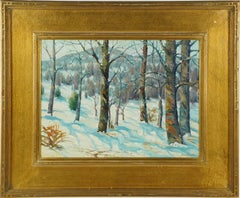
Late 19th Century Landscape - "After The Snow"

Late 19th Century Landscape - "After The Snow"

Gorgeous late 19th-century snowscape titled "After the Snow," by artist Constantin Alexandrovitch Westchiloff (1877-1945) Signed on the bottom right corner and titled on edge (the color differences in the signature letters are original to the painting prior to cleaning, and have not been modified or augmented). Unframed. Image size: 14.25"H x 20.25"W Westchiloff is an American-Russian artist. He was born in Russia in 1877, and studied at the Academy of Fine Arts in St. Petersburg; as an artist, he traveled extensively in Europe and in the USA. He finally settled in New England, where he died in 1945. He is probably best-known for seascapes (particularly of the New England coastline) but was also well regarded for his landscapes, portraits and figures, and genre subjects. His work, especially after his travels in Europe and then in America, is closest to Impressionist in style. His favored medium was oil, which was well suited to his confident and strong technique. This, in turn, imbued his paintings of the rugged landscapes and seascapes of New England...

Category

American Impressionist Early 1900s Art

Materials

Oil, Canvas

Nature Morte - Post Impressionist Still Life Oil Painting by Georges D'Espagnat

Nature Morte - Post Impressionist Still Life Oil Painting by Georges D'Espagnat

By Georges d'Espagnat

Located in Marlow, Buckinghamshire

Signed oil on canvas still life circa 1902 by French post impressionist painter Georges D'Espagnat. The work depicts a table covered in a white cloth with red stripes. On top sit two...

Category

Post-Impressionist Early 1900s Art

Materials

Canvas, Oil

Hawk Moths, English antique natural history Lepidoptera chromolithograph print

Hawk Moths, English antique natural history Lepidoptera chromolithograph print

Located in Melbourne, Victoria

English hawk moth chromolithograph, circa 1900. Plate number top right. From an English series of illustrations of butterflies and moths. Butterflies / moths are numbered and there i...

Category

Art Nouveau Early 1900s Art

Materials

Lithograph

ACAPULCO
ACAPULCO

ACAPULCO

By Joseph Pennell

Located in Santa Monica, CA

JOSEPH PENNELL (1857 - 1926) ACAPULCO 1901-08. Colored pastel and gouache drawing on blue paper. Signed and titled in pencil in his early signature. Image 10 x 14 inches to just ab...

Category

American Impressionist Early 1900s Art

Materials

Pastel, Gouache

Aglaé - Original Etching by Gustave Joseph Biot - 1900

Aglaé - Original Etching by Gustave Joseph Biot - 1900

Located in Roma, IT

Aglaé is an original etching realized by Gustave Joseph Biot d'aprés Cabanel (1900). The artwork is in good conditions except for worn and yellowed paper on the margins. Mounted on...
Category

Modern Early 1900s Art

Materials

Etching

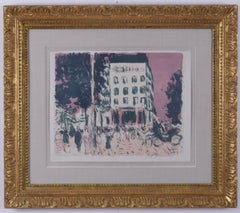
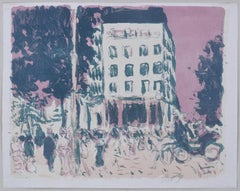
Les Boulevards
Les Boulevards

Les Boulevards

By Pierre Bonnard

Located in Fairlawn, OH

Les Boulevards Color llthograph on china paper, 1900 Signed In graphite, below image, right: P. Bonnard A proof outside of the edition of 100 for Das Ma...

Category

Impressionist Early 1900s Art

Materials

Lithograph

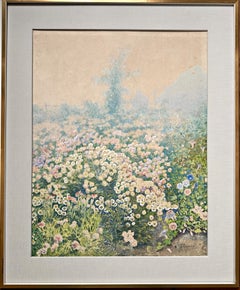
Painting Napoleon III Autumn Flowers by Marthe Danard Puig  France

Painting Napoleon III Autumn Flowers by Marthe Danard Puig France

Located in Valladolid, ES

Stunning still life titled “Fleurs d’automne” (“Autumn Flowers”) by French artist Marthe Danard Puig. In the center, a slender, cylindrical vase filled with chrysanthemums, most of t...

Category

Early 1900s Art

Materials

Canvas

Three Horses and a Foal, Victorian Oil Painting, Framed by Wright Barker C.1900
Three Horses and a Foal, Victorian Oil Painting, Framed by Wright Barker C.1900

By Wright Barker

Located in St. Albans, GB

Wright BARKER 1864 - 1941 Canvas Size: 27 x 40" (69 x 102cm) Outside Frame Size: 33 x 46" (84 x 117cm) Oil on Canvas Free Shipping Exhibited : 1885 - 1935 He was a figure and animal painter who was based originally in Bradford, where he lived until 1885, when he moved to Edwinstowe, near Mansfield, Nottingham. In 1901 he moved to Hampstead and then back north to Harrogate where he stayed until his death. In his later years he became a picture dealer, but in his will he referred to himself as ‘animal painter’. Barker became a member of the Royal Society of British Artists in 1896. Although he called himself an animal painter he is also known to have painted ‘Roman Maidens...

Category

Victorian Early 1900s Art

Materials

Oil