American Modern Art

to
613
1,615
1,276
905
644
547
Overall Width
to
Overall Height
to
1
11
4,281
698
16
66
178
642
482
418
406
367
277
137
119,821
64,456
56,445
28,679
14,487
9,608
6,677
6,094
4,215
3,167
2,544
2,326
2,124
580
2,427
2,176
239
2,262
1,087
823
638
615
500
412
333
300
228
219
212
204
189
187
184
162
155
146
139
1,856
1,408
1,017
638
597
285
219
102
98
86
1,434
550
4,571
343
Style: American Modern
2 Lazy 2 P

2 Lazy 2 P

By Lon Megargee 1

Located in Phoenix, AZ

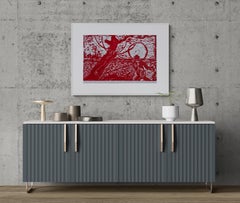
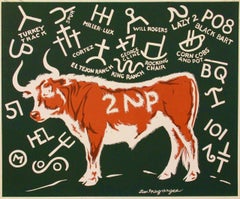
2 Lazy 2P, ca. 1939 Lon Megargee Serigraph 20 x 24 inches Signed in screen Original serigraph print by Lon Megargee 1883 - 1960 Featured in "Hot Irons" by Oren Arnold and John Hale, 1940 SHIPPING CHARGES INCLUDE SHIPPING, PACKAGING & INSURANCE Lon Megargee created this serigraph from his commission with Oren Arnold and John Hale to do their dust jacket for the book, " Hot Irons", 1940. Arnold and Hale wanted to establish a reference work, an "authority", with a entertaining history about the evolution of the brand. Megargee created a painting of a steer that was branded with the script, 2 Lazy 2 P. Surrounding the steer is a random display of famous brands of ranches in the Southwest. It was well received and must have prompted Megargee to create the likeness as a print. The brand is described in chapter thirteen, page 207-208 and says, " Ed Stram, who was Arizona state veterinarian for sixteen years, fire-branded his cattle with this peculiar crest. It isn't peculiar unless you have an equally peculiar sense of humor. At a glance it appears to be just another typically unimaginative brand, but it has been used to make many a thousand girls blush, and a few thousand bashful young men as well". COLLIER GALLERY, FINE ART ESTATE OF LON MEGARGEE Born and raised in Philadelphia, Pennsylvania, Lon Megargee, at age 13, ran away from his upper class home and went West in 1896 led by his zest for the wild and adventuresome life. There he established a reputation as a cowboy painter and illustrator with work most associated with Arizona Brewing Company ads featuring humorous aspects of cowboy life. In his youth, he worked as a free-lance cowboy, exhibition roper, poker dealer, and bronco buster in Arizona, and then went east again to study art in Philadelphia at the Pennsylvania Academy of Fine Arts, and to New York at the Art Students League and Pratt Institute. He returned to Arizona, living in Cave Creek, Salt River Canyon, Phoenix and the last years of his life near Sedona. His Phoenix home later became a popular hotel and dining place called the Hermosa Inn. Megargee was a ranch owner and also did oil canvases of the places he loved and the cowboy life he admired. By 1910, he was among the earliest resident artists, and was probably the best known artist in Arizona. His name was first associated with a landscape series of 15 large murals for the Capitol Building, newly constructed just after Arizona became a state in 1912. Another one of his paintings, Elemental, was the first painting by an artist living in Arizona to be acquired for the Municipal Collection of Phoenix. These works were chosen from entries in the State Fair, where he continued to win prizes for figure and landscape painting. From 1911 to 1953, he did numerous commission works for the Santa Fe Railroad, including a work titledNavajos Watching a Santa Fe Train. Between 1915 and 1930, he also painted in the Los Angeles area of California and had entries in the California State Fair. He died in Cottonwood, Arizona. After his death, theSaturday Evening Post had a double-page reproduction of his painting Cowboy's Dream. Creator of the iconic logo for the Stetson Hat Company, " Last Drop From his Stetson", still in use today. Fine Art Estate of Lon Megargee We offer signed in print and original signature block prints. Custom, hand carved, signature frames, with archival standards and a speciality in hand dyed mats and french matting are provided for a beautiful and timeless presentation. Megargee explored different mediums; printmaking captivated him in particular. The contrast of the black and white block print method captured perfectly his interpretation of a bold American West. The first print was produced around 1921 and culminated with the creation of “The Cowboy Builds a Loop” in 1933 with 28 images and poetry by his friend, Roy George. Megargee continued producing prints throughout the 1940s and early 50s. At age 13, Lon Megargee came to Phoenix in 1896 following the death of his father in Philadelphia. For several years he resided with relatives while working at an uncle’s dairy farm and at odd jobs. He returned to Philadelphia in 1898 – 1899 in order to attend drawing classes at the Pennsylvania Academy of the Fine Arts. Back in Phoenix in 1899, he decided at the age of 16 to try to make his living as a cowboy. Lon moved to the cow country of Wickenburg where he was hired by Tex Singleton’s Bull Ranch. He later joined the Three Bar Ranch . . . and, after a few years, was offered a job by Billy Cook...

Category

1930s American Modern Art

Materials

Screen

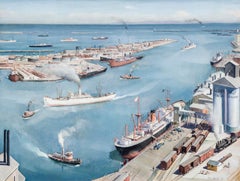
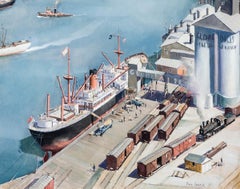
San Pedro Harbor
San Pedro Harbor

San Pedro Harbor

By Paul Sample

Located in New York, NY

It is infrequent, to say the least, that a diagnosis of tuberculosis proves fortuitous, but that was the event, in 1921, that set Paul Starrett Sample on the road to becoming a professional artist. (The best source for an overview of Sample’s life and oeuvre remains Paul Sample: Painter of the American Scene, exhib. cat., [Hanover, New Hampshire: Hood Museum of Art, 1988] with a detailed and definitive chronology by Sample scholar, Paula F. Glick, and an essay by Robert L. McGrath. It is the source for this essay unless otherwise indicated.) Sample, born in Louisville, Kentucky, in 1896 to a construction engineer and his wife, spent his childhood moving with his family to the various locations that his father’s work took them. By 1911, the family had landed in Glencoe, Illinois, settling long enough for Paul to graduate from New Trier High School in 1916. Sample enrolled at Dartmouth College, in Hanover, New Hampshire, where his interests were anything but academic. His enthusiasms included the football and basketball teams, boxing, pledging at a fraternity, and learning to play the saxophone. After the United States entered World War I, Sample, to his family’s dismay, signed on for the Naval Reserve, leading directly to a hiatus from Dartmouth. In 1918 and 1919, Sample served in the U.S. Merchant Marine where he earned a third mate’s license and seriously contemplated life as a sailor. Acceding to parental pressure, he returned to Dartmouth, graduating in 1921. Sample’s undergraduate life revolved around sports and a jazz band he formed with his brother, Donald, two years younger and also a Dartmouth student. In November 1933, Sample summarized his life in a letter he wrote introducing himself to Frederick Newlin Price, founder of Ferargil Galleries, who would become his New York art dealer. The artist characterized his undergraduate years as spent “wasting my time intensively.” He told Price that that “I took an art appreciation course and slept thru it every day” (Ferargil Galleries Records, circa 1900–63, Archives of American Art, Smithsonian Institution, available on line). In 1920, Donald Sample contracted tuberculosis. He went for treatment to the world-famous Trudeau Sanitorium at Saranac Lake, in New York State’s Adirondack Mountains for the prescribed regimen of rest, healthful food, and fresh air. Visiting his brother in 1921, Paul also contracted the disease. Tuberculosis is highly contagious, and had no certain cure before the development of streptomycin in 1946. Even for patients who appeared to have recovered, there was a significant rate of recurrence. Thus, in his letter to Price, Sample avoided the stigma conjured by naming the disease, but wrote “I had a relapse with a bad lung and spent the next four years hospitalized in Saranac Lake.” The stringent physical restrictions imposed by adherence to “the cure” required Sample to cultivate an alternate set of interests. He read voraciously and, at the suggestion of his physician, contacted the husband of a fellow patient for instruction in art. That artist, then living in Saranac, was Jonas Lie (1880–1940), a prominent Norwegian-American painter and an associate academician at the National Academy of Design. Lie had gained renown for his dramatic 1913 series of paintings documenting the construction of the Panama Canal (The Metropolitan Museum of Art, New York; United States Military Academy, West Point, New York). Primarily a landscape artist, Lie had a particular affinity for scenes with water. His paintings, impressionistic, atmospheric, and brushy, never strayed from a realistic rendering of his subject. Sample regarded Lie as a mentor and retained a lifelong reverence for his teacher. Sample’s early paintings very much reflect Lie’s influence. ` In 1925, “cured,” Sample left Saranac Lake for what proved to be a brief stay in New York City, where his veteran’s benefits financed a commercial art course. The family, however, had moved to California, in the futile hope that the climate would benefit Donald. Sample joined them and after Donald’s death, remained in California, taking classes at the Otis Art Institute in Los Angeles. In Sample’s account to Price, “I couldn’t stomach the practice of painting a lot of High Sierras and desert flowers which seemed to be the only kind of pictures that were sold here so I got a job teaching drawing and painting at the art school of the University of Southern California.” Initially hired as a part-time instructor, Sample progressed to full-time status and ultimately, by the mid-1930s, to the post of Chairman of the Fine Art Department. Sample, however, did not want to wind up as a professor. “Teaching is all right in small doses,” he wrote, “but I have a horror of drifting into being a college professor and nothing more.” At the same time as he taught, Sample began to exhibit his work in a variety of venues at first locally, then nationally. Though he confessed himself “a terrible salesman,” and though occupied with continued learning and teaching, Sample was nonetheless, ambitious. In 1927, he wrote in his diary, “I am eventually going to be a painter and a damned good one. And what is more, I am going to make money at it” (as quoted by Glick, p. 15). In 1928, Sample felt sufficiently solvent to marry his long-time love, Sylvia Howland, who had also been a patient at Saranac Lake. The Howland family were rooted New Englanders and in summertime the Samples regularly traveled East for family reunion vacations. While the 1930s brought serious hardship to many artists, for Paul Sample it was a decade of success. Buttressed by the financial safety net of his teacher’s salary, he painted realist depictions of the American scene. While his work addressed depression-era conditions with a sympathetic eye, Sample avoided the anger and tinge of bitterness that characterized much contemporary realist art. Beginning in 1930, Sample began to exhibit regularly in juried exhibitions at important national venues, garnering prizes along the way. In 1930, Inner Harbor won an honorable mention in the Annual Exhibition of the Art Institute of Chicago. That same year Sample was also represented in a show at the Albright-Knox Gallery in Buffalo and at the Biennial Exhibition of the Corcoran Gallery of Art, Washington, D.C. In 1931, Dairy Ranch won the second Hallgarten Prize at the Annual Exhibition of the National Academy of Design, in New York. Sample also made his first appearances at the Carnegie Institute, Pittsburgh, and The Pennsylvania Academy of the Fine Arts, Philadelphia. In 1936, Miner’s Resting won the Temple Gold Medal at the Pennsylvania Academy’s Annual Exhibition. Always interested in watercolor, in 1936, Sample began to send works on paper to exhibitions at the Whitney Museum, New York. While participating in juried exhibitions, Sample also cultivated commercial possibilities. His first New York art dealer was the prestigious Macbeth Gallery in New York, which included his work in a November 1931 exhibition. In 1934, Sample joined the Ferargil Galleries in New York, after Fred Price arranged the sale of Sample’s Church Supper to the Michele and Donald D’Amour Museum of Fine Arts in Springfield, Massachusetts. In 1937, The Metropolitan Museum of Art purchased Sample’s Janitor’s Holiday from the annual exhibition of the National Academy of Design, a notable honor. As prestigious as this exhibition schedule may have been, by far Sample’s most visible presence in the 1930s and 1940s was the result of his relationship with Henry Luce’s burgeoning publishing empire, Time, Inc. Sample’s first contribution to a Luce publication appears to have been another San Pedro...

Category

20th Century American Modern Art
Materials

Canvas, Oil

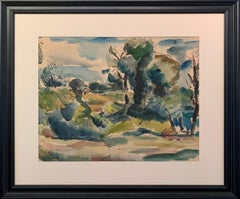
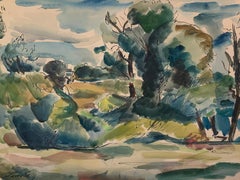
Green Landscape, Watercolor and Ink on Paper, circa 1926

Green Landscape, Watercolor and Ink on Paper, circa 1926

By Leon Kelly

Located in Doylestown, PA

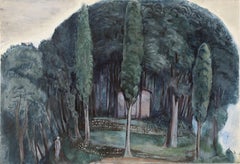
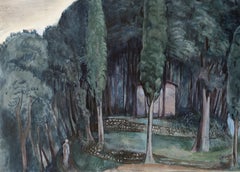
"Green Landscape" by Philadelphia born modernist and surrealist painter Leon Kelly, is a framed and matted landscape painting. The 17.5" x 23.5" watercolor and ink on paper is signed...

Category

1920s American Modern Art

Materials

Archival Ink, Watercolor, Archival Paper

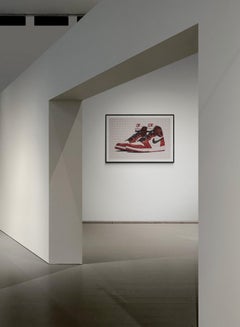
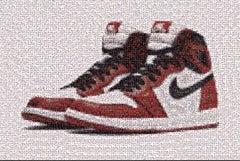
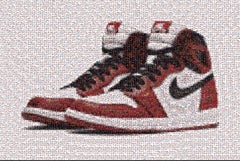
"Air Jordan" 50x60 Nike Michael Jordan, Sneakers, Photography Fine Art Unsigned

"Air Jordan" 50x60 Nike Michael Jordan, Sneakers, Photography Fine Art Unsigned

By Destro

Located in Los Angeles, CA

"Air Jordan" is an acrylic photomosaic artwork by Destro. The first release in a series mosaic works called "Icons". Destro has created large prints which are made up of many hundre...

Category

21st Century and Contemporary American Modern Art

Materials

Archival Pigment

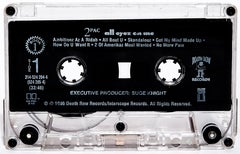
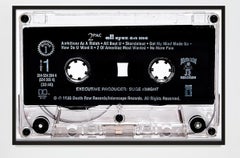
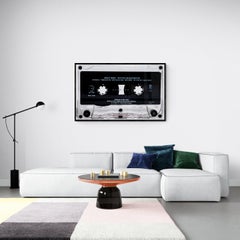
40x60 Tupac Shakur 2pac "All Eyez On Me" Cassette Photography  Pop Art by Destro

40x60 Tupac Shakur 2pac "All Eyez On Me" Cassette Photography Pop Art by Destro

By Destro

Located in Los Angeles, CA

A contemporary photograph of 2Pacs iconic "All eyez on me" cassette tape. This is s the first release in the much anticipated series "The Music" by pop Artists Destro These iconic ta...

Category

21st Century and Contemporary American Modern Art

Materials

Archival Pigment

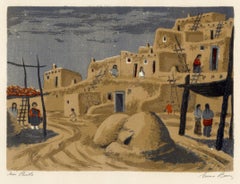
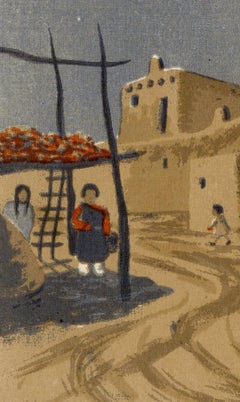
Taos Pueblo Screen Print, American Modern, Signed, Circa 1940s

Taos Pueblo Screen Print, American Modern, Signed, Circa 1940s

By Anna Barry

Located in Fairlawn, OH

Taos Pueblo Screen print, late 1940's Signed in pencil lower right (see photo) Titled in pencil lower left (see photo) Edition: Unknown Clasic depiction of Ranchos de Taos, the oldest continually inhabited city in North America. Condition: Excellent Image size: 5 x 6 3/4 inches Sheet size: 6 1/4 x 7 5/16 inches Anna Barry (1970-2001) “In 1944, after several prior trips to the area during which they had become friends with several of the Taos Founders, Ira and his wife, the artist Anna Barry moved to Taos, New Mexico. They would reside in the area on and off until 1955. Like many others, Moskowitz was entranced by New Mexico's light, landscapes, and cultures. By the time Ira arrived there, the region had already attracted Georgia O'Keeffe, Robert Henri, and Leon Gaspard; the Southwest was starting to be recognized as an art center. Moskowitz and his wife became acquainted with Oscar Berninghaus, Andrew Dasburg, Ernest Blumenschein, and Mabel Dodge Lujan, among others. Ira wrote of that time that "Our house was always open and we had scarcely a single meal without visitors dropping in." "Anna Barry was an artist/printmaker. She married Ira Moskowitz (from a long line of Polish rabbinical leaders) in New York in 1938. They soon visited Taos and Santa Fe in New Mexico, returning there for extended periods until in 1944 they moved there permanently—staying until 1949 when they returned to New York. Her work in New Mexico depicts mostly the pueblos and their people, capturing ritual ceremonial dances in colorful serigraph prints and other artworks. She and Ira (also an artist) worked closely together during their New Mexico sojourns. The pueblos seemed their favored subjects there. She signed her New Mexico work as, "Anna Barry." Her prints are colorful and often detailed. The only ones I have seen (6 in all) were 5"x7" in size. Anna probably lived longest in New York, but perhaps was also in both Europe and Israel for extended periods. (See the AskART Ira Moskowitz biography.)" Courtesy of Fred McCraw "Anna Barry (née Anna Barshefsky), painter, printmaker and teacher, was born to Russian émigrés Max and Ida Goldberg Barshefsky on 20 May 1909 in Philadelphia, Pennsylvania. In the 1930 U.S. Federal Census her family name is changed to Barish and they are listed as living in Bronx, New York. It is not yet known where she had formal art training but she was listed as a teacher on the 1940 U.S. Census. She married artist Ira Moskowitz on 13 November 1938 and they began frequenting New Mexico. They befriended such luminaries as Mabel Dodge Lujan, Georgia O’Keeffe, Oscar Berninghaus, and many others who had become attracted to the unique landscape. Barry and Moskowitz moved to Taos, New Mexico in 1944 and remained until 1949 when they returned to New York. One can’t help but wonder if Anna Barry studied with serigrapher/painter Louie Ewing...

Category

1940s American Modern Art

Materials

Screen

"Air Jordan" 40x50 Nike Michael Jordan, Sneakers, Photography Fine Art Signed

"Air Jordan" 40x50 Nike Michael Jordan, Sneakers, Photography Fine Art Signed

By Destro

Located in Los Angeles, CA

"Air Jordan" is an acrylic photomosaic artwork by Destro. The first release in a series mosaic works called "Icons". Destro has created large prints which are made up of many hundre...

Category

21st Century and Contemporary American Modern Art

Materials

Archival Pigment

Guns N' Roses Appetite for Destruction 40x60 Signed Photography Cassette Tape

Guns N' Roses Appetite for Destruction 40x60 Signed Photography Cassette Tape

By Destro

Located in Los Angeles, CA

* SPECIAL 1STDIBS PRICE A contemporary photograph of Guns N' Roses iconic "Appetite for Destruction" cassette tape. This is s the first release in the much anticipated series "The M...

Category

21st Century and Contemporary American Modern Art

Materials

Archival Pigment

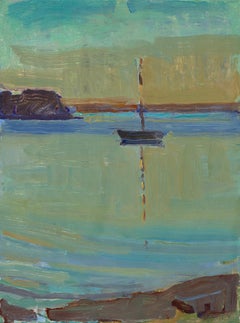
"The Lone Boat" oil painting, contemporary seascape, 16 x 12in signed and framed

"The Lone Boat" oil painting, contemporary seascape, 16 x 12in signed and framed

By Kelly Carmody

Located in Sag Harbor, NY

"The Lone Boat" is an oil painting by American artist, Kelly Carmody. A contemporary seascape of a single sailboat resting upon a still body of water at a special time of day, either...

Category

21st Century and Contemporary American Modern Art

Materials

Oil, Panel, Wood Panel, Board

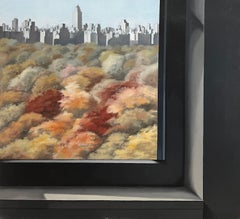
Central Park

Central Park

By Marina Stern

Located in Los Angeles, CA

This work is part of our exhibition Marina Stern Luminary, the first retrospective of the artist since 2007. Marina Stern was a multifaceted New York-based artist whose works ranged...

Category

1980s American Modern Art

Materials

Canvas, Oil

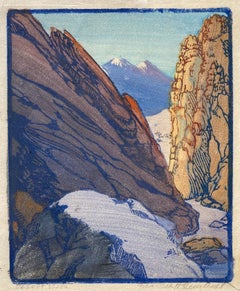
DESERT VISTA (Death Valley)

DESERT VISTA (Death Valley)

By Frances H. Gearhart

Located in Santa Monica, CA

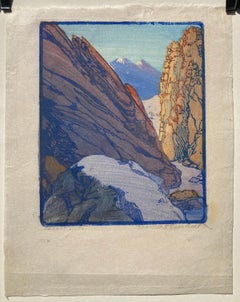
FRANCES H. GEARHART (1869 – 1958) DESERT VISTA (Death Valley) c. 1930 Color linocut signed and titled in pencil. Image 8 3/8 x 8 7/8”. On fibrous japon paper. Sheet 11 ¾ x 8 ¼”. Gen...

Category

1920s American Modern Art

Materials

Color, Linocut, Woodcut

Tulip Festival

Tulip Festival

By Susan Cohen

Located in Fairfield, CT

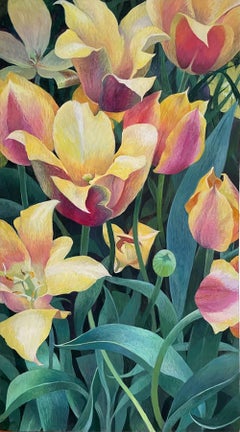
About the artist: Susan Cohen’s paintings are exhibited with New York City galleries: George Billis, Garvey Simon, First Street,The Painting Center; and the Cynthia Winings Gallery...

Category

2010s American Modern Art

Materials

Egg Tempera, Panel

Snorkelling in Antigua, 1960 - Limited Edition Estate Stamped Print

Snorkelling in Antigua, 1960 - Limited Edition Estate Stamped Print

By Slim Aarons

Located in Brighton, GB

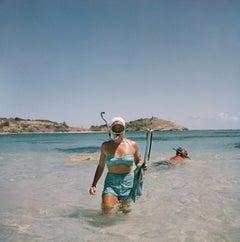
Snorkelling in Antigua is a Limited Edition Estate Stamped Digital C-Type Print by 20th Century American Photographer Slim Aarons. 16" x 16" print. Limited Edition Estate Stamped C-...

Category

20th Century American Modern Art
Materials

C Print, Photographic Paper, Digital, Color

Horse and Tree

Horse and Tree

By Robert Noel Blair

Located in Buffalo, NY

You are viewing a modernist American watercolor painting by Robert Noel Blair Robert Noel Blair (American, 1912-2003) was an American artist, painter, sculptor, printmaker and te...

Category

1960s American Modern Art

Materials

Archival Ink, Paper, Watercolor

NON COMBATANTS - Actual WPA /FAP print with WPA stamp!

NON COMBATANTS - Actual WPA /FAP print with WPA stamp!

By Chet La More

Located in Santa Monica, CA

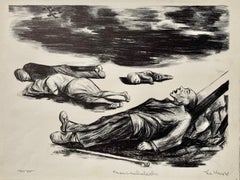
CHET LA MORE (1908 – 1980) NON COMBATANTS c. 1937 Lithograph, signed and titled in pencil. Image 10 ½ x 14 3/8”, sheet 12 3/8 x 15 7/8. With the FEDERAL ART PROJECT / NYC - WPA stam...

Category

1930s American Modern Art

Materials

Lithograph

Zen Minimalist Flowers Etching American Modernist Ed Baynard Pop Art Print

Zen Minimalist Flowers Etching American Modernist Ed Baynard Pop Art Print

By Ed Baynard

Located in Surfside, FL

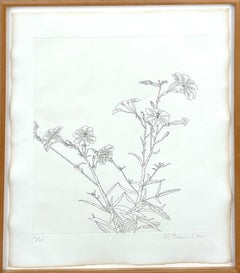
ED BAYNARD (American, 1940-2016) Flowers, Flowers in a Vase, Etching. 1979/1980, Hand signed, dated l.r., Hand numbered from small edition 12/24, Dimensions: 23 by 19 in. Framed 25 by 21 in Born in Washington, D.C. in 1940. Raised in Washington, D.C. and newly graduated from high school, he flew to Europe living off and on in Paris and London. During this time, he designed costumes for Jimi Hendrix, worked as a graphic designer for the Beatles as well as Elizabeth Taylor and Richard Burton. Returning to New York, he dedicated his life to art after a surprise success with his first show in 1971 at the Willard Gallery in NYC. Ed's images are Zen-like in their simplicity and grace rendered in a flat, graphic style that recalls Japanese Ukiyo-e prints. His watercolors are luminous, like the rest of his representations regardless of the medium. The Japanese inspired ukiyo-e style woodblock prints and lithograph works he created at Tyler Graphics in 1980 contain a 20th century "floating world" sensibility. Ed's wish was to bring harmony, color, and a meditative stillness to this chaotic planet. He did so in a gentle and powerful way, always as an expression of his deep gratitude for the love and beauty, friendship, and concerns he held dearest. His first solo exhibition was in 1971 at New York's legendary Willard Gallery on the recommendation of Agnes Martin. Baynard went on to have exhibitions at galleries including Betty Parsons Gallery, New York (1973); Marian Goodman Gallery, New York (1977); John Berggruen Gallery, San Francisco (1980); and Barbara Gladstone Gallery, New York (1980/81).. Baynard manages to retain a simplicity of form inspired by a love of Japanese Woodblock prints. His new works reflect the same poetry of his earlier paintings, retaining his stylized compositions with their Zen like minimalism and Oriental calm, along with a new sense of rhythm and movement. Baynard uses familiar themes such as flowers, plants, pots, and vases, incorporating them into his delicate watercolor still lifes, thus creating stunning visual feasts. He was included in the 1972 Landscape exhibition at MoMA NY alone with other luminaries James Boynton, Christo, Jan Dibbets, Minnie Evans...

Category

1980s American Modern Art

Materials

Etching

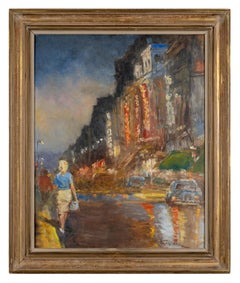
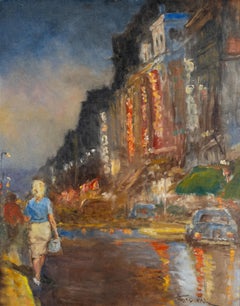
Night In the City
Night In the City

Night In the City

By Pal Fried

Located in Sheffield, MA

Pal Fried Hungarian-American, 1893-1976 Night In the City Oil on canvas 30 X 24 in. w/ frame 36 ¼ X 30 ¼ in. Signed "Fried Pal" lower right Pal was born in Budapest and studied at ...

Category

Mid-20th Century American Modern Art

Materials

Canvas, Oil

Bertoia — Mid-Century Visionary Abstraction, Unique Monotype, Signed

Bertoia — Mid-Century Visionary Abstraction, Unique Monotype, Signed

By Harry Bertoia

Located in Myrtle Beach, SC

Harry Bertoia, Untitled Abstraction, monotype, c. 1960, a unique impression. Signed 'HB' in pencil, lower right sheet corner, verso. Inscribed '1852' (the artist’s inventory number) in pencil, lower right sheet corner, recto. A superb, painterly impression, on cream wove Japan paper, the full sheet, in excellent condition. Unmatted, unframed. Sheet size 12 x 39 inches (30 x 99 cm). Provenance: Val Bertoia; Private Collection; Rago Auctions, Lambertville, NJ. Literature: 'Harry Bertoia: Monoprints,' Nancy N. Schiffer, Schiffer Publishing LTD, 2011; pg. 253. This work is included in the Harry Bertoia Foundation digital resource, Harry Bertoia Catalogue Raisonné, number TD.MO.1584. ABOUT THE ARTIST Harry Bertoia (1915-1978) was a visionary Italian-American artist, sculptor, and designer. Born in San Lorenzo, Italy, Bertoia immigrated to the United States with his family at age fifteen, settling in Detroit, Michigan. From an early age, Bertoia demonstrated a keen interest in art and design, studying painting and drawing at the Cass Technical High School in Detroit. Later, he attended the Cranbrook Academy of Art in Bloomfield Hills, Michigan, where he studied under renowned designers Eliel Saarinen and Charles Eames. At Cranbrook, Bertoia first began to explore the possibilities of working with metal, a medium that would come to define his artistic career. In the 1940s, Bertoia moved to California to work for Charles and Ray Eames, contributing to the development of innovative molded plywood furniture. However, his experimentation with metal wire sculpture would ultimately catapult him to international acclaim. Bertoia's iconic "Sonambient" sculptures, consisting of delicate metal rods arranged in various configurations, created ethereal sounds when touched or moved, transforming the act of sculpture into a multisensory experience. Bertoia's talent and innovation caught the attention of Florence Knoll, the founder of Knoll Associates, a leading furniture design company. In 1950, Bertoia began collaborating with Knoll, producing a series of iconic wire chairs that became emblematic of mid-century modern design. His "Diamond Chair," with its geometric form and airy construction, remains a classic of modern furniture design. Bertoia continued to explore sculpture as a means of artistic expression, experimenting with new forms and materials. His work was characterized by organicism and fluidity, with forms that evoked natural phenomena such as waves, leaves, and clouds. A decade before Harry Bertoia began creating three-dimensional sculpture, he dedicated his creative efforts to producing experimental prints at the Cranbrook Academy in Bloomfield Hills, Michigan, pursuing a passion that would continue for the rest of his life. With these spontaneous works, he worked intuitively, testing different tools and techniques to achieve his desired effects. Rather than using a traditional mechanical pressing process, he would apply ink to a glass or smooth Masonite plate with a sheet of paper laid directly on top. Then, tools such as brayers, dog hair brushes, styluses, and different parts of his hands were employed to draw or “press” the images on the back of the sheet. Rice paper was typically used due to its semi-translucent nature, offering Bertoia limited visibility of the effects of his experimentation, but ultimately, the unpredictable nature of the process was an integral aspect of the results, which never ceased to delight him. Each work was a singular composition with abstract imagery ranging from linear, structural compositions to fantastic surrealistic forms to poetic tonal landscapes. He received little input from other artists, developing his unique vision with rare purity and a deep personal resonance. From his first year of printmaking in 1940, Bertoia quickly amassed an extensive collection of unique works. The compositions were strongly tied to the non-objective movement, which, while popular in Europe, was still in its nascent stages in the US. There were few proponents of this new art form to be found in the 1940s, and it was Hilla Rebay, then Director of the Guggenheim Museum of Non-Objective Art, who gave Bertoia the encouragement and promotion he needed. In 1943, Bertoia sent approximately 100 monotypes to Rebay for review. After receiving the prints, she responded with a surprising offer to buy them all. Rebay then began including them in the museum’s exhibitions. The Guggenheim shows succeeded in putting Bertoia’s name out into the world. He began exhibiting his works regularly at the Neierndorf Gallery in New York and was provided a stipend to ensure a steady supply of prints until Karl Neierndorf died in 1947. By the 1950s...

Category

1960s American Modern Art

Materials

Monotype

"Air Jordan" 50x60 Nike Michael Jordan, Sneakers, Photography Fine Art Signed

"Air Jordan" 50x60 Nike Michael Jordan, Sneakers, Photography Fine Art Signed

By Destro

Located in Los Angeles, CA

"Air Jordan" is an acrylic photomosaic artwork by Destro. The first release in a series mosaic works called "Icons". Destro has created large prints which are made up of many hundre...

Category

21st Century and Contemporary American Modern Art

Materials

Archival Pigment

Coney Island

Coney Island

By John Albok

Located in Denton, TX

Unique Vintage gelatin silver print 7 1/4 x 6 1/8 in. Titled, dated, and artist stamp. Born in Munkacs, Hungary, John Albok learned photography as a boy. He came to the U.S. in 1921...

Category

Mid-20th Century American Modern Art

Materials

Silver Gelatin

Sexy Evening in Bed Phone Call  - Playboy Cartoon Humor - Francis Wilford Smith

Sexy Evening in Bed Phone Call - Playboy Cartoon Humor - Francis Wilford Smith

By Smilby

Located in Miami, FL

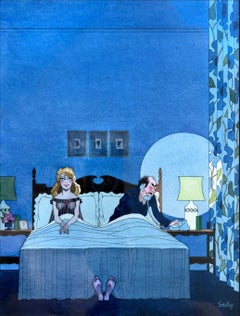
Cartoon art is the original Conceptual Art. Renowned British Illustrator Smilby (Francis Wilford Smith) conceptualizes a Playboy cartoon so good that no caption is needed. The exist...

Category

1970s American Modern Art

Materials

Ink, Watercolor, Illustration Board

Vintage Golden Age Syndicated Ink Drawing Cartoon Strip Susie Q Smith Comic Art

Vintage Golden Age Syndicated Ink Drawing Cartoon Strip Susie Q Smith Comic Art

By Jerry Walter & Linda Walter

Located in Surfside, FL

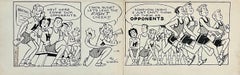
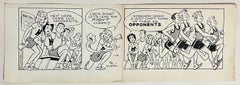
SUSIE Q. SMITH Medium: Newspaper comics Distributed by: King Features Syndicate First Appeared: 1945 Creators: Linda and Jerry Walter 6.5 X 19.5 Like her contemporaries, Aggie Mack, Candy and Patsy Walker (before her conversion to a superhero), Susie Q. Smith was a female Archie-type — not exactly an imitator, because Archie, who had started only four years earlier, hadn't yet become popular enough to spawn imitators, but part of his genre. She attended high school, where her teachers often seemed unreasonable to her, interacted with the opposite gender in a typically adolescent way, and her parents didn't completely understand her. And she was cute and perky as only a teenage girl can be. Susie was the star of a comic strip distributed by King Features, the biggest of the comic strip syndicates, whose other offerings have ranged from Jackys Diary to Prince Valiant. King launched the strip in both daily and Sunday form in 1945. Daily, she was only in a panel at first, but it expanded into a full, multi-panel strip on February 7, 1953. In a very odd turn of events, in 1953 the Walters chose to leave King Features behind and hitch their wagon at the McNaught Syndicate. The creators were Harold "Jerry" Walter and his wife, Linda. Jerry was also responsible for Jellybean Jones, who has nothing to do with Jughead Jones's young sister, a modern-day addition to the Archie cast of characters. Together, they did The Lively Ones during the 1960s. Though each was capable of doing both major jobs in comic strip production, their usual working method was for Jerry to dream up the ideas and write the dialog, while Linda did the artwork. The Walters also collaborated on a series of Susie Q. Smith comic books for Dell Comics. Instead of reprinting newspaper strips, these ran new stories by the Walters. Between 1951 and '54, four issues were published as part of the Four Color Comics series, where many minor comic strips, including Dotty Dripple, Timmy and Rusty Riley had found a home. It had no other media spin-offs. Susie Q. Smith had a respectable run in the newspapers, but it ended in 1959. Jerry Walter (1915 - 2007) was an abstract expressionist artist whose output of energetic and colorful paintings were the products of the rich artistic milieu of post-war New York City. He was born Harold Frank Walter in Mount Pleasant, Iowa on November 25, 1915. After graduating from Colgate University in 1937, Walter moved to New York City, where he studied drawing and painting at the New School and the Art Students’ League. Before concentrating seriously on his art, he spent several years as a successful copywriter and idea man for the advertising agencies of J. Walter Thompson, McCann Ericson, and BBDO. During this time, he also worked as a syndicated cartoonist. Collaborating with his wife, Linda, his best-known series was Susie Q. Smith, which first appeared in 1945 and described as a “female Archie type.” Very popular, the cartoon was later the subject of a series of comic books published from 1951 to 1954. After serving in the United States Army for three years during World War II, Walter began to paint seriously. He ascribed his earliest artistic influence to Joan Miró, whose Dog Barking at the Moon (1926) he viewed when he was twelve, the year he published his first cartoon. Walter later wrote that jazz, “the first native expression of so-called modernism” was a strong influence on his work. During the later 1940s, Walters spent time at the Research Studio in Maitland, Florida. Founded in 1937 by artist and architect J. André Smith and supported by the philanthropist Mary Curtis Bok, the Research Studio was a lively colony that hosted prominent artists, including Milton Avery, Ralston Crawford, and Doris Lee. While at the Studio, Walter’s work was purchased by Frank Crowninshield. A founding trustee of the Museum of Modern Art and editor of Vanity Fair, Crowinshield was a noted collector; his collection included important works by Pablo Picasso, Marc Chagall, Henri Matisse, Edgar Degas, George Bellows, and Pierre Bonnard. Returning to New York after his time at the Studio, Walter became an active member of the New York school of the abstract expressionist movement, and in the summer of 1956, Walter exhibited 13 paintings and a selection of drawings at New York’s Chase Gallery. The adroit manipulation of both color and composition evident in his work shows the influence of Abstract Expressionism, particularly Willem de Kooning, Arshile Gorky, and Hans Hofmann. illustrator and female cartoonist Linda Walter was the talented female mind behind the beloved "Susie Q. Smith" comic strip. She played an instrumental role in shaping the cultural landscape through her vibrant illustrations. Known for the timeless charm of the "Susie Q. Smith" comic strip, Linda's artistry brought joy and laughter to countless readers during the 1950s and continues to resonate with fans across generations. She was part of the Woodstock artists community. from Women in Comics: Linda Walter was the artist of newspaper strip Susie Q. Smith, which was written by her husband, Jerry. It was syndicated by King Features Syndicate and ran from 1945 to 1959. The Walters also contributed original Susie Q. Smith stories to Dell's Four Color comic books from 1951 to 1954. From 1964-1965, they created a singled panel comic called The Lively Ones. Vintage Golden Age of Comics era. The Golden Age of Comic Books describes an era in the history of American comic books from 1938 to 1956. During this time, modern comic books were first published and rapidly increased in popularity. The superhero archetype was created. Between 1939 and 1941 Detective Comics (DC) and its sister company, All-American Publications, introduced popular superheroes such as Batman and Robin, Wonder Woman, the Flash, Green Lantern, Doctor Fate, the Atom, Hawkman, Green Arrow and Aquaman. Timely Comics, the 1940s predecessor of Marvel Comics, had million-selling titles featuring the Human Torch, the Sub-Mariner, and Captain America. Another notable series was The Spirit by Will Eisner. Dell Comics' non-superhero characters (particularly the licensed Walt Disney animated-character comics) outsold the superhero comics of the day. The publisher featured licensed movie and literary characters such as Mickey Mouse, Donald Duck, Roy Rogers and Tarzan. Additionally, MLJ's introduction of Archie Andrews in Pep Comics #22 (December 1941) gave rise to teen humor comics, with the Archie Comics...

Category

1950s American Modern Art

Materials

Paper, Ink

Till the Clouds Roll By 1945 Frank Sinatra Mid Century Modern Hollywood Film WPA

Till the Clouds Roll By 1945 Frank Sinatra Mid Century Modern Hollywood Film WPA

By Richard Whorf

Located in New York, NY

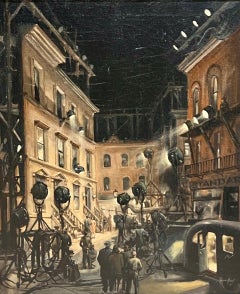
Till the Clouds Roll By 1945 Frank Sinatra Mid Century Modern Hollywood Film WPA TILL THE COULDS ROLL BY (Film Set), oil on canvas, 20 x 24 inches signed “Richard Whorf” lower right and signed and dated on the verso “R. Whorf/ Dec. 21, 1945. Frame by Hendenryk. ABOUT THE PAINTING This painting is from the collection of Barbara and Frank Sinatra, dated December 21, 1945 (just nine days after Frank Sinatra’s 30th birthday), and depicts the Metro-Goldwyn-Mayer Culver City backlot during the filming of Till the Clouds Roll By, the direction of the film having been taking over by Richard Whorf in December 1945. It is not presently clear if Whorf gave the Sinatras this painting as a gift, as the presence of the Dalzell Hatfield Galleries label on the verso indicates the painting may have been sourced there. Frank and Nancy Sinatra acquired a number of works from Dalzell Hatfield Galleries during the 1940’s, or perhaps they framed it for the couple. Sinatra performed “Old Man River’ in the film. Sinatra and June Allyson are depicted in the center of the painting. PROVENANCE From the Estate of Mrs. Nancy Sinatra; Dalzell Hatfield Galleries, Ambassador Hotel, Los Angeles. An image of the Dalzell Hatfield label and the back of the original frame (which we replaced with a stunning Heydenrk frame) are attached. Nancy Sinatra was Fran's first wife. Nancy Rose Barbato was 17 years old when she met Frank Sinatra, an 18-year-old singer from Hoboken, on the Jersey Shore in the summer of 1934. They married in 1939 at Our Lady of Sorrows Church in Jersey City where Frank gave Nancy a recording of a song dedicated to her titled "Our Love" as a wedding present. The young newlyweds lived and worked in New Jersey, where Frank worked as an unknown singing waiter and master of ceremonies at the Rustic Cabin while Nancy worked as a secretary at the American Type Founders. His musical career took off after singing with big band leaders Harry James and Tommy Dorsey...

Category

1940s American Modern Art

Materials

Canvas, Oil

Speedboat Landing - Limited Edition Slim Aarons Estate Stamped C-Type Print

Speedboat Landing - Limited Edition Slim Aarons Estate Stamped C-Type Print

By Slim Aarons

Located in Brighton, GB

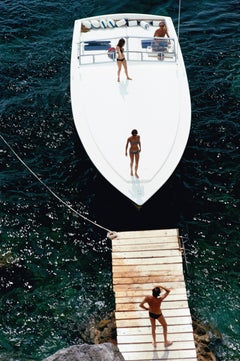
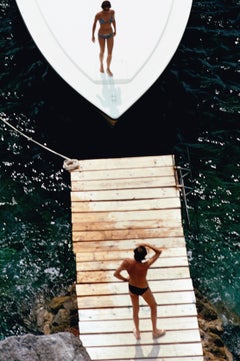
Speedboat Landing by Slim Aarons 16" x 20" print. Limited Edition Estate Stamped Print. Edition of 150. Printed Later. 'Speedboat Landing' is a Limited Edition Estate Stamped Digi...

Category

20th Century American Modern Art
Materials

Photographic Paper, Color, C Print, Digital

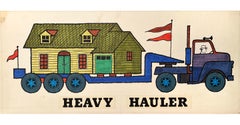
Heavy Hauler - Mid-Century Illustration - Children's Books

Heavy Hauler - Mid-Century Illustration - Children's Books

By Art Seiden

Located in Miami, FL

Art Seiden was born in Brooklyn, NY in 1923. He received a BA at Queens College and studied for eight years (!) at the Art Students League. Mario Cooper was among his instructors. Up...

Category

1950s American Modern Art

Materials

Pencil, Illustration Board, Watercolor

Les Belles et la Bête: Before the Hunt

Les Belles et la Bête: Before the Hunt

By Peter Milton

Located in Middletown, NY

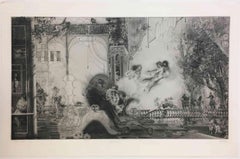
Resist ground etching and engraving on cream wove paper, 22 x 39 inches (558 x 990 mm), full margins. Signed, titled, dated, and numbered 27/160 in pencil, lower margin. With the blindstamp of the printer, Robert E. Townsend, in the lower left margin. A beautiful, richly inked impression of this highly detailed, large image. In very good condition with minor mat tone, extremely minor scattered light surface soiling, and one pin-point sized dot of brown discoloration on the lower left margin, recto, well outside of image area. [Milton 99]. Milton states that there is a metaphorical evolution at the root of his body of graphic work, and with Les Belles et la Bête, Before the Hunt, he found himself at a crossroads that he viewed as a sort of artistic adolescence, which he felt demanded a natural examination of mysteries of sexual awakening. The image is brimming with fantastical images and metaphors for the confrontation of sexual exploration; a Freudian analyst appears in the left of the image, scattered tableaus of paired figures...

Category

1970s American Modern Art

Materials

Archival Paper, Engraving, Etching

Bathing Beauties
Bathing Beauties

John AlbokBathing Beauties, 1943

$1,200Sale Price|57% Off

Bathing Beauties

By John Albok

Located in Denton, TX

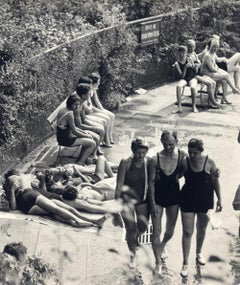
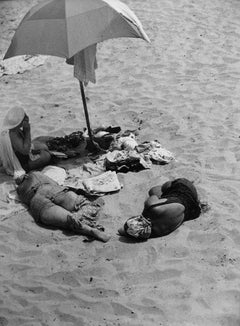
Vintage gelatin silver print 9 1/2 x 7 1/4 in. Titled, dated and artist stamp on verso. Born in Munkacs, Hungary, John Albok learned photography as a boy. He came to the U.S. in 192...

Category

Mid-20th Century American Modern Art
Materials

Silver Gelatin

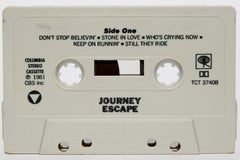
40x60 Journey "ESCAPE" Cassette Photography Pop Art Unsinged

40x60 Journey "ESCAPE" Cassette Photography Pop Art Unsinged

By Destro

Located in Los Angeles, CA

This is new release in the much anticipated series "The Music" by pop Artists Destro These iconic tapes have become more than just timeless music. They encapsulate an era instantly...

Category

21st Century and Contemporary American Modern Art
Materials

Archival Pigment

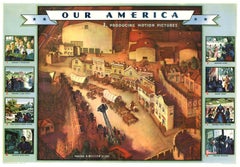
Original Our America #1. Producing Motion Pictures, 1942, linen-backed poster

Original Our America #1. Producing Motion Pictures, 1942, linen-backed poster

Located in Spokane, WA

Vintage 1942 Coca-Cola "Our America" Poster: Producing Motion Pictures. Original poster: Our America. 1. Producing Motion Pictures. Archival linen backed in excellent conditio...

Category

1940s American Modern Art
Materials

Offset

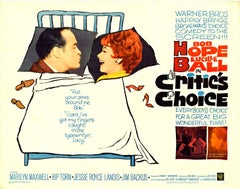
Original 1963 “Critic’s Choice” — Bob Hope & Lucille Ball — Half Sheet Movie

Original 1963 “Critic’s Choice” — Bob Hope & Lucille Ball — Half Sheet Movie

Located in Spokane, WA

Original 1963 Half Sheet Movie Poster — “Critic’s Choice” — Bob Hope & Lucille Ball — Warner Bros. — 22x28” Bring home a witty glimpse of mid-20th century Hollywood with this o...

Category

1960s American Modern Art
Materials

Offset

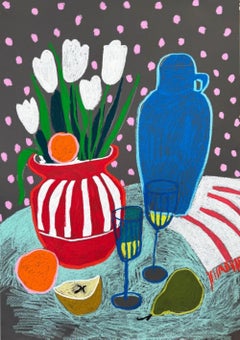
Tulips, Fruit and a Blue Visitor

Tulips, Fruit and a Blue Visitor

Located in Zofingen, AG

Naive art still life with tulips fruit and wine glasses Oil pastel drawing on paper One of a kind artwork Size: 50 × 70 × 0,1 cm It is original hand drawing on 250 gsm acid-free pa...

Category

2010s American Modern Art
Materials

Paper, Oil Pastel

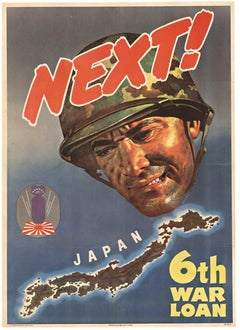
Original NEXT! 6th War Loan vintage 1944 poster  World War 2

Original NEXT! 6th War Loan vintage 1944 poster World War 2

Located in Spokane, WA

Original World War II poster: NEXT!. 6th War Loan. Original World War 2 government issued poster. Linen backed with original fold marks restored. T...

Category

1940s American Modern Art
Materials

Offset

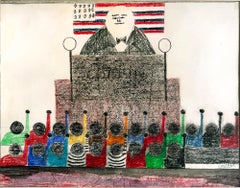
Black Panther Trials - Civil Rights Movement  Police Violence African American

Black Panther Trials - Civil Rights Movement Police Violence African American

Located in Miami, FL

The Black Panther Trials - In this historically significant work, African American Artist Vicent D. Smith functions as an Art Journalist/ Court Reporter as much as a Artist. Here, he depicts, in complete unity, 21 Black Panther Protestors raising their fist of defiance at the White Judge. Smith's composition is about utter simplicity, where the Black Panther Protestors are symmetrically lined up in a confrontation with a Judge whose size is exaggerated in scale. Set against a stylized American Flag, the supercilious Judge gazes down as the protesters as their fists thrust up. Signed Vincent lower right. Titled Panter 21. Original metal frame. Tape on upper left edge of frame. 255 . Panther 21. Framed under plexi. _____________________________ From Wikipedia In 1969-1971 there was a series of criminal prosecutions in New Haven, Connecticut, against various members and associates of the Black Panther Party.[1] The charges ranged from criminal conspiracy to first-degree murder. All charges stemmed from the murder of 19-year-old Alex Rackley in the early hours of May 21, 1969. The trials became a rallying-point for the American Left, and marked a decline in public support, even among the black community, for the Black Panther Party On May 17, 1969, members of the Black Panther Party kidnapped fellow Panther Alex Rackley, who had fallen under suspicion of informing for the FBI. He was held captive at the New Haven Panther headquarters on Orchard Street, where he was tortured and interrogated until he confessed. His interrogation was tape recorded by the Panthers.[2] During that time, national party chairman Bobby Seale visited New Haven and spoke on the campus of Yale University for the Yale Black Ensemble Theater Company.[3] The prosecution alleged, but Seale denied, that after his speech, Seale briefly stopped by the headquarters where Rackley was being held captive and ordered that Rackley be executed. Early in the morning of May 21, three Panthers – Warren Kimbro, Lonnie McLucas, and George Sams, one of the Panthers who had come East from California to investigate the police infiltration of the New York Panther chapter, drove Rackley to the nearby town of Middlefield, Connecticut. Kimbro shot Rackley once in the head and McLucas shot him once in the chest. They dumped his corpse in a swamp, where it was discovered the next day. New Haven police immediately arrested eight New Haven area Black Panthers. Sams and two other Panthers from California were captured later. Sams and Kimbro confessed to the murder, and agreed to testify against McLucas in exchange for a reduction in sentence. Sams also implicated Seale in the killing, telling his interrogators that while visiting the Panther headquarters on the night of his speech, Seale had directly ordered him to murder Rackley. In all, nine defendants were indicted on charges related to the case. In the heated political rhetoric of the day, these defendants were referred to as the "New Haven Nine", a deliberate allusion to other cause-celebre defendants like the "Chicago Seven". The first trial was that of Lonnie McLucas, the only person who physically took part in the killing who refused to plead guilty. In fact, McLucas had confessed to shooting Rackley, but nonetheless chose to go to trial. Jury selection began in May 1970. The case and trial were already a national cause célèbre among critics of the Nixon administration, and especially among those hostile to the actions of the FBI. Under the Bureau's then-secret "Counter-Intelligence Program" (COINTELPRO), FBI director J. Edgar Hoover had ordered his agents to disrupt, discredit, or otherwise neutralize radical groups like the Panthers. Hostility between groups organizing political dissent and the Bureau was, by the time of the trials, at a fever pitch. Hostility from the left was also directed at the two Panthers cooperating with the prosecutors. Sams in particular was accused of being an informant, and lying to implicate Seale for personal benefit. In the days leading up to a rally on May Day 1970, thousands of supporters of the Panthers arrived in New Haven individually and in organized groups. They were housed and fed by community organizations and by sympathetic Yale students in their dormitory rooms. The Yale college dining halls provided basic meals for everyone. Protesters met daily en masse on the New Haven Green across the street from the Courthouse (and one hundred yards from Yale's main gate). On May Day there was a rally on the Green, featuring speakers including Jean Genet, Abbie Hoffman, Jerry Rubin, and John Froines (an assistant professor of chemistry at the University of Oregon). Teach-ins and other events were also held in the colleges themselves. Towards midnight on May 1, two bombs exploded in Yale's Ingalls Rink, where a concert was being held in conjunction with the protests.[4] Although the rink was damaged, no one was injured, and no culprit was identified.[4] Yale chaplain William Sloane Coffin stated, "All of us conspired to bring on this tragedy by law enforcement agencies by their illegal acts against the Panthers, and the rest of us by our immoral silence in front of these acts," while Yale President Kingman Brewster Jr. issued the statement, "I personally want to say that I'm appalled and ashamed that things should have come to such a pass that I am skeptical of the ability of a Black revolutionary to receive a fair trial anywhere in the U.S." Brewster's generally sympathetic tone enraged many of the university's older, more conservative alumni, heightening tensions within the school community. As tensions mounted, Yale officials sought to avoid deeper unrest and to deflect the real possibility of riots or violent student demonstrations. Sam Chauncey has been credited with winning tactical management on behalf of the administration to quell anxiety among law enforcement and New Haven's citizens, while Kurt Schmoke, a future Rhodes Scholar, mayor of Baltimore, MD and Dean of Howard University School of Law, has received kudos as undergraduate spokesman to the faculty during some of the protest's tensest moments. Ralph Dawson, a classmate of Schmoke's, figured prominently as moderator of the Black Student Alliance at Yale (BSAY). In the end, compromises between the administration and the students - and, primarily, urgent calls for nonviolence from Bobby Seale and the Black Panthers themselves - quashed the possibility of violence. While Yale (and many other colleges) went "on strike" from May Day until the end of the term, like most schools it was not actually "shut down". Classes were made "voluntarily optional" for the time and students were graded "Pass/Fail" for the work done up to then. Trial of McLucas Black Panther trial sketch...

Category

1970s American Modern Art
Materials

Watercolor, Pen, Pencil, Paper

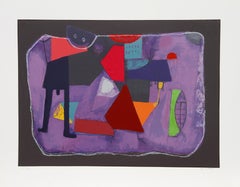
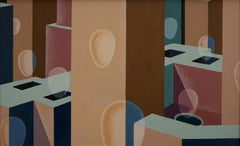
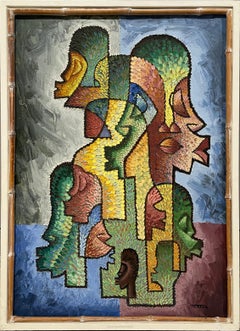
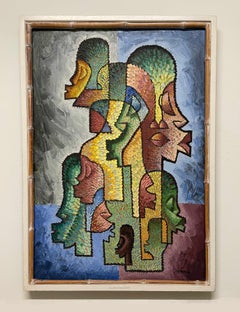
Transection w/ Architectural Forms, Geometrical Figurative Abstract Acrylic

Transection w/ Architectural Forms, Geometrical Figurative Abstract Acrylic

By Clarence Holbrook Carter

Located in Beachwood, OH

Clarence Holbrook Carter (American, 1904-2000) Transection with Architectural Forms, c. 1980s Acrylic and graphite on board 12 x 20 inches A surrealist mid-century figural abstract ...

Category

1980s American Modern Art
Materials

Acrylic, Graphite

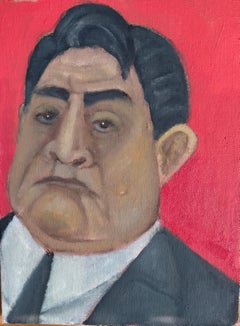
Diplomat. Thee quarter portrait red background

Diplomat. Thee quarter portrait red background

By Stephen Basso

Located in Brooklyn, NY

Oil on linen mounted on wood signed and dated on reverse Stephen Basso's highly origional pastels and oil paintings are romantic yet thought provoking images. His whimsical works a...

Category

2010s American Modern Art
Materials

Linen, Wood, Oil

Vintage Porsche Alfa Romeo Mid Century Modern Architecture Photograph

Vintage Porsche Alfa Romeo Mid Century Modern Architecture Photograph

By Tom Blachford

Located in Brooklyn, NY

Landscape, Vintage Car, Palm Tree, Classic Porsche, Mid Century Modern, Limited Series. Archival Inkjet Print on Semi Gloss 100% Cotton Paper. Mid Century Design. Tom Blachford. Moonlight Classic Porsche in Palm Springs California. This is a limited edition print in a series of 10. Each pieces comes with a hand-signed certificate of authenticity. The latest and final release in Australian photographer Tom Blachford’s long-running project, Midnight Modern, will be exhibited for the first time at TOTH Gallery in New York. Loosening the shackles of Palm Springs and Mid Century, Blachford’s large scale works explores some of the outer reaches of the Modernist movement in Architecture, and captured using only the light of the full moon. Blachford's series is a surreal ode to the landscapes of California and its cache of pristine Modernist buildings. Shot entirely at night, bathed in moonlight, the homes, vintage cars, and foliage appear as they have been captured in another space and time. Recognizing the locations may be easy, but it is more difficult to identity when the image was actually taken, be this day or night, in the past, present, or future. The images act as portals in time where it seems these moments exist in all places at once. For Blachford these unique residences act as the sets for infinite narratives, both real and imagined, which the viewer is invited to script for themselves. Each image acts as a still frame for a story about to start and end simultaneously. California has a unique geography and climate, and this gives rise to a distinct deep blue sky: a hue of moonlight ideal for this approach to architectural photography. The long exposure allows the camera to capture a world just beyond our perception and distil it into a single moment. Midnight Modern has already included Palm Springs' most iconic properties; the Kaufman Desert House...

Category

2010s American Modern Art
Materials

Photographic Paper, Archival Pigment

American Modern art for sale on 1stDibs.
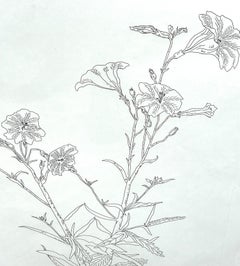
Find a wide variety of authentic American Modern art available for sale on 1stDibs. Works in this style were very popular during the 21st Century and Contemporary, but contemporary artists have continued to produce works inspired by this movement. If you’re looking to add art created in this style to introduce contrast in an otherwise neutral space in your home, the works available on 1stDibs include elements of blue, orange, purple, red and other colors. Many Pop art paintings were created by popular artists on 1stDibs, including Slim Aarons, Destro, Howard Schatz, and John Taylor Arms. Frequently made by artists working with Paint, and Oil Paint and other materials, all of these pieces for sale are unique and have attracted attention over the years. Not every interior allows for large American Modern art, so small editions measuring 0.25 inches across are also available.