Simka Simkhovitch Art

Russian, American, 1893-1949
Simka Simkhovitch was born near the city of Kiev, Russia. When he was 7, he spent a year in bed with a severe case of measles. To amuse himself he used to sketch an old mill outside his window, and thus decided to become an artist. He studied at an art school in Odessa and was recommended to attend the Imperial Academy of St. Petersburg (a singular honor in Russia at the time) before the war and revolution. Swept up into the army before he could attend, his work was hung in the Museum of Revolution in Leningrad. He resumed his studies in 1914 and graduated four years later. He was sent to the United States in 1924 to do illustrations for Soviet textbooks. He quickly applied for and gained U.S. citizenship. Simkhovitch integrated with the art world immediately and galleries such as Midtown Galleries and Marie Sterner took him on as part of their stable of artists. He also was employed by the WPA and executed major mural commissions throughout the country. One of his largest commissions was the Mississippi Court House. Life magazine profiled him twice with full-length features on his life here in this country as an artist. When he died at an early age, the Whitney Museum of Art in New York offered to do a retrospective and the widow denied the possibility and simply put his works away in storage. Considered a master draftsman and an adherent of certain classicism, Simkhovitch’s compositions are often built up in a complicated but well-managed counterpoint. But at heart, he is a romanticist preferring the dreamy colors of a Russian fairy tale.
to
6
8
3
3
Overall Width
to
Overall Height
to
14
3
7
2
6
2
7
6
1
6
3
3
3
2
2
1
10
7
6
4
3
14
11,651
2,883
2,492
1,596
7
14
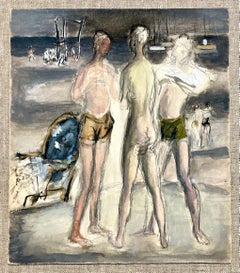
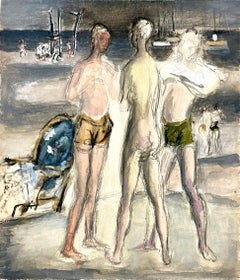
Artist: Simka Simkhovitch
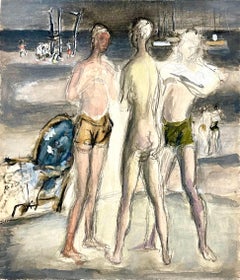
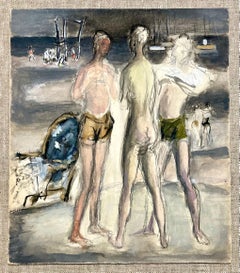
Simka Simkhovitch WPA W/C Painting Gouache American Modernist Beach Scene Nude

Simka Simkhovitch WPA W/C Painting Gouache American Modernist Beach Scene Nude

By Simka Simkhovitch

Located in Surfside, FL

Simka Simkhovitch (Russian/American 1893 - 1949) This came with a small grouping from the artist's family, some were hand signed some were not. These were studies for larger paintin...

Category

1930s American Modern Simka Simkhovitch Art

Materials

Watercolor, Gouache, Board

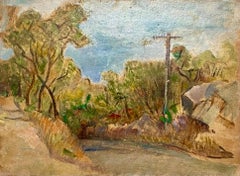
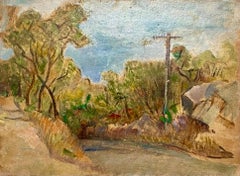
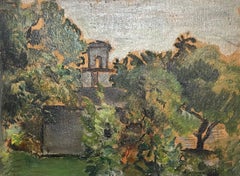
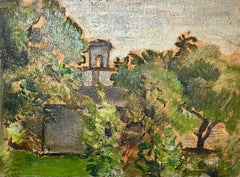
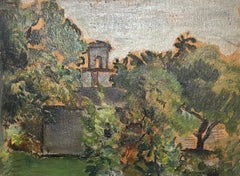
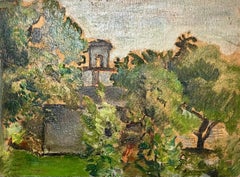
Simka Simkhovitch WPA Artist Oil Painting American Modernist Landscape w Tower

Simka Simkhovitch WPA Artist Oil Painting American Modernist Landscape w Tower

By Simka Simkhovitch

Located in Surfside, FL

Simka Simkhovitch (Russian/American 1893 - 1949) This came with a small grouping from the artist's family, some were hand signed some were not. These were studies for larger paintin...

Category

1930s American Modern Simka Simkhovitch Art

Materials

Oil, Board

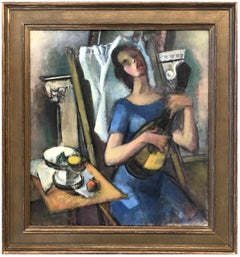
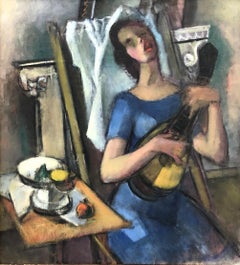
Woman with a Guitar, Cubism

Woman with a Guitar, Cubism

By Simka Simkhovitch

Located in New York, NY

A period work by a Russian artist working in a Cubist approach. The canvas is 24 1/4 x 22 1/4 inches and the above dimension is the framed size. The frame is an older frame, with a flat gold/brown finish. In Woman with Guitar, Simkhovitch plays on his his early fascination with Cubism and Constructivism (and his background in illustration) expressing and compressing with planes and color the spatiality of a domestic scene. Considered a master draftsman and an adherent of certain classicism, Simkhovitch’s compositions are often built up in a complicated but well-managed counterpoint, at heart, he is a romanticist preferring the dreamy colors of a Russian fairy tale.

Category

1940s Synthetic Cubist Simka Simkhovitch Art

Materials

Oil

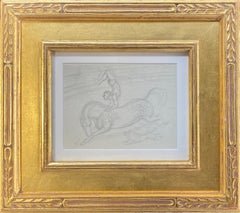
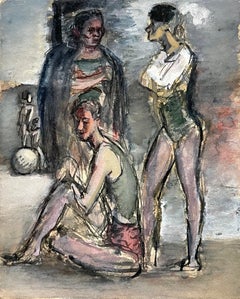
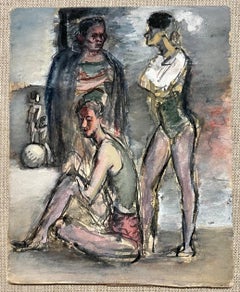
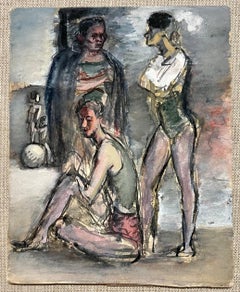
Circus Rider, Acrobat

Circus Rider, Acrobat

By Simka Simkhovitch

Located in New York, NY

Simkhovitch was a celebrated artist in New York City from the 1920's through the 1940's. Life Magazine did a story on him and he was having great success in the New York Galleries. ...

Category

1920s American Realist Simka Simkhovitch Art

Materials

Paper, Graphite

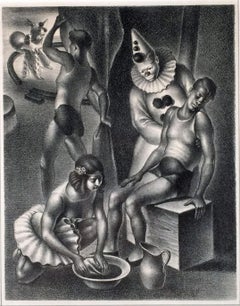
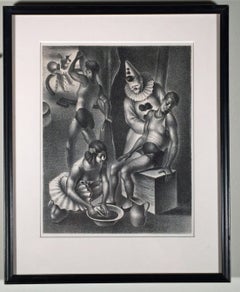
CIRCUS PERFORMERS
CIRCUS PERFORMERS

CIRCUS PERFORMERS

By Simka Simkhovitch

Located in Portland, ME

Simkhovich, Simka. CIRCUS PERFORMERS. Lithograph, C. 1933. Edition size not known. Unsigned. 11 x 8 1/4 inches, 278 x 209 mm. Framed to 16 x 12 inches...

Category

1930s Simka Simkhovitch Art

Materials

Lithograph

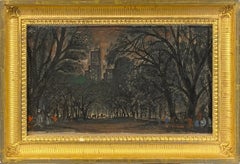
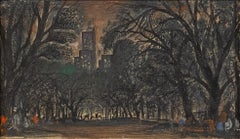
Central Park, Evening

Central Park, Evening

By Simka Simkhovitch

Located in New York, NY

Estate stamped on verso paper of backing board size 9 x 14 3/4 inches As we travel back in American art, Central Park is one of the subjects, while done - is hard to come by and very...

Category

1920s American Impressionist Simka Simkhovitch Art

Materials

Mixed Media, Board

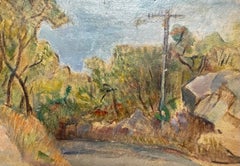
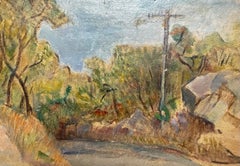
Simka Simkhovitch WPA Artist Oil Painting Gouache American Modernist Powerline

Simka Simkhovitch WPA Artist Oil Painting Gouache American Modernist Powerline

By Simka Simkhovitch

Located in Surfside, FL

Simka Simkhovitch (Russian/American 1893 - 1949) This came with a small grouping from the artist's family, some were hand signed some were not. These were studies for larger paintin...

Category

1930s American Modern Simka Simkhovitch Art

Materials

Oil, Gouache, Board

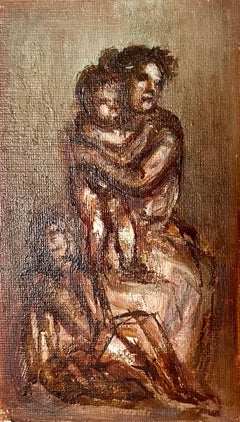
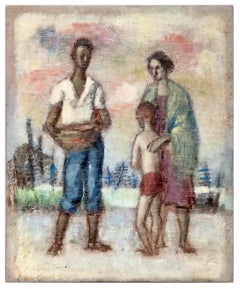
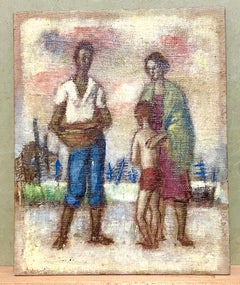
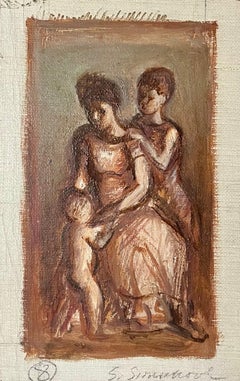
Simka Simkhovitch WPA Artist Oil Painting Family Mother, Kids American Modernist

Simka Simkhovitch WPA Artist Oil Painting Family Mother, Kids American Modernist

By Simka Simkhovitch

Located in Surfside, FL

Simka Simkhovitch (Russian/American 1893 - 1949) This came with a small grouping from the artist's family, some were hand signed some were not. These were studies for larger paintin...

Category

1930s American Modern Simka Simkhovitch Art

Materials

Oil, Board

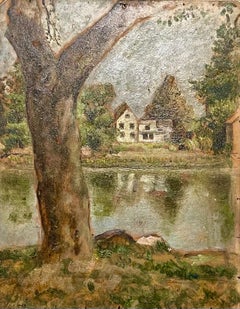
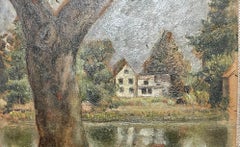
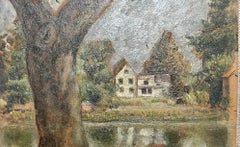
Simka Simkhovitch WPA Artist Oil Painting American Modernist Landscape Pond Tree

Simka Simkhovitch WPA Artist Oil Painting American Modernist Landscape Pond Tree

By Simka Simkhovitch

Located in Surfside, FL

Simka Simkhovitch (Russian/American 1893 - 1949) This came with a small grouping from the artist's family, some were hand signed some were not. These were studies for larger paintin...

Category

1930s American Modern Simka Simkhovitch Art

Materials

Oil, Board

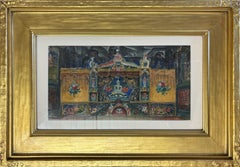
Set Design, Theater and Stage

Set Design, Theater and Stage

By Simka Simkhovitch

Located in New York, NY

This gem of a set design or theatre design was possibly done prior to the artist coming to the United States from Russia. Born in Kiev, this artist was talented and given the distin...

Category

1920s Other Art Style Simka Simkhovitch Art

Materials

Paper, Gouache

Women in the Park, Greenwich, Connecticut landscape

Women in the Park, Greenwich, Connecticut landscape

By Simka Simkhovitch

Located in New York, NY

This vintage and lovely landscape of women out in the park in Greenwich, Connecticut was done by a Russian/ American artist, very famous back in his time. Signed lower right: Simkhov...

Category

20th Century American Impressionist Simka Simkhovitch Art

Materials

Oil

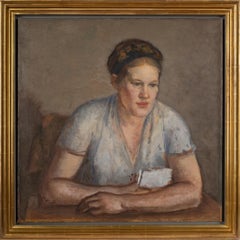
Elsa Reading a Letter

Elsa Reading a Letter

By Simka Simkhovitch

Located in New York, NY

A marvelous and affecting depiction of "Elsa" the artist's wife at the kitchen table with an object not yet decided in her hand. It could be a coffee cup, a glass or a letter that t...

Category

1940s American Realist Simka Simkhovitch Art

Materials

Canvas, Oil

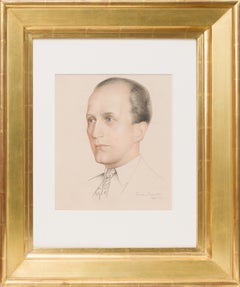
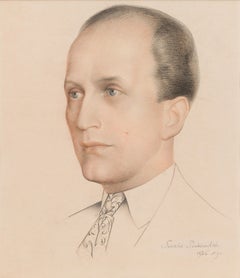
Head of a Gentleman sketch, mid modern

Head of a Gentleman sketch, mid modern

By Simka Simkhovitch

Located in New York, NY

A superbly executed work, this work would have been done for reproduction in a book or magazine. Simkhovitch received quite a number of illustration jobs and could adapt his style t...

Category

Early 20th Century American Realist Simka Simkhovitch Art

Materials

Paper, Watercolor

Related Items
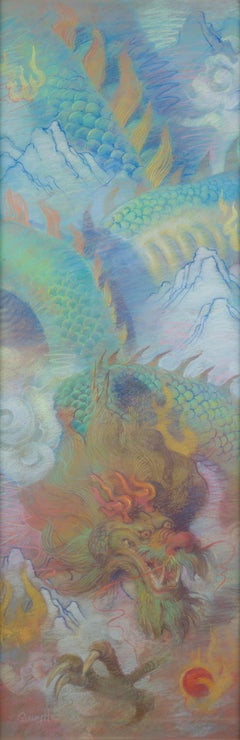
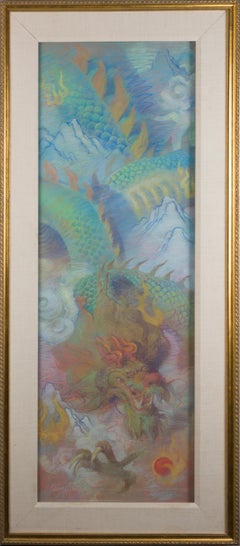
"Dragon, " Original Pastel Drawing

"Dragon, " Original Pastel Drawing

By Quang Ho

Located in Denver, CO

"Dragon," by Quang Ho, is a secondary market work with one previous owner. It is signed and dated (1988) on the lower left. The painting comes with it's original frame (measures 50 x...

Category

20th Century American Realist Simka Simkhovitch Art

Materials

Paper, Pastel

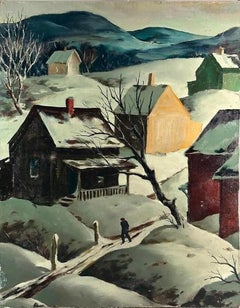
Henry Gasser American Scene Realism Regionalism Mid-20th Century Modern WPA

Henry Gasser American Scene Realism Regionalism Mid-20th Century Modern WPA

Located in New York, NY

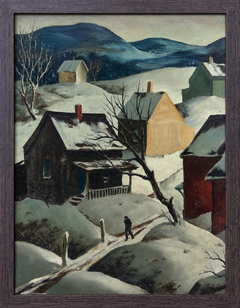
Henry Gasser American Scene Realism Regionalism Mid-20th Century Modern WPA Henry Martin Gasser (1909-1981) "Village in Snow" Oil on canvas laid on artist's board, c. 1930s 28 x 22...

Category

1930s American Modern Simka Simkhovitch Art

Materials

Canvas, Oil, Board

Mid Century California Mission Landscape

Mid Century California Mission Landscape

$600Sale Price|20% Off

H 18.5 in W 25 in D 1 in

Mid Century California Mission Landscape

Located in Soquel, CA

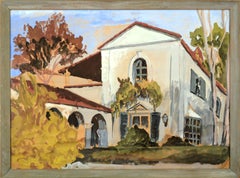
Beautiful mid century landscape of a historic California mission, highlighting its iconic architectural details such as a columned arches, white was...

Category

Mid-20th Century American Impressionist Simka Simkhovitch Art

Materials

Paper, Gouache, Cardboard

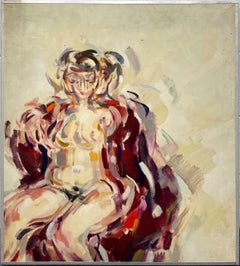
A Radiant 1950s Mid-Century Modern Studio Portrait of a Seated Female Nude Model

A Radiant 1950s Mid-Century Modern Studio Portrait of a Seated Female Nude Model

By Rudolph Pen

Located in Chicago, IL

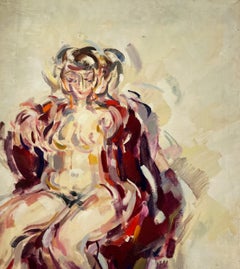
A Radiant, 1950s Mid-Century Modern Studio Portrait of a Seated Female Nude Model. Painted in a sensuous color palette of wonderfully expressive reds and cool creams, the painting e...

Category

Mid-20th Century American Modern Simka Simkhovitch Art

Materials

Canvas, Oil

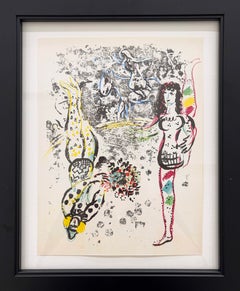
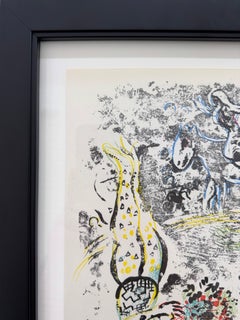
Acrobats, circa 1969 — Marc Chagall, Color Lithograph

Acrobats, circa 1969 — Marc Chagall, Color Lithograph

By Marc Chagall

Located in Santa Monica, CA

Acrobats, circa 1969, by Marc Chagall. Lithograph in color on Velin paper, from an edition of 2,000. Artwork dimensions: 12.5 × 9.5 inches (31.75 × 24.13 cm). Framed dimensions: 16.7...

Category

15th Century and Earlier Simka Simkhovitch Art

Materials

Archival Paper, Lithograph

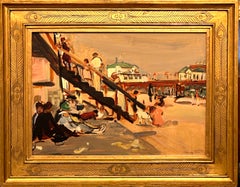
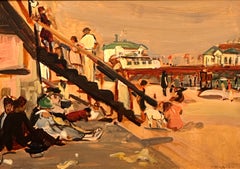
Theresa Bernstein, American Modernist, "Coney Island", Foster Bros period frame

Theresa Bernstein, American Modernist, "Coney Island", Foster Bros period frame

By Theresa Bernstein

Located in Rockport, MA

Painting size without frame: 15"x20 1/2" Painting size with frame: 21"x26 1/2" Period Foster Brothers Frame Painting is signed lower right. A lively boardwalk scene by Theresa Ber...

Category

Early 20th Century American Modern Simka Simkhovitch Art

Materials

Oil, Board

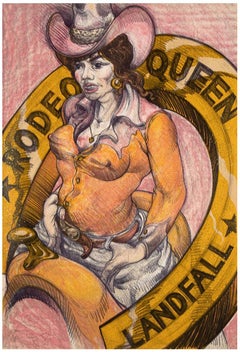
Rodeo Queen by Luis Jimenez

Rodeo Queen by Luis Jimenez

By Luis Alfonso Jimenez

Located in Phoenix, AZ

Rodeo Queen, 1981 Edition 36/50 Signed lower left, Inscribed: for the "Rose" 82. Provenance: Print was a gift to Rozanne Charington, companion and model for "Rodeo Queen", "Rose Tattoo" and "Jimenez at Adeliza's Candy Store". Lithograph on paper 42 ½ × 29 in. (107.3 × 73.7 cm) Luis Alfonso Jimenez Born, 1940, El Paso, Texas, died 2006, Hondo, New Mexico. Statement: Luis Jimenez, in his work, celebrates the vitality of life. . . . Jimenez es un hijo de la frontera; he knows its people and the landscape. It is the transformation of these people into art that is his most important contribution to the art of this vast region which stretches between Mexico and the United States. His subject matter utilizes the popular images of the cultura del norte, and a large part of it is depicted and transformed in the rough and tumble world of la frontera. He is also a son of el norte, and so he uses its materials and explores its emerging, popular myths. The tension and attraction of Jimnez’s work is that he always creates within the space of his two worlds, the Mexicano and the Americano. He constantly shows us the irony of the two forces which repel, while showing us glimpses of the synthesis he seeks. What a gift it has been to us for this talented artist to reflect on the soul of our region. He gives meaning to our existence and history. Rudolfo Anaya (passage chosen by the artist), A View from La Frontera, Man on Fire: Luis Jimenez, pp. 1, 3, 6Biography: Luis Jimenez was born in Texas to parents who had emigrated from Mexico to the United States; he would later dedicate his 1989 sculpture Border Crossing to his father, who had entered the country illegally. The elder Jimenez was a neon sign designer in El Paso, and Luis worked with him as a youth. His experience working in the neon shop and his fascination with U.S. car culture would both become major influences on his art career. Jimenez studied architecture at the University of Texas, Austin (UTA), and also took art courses in which he first created sculptures with wood, steel, and fiberglass, choosing the latter because of its association with U.S. popular culture. He subsequently became one of the artists who made fiberglass an acceptable medium in the 1960s. In 1964 Jimenez received his B.S. in art from UTA, and he continued his studies at the Universidad Nacional Autonoma de Mexico in Mexico City. In 1966 he moved to New York City and worked as an assistant to sculptor Seymour Lipton. Jimenez began to exhibit his art while in New York and in 1972 moved to New Mexico to focus on creating public sculptures, even as he maintained his diverse output of drawings, prints, and lithographs. Drawing on his early experiences, Jimenez creates works that come from a border perspective, one that draws upon the hybridity bred by culture clashes. Often socially and politically informed, his works speak not only in regional terms, those germane to the southwestern United States, but to broader, more global issues as well. They exhibit a profoundly Chicano aesthetic and sensibility, one that is informed by Mexican and Mexican American traditions, North American popular culture, Chicano cultural icons, and images and themes unique to the Southwest. Death, sexuality, and the struggle of the common people are frequent themes. Inspired by authors who write in an autobiographical style, Jimenez creates works that function as personal narrative yet are also able to make statements about culture in more global terms. His use of bold colors and lines, a legacy from his fathers work as a neon sign maker, lends a dynamic sensuality to his work, one that is particularly evident in his monumental fiberglass and acrylic urethane sculptural works Many of Jimenez's works correspond to scholar Toms Ybarra-Fraustos definition of the Chicano aesthetic of rasquachismo, a lowbrow sensibility that appeals to the working class in that it applies to objects that subvert expressions of the mainstream or dominant culture. Creating art that speaks to the people, Jimenez is able to transform regional and culturally specific myths and symbols into globally recognized and relevant icons. Exhibitions: In addition to his personal work, Jimenez has been commissioned for numerous public art projects. In 1999 his sculpture Southwest Piet was designated a National Treasure by First Lady Hillary Clinton. The many exhibitions featuring his work have included Human Concern/Personal Torment (Whitney Museum of American Art, New York, 1969). The First International Motorcycle Art Show (Phoenix Art Museum, Phoenix, AZ, 1973). Three Texas Artists (Centre Cultural Americaine, USIS, Paris, 1977), Recent Trends in Collecting (Smithsonian Institution, Washington, DC, 1982). Committed to Print (Museum of Modern Art, New York, 1989) Printmaking in Texas: The 1980s (Modern Art Museum, Fort Worth, TX. Laguna Gloria Art Museum, Austin, 1990. The Whitney Biennial (Whitney Museum of American Art, New York, 1991) Man On Fire: Luis Jimnez (Albuquerque Museum of Art, NM, 1994-95). 47th Annual Purchase Exhibition (American Academy of Arts and Letters, New York, 1995). Traveling solo exhibition, Working Class Heroes: Images from the Popular Culture (1997-2000). Jiménez Collier Gallery has been in continuous operation for over 40 years. Originally located just off Main Street in downtown Scottsdale, Arizona, we have moved to Phoenix to accommodate and showcase our large inventory including: • Original works by Maynard Dixon, Lon Megargee, Ed Mell, Fritz Scholder, Bill Schenck, Bill Lesch, Luis Jimenez, Greg Singley, Dan Budnik, and other 20th century Western, WPA and Contemporary Southwestern artists. • The Fine Art Estate of Lon Megargee • Vintage rodeo...

Category

1980s Contemporary Simka Simkhovitch Art
Materials

Lithograph

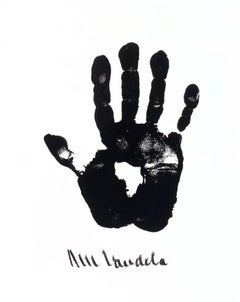
Hand of Africa - Mandela, Former South African President, Signed Artwork, Hand

Hand of Africa - Mandela, Former South African President, Signed Artwork, Hand

By Nelson Mandela

Located in Knowle Lane, Cranleigh

Nelson Mandela, Hand of Africa, Signed Limited Edition Lithograph Many people are unaware that Nelson Mandela turned his hand to art in his 80's as a way of leaving a legacy for his ...

Category

Early 2000s Contemporary Simka Simkhovitch Art
Materials

Lithograph

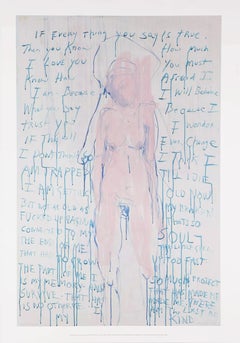
I Am The Last Of My Kind

I Am The Last Of My Kind

By Tracey Emin

Located in London, GB

Published by the Royal Academy

Category

2010s Contemporary Simka Simkhovitch Art
Materials

Lithograph, Offset

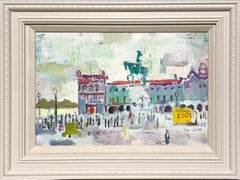
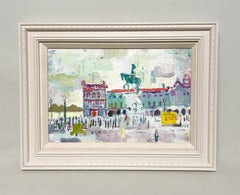
A Charming 1950s Painting of Lisbon, Portugal by Famed Artist Francis Chapin

A Charming 1950s Painting of Lisbon, Portugal by Famed Artist Francis Chapin

By Francis Chapin

Located in Chicago, IL

A Charming, 1950s Painting of Lisbon, Portugal by Famed Chicago Modern Artist Francis Chapin (Am. 1899-1965). Depicting a bustling, colorful view of Lisbon's historic Black Horse Sq...

Category

Mid-20th Century American Modern Simka Simkhovitch Art
Materials

Oil, Canvas, Board

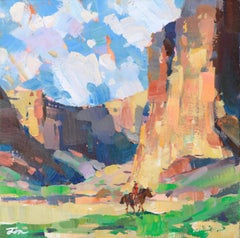
Cowboy in the Canyon, Small Contemporary Multicolor Abstract Figural Landscape

Cowboy in the Canyon, Small Contemporary Multicolor Abstract Figural Landscape

By Tiffanie Mang

Located in Soquel, CA

Small-scale yet bold multi-colored abstracted figurative landscape of a horse rider in a canyon (a study after Edgar Payne’s works) by Tiffanie Mang (Ameri...

Category

2010s American Impressionist Simka Simkhovitch Art
Materials

Gouache, Cardboard

Previously Available Items
Simka Simkhovitch WPA Artist Painting Gouache American Modernist Beach Scene

Simka Simkhovitch WPA Artist Painting Gouache American Modernist Beach Scene

By Simka Simkhovitch

Located in Surfside, FL

Simka Simkhovitch (Russian/American 1893 - 1949) This came with a small grouping from the artist's family, some were hand signed some were not. These were studies for larger paintin...

Category

1930s American Modern Simka Simkhovitch Art
Materials

Gouache, Board

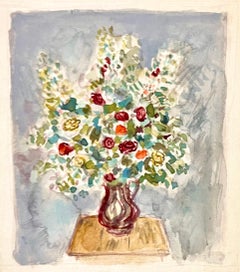
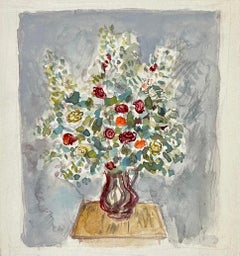
Simka Simkhovitch WPA W/C Painting Gouache American Modernist Bouquet of Flowers

Simka Simkhovitch WPA W/C Painting Gouache American Modernist Bouquet of Flowers

By Simka Simkhovitch

Located in Surfside, FL

Simka Simkhovitch (Russian/American 1893 - 1949) This came with a small grouping from the artist's family, some were hand signed some were not. These were studies for larger paintings. This is a miniature watercolor and gouache vibrant, colorful bouquet of flowers in a vase. Simka Simkhovitch (Симха Файбусович Симхович) (aka Simka Faibusovich Simkhovich) (Novozybkov, Russia May 21, 1885 O.S./June 2, 1885 N.S.—Greenwich, Connecticut February 25, 1949) was a Ukrainian-Russian Jewish artist and immigrant to the United States. He painted theater scenery in his early career and then had several showings in galleries in New York City. Winning Works Progress Administration (WPA) commissions in the 1930s, he completed murals for the post offices in Jackson, Mississippi and Beaufort, North Carolina. His works are in the permanent collections of the Dallas Museum of Art, the National Museum of American Art and the Whitney Museum of American Art. Born outside Kyiv (Petrograd Ukraine) into a Jewish family who owned a small department store. During a severe case of measles when he was seven, Simcha Simchovitch sketched the views outside his window and decided to become an artist, over his father's objections. Beginning in 1905, he studied at the Grekov Odessa Art School and upon completion of his studies in 1911 received a recommendation to be admitted to the Imperial Academy of Arts. Though he enrolled to begin classes in architecture, painting, and sculpture at the Imperial Academy, he was dropped from the school roster in December because of the quota on the number of Jewish students and drafted into the army. Simchovitch served as a private in the 175th Infantry Regiment Baturyn [ru] until his demobilization in 1912. Re-enrolling in the Imperial Academy, he audited classes. Simka Simkhovitch exhibited paintings and sculptures in 1918 as part of an exhibition of Jewish artists and in 1919 placed 1st in the competition "The Great Russian Revolution" with a painting called "Russian Revolution" which was hung in the State Museum of Revolution. In 1922, Simkha Simkhovitch exhibited at the International Book Fair in Florence (Italian: Fiera Internazionale del Libro di Firenze). In 1924, Simkhovitch came to the United States to make illustrations for Soviet textbooks and decided to immigrate instead. Initially he supported himself by doing commercial art and a few portrait commissions. In 1927, he was hired to paint a screen for a scene in the play "The Command to Love" by Fritz Gottwald and Rudolph Lothar which was playing at the Longacre Theatre on Broadway. Art dealers began clamoring for the screen and Simkhovitch began a career as a screen painter for the theater. Catching the attention of the screenwriter, Ernest Pascal, he worked as an illustrator for Pascal, who then introduced him to gallery owner, Marie Sterner. Simkhovitch's works appeared at the Marie Sterner Gallery beginning with a 1927 exhibit and were repeated the following year. Simkhovitch had an exhibit in 1929 at Sterner's on circus paintings. In 1931, he held a showing of works at the Helen Hackett Gallery, in New York City and later that same year he was one of the featured artists of a special exhibit in San Francisco at the California Palace of the Legion of Honor in Lincoln Park. The exhibit was coordinated by Marie Sterner and included four watercolors, including one titled "Nudes". He is of the generation of Russian Soviet artists such as Isaac Pailes, Serge Charchoune, Marc Chagall, Chana Orloff, Isaac Ilyich Levitan, and Ossip Zadkine. In 1936, Simkhovitch was selected to complete the mural for the WPA Post office project in Jackson, Mississippi. The mural was hung in the post office and courthouse in 1938 depicted a plantation theme. Painted on the wall behind the judge’s bench, “Pursuits of Life in Mississippi”, a depiction of black workers engaged in manual labor amid scenes of white professionals and socialites, was eventually covered over in later years during renovations due to its stereotypical African American imagery. Simka painted what he thought was typical of Jackson. His impression of pre-civil rights Mississippi was evidently Greek Revival column houses, weeping willow trees, working class families, and the oppression of African Americans. He painted African American men picking cotton, while a white man took account of the harvest and a white judge advised a white family, calling it Pursuits of Life in Mississippi. Though clearly endorsed by the government and initially generally well-received, the mural soon raised concerns with locals as the climate toward racial segregation began to change. The main concern was whether depictions that show African Americans in subjugated societal roles should be featured in a courtroom. The following year, his painting "Holiday" won praise at an exhibition in Lincoln, Nebraska. In 1940, Simkhovitch's second WPA post office project was completed when four murals, "The Cape Lookout Lighthouse and the Orville W. Mail Boat", "The Wreck of the Crissie Wright", "Sand Ponies" and "Canada Geese" were installed in Beaufort, North Carolina. The works were commissioned in 1938 and did not generate the controversy that the Jackson mural had. The main mural is "The Wreck of the Crissie Wright" and depicts a shipwreck which had occurred in Beaufort in 1866. "The Cape Lookout Lighthouse and the Orville W. Mail Boat" depicted the lighthouse built in 1859 and the mail boat that was running mail during the time which Simkhovitch was there. The boat ran mail for the area until 1957. "Sand Ponies" shows the wild horses common to the North Carolina barrier islands and "Canada Geese" showed the importance of hunting and fishing in the area. All four murals were restored in the 1990s by Elisabeth Speight, daughter of two other WPA muralists, Francis Speight...

Category

1930s American Modern Simka Simkhovitch Art
Materials

Watercolor, Gouache, Board

Simka Simkhovitch WPA W/C Painting Gouache American Modernist Beach Scene Nude

Simka Simkhovitch WPA W/C Painting Gouache American Modernist Beach Scene Nude

By Simka Simkhovitch

Located in Surfside, FL

Simka Simkhovitch (Russian/American 1893 - 1949) This came with a small grouping from the artist's family, some were hand signed some were not. These were studies for larger paintings. This is a watercolor and gouache beach scene three young men bathing...

Category

1930s American Modern Simka Simkhovitch Art
Materials

Gouache, Board, Watercolor

Simka Simkhovitch WPA Artist Painting Gouache American Modernist Beach Scene

Simka Simkhovitch WPA Artist Painting Gouache American Modernist Beach Scene

By Simka Simkhovitch

Located in Surfside, FL

Simka Simkhovitch (Russian/American 1893 - 1949) This came with a small grouping from the artist's family, some were hand signed some were not. These were studies for larger paintings. Simka Simkhovitch (Симха Файбусович Симхович) (aka Simka Faibusovich Simkhovich) (Novozybkov, Russia May 21, 1885 O.S./June 2, 1885 N.S.—Greenwich, Connecticut February 25, 1949) was a Ukrainian-Russian Jewish artist and immigrant to the United States. He painted theater scenery in his early career and then had several showings in galleries in New York City. Winning Works Progress Administration (WPA) commissions in the 1930s, he completed murals for the post offices in Jackson, Mississippi and Beaufort, North Carolina. His works are in the permanent collections of the Dallas Museum of Art, the National Museum of American Art and the Whitney Museum of American Art. Born outside Kyiv (Petrograd Ukraine) into a Jewish family who owned a small department store. During a severe case of measles when he was seven, Simcha Simchovitch sketched the views outside his window and decided to become an artist, over his father's objections. Beginning in 1905, he studied at the Grekov Odessa Art School and upon completion of his studies in 1911 received a recommendation to be admitted to the Imperial Academy of Arts. Though he enrolled to begin classes in architecture, painting, and sculpture at the Imperial Academy, he was dropped from the school roster in December because of the quota on the number of Jewish students and drafted into the army. Simchovitch served as a private in the 175th Infantry Regiment Baturyn [ru] until his demobilization in 1912. Re-enrolling in the Imperial Academy, he audited classes. Simka Simkhovitch exhibited paintings and sculptures in 1918 as part of an exhibition of Jewish artists and in 1919 placed 1st in the competition "The Great Russian Revolution" with a painting called "Russian Revolution" which was hung in the State Museum of Revolution. In 1922, Simkha Simkhovitch exhibited at the International Book Fair in Florence (Italian: Fiera Internazionale del Libro di Firenze). In 1924, Simkhovitch came to the United States to make illustrations for Soviet textbooks and decided to immigrate instead. Initially he supported himself by doing commercial art and a few portrait commissions. In 1927, he was hired to paint a screen for a scene in the play "The Command to Love" by Fritz Gottwald and Rudolph Lothar which was playing at the Longacre Theatre on Broadway. Art dealers began clamoring for the screen and Simkhovitch began a career as a screen painter for the theater. Catching the attention of the screenwriter, Ernest Pascal, he worked as an illustrator for Pascal, who then introduced him to gallery owner, Marie Sterner. Simkhovitch's works appeared at the Marie Sterner Gallery beginning with a 1927 exhibit and were repeated the following year. Simkhovitch had an exhibit in 1929 at Sterner's on circus paintings. In 1931, he held a showing of works at the Helen Hackett Gallery, in New York City and later that same year he was one of the featured artists of a special exhibit in San Francisco at the California Palace of the Legion of Honor in Lincoln Park. The exhibit was coordinated by Marie Sterner and included four watercolors, including one titled "Nudes". He is of the generation of Russian Soviet artists such as Isaac Pailes, Serge Charchoune, Marc Chagall, Chana Orloff, Isaac Ilyich Levitan, and Ossip Zadkine. In 1936, Simkhovitch was selected to complete the mural for the WPA Post office project in Jackson, Mississippi. The mural was hung in the post office and courthouse in 1938 depicted a plantation theme. Painted on the wall behind the judge’s bench, “Pursuits of Life in Mississippi”, a depiction of black workers engaged in manual labor amid scenes of white professionals and socialites, was eventually covered over in later years during renovations due to its stereotypical African American imagery. Simka painted what he thought was typical of Jackson. His impression of pre-civil rights Mississippi was evidently Greek Revival column houses, weeping willow trees, working class families, and the oppression of African Americans. He painted African American men picking cotton, while a white man took account of the harvest and a white judge advised a white family, calling it Pursuits of Life in Mississippi. Though clearly endorsed by the government and initially generally well-received, the mural soon raised concerns with locals as the climate toward racial segregation began to change. The main concern was whether depictions that show African Americans in subjugated societal roles should be featured in a courtroom. The following year, his painting "Holiday" won praise at an exhibition in Lincoln, Nebraska. In 1940, Simkhovitch's second WPA post office project was completed when four murals, "The Cape Lookout Lighthouse and the Orville W. Mail Boat", "The Wreck of the Crissie Wright", "Sand Ponies" and "Canada Geese" were installed in Beaufort, North Carolina. The works were commissioned in 1938 and did not generate the controversy that the Jackson mural had. The main mural is "The Wreck of the Crissie Wright" and depicts a shipwreck which had occurred in Beaufort in 1866. "The Cape Lookout Lighthouse and the Orville W. Mail Boat" depicted the lighthouse built in 1859 and the mail boat that was running mail during the time which Simkhovitch was there. The boat ran mail for the area until 1957. "Sand Ponies" shows the wild horses common to the North Carolina barrier islands and "Canada Geese" showed the importance of hunting and fishing in the area. All four murals were restored in the 1990s by Elisabeth Speight, daughter of two other WPA muralists, Francis Speight...

Category

1930s American Modern Simka Simkhovitch Art
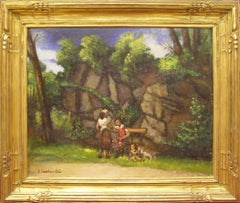
Materials

Gouache, Board

Simka Simkhovitch WPA Artist Oil Painting Gouache American Modernist Powerline

Simka Simkhovitch WPA Artist Oil Painting Gouache American Modernist Powerline

By Simka Simkhovitch

Located in Surfside, FL

Simka Simkhovitch (Russian/American 1893 - 1949) This came with a small grouping from the artist's family, some were hand signed some were not. These were studies for larger paintings. Simka Simkhovitch (Симха Файбусович Симхович) (aka Simka Faibusovich Simkhovich) (Novozybkov, Russia May 21, 1885 O.S./June 2, 1885 N.S.—Greenwich, Connecticut February 25, 1949) was a Ukrainian-Russian Jewish artist and immigrant to the United States. He painted theater scenery in his early career and then had several showings in galleries in New York City. Winning Works Progress Administration (WPA) commissions in the 1930s, he completed murals for the post offices in Jackson, Mississippi and Beaufort, North Carolina. His works are in the permanent collections of the Dallas Museum of Art, the National Museum of American Art and the Whitney Museum of American Art. Born outside Kyiv (Petrograd Ukraine) into a Jewish family who owned a small department store. During a severe case of measles when he was seven, Simcha Simchovitch sketched the views outside his window and decided to become an artist, over his father's objections. Beginning in 1905, he studied at the Grekov Odessa Art School and upon completion of his studies in 1911 received a recommendation to be admitted to the Imperial Academy of Arts. Though he enrolled to begin classes in architecture, painting, and sculpture at the Imperial Academy, he was dropped from the school roster in December because of the quota on the number of Jewish students and drafted into the army. Simchovitch served as a private in the 175th Infantry Regiment Baturyn [ru] until his demobilization in 1912. Re-enrolling in the Imperial Academy, he audited classes. Simka Simkhovitch exhibited paintings and sculptures in 1918 as part of an exhibition of Jewish artists and in 1919 placed 1st in the competition "The Great Russian Revolution" with a painting called "Russian Revolution" which was hung in the State Museum of Revolution. In 1922, Simkha Simkhovitch exhibited at the International Book Fair in Florence (Italian: Fiera Internazionale del Libro di Firenze). In 1924, Simkhovitch came to the United States to make illustrations for Soviet textbooks and decided to immigrate instead. Initially he supported himself by doing commercial art and a few portrait commissions. In 1927, he was hired to paint a screen for a scene in the play "The Command to Love" by Fritz Gottwald and Rudolph Lothar which was playing at the Longacre Theatre on Broadway. Art dealers began clamoring for the screen and Simkhovitch began a career as a screen painter for the theater. Catching the attention of the screenwriter, Ernest Pascal, he worked as an illustrator for Pascal, who then introduced him to gallery owner, Marie Sterner. Simkhovitch's works appeared at the Marie Sterner Gallery beginning with a 1927 exhibit and were repeated the following year. Simkhovitch had an exhibit in 1929 at Sterner's on circus paintings. In 1931, he held a showing of works at the Helen Hackett Gallery, in New York City and later that same year he was one of the featured artists of a special exhibit in San Francisco at the California Palace of the Legion of Honor in Lincoln Park. The exhibit was coordinated by Marie Sterner and included four watercolors, including one titled "Nudes". He is of the generation of Russian Soviet artists such as Isaac Pailes, Serge Charchoune, Marc Chagall, Chana Orloff, Isaac Ilyich Levitan, and Ossip Zadkine. In 1936, Simkhovitch was selected to complete the mural for the WPA Post office project in Jackson, Mississippi. The mural was hung in the post office and courthouse in 1938 depicted a plantation theme. Painted on the wall behind the judge’s bench, “Pursuits of Life in Mississippi”, a depiction of black workers engaged in manual labor amid scenes of white professionals and socialites, was eventually covered over in later years during renovations due to its stereotypical African American imagery. Simka painted what he thought was typical of Jackson. His impression of pre-civil rights Mississippi was evidently Greek Revival column houses, weeping willow trees, working class families, and the oppression of African Americans. He painted African American men picking cotton, while a white man took account of the harvest and a white judge advised a white family, calling it Pursuits of Life in Mississippi. Though clearly endorsed by the government and initially generally well-received, the mural soon raised concerns with locals as the climate toward racial segregation began to change. The main concern was whether depictions that show African Americans in subjugated societal roles should be featured in a courtroom. The following year, his painting "Holiday" won praise at an exhibition in Lincoln, Nebraska. In 1940, Simkhovitch's second WPA post office project was completed when four murals, "The Cape Lookout Lighthouse and the Orville W. Mail Boat", "The Wreck of the Crissie Wright", "Sand Ponies" and "Canada Geese" were installed in Beaufort, North Carolina. The works were commissioned in 1938 and did not generate the controversy that the Jackson mural had. The main mural is "The Wreck of the Crissie Wright" and depicts a shipwreck which had occurred in Beaufort in 1866. "The Cape Lookout Lighthouse and the Orville W. Mail Boat" depicted the lighthouse built in 1859 and the mail boat that was running mail during the time which Simkhovitch was there. The boat ran mail for the area until 1957. "Sand Ponies" shows the wild horses common to the North Carolina barrier islands and "Canada Geese" showed the importance of hunting and fishing in the area. All four murals were restored in the 1990s by Elisabeth Speight, daughter of two other WPA muralists, Francis Speight...

Category

1930s American Modern Simka Simkhovitch Art
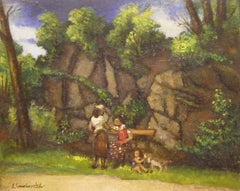
Materials

Oil, Board, Gouache

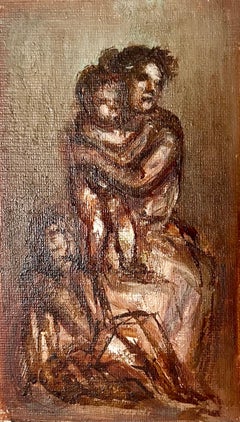
Simka Simkhovitch WPA Artist Oil Painting Family Mother, Kids American Modernist

Simka Simkhovitch WPA Artist Oil Painting Family Mother, Kids American Modernist

By Simka Simkhovitch

Located in Surfside, FL

Simka Simkhovitch (Russian/American 1893 - 1949) This came with a small grouping from the artist's family, some were hand signed some were not. These were studies for larger paintings. Simka Simkhovitch (Симха Файбусович Симхович) (aka Simka Faibusovich Simkhovich) (Novozybkov, Russia May 21, 1885 O.S./June 2, 1885 N.S.—Greenwich, Connecticut February 25, 1949) was a Ukrainian-Russian Jewish artist and immigrant to the United States. He painted theater scenery in his early career and then had several showings in galleries in New York City. Winning Works Progress Administration (WPA) commissions in the 1930s, he completed murals for the post offices in Jackson, Mississippi and Beaufort, North Carolina. His works are in the permanent collections of the Dallas Museum of Art, the National Museum of American Art and the Whitney Museum of American Art. Born outside Kyiv (Petrograd Ukraine) into a Jewish family who owned a small department store. During a severe case of measles when he was seven, Simcha Simchovitch sketched the views outside his window and decided to become an artist, over his father's objections. Beginning in 1905, he studied at the Grekov Odessa Art School and upon completion of his studies in 1911 received a recommendation to be admitted to the Imperial Academy of Arts. Though he enrolled to begin classes in architecture, painting, and sculpture at the Imperial Academy, he was dropped from the school roster in December because of the quota on the number of Jewish students and drafted into the army. Simchovitch served as a private in the 175th Infantry Regiment Baturyn [ru] until his demobilization in 1912. Re-enrolling in the Imperial Academy, he audited classes. Simka Simkhovitch exhibited paintings and sculptures in 1918 as part of an exhibition of Jewish artists and in 1919 placed 1st in the competition "The Great Russian Revolution" with a painting called "Russian Revolution" which was hung in the State Museum of Revolution. In 1922, Simkha Simkhovitch exhibited at the International Book Fair in Florence (Italian: Fiera Internazionale del Libro di Firenze). In 1924, Simkhovitch came to the United States to make illustrations for Soviet textbooks and decided to immigrate instead. Initially he supported himself by doing commercial art and a few portrait commissions. In 1927, he was hired to paint a screen for a scene in the play "The Command to Love" by Fritz Gottwald and Rudolph Lothar which was playing at the Longacre Theatre on Broadway. Art dealers began clamoring for the screen and Simkhovitch began a career as a screen painter for the theater. Catching the attention of the screenwriter, Ernest Pascal, he worked as an illustrator for Pascal, who then introduced him to gallery owner, Marie Sterner. Simkhovitch's works appeared at the Marie Sterner Gallery beginning with a 1927 exhibit and were repeated the following year. Simkhovitch had an exhibit in 1929 at Sterner's on circus paintings. In 1931, he held a showing of works at the Helen Hackett Gallery, in New York City and later that same year he was one of the featured artists of a special exhibit in San Francisco at the California Palace of the Legion of Honor in Lincoln Park. The exhibit was coordinated by Marie Sterner and included four watercolors, including one titled "Nudes". He is of the generation of Russian Soviet artists such as Isaac Pailes, Serge Charchoune, Marc Chagall, Chana Orloff, Isaac Ilyich Levitan, and Ossip Zadkine. In 1936, Simkhovitch was selected to complete the mural for the WPA Post office project in Jackson, Mississippi. The mural was hung in the post office and courthouse in 1938 depicted a plantation theme. Painted on the wall behind the judge’s bench, “Pursuits of Life in Mississippi”, a depiction of black workers engaged in manual labor amid scenes of white professionals and socialites, was eventually covered over in later years during renovations due to its stereotypical African American imagery. The following year, his painting "Holiday" won praise at an exhibition in Lincoln, Nebraska. In 1940, Simkhovitch's second WPA post office project was completed when four murals, "The Cape Lookout Lighthouse and the Orville W. Mail Boat", "The Wreck of the Crissie Wright", "Sand Ponies" and "Canada Geese" were installed in Beaufort, North Carolina. The works were commissioned in 1938 and did not generate the controversy that the Jackson mural had. The main mural is "The Wreck of the Crissie Wright" and depicts a shipwreck which had occurred in Beaufort in 1866. "The Cape Lookout Lighthouse and the Orville W. Mail Boat" depicted the lighthouse built in 1859 and the mail boat that was running mail during the time which Simkhovitch was there. The boat ran mail for the area until 1957. "Sand Ponies" shows the wild horses common to the North Carolina barrier islands and "Canada Geese" showed the importance of hunting and fishing in the area. All four murals were restored in the 1990s by Elisabeth Speight, daughter of two other WPA muralists, Francis Speight...

Category

1930s American Modern Simka Simkhovitch Art
Materials

Oil, Board

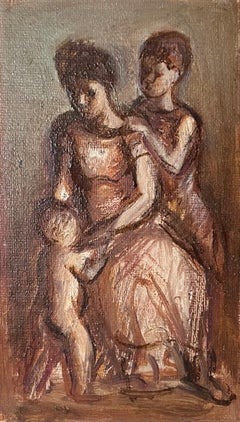
Simka Simkhovitch WPA Artist Oil Painting Family Mother, Kids American Modernist

Simka Simkhovitch WPA Artist Oil Painting Family Mother, Kids American Modernist

By Simka Simkhovitch

Located in Surfside, FL

Simka Simkhovitch (Russian/American 1893 - 1949) This came with a small grouping from the artist's family, some were hand signed some were not. These were studies for larger paintings. Simka Simkhovitch (Симха Файбусович Симхович) (aka Simka Faibusovich Simkhovich) (Novozybkov, Russia May 21, 1885 O.S./June 2, 1885 N.S.—Greenwich, Connecticut February 25, 1949) was a Ukrainian-Russian Jewish artist and immigrant to the United States. He painted theater scenery in his early career and then had several showings in galleries in New York City. Winning Works Progress Administration (WPA) commissions in the 1930s, he completed murals for the post offices in Jackson, Mississippi and Beaufort, North Carolina. His works are in the permanent collections of the Dallas Museum of Art, the National Museum of American Art and the Whitney Museum of American Art. Born outside Kyiv (Petrograd Ukraine) into a Jewish family who owned a small department store. During a severe case of measles when he was seven, Simcha Simchovitch sketched the views outside his window and decided to become an artist, over his father's objections. Beginning in 1905, he studied at the Grekov Odessa Art School and upon completion of his studies in 1911 received a recommendation to be admitted to the Imperial Academy of Arts. Though he enrolled to begin classes in architecture, painting, and sculpture at the Imperial Academy, he was dropped from the school roster in December because of the quota on the number of Jewish students and drafted into the army. Simchovitch served as a private in the 175th Infantry Regiment Baturyn [ru] until his demobilization in 1912. Re-enrolling in the Imperial Academy, he audited classes. Simka Simkhovitch exhibited paintings and sculptures in 1918 as part of an exhibition of Jewish artists and in 1919 placed 1st in the competition "The Great Russian Revolution" with a painting called "Russian Revolution" which was hung in the State Museum of Revolution. In 1922, Simkha Simkhovitch exhibited at the International Book Fair in Florence (Italian: Fiera Internazionale del Libro di Firenze). In 1924, Simkhovitch came to the United States to make illustrations for Soviet textbooks and decided to immigrate instead. Initially he supported himself by doing commercial art and a few portrait commissions. In 1927, he was hired to paint a screen for a scene in the play "The Command to Love" by Fritz Gottwald and Rudolph Lothar which was playing at the Longacre Theatre on Broadway. Art dealers began clamoring for the screen and Simkhovitch began a career as a screen painter for the theater. Catching the attention of the screenwriter, Ernest Pascal, he worked as an illustrator for Pascal, who then introduced him to gallery owner, Marie Sterner. Simkhovitch's works appeared at the Marie Sterner Gallery beginning with a 1927 exhibit and were repeated the following year. Simkhovitch had an exhibit in 1929 at Sterner's on circus paintings. In 1931, he held a showing of works at the Helen Hackett Gallery, in New York City and later that same year he was one of the featured artists of a special exhibit in San Francisco at the California Palace of the Legion of Honor in Lincoln Park. The exhibit was coordinated by Marie Sterner and included four watercolors, including one titled "Nudes". He is of the generation of Russian Soviet artists such as Isaac Pailes, Serge Charchoune, Marc Chagall, Chana Orloff, Isaac Ilyich Levitan, and Ossip Zadkine. In 1936, Simkhovitch was selected to complete the mural for the WPA Post office project in Jackson, Mississippi. The mural was hung in the post office and courthouse in 1938 depicted a plantation theme. Painted on the wall behind the judge’s bench, “Pursuits of Life in Mississippi”, a depiction of black workers engaged in manual labor amid scenes of white professionals and socialites, was eventually covered over in later years during renovations due to its stereotypical African American imagery. The following year, his painting "Holiday" won praise at an exhibition in Lincoln, Nebraska. In 1940, Simkhovitch's second WPA post office project was completed when four murals, "The Cape Lookout Lighthouse and the Orville W. Mail Boat", "The Wreck of the Crissie Wright", "Sand Ponies" and "Canada Geese" were installed in Beaufort, North Carolina. The works were commissioned in 1938 and did not generate the controversy that the Jackson mural had. The main mural is "The Wreck of the Crissie Wright" and depicts a shipwreck which had occurred in Beaufort in 1866. "The Cape Lookout Lighthouse and the Orville W. Mail Boat" depicted the lighthouse built in 1859 and the mail boat that was running mail during the time which Simkhovitch was there. The boat ran mail for the area until 1957. "Sand Ponies" shows the wild horses common to the North Carolina barrier islands and "Canada Geese" showed the importance of hunting and fishing in the area. All four murals were restored in the 1990s by Elisabeth Speight, daughter of two other WPA muralists, Francis Speight...

Category

1930s American Modern Simka Simkhovitch Art
Materials

Oil, Board

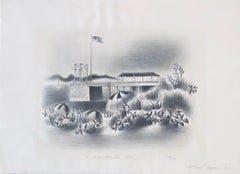
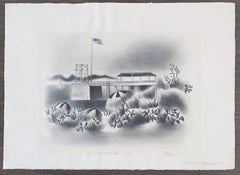
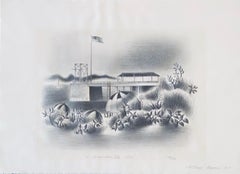
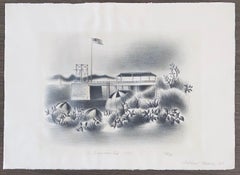
Simka Simkhovitch WPA Artist Lithograph Island Beach 1933 American Modernist

Simka Simkhovitch WPA Artist Lithograph Island Beach 1933 American Modernist

By Simka Simkhovitch

Located in Surfside, FL

Simka Simkhovitch (Russian/American 1893 - 1949) signed lithograph. Pencil signed and dated "S. Simkhovitch 1933" lower center. Title "Island Beach," in pencil lower left of sheet. Numbered "44/50" in pencil lower right. (it is either Island Beach Wisconsin or New Jersey) Simka Simkhovitch (Симха Файбусович Симхович) (aka Simka Faibusovich Simkhovich) (Novozybkov, Russia May 21, 1885 O.S./June 2, 1885 N.S.—Greenwich, Connecticut February 25, 1949) was a Ukrainian-Russian Jewish artist and immigrant to the United States. He painted theater scenery in his early career and then had several showings in galleries in New York City. Winning Works Progress Administration (WPA) commissions in the 1930s, he completed murals for the post offices in Jackson, Mississippi and Beaufort, North Carolina. His works are in the permanent collections of the Dallas Museum of Art, the National Museum of American Art and the Whitney Museum of American Art. Born outside Kyiv (Petrograd Ukraine) into a Jewish family who owned a small department store. During a severe case of measles when he was seven, Simcha Simchovitch sketched the views outside his window and decided to become an artist, over his father's objections. Beginning in 1905, he studied at the Grekov Odessa Art School and upon completion of his studies in 1911 received a recommendation to be admitted to the Imperial Academy of Arts. Though he enrolled to begin classes in architecture, painting, and sculpture at the Imperial Academy, he was dropped from the school roster in December because of the quota on the number of Jewish students and drafted into the army. Simchovitch served as a private in the 175th Infantry Regiment Baturyn [ru] until his demobilization in 1912. Re-enrolling in the Imperial Academy, he audited classes. Simka Simkhovitch exhibited paintings and sculptures in 1918 as part of an exhibition of Jewish artists and in 1919 placed 1st in the competition "The Great Russian Revolution" with a painting called "Russian Revolution" which was hung in the State Museum of Revolution. In 1922, Simkha Simkhovitch exhibited at the International Book Fair in Florence (Italian: Fiera Internazionale del Libro di Firenze). In 1924, Simkhovitch came to the United States to make illustrations for Soviet textbooks and decided to immigrate instead. Initially he supported himself by doing commercial art and a few portrait commissions. In 1927, he was hired to paint a screen for a scene in the play "The Command to Love" by Fritz Gottwald and Rudolph Lothar which was playing at the Longacre Theatre on Broadway. Art dealers began clamoring for the screen and Simkhovitch began a career as a screen painter for the theater. Catching the attention of the screenwriter, Ernest Pascal, he worked as an illustrator for Pascal, who then introduced him to gallery owner, Marie Sterner. Simkhovitch's works appeared at the Marie Sterner Gallery beginning with a 1927 exhibit and were repeated the following year. Simkhovitch had an exhibit in 1929 at Sterner's on circus paintings. In 1931, he held a showing of works at the Helen Hackett Gallery, in New York City and later that same year he was one of the featured artists of a special exhibit in San Francisco at the California Palace of the Legion of Honor in Lincoln Park. The exhibit was coordinated by Marie Sterner and included four watercolors, including one titled "Nudes". He is of the generation of Russian Soviet artists such as Isaac Pailes, Serge Charchoune, Marc Chagall, Chana Orloff, Isaac Ilyich Levitan, and Ossip Zadkine. In 1936, Simkhovitch was selected to complete the mural for the WPA Post office project in Jackson, Mississippi. The mural was hung in the post office and courthouse in 1938 depicted a plantation theme. Painted on the wall behind the judge’s bench, “Pursuits of Life in Mississippi”, a depiction of black workers engaged in manual labor amid scenes of white professionals and socialites, was eventually covered over in later years during renovations due to its stereotypical African American imagery. The following year, his painting "Holiday" won praise at an exhibition in Lincoln, Nebraska. In 1940, Simkhovitch's second WPA post office project was completed when four murals, "The Cape Lookout Lighthouse and the Orville W. Mail Boat", "The Wreck of the Crissie Wright", "Sand Ponies" and "Canada Geese" were installed in Beaufort, North Carolina. The works were commissioned in 1938 and did not generate the controversy that the Jackson mural had. The main mural is "The Wreck of the Crissie Wright" and depicts a shipwreck which had occurred in Beaufort in 1866. "The Cape Lookout Lighthouse and the Orville W. Mail Boat" depicted the lighthouse built in 1859 and the mail boat that was running mail during the time which Simkhovitch was there. The boat ran mail for the area until 1957. "Sand Ponies" shows the wild horses common to the North Carolina barrier islands and "Canada Geese" showed the importance of hunting and fishing in the area. All four murals were restored in the 1990s by Elisabeth Speight, daughter of two other WPA muralists, Francis Speight...

Category

1930s American Modern Simka Simkhovitch Art
Materials

Lithograph

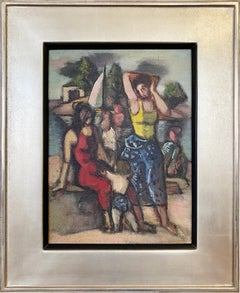
Sunday Outing, possibly Island Beach, Greenwich, CT

Sunday Outing, possibly Island Beach, Greenwich, CT

By Simka Simkhovitch

Located in New York, NY

A charming and exquisitely framed piece that is evocative of the late 1930's and early 40's in America. Simkhovitch was a regional artist and WPA muralist and he was famous for his ...

Category

1930s American Modern Simka Simkhovitch Art
Materials

Masonite, Oil

Simka Simkhovitch art for sale on 1stDibs.
Find a wide variety of authentic Simka Simkhovitch art available for sale on 1stDibs. You can also browse by medium to find art by Simka Simkhovitch in paint, board, oil paint and more. Much of the original work by this artist or collective was created during the 20th century and is mostly associated with the modern style. Not every interior allows for large Simka Simkhovitch art, so small editions measuring 5 inches across are available. Customers who are interested in this artist might also find the work of Francesco Spicuzza, Virginia Dehn, and Francis Chapin. Simka Simkhovitch art prices can differ depending upon medium, time period and other attributes. On 1stDibs, the price for these items starts at $300 and tops out at $8,000, while the average work can sell for $1,200.
Artists Similar to Simka Simkhovitch