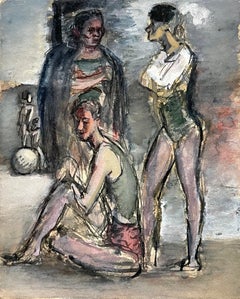
Simka Simkhovitch Paintings

Russian, American, 1893-1949
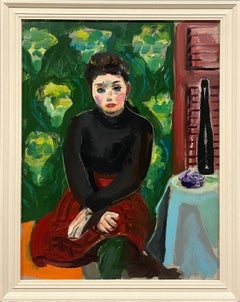
Simka Simkhovitch was born near the city of Kiev, Russia. When he was 7, he spent a year in bed with a severe case of measles. To amuse himself he used to sketch an old mill outside his window, and thus decided to become an artist. He studied at an art school in Odessa and was recommended to attend the Imperial Academy of St. Petersburg (a singular honor in Russia at the time) before the war and revolution. Swept up into the army before he could attend, his work was hung in the Museum of Revolution in Leningrad. He resumed his studies in 1914 and graduated four years later. He was sent to the United States in 1924 to do illustrations for Soviet textbooks. He quickly applied for and gained U.S. citizenship. Simkhovitch integrated with the art world immediately and galleries such as Midtown Galleries and Marie Sterner took him on as part of their stable of artists. He also was employed by the WPA and executed major mural commissions throughout the country. One of his largest commissions was the Mississippi Court House. Life magazine profiled him twice with full-length features on his life here in this country as an artist. When he died at an early age, the Whitney Museum of Art in New York offered to do a retrospective and the widow denied the possibility and simply put his works away in storage. Considered a master draftsman and an adherent of certain classicism, Simkhovitch’s compositions are often built up in a complicated but well-managed counterpoint. But at heart, he is a romanticist preferring the dreamy colors of a Russian fairy tale.
to
4
6
2
3
Overall Width
to
Overall Height
to
11
1
6
2
6
1
6
4
1
5
3
2
2
2
1
1
11
7
6
5
4
15
757
757
740
675
5
11
Artist: Simka Simkhovitch
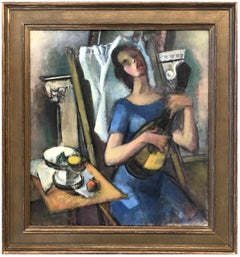
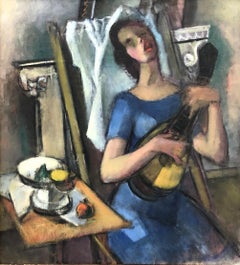
Woman with a Guitar, Cubism

Woman with a Guitar, Cubism

By Simka Simkhovitch

Located in New York, NY

A period work by a Russian artist working in a Cubist approach. The canvas is 24 1/4 x 22 1/4 inches and the above dimension is the framed size. The frame is an older frame, with a flat gold/brown finish. In Woman with Guitar, Simkhovitch plays on his his early fascination with Cubism and Constructivism (and his background in illustration) expressing and compressing with planes and color the spatiality of a domestic scene. Considered a master draftsman and an adherent of certain classicism, Simkhovitch’s compositions are often built up in a complicated but well-managed counterpoint, at heart, he is a romanticist preferring the dreamy colors of a Russian fairy tale.

Category

1940s Synthetic Cubist Simka Simkhovitch Paintings

Materials

Oil

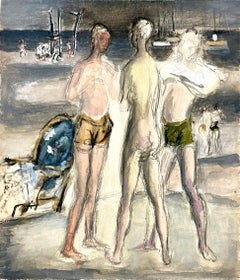
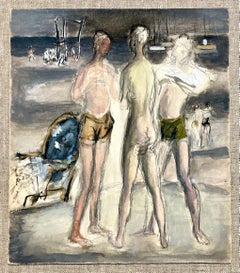
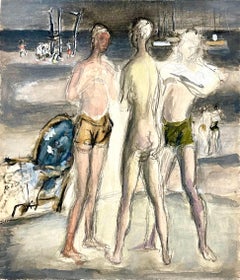
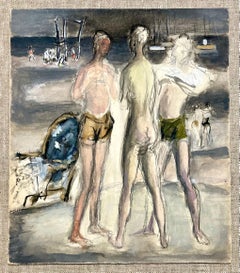
Simka Simkhovitch WPA W/C Painting Gouache American Modernist Beach Scene Nude

Simka Simkhovitch WPA W/C Painting Gouache American Modernist Beach Scene Nude

By Simka Simkhovitch

Located in Surfside, FL

Simka Simkhovitch (Russian/American 1893 - 1949) This came with a small grouping from the artist's family, some were hand signed some were not. These were studies for larger paintin...

Category

1930s American Modern Simka Simkhovitch Paintings

Materials

Watercolor, Gouache, Board
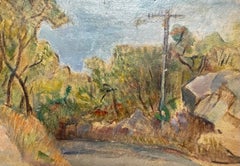
Simka Simkhovitch WPA Artist Painting Gouache American Modernist Beach Scene

Simka Simkhovitch WPA Artist Painting Gouache American Modernist Beach Scene

By Simka Simkhovitch

Located in Surfside, FL

Simka Simkhovitch (Russian/American 1893 - 1949) This came with a small grouping from the artist's family, some were hand signed some were not. These were studies for larger paintin...

Category

1930s American Modern Simka Simkhovitch Paintings

Materials

Gouache, Board

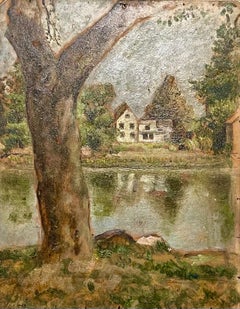
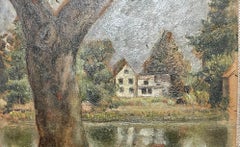
Simka Simkhovitch WPA Artist Oil Painting American Modernist Landscape Pond Tree

Simka Simkhovitch WPA Artist Oil Painting American Modernist Landscape Pond Tree

By Simka Simkhovitch

Located in Surfside, FL

Simka Simkhovitch (Russian/American 1893 - 1949) This came with a small grouping from the artist's family, some were hand signed some were not. These were studies for larger paintin...

Category

1930s American Modern Simka Simkhovitch Paintings

Materials

Oil, Board

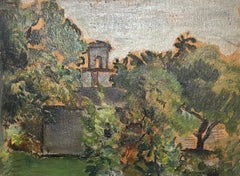
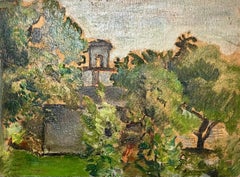
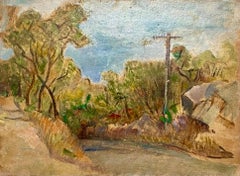
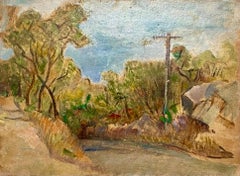
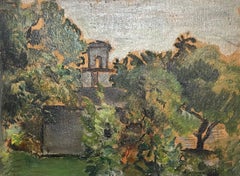
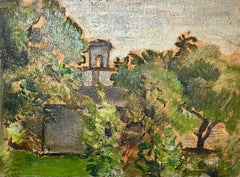
Simka Simkhovitch WPA Artist Oil Painting American Modernist Landscape w Tower

Simka Simkhovitch WPA Artist Oil Painting American Modernist Landscape w Tower

By Simka Simkhovitch

Located in Surfside, FL

Simka Simkhovitch (Russian/American 1893 - 1949) This came with a small grouping from the artist's family, some were hand signed some were not. These were studies for larger paintin...

Category

1930s American Modern Simka Simkhovitch Paintings

Materials

Oil, Board

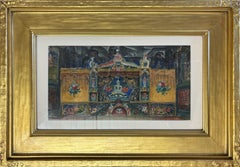
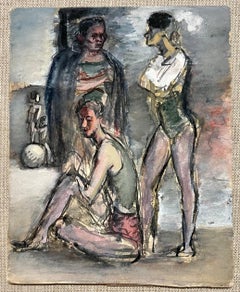
Set Design, Theater and Stage

Set Design, Theater and Stage

By Simka Simkhovitch

Located in New York, NY

This gem of a set design or theatre design was possibly done prior to the artist coming to the United States from Russia. Born in Kiev, this artist was talented and given the distin...

Category

1920s Other Art Style Simka Simkhovitch Paintings

Materials

Paper, Gouache

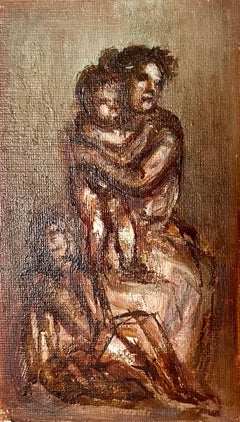
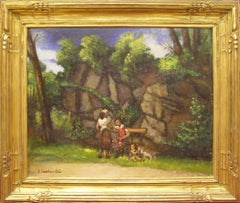
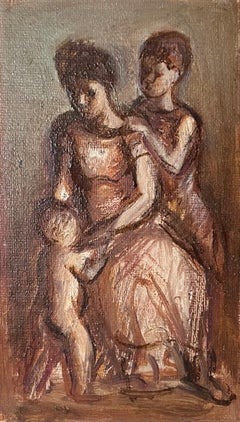
Simka Simkhovitch WPA Artist Oil Painting Family Mother, Kids American Modernist

Simka Simkhovitch WPA Artist Oil Painting Family Mother, Kids American Modernist

By Simka Simkhovitch

Located in Surfside, FL

Simka Simkhovitch (Russian/American 1893 - 1949) This came with a small grouping from the artist's family, some were hand signed some were not. These were studies for larger paintin...

Category

1930s American Modern Simka Simkhovitch Paintings

Materials

Oil, Board

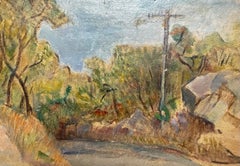
Simka Simkhovitch WPA Artist Oil Painting Gouache American Modernist Powerline

Simka Simkhovitch WPA Artist Oil Painting Gouache American Modernist Powerline

By Simka Simkhovitch

Located in Surfside, FL

Simka Simkhovitch (Russian/American 1893 - 1949) This came with a small grouping from the artist's family, some were hand signed some were not. These were studies for larger paintin...

Category

1930s American Modern Simka Simkhovitch Paintings

Materials

Oil, Gouache, Board

Elsa Reading a Letter

Elsa Reading a Letter

By Simka Simkhovitch

Located in New York, NY

A marvelous and affecting depiction of "Elsa" the artist's wife at the kitchen table with an object not yet decided in her hand. It could be a coffee cup, a glass or a letter that t...

Category

1940s American Realist Simka Simkhovitch Paintings

Materials

Canvas, Oil

Women in the Park, Greenwich, Connecticut landscape

Women in the Park, Greenwich, Connecticut landscape

By Simka Simkhovitch

Located in New York, NY

This vintage and lovely landscape of women out in the park in Greenwich, Connecticut was done by a Russian/ American artist, very famous back in his time. Signed lower right: Simkhov...

Category

20th Century American Impressionist Simka Simkhovitch Paintings

Materials

Oil

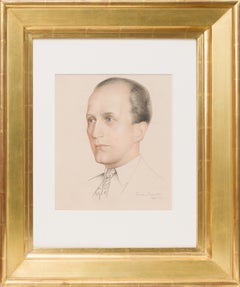
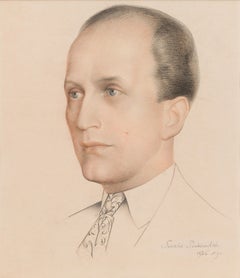
Head of a Gentleman sketch, mid modern

Head of a Gentleman sketch, mid modern

By Simka Simkhovitch

Located in New York, NY

A superbly executed work, this work would have been done for reproduction in a book or magazine. Simkhovitch received quite a number of illustration jobs and could adapt his style t...

Category

Early 20th Century American Realist Simka Simkhovitch Paintings

Materials

Paper, Watercolor

Related Items
Projet de Tissus - Fauvist Flowers Watercolor & Gouache by Raoul Dufy

Projet de Tissus - Fauvist Flowers Watercolor & Gouache by Raoul Dufy

By Raoul Dufy

Located in Marlow, Buckinghamshire

Botanical watercolour and gouache on paper circa 1920 by French fauvist painter Raoul Dufy. The work depicts flowers in red, blue and green. This work was executed by Dufy as a fabric design. Dimensions: Framed: 19.5"x19.5" Unframed: 12"x12" Provenance: Private collection of works by Raoul Dufy for Bianchini Ferier Bianchini Ferrier Collection - Christie's London - July 2001 SF Fall Show Raoul Dufy was one of a family of nine children, including five sisters and a younger brother, Jean Dufy, also destined to become a painter. Their father was an accountant in the employ of a major company in Le Havre. The Dufy family was musically gifted: his father was an organist, as was his brother Léon, and his youngest brother Gaston was an accomplished flautist who later worked as a music critic in Paris. Raoul Dufy's studies were interrupted at the age of 14, when he had to contribute to the family income. He took a job with an importer of Brazilian coffee, but still found time from 1892 to attend evening courses in drawing and composition at the local college of fine arts under Charles Marie Lhullier, former teacher of Othon Friesz and Georges Braque. He spent his free time in museums, admiring the paintings of Eugène Boudin in Le Havre and The Justice of Trajan in Rouen. A municipal scholarship enabled him to leave for Paris in 1900, where he lodged initially with Othon Friesz. He was accepted by the École des Beaux-Arts, where he studied under Léon Bonnat, whose innate conservatism prompted Dufy to remark later that it was 'good to be at the Beaux-Arts providing one knew one could leave'. And leave he did, four years later, embarking with friends and fellow students on the rounds of the major Paris galleries - Ambroise Vollard, Durand-Ruel, Eugène Blot and Berheim-Jeune. For Dufy and his contemporaries, Impressionism represented a rejection of sterile academism in favour of the open-air canvases of Manet, the light and bright colours of the Impressionists, and, beyond them, the daringly innovative work of Gauguin and Van Gogh, Seurat, Cézanne, Toulouse-Lautrec and others. Dufy was an out-and-out individualist, however, and was not tempted to imitate any of these artists. He produced, between 1935 and 1937, Fée Electricité (Spirit of Electricity), the emblem for the French utilities company Electricité de France (EDF). Dufy visited the USA for the first time in 1937, as a member of the Carnegie Prize jury. In 1940, the outbreak of war (and his increasingly rheumatic condition) persuaded him to settle in Nice. When he eventually returned to Paris 10 years later, his rheumatism had become so debilitating that he immediately left for Boston to follow a course of pioneering anti-cortisone treatment. He continued working, however, spending time first in Harvard and then in New York City before moving to the drier climate of Tucson, Arizona. The cortisone treatment was by and large unsuccessful, although he did recover the use of his fingers. He returned to Paris in 1951 and decided to settle in Forcalquier, where the climate was more clement. Within a short time, however, he was wheelchair-bound. He died in Forcalquier in March 1953 and was buried in Cimiez. Between 1895 and 1898, Raoul Dufy painted watercolours of landscapes near his native Le Havre and around Honfleur and Falaise. By the turn of the century, however, he was already painting certain subjects that were to become hallmarks of his work - flag-decked Parisian cityscapes, Normandy beaches teeming with visitors, regattas and the like, including one of his better-known early works, Landing Stage at Ste-Adresse. By 1905-1906 Friesz, Braque, Matisse, Derain, Vlaminck, Van Dongen and Rouault were described collectively as Fauves (the wild beasts). What they had in common was a desire to innovate, but they felt constrained nonetheless to meet formally to set out the guiding principles of what promised to be a new 'movement'. Dufy quickly established that those principles were acceptable; moreover, he was most impressed by one particular painting by Henri Matisse ( Luxury, Calm and Voluptuousness) which, to Dufy, embodied both novelty and a sense of artistic freedom. Dufy promptly aligned himself with the Fauves. Together with Albert Marquet in particular, he spent his time travelling the Normandy coast and painting views similar...

Category

1920s Fauvist Simka Simkhovitch Paintings

Materials

Paper, Watercolor, Gouache

A Muse Berkeley Figurative School by Patricia Gren Hayes 1975

A Muse Berkeley Figurative School by Patricia Gren Hayes 1975

By Patricia Gren Hayes

Located in Soquel, CA

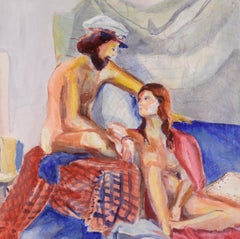
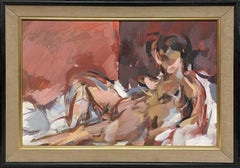
A Muse - Figurative Study in Oil on Canvas A nude man wearing a sailor hat while he looks down at a woman sitting on sheets of red and blue by American painter, Patricia Gren Hayes ...

Category

1970s American Modern Simka Simkhovitch Paintings

Materials

Canvas, Oil

Mid Century Modern Dancers Oil Painting; Listed Artist Albert Michini, ca 1970’s

Mid Century Modern Dancers Oil Painting; Listed Artist Albert Michini, ca 1970’s

Located in Baltimore, MD

If you have an association with dance, yoga or working out, this unusual modernist painting might be an interesting addition to your space. Artist Albert Michini used several models ...

Category

1970s American Modern Simka Simkhovitch Paintings

Materials

Oil

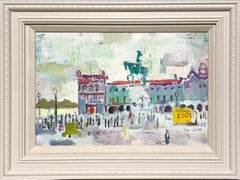
A Scenic 1940s Modern Summer Harbor Scene of Saugatuck, Michigan- Francis Chapin

A Scenic 1940s Modern Summer Harbor Scene of Saugatuck, Michigan- Francis Chapin

By Francis Chapin

Located in Chicago, IL

A scenic, colorful Modern 1930s summer harbor scene of Saugatuck, Michigan by notable Chicago Modern artist, Francis Chapin. Depicting a lively summer harbor view of the historic S...

Category

1940s American Modern Simka Simkhovitch Paintings

Materials

Oil, Board

"Woodstock Landscape" Albert Heckman, American Modernist, Atmospheric Valley

"Woodstock Landscape" Albert Heckman, American Modernist, Atmospheric Valley

By Albert Heckman

Located in New York, NY

Albert Heckman Woodstock Landscape Oil on board 10 x 8 inches Albert Heckman was born in Meadville, Western Pennsylvania, 1893. He went to New York City to try his hand at the art ...

Category

1940s American Modern Simka Simkhovitch Paintings

Materials

Oil, Board

"Woodstock Landscape" Albert Heckman, Modernist, Bright Landscape

"Woodstock Landscape" Albert Heckman, Modernist, Bright Landscape

By Albert Heckman

Located in New York, NY

Albert Heckman Woodstock Landscape Oil on board 8 1/2 x 10 1/2 inches Albert Heckman was born in Meadville, Western Pennsylvania, 1893. He went to New York City to try his hand at ...

Category

1940s American Modern Simka Simkhovitch Paintings

Materials

Oil, Board

The Artist's Wife oil painting by Hans Burkhardt

The Artist's Wife oil painting by Hans Burkhardt

By Hans Burkhardt

Located in Hudson, NY

Hans Burkhardt The Artist's Wife (1930) Oil on canvas, 20" x 16" 24" x 20 ½" x 1 ½" framed Dated 1930 lower right recto. Annotated "To Elsa HB Louise Burkhardt 1930. HB" verso. ...

Category

1930s American Modern Simka Simkhovitch Paintings

Materials

Canvas, Oil

Virility (framed original painting)

Ottorino MancioliVirility (framed original painting), 1931

$2,800Sale Price|20% Off

H 37 in W 39 in D 1 in

Virility (framed original painting)

Located in Aventura, FL

Original oil painting on machine made colored paper. Hand signed and dated on front by Ottorino Mancioli. Artwork size: 25.5 x 27.1 inches. Frame size: 37 x 39 inches. The pain...

Category

1930s Cubist Simka Simkhovitch Paintings

Materials

Paper, Oil

An Intriguing 1950s Mid-Century Modern Oil, Standing Male Nude, "Departure"

An Intriguing 1950s Mid-Century Modern Oil, Standing Male Nude, "Departure"

By Harold Haydon

Located in Chicago, IL

An Intriguing, Large 1950s Mid-Century Modern Oil Painting of a Standing Male Nude Figure on a Beach by Notable Chicago Artist, Harold Haydon (Am. 1909-1994). Titled "Departure", pa...

Category

Mid-20th Century American Modern Simka Simkhovitch Paintings

Materials

Oil, Masonite

A Charming 1950s Painting of Lisbon, Portugal by Famed Artist Francis Chapin

A Charming 1950s Painting of Lisbon, Portugal by Famed Artist Francis Chapin

By Francis Chapin

Located in Chicago, IL

A Charming, 1950s Painting of Lisbon, Portugal by Famed Chicago Modern Artist Francis Chapin (Am. 1899-1965). Depicting a bustling, colorful view of Lisbon's historic Black Horse Sq...

Category

Mid-20th Century American Modern Simka Simkhovitch Paintings

Materials

Board, Canvas, Oil

Coney Island, Fourth of July

Coney Island, Fourth of July

Located in Los Angeles, CA

Coney Island, Fourth of July, c. 1940s, oil on canvas applied to Masonite, signed upper right, 26 x 21 1/2 inches, presented in its original frame During the 1930s and 40s, Coney I...

Category

1940s American Modern Simka Simkhovitch Paintings

Materials

Canvas, Oil, Board

Previously Available Items
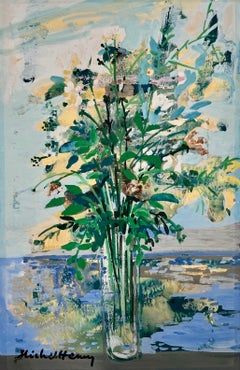
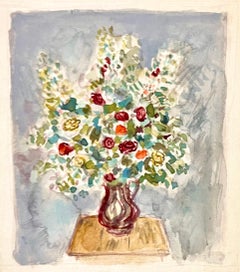
Simka Simkhovitch WPA W/C Painting Gouache American Modernist Bouquet of Flowers

Simka Simkhovitch WPA W/C Painting Gouache American Modernist Bouquet of Flowers

By Simka Simkhovitch

Located in Surfside, FL

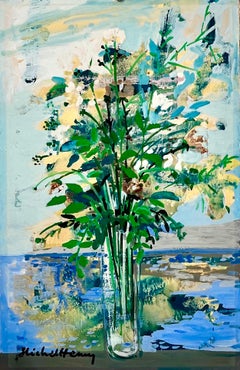
Simka Simkhovitch (Russian/American 1893 - 1949) This came with a small grouping from the artist's family, some were hand signed some were not. These were studies for larger paintings. This is a miniature watercolor and gouache vibrant, colorful bouquet of flowers in a vase. Simka Simkhovitch (Симха Файбусович Симхович) (aka Simka Faibusovich Simkhovich) (Novozybkov, Russia May 21, 1885 O.S./June 2, 1885 N.S.—Greenwich, Connecticut February 25, 1949) was a Ukrainian-Russian Jewish artist and immigrant to the United States. He painted theater scenery in his early career and then had several showings in galleries in New York City. Winning Works Progress Administration (WPA) commissions in the 1930s, he completed murals for the post offices in Jackson, Mississippi and Beaufort, North Carolina. His works are in the permanent collections of the Dallas Museum of Art, the National Museum of American Art and the Whitney Museum of American Art. Born outside Kyiv (Petrograd Ukraine) into a Jewish family who owned a small department store. During a severe case of measles when he was seven, Simcha Simchovitch sketched the views outside his window and decided to become an artist, over his father's objections. Beginning in 1905, he studied at the Grekov Odessa Art School and upon completion of his studies in 1911 received a recommendation to be admitted to the Imperial Academy of Arts. Though he enrolled to begin classes in architecture, painting, and sculpture at the Imperial Academy, he was dropped from the school roster in December because of the quota on the number of Jewish students and drafted into the army. Simchovitch served as a private in the 175th Infantry Regiment Baturyn [ru] until his demobilization in 1912. Re-enrolling in the Imperial Academy, he audited classes. Simka Simkhovitch exhibited paintings and sculptures in 1918 as part of an exhibition of Jewish artists and in 1919 placed 1st in the competition "The Great Russian Revolution" with a painting called "Russian Revolution" which was hung in the State Museum of Revolution. In 1922, Simkha Simkhovitch exhibited at the International Book Fair in Florence (Italian: Fiera Internazionale del Libro di Firenze). In 1924, Simkhovitch came to the United States to make illustrations for Soviet textbooks and decided to immigrate instead. Initially he supported himself by doing commercial art and a few portrait commissions. In 1927, he was hired to paint a screen for a scene in the play "The Command to Love" by Fritz Gottwald and Rudolph Lothar which was playing at the Longacre Theatre on Broadway. Art dealers began clamoring for the screen and Simkhovitch began a career as a screen painter for the theater. Catching the attention of the screenwriter, Ernest Pascal, he worked as an illustrator for Pascal, who then introduced him to gallery owner, Marie Sterner. Simkhovitch's works appeared at the Marie Sterner Gallery beginning with a 1927 exhibit and were repeated the following year. Simkhovitch had an exhibit in 1929 at Sterner's on circus paintings. In 1931, he held a showing of works at the Helen Hackett Gallery, in New York City and later that same year he was one of the featured artists of a special exhibit in San Francisco at the California Palace of the Legion of Honor in Lincoln Park. The exhibit was coordinated by Marie Sterner and included four watercolors, including one titled "Nudes". He is of the generation of Russian Soviet artists such as Isaac Pailes, Serge Charchoune, Marc Chagall, Chana Orloff, Isaac Ilyich Levitan, and Ossip Zadkine. In 1936, Simkhovitch was selected to complete the mural for the WPA Post office project in Jackson, Mississippi. The mural was hung in the post office and courthouse in 1938 depicted a plantation theme. Painted on the wall behind the judge’s bench, “Pursuits of Life in Mississippi”, a depiction of black workers engaged in manual labor amid scenes of white professionals and socialites, was eventually covered over in later years during renovations due to its stereotypical African American imagery. Simka painted what he thought was typical of Jackson. His impression of pre-civil rights Mississippi was evidently Greek Revival column houses, weeping willow trees, working class families, and the oppression of African Americans. He painted African American men picking cotton, while a white man took account of the harvest and a white judge advised a white family, calling it Pursuits of Life in Mississippi. Though clearly endorsed by the government and initially generally well-received, the mural soon raised concerns with locals as the climate toward racial segregation began to change. The main concern was whether depictions that show African Americans in subjugated societal roles should be featured in a courtroom. The following year, his painting "Holiday" won praise at an exhibition in Lincoln, Nebraska. In 1940, Simkhovitch's second WPA post office project was completed when four murals, "The Cape Lookout Lighthouse and the Orville W. Mail Boat", "The Wreck of the Crissie Wright", "Sand Ponies" and "Canada Geese" were installed in Beaufort, North Carolina. The works were commissioned in 1938 and did not generate the controversy that the Jackson mural had. The main mural is "The Wreck of the Crissie Wright" and depicts a shipwreck which had occurred in Beaufort in 1866. "The Cape Lookout Lighthouse and the Orville W. Mail Boat" depicted the lighthouse built in 1859 and the mail boat that was running mail during the time which Simkhovitch was there. The boat ran mail for the area until 1957. "Sand Ponies" shows the wild horses common to the North Carolina barrier islands and "Canada Geese" showed the importance of hunting and fishing in the area. All four murals were restored in the 1990s by Elisabeth Speight, daughter of two other WPA muralists, Francis Speight...

Category

1930s American Modern Simka Simkhovitch Paintings

Materials

Watercolor, Gouache, Board
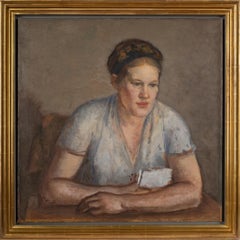
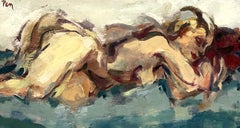
Simka Simkhovitch WPA W/C Painting Gouache American Modernist Beach Scene Nude

Simka Simkhovitch WPA W/C Painting Gouache American Modernist Beach Scene Nude

By Simka Simkhovitch

Located in Surfside, FL

Simka Simkhovitch (Russian/American 1893 - 1949) This came with a small grouping from the artist's family, some were hand signed some were not. These were studies for larger paintings. This is a watercolor and gouache beach scene three young men bathing...

Category

1930s American Modern Simka Simkhovitch Paintings

Materials

Gouache, Board, Watercolor

Simka Simkhovitch WPA Artist Painting Gouache American Modernist Beach Scene

Simka Simkhovitch WPA Artist Painting Gouache American Modernist Beach Scene

By Simka Simkhovitch

Located in Surfside, FL

Simka Simkhovitch (Russian/American 1893 - 1949) This came with a small grouping from the artist's family, some were hand signed some were not. These were studies for larger paintings. Simka Simkhovitch (Симха Файбусович Симхович) (aka Simka Faibusovich Simkhovich) (Novozybkov, Russia May 21, 1885 O.S./June 2, 1885 N.S.—Greenwich, Connecticut February 25, 1949) was a Ukrainian-Russian Jewish artist and immigrant to the United States. He painted theater scenery in his early career and then had several showings in galleries in New York City. Winning Works Progress Administration (WPA) commissions in the 1930s, he completed murals for the post offices in Jackson, Mississippi and Beaufort, North Carolina. His works are in the permanent collections of the Dallas Museum of Art, the National Museum of American Art and the Whitney Museum of American Art. Born outside Kyiv (Petrograd Ukraine) into a Jewish family who owned a small department store. During a severe case of measles when he was seven, Simcha Simchovitch sketched the views outside his window and decided to become an artist, over his father's objections. Beginning in 1905, he studied at the Grekov Odessa Art School and upon completion of his studies in 1911 received a recommendation to be admitted to the Imperial Academy of Arts. Though he enrolled to begin classes in architecture, painting, and sculpture at the Imperial Academy, he was dropped from the school roster in December because of the quota on the number of Jewish students and drafted into the army. Simchovitch served as a private in the 175th Infantry Regiment Baturyn [ru] until his demobilization in 1912. Re-enrolling in the Imperial Academy, he audited classes. Simka Simkhovitch exhibited paintings and sculptures in 1918 as part of an exhibition of Jewish artists and in 1919 placed 1st in the competition "The Great Russian Revolution" with a painting called "Russian Revolution" which was hung in the State Museum of Revolution. In 1922, Simkha Simkhovitch exhibited at the International Book Fair in Florence (Italian: Fiera Internazionale del Libro di Firenze). In 1924, Simkhovitch came to the United States to make illustrations for Soviet textbooks and decided to immigrate instead. Initially he supported himself by doing commercial art and a few portrait commissions. In 1927, he was hired to paint a screen for a scene in the play "The Command to Love" by Fritz Gottwald and Rudolph Lothar which was playing at the Longacre Theatre on Broadway. Art dealers began clamoring for the screen and Simkhovitch began a career as a screen painter for the theater. Catching the attention of the screenwriter, Ernest Pascal, he worked as an illustrator for Pascal, who then introduced him to gallery owner, Marie Sterner. Simkhovitch's works appeared at the Marie Sterner Gallery beginning with a 1927 exhibit and were repeated the following year. Simkhovitch had an exhibit in 1929 at Sterner's on circus paintings. In 1931, he held a showing of works at the Helen Hackett Gallery, in New York City and later that same year he was one of the featured artists of a special exhibit in San Francisco at the California Palace of the Legion of Honor in Lincoln Park. The exhibit was coordinated by Marie Sterner and included four watercolors, including one titled "Nudes". He is of the generation of Russian Soviet artists such as Isaac Pailes, Serge Charchoune, Marc Chagall, Chana Orloff, Isaac Ilyich Levitan, and Ossip Zadkine. In 1936, Simkhovitch was selected to complete the mural for the WPA Post office project in Jackson, Mississippi. The mural was hung in the post office and courthouse in 1938 depicted a plantation theme. Painted on the wall behind the judge’s bench, “Pursuits of Life in Mississippi”, a depiction of black workers engaged in manual labor amid scenes of white professionals and socialites, was eventually covered over in later years during renovations due to its stereotypical African American imagery. Simka painted what he thought was typical of Jackson. His impression of pre-civil rights Mississippi was evidently Greek Revival column houses, weeping willow trees, working class families, and the oppression of African Americans. He painted African American men picking cotton, while a white man took account of the harvest and a white judge advised a white family, calling it Pursuits of Life in Mississippi. Though clearly endorsed by the government and initially generally well-received, the mural soon raised concerns with locals as the climate toward racial segregation began to change. The main concern was whether depictions that show African Americans in subjugated societal roles should be featured in a courtroom. The following year, his painting "Holiday" won praise at an exhibition in Lincoln, Nebraska. In 1940, Simkhovitch's second WPA post office project was completed when four murals, "The Cape Lookout Lighthouse and the Orville W. Mail Boat", "The Wreck of the Crissie Wright", "Sand Ponies" and "Canada Geese" were installed in Beaufort, North Carolina. The works were commissioned in 1938 and did not generate the controversy that the Jackson mural had. The main mural is "The Wreck of the Crissie Wright" and depicts a shipwreck which had occurred in Beaufort in 1866. "The Cape Lookout Lighthouse and the Orville W. Mail Boat" depicted the lighthouse built in 1859 and the mail boat that was running mail during the time which Simkhovitch was there. The boat ran mail for the area until 1957. "Sand Ponies" shows the wild horses common to the North Carolina barrier islands and "Canada Geese" showed the importance of hunting and fishing in the area. All four murals were restored in the 1990s by Elisabeth Speight, daughter of two other WPA muralists, Francis Speight...

Category

1930s American Modern Simka Simkhovitch Paintings

Materials

Gouache, Board
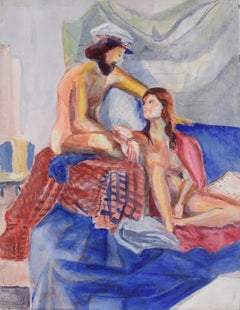
Simka Simkhovitch WPA Artist Oil Painting Gouache American Modernist Powerline

Simka Simkhovitch WPA Artist Oil Painting Gouache American Modernist Powerline

By Simka Simkhovitch

Located in Surfside, FL

Simka Simkhovitch (Russian/American 1893 - 1949) This came with a small grouping from the artist's family, some were hand signed some were not. These were studies for larger paintings. Simka Simkhovitch (Симха Файбусович Симхович) (aka Simka Faibusovich Simkhovich) (Novozybkov, Russia May 21, 1885 O.S./June 2, 1885 N.S.—Greenwich, Connecticut February 25, 1949) was a Ukrainian-Russian Jewish artist and immigrant to the United States. He painted theater scenery in his early career and then had several showings in galleries in New York City. Winning Works Progress Administration (WPA) commissions in the 1930s, he completed murals for the post offices in Jackson, Mississippi and Beaufort, North Carolina. His works are in the permanent collections of the Dallas Museum of Art, the National Museum of American Art and the Whitney Museum of American Art. Born outside Kyiv (Petrograd Ukraine) into a Jewish family who owned a small department store. During a severe case of measles when he was seven, Simcha Simchovitch sketched the views outside his window and decided to become an artist, over his father's objections. Beginning in 1905, he studied at the Grekov Odessa Art School and upon completion of his studies in 1911 received a recommendation to be admitted to the Imperial Academy of Arts. Though he enrolled to begin classes in architecture, painting, and sculpture at the Imperial Academy, he was dropped from the school roster in December because of the quota on the number of Jewish students and drafted into the army. Simchovitch served as a private in the 175th Infantry Regiment Baturyn [ru] until his demobilization in 1912. Re-enrolling in the Imperial Academy, he audited classes. Simka Simkhovitch exhibited paintings and sculptures in 1918 as part of an exhibition of Jewish artists and in 1919 placed 1st in the competition "The Great Russian Revolution" with a painting called "Russian Revolution" which was hung in the State Museum of Revolution. In 1922, Simkha Simkhovitch exhibited at the International Book Fair in Florence (Italian: Fiera Internazionale del Libro di Firenze). In 1924, Simkhovitch came to the United States to make illustrations for Soviet textbooks and decided to immigrate instead. Initially he supported himself by doing commercial art and a few portrait commissions. In 1927, he was hired to paint a screen for a scene in the play "The Command to Love" by Fritz Gottwald and Rudolph Lothar which was playing at the Longacre Theatre on Broadway. Art dealers began clamoring for the screen and Simkhovitch began a career as a screen painter for the theater. Catching the attention of the screenwriter, Ernest Pascal, he worked as an illustrator for Pascal, who then introduced him to gallery owner, Marie Sterner. Simkhovitch's works appeared at the Marie Sterner Gallery beginning with a 1927 exhibit and were repeated the following year. Simkhovitch had an exhibit in 1929 at Sterner's on circus paintings. In 1931, he held a showing of works at the Helen Hackett Gallery, in New York City and later that same year he was one of the featured artists of a special exhibit in San Francisco at the California Palace of the Legion of Honor in Lincoln Park. The exhibit was coordinated by Marie Sterner and included four watercolors, including one titled "Nudes". He is of the generation of Russian Soviet artists such as Isaac Pailes, Serge Charchoune, Marc Chagall, Chana Orloff, Isaac Ilyich Levitan, and Ossip Zadkine. In 1936, Simkhovitch was selected to complete the mural for the WPA Post office project in Jackson, Mississippi. The mural was hung in the post office and courthouse in 1938 depicted a plantation theme. Painted on the wall behind the judge’s bench, “Pursuits of Life in Mississippi”, a depiction of black workers engaged in manual labor amid scenes of white professionals and socialites, was eventually covered over in later years during renovations due to its stereotypical African American imagery. Simka painted what he thought was typical of Jackson. His impression of pre-civil rights Mississippi was evidently Greek Revival column houses, weeping willow trees, working class families, and the oppression of African Americans. He painted African American men picking cotton, while a white man took account of the harvest and a white judge advised a white family, calling it Pursuits of Life in Mississippi. Though clearly endorsed by the government and initially generally well-received, the mural soon raised concerns with locals as the climate toward racial segregation began to change. The main concern was whether depictions that show African Americans in subjugated societal roles should be featured in a courtroom. The following year, his painting "Holiday" won praise at an exhibition in Lincoln, Nebraska. In 1940, Simkhovitch's second WPA post office project was completed when four murals, "The Cape Lookout Lighthouse and the Orville W. Mail Boat", "The Wreck of the Crissie Wright", "Sand Ponies" and "Canada Geese" were installed in Beaufort, North Carolina. The works were commissioned in 1938 and did not generate the controversy that the Jackson mural had. The main mural is "The Wreck of the Crissie Wright" and depicts a shipwreck which had occurred in Beaufort in 1866. "The Cape Lookout Lighthouse and the Orville W. Mail Boat" depicted the lighthouse built in 1859 and the mail boat that was running mail during the time which Simkhovitch was there. The boat ran mail for the area until 1957. "Sand Ponies" shows the wild horses common to the North Carolina barrier islands and "Canada Geese" showed the importance of hunting and fishing in the area. All four murals were restored in the 1990s by Elisabeth Speight, daughter of two other WPA muralists, Francis Speight...

Category

1930s American Modern Simka Simkhovitch Paintings

Materials

Oil, Board, Gouache

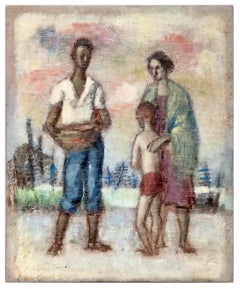
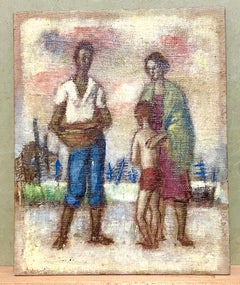
Simka Simkhovitch WPA Artist Oil Painting Family Mother, Kids American Modernist

Simka Simkhovitch WPA Artist Oil Painting Family Mother, Kids American Modernist

By Simka Simkhovitch

Located in Surfside, FL

Simka Simkhovitch (Russian/American 1893 - 1949) This came with a small grouping from the artist's family, some were hand signed some were not. These were studies for larger paintings. Simka Simkhovitch (Симха Файбусович Симхович) (aka Simka Faibusovich Simkhovich) (Novozybkov, Russia May 21, 1885 O.S./June 2, 1885 N.S.—Greenwich, Connecticut February 25, 1949) was a Ukrainian-Russian Jewish artist and immigrant to the United States. He painted theater scenery in his early career and then had several showings in galleries in New York City. Winning Works Progress Administration (WPA) commissions in the 1930s, he completed murals for the post offices in Jackson, Mississippi and Beaufort, North Carolina. His works are in the permanent collections of the Dallas Museum of Art, the National Museum of American Art and the Whitney Museum of American Art. Born outside Kyiv (Petrograd Ukraine) into a Jewish family who owned a small department store. During a severe case of measles when he was seven, Simcha Simchovitch sketched the views outside his window and decided to become an artist, over his father's objections. Beginning in 1905, he studied at the Grekov Odessa Art School and upon completion of his studies in 1911 received a recommendation to be admitted to the Imperial Academy of Arts. Though he enrolled to begin classes in architecture, painting, and sculpture at the Imperial Academy, he was dropped from the school roster in December because of the quota on the number of Jewish students and drafted into the army. Simchovitch served as a private in the 175th Infantry Regiment Baturyn [ru] until his demobilization in 1912. Re-enrolling in the Imperial Academy, he audited classes. Simka Simkhovitch exhibited paintings and sculptures in 1918 as part of an exhibition of Jewish artists and in 1919 placed 1st in the competition "The Great Russian Revolution" with a painting called "Russian Revolution" which was hung in the State Museum of Revolution. In 1922, Simkha Simkhovitch exhibited at the International Book Fair in Florence (Italian: Fiera Internazionale del Libro di Firenze). In 1924, Simkhovitch came to the United States to make illustrations for Soviet textbooks and decided to immigrate instead. Initially he supported himself by doing commercial art and a few portrait commissions. In 1927, he was hired to paint a screen for a scene in the play "The Command to Love" by Fritz Gottwald and Rudolph Lothar which was playing at the Longacre Theatre on Broadway. Art dealers began clamoring for the screen and Simkhovitch began a career as a screen painter for the theater. Catching the attention of the screenwriter, Ernest Pascal, he worked as an illustrator for Pascal, who then introduced him to gallery owner, Marie Sterner. Simkhovitch's works appeared at the Marie Sterner Gallery beginning with a 1927 exhibit and were repeated the following year. Simkhovitch had an exhibit in 1929 at Sterner's on circus paintings. In 1931, he held a showing of works at the Helen Hackett Gallery, in New York City and later that same year he was one of the featured artists of a special exhibit in San Francisco at the California Palace of the Legion of Honor in Lincoln Park. The exhibit was coordinated by Marie Sterner and included four watercolors, including one titled "Nudes". He is of the generation of Russian Soviet artists such as Isaac Pailes, Serge Charchoune, Marc Chagall, Chana Orloff, Isaac Ilyich Levitan, and Ossip Zadkine. In 1936, Simkhovitch was selected to complete the mural for the WPA Post office project in Jackson, Mississippi. The mural was hung in the post office and courthouse in 1938 depicted a plantation theme. Painted on the wall behind the judge’s bench, “Pursuits of Life in Mississippi”, a depiction of black workers engaged in manual labor amid scenes of white professionals and socialites, was eventually covered over in later years during renovations due to its stereotypical African American imagery. The following year, his painting "Holiday" won praise at an exhibition in Lincoln, Nebraska. In 1940, Simkhovitch's second WPA post office project was completed when four murals, "The Cape Lookout Lighthouse and the Orville W. Mail Boat", "The Wreck of the Crissie Wright", "Sand Ponies" and "Canada Geese" were installed in Beaufort, North Carolina. The works were commissioned in 1938 and did not generate the controversy that the Jackson mural had. The main mural is "The Wreck of the Crissie Wright" and depicts a shipwreck which had occurred in Beaufort in 1866. "The Cape Lookout Lighthouse and the Orville W. Mail Boat" depicted the lighthouse built in 1859 and the mail boat that was running mail during the time which Simkhovitch was there. The boat ran mail for the area until 1957. "Sand Ponies" shows the wild horses common to the North Carolina barrier islands and "Canada Geese" showed the importance of hunting and fishing in the area. All four murals were restored in the 1990s by Elisabeth Speight, daughter of two other WPA muralists, Francis Speight...

Category

1930s American Modern Simka Simkhovitch Paintings

Materials

Oil, Board
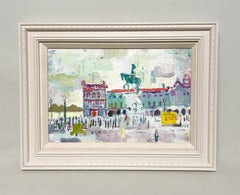
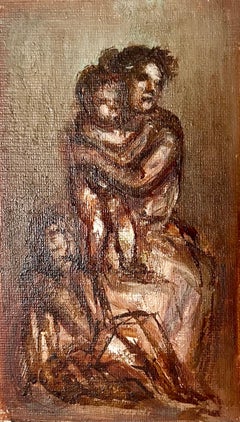
Simka Simkhovitch WPA Artist Oil Painting Family Mother, Kids American Modernist

Simka Simkhovitch WPA Artist Oil Painting Family Mother, Kids American Modernist

By Simka Simkhovitch

Located in Surfside, FL

Simka Simkhovitch (Russian/American 1893 - 1949) This came with a small grouping from the artist's family, some were hand signed some were not. These were studies for larger paintings. Simka Simkhovitch (Симха Файбусович Симхович) (aka Simka Faibusovich Simkhovich) (Novozybkov, Russia May 21, 1885 O.S./June 2, 1885 N.S.—Greenwich, Connecticut February 25, 1949) was a Ukrainian-Russian Jewish artist and immigrant to the United States. He painted theater scenery in his early career and then had several showings in galleries in New York City. Winning Works Progress Administration (WPA) commissions in the 1930s, he completed murals for the post offices in Jackson, Mississippi and Beaufort, North Carolina. His works are in the permanent collections of the Dallas Museum of Art, the National Museum of American Art and the Whitney Museum of American Art. Born outside Kyiv (Petrograd Ukraine) into a Jewish family who owned a small department store. During a severe case of measles when he was seven, Simcha Simchovitch sketched the views outside his window and decided to become an artist, over his father's objections. Beginning in 1905, he studied at the Grekov Odessa Art School and upon completion of his studies in 1911 received a recommendation to be admitted to the Imperial Academy of Arts. Though he enrolled to begin classes in architecture, painting, and sculpture at the Imperial Academy, he was dropped from the school roster in December because of the quota on the number of Jewish students and drafted into the army. Simchovitch served as a private in the 175th Infantry Regiment Baturyn [ru] until his demobilization in 1912. Re-enrolling in the Imperial Academy, he audited classes. Simka Simkhovitch exhibited paintings and sculptures in 1918 as part of an exhibition of Jewish artists and in 1919 placed 1st in the competition "The Great Russian Revolution" with a painting called "Russian Revolution" which was hung in the State Museum of Revolution. In 1922, Simkha Simkhovitch exhibited at the International Book Fair in Florence (Italian: Fiera Internazionale del Libro di Firenze). In 1924, Simkhovitch came to the United States to make illustrations for Soviet textbooks and decided to immigrate instead. Initially he supported himself by doing commercial art and a few portrait commissions. In 1927, he was hired to paint a screen for a scene in the play "The Command to Love" by Fritz Gottwald and Rudolph Lothar which was playing at the Longacre Theatre on Broadway. Art dealers began clamoring for the screen and Simkhovitch began a career as a screen painter for the theater. Catching the attention of the screenwriter, Ernest Pascal, he worked as an illustrator for Pascal, who then introduced him to gallery owner, Marie Sterner. Simkhovitch's works appeared at the Marie Sterner Gallery beginning with a 1927 exhibit and were repeated the following year. Simkhovitch had an exhibit in 1929 at Sterner's on circus paintings. In 1931, he held a showing of works at the Helen Hackett Gallery, in New York City and later that same year he was one of the featured artists of a special exhibit in San Francisco at the California Palace of the Legion of Honor in Lincoln Park. The exhibit was coordinated by Marie Sterner and included four watercolors, including one titled "Nudes". He is of the generation of Russian Soviet artists such as Isaac Pailes, Serge Charchoune, Marc Chagall, Chana Orloff, Isaac Ilyich Levitan, and Ossip Zadkine. In 1936, Simkhovitch was selected to complete the mural for the WPA Post office project in Jackson, Mississippi. The mural was hung in the post office and courthouse in 1938 depicted a plantation theme. Painted on the wall behind the judge’s bench, “Pursuits of Life in Mississippi”, a depiction of black workers engaged in manual labor amid scenes of white professionals and socialites, was eventually covered over in later years during renovations due to its stereotypical African American imagery. The following year, his painting "Holiday" won praise at an exhibition in Lincoln, Nebraska. In 1940, Simkhovitch's second WPA post office project was completed when four murals, "The Cape Lookout Lighthouse and the Orville W. Mail Boat", "The Wreck of the Crissie Wright", "Sand Ponies" and "Canada Geese" were installed in Beaufort, North Carolina. The works were commissioned in 1938 and did not generate the controversy that the Jackson mural had. The main mural is "The Wreck of the Crissie Wright" and depicts a shipwreck which had occurred in Beaufort in 1866. "The Cape Lookout Lighthouse and the Orville W. Mail Boat" depicted the lighthouse built in 1859 and the mail boat that was running mail during the time which Simkhovitch was there. The boat ran mail for the area until 1957. "Sand Ponies" shows the wild horses common to the North Carolina barrier islands and "Canada Geese" showed the importance of hunting and fishing in the area. All four murals were restored in the 1990s by Elisabeth Speight, daughter of two other WPA muralists, Francis Speight...

Category

1930s American Modern Simka Simkhovitch Paintings

Materials

Oil, Board
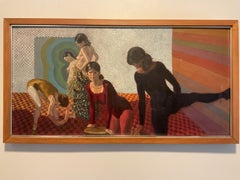
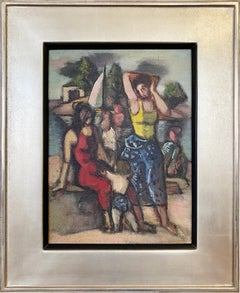
Sunday Outing, possibly Island Beach, Greenwich, CT

Sunday Outing, possibly Island Beach, Greenwich, CT

By Simka Simkhovitch

Located in New York, NY

A charming and exquisitely framed piece that is evocative of the late 1930's and early 40's in America. Simkhovitch was a regional artist and WPA muralist and he was famous for his ...

Category

1930s American Modern Simka Simkhovitch Paintings

Materials

Masonite, Oil

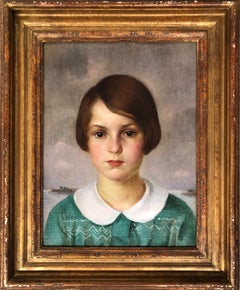
Young Girl in Green Dress

Young Girl in Green Dress

By Simka Simkhovitch

Located in New York, NY

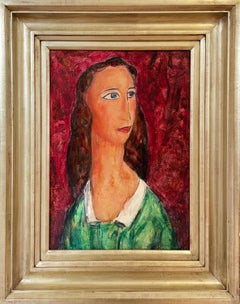
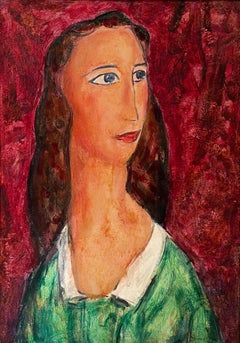
A beautifully rendered and riveting depiction of a young American girl presented with a purity and honesty. Simkhovitch was a Russian immigrant artist who adopted a strong American style and became an active part of the New York art scene. He often depicted these direct portraits against a backdrop of a distant landscape. The frame is an older, lovely and simple cove frame of deeper gold patina and it compliments the painting. The canvas itself measure 15 3/4 x 11 3/4 inches so listed size is framed dimensions. Young Girl in Green...

Category

1920s American Realist Simka Simkhovitch Paintings

Materials

Canvas, Oil

Circus, Sunday
Circus, Sunday

Circus, Sunday

By Simka Simkhovitch

Located in New York, NY

This idyllic sketch is what Simkhovitch, who was regionalist and WPA era artist, was best known for. He did quite a series of circus scenes depicting Ringmasters, Trapese artists an...

Category

1930s American Modern Simka Simkhovitch Paintings

Materials

Oil, Illustration Board
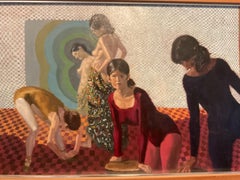
Simka Simkhovitch paintings for sale on 1stDibs.

Find a wide variety of authentic Simka Simkhovitch paintings available for sale on 1stDibs. You can also browse by medium to find art by Simka Simkhovitch in paint, board, oil paint and more. Much of the original work by this artist or collective was created during the 20th century and is mostly associated with the modern style. Not every interior allows for large Simka Simkhovitch paintings, so small editions measuring 5 inches across are available. Customers who are interested in this artist might also find the work of Ben Benn, Harold von Schmidt, and Francis Chapin. Simka Simkhovitch paintings prices can differ depending upon medium, time period and other attributes. On 1stDibs, the price for these items starts at $850 and tops out at $8,000, while the average work can sell for $1,600.