American Modern Art

4,723 Results
to
672
1,602
1,304
947
645
553
Overall Width
to
Overall Height
to
1
13
4,319
722
16
69
191
657
487
429
407
374
277
144
119,971
64,126
57,202
29,235
14,510
9,683
6,986
6,316
4,261
3,197
2,527
2,322
2,127
592
2,489
2,170
243
2,311
1,106
841
680
642
489
424
342
311
228
221
216
208
196
194
184
159
151
146
136
1,913
1,460
1,045
666
606
266
232
101
92
86
1,457
543
4,631
322
Style: American Modern
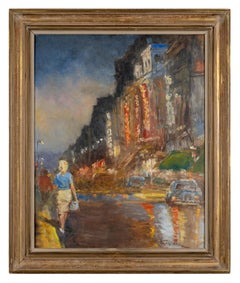
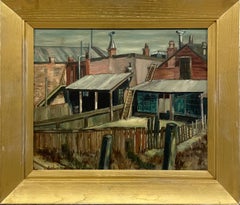
Night In the City
Night In the City

Night In the City

By Pal Fried

Located in Sheffield, MA

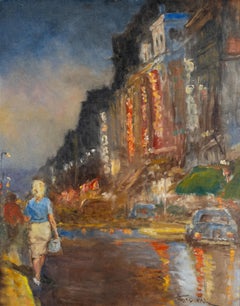
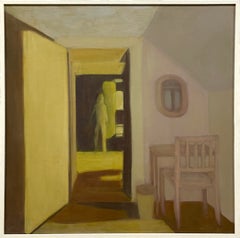
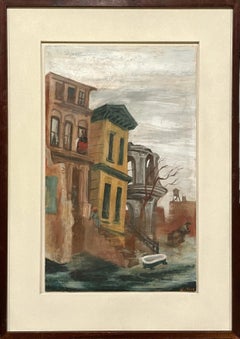
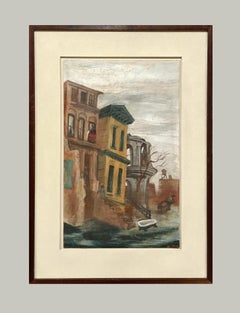
Pal Fried Hungarian-American, 1893-1976 Night In the City Oil on canvas 30 X 24 in. w/ frame 36 ¼ X 30 ¼ in. Signed "Fried Pal" lower right Pal was born in Budapest and studied at ...

Category

Mid-20th Century American Modern Art

Materials

Canvas, Oil

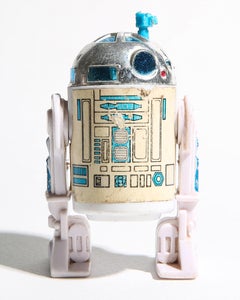
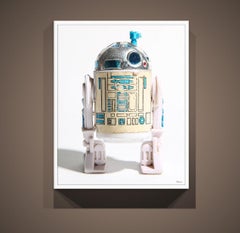
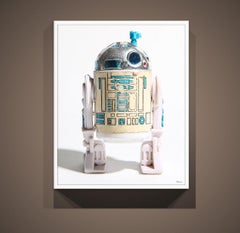
R2D2 50x40 Star Wars, Photography Jedi, Photograph Toys, Movie Empire Pop Art

R2D2 50x40 Star Wars, Photography Jedi, Photograph Toys, Movie Empire Pop Art

By Destro

Located in Los Angeles, CA

R2D2 from the original Kenner release of the Star Wars toys in May of 1977 This is pre release is the first release in the much anticipated series "The Toys" These iconic figures hav...

Category

21st Century and Contemporary American Modern Art

Materials

Archival Pigment

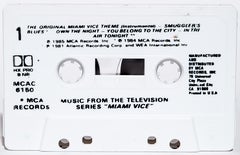
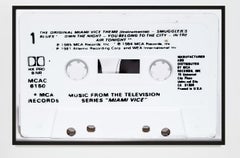
Miami Vice Soundtrack Cassette 30x50 Pop Fine Art Unsigned Photography Photo

Miami Vice Soundtrack Cassette 30x50 Pop Fine Art Unsigned Photography Photo

By Destro

Located in Los Angeles, CA

A contemporary photograph of 2Pacs iconic "Miami Vice" soundtrack cassette tape. This is s the first release in the much anticipated series "The Music" by pop Artists Destro These ic...

Category

21st Century and Contemporary American Modern Art

Materials

Archival Pigment

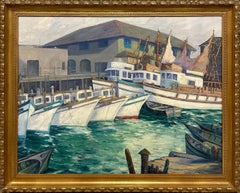
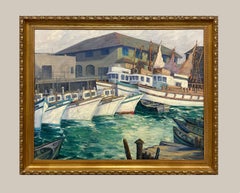
San Pedro Harbor
San Pedro Harbor

San Pedro Harbor

By Paul Sample

Located in New York, NY

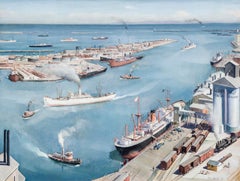
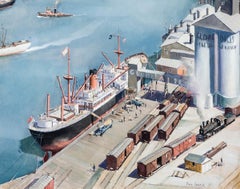
It is infrequent, to say the least, that a diagnosis of tuberculosis proves fortuitous, but that was the event, in 1921, that set Paul Starrett Sample on the road to becoming a professional artist. (The best source for an overview of Sample’s life and oeuvre remains Paul Sample: Painter of the American Scene, exhib. cat., [Hanover, New Hampshire: Hood Museum of Art, 1988] with a detailed and definitive chronology by Sample scholar, Paula F. Glick, and an essay by Robert L. McGrath. It is the source for this essay unless otherwise indicated.) Sample, born in Louisville, Kentucky, in 1896 to a construction engineer and his wife, spent his childhood moving with his family to the various locations that his father’s work took them. By 1911, the family had landed in Glencoe, Illinois, settling long enough for Paul to graduate from New Trier High School in 1916. Sample enrolled at Dartmouth College, in Hanover, New Hampshire, where his interests were anything but academic. His enthusiasms included the football and basketball teams, boxing, pledging at a fraternity, and learning to play the saxophone. After the United States entered World War I, Sample, to his family’s dismay, signed on for the Naval Reserve, leading directly to a hiatus from Dartmouth. In 1918 and 1919, Sample served in the U.S. Merchant Marine where he earned a third mate’s license and seriously contemplated life as a sailor. Acceding to parental pressure, he returned to Dartmouth, graduating in 1921. Sample’s undergraduate life revolved around sports and a jazz band he formed with his brother, Donald, two years younger and also a Dartmouth student. In November 1933, Sample summarized his life in a letter he wrote introducing himself to Frederick Newlin Price, founder of Ferargil Galleries, who would become his New York art dealer. The artist characterized his undergraduate years as spent “wasting my time intensively.” He told Price that that “I took an art appreciation course and slept thru it every day” (Ferargil Galleries Records, circa 1900–63, Archives of American Art, Smithsonian Institution, available on line). In 1920, Donald Sample contracted tuberculosis. He went for treatment to the world-famous Trudeau Sanitorium at Saranac Lake, in New York State’s Adirondack Mountains for the prescribed regimen of rest, healthful food, and fresh air. Visiting his brother in 1921, Paul also contracted the disease. Tuberculosis is highly contagious, and had no certain cure before the development of streptomycin in 1946. Even for patients who appeared to have recovered, there was a significant rate of recurrence. Thus, in his letter to Price, Sample avoided the stigma conjured by naming the disease, but wrote “I had a relapse with a bad lung and spent the next four years hospitalized in Saranac Lake.” The stringent physical restrictions imposed by adherence to “the cure” required Sample to cultivate an alternate set of interests. He read voraciously and, at the suggestion of his physician, contacted the husband of a fellow patient for instruction in art. That artist, then living in Saranac, was Jonas Lie (1880–1940), a prominent Norwegian-American painter and an associate academician at the National Academy of Design. Lie had gained renown for his dramatic 1913 series of paintings documenting the construction of the Panama Canal (The Metropolitan Museum of Art, New York; United States Military Academy, West Point, New York). Primarily a landscape artist, Lie had a particular affinity for scenes with water. His paintings, impressionistic, atmospheric, and brushy, never strayed from a realistic rendering of his subject. Sample regarded Lie as a mentor and retained a lifelong reverence for his teacher. Sample’s early paintings very much reflect Lie’s influence. ` In 1925, “cured,” Sample left Saranac Lake for what proved to be a brief stay in New York City, where his veteran’s benefits financed a commercial art course. The family, however, had moved to California, in the futile hope that the climate would benefit Donald. Sample joined them and after Donald’s death, remained in California, taking classes at the Otis Art Institute in Los Angeles. In Sample’s account to Price, “I couldn’t stomach the practice of painting a lot of High Sierras and desert flowers which seemed to be the only kind of pictures that were sold here so I got a job teaching drawing and painting at the art school of the University of Southern California.” Initially hired as a part-time instructor, Sample progressed to full-time status and ultimately, by the mid-1930s, to the post of Chairman of the Fine Art Department. Sample, however, did not want to wind up as a professor. “Teaching is all right in small doses,” he wrote, “but I have a horror of drifting into being a college professor and nothing more.” At the same time as he taught, Sample began to exhibit his work in a variety of venues at first locally, then nationally. Though he confessed himself “a terrible salesman,” and though occupied with continued learning and teaching, Sample was nonetheless, ambitious. In 1927, he wrote in his diary, “I am eventually going to be a painter and a damned good one. And what is more, I am going to make money at it” (as quoted by Glick, p. 15). In 1928, Sample felt sufficiently solvent to marry his long-time love, Sylvia Howland, who had also been a patient at Saranac Lake. The Howland family were rooted New Englanders and in summertime the Samples regularly traveled East for family reunion vacations. While the 1930s brought serious hardship to many artists, for Paul Sample it was a decade of success. Buttressed by the financial safety net of his teacher’s salary, he painted realist depictions of the American scene. While his work addressed depression-era conditions with a sympathetic eye, Sample avoided the anger and tinge of bitterness that characterized much contemporary realist art. Beginning in 1930, Sample began to exhibit regularly in juried exhibitions at important national venues, garnering prizes along the way. In 1930, Inner Harbor won an honorable mention in the Annual Exhibition of the Art Institute of Chicago. That same year Sample was also represented in a show at the Albright-Knox Gallery in Buffalo and at the Biennial Exhibition of the Corcoran Gallery of Art, Washington, D.C. In 1931, Dairy Ranch won the second Hallgarten Prize at the Annual Exhibition of the National Academy of Design, in New York. Sample also made his first appearances at the Carnegie Institute, Pittsburgh, and The Pennsylvania Academy of the Fine Arts, Philadelphia. In 1936, Miner’s Resting won the Temple Gold Medal at the Pennsylvania Academy’s Annual Exhibition. Always interested in watercolor, in 1936, Sample began to send works on paper to exhibitions at the Whitney Museum, New York. While participating in juried exhibitions, Sample also cultivated commercial possibilities. His first New York art dealer was the prestigious Macbeth Gallery in New York, which included his work in a November 1931 exhibition. In 1934, Sample joined the Ferargil Galleries in New York, after Fred Price arranged the sale of Sample’s Church Supper to the Michele and Donald D’Amour Museum of Fine Arts in Springfield, Massachusetts. In 1937, The Metropolitan Museum of Art purchased Sample’s Janitor’s Holiday from the annual exhibition of the National Academy of Design, a notable honor. As prestigious as this exhibition schedule may have been, by far Sample’s most visible presence in the 1930s and 1940s was the result of his relationship with Henry Luce’s burgeoning publishing empire, Time, Inc. Sample’s first contribution to a Luce publication appears to have been another San Pedro...

Category

20th Century American Modern Art

Materials

Canvas, Oil

Skull 2

Max GrantSkull 2, 2018

$5,600Sale Price|20% Off

Skull 2

By Max Grant

Located in Brooklyn, NY

Taking inspiration from Robert Mapplethorpe, Max Grant's skull images from his Catacomb Series look at the macabre beauty of the human anatomy, recollecting his time in the Paris Cat...

Category

21st Century and Contemporary American Modern Art

Materials

Photographic Paper

Portrait of Virginia Cowles

Portrait of Virginia Cowles

By René Bouché

Located in Sheffield, MA

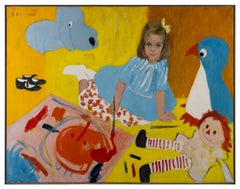
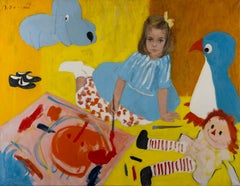
Rene Robert Bouche American, 1906-1963 Portrait of Virginia Cowles Oil on canvas 33 by 43 in, w/ frame 35 ½ by 45 ½ in Signed upper left Fascinated by th...

Category

1960s American Modern Art

Materials

Oil

Karima IV, Fashion Girl on Train

Karima IV, Fashion Girl on Train

By Formento & Formento

Located in New York, NY

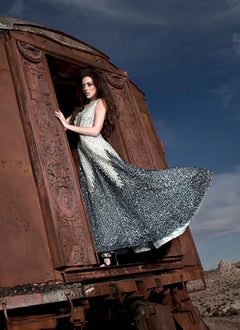
Dramatic and impressive photograph from the Formento & Formento "Circumstance Series". This image captures fantasy, fashion and has a timeless quality to it - capturing the feel of vintage film stills and modern day glamour. Especially wonderful for a Western America interior! This photography duo are internationally known and acclaimed for their narrative work of women empowered...

Category

21st Century and Contemporary American Modern Art

Materials

Archival Pigment

40x60 "Star Wars" VHS Photo Photography Pop Art by Destro

40x60 "Star Wars" VHS Photo Photography Pop Art by Destro

By Destro

Located in Los Angeles, CA

"The VHS" by pop Artist Destro. We all remember those iconic nights at the video store. Pop artist DESTRO once again encapsulates one of our favorite past times in a fine art con...

Category

21st Century and Contemporary American Modern Art

Materials

Archival Pigment

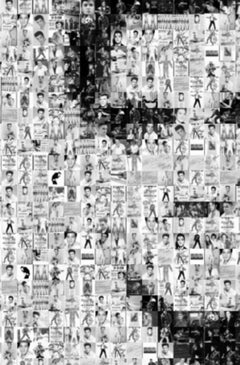
50x40" Elvis by Warhol" Photomosaic Pop Fine Art Photography Unsigned Print

50x40" Elvis by Warhol" Photomosaic Pop Fine Art Photography Unsigned Print

By Destro

Located in Los Angeles, CA

"ELVIS BY ANDY WARHOL" is a photomosaic artwork by Destro. Destro has created large prints which are made up of many hundreds of smaller images. Archival photographic paper Framin...

Category

21st Century and Contemporary American Modern Art

Materials

Archival Pigment

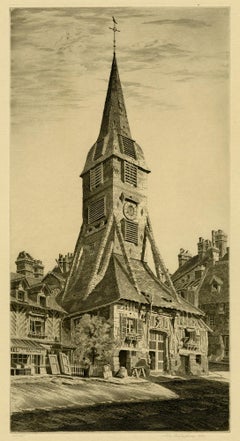
Saint Catherine's Belfry, Honfleur

Saint Catherine's Belfry, Honfleur

By John Taylor Arms

Located in Middletown, NY

Etching on elaborately watermarked, antique, cream laid Dard Hunter paper, 13 5/8 x 7 1/78 inches (347 x 181 mm), full margins. Signed, titled, dated and inscribed "Ed. 100 II." From...

Category

Mid-20th Century American Modern Art

Materials

Handmade Paper, Laid Paper, Etching

Garden Flowers
Garden Flowers

Garden Flowers

By Charles Demuth

Located in New York, NY

Charles Demuth was one of the most complex, talented, and deeply sensitive artists of the American modern period. Whether he was painting floral still lifes, industrial landscapes, or Turkish bathhouses, art was, for Demuth, fraught with personal meaning. A fixture of the vanguard art scene in New York, Demuth navigated the currents of Modernism, producing some of the most exquisite watercolors and original oil paintings in twentieth-century American art. Demuth was born in Lancaster, Pennsylvania, the only child of a well-to-do family. He had an awkward and introverted childhood shaped by a childhood illness, Perthes, a disease of the hip that not only left him permanently lame, but, as part of the “cure,” bedridden for two years in the care of his mother. This long period of incapacitation had a deep impact on Demuth, who came to see himself as an invalid, an outsider who was different from everyone else. It was perhaps during this period of indoor confinement that his keen interest in art developed. Several relatives on his father’s side had been amateur artists, and, following his convalescence, his mother encouraged his artistic pursuits by sending him to a local painter for instruction. The majority of his early pictures are of flowers, a subject for which Demuth maintained a lifelong passion. Following high school, Demuth enrolled at the Drexel Institute of Art in Philadelphia, a school renowned for its commercial arts program. He advanced through the program rapidly, and, in 1905, at the encouragement of his instructors, he began taking courses at the Pennsylvania Academy of the Fine Arts. The two leading teachers then at the Academy were William Merritt Chase and Thomas Anshutz. Anshutz, himself a former student of Thomas Eakins, was well liked by his students, and is best known as the teacher of Robert Henri, John Sloan, and several of the other artists of the Ashcan School. Demuth, too, adopted a similar idiom, working in a controlled, realistic manner while at the Academy, where he remained until 1910. In 1907, Demuth made his first trip to Europe, staying in Paris. He spent time on the periphery of the art scene composed of the numerous American artists there, including John Marin and Edward Steichen. He returned to Philadelphia five months later, and immediately resumed courses at the Academy. Despite his introduction to advanced modern styles in Europe, Demuth’s work of this period retains the academic style he practiced before the trip. It wasn’t until he had summered at New Hope, Pennsylvania, in 1908 and 1911, that his style began to evolve. New Hope was a prominent American Impressionist art colony whose members were largely affiliated with the Pennsylvania Academy. Demuth dropped the conservative tone of his style and adopted a freer and more colorful palette. Although he remained based in Philadelphia, Demuth frequently went to New York during this period. Many of the same American artists of the Parisian art scene Demuth had encountered on his earlier European trip now formed the nucleus of New York’s avant-garde, which centered around Alfred Stieglitz’s 291 gallery. It wasn’t long before Demuth began to apply modernist-inspired strategies to his work. He was particularly influenced by the watercolor work of John Marin, also a former student of Anshutz, whose bold use of color in the medium Demuth freely adapted into looser washes of color. In 1912, Demuth again left for Paris, this time studying in the Académie Moderne, Académie Colorossi, and Académie Julian. In Paris Demuth met the American modernist Marsden Hartley. Hartley, a principal figure in the expatriate art circle, acted as a mentor to Demuth, and introduced him to the wide array of modern styles currently practiced in Europe. Hartley also introduced Demuth to many of the members of the Parisian avant-garde, including Gertrude Stein. Demuth was an aspiring writer, and he spent many hours in conversation with Stein. He wrote extensively during this period, and published two works shortly after his return to America. He also developed an interest in illustrating scenes from literary texts. From 1914 to 1919, Demuth produced a series of watercolors of scenes from books such as Emile Zola’s Nana and Henry James’s The Turn of the Screw. Upon his return to America, Demuth settled in New York. In 1914, Demuth had his first one-man show at Charles Daniel’s gallery, which promoted emerging modern American artists, including Man Ray, Rockwell Kent, Yasuo Kuniyoshi, Stuart Davis, and Max Weber. Demuth drew closer to the artistic vanguard in New York, becoming friends with many in the Stieglitz and Daniel circles, including Georgia O’Keeffe, Marcel Duchamp, Carl Van Vechten, and Edward Fiske. New York’s cosmopolitan atmosphere and active nightlife appealed greatly to Demuth. In a sketchy style well suited to watercolor, he painted many vaudeville and circus themes, as well as nightclub, café, and bathhouse scenes. Often with Duchamp, Demuth took part in an urban subculture replete with nightclubs, bars, drugs, and sexual permissiveness, which, for a homosexual artist like himself, allowed room for previously unattainable personal expression. Demuth’s pictures of sailors, bathhouses, and circus performers embody a sensual and sexual undercurrent, expressing the artist’s sense of comfort and belonging in the bohemian subculture of New York. Simultaneously, Demuth deepened his interest in floral pictures, painting these almost exclusively in watercolor. His style evolved from the broad color washes of his earlier pictures to more spare, flattened, and sinuous compositions, inspired by the drawings of Aubrey Beardsley and other artists of the Aesthetic Movement. Demuth’s flower watercolors are moody and atmospheric, sensuous and elegant, introspective and yet full of expressive power. Moreover they are beautiful, and are unequivocally among the finest still lifes in American art. Despite numerous subsequent artistic undertakings that led him in a variety of directions, Demuth never stopped painting flower pictures, ultimately adding fruits and other still-life objects to his repertoire. In 1916, Demuth began to develop a style later known as Precisionism, a form of landscape painting infused with Cubism, in which space is divided into precisely drawn geometric regions of color. Demuth first began to paint the landscape in an appropriated Cubist mode while on a trip with Hartley to Bermuda. In these early landscapes, in which the curvilinear forms of trees intersect the geometrically articulated architectural forms, Demuth explored ideas that shaped the future development of modernism in America. The full realization of Demuth’s explorations came after his return to America in 1917, when he turned his attention to industrial subjects. These works derive from a “machine aesthetic,” espoused by New York artists such as Francis Picabia, Joseph Stella, Albert Gleizes, and Duchamp, by which artists viewed machines as embodying mystical, almost religious significance as symbols of the modern world. Rather than painting the skyscrapers and bridges of New York as did most of his like-minded contemporaries, Demuth returned to his home town of Lancaster, where he painted factories and warehouses in a Precisionist idiom. The titles for these pictures are often contain literary references, which serve as clues for the viewer to aid in the decoding of the artist’s meaning. In 1923, Demuth planned a series of abstract “poster portraits” of his friends and contemporaries in the New York art and literary scene. In these “portraits,” Demuth combined text and symbolic elements to evoke the essential nature of his sitters’ distinguishing characteristics. In this fashion, he painted portraits of such artists as Georgia O’Keeffe, John Marin, and Arthur Dove. His most famous poster portrait, I Saw the Figure 5 in Gold...

Category

20th Century American Modern Art

Materials

Paper, Watercolor
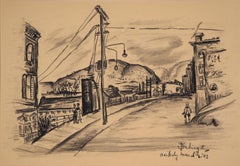
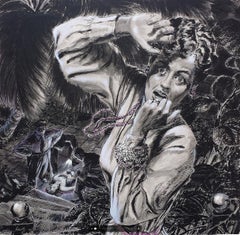
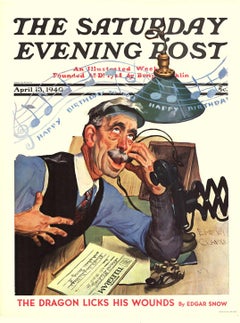
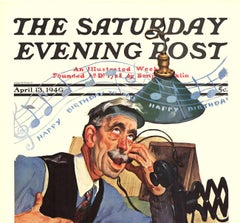
Saturday Evening Post Illustration. “ The Devil’s Stronghold” Original Magazine

Saturday Evening Post Illustration. “ The Devil’s Stronghold” Original Magazine

By Edwin Georgi

Located in Miami, FL

The work is mostly black and white to indicate that this is a night scene. On closer inspection, you will see areas of magenta and ivory throughout The publisher's label on verso ide...

Category

1960s American Modern Art

Materials

India Ink, Gouache, Pencil, Illustration Board

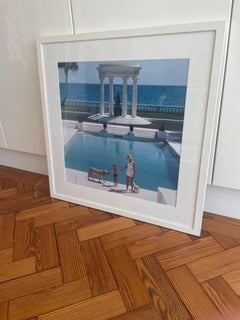
Giacomo Montegazza, 1983 - Slim Aarons Estate Stamped Limited Edition C-Type

Giacomo Montegazza, 1983 - Slim Aarons Estate Stamped Limited Edition C-Type

By Slim Aarons

Located in Brighton, GB

Giacomo Montegazza, 1983 by Slim Aarons 16 x 20" print. Limited Edition Estate Stamped Print. Edition of 150. Printed Later. "Giacomo Montegazza" is a Limited Edition Estate Stampe...

Category

20th Century American Modern Art

Materials

Photographic Paper, Color, C Print, Digital

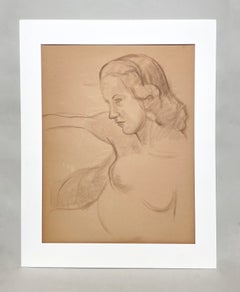
A Large Striking 1930s American Modern, Art Deco Era Portrait, Female Nude Model

A Large Striking 1930s American Modern, Art Deco Era Portrait, Female Nude Model

By Walter Burt Adams

Located in Chicago, IL

A large, striking 1920s American Modern, Art Deco era drawing, portrait of a young female nude model in profile by notable Chicago artist, Walter Burt Adams (Am. 1903-1990). A wond...

Category

1920s American Modern Art

Materials

Paper, Charcoal, A La Poupee

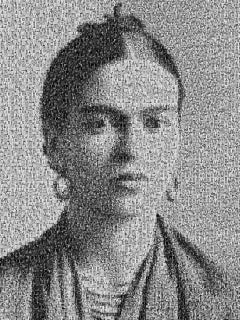
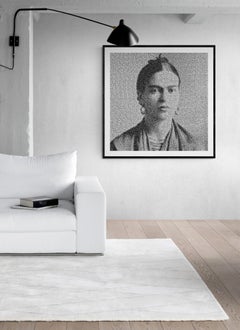
"64x48" FRIDA KAHLO Photomosaic Pop Art Archival Fine Art Photography Print

"64x48" FRIDA KAHLO Photomosaic Pop Art Archival Fine Art Photography Print

By Destro

Located in Los Angeles, CA

Frida is a photomosaic artwork by Destro. The first release in a series mosaic works called "Icons". Destro has created large prints which are made up of many hundreds of smaller i...

Category

21st Century and Contemporary American Modern Art

Materials

Archival Pigment

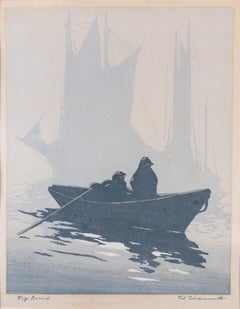
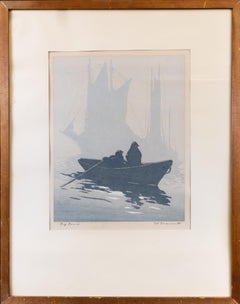
Fog Bound
Fog Bound

Fog Bound

By Tod Lindenmuth

Located in Missouri, MO

Fog Bound Tod Lindenmuth (American, 1885-1976) Woodblock Print 14 x 11 inches 26 x 20.25 inches with frame Signed Lower Right Titled Lower Left A founder of the Provincetown Art Association and one of the original Provincetown Printers, Tod Lindenmuth was a semi-abstract painter and graphic artist who did much to promote modernist styles. Although he was much influenced by Abstract Expressionism, his subject matter was realistic enough to be recognizable. He did linoleum cuts and was one of the first to work with that medium, and towards the end of his life, he experimented with collage. In the 1930s, he had commissions for the Public Works of Art Project and the Works Progress Administration. Lindenmuth was born in Allentown, Pennsylvania. He studied with Robert Henri at the New York School of Art in Manhattan, and in Provincetown with E. Ambrose Webster and George Elmer Browne. He first exhibited in Provincetown in 1915, and between 1917 and 1928 served on the jury for the Provincetown Art Association's 'First Modernistic Exhibition". He exhibited regularly with the Society of Independent Artists in New York. He married artist and illustrator Elizabeth Boardman Warren...

Category

Mid-20th Century American Modern Art

Materials

Color

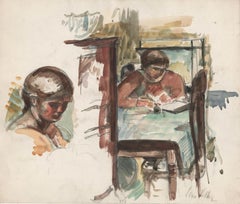
Two Studies of Henriette (Head of the artist's wife & The Artist's wife writing

Two Studies of Henriette (Head of the artist's wife & The Artist's wife writing

By Leon Kelly

Located in Fairlawn, OH

Two Studies of Henriette (Left: Head of the artist's wife, Right: The Artist's wife writing a letter) Watercolor and graphite on paper, 1928-1930 Signed in pencil lower right (see photo) Image/sheet size: 9 3/8 x 11 inches Condition: Excellent Colors fresh and unfaded Provenance: Estate of the artist The Orange Chicken...

Category

1920s American Modern Art

Materials

Watercolor

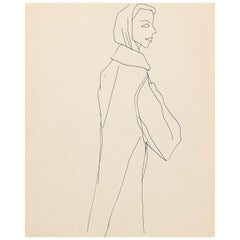
Famous Raincoat
Famous Raincoat

Famous Raincoat

By Andy Warhol

Located in Toronto, Ontario

Andy Warhol is arguably the most important American artist of the 20th century. In the 1950s, he was an in-demand and celebrated illustrator working for New York's toniest publicatio...

Category

1950s American Modern Art

Materials

Ballpoint Pen

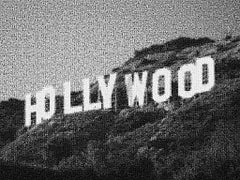
48x64 " Hollywood Sign" Photomosaic Pop Fine Art Photography Unsigned

48x64 " Hollywood Sign" Photomosaic Pop Fine Art Photography Unsigned

By Destro

Located in Los Angeles, CA

"Hollywood Sign" is a photomosaic artwork by Destro. This image is made up of 100's of smaller images of Hollywood related imagery. Archival photographic paper Framing options ava...

Category

21st Century and Contemporary American Modern Art

Materials

Archival Pigment

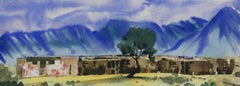
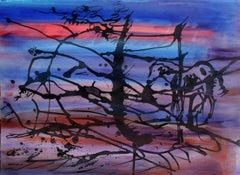
Horse and Tree

Horse and Tree

By Robert Noel Blair

Located in Buffalo, NY

You are viewing a modernist American watercolor painting by Robert Noel Blair Robert Noel Blair (American, 1912-2003) was an American artist, painter, sculptor, printmaker and te...

Category

1960s American Modern Art

Materials

Archival Ink, Paper, Watercolor
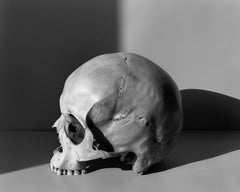
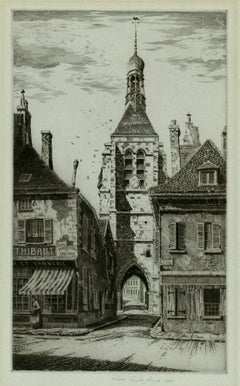
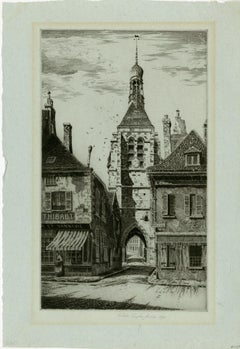
Notre Dame du Val, Provins / Thibaut

Notre Dame du Val, Provins / Thibaut

By John Taylor Arms

Located in Middletown, NY

Etching on bluish-grey wove paper, 8 5/8 x 5 1/8 inches (221 x 130 mm), full margins. Signed and dated in pencil. In good condition with light mat tone on the recto and various frame...

Category

Mid-20th Century American Modern Art

Materials

Handmade Paper, Laid Paper, Etching

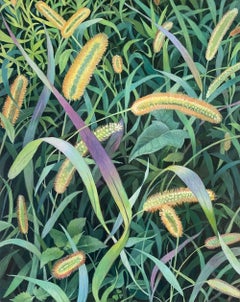
Late Summer Pageant

Late Summer Pageant

By Susan Cohen

Located in Fairfield, CT

About the artist: Susan Cohen’s paintings are exhibited with New York City galleries: George Billis, Garvey Simon, First Street,The Painting Center; and the Cynthia Winings Gallery...

Category

2010s American Modern Art

Materials

Egg Tempera, Panel

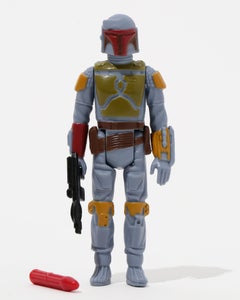
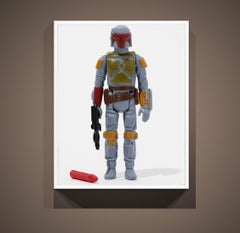
48x36  Rocket Firing Boba Fett Star Wars, Empire Strikes Back, Jedi Photography

48x36 Rocket Firing Boba Fett Star Wars, Empire Strikes Back, Jedi Photography

By Destro

Located in Los Angeles, CA

This is a pop art print of the original Rocket Firing Boba Fett toy from Kenner "The Toys" by LA based Pop Artists DESTRO. These iconic figures have become more then just iconic col...

Category

21st Century and Contemporary American Modern Art

Materials

Ink, Color, Archival Pigment

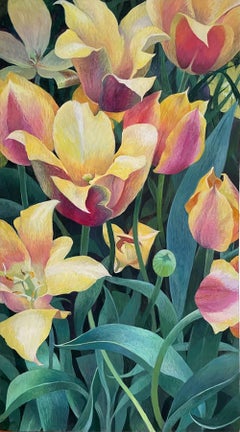
Tulip Festival

Tulip Festival

By Susan Cohen

Located in Fairfield, CT

About the artist: Susan Cohen’s paintings are exhibited with New York City galleries: George Billis, Garvey Simon, First Street,The Painting Center; and the Cynthia Winings Gallery...

Category

2010s American Modern Art

Materials

Egg Tempera, Panel

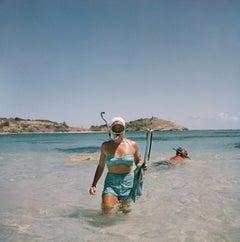
Snorkelling in Antigua, 1960 - Limited Edition Estate Stamped Print

Snorkelling in Antigua, 1960 - Limited Edition Estate Stamped Print

By Slim Aarons

Located in Brighton, GB

Snorkelling in Antigua is a Limited Edition Estate Stamped Digital C-Type Print by 20th Century American Photographer Slim Aarons. 16" x 16" print. Limited Edition Estate Stamped C-...

Category

20th Century American Modern Art

Materials

Photographic Paper, C Print, Color, Digital

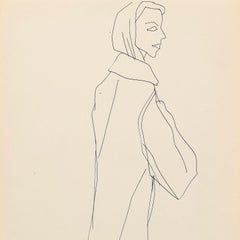
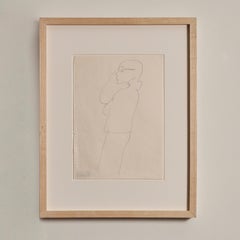
Woman in Blue
Woman in Blue

Woman in Blue

By Andy Warhol

Located in Toronto, Ontario

Andy Warhol is arguably the most important American artist of the 20th century. In the 1950s, he was an in-demand and celebrated illustrator working for New York's toniest publications (like Harper's Bazaar) and elegant shops (such as Bonwit Teller), in addition to many smaller independent fashion companies. In the mid-1950s Warhol became synonymous with shoes after creating a successful campaign for shoe retailer Miller & Sons. Although Warhol had a parallel art practice, primarily focused on drawing, surpassing the designation of “commercial artist” proved difficult. Consider that this era was the height of popularity for the Abstract Expressionist painters. Despite the prevailing aesthetic, Warhol continued to be dedicated to making elegant or playful line drawings. This untitled illustration is an intimate example of Warhol at his best in the 1950's. It is ambiguous whether this was created for a client, or whether Warhol was inspired by an encounter in real life. With the lightest touch, the artist renders a glamorous woman's profile as she holds a young child in her arms. Unique to this drawing is the subtle presence of the child, who rests gently against the woman's chest in a tender embrace yet is almost entirely abstract. This maternal exchange represents an unexpected deviation from Warhol's typical subject matter, possibly serving as a tribute to his own mother, Julia Warhola, whom he admired deeply. This elegant drawing is a marvellous precursor to Warhol's Pop Art era when he became transfixed by images and representation of women. Questions about this piece? Contact us. Visit our Toronto gallery on Thursdays or by appointment. Untitled "Woman in Blue...

Category

1950s American Modern Art

Materials

Ballpoint Pen

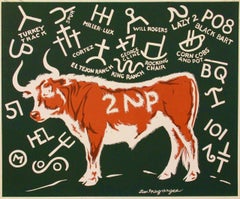
2 Lazy 2 P

2 Lazy 2 P

By Lon Megargee 1

Located in Phoenix, AZ

2 Lazy 2P, ca. 1939 Lon Megargee Serigraph 20 x 24 inches Signed in screen Original serigraph print by Lon Megargee 1883 - 1960 Featured in "Hot Irons" by Oren Arnold and John Hale, 1940 SHIPPING CHARGES INCLUDE SHIPPING, PACKAGING & INSURANCE Lon Megargee created this serigraph from his commission with Oren Arnold and John Hale to do their dust jacket for the book, " Hot Irons", 1940. Arnold and Hale wanted to establish a reference work, an "authority", with a entertaining history about the evolution of the brand. Megargee created a painting of a steer that was branded with the script, 2 Lazy 2 P. Surrounding the steer is a random display of famous brands of ranches in the Southwest. It was well received and must have prompted Megargee to create the likeness as a print. The brand is described in chapter thirteen, page 207-208 and says, " Ed Stram, who was Arizona state veterinarian for sixteen years, fire-branded his cattle with this peculiar crest. It isn't peculiar unless you have an equally peculiar sense of humor. At a glance it appears to be just another typically unimaginative brand, but it has been used to make many a thousand girls blush, and a few thousand bashful young men as well". COLLIER GALLERY, FINE ART ESTATE OF LON MEGARGEE Born and raised in Philadelphia, Pennsylvania, Lon Megargee, at age 13, ran away from his upper class home and went West in 1896 led by his zest for the wild and adventuresome life. There he established a reputation as a cowboy painter and illustrator with work most associated with Arizona Brewing Company ads featuring humorous aspects of cowboy life. In his youth, he worked as a free-lance cowboy, exhibition roper, poker dealer, and bronco buster in Arizona, and then went east again to study art in Philadelphia at the Pennsylvania Academy of Fine Arts, and to New York at the Art Students League and Pratt Institute. He returned to Arizona, living in Cave Creek, Salt River Canyon, Phoenix and the last years of his life near Sedona. His Phoenix home later became a popular hotel and dining place called the Hermosa Inn. Megargee was a ranch owner and also did oil canvases of the places he loved and the cowboy life he admired. By 1910, he was among the earliest resident artists, and was probably the best known artist in Arizona. His name was first associated with a landscape series of 15 large murals for the Capitol Building, newly constructed just after Arizona became a state in 1912. Another one of his paintings, Elemental, was the first painting by an artist living in Arizona to be acquired for the Municipal Collection of Phoenix. These works were chosen from entries in the State Fair, where he continued to win prizes for figure and landscape painting. From 1911 to 1953, he did numerous commission works for the Santa Fe Railroad, including a work titledNavajos Watching a Santa Fe Train. Between 1915 and 1930, he also painted in the Los Angeles area of California and had entries in the California State Fair. He died in Cottonwood, Arizona. After his death, theSaturday Evening Post had a double-page reproduction of his painting Cowboy's Dream. Creator of the iconic logo for the Stetson Hat Company, " Last Drop From his Stetson", still in use today. Fine Art Estate of Lon Megargee We offer signed in print and original signature block prints. Custom, hand carved, signature frames, with archival standards and a speciality in hand dyed mats and french matting are provided for a beautiful and timeless presentation. Megargee explored different mediums; printmaking captivated him in particular. The contrast of the black and white block print method captured perfectly his interpretation of a bold American West. The first print was produced around 1921 and culminated with the creation of “The Cowboy Builds a Loop” in 1933 with 28 images and poetry by his friend, Roy George. Megargee continued producing prints throughout the 1940s and early 50s. At age 13, Lon Megargee came to Phoenix in 1896 following the death of his father in Philadelphia. For several years he resided with relatives while working at an uncle’s dairy farm and at odd jobs. He returned to Philadelphia in 1898 – 1899 in order to attend drawing classes at the Pennsylvania Academy of the Fine Arts. Back in Phoenix in 1899, he decided at the age of 16 to try to make his living as a cowboy. Lon moved to the cow country of Wickenburg where he was hired by Tex Singleton’s Bull Ranch. He later joined the Three Bar Ranch . . . and, after a few years, was offered a job by Billy Cook...

Category

1930s American Modern Art

Materials

Screen

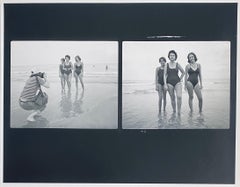
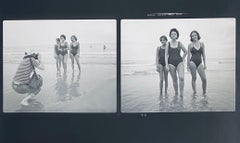
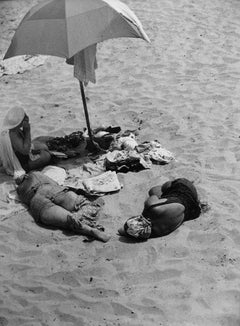
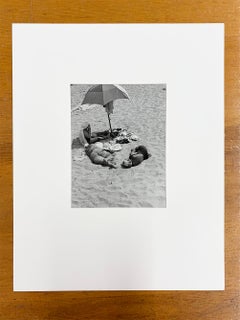
Bathing Beauties
Bathing Beauties

John AlbokBathing Beauties, 1943

$1,200Sale Price|57% Off

Bathing Beauties

By John Albok

Located in Denton, TX

Vintage gelatin silver print 9 1/2 x 7 1/4 in. Titled, dated and artist stamp on verso. Born in Munkacs, Hungary, John Albok learned photography as a boy. He came to the U.S. in 192...

Category

Mid-20th Century American Modern Art

Materials

Silver Gelatin

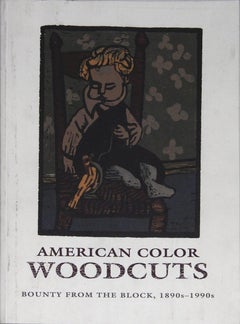
James Watrous "American Color Woodcuts Art Book, Signed, 1990s"
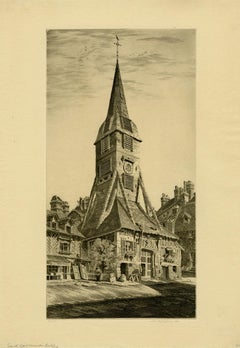
James Watrous "American Color Woodcuts Art Book, Signed, 1990s"
Located in Brooklyn, NY

American Color Woodcuts: Bounty from the Block, 1890s–1990s, published in 1993 by the Elvehjem Art Center, Madison, WI, is a softcover book in very good condition, with a tight bindi...
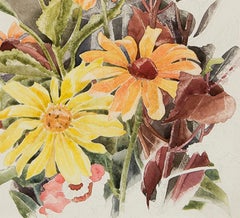
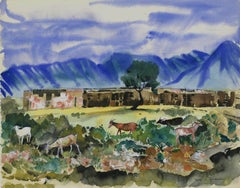
Category

1990s American Modern Art

Materials

Offset

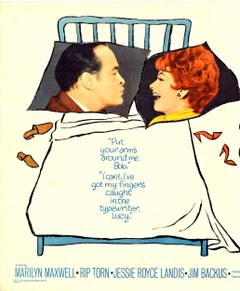
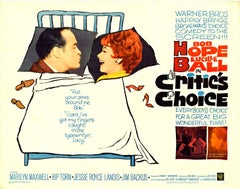
Original 1963 “Critic’s Choice” — Bob Hope & Lucille Ball — Half Sheet Movie

Original 1963 “Critic’s Choice” — Bob Hope & Lucille Ball — Half Sheet Movie

Located in Spokane, WA

Original 1963 Half Sheet Movie Poster — “Critic’s Choice” — Bob Hope & Lucille Ball — Warner Bros. — 22x28” Bring home a witty glimpse of mid-20th century Hollywood with this o...

Category

1960s American Modern Art

Materials

Offset

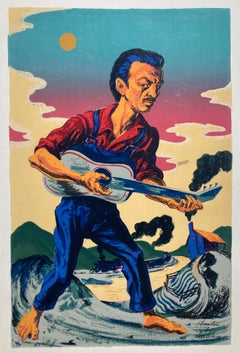
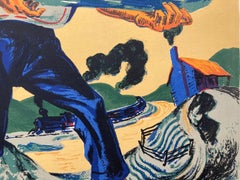
THOMAS HART BENTON
THOMAS HART BENTON

THOMAS HART BENTON

By Harry Sternberg

Located in Santa Monica, CA

HARRY STERNBERG (American, 1904-2001) THOMAS BENTON, 1943. Color screenprint on gray card stock wove paper. Edition of 30. Signed "Benton by Sternberg" in ink, by hand by the artist...
Category

1940s American Modern Art

Materials

Screen

R2D2 30x40 First Release , Star Wars, Photography Pop Art, 70's Toys, Movie

R2D2 30x40 First Release , Star Wars, Photography Pop Art, 70's Toys, Movie

By Destro

Located in Los Angeles, CA

R2D2 from the original Kenner release of the Star Wars toys in May of 1977 This is pre release is the first release in the much anticipated series "The Toys" "They encapsulate an era...

Category

21st Century and Contemporary American Modern Art

Materials

Archival Pigment

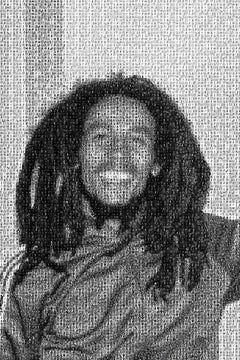
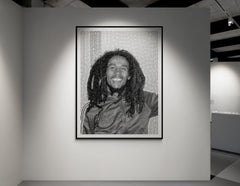
"64x48" BOB MARLEY Photomosaic Pop Art Archival Fine Art Photography Print

"64x48" BOB MARLEY Photomosaic Pop Art Archival Fine Art Photography Print

By Destro

Located in Los Angeles, CA

'Bob" is a photomosaic artwork by Destro. The first release in a series mosaic works called "Icons". Destro has created large prints which are made up of many hundreds of smaller i...

Category

21st Century and Contemporary American Modern Art

Materials

Archival Pigment

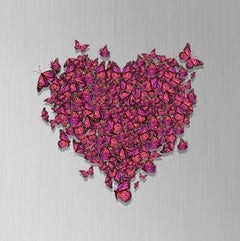
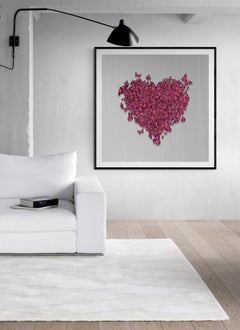
"BUTTERFLY HEART" 60x40 Pop Art Archival Print Butterflies Unsigned Edition

"BUTTERFLY HEART" 60x40 Pop Art Archival Print Butterflies Unsigned Edition

By Destro

Located in Los Angeles, CA

Archival pigment pop art print of butterflies creating a heart shape created by DESTRO DESTRO is an LA based pop artist. and image creator. Printed on archival exhibition paper.

Category

21st Century and Contemporary American Modern Art

Materials

Archival Ink, Archival Pigment

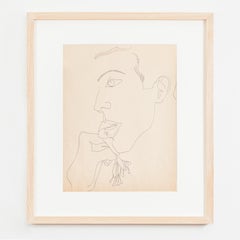
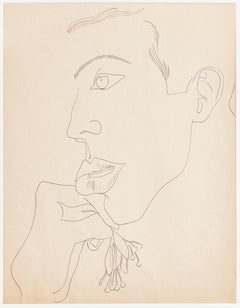
Young Man with Flower

Young Man with Flower

By Andy Warhol

Located in Toronto, Ontario

Andy Warhol (1928-1987) is arguably the most important American artist of the 20th century. He not only defined Pop Art but had an unrivaled influence on artists and image-making. ...

Category

1950s American Modern Art

Materials

Paper, Ballpoint Pen

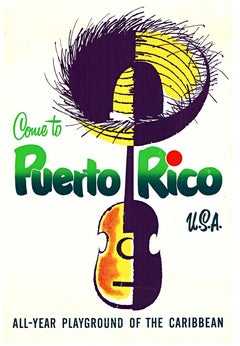
Original Vintage Poster: "Come to Puerto Rico, U.S.A. Caribbean Playground

Original Vintage Poster: "Come to Puerto Rico, U.S.A. Caribbean Playground

Located in Spokane, WA

Original Vintage Poster: "Come to Puerto Rico, U.S.A. - All-Year Playground of the Caribbean." This serigraph is archivally linen-backed and ready for framing. It is in B+ condition,...

Category

1950s American Modern Art

Materials

Screen

American Modern art for sale on 1stDibs.

Find a wide variety of authentic American Modern art available for sale on 1stDibs. Works in this style were very popular during the 21st Century and Contemporary, but contemporary artists have continued to produce works inspired by this movement. If you’re looking to add art created in this style to introduce contrast in an otherwise neutral space in your home, the works available on 1stDibs include elements of blue, orange, purple, red and other colors. Many Pop art paintings were created by popular artists on 1stDibs, including Slim Aarons, Destro, Howard Schatz, and John Taylor Arms. Frequently made by artists working with Paint, and Oil Paint and other materials, all of these pieces for sale are unique and have attracted attention over the years. Not every interior allows for large American Modern art, so small editions measuring 0.25 inches across are also available.