Art by Medium: Engraving

4,606 Results
to
773
2,801
901
810
224
137
Overall Width
to
Overall Height
to
1,060
953
2,279
653
38
151
185
162
125
165
202
438
174
185
742
685
659
362
352
318
113
74
33
27
17
12
11
5
2
2,398
1,152
1,068
741
669
532
392
353
258
202
197
196
175
160
149
144
114
113
109
108
2,724
1,817

Use search to find more

322
111
105
69
67

Use search to find more

Medium: Engraving
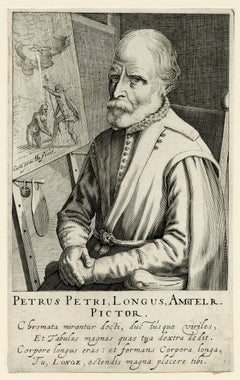
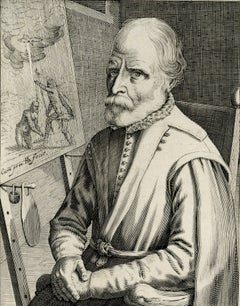
Old Master, 1610, engraving, Hendrick Hondius I, Painter Pieter Aetsen, Dutch

Old Master, 1610, engraving, Hendrick Hondius I, Painter Pieter Aetsen, Dutch

By Hendrik Hondius the Elder

Located in Fairlawn, OH

Hendrick Hondius I Flemish/Dutch, 1573–1650 formerly attributed jointly to Simon Frisius and Hondius Portrait of Pieter Aertsen (“Petrus Petri, Longus, Amstelr. Pictor”) 1610 Engraving on laid paper Plate: approximately 20.4 × 12.8 cm (8 × 5 in.) From Pictorum aliquot celebrium praecipuae Germaniae Inferioris effigies Signed within the image at lower left: Cum priv. Hh. fecit Lettered below the portrait with the sitter’s name and a four-line Latin encomium New Hollstein (Hondius) 105; Hollstein (Frisius) 149 Christopher Mendez stock label verso Attribution and series This engraving was published in The Hague in 1610 as part of Hendrick Hondius I’s celebrated series Pictorum aliquot celebrium praecipuae Germaniae Inferioris effigies—“Portraits of Certain Celebrated Painters, Principally of the Low Countries.” The volume assembled engraved likenesses of distinguished Northern European artists and helped establish an enduring visual canon of Netherlandish art. The old Christopher Mendez label identifies the engraving as “Frisius and Hondius” and calls it number 30 in the series. Current Rijksmuseum cataloguing, however, identifies Hendrick Hondius I as both engraver and publisher, consistent with the inscription Hh. fecit—“Hendrick Hondius made this”—within the image. Simon Frisius contributed other plates to the publication, which presumably accounts for the older dual attribution and the print’s listing under Frisius in Hollstein. Numbering varies between arrangements or parts of the series: another commercial description identifies the Aertsen portrait as plate 27 of the second part. The safest modern attribution is therefore engraved and published by Hendrick Hondius I, while recording the historical Frisius–Hondius attribution. The Rijksmuseum dates its impression to 1610 and gives the plate dimensions as 204 × 128 mm. Catalog Essay and Analysis Pieter Aertsen is represented half-length, seated before an easel and turning slightly toward the viewer. His heavy mustache, rounded beard, furrowed brow and direct gaze communicate experience and intellectual authority rather than courtly refinement. Hondius surrounds him with the material signs of his profession: palette, brushes and mahlstick rest on the ledge at left, while the unfinished or displayed painting behind him depicts the Baptism of Christ. The inclusion of a religious composition is important. Although Aertsen is now especially celebrated for monumental kitchen and market scenes, he was also a highly regarded painter of altarpieces. Many of those religious works were destroyed during the iconoclastic upheavals of the sixteenth century. By placing a sacred history painting so conspicuously beside the sitter, Hondius reminds the viewer that Aertsen was not merely a painter of food, peasants and market produce, but an ambitious inventor of large-scale religious compositions. The Baptism scene also establishes a subtle relationship between the artist and his creation. Aertsen’s large head and upper body dominate the foreground, while the slender figures in the painting recede dramatically. The arrangement transforms the workshop into a site of artistic memory: the painter survives physically through his likeness and professionally through the work displayed behind him. Hondius differentiates the surfaces through exceptionally controlled engraving. Closely spaced, curving lines model the sitter’s face and sleeves, while dense cross-hatching produces the dark wall and garment. The comparatively open white areas of the bald forehead, collar and cloak give the figure monumental clarity. The strict geometry of the chair, easel and background contrasts with the organic lines of Aertsen’s face and beard. The print is also an early example of the artist portrait as cultural historiography. Hondius’s series did more than reproduce appearances. It organized Northern painters into a lineage of recognized masters, pairing each likeness with a concise Latin inscription praising the sitter’s distinctive achievements. The series contained portraits made by Hondius, Simon Frisius, Andries Jacobsz. Stock and Robert de Baudous; the Rijksmuseum describes its set as comprising seventy-two portraits. Inscription The title identifies the sitter as: PETRUS PETRI, LONGUS, AMSTELR. PICTOR That is, “Pieter Pietersz., the Tall, painter of Amsterdam.” Longus translates Aertsen’s familiar nickname Lange Piet or “Tall Pieter.” The Latin verses may be translated: Learned men admire your colors and vigorous draughtsmanship, And the great pictures produced by your right hand. Tall you were in body, and in forming tall bodies; You, O Tall One, show that greatness pleased you. The poem plays repeatedly upon Aertsen’s exceptional height, his nickname, the elongated figures in his paintings and the unusually large scale of his compositions. A period description of another impression transcribes the same inscription and identifies the scene on the easel as the Baptism of Christ. Hendrick Hondius I Hendrick Hondius the Elder was born at Duffel, near Antwerp, in 1573. Trained initially in drawing and engraving, he reportedly studied with the celebrated printmaker Jan Wierix. He also developed interests in mathematics, perspective, architecture and fortification design. Following travels that included Cologne, London and Paris, he settled in The Hague, where he entered the Guild of Saint Luke in 1597. Hondius became an important engraver, publisher and organizer of printed knowledge. His publications ranged from architectural and perspective studies to portraits and reproductive prints. His 1610 Pictorum aliquot celebrium was among his most consequential projects. The collection expanded upon the earlier artist-portrait series issued in Antwerp in 1572 by Hieronymus Cock’s widow, Volcxken Diericx, with texts by Dominicus Lampsonius. By enlarging the group to include later Netherlandish artists—and selected German and English figures—Hondius fashioned a broader history of Northern European art. Hondius should not be confused with the contemporary cartographer Jodocus Hondius or with Jodocus’s son, Hendrik Hondius II. Pieter Aertsen Pieter Aertsen was born in Amsterdam in 1508 and died there on June 2, 1575. By 1535 he was documented as a master in the Antwerp Guild of Saint Luke. He remained in Antwerp for much of his career before returning to Amsterdam around the middle of the century. Known as Lange Piet because of his height, Aertsen was a pivotal figure in the development of Northern European genre and still-life painting. He pioneered monumental compositions in which lavish displays of meat, fish, vegetables, cooking vessels and market goods occupy the foreground, while a comparatively small biblical episode appears in the distance. These deliberate reversals of pictorial hierarchy invite the viewer to choose between material abundance and spiritual meaning. Aertsen’s compositions were deeply influential upon his nephew and pupil Joachim Beuckelaer and, through him, upon subsequent Flemish and Dutch kitchen...

Category

1610s Old Masters Art by Medium: Engraving

Materials

Engraving

Ruinarum Antiquarum quae Romae, title page; Authentic drawings of ancient ruins

Ruinarum Antiquarum quae Romae, title page; Authentic drawings of ancient ruins

By Willem van Nieulandt II

Located in Middletown, NY

The title page from a popular Grant Tour publication featuring a cartouche with Fame and Winged Victory, and an allegory to artistic inspiration. Rome: 1618. Engraving on cream lai...

Category

Early 17th Century Old Masters Art by Medium: Engraving

Materials

Laid Paper, Engraving

Triumphfzug, from Triumphfzug der edelen sighaften Weiber

Triumphfzug, from Triumphfzug der edelen sighaften Weiber

By Hans Sebald Beham

Located in Middletown, NY

Frankfurt: c1549. Engraving on laid paper, 7/8 x 5 3/8 (22 x 136 mm), thread margins. Fine impression. A fine first state (of 3) impression, with the collector's stamp of Pieter M.M....

Category

16th Century Old Masters Art by Medium: Engraving

Materials

Handmade Paper, Laid Paper, Engraving

Portrait de Fanny Charrin /// Female Women Artist French Impressionist Modern

Portrait de Fanny Charrin /// Female Women Artist French Impressionist Modern

Located in Saint Augustine, FL

Artist: Nori Malo-Renault (French, 1871-1953) Title: "Portrait de Fanny Charrin" Portfolio: Gazette des Beaux-Arts *Issued unsigned Year: 1909 Medium: Original Etching and Drypoint o...

Category

Early 1900s French School Art by Medium: Engraving

Materials

Drypoint, Etching, Intaglio

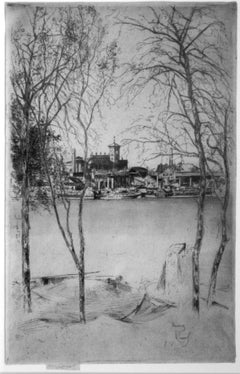
Laburnums and Battersea.

Laburnums and Battersea.

By Theodore Casimir Roussel

Located in Plano, TX

Laburnums and Battersea. 1889-90. Etching and drypoint. Hausberg 34.iii/v. 13 1/2 x 8 5/8 (image and sheet). Only one other known impression in this state (total of about 62 known im...

Category

19th Century Impressionist Art by Medium: Engraving

Materials

Drypoint, Etching

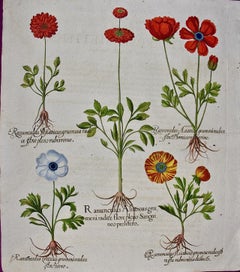
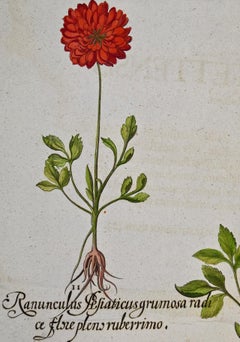
Buttercup Flowers: A Besler 18th Century Hand-colored Botanical Engraving

Buttercup Flowers: A Besler 18th Century Hand-colored Botanical Engraving

By Basilius Besler 1

Located in Alamo, CA

This is a hand-colored copper plate engraving depicting Ranunculus (Persian Buttercup) flowers from Basilius Besler's landmark work, Hortus Eystettensis (Garden at Eichstatt), first published in 1613 in Eichstatt, Germany near Nuremberg and later in 1640 and 1713. This beautiful colorful engraving is printed on thick laid chain-linked paper. There is latin text on the verso. There are central horizontal creases and two small holes on the right and another in the left lower corner. It is otherwise in excellent condition. Basilius Besler (1561–1629) was an apothecary and botanist. He was curator of the Willibaldsburg Castle garden of Johann Konrad von Gemmingen, prince bishop...

Category

Early 18th Century Academic Art by Medium: Engraving

Materials

Engraving

[ Bird of Paradise] La Pie de paradise, vue par derriere, No.21

[ Bird of Paradise] La Pie de paradise, vue par derriere, No.21

By Jacques Barraband

Located in Paonia, CO

[ Bird of Paradise] La Pie de paradise, vue par derriere , No.21, Paris 1801-1806 [Astrapia nigra]. Color-printed engraving with hand-coloring. French botanical and zoological illustrator Jacques Barraband (1767-1809) was known as one of the finest ornithological artists of his time .He is best known for his watercolors and engravings that were commissioned by François LeVaillant, French explorer, naturalist, zoological collector , noted ornithologist and author. Levaillant’s Histoire naturelle des perroquets (1801-05) and his Histoire naturelle des oiseaux de paradis (Birds of Paradise, 1801-06), both of which Barraband contributed to, are still considered some of the most beautiful bird books of all times because of their exceptional scientific accuracy, rich color and detail. The Astrapia nigra is a Bird of Paradise that inhabits the Vogelkop Peninsula of West Papua...

Category

Early 18th Century Other Art Style Art by Medium: Engraving

Materials

Engraving

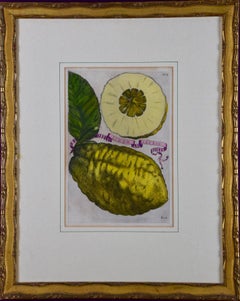
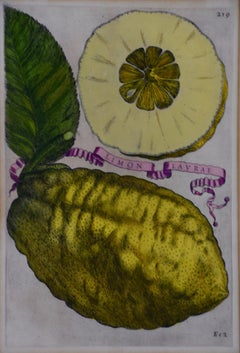
Limon Lavrae: A 17th C. Hand-colored Engraving of Lemon Anatomy by G. Ferrari

Limon Lavrae: A 17th C. Hand-colored Engraving of Lemon Anatomy by G. Ferrari

By Giovanni Battista Ferrari

Located in Alamo, CA

This 17th century hand-colored engraving of a lemon entitled "Limon Lavrae", plate 219 from Giovanni Baptista Ferrari's publication "Hesperides, sive, De Malorum Aureorum Cultura Etu...

Category

17th Century Old Masters Art by Medium: Engraving

Materials

Engraving

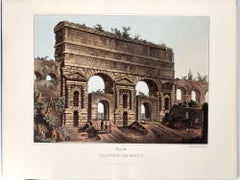
The Claudian Aquaduct (Porta Maggiore)

The Claudian Aquaduct (Porta Maggiore)

By Matthew Dubourg

Located in Middletown, NY

London: J. Taylor, 1820. Etching with aquatint and engraving with hand coloring in watercolor on cream wove paper with a gilded edge, 11 1/2 x 14 3/4 inches (290 x 374 mm), the full...

Category

Mid-19th Century English School Art by Medium: Engraving

Materials

Watercolor, Handmade Paper, Engraving, Etching, Aquatint

Tribute to Artists 2 by Zhang Hongyu - Portrait painting, black and white

Tribute to Artists 2 by Zhang Hongyu - Portrait painting, black and white

By Zhang Hongyu

Located in Paris, FR

Tribute to Artists 2 is a unique painting by contemporary artist Hongyu Zhang. The painting is made with India ink, acrylic, pastel and engraving on cardboard mounted on canvas, dime...

Category

2010s Contemporary Art by Medium: Engraving

Materials

Canvas, Pastel, India Ink, Acrylic, Cardboard, Engraving

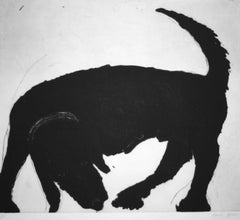
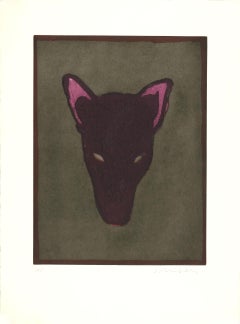
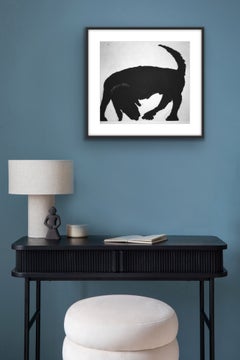
Stevie Kate Boxer, limited edition animal print, contemporary dog art

Stevie Kate Boxer, limited edition animal print, contemporary dog art

By Kate Boxer

Located in Deddington, GB

Stevie is a limited edition drypoint and carborundum etching by Kate Boxer. Kate Boxer makes the plates in her studio which are then sent to to the master printmakers. After they h...

Category

2010s Contemporary Art by Medium: Engraving

Materials

Drypoint, Carborundum Etching

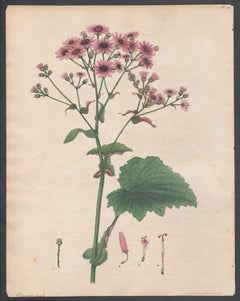
Two-coloured-leaved Cineraria. Andrews antique botanical flower engraving print

Two-coloured-leaved Cineraria. Andrews antique botanical flower engraving print

By Henry C Andrews

Located in Melbourne, Victoria

'Cineraria Aurita - Two-coloured-leaved Cineraria' Native of the Canary Islands. Original copper-line engraving with original hand-colouring from Henry Andrews' 'The Botanist's Re...

Category

Early 19th Century Naturalistic Art by Medium: Engraving

Materials

Engraving

'Fantasia Americana, 1880' — Mid-Century American Surrealism

'Fantasia Americana, 1880' — Mid-Century American Surrealism

By Lawrence Kupferman

Located in Myrtle Beach, SC

Lawrence Kupferman, 'Fantasia Americana – 1880', drypoint etching with sandground, 1943. Signed, titled, and annotated 'Series A, 1971 2/6' in pencil. A superb, richly-inked impression, on heavy, cream wove paper, with full margins (2 1/2 to 3 1/2 inches); the paper slightly lightened within the original mat opening, otherwise in excellent condition. One of only 6 impressions printed in 1971, with the added sandground grey background tint. Archivally matted to museum standards, unframed. Image size 11 13/16 x 14 3/4 inches; sheet size 18 x 20 1/4 inches. Collections: National Gallery of Art, Zimmerli Art Museum (Rutgers University). ABOUT THE ARTIST Lawrence Kupferman (1909 - 1982) was born in the Dorchester neighborhood of Boston and grew up in a working-class family. He attended the Boston Latin School and participated in the high school art program at the Museum of Fine Arts, Boston. In the late 1920s, he studied drawing under Philip Leslie Hale at the Museum School—an experience he called 'stultifying and repressive'. In 1932 he transferred to the Massachusetts College of Art, where he first met his wife, the artist Ruth Cobb. He returned briefly to the Museum School in 1946 to study with the influential expressionist German-American painter Karl Zerbe. Kupferman held various jobs while pursuing his artistic career, including two years as a security guard at the Museum of Fine Arts, Boston. During the 1930s he worked as a drypoint etcher for the Federal Art Project, creating architectural drawings in a formally realistic style—these works are held in the collections of the Fogg Museum and the Smithsonian American Art Museum. In the 1940s he began incorporating more expressionistic forms into his paintings as he became progressively more concerned with abstraction. In 1946 he began spending summers in Provincetown, Massachusetts, where he met and was influenced by Mark Rothko, Hans Hofmann, Jackson Pollock, and other abstract painters. At about the same time he began exhibiting his work at the Boris Mirski Gallery in Boston. In 1948, Kupferman was at the center of a controversy involving hundreds of Boston-area artists. In February of that year, the Boston Institute of Modern Art issued a manifesto titled 'Modern Art and the American Public' decrying 'the excesses of modern art,' and announced that it was changing its name to the Institute of Contemporary Art (ICA). The poorly conceived statement, intended to distinguish Boston's art scene from that of New York, was widely perceived as an attack on modernism. In protest, Boston artists such as Karl Zerbe, Jack Levine, and David Aronson formed the 'Modern Artists Group' and organized a mass meeting. On March 21, 300 artists, students, and other supporters met at the Old South Meeting House and demanded that the ICA retract its statement. Kupferman chaired the meeting and read this statement to the press: “The recent manifesto of the Institute is a fatuous declaration which misinforms and misleads the public concerning the integrity and intention of the modern artist. By arrogating to itself the privilege of telling the artists what art should be, the Institute runs counter to the original purposes of this organization whose function was to encourage and to assimilate contemporary innovation.” The other speakers were Karl Knaths...

Category

1940s Surrealist Art by Medium: Engraving

Materials

Drypoint, Etching

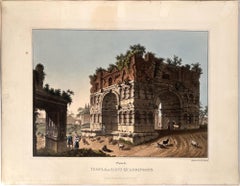
Temple of Janus Quadrifons

Temple of Janus Quadrifons

By Matthew Dubourg

Located in Middletown, NY

London: J. Taylor, 1820. Etching with aquatint and engraving with hand coloring in watercolor on cream wove paper with a gilded edge, 11 1/2 x 14 3/4 inches (290 x 374 mm), the full...

Category

Mid-19th Century English School Art by Medium: Engraving

Materials

Watercolor, Handmade Paper, Engraving, Etching, Aquatint

Coast Line, 2000
Coast Line, 2000

Coast Line, 2000

By Eyvind Earle

Located in Greenwich, CT

Coast Line, 2000 is an engraved painting on wood panel, 14 x 11 inches, initialed and dated lower right 'EE © 3.11.00'. Framed in an ornate, gold-tone frame.

Category

20th Century Contemporary Art by Medium: Engraving

Materials

Acrylic, Engraving

Pujol Baladas Dali Sensations engraving Surrealist limited edition

Pujol Baladas Dali Sensations engraving Surrealist limited edition

By Manel Pujol Baladas

Located in CORAL GABLES - MIAMI, FL

Sensations engraving surrealist limited edition painting Paper handmade of 600 grs. Edition of 100 copies Numbered in pencil and signed VIRTUAL FRAME Born in Vic, Cataluña, in 194...

Category

Late 20th Century Surrealist Art by Medium: Engraving

Materials

Paper, Engraving

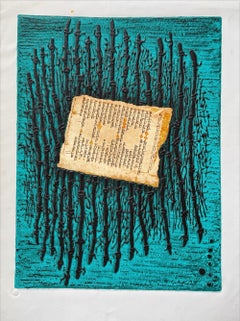
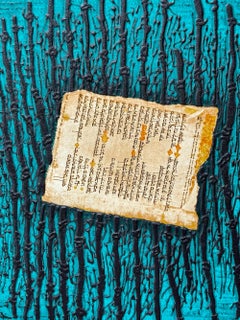
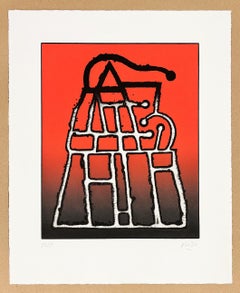
ANCIENT HEBREW WRITING Original Etching, Abstract Letters Turquoise, Black, Gold

ANCIENT HEBREW WRITING Original Etching, Abstract Letters Turquoise, Black, Gold

By Moshe Castel

Located in Union City, NJ

ANCIENT HEBREW WRITING by the Israeli artist Moshe Castel (1909-1991) is an original etching and aquatint printed in colors with carborundum using traditional hand intaglio technique...

Category

1970s Contemporary Art by Medium: Engraving

Materials

Printer's Ink, Archival Paper, Engraving, Etching, Aquatint

Forum of Nerva
Forum of Nerva

Forum of Nerva

By Matthew Dubourg

Located in Middletown, NY

London: J. Taylor, 1820. Etching with aquatint and engraving with hand coloring in watercolor on cream wove paper with a gilded edge, 11 1/2 x 14 3/4 inches (290 x 374 mm), the full...

Category

Mid-19th Century English School Art by Medium: Engraving

Materials

Watercolor, Handmade Paper, Engraving, Etching, Aquatint

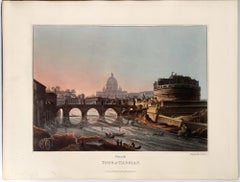
The Tomb of Hadrian
The Tomb of Hadrian

The Tomb of Hadrian

By Matthew Dubourg

Located in Middletown, NY

London: J. Taylor, 1820. Etching with aquatint and engraving with hand coloring in watercolor on cream wove paper with a gilded edge, 11 1/2 x 12 1/4 inches (290 x 312 mm), full, bu...

Category

Mid-19th Century English School Art by Medium: Engraving

Materials

Watercolor, Handmade Paper, Engraving, Etching, Aquatint

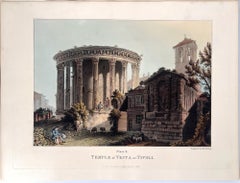
Temple of Vesta at Tivoli

Temple of Vesta at Tivoli

By Matthew Dubourg

Located in Middletown, NY

London: J. Taylor, 1820. Etching with aquatint and engraving with hand coloring in watercolor on cream wove paper with a gilded edge, 11 1/2 x 14 3/4 inches (290 x 374 mm), the full...

Category

Mid-19th Century English School Art by Medium: Engraving

Materials

Watercolor, Handmade Paper, Engraving, Etching, Aquatint

Girl's Head - Woman's Head  (Harvard)

Girl's Head - Woman's Head (Harvard)

By Elie Nadelman

Located in Fairlawn, OH

Girl's Head - Woman's Head (Harvard) Drypoint, 1920 Unsigned (as issued) From: The Drypoints of Elie Nadelman, 21 unpublished prints by the sculptor, proof from the original zinc an...

Category

1920s American Modern Art by Medium: Engraving

Materials

Drypoint

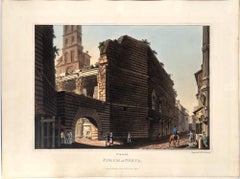
John Knox House in Edinburgh

John Knox House in Edinburgh

Located in Middletown, NY

London: Fine Art Trade Guild, c1900. Etching with drypoint on cream laid paper with a deckle edge 11 1/2 x 8 1/4 inches (290 x 208 mm); sheet 15 x 11 5/8 inches (380 x 294 mm), full...

Category

Early 20th Century English School Art by Medium: Engraving

Materials

Laid Paper, Drypoint, Etching

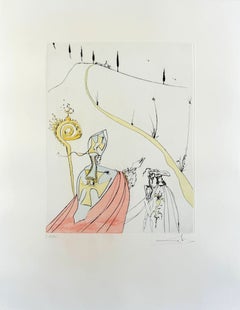
The Divine Love of Gala, Original Drypoint Etching, Surrealist, 1973, Signed

The Divine Love of Gala, Original Drypoint Etching, Surrealist, 1973, Signed

By Salvador Dalí­

Located in OPOLE, PL

Salvador Dali (1904-1989) - The Divine Love of Gala Drypoint etching with stencil from 1973. F171/195 on BFK Rives paper. Dimensions of work: 65.4 x 50.4 cm Publisher: Transworld...

Category

1970s Surrealist Art by Medium: Engraving

Materials

Drypoint, Etching, Stencil

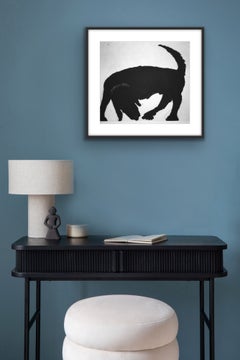
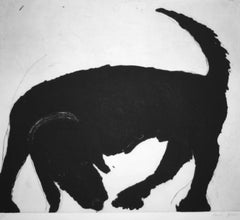
Stevie Kate Boxer, limited edition animal dog print, contemporary large print

Stevie Kate Boxer, limited edition animal dog print, contemporary large print

By Kate Boxer

Located in Deddington, GB

Stevie is a limited edition drypoint and carborundum etching by Kate Boxer. Kate Boxer makes the plates in her studio which are then sent to to the master printmakers. After they h...

Category

21st Century and Contemporary Contemporary Art by Medium: Engraving

Materials

Drypoint, Carborundum Etching

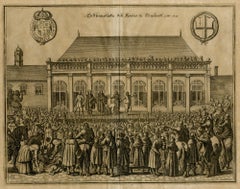
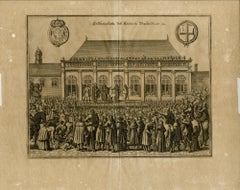
The Beheading of the King of England; Enthauptung des Königs in England

The Beheading of the King of England; Enthauptung des Königs in England

By Matthäus Merian the Elder

Located in Middletown, NY

The execution of Charles I (1600-1649) at Whitehall, January 30th 1649, in front of the Banqueting House. The executioner holding the head of Charles up to the crowd below. Engravin...

Category

Mid-17th Century Old Masters Art by Medium: Engraving

Materials

Laid Paper, Engraving

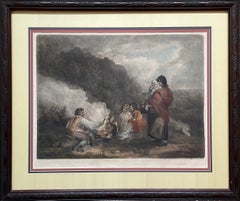
"The Fern Gatherers" 18th Century Antique Mezzotint Engraving by John R. Smith

"The Fern Gatherers" 18th Century Antique Mezzotint Engraving by John R. Smith

By George Morland

Located in Carmel, CA

"The Fern Gatherers" After a painting by George Morland. 1763-1804. - Mezzotint engraving by John Raphael Smith. 1752-1812. Print: 20.75" x 26" - With Frame: 28" x 33.5" Published:...

Category

Late 18th Century Realist Art by Medium: Engraving

Materials

Engraving, Mezzotint

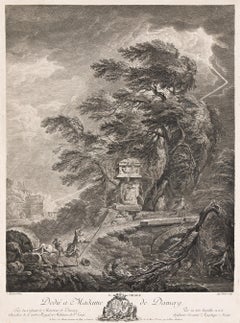
L' Orage
L' Orage

L' Orage

Located in New York, NY

Etching and engraving, circa 1770. Coat-of-arms with an eagle watermark. The sheet overall in good condition with narrow to thread margins.

Category

1770s Old Masters Art by Medium: Engraving

Materials

Engraving, Etching

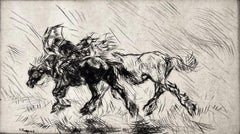
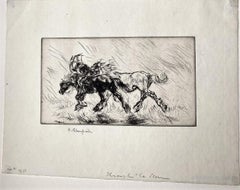
Through the Storm.
Through the Storm.

Through the Storm.

By Edmund Blampied

Located in Plano, TX

Appleby 97. 4 x 6 15/16 (sheet 8 1/8 x 10 3/8). Edition 100. A rich impression with drypoint burr and carefully wiped plate tone, printed on 'FJ Head' paper, on the full sheet with ...

Category

1920s Modern Art by Medium: Engraving

Materials

Drypoint, Etching

Requiem
Requiem

Art WergerRequiem, 2007

$2,000Sale Price|20% Off

Requiem

By Art Werger

Located in Palm Springs, CA

Scene of cliffs shaped by the waaves of the california coastline. Suggestions of human forms can be seen in some rock formations. Werger's mezzotint prints are masterful at capturin...

Category

Early 2000s Contemporary Art by Medium: Engraving

Materials

Mezzotint

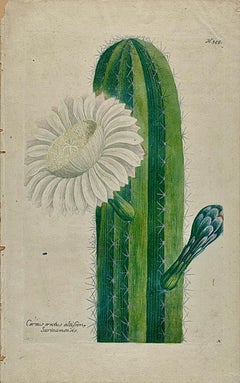
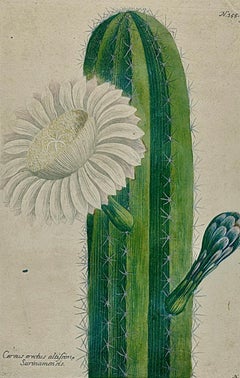
A Flowering Cactus Plant: 18th C. Hand-colored Botanical Engraving by Weinmann

A Flowering Cactus Plant: 18th C. Hand-colored Botanical Engraving by Weinmann

By Johann Wilhelm Weinmann

Located in Alamo, CA

This hand-colored botanical mezzotint and line engraving by Johann Wilhelm Weinmann (1683-1741) is entitled "Cereus Erectus Altissimo Surinamensis (Cereus Cactus Plant)". It is plate...

Category

Mid-18th Century Naturalistic Art by Medium: Engraving

Materials

Engraving, Mezzotint

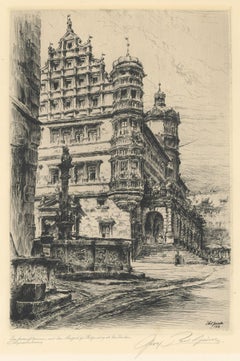
City Hall Tower, Rothenburg, Germany.

City Hall Tower, Rothenburg, Germany.

By Paul Geissler

Located in Middletown, NY

Etching and drypoint on cream wove paper, 10 3/4 x 7 1/2 inches (270 x 190 mm), full margins. Signed, inscribed and titled in pencil, lower margin. Some small, scattered light spots...

Category

Early 20th Century Modern Art by Medium: Engraving

Materials

Handmade Paper, Drypoint, Etching

Quai des Grands Augustins, Paris

Quai des Grands Augustins, Paris

By Auguste Lepère

Located in Middletown, NY

Wood engraving on onionskin paper, 14 1/2 x 9 inches (369 x 228 mm), the full sheet. In very good condition with minor cockling around the areas of the mount at the top corners. [Lo...

Category

Late 19th Century French School Art by Medium: Engraving

Materials

Engraving, Handmade Paper, Woodcut

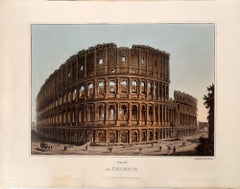
The Coliseum
The Coliseum

The Coliseum

By Matthew Dubourg

Located in Middletown, NY

London: J. Taylor, 1820. Etching with aquatint and engraving with hand coloring in watercolor on cream wove paper with a gilded edge, 11 1/2 x 14 3/4 inches (290 x 374 mm), the full...

Category

Mid-19th Century English School Art by Medium: Engraving

Materials

Watercolor, Handmade Paper, Engraving, Etching, Aquatint

Temple of Vesta
Temple of Vesta

Temple of Vesta

By Matthew Dubourg

Located in Middletown, NY

London: J. Taylor, 1820. Etching with aquatint and engraving with hand coloring in watercolor on watermarked J Whatman Turkey Mill 1843 paper with a gilded edge, 11 1/2 x 14 3/4 inc...

Category

Mid-19th Century English School Art by Medium: Engraving

Materials

Watercolor, Handmade Paper, Engraving, Etching, Aquatint

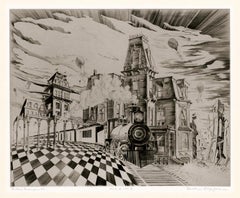
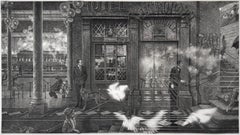
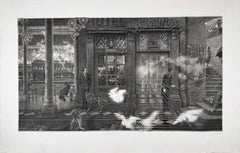
Interiors VII: The Train from Munich,  by Peter Milton

Interiors VII: The Train from Munich, by Peter Milton

By Peter Milton

Located in Palm Springs, CA

The Train from Munich is a print for Milton's wife, Edith, referencing her escape from Germany in 1939. The image started with a photograph by Eugène Atget of a girl looking out of a...

Category

2010s Contemporary Art by Medium: Engraving

Materials

Engraving, Etching

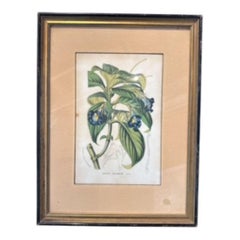
19th Century Botanical Engraving of Chirita Walkeria. Hand-Colored Print by Gar

19th Century Botanical Engraving of Chirita Walkeria. Hand-Colored Print by Gar

By George Gardner Symons

Located in Jacksonville, FL

A captivating 19th-century botanical engraving depicting Chirita walkeria, a delicate flowering plant named in honor of Anna Maria Walker, a noted naturalist. This hand-colored print...

Category

Early 19th Century Victorian Art by Medium: Engraving

Materials

Engraving

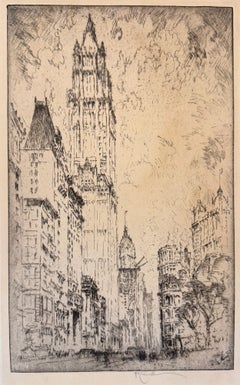
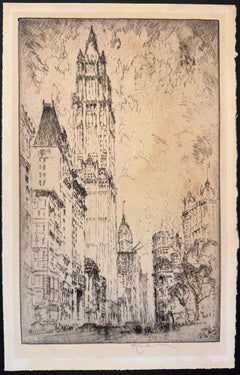
Woolworth Building, New York

Woolworth Building, New York

By Paul Schumann

Located in Middletown, NY

A rich and tonal image of an icon of Manhattan architecture. Etching with drypoint, 11 7/8 x 7 3/8 inches (300 x 186 mm), full margins. Edition of 100. Signed in pencil, lower right...

Category

Early 20th Century Realist Art by Medium: Engraving

Materials

Handmade Paper, Drypoint, Etching

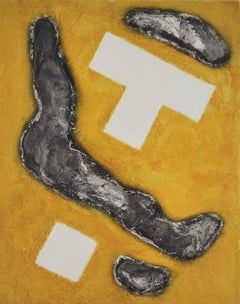
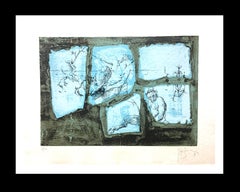
Untitled
Untitled

Untitled

By Antoni Clavé

Located in Barcelona, CT

the painting is being offered with a work and authenticity certificate

Category

1990s Art by Medium: Engraving

Materials

Engraving

Forum Vulcani jam Solfatara dictum (Vulcan's Forum, now called Solfatara)

Forum Vulcani jam Solfatara dictum (Vulcan's Forum, now called Solfatara)

By Sir William Hamilton

Located in Middletown, NY

A collabroation between Sir William Hamilton & Pietro Fabris Naples: Pietro Fabris, 1776. Engraving with hand coloring in gouache and watercolor on 18th century laid paper with an...

Category

18th Century Italian School Art by Medium: Engraving

Materials

Handmade Paper, Laid Paper, Engraving, Watercolor, Gouache

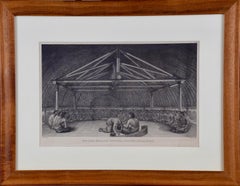
"King of the Friendly Islands" (Tonga); Engraving from Captain Cook's 3rd Voyage

"King of the Friendly Islands" (Tonga); Engraving from Captain Cook's 3rd Voyage

By John Webber

Located in Alamo, CA

"Poulaho, King of the Friendly Islands, Drinking Kava" is an engraving created by William Sharp (1749-1824), from a drawing by John Webber (1752-1793), who was the artist on Captain James Cook's 3rd and final voyage of discovery. It was published in the atlas of "A Voyage to the Pacific Ocean Undertaken by the Command of His Majesty, for Making Discoveries in the Northern Hemisphere", the official British Admirality sanctioned journal published upon completion of the voyage in London in 1784 by Strahan & Cadell. Captain Cook visited Tonga on his 3rd voyage, which he named The Friendly Islands because of the warm welcome he and his crew received, unlike some of the other more hostile Pacific islands. The engraving depicts Cook and his men observed a kava ceremony at the village of Mu’a on Tongatapu. King Paulaho sits in the centre foreground, his back to the spectator with a man kneeling before him. The ceremonial mat depicted behind Paulaho indicates that nobody was allowed to sit behind him. The figure in the centre holds a single cup, referring to the Tongan custom of offering the cup to the king first. Kava is native to the islands of the South Pacific and was first described for English readers in 1768 by Captain James Cook. The kava root has been used for centuries as a central feature of ceremonies and celebrations because it was able to bring about a calming and pleasant social atmosphere. The root was crushed and processed into coconut milk to become the focal ceremonial beverage, simply referred to as kava. This engraving is presented in a Koa wood frame and a white mat. Koa wood is legendary in Hawaii. There are occasional faint spots, but the print is otherwise in very good condition. This amazing Koa wood is native to Hawaii and it is known for the deep rich colors and varied grain pattern. Koa has an honored heritage in Hawaii and is highly revered and sacred. The word “koa” means “warrior” in Hawaiian. The warriors of King Kamehameha the Great, created canoes and weapons from a wood plentiful on the Big Island of Hawaii. This wood became synonymous with the warriors themselves, and it became known as koa. There are three other engravings listed from the official journal of Captain Cook's 3rd voyage available that are presented in identical Koa wood frames and mats (LU117324682422, LU117324684052, LU117324684032). They would make a wonderful grouping for a display of 2, 3 or 4 prints. A discount is available for a grouping depending on the number of items included. Captain Cook is remembered as one of the greatest explorers and navigators in history. His explorations included Australia, New Zealand and islands of the South Pacific and the northwest coast of North America. Hawaii was discovered by Captain Cook during this voyage. Hawaii was originally called The Sandwich Islands in honor of The Earl of Sandwich...

Category

1780s Realist Art by Medium: Engraving

Materials

Engraving

"The Boat" Hand Signed Drypoint Print, American Realist, 1930s, Framed

"The Boat" Hand Signed Drypoint Print, American Realist, 1930s, Framed

By Jeanette Maxfield Lewis

Located in Soquel, CA

"The Boat" Hand Signed Drypoint Print Maritime drypoint print by Jeannette Maxfield Lewis (American. b 1894 d. 1982.) A boat is docked in a harbor, its sails are lowered over the c...

Category

1930s American Realist Art by Medium: Engraving

Materials

Paper, Drypoint, Ink

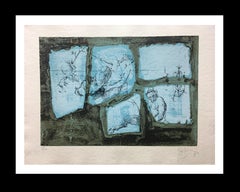
Untitled
Untitled

Untitled

Located in Barcelona, CT

The painting is being offered with a work and authenticity certificate

Category

1980s Conceptual Art by Medium: Engraving

Materials

Engraving

Engraving art for sale on 1stDibs.
Find a wide variety of authentic Engraving art available on 1stDibs. There are many well-known artists whose body of work includes ceramic sculptures. Not every interior allows for large Engraving art, so small editions measuring 0.4 inches across are also available Prices for art made by famous or emerging artists can differ depending on medium, time period and other attributes. On 1stDibs, the price for these items starts at $106 and tops out at $981,948, while the average work can sell for $3,322.