William Hodges Art

to
4
4
Overall Width
to
Overall Height
to
4
4
1
1
1
1
4

Use search to find more

4
11,863
2,887
2,541
1,621

Use search to find more

Artist: William Hodges
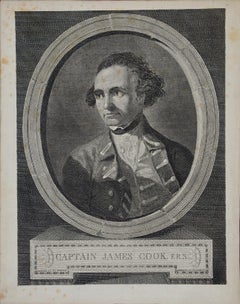
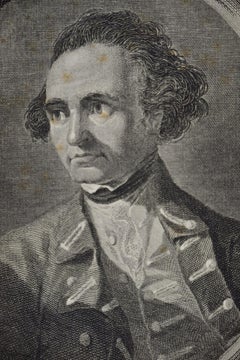
Captain James Cook: 18th C. Portrait by William Hodges After Cook's 2nd Voyage

Captain James Cook: 18th C. Portrait by William Hodges After Cook's 2nd Voyage

By William Hodges

Located in Alamo, CA

This is an original 18th Century copper plate engraved portrait of Captain James Cook as a young man. It was engraved by J. Basire after a painting by William Hodges, published in London by W. Strahan and T. Cadell in the Strand in 1777 as the frontispiece to the official journal publication of Cook's 2nd voyage of discovery, "A voyage towards the South Pole, and round the World. Performed in His Majesty's ships the Resolution and Adventure, in the years 1772, 1773, 1774, and 1775". The journal was written by James Cook, Commander of the Resolution, which was the ship used for the voyage and William Hodges, who was the artist on board the ship. This famous image has been used in many articles and tributes to Captain Cook, including a Norfolk Island stamp celebrating his many accomplishments. This engraved head-and-shoulders portrait of Captain Cook is enclosed in an oval with the appearance of a stone border. Captain Cook is dressed in his naval dress uniform, with a topcoat over a lace shirt. The engraving is printed on watermarked laid, chain-linked paper. The sheet measures 11.5" high x 9" wide. There is some spotting, most prominently in the margins. The print is otherwise in excellent condition. Captain James Cook (1728-1779) was an English explorer, navigator, surveyor and cartographer, who dramatically changed what was known about the world through his three voyages of discovery in the 1770's. Cook's achievements are too numerous to include here, but for example, Cook charted much of the Pacific Ocean and discovered many island groups, including the Hawaiian islands, which he named the Sandwich Islands, in honor of the head of the British Admiralty and a patron of Cook's. Cook was the first European to explore the eastern coast of Australia, and he was the first to map the New Zealand coastline. He sailed farther south than any other explorer before him, disproving the belief that a huge land mass occupied the South Pole. He also explored the northwest coast of North America, including present day Alaska and adjacent portions of Russia. He proved that the Northwest Passage did not exist. Cook was an exceptional seaman, navigator and leader of men, which contributed to the success of his explorations, but also saved his ship and crew on many occasions when faced with challenges, such as storms in previously unexplored waters, like occurred in the Great Barrier Reef off the eastern coast of Australia. He is also the first to require his crew to eat citrus fruit which markedly reduced the incidence of survey, which had led to large scale illness and death during earlier ocean voyages. As outstanding as Cook's skills were, they are even more impressive since they were self-taught. Having grown up the son of a farmhand in Northern England he had only four years of formal schooling. He taught himself astronomy, mathematics and other disciplines which were helpful when he continued his education, first in the merchant marine and then in the British Navy. Cook's adventurous career came to a sudden and unfortunate end in 1779, when he was killed in a confrontation with Hawaiian natives...

Category

1770s William Hodges Art

Materials

Engraving

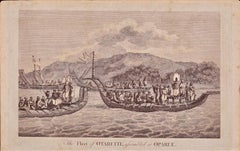
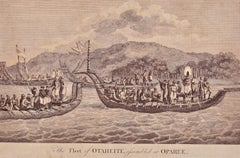
The Fleet of Tahiti displayed for Captain Cook: An Original 18th C. Engraving

The Fleet of Tahiti displayed for Captain Cook: An Original 18th C. Engraving

By William Hodges

Located in Alamo, CA

"The Fleet of Otaheite, Assembled at Oparee" is an original 18th century engraving from a drawing by William Hodges (1744-1797), who was the artist who accompanies Captain Cook on hi...

Category

1780s William Hodges Art

Materials

Engraving

Related Items
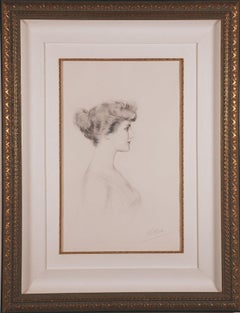
"Madame Georges Menier" Portrait, by Paul Cesar Helleu

"Madame Georges Menier" Portrait, by Paul Cesar Helleu

By Paul César Helleu

Located in Hinsdale, IL

HELLEU, PAUL CÉSAR (1859 -1927) "MADAME GEORGES MENIER" Montesquiou XXI Drypoint in colors, c. 1900 Signed in pencil, lower right Printed on wove paper Full...

Category

Early 20th Century Art Nouveau William Hodges Art

Materials

Drypoint

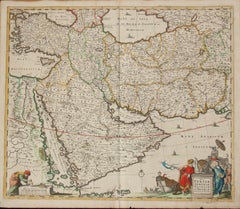
Persiae, Armeniae, Natoliae et Arabiae Descriptio per Frederick deWit 1666 map

Persiae, Armeniae, Natoliae et Arabiae Descriptio per Frederick deWit 1666 map

Located in Paonia, CO

Map of Persiae, Armeniae, Natoliae et Arabiae Descriptio per F de Wit 1688 engraving from: Atlas Contractus Orbis Terrarum Praecipuas ac Novissimas Complectens Tabulas. Amsterdam, N. Visscher, 1656-77. (Koeman III, Vis5-8) This highly decorative map of the Middle East is by the Dutch engraver, publisher, and map seller...

Category

1660s Realist William Hodges Art

Materials

Engraving

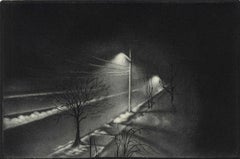
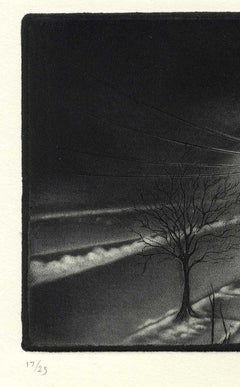
Foggy Night (the way home or a Stephen King setting)

Foggy Night (the way home or a Stephen King setting)

By Carol Wax

Located in New Orleans, LA

This impression is #22 Carol Wax originally trained to be a classical musician at the Manhattan School of Music but fell in love with printmaking. Soon after she began engraving mezzotints she was asked by the renowned print dealer Sylvan Cole to exhibit at Associated American Artists Gallery, launching her career as a professional artist/printmaker. With the publication of her book, The Mezzotint: History and Technique, published by Abrams, 1990 and 1996, Carol added author and teacher to her credits. In the ensuing years she has expanded her repertoire of mediums beyond printmaking into other works on paper and painting. In compositions reflecting an appreciation for antiquated machinery and vintage textiles, Wax creates imagery that, in her own words, “… speaks to an inner life perceived in inanimate objects.” She uses stylization and imagination to reinvent subjects, transforming an ordinary typewriter into a monumental icon...

Category

2010s American Modern William Hodges Art

Materials

Engraving, Mezzotint

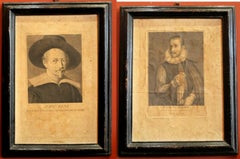
Italian Painter’s Portrait Engravings on Laid Paper on Canvas in Ebonized Frames

Italian Painter’s Portrait Engravings on Laid Paper on Canvas in Ebonized Frames

By Giovanni Domenico Campiglia 1

Located in Firenze, IT

These beautiful Italian 18th Centruy engravings on laid paper feature the portrait of two famous Italian painters: Veronese and Guido Reni. They were engraved by Pier Antonio Pazzi a...

Category

18th Century Baroque William Hodges Art

Materials

Cotton Canvas, Laid Paper, Engraving

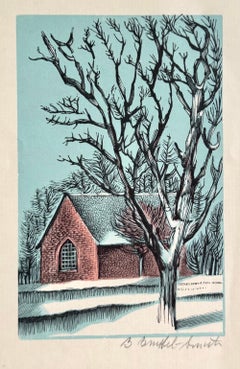
SNOWSCAPE, RED BRICK COTTAGE Signed Wood Engraving, Country House Arched Window

SNOWSCAPE, RED BRICK COTTAGE Signed Wood Engraving, Country House Arched Window

By Bernard Brussel-Smith

Located in Union City, NJ

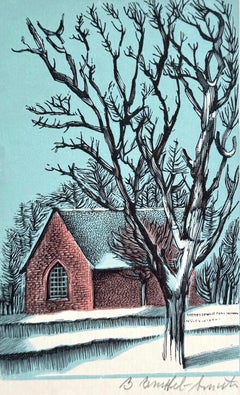
SNOWSCAPE, RED BRICK COTTAGE is an original wood engraving by the American artist Bernard Brussel-Smith, hand printed in light blue, light red and black ink on Strathmore cream color...

Category

1970s Realist William Hodges Art

Materials

Engraving

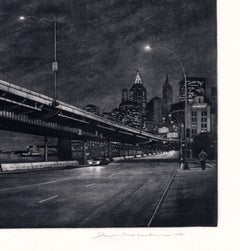
Signed Late 20th Century American Realist Mezzotint Engraving

Signed Late 20th Century American Realist Mezzotint Engraving

By Frederick Mershimer

Located in New York, NY

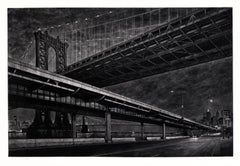
CROSSINGS Contemporary artist Frederick Mershimer created the mezzotint engraving entitled "Crossings" in 1998. This impression is signed, titled, and dated in pencil. The printed ...

Category

Late 20th Century American Realist William Hodges Art

Materials

Mezzotint

Restaurant in Mott Street

Restaurant in Mott Street

By Charles Frederick William Mielatz

Located in New Orleans, LA

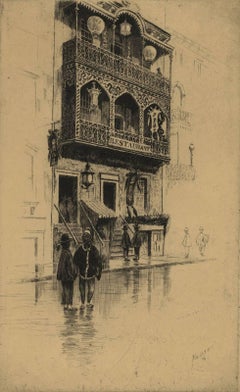
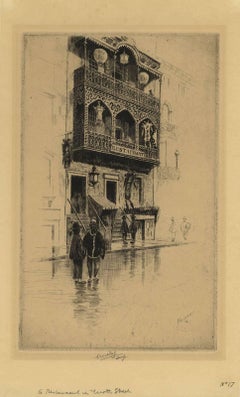
The image depicts a restaurant on New York's Mott Street with ornamental iron work on the balconies. There are six figures in the scene in various stages of contrast. Mott Street is considered the unofficial Main Street of New York's Chinatown. Ella Fitzgerald sang it best: “And tell me what street compares with Mott Street in July? Sweet pushcarts gently gliding by.” CFW Mielatz was an early influence on the drypoints and etchings of Martin Lewis. This piece was created in 1906 and it is signed in pencil. It is part of the collection of New York's Metropolitan Museum of Art C.F.W. Mielatz American, 1860-1919 Born in Bredding, Germany in 1864, Mielatz emigrated to the United States as a young boy and studied at the Chicago School of Design. Mostly self-taught, his first prints were large New England landscapes reminiscent of the painter-etcher school of American Art. Around 1890 he started to produce prints of New York City and by the time of his death, the number totaled over ninety images. He was a master technician in the field of etching, reworking many of his plates to get the exact feeling he was seeking. Mielatz was a member of the New York Etching...

Category

Early 20th Century American Modern William Hodges Art

Materials

Drypoint, Etching

Tete d'homme Barbu
Tete d'homme Barbu

Pablo PicassoTete d'homme Barbu, 1965

$13,615Sale Price|25% Off

H 13.78 in W 10.75 in

Tete d'homme Barbu

By Pablo Picasso

Located in Wien, 9

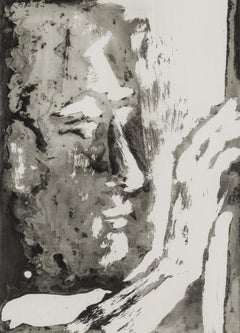
Tête d’homme barbu by Pablo Picasso is a powerful and expressive portrait that highlights the artist’s mastery of form and character. The image depicts a bearded man, constructed thr...

Category

20th Century Modern William Hodges Art

Materials

Drypoint, Aquatint

Le Sculpteur
Le Sculpteur

Pablo PicassoLe Sculpteur, 1965

$13,641Sale Price|25% Off

H 14.97 in W 11.03 in

Le Sculpteur

By Pablo Picasso

Located in Wien, 9

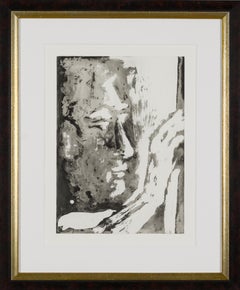
Le Sculpteur by Pablo Picasso is a compelling and refined representation of the artist at work. The composition focuses on a sculptor figure, reduced to essential lines and forms, ye...

Category

20th Century Modern William Hodges Art

Materials

Drypoint, Aquatint

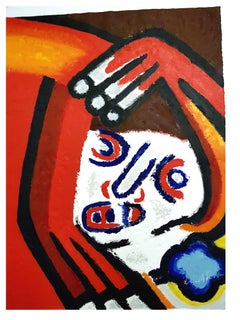
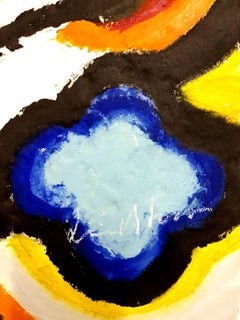
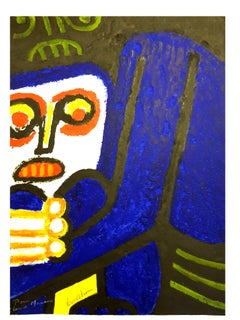
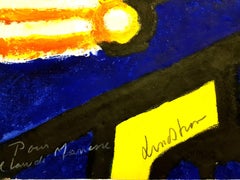
Bengt Lindstrom - Original Handsigned Engraving

Bengt Lindstrom - Original Handsigned Engraving

By Bengt Lindström

Located in Collonge Bellerive, Geneve, CH

Bengt Lindström - Original Handsigned Engraving The Seven Deadly Sins. 76 x 56 cm Signed in pencil by Bengt Lindström Paris, ABCD, 1976. Original etching in color Limited edition 90 ex. This is the unique copy offered to Claude Manesse, The story of B. Lindström was collected by Frederick Towarnicki, assisted by Agathe Malet-Buisson. The engravings were drawn on the presses of Claude Manesse. Bengt Lindström (1925-2008) Bengt Lindström was born on September 3rd, 1925 in Storsjökapell, a small isolated village in the Swedish province of Norrland. The young child thus grew up in that vast, mythical and harsh expanse of mounts, glistening lakes and endless forests known as Lapland. His father was a primary school teacher who was fond of Lapps and who showed great interest in their ethnic group and culture. The child was only three days old when Lapp King Kroik, his godfather, administered the Baptism of the Earth, where the child is conveyed between two roots of a tree to grant him protection from the Gods. Lapps as well as local lumberjacks would occasionally abandon their silent ways to tell him and reveal the tales, legends and mysteries of the Great White North. 1935-1945 : He left Storsjökapell and headed to Härnösand, where he wrote short science-fiction novellas, became a renowned athlete and began to paint. 1944-1946 : Isaac Grünewald Art School in Stockholm, Sweden. Study drawing with Aksel Jörgensen at the Copenhagen Fine Arts School in Denmark. He realized his first two lithographs, Meditation and Le Modèle Etendu (The Stretched Model). 1947-1952 : He arrived in Paris. He travelled to Italy, where he visited Florence and Assisi, developing a deep fascination for Giotto and Cimabue. He was granted a scholarship by Swedish magazine Aftontidningen, which helped him move into a workshop in Arcueil, France. He began working on mosaics. 1953-1967 : He returned to Paris, once again taking up lithography and engraving, which holds a vital position in his work. He moved into a workshop in Rueil-Malmaison. This was the start of his collaboration with the Rive Gauche Gallery in Paris. London Tooth & Sons Gallery Director M. Cochrane purchased a large number of his works. He left the workshop in Rueil-Malmaison to settle in Savigny-sur-Orge, France. He began taking to figurative art with Masks, Gods and Monsters. He exhibited with the Nouvelle Figuration Group at the Mathias Feld Gallery. He also began working with the Ariel Gallery in Paris. 1968-1978 : Lindström completed a series of 10 lithographs about Scandinavian mythology. He also completed a series of drypoint works. An association with the Protée Gallery in Toulouse, France, led to exhibitions at the Protée Gallery II in Paris starting in 1984. He executed a large mural painting the Grand Hotel in Härnösand, Sweden. He also made two large frescoes for the Nacksta-Sundsvall covered market in Sweden. He took to sharing his working time between the workshop in Savigny-sur-Orge and the one in Sundsvall. He began collaboration that was to last several years with the ABCD Gallery in Paris, which provided exclusive publication for his engravings and strong ink work. Les Hommes du Nord (Men of the North) was the first of the major tapestries. He published a boxed set album, Eddan, Eddan, Eddan, illustrating Scandinavian mythology. Together with Jacques Putman, he completed two editions of bronze sculptures, Les Enfants Sauvages (The Wild Children). 1979-1982 : He worked on glass, making thirty dishes and goblets for renowned Swedish glassmaker Kosta Boda. He painted a car for Volvo, Sweden’s leading car manufacturer. Then, close to his birthplace, he painted gigantic tarpaulins over forty metres high, covering the slopes of the neighbouring Våladalen Mountain, as a protest against the building of a dam. This action caused a sensation and provoked fierce reactions. He also created small painted papier mâché sculptures, Têtes (Heads), as well as some gold and silver jewellery. 1983 : He exhibited seven monumental 3x2.5m works at the Art and History Museum in Stockholm: Les Grands Dieux Ase (The Great Aesir Gods), depicting the gods from Scandinavian mythology: Thor, Odin, Frej, Balder, Ymer, Loki and Unknown God, as well as acrylic paintings about the Valkyries. Les Grands Dieux was ultimately exhibited in a purpose-built chapel adjoining the Midlanda Contemporary Arts Centre in 1996. He completed Thor’s Hammer, a monumental sculpture. 1985-1990 : He lived also in the Alicante region, where Spanish friends found him a new workshop. While there he completed Novelda, an album of lithographs featuring poems by Spanish poet Paco Pastor. He completed a new mural, 5mx5m, for the Västeras Science Institute in Sweden. He then started working with the San Carlo Gallery in Milan, Italy, which coordinated all of the Italian events. Major exhibitions and retrospectives were held in Italy, Belgium, Luxembourg, Germany and Spain. He created two boxed set albums, containing series of 10 aquatints, Monde Autre et Chamanes (Otherworld and Shamans), featuring poems by Michel Perrin. 1991-1994 : He went back to working in black and white, completing some very-large-format works. In Murano, in association with the San Carlo Gallery, he created Grands Verres (Large Glasses), a series of large vases and sculptures made of crystal. He painted Kåtan Mimi, an 8x9m Lapp tent, for the town of Arjeplog in Swedish Lapland. He completed a couple of 2m-high painted polyester sculptures, Lui et Elle (Him and Her). He then made a new series of crystal glasses and sculptures in Murano, Italy. He completed Présence (Presence), a new 3.5x2.7m tapestry for the municipality of Timrå, Sweden. He started on the Grands Initiés (Great Insiders) series, all large format and mixed black and white techniques. He finished the strong series about Norse gods. 1995-1996 : He moved into a new workshop in Paris. A retrospective was held at the Sundsvall Museum in Sweden, and on that occasion he painted a monumental 700-m² canvass, Le Géant sur la montagne (The Giant on the Mountain), which was hung all summer long on the mountain slope facing the town. He went on to complete a suite of six silkscreen prints on the same theme. Then he inaugurated the Y, a monumental sculpture. Lindström then completed Temps Zéro (Zero Time), a watch made for Swatch. One of his works, L’hiver (Winter), made the cover of the first 1996 issue of Telerama, the leading French weekly. In association with Sydkraft Sweden, he painted a fresco for the municipality of Örebro on a 17m-high tank with a surface area of 3,000 m², located at the crossroads of major Swedish motorways, by the entrance to the Åbyverket industrial estate. He also created a 6.5m-high Tången sculpture made of painted concrete in Ånge, which was inaugurated on September 3rd in the presence of their Majesties the King and Queen of Sweden. 1997-1999 : He began working on ceramics in Albisolla, Italy. He also completed a new 30m-high fresco for the town of Örebro, located close to the tank he had painted in 1996 near Åbyverket. The year saw the inauguration of the Midlanda Contemporary Arts Centre in Sweden, which harbours the collection of the Bengt and Michèle Lindström Foundation, featuring the entire engravings collection (about 800 works), as well as a selection of paintings and sculptures. He completed a 4x10m mural in the lobby of the University of Eskilstuna, Sweden, and also completed two monumental frescoes on the Akkats dam and a mural on the power station facing Jokkmokk in Swedish Lapland. 2000-2003 : He painted all of the sides of a semi-articulated lorry for Scania, Sweden’s main truck manufacturer. In Italy, he completed a new series of crystal sculptures with Adriano Bérengo. He finished the Great Prophets, a series of 2x2m oil on canvass works. Swiss publisher Ides et Calendes published a small but luxurious monograph, with text by Françoise Monnin. A notebook was also published, Le Visage dans l’Art de Bengt Lindström (Faces in the Art of Bengt Lindström). He completed a substantial series of large blue acrylic paintings, Femmes (Women). 2003 : Bengt fell ill and was unable to paint, but the exhibitions went on. 2004 : Saw the release of the film by Dag Jonzon and Hans Östbom, produced by Dell’arte AB and Östbom Filmbild, about the life of Bengt Lindström. Entitled Lindström - Le Diable de la couleur et de la forme (Lindström – The Colour and Form Devil), the film was produced thanks to support from Film Västernorrland, Länsstyrelsen Västernorrland and Sveriges Television. It was broadcast on Swedish television channels. That same year, the Midlanda Contemporary Arts Centre was closed as a result of municipal policy. 2005-2007 : The 6m-high sculpture Le Loup (The Wolf), made for PEAB, was inaugurated in Botkyrka-Stockholm. Lindström – The Colour and Form Devil was screened at the Paris Swedish Cultural Centre and released on DVD. The Michèle and Bengt Lindström Foundation was donated and transferred to the Länsmuseet i Västernorrland in Härnösand, Sweden, where a special room was prepared to host Les Grands Dieux Ase. Edition of the 1998 Ceramics, created in association with Francis Dellile’s ”La Tuilerie” workshop. The Bengt Lindström Collection was inaugurated at, Murberget, the Länsmuseet i Västernorrland in Härnösand, Sweden. He illustrated Sinfonietta för Juliana, a collection of poems by Italian poet and art critic Sebastiano Grasso. On January 29th, 2008, Bengt Lindström passed away at his home in Sweden. 2008-2012 : The Fondation Krimaro presents the first volume of the works of Bengt Lindström in his collection. Numerous exhibitions-tribute to the work are presented in major cities in Europe. 2012 : Retrospective - Black and White in the engravings - Museum of Härnösand, Murberget, Sweden. Main exhibitions 1952 Fair Réalités Nouvelles – New realities, Paris, France. 1953 Craven Gallery, Paris, France. 1954 Gummeson Gallery, Stockholm, Sweden. Fair Salon d’Octobre, Paris, France. 1958 Breteau Gallery, Paris, France. 1959 Autour du Spontanéisme – Around the sontaneity, Stockholm, Sweden. L’Europe Nouvelle – The new Europe, LaUnited Statesnne, Switzerland. 1960 Rive Gauche Gallery, Paris, France. 1961 Tooth Gallery, London, England. Le Zodiaque Gallery, Brussels, Belgium. Fair Salon de Mai, Paris, France. 1962 Nouvelle Figuration – New Figuration , Mathias Fels Gallery, Paris, France, 1964 Nord-Sud – North-South, in several cities in Sweden. Ariel Gallery, Paris, France, 15 artists of my generation. Museum of Fine Arts in Gent, Belgium, Figuration-Défiguration – Figuration – Disfigurement. 1965 Rive Gauche Gallery. Paris, France. Nord Gallery, Lille, France. Birch Gallery, Copenhagen, Denmark. 1966 Museum of Modern Art, Gothenburg, Sweden. 1967 Veranneman Gallery, Brussels, Belgium. Carnegie Institute, Pittsburgh, United States. Seibu Gallery, Tokyo, Japan, 23 peintres in Paris. 1968 Ariel Gallery, Paris, France, followed by six exhibitions until 1976. 1969 La Pochade Gallery, Paris, France. Protée Gallery, Toulouse, France, who exhibited him in Paris, Gallery Protée II, from 1984. 1973 Galliera Museum, Paris, France. 1974 Gallery 111, Lisbon, Portugal. 1982 Gallery Protée-Arco, Madrid, Spain and Fair Foire de Cologne, Germany. 1983 Historia Museum, Stockholm, Sweden, The Ase gods and the Valkyries. 1984 Gallery Arcano XXI, Lisbon, Portugal. Gallery Christian Cheneau, Paris, France. Museum Château comtal, Carcassonne, France. 1985 Gallery Italia, Alicante, Spain. 1986 Gallery Sala Gaspar, Barcelona, Spain. Gallery Juan Mordo-Arco, Madrid, Spain. Gallery Italia, Alicante, Spain. Museum of Salamanca, Salamanca, Spain. Gallery Three Continents, New-York, United States. Gallery Protée, Toulouse France, Autour du Roi Lear – Around King Lear. 1987 Gallery Kostel, Paris, France. Gallery Zwirner, Cologne, Germany. Gallery Leu, Rottach-Egern, Germany. 1988 Maison du Lot, Figeac, France. Gallery Protée, Paris, France. Gallery Michèle Sadoun, Paris, France 1989 Gallery Michèle Sadoun, Paris, France, La terre des ancêtres - The Land pf the ancestors. Gallery Protée, Paris, France, Nomads. Gallery Raab, London, England. 1990 Gallery Michèle Sadoun, Paris, France. Centre Culturel de Brest, France. 1991 Gallery Michèle Sadoun, Paris, France. 1992 Archotèque, Saint-Denis, La Réunion, France. Museum of Vesoul, Vesoul, France. Gallery San Carlo, Milan, Italy. 1993 Gallery 111, Lisbon, Portugal. Tonnellerie du Cognac Monnet...

Category

1970s Modern William Hodges Art
Materials

Engraving

Bengt Lindstrom - Original Handsigned Engraving

Bengt Lindstrom - Original Handsigned Engraving

By Bengt Lindström

Located in Collonge Bellerive, Geneve, CH

Bengt Lindström - Original Handsigned Engraving The Seven Deadly Sins. 76 x 56 cm Signed in pencil by Bengt Lindström Paris, ABCD, 1976. Original etching in color Limited edition 90 ex. This is the unique copy offered to Claude Manesse, The story of B. Lindström was collected by Frederick Towarnicki, assisted by Agathe Malet-Buisson. The engravings were drawn on the presses of Claude Manesse. Bengt Lindström (1925-2008) Bengt Lindström was born on September 3rd, 1925 in Storsjökapell, a small isolated village in the Swedish province of Norrland. The young child thus grew up in that vast, mythical and harsh expanse of mounts, glistening lakes and endless forests known as Lapland. His father was a primary school teacher who was fond of Lapps and who showed great interest in their ethnic group and culture. The child was only three days old when Lapp King Kroik, his godfather, administered the Baptism of the Earth, where the child is conveyed between two roots of a tree to grant him protection from the Gods. Lapps as well as local lumberjacks would occasionally abandon their silent ways to tell him and reveal the tales, legends and mysteries of the Great White North. 1935-1945 : He left Storsjökapell and headed to Härnösand, where he wrote short science-fiction novellas, became a renowned athlete and began to paint. 1944-1946 : Isaac Grünewald Art School in Stockholm, Sweden. Study drawing with Aksel Jörgensen at the Copenhagen Fine Arts School in Denmark. He realized his first two lithographs, Meditation and Le Modèle Etendu (The Stretched Model). 1947-1952 : He arrived in Paris. He travelled to Italy, where he visited Florence and Assisi, developing a deep fascination for Giotto and Cimabue. He was granted a scholarship by Swedish magazine Aftontidningen, which helped him move into a workshop in Arcueil, France. He began working on mosaics. 1953-1967 : He returned to Paris, once again taking up lithography and engraving, which holds a vital position in his work. He moved into a workshop in Rueil-Malmaison. This was the start of his collaboration with the Rive Gauche Gallery in Paris. London Tooth & Sons Gallery Director M. Cochrane purchased a large number of his works. He left the workshop in Rueil-Malmaison to settle in Savigny-sur-Orge, France. He began taking to figurative art with Masks, Gods and Monsters. He exhibited with the Nouvelle Figuration Group at the Mathias Feld Gallery. He also began working with the Ariel Gallery in Paris. 1968-1978 : Lindström completed a series of 10 lithographs about Scandinavian mythology. He also completed a series of drypoint works. An association with the Protée Gallery in Toulouse, France, led to exhibitions at the Protée Gallery II in Paris starting in 1984. He executed a large mural painting the Grand Hotel in Härnösand, Sweden. He also made two large frescoes for the Nacksta-Sundsvall covered market in Sweden. He took to sharing his working time between the workshop in Savigny-sur-Orge and the one in Sundsvall. He began collaboration that was to last several years with the ABCD Gallery in Paris, which provided exclusive publication for his engravings and strong ink work. Les Hommes du Nord (Men of the North) was the first of the major tapestries. He published a boxed set album, Eddan, Eddan, Eddan, illustrating Scandinavian mythology. Together with Jacques Putman, he completed two editions of bronze sculptures, Les Enfants Sauvages (The Wild Children). 1979-1982 : He worked on glass, making thirty dishes and goblets for renowned Swedish glassmaker Kosta Boda. He painted a car for Volvo, Sweden’s leading car manufacturer. Then, close to his birthplace, he painted gigantic tarpaulins over forty metres high, covering the slopes of the neighbouring Våladalen Mountain, as a protest against the building of a dam. This action caused a sensation and provoked fierce reactions. He also created small painted papier mâché sculptures, Têtes (Heads), as well as some gold and silver jewellery. 1983 : He exhibited seven monumental 3x2.5m works at the Art and History Museum in Stockholm: Les Grands Dieux Ase (The Great Aesir Gods), depicting the gods from Scandinavian mythology: Thor, Odin, Frej, Balder, Ymer, Loki and Unknown God, as well as acrylic paintings about the Valkyries. Les Grands Dieux was ultimately exhibited in a purpose-built chapel adjoining the Midlanda Contemporary Arts Centre in 1996. He completed Thor’s Hammer, a monumental sculpture. 1985-1990 : He lived also in the Alicante region, where Spanish friends found him a new workshop. While there he completed Novelda, an album of lithographs featuring poems by Spanish poet Paco Pastor. He completed a new mural, 5mx5m, for the Västeras Science Institute in Sweden. He then started working with the San Carlo Gallery in Milan, Italy, which coordinated all of the Italian events. Major exhibitions and retrospectives were held in Italy, Belgium, Luxembourg, Germany and Spain. He created two boxed set albums, containing series of 10 aquatints, Monde Autre et Chamanes (Otherworld and Shamans), featuring poems by Michel Perrin. 1991-1994 : He went back to working in black and white, completing some very-large-format works. In Murano, in association with the San Carlo Gallery, he created Grands Verres (Large Glasses), a series of large vases and sculptures made of crystal. He painted Kåtan Mimi, an 8x9m Lapp tent, for the town of Arjeplog in Swedish Lapland. He completed a couple of 2m-high painted polyester sculptures, Lui et Elle (Him and Her). He then made a new series of crystal glasses and sculptures in Murano, Italy. He completed Présence (Presence), a new 3.5x2.7m tapestry for the municipality of Timrå, Sweden. He started on the Grands Initiés (Great Insiders) series, all large format and mixed black and white techniques. He finished the strong series about Norse gods. 1995-1996 : He moved into a new workshop in Paris. A retrospective was held at the Sundsvall Museum in Sweden, and on that occasion he painted a monumental 700-m² canvass, Le Géant sur la montagne (The Giant on the Mountain), which was hung all summer long on the mountain slope facing the town. He went on to complete a suite of six silkscreen prints on the same theme. Then he inaugurated the Y, a monumental sculpture. Lindström then completed Temps Zéro (Zero Time), a watch made for Swatch. One of his works, L’hiver (Winter), made the cover of the first 1996 issue of Telerama, the leading French weekly. In association with Sydkraft Sweden, he painted a fresco for the municipality of Örebro on a 17m-high tank with a surface area of 3,000 m², located at the crossroads of major Swedish motorways, by the entrance to the Åbyverket industrial estate. He also created a 6.5m-high Tången sculpture made of painted concrete in Ånge, which was inaugurated on September 3rd in the presence of their Majesties the King and Queen of Sweden. 1997-1999 : He began working on ceramics in Albisolla, Italy. He also completed a new 30m-high fresco for the town of Örebro, located close to the tank he had painted in 1996 near Åbyverket. The year saw the inauguration of the Midlanda Contemporary Arts Centre in Sweden, which harbours the collection of the Bengt and Michèle Lindström Foundation, featuring the entire engravings collection (about 800 works), as well as a selection of paintings and sculptures. He completed a 4x10m mural in the lobby of the University of Eskilstuna, Sweden, and also completed two monumental frescoes on the Akkats dam and a mural on the power station facing Jokkmokk in Swedish Lapland. 2000-2003 : He painted all of the sides of a semi-articulated lorry for Scania, Sweden’s main truck manufacturer. In Italy, he completed a new series of crystal sculptures with Adriano Bérengo. He finished the Great Prophets, a series of 2x2m oil on canvass works. Swiss publisher Ides et Calendes published a small but luxurious monograph, with text by Françoise Monnin. A notebook was also published, Le Visage dans l’Art de Bengt Lindström (Faces in the Art of Bengt Lindström). He completed a substantial series of large blue acrylic paintings, Femmes (Women). 2003 : Bengt fell ill and was unable to paint, but the exhibitions went on. 2004 : Saw the release of the film by Dag Jonzon and Hans Östbom, produced by Dell’arte AB and Östbom Filmbild, about the life of Bengt Lindström. Entitled Lindström - Le Diable de la couleur et de la forme (Lindström – The Colour and Form Devil), the film was produced thanks to support from Film Västernorrland, Länsstyrelsen Västernorrland and Sveriges Television. It was broadcast on Swedish television channels. That same year, the Midlanda Contemporary Arts Centre was closed as a result of municipal policy. 2005-2007 : The 6m-high sculpture Le Loup (The Wolf), made for PEAB, was inaugurated in Botkyrka-Stockholm. Lindström – The Colour and Form Devil was screened at the Paris Swedish Cultural Centre and released on DVD. The Michèle and Bengt Lindström Foundation was donated and transferred to the Länsmuseet i Västernorrland in Härnösand, Sweden, where a special room was prepared to host Les Grands Dieux Ase. Edition of the 1998 Ceramics, created in association with Francis Dellile’s ”La Tuilerie” workshop. The Bengt Lindström Collection was inaugurated at, Murberget, the Länsmuseet i Västernorrland in Härnösand, Sweden. He illustrated Sinfonietta för Juliana, a collection of poems by Italian poet and art critic Sebastiano Grasso. On January 29th, 2008, Bengt Lindström passed away at his home in Sweden. 2008-2012 : The Fondation Krimaro presents the first volume of the works of Bengt Lindström in his collection. Numerous exhibitions-tribute to the work are presented in major cities in Europe. 2012 : Retrospective - Black and White in the engravings - Museum of Härnösand, Murberget, Sweden. Main exhibitions 1952 Fair Réalités Nouvelles – New realities, Paris, France. 1953 Craven Gallery, Paris, France. 1954 Gummeson Gallery, Stockholm, Sweden. Fair Salon d’Octobre, Paris, France. 1958 Breteau Gallery, Paris, France. 1959 Autour du Spontanéisme – Around the sontaneity, Stockholm, Sweden. L’Europe Nouvelle – The new Europe, LaUnited Statesnne, Switzerland. 1960 Rive Gauche Gallery, Paris, France. 1961 Tooth Gallery, London, England. Le Zodiaque Gallery, Brussels, Belgium. Fair Salon de Mai, Paris, France. 1962 Nouvelle Figuration – New Figuration , Mathias Fels Gallery, Paris, France, 1964 Nord-Sud – North-South, in several cities in Sweden. Ariel Gallery, Paris, France, 15 artists of my generation. Museum of Fine Arts in Gent, Belgium, Figuration-Défiguration – Figuration – Disfigurement. 1965 Rive Gauche Gallery. Paris, France. Nord Gallery, Lille, France. Birch Gallery, Copenhagen, Denmark. 1966 Museum of Modern Art, Gothenburg, Sweden. 1967 Veranneman Gallery, Brussels, Belgium. Carnegie Institute, Pittsburgh, United States. Seibu Gallery, Tokyo, Japan, 23 peintres in Paris. 1968 Ariel Gallery, Paris, France, followed by six exhibitions until 1976. 1969 La Pochade Gallery, Paris, France. Protée Gallery, Toulouse, France, who exhibited him in Paris, Gallery Protée II, from 1984. 1973 Galliera Museum, Paris, France. 1974 Gallery 111, Lisbon, Portugal. 1982 Gallery Protée-Arco, Madrid, Spain and Fair Foire de Cologne, Germany. 1983 Historia Museum, Stockholm, Sweden, The Ase gods and the Valkyries. 1984 Gallery Arcano XXI, Lisbon, Portugal. Gallery Christian Cheneau, Paris, France. Museum Château comtal, Carcassonne, France. 1985 Gallery Italia, Alicante, Spain. 1986 Gallery Sala Gaspar, Barcelona, Spain. Gallery Juan Mordo-Arco, Madrid, Spain. Gallery Italia, Alicante, Spain. Museum of Salamanca, Salamanca, Spain. Gallery Three Continents, New-York, United States. Gallery Protée, Toulouse France, Autour du Roi Lear – Around King Lear. 1987 Gallery Kostel, Paris, France. Gallery Zwirner, Cologne, Germany. Gallery Leu, Rottach-Egern, Germany. 1988 Maison du Lot, Figeac, France. Gallery Protée, Paris, France. Gallery Michèle Sadoun, Paris, France 1989 Gallery Michèle Sadoun, Paris, France, La terre des ancêtres - The Land pf the ancestors. Gallery Protée, Paris, France, Nomads. Gallery Raab, London, England. 1990 Gallery Michèle Sadoun, Paris, France. Centre Culturel de Brest, France. 1991 Gallery Michèle Sadoun, Paris, France. 1992 Archotèque, Saint-Denis, La Réunion, France. Museum of Vesoul, Vesoul, France. Gallery San Carlo, Milan, Italy. 1993 Gallery 111, Lisbon, Portugal. Tonnellerie du Cognac Monnet...

Category

1970s Modern William Hodges Art
Materials

Engraving

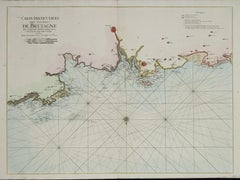
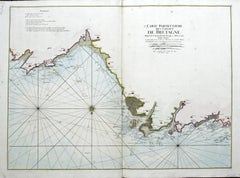
Carte Particuliere Des Coste De Bretagne qui Comprend Morlaix

Carte Particuliere Des Coste De Bretagne qui Comprend Morlaix

By Pierre Mortier

Located in Paonia, CO

Carte Particuliere Des Costes De Bretagne qui Comprend Morlaix, Saint Paul de Leon, les Sept Isles, et L’Isle. Faite par ordre Exprez Du Roy de France is from the collection of ch...

Category

1690s William Hodges Art
Materials

Engraving

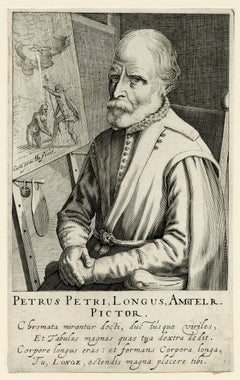
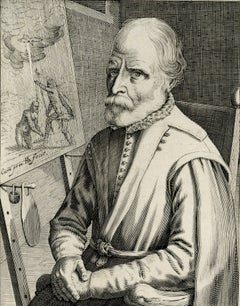
Old Master, 1610, engraving, Hendrick Hondius I, Painter Pieter Aetsen, Dutch

Old Master, 1610, engraving, Hendrick Hondius I, Painter Pieter Aetsen, Dutch

By Hendrik Hondius the Elder

Located in Fairlawn, OH

Hendrick Hondius I Flemish/Dutch, 1573–1650 formerly attributed jointly to Simon Frisius and Hondius Portrait of Pieter Aertsen (“Petrus Petri, Longus, Amstelr. Pictor”) 1610 Engraving on laid paper Plate: approximately 20.4 × 12.8 cm (8 × 5 in.) From Pictorum aliquot celebrium praecipuae Germaniae Inferioris effigies Signed within the image at lower left: Cum priv. Hh. fecit Lettered below the portrait with the sitter’s name and a four-line Latin encomium New Hollstein (Hondius) 105; Hollstein (Frisius) 149 Christopher Mendez stock label verso Attribution and series This engraving was published in The Hague in 1610 as part of Hendrick Hondius I’s celebrated series Pictorum aliquot celebrium praecipuae Germaniae Inferioris effigies—“Portraits of Certain Celebrated Painters, Principally of the Low Countries.” The volume assembled engraved likenesses of distinguished Northern European artists and helped establish an enduring visual canon of Netherlandish art. The old Christopher Mendez label identifies the engraving as “Frisius and Hondius” and calls it number 30 in the series. Current Rijksmuseum cataloguing, however, identifies Hendrick Hondius I as both engraver and publisher, consistent with the inscription Hh. fecit—“Hendrick Hondius made this”—within the image. Simon Frisius contributed other plates to the publication, which presumably accounts for the older dual attribution and the print’s listing under Frisius in Hollstein. Numbering varies between arrangements or parts of the series: another commercial description identifies the Aertsen portrait as plate 27 of the second part. The safest modern attribution is therefore engraved and published by Hendrick Hondius I, while recording the historical Frisius–Hondius attribution. The Rijksmuseum dates its impression to 1610 and gives the plate dimensions as 204 × 128 mm. Catalog Essay and Analysis Pieter Aertsen is represented half-length, seated before an easel and turning slightly toward the viewer. His heavy mustache, rounded beard, furrowed brow and direct gaze communicate experience and intellectual authority rather than courtly refinement. Hondius surrounds him with the material signs of his profession: palette, brushes and mahlstick rest on the ledge at left, while the unfinished or displayed painting behind him depicts the Baptism of Christ. The inclusion of a religious composition is important. Although Aertsen is now especially celebrated for monumental kitchen and market scenes, he was also a highly regarded painter of altarpieces. Many of those religious works were destroyed during the iconoclastic upheavals of the sixteenth century. By placing a sacred history painting so conspicuously beside the sitter, Hondius reminds the viewer that Aertsen was not merely a painter of food, peasants and market produce, but an ambitious inventor of large-scale religious compositions. The Baptism scene also establishes a subtle relationship between the artist and his creation. Aertsen’s large head and upper body dominate the foreground, while the slender figures in the painting recede dramatically. The arrangement transforms the workshop into a site of artistic memory: the painter survives physically through his likeness and professionally through the work displayed behind him. Hondius differentiates the surfaces through exceptionally controlled engraving. Closely spaced, curving lines model the sitter’s face and sleeves, while dense cross-hatching produces the dark wall and garment. The comparatively open white areas of the bald forehead, collar and cloak give the figure monumental clarity. The strict geometry of the chair, easel and background contrasts with the organic lines of Aertsen’s face and beard. The print is also an early example of the artist portrait as cultural historiography. Hondius’s series did more than reproduce appearances. It organized Northern painters into a lineage of recognized masters, pairing each likeness with a concise Latin inscription praising the sitter’s distinctive achievements. The series contained portraits made by Hondius, Simon Frisius, Andries Jacobsz. Stock and Robert de Baudous; the Rijksmuseum describes its set as comprising seventy-two portraits. Inscription The title identifies the sitter as: PETRUS PETRI, LONGUS, AMSTELR. PICTOR That is, “Pieter Pietersz., the Tall, painter of Amsterdam.” Longus translates Aertsen’s familiar nickname Lange Piet or “Tall Pieter.” The Latin verses may be translated: Learned men admire your colors and vigorous draughtsmanship, And the great pictures produced by your right hand. Tall you were in body, and in forming tall bodies; You, O Tall One, show that greatness pleased you. The poem plays repeatedly upon Aertsen’s exceptional height, his nickname, the elongated figures in his paintings and the unusually large scale of his compositions. A period description of another impression transcribes the same inscription and identifies the scene on the easel as the Baptism of Christ. Hendrick Hondius I Hendrick Hondius the Elder was born at Duffel, near Antwerp, in 1573. Trained initially in drawing and engraving, he reportedly studied with the celebrated printmaker Jan Wierix. He also developed interests in mathematics, perspective, architecture and fortification design. Following travels that included Cologne, London and Paris, he settled in The Hague, where he entered the Guild of Saint Luke in 1597. Hondius became an important engraver, publisher and organizer of printed knowledge. His publications ranged from architectural and perspective studies to portraits and reproductive prints. His 1610 Pictorum aliquot celebrium was among his most consequential projects. The collection expanded upon the earlier artist-portrait series issued in Antwerp in 1572 by Hieronymus Cock’s widow, Volcxken Diericx, with texts by Dominicus Lampsonius. By enlarging the group to include later Netherlandish artists—and selected German and English figures—Hondius fashioned a broader history of Northern European art. Hondius should not be confused with the contemporary cartographer Jodocus Hondius or with Jodocus’s son, Hendrik Hondius II. Pieter Aertsen Pieter Aertsen was born in Amsterdam in 1508 and died there on June 2, 1575. By 1535 he was documented as a master in the Antwerp Guild of Saint Luke. He remained in Antwerp for much of his career before returning to Amsterdam around the middle of the century. Known as Lange Piet because of his height, Aertsen was a pivotal figure in the development of Northern European genre and still-life painting. He pioneered monumental compositions in which lavish displays of meat, fish, vegetables, cooking vessels and market goods occupy the foreground, while a comparatively small biblical episode appears in the distance. These deliberate reversals of pictorial hierarchy invite the viewer to choose between material abundance and spiritual meaning. Aertsen’s compositions were deeply influential upon his nephew and pupil Joachim Beuckelaer and, through him, upon subsequent Flemish and Dutch kitchen...

Category

1610s Old Masters William Hodges Art
Materials

Engraving

Previously Available Items
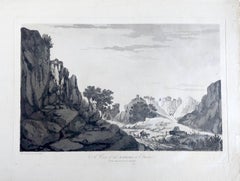
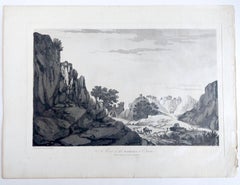
India William Hodges 'A View of the Ravines at Etana' Early India Engraving

India William Hodges 'A View of the Ravines at Etana' Early India Engraving

By William Hodges

Located in Norfolk, GB

William Hodges Plate 27 'A View of the Ravines at Etawa' Published 20th May 1787 by J Wells, 22 Charing Cross. Page size, 16.5” x 22.5”, image 11.25 x 18” Aquatint with soft gro...

Category

Early 2000s Other Art Style William Hodges Art
Materials

Engraving

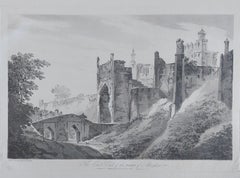
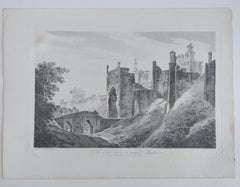
India William Hodges 'The East End of the Fort of Mongheer' India Engraving

India William Hodges 'The East End of the Fort of Mongheer' India Engraving

By William Hodges

Located in Norfolk, GB

Aquatint with soft ground etching from the seminal publication, Selected Views in India, drawn on the Spot, in the Years 1780, 1781, 1782 and 1783, and Executed in Aquatint in 1786 -...

Category

Late 18th Century Other Art Style William Hodges Art
Materials

Engraving

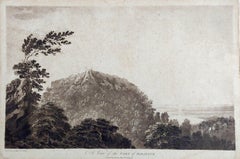
William Hodges India  'A View of the Fort of Bidjegur' Early India Engraving

William Hodges India 'A View of the Fort of Bidjegur' Early India Engraving

By William Hodges

Located in Norfolk, GB

William Hodges 'A View of the Fort of Bidjegur' Published May 29th 1786 by J.Wells No:22 Charing Cross Image size 32.2 x 48.2 cm Aquatint with soft ground etching from the seminal ...

Category

Late 18th Century Other Art Style William Hodges Art

Materials

Engraving

William Hodges art for sale on 1stDibs.

Find a wide variety of authentic William Hodges art available for sale on 1stDibs. You can also browse by medium to find art by William Hodges in engraving, oil paint, paint and more. Much of the original work by this artist or collective was created during the 18th century and is mostly associated with the Old Masters style. Not every interior allows for large William Hodges art, so small editions measuring 9 inches across are available. Customers who are interested in this artist might also find the work of George Morland, George Romney, and Giovanni Battista Piranesi. William Hodges art prices can differ depending upon medium, time period and other attributes. On 1stDibs, the price for these items starts at $1,100 and tops out at $6,464, while the average work can sell for $3,782.

Artists Similar to William Hodges

Questions About William Hodges Art

  • 1stDibs ExpertOctober 24, 2024
    How much William Hodges paintings are worth will depend on their size, condition, historical significance and other characteristics. At an auction in 2019, his Matavie Bay in the Island of Otaheite set a record for the artist's work when it sold for more than $848,000. The piece depicts a landscape that the British artist experienced firsthand as a part of James Cook's second voyage to the Pacific Ocean in the 1770s. Hodges produced a series of paintings inspired by his voyages and later reproduced select works as prints. If you own a piece by Hodges, you can use the services of a certified appraiser or knowledgeable art dealer to find out how much it may be worth. Find a wide range of landscape paintings on 1stDibs.