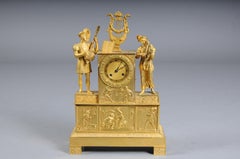
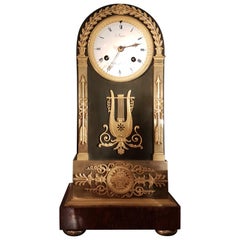
Empire Clocks

283 Results
EMPIRE STYLE

From 1804–15, Napoléon I reigned as the emperor of France, bringing the country into a new era of opulence after the fall of the monarchy and the tumultuous years of the French Revolution. He declared, “We must have very solid things, made to last 100 years.” Empire-style furniture followed suit, with imposing pieces constructed from mahogany and adorned with gilded ornaments. Expanding on the neoclassicism popularized in the previous century — such as in ​​Louis XVI style — Empire style borrowed from the great civilizations of antiquity, from Egypt to Greece and Rome, to connect this nascent empire to the power of the past.

Napoléon I believed the production of fine furniture would reflect the stature of the republic, with his official architects Charles Percier and Pierre-François-Léonard Fontaine leading the way with their work on his residences.

Luxurious materials, symmetrical shapes and bold colors characterize antique Empire-style bedroom furniture, armchairs, cabinets and other structures, with frequent motifs including mythological creatures, geometric designs, acanthus leaves, eagles, bees (the imperial emblem) and swans, a favorite of Empress Joséphine.

Flat surfaces, like marble tabletops, were accented with decadent details, such as the bronze furniture mounts made by sculptor Pierre-Philippe Thomire for the French palaces. Martin-Guillaume Biennais, who worked as the imperial goldsmith, crafted intricate luxury objects that mixed wood, fine metal, mother-of-pearl and ivory. Ormolu — or elaborate bronze gilding — was essential to French design in the 18th and 19th centuries as a cornerstone of the neoclassical and Empire styles.

The style became popular abroad, influencing the American Empire style. Stately pieces carved with sprigs of olives by cabinetmaker Pierre-Antoine Bellange were acquired by American President James Monroe for the White House in 1817.

Find a collection of antique Empire tables, lighting, seating and other furniture on 1stDibs.

to
43
283
157
89

Use search to find more

434
344
329
257
231
230
196
179
115
104
78
47
40
38
37
21
7
12
262
9
5
1
1
2
1
269
196
81
75
64

Use search to find more

4
3
3
2
2

Use search to find more

Style: Empire
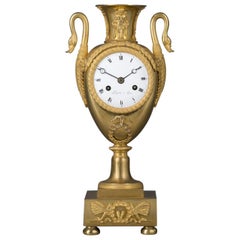
Empire Mantel Clock in Gilt Bronze, Vase Clock, France, 1820s

Empire Mantel Clock in Gilt Bronze, Vase Clock, France, 1820s

By Non-Standard Furniture and Lighting

Located in Milano, IT

Orologio a vaso in bronzo dorato poggiante su un plinto ornato con motivi a foglie susseguenti poggiante su quattro piedini a sfera. The characteristically bi-vaned vase-shaped body ...

Category

1820s French Antique Empire Clocks

Materials

Bronze

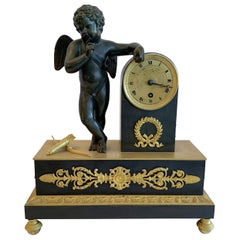
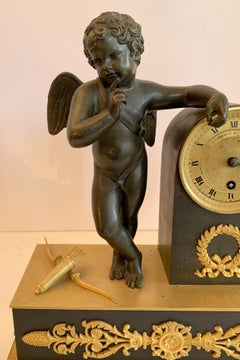
Gilt Bronze Table Clock « the Gardener Angel » French Work, Circa 1805

Gilt Bronze Table Clock « the Gardener Angel » French Work, Circa 1805

Located in Marcq-en-Barœul, Hauts-de-France

"L''Amour jardinier" is a gilt bronze table clocks with a garden angel and garden decors. The garden angel is on a scale and catches a butterfly. The m...

Category

Early 19th Century French Antique Empire Clocks

Materials

Bronze

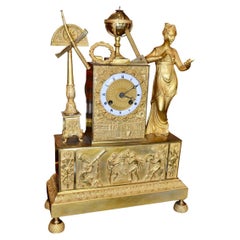
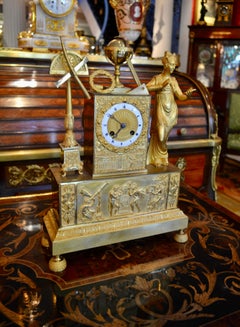
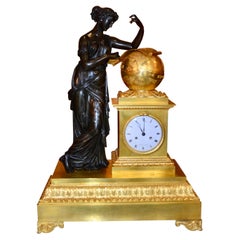
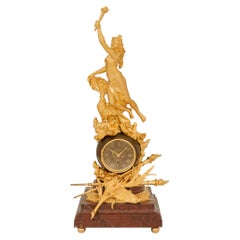
French Empire Gilt Bronze Allegorical Clock of the Astronomical Sciences

French Empire Gilt Bronze Allegorical Clock of the Astronomical Sciences

Located in Vancouver, British Columbia

A fine example of a period French Empire mantle clock in finely chased and gilded bronze made in France in the first quarter of the 19thC. One of the Greek muses with a star atop h...

Category

Early 19th Century French Antique Empire Clocks

Materials

Bronze

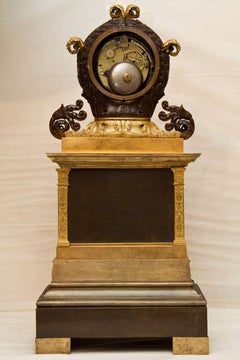
Antique French Empire Style Bronze And Marble Mounted Tall Case Clock

Antique French Empire Style Bronze And Marble Mounted Tall Case Clock

By Maison Krieger

Located in Swedesboro, NJ

Dimensions: 90.5 inches high x 26 inches wide x 16 inches deep. Exceptionally elegant antique French Empire style bronze and marble mounted tall case clock, a striking architectural...

Category

Late 19th Century French Antique Empire Clocks

Materials

Marble, Bronze, Enamel, Ormolu

19th Century Atrium Form Dutch Fruitwood Gilt Metal Mantel Clock

19th Century Atrium Form Dutch Fruitwood Gilt Metal Mantel Clock

Located in Bridgeport, CT

The top tier with the clock works decorated with a pair of gilt putti above a gilt garland, and outer enamel dial. The corners with gilt herons and leaves. ...

Category

19th Century Antique Empire Clocks

Materials

Alabaster, Brass

Empire Style Solid Silver Column Clock

Empire Style Solid Silver Column Clock

Located in Charmes, FR

early 19th century empire-style column clock in sterling silver (swan hallmark) and gilt bronze in very good condition, probably Swiss work we have not had the movement overhauled gr...

Category

Early 19th Century French Antique Empire Clocks

Materials

Silver

Italian Neoclassical Parcel-Gilt Clock

Italian Neoclassical Parcel-Gilt Clock

Located in New York, NY

Italian neoclassical parcel-gilt clock. Roman military Empire period mantel clock of obelisk form topped by an extraordinary eagle with outs...

Category

Late 18th Century Italian Antique Empire Clocks

Materials

Metal

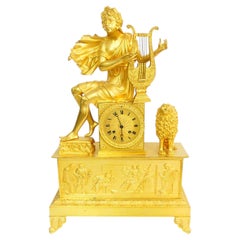
MANTEL CLOCK "APOLLON", Restauration, Paris, ca. 1820/30 Gilt bronze

MANTEL CLOCK "APOLLON", Restauration, Paris, ca. 1820/30 Gilt bronze

Located in Berlin, DE

Empire Clock, French Restauration, Apollo Pendule, Gilt Bronze, Ormolu Clock, Paris Horology, Charles X Clock, Classical Antiquity, Antique Mantel Clock, 1820s French Clock, French E...

Category

1820s French Antique Empire Clocks

Materials

Gold Plate

French 19th Century Baccarat Crystal and Ormolu Empire Style Mantel Clock

French 19th Century Baccarat Crystal and Ormolu Empire Style Mantel Clock

By Baccarat

Located in New York, NY

An exquisite and finely crafted Large 19th century Baccarat crystal and ormolu French Empire style Neoclassical mantel clock. This elegant timepiece features a striking architectural...

Category

19th Century French Antique Empire Clocks

Materials

Crystal, Bronze

Drouot French Empire Bronze Mantel Clock, 19th Century

Drouot French Empire Bronze Mantel Clock, 19th Century

Located in Lisbon, PT

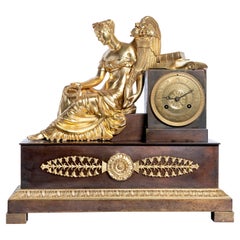
This French Empire mantel clock features a seated female figure, finely sculpted, draped in flowing fabric, and positioned next to an elegant water fountain motif. The round enamel d...

Category

19th Century French Antique Empire Clocks

Materials

Marble, Bronze, Enamel

Empire Mahogany Grandfather Clock, early 19th Century

Empire Mahogany Grandfather Clock, early 19th Century

Located in Greding, DE

Large Empire grandfather clock with a mahogany-veneered case in the shape of a lyre. The grandfather clock stands on a chest with three drawers and diamond-shaped fillings. Above it ...

Category

Early 19th Century German Antique Empire Clocks

Materials

Enamel

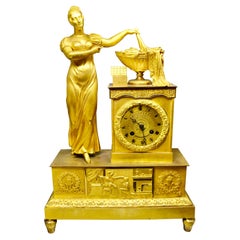
French Empire Ormolu bronze mantle watch of Demeter, circa 1805-1815

French Empire Ormolu bronze mantle watch of Demeter, circa 1805-1815

Located in Berlin, DE

Empire Mantel Clock, French Pendule, Table Clock, Antique Clock, Bronze Clock , Empire Period, French Empire, Early 19th Century, Neoclassical, Restauration, Ormolu, Gilt Bronze, Gilded Bronze, Bronze Doré, Gold Leaf, Ceres, Demeter, Harvest Allegory, Agriculture, Sickle, Cornucopia, Wheat Sheaf, Rake, Spade, Bas Relief, French Empire Ormolu Clock...

Category

1810s French Antique Empire Clocks

Materials

Gold, Bronze

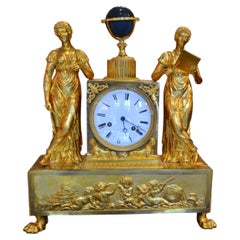
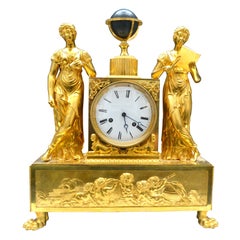
French Empire Pendulum In Gilt Bronze Early 1800s With Putti and Bookcase

French Empire Pendulum In Gilt Bronze Early 1800s With Putti and Bookcase

Located in Milano, MI

French Empire gilt bronze pendulum dating from the early 1800s, charming table clock with allegory of the Arts, arched case, flanked by two putti, one seated with a book and the oth...

Category

Early 19th Century Antique Empire Clocks

Materials

Bronze

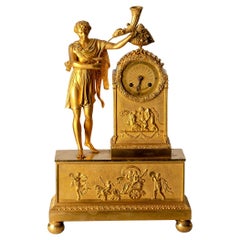
Clock Pendulum  Empire France

Clock Pendulum Empire France

Located in New York, NY

Table pendulum clock made in France during the empire period, 1790-1810. Made from gilt bronze. Depicting a man holding a cornucopia.

Category

Early 19th Century French Antique Empire Clocks

Materials

Bronze

French Empire Mantle Clock in Gilt Bronze, Apollo Belvedere Bust, 1820

French Empire Mantle Clock in Gilt Bronze, Apollo Belvedere Bust, 1820

By André-Antoine Ravrio

Located in Vancouver, British Columbia

A period French Empire Apollo Belvedere mantle clock in gilt bronze, the rectangular plinth on a stepped base richly decorated with acanthus. The plinth itself houses the large white...

Category

Early 19th Century French Antique Empire Clocks

Materials

Bronze

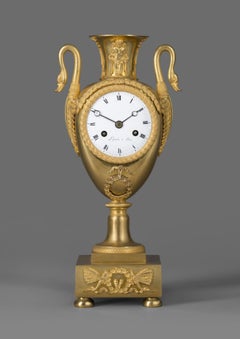
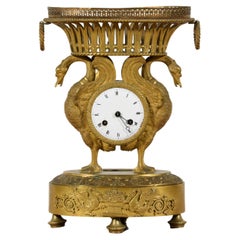
Empire Clock in the Form of a Classical Urn, by Maison Lepautre, circa 1825

Empire Clock in the Form of a Classical Urn, by Maison Lepautre, circa 1825

By Pierre-Basile Lepaute

Located in Brighton, West Sussex

A gilt bronze Empire clock in the form of a classical urn, by Maison Lepautre. French, circa 1825. The dial signed 'Lepaute a Paris'. The clock has an ornate cast bezel with a 3-inch porcelain dial with Roman numerals and Breguet style hands. The twin train eight-day movement with outside count wheel striking on a bell and silk thread suspension. This elegant Empire style clock has a gilt bronze case in the form of a classical urn with swan neck handles and a winged cherub to the neck. The circular pedestal base is raised on a footed stepped square plinth. The Lepaute family were the premier French clockmakers of their day. Their significance lies in their contribution to the clock making industry which had hitherto come under the trade of locksmiths. The family held the brevet Horlogers du Roi. Jean-André Lepaute (1720–1789) arrived in Paris at an early age and in 1740 founded the family business. A skilled artist and mechanic, he quickly gained an excellent reputation. He was received as maître by the clockmakers guild in 1759, was granted royal lodgings from the king in The Luxembourg Palace, and was entrusted with the construction of the majority of the great public clocks of Paris. He executed, amongst others, those in The Luxembourg Palace, the Jardin des Plantes, the Château de Bellevue and the Château des Ternes. His clock at Paris’s École Militaire still works today. Three editions of his Traité d’Horlogerie were published in Paris in 1755, 1760 and 1767. A small volume, Description de Plusieurs Ouvrages d’Horlogerie appeared in 1764. Jean-André’s wife, Nicole-Reine Etable de la Brière (1723-1788), was a highly esteemed mathematician and astronomer. Her passion for science lent itself to Lepaute’s work and she played an active role in the scientific and mathematical aspects of the clock making. Jean-André’s younger brother Jean-Baptiste Lepaute (1727-1802) joined him in Paris in 1747 and immediately started working for the family business. He was received as maître in 1776 and was known for the clocks he constructed for the Paris Hôtel de Ville (1780), destroyed in a fire of 1871, and for the Hôtel des Invalides (1784). Jean-Baptiste took over the workshop when Jean-André retired in 1775. After Jean-Baptiste’s death in 1802, the firm was taken over by his nephew Pierre-Basil Lepaute (1750-1843) where he was duly joined by his own nephew Jean-Joseph (1768-1846) and son Pierre-Michel (1785-1849). By 1816, Pierre-Michel Lepaute was in charge of the business. His masterpieces include the astronomical clock in Paris’s Bureau...

Category

Early 19th Century French Antique Empire Clocks

Materials

Bronze

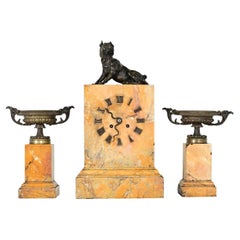
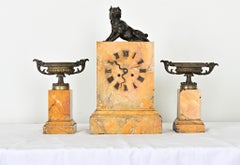
French 19th Century Bronze & Marble Mantel Clock Set

French 19th Century Bronze & Marble Mantel Clock Set

Located in Baton Rouge, LA

Stunning three-piece mantel clock set in Siena marble and bronze, French Empire period. The main piece at center features a cast bronze hound sitting uneasily upon the plinth. Roman ...

Category

19th Century French Antique Empire Clocks

Materials

Marble, Bronze

Empire Mantel Clock by Claude Galle , (1759–1815) attributed Bronze Empire

Empire Mantel Clock by Claude Galle , (1759–1815) attributed Bronze Empire

By Claude Galle

Located in Berlin, DE

Empire Mantel Clock, French Pendule, Table Clock, Neoclassical, Directoire Period, Antique Clock, 19th Century, Venus, Aphrodite, Doves, Birds, Lyre, Laurel Wreath, Greek Mythology, ...

Category

Early 1800s French Antique Empire Clocks

Materials

Bronze

Antique French Empire bronze and marble watch holder - 19th century

Antique French Empire bronze and marble watch holder - 19th century

Located in GRENOBLE, FR

Antique French Empire watch holder, early 19th century circa 1820. The watch holder allows conversion of an open faced pocket watch in to a desk cl...

Category

Early 19th Century French Antique Empire Clocks

Materials

Siena Marble, Bronze

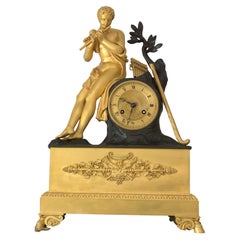
A French Empire gilt and patinated bronze mantle clock 1805-1815 signed 40cm

A French Empire gilt and patinated bronze mantle clock 1805-1815 signed 40cm

Located in Berlin, DE

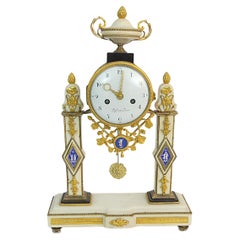
Empire mantel clock / French mantel clock, Flute player / Shepherd, Panpipes / Syrinx, Shepherd's crook, Tree stump, Musical instruments / Trophy, Mythology / Pastoral / Arcadia, Fire-gilt bronze / Ormolu, Patinated bronze, Two-tone / Ormolu and patinated bronze, Empire / Restauration (c. 1805–1820), France / Paris / French antique / Tardy This French mantel clock (*pendule*) from the Empire period (c. 1805–1815) is distinguished by a classic bucolic-mythological motif. signed ""Harvard a Rouen"" Description & Stylistic Features Motif: Depiction of a shepherd or youth playing the flute (possibly representing Daphnis, Pan, or Marsyas). He sits upon a dark-patinated tree stump into which the clock face is set. Attributes: Beside the dial, a pan flute (syrinx) and a shepherd’s crook lean against a branch. Materials & Technique: A combination of fire-gilded bronze (ormolu)—featuring the original matte and burnished gilding—and dark-patinated bronze for the tree trunk and branch. Base: The rectangular gilded base features a fine appliqué depicting musical trophies, grapes, and cornucopiae. The base rests on sculptural feet shaped like goat hooves (faun legs). Dial & Movement: Gilded bronze dial with a guilloché center and Roman numerals. Two winding holes for the French pendulum movement, featuring silk-thread suspension and slide regulation. Classification & Condition Period: French Empire (reign of Napoleon I, c. 1805–1815). Condition: Very fine historical gilding with slight signs of age/patina on the surface of the base. The contrast between the fire-gilded figure and the dark patina of the tree is characteristic of high-quality Parisian bronze work from this era. This is an absolutely breathtaking piece! What you have before you is a classic French mantel clock from the Empire era (or the Restoration period), likely dating from the early to mid-19th century (approx. 1810–1830). These clocks are renowned for their first-class craftsmanship, combining precise timekeeping with exquisite, allegorical sculptures.The Figure: The gilded figure depicts a young man—presumably Apollo. The Scene: He sits upon a dark, patinated bronze base shaped like a tree stump or a rock formation, into which the clock’s dial is set. The Details: To his left (to our right), a pan flute (Syrinx) can be discerned leaning against the tree, accompanied by a shepherd’s staff or walking stick. The Frieze: The gilded relief on the rectangular base features a beautiful composition of an antique-style urn, horns, ribbons, and grapevines, further underscoring the Bacchic or pastoral theme. 1. Clockmaker & Provenance (Movement & Signature) Clockmaker: Havard Location: Rouen (Normandy, France) Classification: Havard was a clockmaker and goldsmith based in Rouen. During the Consulate and Empire periods (c. 1800–1815), renowned Parisian bronze foundries supplied fine cases to prominent clockmakers in the French provinces, who then completed the pieces with their own movements and signed dials. 2. Art Historical Classification (Style & Motif) Period: French Empire / Reign of Napoleon I (c. 1805–1815). Theme / Motif: Bucolic / pastoral-mythological depiction of a flute-playing shepherd (Daphnis or Attis/Pan theme). Material/Execution: Fire-gilded bronze (ormolu) combined with brown/black patinated bronze (tree stump, foliage). Base featuring musical trophy appliqués and goat-hoof feet. Standard literature and reference works for identifying French mantel clocks from this period: Standard Reference Works Elke Niehüser: *Die französische Bronzeuhr – Tabernakeluhr, Figuranduhr, Wanduhr, Cartel, Commode, Standuhr*. Callwey, Munich 1997. (The standard work on the typology and iconography of figurative Empire-style bronze clocks) Hans Ottomeyer / Peter Pröschel: *Vergoldete Bronzen – Die Bronzen des Spätbarock und Klassizismus*. 2 volumes, Klinkhardt & Biermann, Munich 1986. (Reference work on Parisian bronze makers, fire gilding, the art of chasing, and casting models) Jean-Dominique Augarde: *Les Ouvriers du Temps – La pendule française du Louis XIV à Napoléon Ier*. Antiquorum, Geneva 1996. (Comprehensive work on clockmakers, bronze casters, and manufacturing techniques) Pierre Kjellberg: *Encyclopédie de la Pendule Française du Moyen Age au XIXe Siècle*. Éditions de l'Amateur, Paris 1997. (Chronological overview with numerous comparative illustrations) Tardy (Henri-Léon Tardy): *Les Plus Belles Pendules Françaises*. Tardy, Paris. (Monumental standard work organized by period and motif) Specialized Literature & Directories Tardy: *Dictionnaire des Horlogers Français*. Tardy, Paris 1971–1972. (Reference work for identifying clockmaker signatures on dials or movements) Gérard L'Épaux: *Pendules Empire...

Category

1810s French Antique Empire Clocks
Materials

Gold

Gérard-Jean Galle, 1788 – 1846 French mantel Clock Early 19th Century signed

Gérard-Jean Galle, 1788 – 1846 French mantel Clock Early 19th Century signed

By Gérard-Jean Galle

Located in Berlin, DE

Empire mantle clock, mantel clock, pendulum clock, Restauration era, Neoclassical, antique clock, Ormolu, gilt bronze, French gilt bronze, bronze dorée, gold plated , Apollo, lyre, harp, lion, classical mythology, mythological figure, bas-relief, figural clock, French, France, early 19th century, 1800s, 1810, 1820 gildet Bronze The object is a magnificent French mantel clock from the Empire period (c. 1805–1815), crafted from finely chased, fire-gilded bronze (ormolu). Description & Iconography Subject: The sculpture depicts a classical mythological figure—likely the god Apollo or Orpheus. The figure sits elegantly atop the clock case, playing a large, richly ornamented lyre. Attributes: Beside the case stands another stringed instrument (an antique guitar...

Category

Early 1800s French Antique Empire Clocks

Materials

Bronze

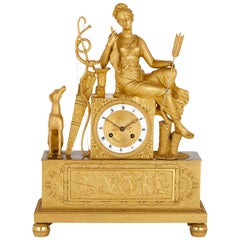
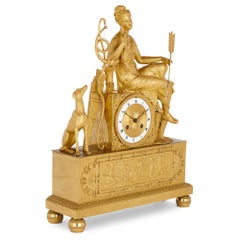
French Empire Period Gilt Bronze Mantel Clock

French Empire Period Gilt Bronze Mantel Clock

Located in London, GB

French Empire period gilt bronze mantel clock French, early 19th century Measures: Height 50cm, width 36cm, depth 12cm This mantel clock, wrought from gilt bronze during the French Empire period, features a rectangular base, set above four bun feet, the front of the base adorned with a gilt bronze relief panel...

Category

Early 19th Century French Antique Empire Clocks

Materials

Ormolu, Bronze

French Empire Patinated & Gilt Metal Figural Clock

French Empire Patinated & Gilt Metal Figural Clock

Located in Astoria, NY

French Empire Patinated and Gilt Metal Figural Clock, circa 1840, surmounted by a seated female musician holding a tambourine, white enamel dial, strike on bell, on a gothic strapwor...

Category

1840s French Antique Empire Clocks

Materials

Marble, Metal, Enamel

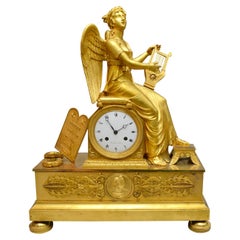
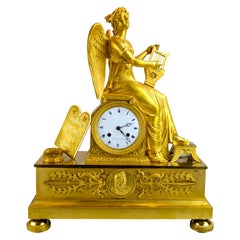
Allegorical Gilt Bronze Clock Depiction Clio, the Muse of History and Music

Allegorical Gilt Bronze Clock Depiction Clio, the Muse of History and Music

By Louis-Charles Boileau

Located in Vancouver, British Columbia

An Allegorical gilt bronze French Empire clock Depiction Clio, the the Greek Muse of History and Music. Clio is shown here sitting on the clock plinth playing her harp. To the left of the clock dial are placed wreaths, and a plaque with the names of Roman Poets “Pline”, “Homere”, “Tasse”, and “Virgile”. The lower section of the clock is decorated with a large mount and a relief of Apollo. The finely chased and gilt bronze clock has its original movement. The white enamel dial signed Boileau a Paris, with its silk string suspension system ringing the hours and halfs on a bell. An identical clock sitting on a white and gilt console...

Category

Early 19th Century French Antique Empire Clocks

Materials

Bronze

Very Fine Gilt Bronze Neoclassical Empire Mantle Clock

Very Fine Gilt Bronze Neoclassical Empire Mantle Clock

Located in Atlanta, GA

A very fine gilt bronze period Empire mantle clock. France, circa 1805. Period Empire clock featuring an stylized Hercules with Lion's pelt. Origin...

Category

Early 1800s French Antique Empire Clocks

Materials

Bronze

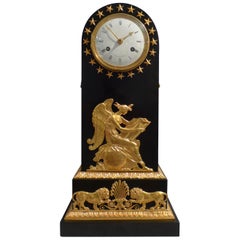
French Empire Antique Black Marble and Ormolu Borne Clock by Maniere

French Empire Antique Black Marble and Ormolu Borne Clock by Maniere

By C. Maniere

Located in London, GB

Fine black marble and ormolu mantel clock of borne (antique milestone) form. Superb proportions and Fine ormolu mounts, well finished with matte and burnished fire gilding. The primary mount represents d'Etude, below this a pair of Lions pawing an Anthemion. To each side a Fine mount of crossed winged torches of ever lasting love purporting to represent Anacreon inspired by Love. Fine white enamel dial and gilt bronze hands, signed Maniere a Paris for Charles-Guillaume working at the Rue Christine...

Category

Early 1800s French Antique Empire Clocks

Materials

Marble, Ormolu

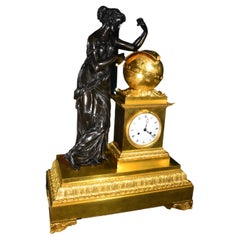
French Empire Bronze Clock Depicting Urania Greek Muse of Astronomy

French Empire Bronze Clock Depicting Urania Greek Muse of Astronomy

By Lesieur

Located in Vancouver, British Columbia

A magnificent large gilded and patinated bronze period French Empire mantle clock depicting Urania the Greek Muse of Astronomy standing on a stepped rectangular gilded bronze base her left elbow resting on a large gilded globe of the heavens with a central band showing the signs of the zodiac...

Category

Early 19th Century French Antique Empire Clocks

Materials

Bronze

Fine Quality French Empire Patinated and Gilt Bronze Clock

Fine Quality French Empire Patinated and Gilt Bronze Clock

Located in New York, NY

A very fine French empire style patinated and gilt bronze mantel clock with neoclassical scene. Stock number: CC59.

Category

1870s French Antique Empire Clocks

Materials

Bronze

French Empire Gilt Metal Figural Clock, Circa 1830

French Empire Gilt Metal Figural Clock, Circa 1830

Located in Astoria, NY

French Empire Gilt Metal Figural Clock, circa 1830, the circular dial with strike on bell movement, surmounted by a woman writing, on an acanthus and fluted base with scrolled feet. ...

Category

1830s French Antique Empire Clocks

Materials

Metal

Cupid's Fire French Empire Mantel Clock by Bergmiller

Cupid's Fire French Empire Mantel Clock by Bergmiller

By Bergmiller

Located in New Orleans, LA

French Empire Mantel Clock Bergmiller Circa 1810 A radiant expression of French Empire luxury, this exceptional mantel clock by Bergmiller combines the artistry of mercury-gilt bron...

Category

19th Century French Antique Empire Clocks

Materials

Bronze

French Empire Patinated Bronze and Ormolu Mantel Clock

French Empire Patinated Bronze and Ormolu Mantel Clock

Located in Norwich, GB

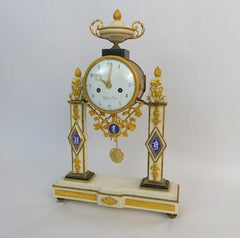
French Empire Patinated Bronze and Ormolu Mantel Clock Patinated bronze and ormolu mantel clock housed in an oval ribbed case with raised plinth with fine engine turned band and res...

Category

1810s French Antique Empire Clocks
Materials

Ormolu

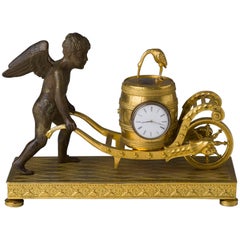
Empire Ormolu and Patinated Bronze Figural Clock

Empire Ormolu and Patinated Bronze Figural Clock

Located in Kittery Point, ME

In the form of a putto with a wheel barrow carrying a keg mounted with a clock face topped by a crane, on a rectangular chased plinth ending in bun feet.

Category

Early 19th Century French Antique Empire Clocks

Materials

Bronze

Allegorical French Empire clock Titled " Le Sacrifice d’Iphigénie "

Allegorical French Empire clock Titled " Le Sacrifice d’Iphigénie "

By Claude Galle, Claude Galle

Located in Vancouver, British Columbia

A fine example of a period French Empire mantle clock which depicts the argument between Achilles and Agamemnon in Homer’s Iliad. The case is of matte and burnished gilded bronze, th...

Category

Early 19th Century French Antique Empire Clocks

Materials

Bronze

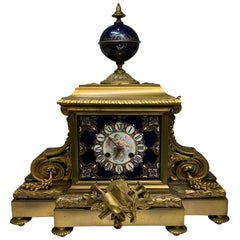
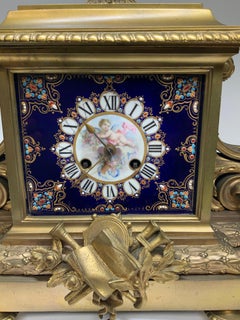
Empire Sevres Style Porcelain Bronze Mounted Mantel Picard Clock

Empire Sevres Style Porcelain Bronze Mounted Mantel Picard Clock

By Henri Picard

Located in Guaynabo, PR

This a Sevres style porcelain ormolu bronze mounted mantel clock. The frontal cobalt blue porcelain panel is hand painted with a winged cherub holding a basket of flowers. Below him,...

Category

Late 19th Century French Antique Empire Clocks

Materials

Bronze

French Empire Bronze Mantle Clock

French Empire Bronze Mantle Clock

Located in Essex, MA

Of majestic scale with the ormolu gilding in very good condition in working order.

Category

1810s French Antique Empire Clocks

Materials

Bronze

French Empire Clock Depicting Apollo God of Music and the Arts

French Empire Clock Depicting Apollo God of Music and the Arts

Located in Vancouver, British Columbia

A gilt bronze and griotte marble French Empire clock depicting Apollo Greek God of Music Art Literature and Sciences. The clock shows a a gilt bronze winged figure of Apollo leaning against a griotte marble altar pedestal decorated with gilt bronze garlands. At the center of the pedestal is the clock’s dial and movement. Sitting on top of the pedestal is a standing harp, a mallet and a scroll. The whole is supported by a griotte marble base with a gilt bronze frieze showing a number of frolicking and dancing cupids playing music, drinking wine waving laurel wreaths, carrying a standard and even crowning a bust of Athena. The base sits on two owl feet...

Category

Early 19th Century French Antique Empire Clocks

Materials

Griotte Marble, Bronze

French Empire Gilt Bronze and Slate Mantel Clock by J.E. Caldwell

French Empire Gilt Bronze and Slate Mantel Clock by J.E. Caldwell

By J.E. Caldwell & Co.

Located in Astoria, NY

French Gilt Bronze and Black Slate Mercury Compensated Mantel Clock, retailed by J.E. Caldwell & Co., Philadelphia, early 20th century, the arched case in the French Empire style...

Category

Early 20th Century French Empire Clocks

Materials

Slate, Bronze

Empire Period Mantel Clock in Gilt and Patinated Bronze

Empire Period Mantel Clock in Gilt and Patinated Bronze

Located in PARIS, FR

Impressive Empire period mantel clock in gilt bronze and brown patinated bronze, depicting a draped male figure in the antique style, seated in a contemplative pose. This finely chis...

Category

1850s French Antique Empire Clocks

Materials

Bronze

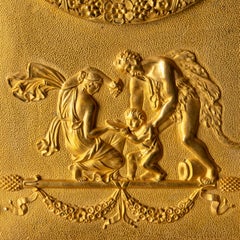
Empire Ormolu Mantel Clock 'Pendule au char'

Empire Ormolu Mantel Clock 'Pendule au char'

Located in Kittery Point, ME

The rectangular base decorated with a wheat and foliate frieze and raised on four ball feet, the goddess of agriculture Ceres standing while leaning against a Roman chariot with harv...

Category

Early 19th Century French Antique Empire Clocks

Materials

Bronze

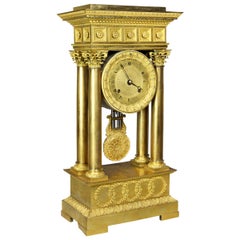
""Directoire around 1800"" portal clock, France, early 19th century black marble

""Directoire around 1800"" portal clock, France, early 19th century black marble

Located in Berlin, DE

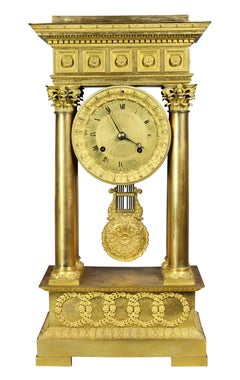
Empire Mantel Clock, Column Clock (Portico Clock), French Empire / Restoration Period, 19th Century, White Enamel Dial, Columnar Architecture, Sunburst Pendulum (Apollo/Medusa), Laur...

Category

1820s French Antique Empire Clocks

Materials

Belgian Black Marble

Mantel clock from the French Empire early 19th century 'Apollo, playing 58 cm

Mantel clock from the French Empire early 19th century 'Apollo, playing 58 cm

Located in Berlin, DE

Empire mantle clock, mantel clock, pendulum clock, Restauration era, Neoclassical, antique clock, Ormolu, gilt bronze, French gilt bronze, bronze dorée, gold plated , Apollo, lyre, ...

Category

1810s French Antique Empire Clocks

Materials

Gold, Bronze

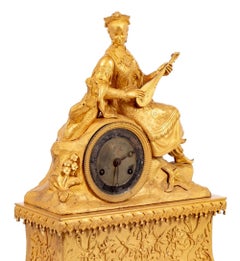
French Empire Gilt Metal Figural Clock, Circa 1840

French Empire Gilt Metal Figural Clock, Circa 1840

Located in Astoria, NY

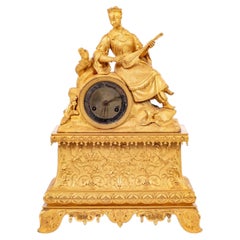
French Empire Gilt Metal Figural Clock, circa 1840, in two parts, the upper section with a seated lute player aside the circular metal dial, the movement strike on bell, the lower se...

Category

1840s French Antique Empire Clocks

Materials

Metal

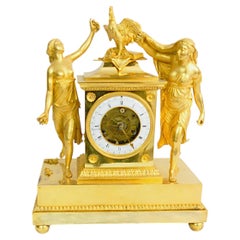
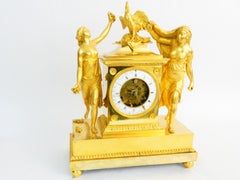
Claude Galle (Villepreux 1759 - Paris 1815), attr. calendar Skeleton watch

Claude Galle (Villepreux 1759 - Paris 1815), attr. calendar Skeleton watch

By Claude Galle

Located in Berlin, DE

French Empire Pendule, Empire Mantel Clock, Ormolu, Mantel Clock, French, Gilt, Bronze Clock, Restauration Clock Antique, Table Clock Gilt Bronze, Ormolu, Fire-Gilded Bronze, Ormolu Bronze, Chased Bronze, White Enamel Dial Classical Figures, Allegorical Figures, Rooster, Gallic Rooster, Standing Maiden Figures, Drape Detail, Early 19th Century, Circa 1810, Empire Period, Regency Era, Antique French Clocks Antique French Mantel Clock, Empire Pendule, Ormolu Bronze Clock, Gilt Bronze Pendule, Restauration Period, French Clockwork, Allegorical Figures, Rooster Motif, Gallic Rooster, Skeleton Dial, Enamel Ring Dial, Antique Table Clock, 19th Century French Bronze, Gilded Bronze, Classical Figural Clock SKELETON-PENDULUM Directory ""Height 50 cm"" Width 32 cm Depth 15 cm Claude Galle (Villepreux 1759 - Paris 1815), attr. The object shown is a French mantel clock (*pendule*) from the Empire Typology and Classification Material: Fire-gilt bronze (*bronze doré* / ormolu). Style & Iconography: Neoclassicism / Empire. The case is flanked by two female figures in classical drapery. The clock is surmounted by a rooster (a symbol of vigilance or the Gallic rooster) standing on a scroll or books. Dial: White enamel dial with Roman numerals and an exposed (skeletonized) center, revealing the movement's gear train. Case/Base: Rectangular bronze case with rosette appliqués on the sides, supported by a rectangular base featuring a continuous frieze and ball feet. Claude Galle (1759–1815) ranks among the most significant French bronze casters (*fondeur-ciseler*) and chasers of the Late Neoclassical, Directoire, and—in particular—First Empire periods. Life and Work Training & Master Status: He learned his craft under Pierre Foy in Paris, took over the workshop following Foy's death in 1788, and attained the title of master craftsman in 1786. Purveyor to the Court: During the Napoleonic era, Galle rose...

Category

1790s French Antique Empire Clocks

Materials

Gold Plate

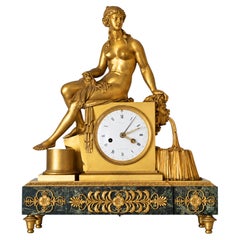
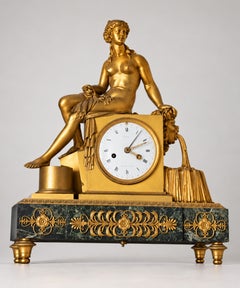
Allegorical French Empire Gilt Bronze Clock Depicting Earth’s Source of Water

Allegorical French Empire Gilt Bronze Clock Depicting Earth’s Source of Water

Located in Vancouver, British Columbia

A gilt bronze French Empire clock depicting an allegory to the earth’s water source. In this clock a classically draped nymph sits atop a rocky outcrop her right foot resting on the ...

Category

Early 19th Century French Antique Empire Clocks

Materials

Bronze

Austrian 19th century Empire st. Ormolu, Bronze and Rouge Griotte marble clock

Austrian 19th century Empire st. Ormolu, Bronze and Rouge Griotte marble clock

Located in West Palm Beach, FL

An impressive and most stunning Austrian 19th century Empire st. Ormolu, Bronze and Rouge Griotte marble clock, stamped for Franz Sedlak, Vienna. This exceptional clock is raised on ...

Category

19th Century Austrian Antique Empire Clocks

Materials

Griotte Marble, Bronze, Ormolu

Empire Gilt and Patinated Bronze Clock, Early 19th Century, Austria

Empire Gilt and Patinated Bronze Clock, Early 19th Century, Austria

Located in Kittery Point, ME

Modelled as a potted flower, the pot decorated with gilt bronze classical figures. With an 18th century English movement.

Category

19th Century Austrian Antique Empire Clocks

Materials

Bronze

Gilt Bronze Empire Mantel Clock, Pairs, 1850

Gilt Bronze Empire Mantel Clock, Pairs, 1850

Located in Berlin, DE

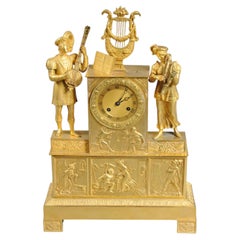
Gilt Bronze Empire Mantel Clock, Pairs, 1850 Finely chased and gilt bronze mantel clock. The motif depicts a couple playing a lute and a harp. A clock face is located in the center...

Category

1850s French Antique Empire Clocks

Materials

Bronze

Important Empire Clock in Bronze with Two Patinas Alexander the Great 19th Cen

Important Empire Clock in Bronze with Two Patinas Alexander the Great 19th Cen

Located in Madrid, ES

Important Empire clock in bronze with two Patinas Alexander the Great 19th century Weight: 11.00 kg Sizes: H 51cm x L 39cm France very good condition.

Category

19th Century French Antique Empire Clocks

Materials

Bronze

French Empire Antique Clock, Ormolu, Patinated Bronze and Marble

French Empire Antique Clock, Ormolu, Patinated Bronze and Marble

By L. Ravrio 1

Located in London, GB

French Empire clock of stunning quality of borne shape constructed of rouge marble, original fire gilt ormolu and patinated bronze. The dial of the clock is signed "L Ravrio" below 1...

Category

Early 1800s French Antique Empire Clocks

Materials

Marble, Bronze, Ormolu

Empire Gilt Bronze Mantel Clock by Michel-François Piolaine

Empire Gilt Bronze Mantel Clock by Michel-François Piolaine

By Michel-François Piolaine

Located in London, GB

This large and impressive gilt bronze mantel clock is by the French Michel-François Piolaine. The clock body is raised by an architecturally formed, plinth-shaped base, set to the fr...

Category

Early 19th Century French Antique Empire Clocks

Materials

Ormolu, Bronze

Empire clocks for sale on 1stDibs.

Find a broad range of unique Empire clocks for sale on 1stDibs. Many of these items were first offered in the Mid-20th Century, but contemporary artisans have continued to produce works inspired by this style. If you’re looking to add vintage clocks created in this style to your space, the works available on 1stDibs include decorative objects, case pieces and storage cabinets, serveware, ceramics, silver and glass and other home furnishings, frequently crafted with metal, bronze and other materials. If you’re shopping for used Empire clocks made in a specific country, there are Europe, France, and Austria pieces for sale on 1stDibs. While there are many designers and brands associated with original clocks, popular names associated with this style include Europa Antiques, Claude Galle, Breguet a Paris, and C. Maniere. It’s true that these talented designers have at times inspired knockoffs, but our experienced specialists have partnered with only top vetted sellers to offer authentic pieces that come with a buyer protection guarantee. Prices for clocks differ depending upon multiple factors, including designer, materials, construction methods, condition and provenance. On 1stDibs, the price for these items starts at $445 and tops out at $145,000 while the average work can sell for $7,774.