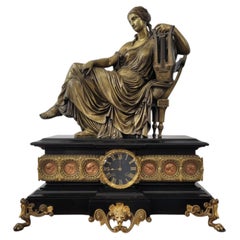
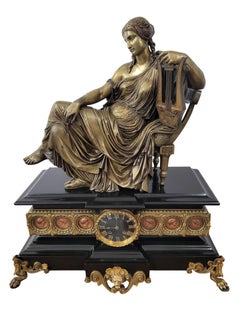
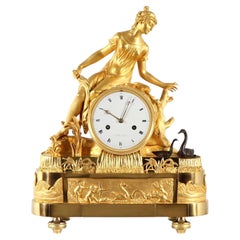
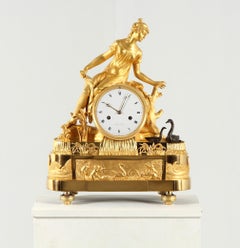
Empire Clocks

EMPIRE STYLE

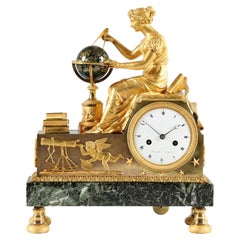
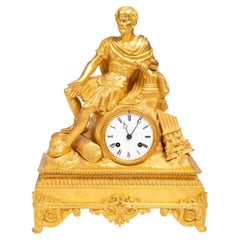
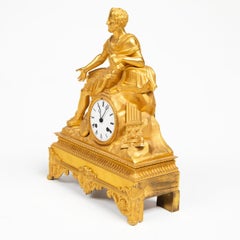
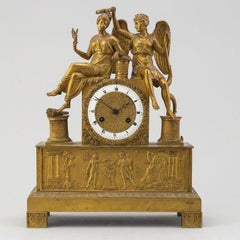
From 1804–15, Napoléon I reigned as the emperor of France, bringing the country into a new era of opulence after the fall of the monarchy and the tumultuous years of the French Revolution. He declared, “We must have very solid things, made to last 100 years.” Empire-style furniture followed suit, with imposing pieces constructed from mahogany and adorned with gilded ornaments. Expanding on the neoclassicism popularized in the previous century — such as in ​​Louis XVI style — Empire style borrowed from the great civilizations of antiquity, from Egypt to Greece and Rome, to connect this nascent empire to the power of the past.

Napoléon I believed the production of fine furniture would reflect the stature of the republic, with his official architects Charles Percier and Pierre-François-Léonard Fontaine leading the way with their work on his residences.

Luxurious materials, symmetrical shapes and bold colors characterize antique Empire-style bedroom furniture, armchairs, cabinets and other structures, with frequent motifs including mythological creatures, geometric designs, acanthus leaves, eagles, bees (the imperial emblem) and swans, a favorite of Empress Joséphine.

Flat surfaces, like marble tabletops, were accented with decadent details, such as the bronze furniture mounts made by sculptor Pierre-Philippe Thomire for the French palaces. Martin-Guillaume Biennais, who worked as the imperial goldsmith, crafted intricate luxury objects that mixed wood, fine metal, mother-of-pearl and ivory. Ormolu — or elaborate bronze gilding — was essential to French design in the 18th and 19th centuries as a cornerstone of the neoclassical and Empire styles.

The style became popular abroad, influencing the American Empire style. Stately pieces carved with sprigs of olives by cabinetmaker Pierre-Antoine Bellange were acquired by American President James Monroe for the White House in 1817.

Find a collection of antique Empire tables, lighting, seating and other furniture on 1stDibs.

to
54
291
10
272
9
5
1
1
2
1
431
356
325
261
245
236
188
176
118
106
75
47
40
37
36
25
7
270
195
79
75
63
158
88
268
241
9
4
4
Height
to
Width
to
291
291
291
4
3
2
2
2
Style: Empire
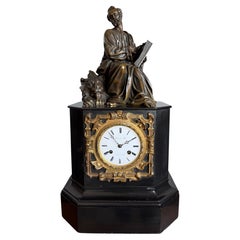
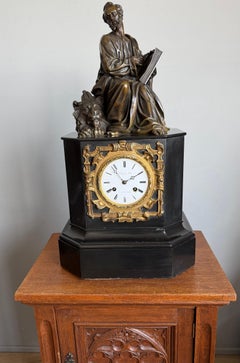
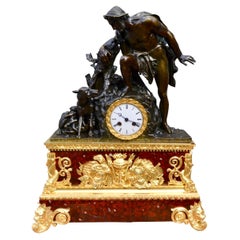
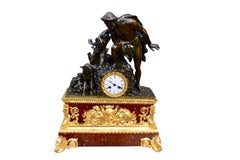
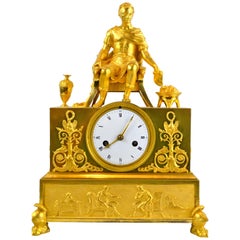
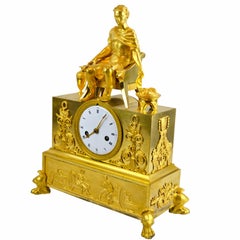
Fine Early 19th C. Bronze Mantel Clock “Saint Mark with Lion”, Detouche, Paris

Fine Early 19th C. Bronze Mantel Clock “Saint Mark with Lion”, Detouche, Paris

By C. Detouche

Located in Lisse, NL

A fine and highly decorative early 19th century French mantel clock, signed C. Detouche, Bté, Paris, depicting Saint Mark the Evangelist seated beside his traditional attribute, the ...

Category

Early 19th Century French Antique Empire Clocks

Materials

Marble, Brass, Bronze

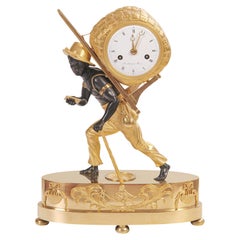
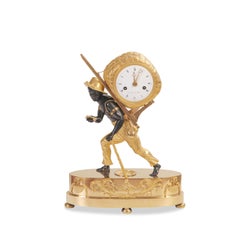
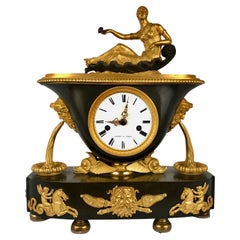
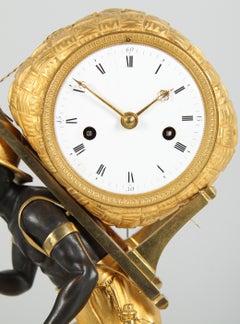
Early 19th Century French Empire Pendule Portefaix circa 1810 Paris

Early 19th Century French Empire Pendule Portefaix circa 1810 Paris

Located in Münster, DE

Paris, Empire, c. 1810, bronze body, fire-gilt and patinated, designed by Jean-André Reiche in 1808, 8-day movement, enamel dial with Roman numerals, figure of the wearer on an oval ...

Category

Early 19th Century French Antique Empire Clocks

Materials

Bronze, Enamel

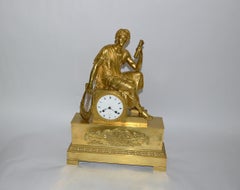
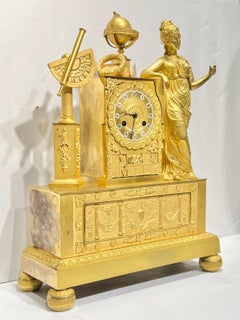
19th Century Ormolu Pendule - Astronomy, France, circa 1825

19th Century Ormolu Pendule - Astronomy, France, circa 1825

Located in Greven, DE

Mantel Clock Urania - Allegory of astronomy Montpellier Bronze, marble, enamel circa 1825 Dimensions: Height x width x depth: 37 x 31 x 10 cm Description: Beautiful mantel clock designed by the famous Parisian bronzier Jean Andre Reiche...

Category

1820s French Antique Empire Clocks

Materials

Enamel, Ormolu

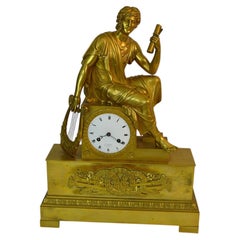
French Charles X Ormolu Mantel Clock with Horatius, circa 1820-1830

French Charles X Ormolu Mantel Clock with Horatius, circa 1820-1830

Located in Kastrup, DK

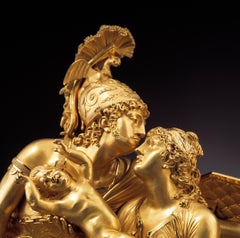
Decorative and finely executed French Charles X mantel clock in ormolu. The clock is surmounted by a seated Roman general, possibly Horatius, dressed in classical armour and drapery...

Category

Early 19th Century French Antique Empire Clocks

Materials

Bronze

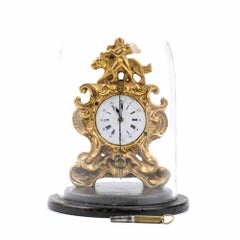
Table Clock with Glass Dome, 19th century

Table Clock with Glass Dome, 19th century

Located in Roma, IT

Shaped case in gilded bronze topped with a musician putto and a tiger, white enamel dial with Roman numerals and black hour markers, long pendulum extending from the top and key-woun...

Category

19th Century French Antique Empire Clocks

Materials

Bronze, Enamel

LARGE CLOCK 'A L'ETUDE', Empire, the model by P.V. LEDURE 1825-1830

LARGE CLOCK 'A L'ETUDE', Empire, the model by P.V. LEDURE 1825-1830

Located in Berlin, DE

Height: 50 cm. Width: 34 cm. Depth: 13 cm. France, 1810-1820 Attr. P.V. LEDURE MOVEMENT Eight-day movement. Pendulum with thread suspension. Half-hour and hour lockwheel strike,...

Category

1820s Antique Empire Clocks

Materials

Gold

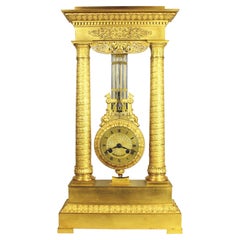
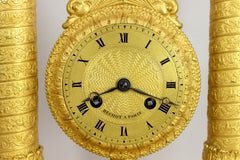
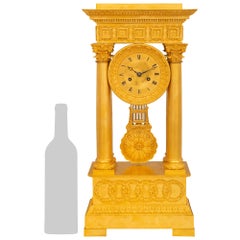
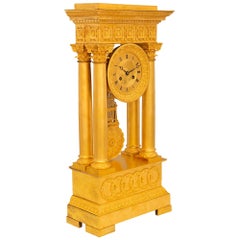
An Extremely Fine Ormolu Portico Mystery Clock

An Extremely Fine Ormolu Portico Mystery Clock

By Breguet a Paris

Located in Amersham, GB

This extremely rare swinging portico clock by Béchot Paris, in an ormolu case of exquisite quality, finely cast and gilded with its original burnished and chased finish, this clock i...

Category

Early 19th Century French Antique Empire Clocks

Materials

Ormolu

Gilt French Empire Table Clock, Early 1800s

Gilt French Empire Table Clock, Early 1800s

Located in New York, NY

A French Empire table clock, first half of the 19th century. Measures: Width 30, depth 11, height 38 cm. Key included. Later added hatch at back. F...

Category

Early 19th Century French Antique Empire Clocks

Materials

Brass

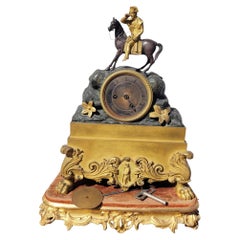
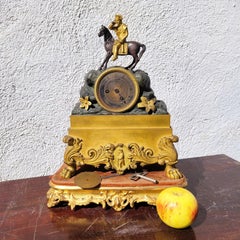
Napoleon On Horseback, Double Patina Bronze Clock, H40cm, 19th Century

Napoleon On Horseback, Double Patina Bronze Clock, H40cm, 19th Century

Located in MARSEILLE, FR

Bronze clock with double patina, representing Napoleon I on horseback, looking into the distance with his telescope. In front, 2 feet in the form of lion paws and a macaron with a...

Category

19th Century French Antique Empire Clocks

Materials

Bronze

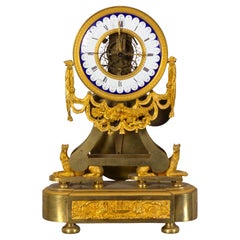
French Directoire Bronze Skeleton Clock

French Directoire Bronze Skeleton Clock

Located in Rome, IT

Extremely fine quality Directoire/Empire gilt bronze mounted gilt brass skeleton clock with enameled chapter ring and openwork movement. Roman numerals for the hours and outer half...

Category

1790s French Antique Empire Clocks

Materials

Ormolu

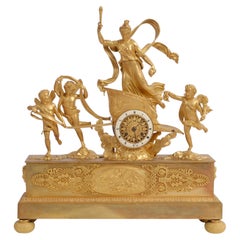
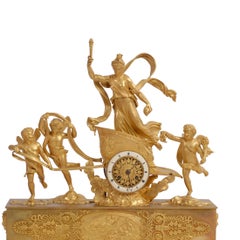
Fire-gilded French Empire bronze clock, ca. 1800, “Chariot of Aurora”; Deniere

Fire-gilded French Empire bronze clock, ca. 1800, “Chariot of Aurora”; Deniere

By Maison Deniere

Located in Münster, DE

Fire-gilded bronze clock depicting Aurora’s chariot, dial signed Deniere á Paris, Maison Deniere The signature “Denière” or “Denière Fabt de Bronzes à Paris” belongs to Jean-Franço...

Category

Early 19th Century French Antique Empire Clocks

Materials

Bronze, Enamel

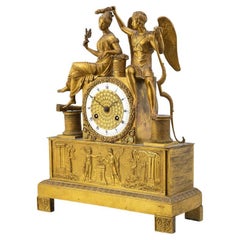
Early 19th Century French Mantel Clock - Allegory of Love, Paris circa 1815

Early 19th Century French Mantel Clock - Allegory of Love, Paris circa 1815

Located in Greven, DE

Antique French Mantel Clock - Allegory of Love Paris Ormolu circa 1815 Dimensions: H x W x D: 45 x 35 x 13 cm Description: Antique French mantel clock as an allegory of love. Set...

Category

Early 19th Century French Antique Empire Clocks

Materials

Enamel, Ormolu

Early 19th Century Mantel Clock - "Pendule au Noir", Faizan à Paris circa 1810

Early 19th Century Mantel Clock - "Pendule au Noir", Faizan à Paris circa 1810

By Faizan A Paris

Located in Greven, DE

The barrel roller - so-called "Pendule au Noir" Paris fire-gilt bronze early 19th century Dimensions: H x W x D: 34 x 27 x 11 cm Description: Fire-gilt bronze clock from the early...

Category

Early 19th Century French Antique Empire Clocks

Materials

Bronze, Enamel, Ormolu

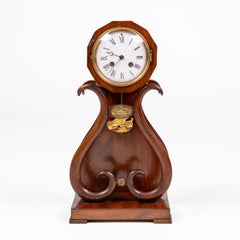
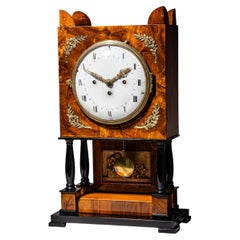
Bracket Clock, Vienna, circa 1820

Bracket Clock, Vienna, circa 1820

Located in Greding, DE

Elegant Viennese bracket clock with an ebonized base and splayed legs supporting the clock case. The case is made of walnut and decorated with brass appliqués. The movement features...

Category

1820s Austrian Antique Empire Clocks

Materials

Brass

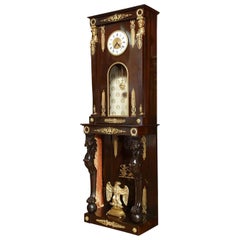
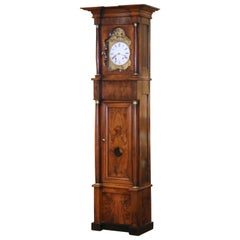
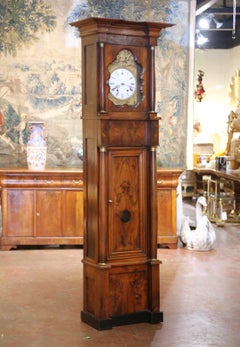
Early 19th Century French Empire Walnut Tall Case Grandfather Clock

Early 19th Century French Empire Walnut Tall Case Grandfather Clock

Located in Dallas, TX

Add architectural presence and old-world elegance to an entry, hallway, living room, or study with this stately antique French Empire walnut grandfather clock. Crafted in France circ...

Category

Early 19th Century French Antique Empire Clocks

Materials

Brass

19th Century French Empire Clock, Japy Frères et Cie Movement

19th Century French Empire Clock, Japy Frères et Cie Movement

By Japy Frères

Located in North Palm Beach, FL

This magnificent mantel clock exemplifies the height of French Empire Revival design in the 19th century—where classical grandeur, refined materials, and superb craftsmanship converg...

Category

Late 19th Century French Antique Empire Clocks

Materials

Belgian Black Marble, Bronze, Copper

Late 19th Century Empire-Style Longcase Clock

Late 19th Century Empire-Style Longcase Clock

Located in Paris, FR

Impressive mahogany longcase clock with gilt and sculpted decorative bronze elements such as fantastic animals, diamond-shaped patterns, scrollwork, and foliage. This floor clock is ...

Category

1880s French Antique Empire Clocks

Materials

Ormolu, Bronze

Empire Period Mantle Clock by Leroy a Paris, Bronze & Ormolu, 1815

Empire Period Mantle Clock by Leroy a Paris, Bronze & Ormolu, 1815

Located in Montreal, QC

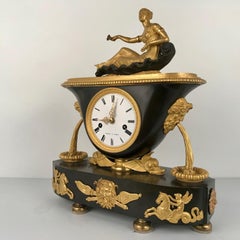
This mantle clock is by a well-respected Paris maker in a fashionable style. The oval base supports a vase shaped clock case in turn supported by winged dolphin heads and flanked by ...

Category

1810s French Antique Empire Clocks

Materials

Bronze, Ormolu

Empire Era Fire-Gilt Bronze Clock Representing a Figure in Neo-Egyptian Style

Empire Era Fire-Gilt Bronze Clock Representing a Figure in Neo-Egyptian Style

Located in 263-0031, JP

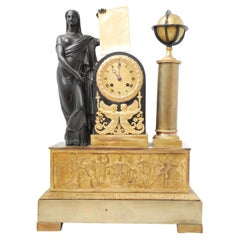
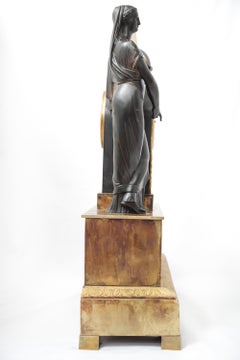
A French patinated and fire-gilt clock depicting a standing figure in the neo-Egyptian style, Empire Era, 1800-15. The silk-thread mechanism is in good working condition with key and...

Category

Early 19th Century French Antique Empire Clocks

Materials

Bronze

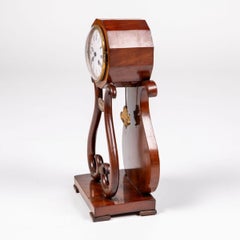
Early 19th Century Danish Empire Console Clock in Mahogany

Early 19th Century Danish Empire Console Clock in Mahogany

Located in Kastrup, DK

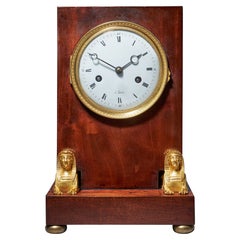
A beautiful and decorative late Empire console clock crafted in Cuban mahogany. The case is architecturally shaped with gracefully curved lines and executed with fine craftsmanship. ...

Category

Early 19th Century Danish Antique Empire Clocks

Materials

Metal, Brass

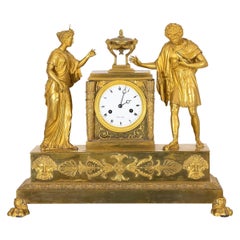
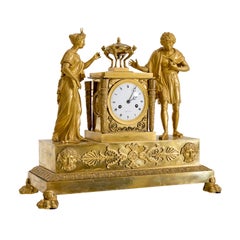
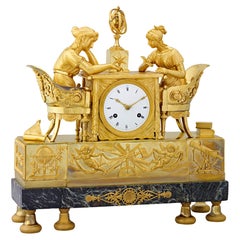
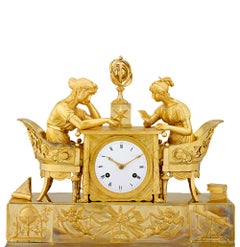
The Astronomy Lesson French Empire Mantel Clock

The Astronomy Lesson French Empire Mantel Clock

Located in New Orleans, LA

This magnificent French Empire ormolu mantel clock features the iconic Neoclassical genre scene often referred to as "The Astronomy Lesson." A popular motif during this period, Emper...

Category

19th Century French Antique Empire Clocks

Materials

Marble, Enamel, Ormolu

Early 19th Century Ormolu Mantel Clock "Portefaix", Paris, circa 1810

Early 19th Century Ormolu Mantel Clock "Portefaix", Paris, circa 1810

Located in Greven, DE

Pendule Portefaix Paris Bronze, enamel Empire around 1810 Dimensions: H x W x D: 36 x 28 x 11 cm Description: Beautiful, fire-gilded and patinated bronze pendule from the early 19...

Category

Early 19th Century French Antique Empire Clocks

Materials

Ormolu

Ormolu Mantel Clock, Belgium, circa 1810-1820

Ormolu Mantel Clock, Belgium, circa 1810-1820

Located in Belmont, MA

Empire ormolu mantel clock, Belgium, circa 1810, Signed "J.B. Romaet a Gand". Decorated with a shepherd scene. Strikes the hour and half hour on a bell. With enamel clock face and si...

Category

1810s Belgian Antique Empire Clocks

Materials

Ormolu

Rare French Empire Clock in Gilt and Patinated Bronze Signed Lepaute

Rare French Empire Clock in Gilt and Patinated Bronze Signed Lepaute

By Jean-André Lepaute 1

Located in Vancouver, British Columbia

An extremely rare and important French Empire mantle clock signed by the master clock making dynasty of Jean-Andre Lepaute and his brother Jean-Baptiste Lepaute. The case, in the form of an antique portal...

Category

Early 19th Century French Antique Empire Clocks

Materials

Bronze

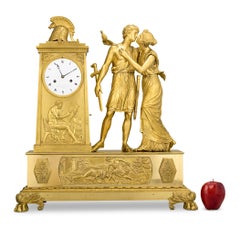
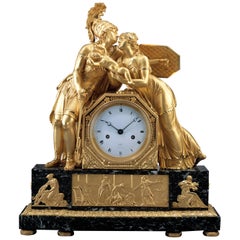
Odysseus and Theseus French Empire Mantle Clock by André Antoine Ravrio

Odysseus and Theseus French Empire Mantle Clock by André Antoine Ravrio

Located in New Orleans, LA

Odysseus and Theseus French Empire Mantel Clock André Antoine Ravrio Circa 1800 This monumental Empire mantel clock by André Antoine Ravrio, whose case is crafted entirely of gilded...

Category

Early 19th Century French Antique Empire Clocks

Materials

Bronze

Antique French Empire Patinated and Gilt Bronze Mantel Clock

Antique French Empire Patinated and Gilt Bronze Mantel Clock

Located in London, GB

Antique French Empire patinated and gilt bronze mantel clock French, early 19th century Measures: Height 55cm, width 43cm, depth 13cm This fine Empire period mantel clock is wro...

Category

Early 19th Century French Antique Empire Clocks

Materials

Bronze, Ormolu

French Mid 19th Century Empire St. Ormolu Portico Clock

French Mid 19th Century Empire St. Ormolu Portico Clock

Located in West Palm Beach, FL

An exquisite French mid 19th century Empire st. ormolu portico clock. The clock raised on a rectangular base with finely chased borders and satin and burnish finish interlocking circ...

Category

19th Century French Antique Empire Clocks

Materials

Ormolu

Early 19th Century Ormolu Mantel Clock, Atala freeing Chactas, Paris, circa 1810

Early 19th Century Ormolu Mantel Clock, Atala freeing Chactas, Paris, circa 1810

Located in Greven, DE

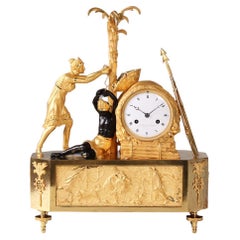
Mantel Clock "Atala and Chactas" Paris Bronze (fire-gilt and patinated), enamel Empire around 1810 Dimensions: H x W x D: 40 x 32 x 11 cm Description: Very rare and extremely high quality French mantel clock, so-called Pendule Au Bon Sauvage. Depicted are scenes from the love story "Atala or the love of two savages in the desert" written by Francois René Vicomte de Chateaubriand in 1801. At the beginning of the 19th century, this was probably the most famous love story in Europe, but today it has been forgotten. The story, set in present-day Louisiana (USA), is roughly rewritten about the forbidden love between Chactas, a young Indian, and Atala, the beautiful daughter of a Spaniard. Chactas is captured in a battle between two Indian tribes, chained to a palm tree and is to be sacrificed. Atala wants to save his life and convert him to Christianity. She unties him from the palm tree at night and they flee together into the wilderness of North America. Their love for each other grows stronger and stronger and they have prospects for a future together. The story takes a tragic turn when Atala, who must remain a virgin due to a vow made by her mother, can no longer withstand the conflict of her feelings and commits suicide. The main group of characters thus shows Chacta's liberation through Atala. Atala is leaning against a pile of logs. The animal fur thrown over the logs and the weapons leaning against the stack on the right give the impression of a night camp. The bronze is of rarely beautiful quality, finely chiselled and makes the scene appear very lively. The contrast of fire-gilded and patinated bronze adds tension to the composition. In the base we see the Entombment as the end of the tragic love story. This bronze work is also very detailed, the interplay of bright and matt gilding makes the flat relief appear much deeper than it is. The depiction of the mantel clock presented here shows that the exotic was only known from stories and that the bronzier had his own ideas about the appearance of this distant world. The Indian, for example, has very European facial features and his skin was not black in reality, of course. The palm tree was also certainly not found in the North American wilderness. The heart of the clock is a French pendulum movement, integrated into the wooden pile, with an eight-day power reserve and a lock plate striking a bell on the half and full hour. The pendulum is suspended on a thread, typical of the period. The classically shaped hands, so-called Breguet hands, are also typical of the time. The enamelled dial has black Roman hour numerals, Arabic quarter hours and bears the signature: Le Roy hr. de Madame A PARIS. Interesting facts: The period from 1795 to about 1815 saw the creation of probably the most spectacular group of bronzes: The "Au bon Sauvage" pendulums - depictions of the "Noble Savage". Today's viewers react to these objects with both fascination and irritation. Enthusiastic on the one hand about the obvious quality of the detailed bronzes and the allure of the exotic, on the other hand distanced and cautious because of the possible discrimination that is suspected behind them. The ambivalence of this feeling motivates the search for the conditions of origin of these pendulums. Europeans found their new ideal of the natural man primarily in fictional and realistic travelogues about the Indians of North America...

Category

Early 19th Century French Antique Empire Clocks

Materials

Ormolu

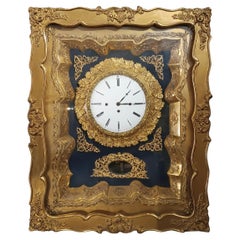
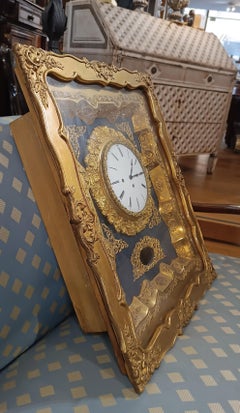
EARLY 19th CENTURY GOLDEN WALL CLOCK WITH MUSIC BOX

EARLY 19th CENTURY GOLDEN WALL CLOCK WITH MUSIC BOX

Located in Firenze, FI

Splendid wall clock set in an elegant opening wooden case, with carved frame and golden tablet. The internal finishes of the clock are also in golden tablet and brass. The decoration...

Category

Early 19th Century Austrian Antique Empire Clocks

Materials

Brass

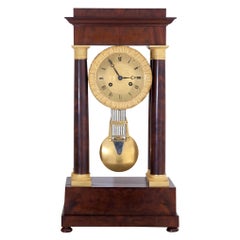
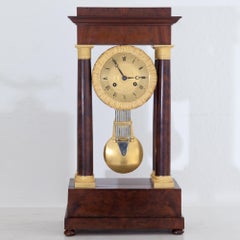
Empire Portal Clock, Mahogany and Bronze, France, Early 19th Century

Empire Portal Clock, Mahogany and Bronze, France, Early 19th Century

Located in Greding, DE

Portal clock on a rectangular, stepped base in mahogany veneered with small bun feet. The stepped architrave is supported by four smooth columns, the capi...

Category

Early 19th Century French Antique Empire Clocks

Materials

Bronze

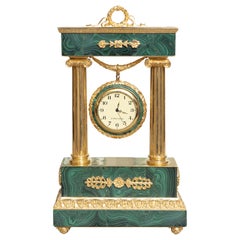
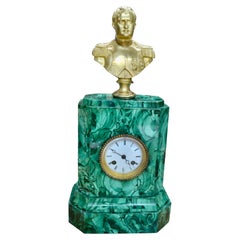
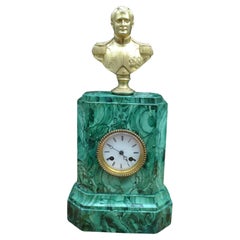
A Late 19 Century Malachite clock Topped by a Gilt  Bronze Bust of Napoleon

A Late 19 Century Malachite clock Topped by a Gilt Bronze Bust of Napoleon

Located in Vancouver, British Columbia

A simple yet elegant relatively rare malachite cased clock topped by a gilt bronze bust of a young Napoleon in uniform after the marble original work by Jean Antoine Houdon.

Category

Late 19th Century French Antique Empire Clocks

Materials

Malachite, Bronze

A French Empire Clock of the Roman Goddess Aurora Announcing a New Day

A French Empire Clock of the Roman Goddess Aurora Announcing a New Day

Located in Vancouver, British Columbia

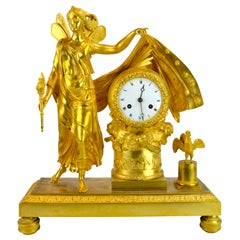
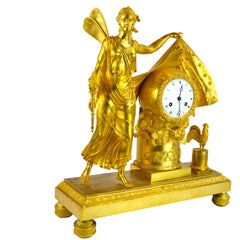
A period French Empire allegorical mantel clock with a case of finely chased and gilt bronze. Aurora stands to the left of the circular clock plinth draping a starry cloak over the g...

Category

Early 19th Century French Antique Empire Clocks

Materials

Bronze

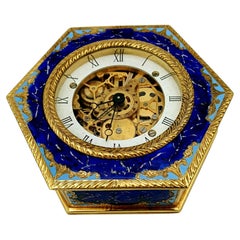
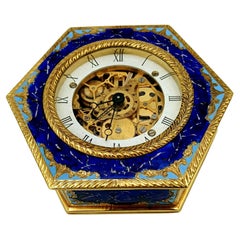
Table Box with Clock fired and Enamel fine hand-engraved arabesques Salimbeni

Table Box with Clock fired and Enamel fine hand-engraved arabesques Salimbeni

By Giorgio Salimbeni, Salimbeni

Located in Firenze, FI

Hexagonal table box with clock on the lid, in gold-plated 925/1000 sterling silver with hand-painted fired enamel in the style of lapis lazuli stone and fine hand-engraved arabesques...

Category

1970s Italian Vintage Empire Clocks

Materials

Gold Plate, Sterling Silver, Enamel

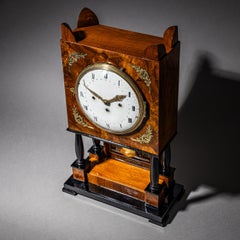
Bracket Clock, Vienna, circa 1820

Bracket Clock, Vienna, circa 1820

Located in Greding, DE

Bracket clock in a walnut case with ebonized columns and base. The case is decorated with brass appliqués. The movement features a brass chapter ring with Roman numerals, Arabic sec...

Category

1820s Austrian Antique Empire Clocks

Materials

Brass

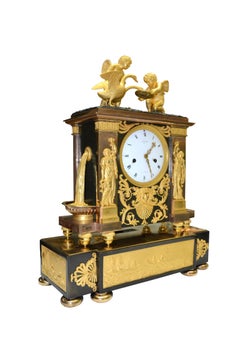
French Empire Period Ormolu Bronze Mantel Clock - Allegory of Astronomy

French Empire Period Ormolu Bronze Mantel Clock - Allegory of Astronomy

Located in New York, NY

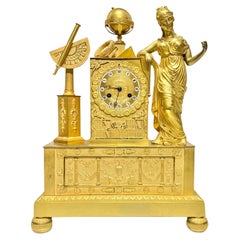
French Empire period early 19th century ormolu bronze mantel clock depicting Urania, muse of astronomy, in an allegory of astronomy, beside a variety of scientific instruments. 16 b...

Category

Early 19th Century French Antique Empire Clocks

Materials

Bronze

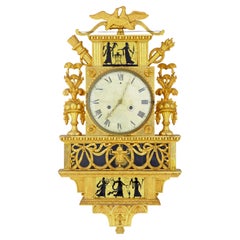
19th century Swedish gilt and eglomise ornate wall clock

19th century Swedish gilt and eglomise ornate wall clock

Located in Debenham, Suffolk

19th century Swedish gilt and églomisé ornate wall clock circa 1840. Fine quality Swedish wall clock of the empire period circa 1840. Beautifully carved, surmounted with doves. 2 si...

Category

Mid-19th Century Swedish Antique Empire Clocks

Materials

Brass

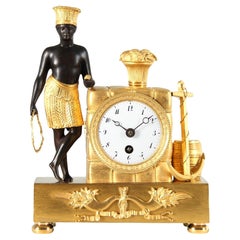
Early 19th Century Empire Clock, Miniature Matelot "Au Bon Sauvage", circa 1815

Early 19th Century Empire Clock, Miniature Matelot "Au Bon Sauvage", circa 1815

Located in Greven, DE

Miniature Empire Bronze Clock - Matelot Paris fire-gilded and patinated bronze early 19th century Dimensions: H x W x D: 18 x 14 x 9 cm Description: Very rare miniature of the famous Pendule Matelot "Au Bon Sauvage". The depiction deals with an important topic of the time, trade with the colonies. The rectangular base stands on pressed ball feet. Attached to the front, we see two cornucopias filled with exotic fruits and held by a bow. A young sailor, dressed in a raffia skirt and feather jewellery...

Category

1810s French Antique Empire Clocks

Materials

Bronze

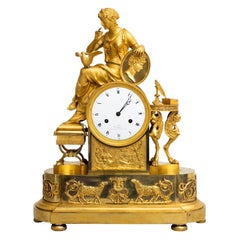
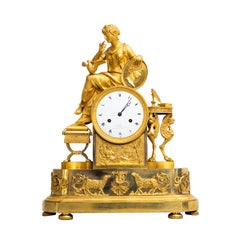
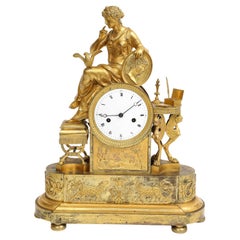
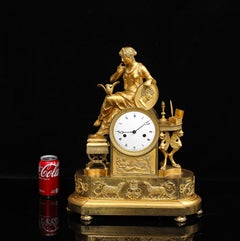
French Empire Ormolu Mantel Clock “Lettre d’Amour”, Att. François-Louis Savart

French Empire Ormolu Mantel Clock “Lettre d’Amour”, Att. François-Louis Savart

Located in New York, NY

An Important French Empire Ormolu Mantel Clock “Lettre d’Amour,” Attributed to François-Louis Savart, Paris The clock is formed with a rectangular case rising from a shaped plinth base set on four flattened bun feet. The base displays a continuous frieze cast in relief with two sheep flanking a central urn, framed by scrolling foliage at each end. Above, the main case supports a circular white enamel dial with Roman numerals and two winding apertures, enclosed within a beaded ormolu bezel. Beneath the dial, a rectangular panel is cast with a reclining male figure in a landscape setting, accompanied by trees. To the left, a female figure is seated on a cushion supported by an X form empire stool, her body turned toward the dial. She raises one hand toward her face while a bird rests on her knee, and she holds a circular medallion bearing a profile portrait. To the right, a tripod table stands on three supports formed as winged griffins with lion heads and clawed feet. The table surface holds a writing box with an open lid, a quill, and a candlestick. The surfaces throughout are finished in gilt, with visible chasing across the figures, drapery, and ornamental borders. The clock is attributed to François Louis Savart, a bronzier active in Paris. Savart produced objects in gilt bronze including clocks, candelabra, and decorative mounts. He maintained a workshop in Paris where he developed figural clock models incorporating classical motifs and narrative subjects. Comparable models associated with Savart include figural compositions with seated female figures, auxiliary furniture elements, and narrative relief panels, reflecting established design types within Parisian bronze production. Savart’s workshop operated within the Paris bronze industry, where cast ormolu objects were produced using sand casting followed by chasing and gilding. The construction of this clock case reflects the use of multiple cast components assembled into a unified structure, including separately cast figures, furniture elements, and applied relief panels. The inclusion of tripod tables, X form seating, and winged supports corresponds to design sources drawn from Greco Roman models that were adapted in Empire period decorative arts. The precise casting, crisp chasing, and consistent gilt surface across the figures, mounts, and relief panels indicate a high level of production quality, with the complexity of the assembled components supporting its desirability among Paris ormolu figural clocks...

Category

1810s French Antique Empire Clocks

Materials

Gold Plate, Bronze
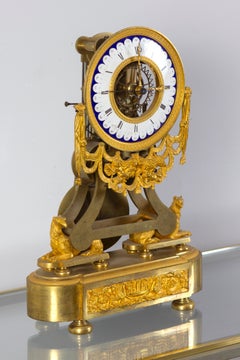
French Empire Gilt and Patinated Bronze “Pendule-Veilleuse” Mantel Clock, 19thC

French Empire Gilt and Patinated Bronze “Pendule-Veilleuse” Mantel Clock, 19thC

Located in New York, NY

A finely cast 19th-century French Empire-style mantel clock in patinated and gilt bronze, notable for its sculptural presence and refined neoclassical detailing. The circular dial fe...

Category

19th Century French Antique Empire Clocks

Materials

Bronze

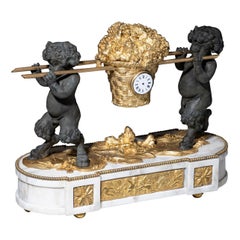
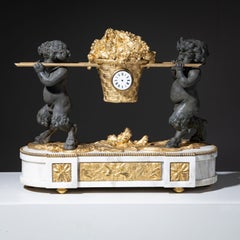
Mantel Clock with small Satyrs, 1st Half 19th Century

Mantel Clock with small Satyrs, 1st Half 19th Century

Located in Greding, DE

Mantel clock on an oval marble base, adorned with fire-gilded bronze appliqués. The clock is supported by fully sculpted satyr figures carrying an overflowing gilded fruit basket. Em...

Category

Early 19th Century French Antique Empire Clocks

Materials

Marble, Bronze
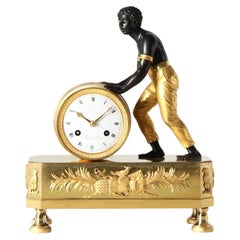
French Early 19th Century Empire Gilt Bronze Mantel Clock by Claude Galle

French Early 19th Century Empire Gilt Bronze Mantel Clock by Claude Galle

By Claude Galle

Located in Worpswede / Bremen, DE

Claude Galle, (1759–1815, master in 1786) is one of the most renowned bronziers active during the Napoleonic period, such as Pierre-Philippe Thomire, André-Antoine Ravrio and Louis-S...

Category

Early 1800s French Antique Empire Clocks

Materials

Marble, Bronze
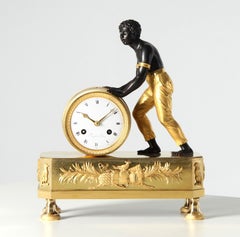
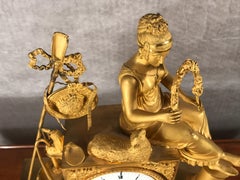
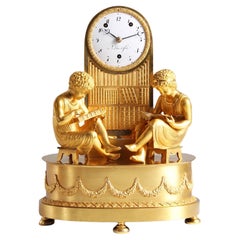
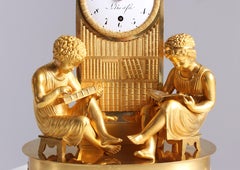
Empire Mantel Clock - La Bibliotheque, Ormolu, France, Paris, circa 1820

Empire Mantel Clock - La Bibliotheque, Ormolu, France, Paris, circa 1820

By Le Roi

Located in Greven, DE

Mantel Clock - La Bibliotheque - In the study room Paris fire-gilt bronze, enamel Empire around 1820 Dimensions: H x W x D: 38 x 28 x 19 cm Description: Scenery mounted on an oval...

Category

Early 19th Century French Antique Empire Clocks

Materials

Bronze
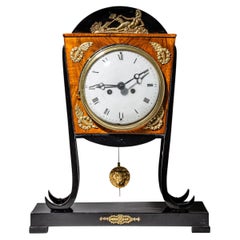
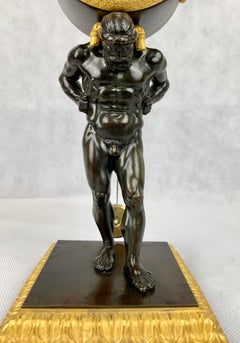
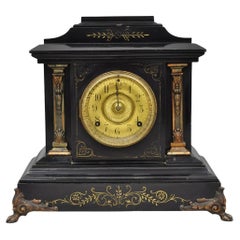
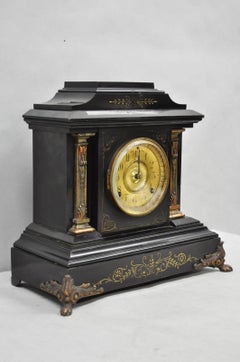
French Empire Bronze Doré and Patinated Clock Depicting Atlas-Early 19th Century
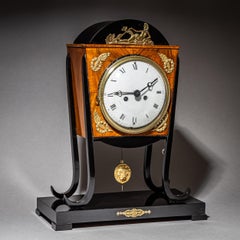
French Empire Bronze Doré and Patinated Clock Depicting Atlas-Early 19th Century
Located in West Palm Beach, FL

Period French Empire Bronze Doré and Patinated Clock Depicting Atlas with original gilt edged and velvet lined case. Atlas son of Titan, from Greek mythology is holding the clock on ...
Category

Early 19th Century French Antique Empire Clocks

Materials

Bronze, Steel

Large Antique French Empire Style Bronze and Marble Figural Clock

Large Antique French Empire Style Bronze and Marble Figural Clock

Located in New York, NY

The large and elegant antique French Empire style bronze and marble figural clock features a rectangular stepped base of dark green marble, raised on four gilt bronze feet cast with ...

Category

19th Century French Antique Empire Clocks

Materials

Ormolu, Bronze
Antique 19th Century French Empire Style Ormolu Clock By Etienne Maxant Paris

Antique 19th Century French Empire Style Ormolu Clock By Etienne Maxant Paris

By Etienne Maxant

Located in Swedesboro, NJ

Dimensions - H: 16 in W: 7 1/2 in D: 4 1/4 in This exceptional 19th-century French Empire-style bronze ormolu clock, crafted by the renowned Parisian clockmaker Etienne Maxant and r...

Category

Late 19th Century French Antique Empire Clocks

Materials

Marble, Bronze, Enamel, Ormolu

19th c, French Empire Table Clock

19th c, French Empire Table Clock

Located in Allerum, SE

19th century French, Charles X bronze, brass and sienna marble table clock from the Empire period. Signed Ravrio Bronzier, ca 1820 France.

Category

Early 19th Century French Antique Empire Clocks

Materials

Marble, Metal, Brass, Bronze
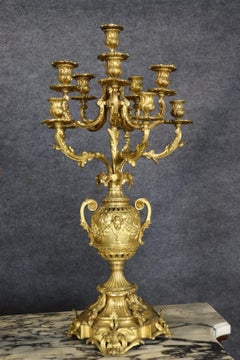
French Early 19th Century Empire Gilt Bronze Dragon Handled Urn Clock
French Early 19th Century Empire Gilt Bronze Dragon Handled Urn Clock
Located in Vancouver, British Columbia

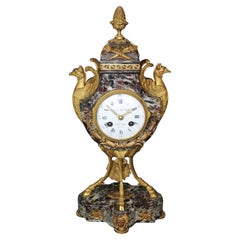
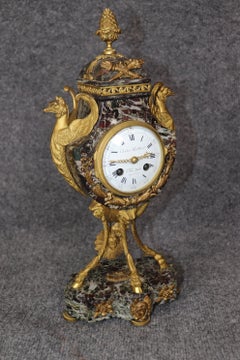
An rare model French Empire mantle clock featuring a classical urn with dragon handles. The clock is entirely of gilded bronze with original fire gilding. The urn-shaped case is surm...
Category

Early 19th Century French Antique Empire Clocks

Materials

Bronze
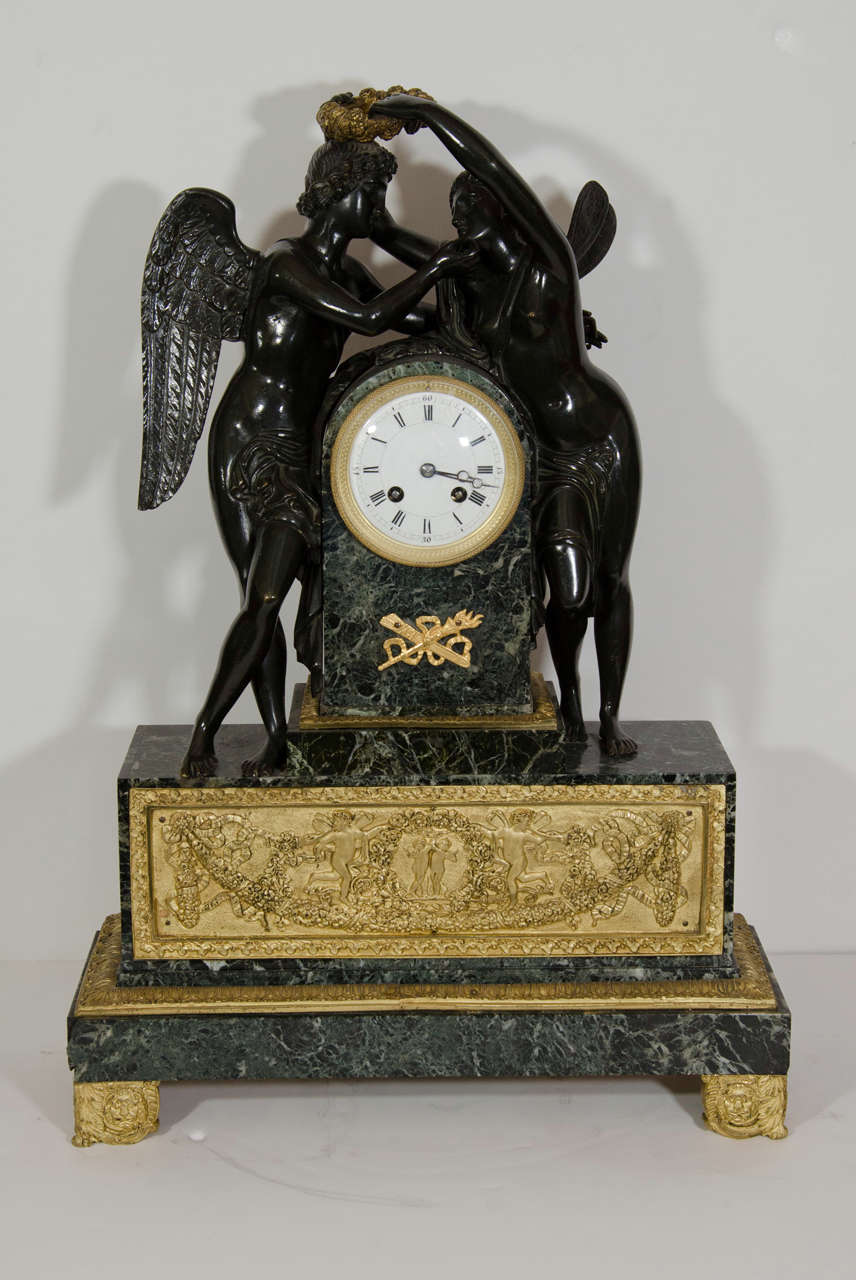
Große Empire Pendule Amor und Psyche Frankreich um 1810
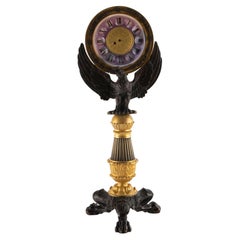

Große Empire Pendule Amor und Psyche Frankreich um 1810

Located in Berlin, DE

This magnificent fireplace clock (pendule) is a classic and very high-quality example of the French art of classicism or the Empire / restoration (early 19. century, approx. 1810–183...

Category

1810s French Antique Empire Clocks

Materials

Siena Marble

Empire clocks for sale on 1stDibs.

Find a broad range of unique Empire clocks for sale on 1stDibs. Many of these items were first offered in the Mid-20th Century, but contemporary artisans have continued to produce works inspired by this style. If you’re looking to add vintage clocks created in this style to your space, the works available on 1stDibs include decorative objects, case pieces and storage cabinets, serveware, ceramics, silver and glass and other home furnishings, frequently crafted with metal, bronze and other materials. If you’re shopping for used Empire clocks made in a specific country, there are Europe, France, and Austria pieces for sale on 1stDibs. While there are many designers and brands associated with original clocks, popular names associated with this style include Europa Antiques, Claude Galle, Breguet a Paris, and C. Maniere. It’s true that these talented designers have at times inspired knockoffs, but our experienced specialists have partnered with only top vetted sellers to offer authentic pieces that come with a buyer protection guarantee. Prices for clocks differ depending upon multiple factors, including designer, materials, construction methods, condition and provenance. On 1stDibs, the price for these items starts at $445 and tops out at $145,000 while the average work can sell for $7,774.