THIS PAGE IS INTENDED FOR SEARCH ENGINES
click here to view the complete article with images.

CREATORS:  Coco Chanel  by Andrew Myers


The Eternal Mademoiselle

Chanel. Harbinger of the new. Model and maker of the modern. Definer of How to Dress in the Dernier Cri of Comfort and Chic. Chanel the worker, Chanel the wonder, Chanel the so-so sewer with an uncompromising eye who saved her embroidery for her oral autobiographies, which were never given in full and rarely told the same way twice.
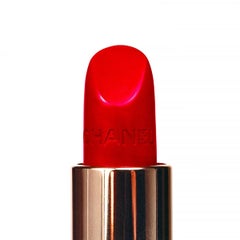
Chanel was also, first and foremost, the class-conquering corset killer who transcended poverty and rural peasantry to become part of the patrician Parisian monde [ITALICS] by developing, refining and brilliantly publicizing her own revolutionary, highly idiosyncratic, supremely practical style. She then took that revolution to the street, across borders and oceans, and translated that style into an entire sensibility, one that included clothes, scent, accessories, jewels fake and later real, and packaged them as a complete point of view. That composite — C H A N E L in black letters on a white background — she proceeded to sell to the world with a guillotine’s dispatch, and in so doing created the first “lifestyle” brand.
            Was she cuddly, sororal, confessional? No. Would she have readily curled up on Oprah’s sofa? Never. Could she be sardonic, even sarcastic? You bet your Schiaparelli. But she was always creative, consistently surprising, sometimes wildly magnanimous, and never a bore. She was also the first female dressmaker to be labeled   couturier(ITALICS) (before Chanel the word was used exclusively in the masculine, for the likes of 19th-century great Charles Frederick Worth, and her early rival and stylistic counterpoint, Paul Poiret), and it was Chanel, or “Mademoiselle,” as she was known in her atelier until she died at age 87 in 1971, who gave the world pearls for anytime, twin sets, to-the-knee A-line and pencil skirts, tweeds, jersey, real pockets and trousers for women, as well as the little black dress (introduced in 1926 as a short silk number).
It was she who championed the whole then-radical notion that women should be able to move freely, without inhibition or constriction, in their own clothes. Just as she had done as a young women in her early twenties, when she’d dared to make clothes for herself that allowed her to ride astride. “I invented sportswear for myself,” she declared. “I set the fashion for the very reason that I was the first twentieth-century woman.” Modesty might become a lady, but it is not an asset in becoming a legend.
            Undeniably long and broad, Chanel’s legacy is also complex and contradictory — qualities that would undoubtedly have pleased this entirely self-created, nay, self-imagined woman who was equally comfortable playing the contrarian, the coquette and, especially after her “comeback” in 1953, the curmudgeon (and sometimes combining all three within a single conversation-cum-performance-cum-fierce monologue). 
But who was she? Fearless, elegant, gender bending, androgynous, independent, innovative, brave, uncompromising, resolute, realistic, rule-breaking, cyclone tempered, witty, classically beautiful, Nazi collaborationist. These are all words and phrases that have been attributed to (or leveled at) this woman who — before she was a muse or amie (ITALICS) to 20th-century greats such as Serge Diaghilev, Igor Stravinsky, Jean Cocteau, Paul Iribe and Picasso, and long before she was mistress of her own destiny — was the mistress of some exceedingly powerful, creative, cultivated and well-connected men.
Gabrielle Chanel was born August 19, 1883, in the poorhouse hospice in Saumer, a two-bit town in central France. Black eyed, black haired, she was the second child of the unmarried Henri-Albert Chanel, a charismatic sheister and itinerant peddler in sundries, and the much younger, naïve Jeanne DeVoll, daughter of a local innkeeper (making her a late 19th-century version of the Farmer’s Daughter). After having a passel of kids, Jeanne died at age 26, whereupon Papa dropped his progency at Mom’s place in Vichy. Then he hit the road, never to be seen or heard from again. The even bigger trouble was, Albert’s mom had no money and lots of kidlets too, which meant that Gabrielle and her two sisters were trundled off to the local orphanage run by the Sisters of the Congregation of the Sacred Heart of Mary at Aubazine. There she learned the basics of sewing and acquired a burning desire to Get Out: from the orphanage, from small towns, from everything she’d known.

All of the aforementioned, although fairly indisputable, was re-arranged, edited, re-invented, augmented, denied and generally lied about by Chanel her entire life. Her accounts of her early years ranged from employing adjectives like “healthy” and “bucolic” to New Yorker [ITALICS] correspondent Janet Flanner in a 1931 interview, to even broader brushstrokes of picturesque and comfortable rural ennui. Never, NEVER, was she in an orphanage. Rather, she was raised by austere yet loving “aunts,” wise women who favored order and owned horse pastures leased to the local cavalry. Not one for introspection, Chanel was nevertheless proud of her ancestral ties to the Auvergne, a region known for its no-nonsense, natural salespeople who were famously shrewd, calculating and charming. Even so, the specific mention of horses and an allusion of their importance might well have been a Freudian slip.
Dates at this point in Chanel’s life are unclear, largely because Chanel cared not to clarify them. What’s certain is that she spent her second chapter trying to transcend the circumstances of her first, and that this attempt took place primarily in café-concerts (ITALICS)—ubiquitous Belle Époque bars in which girls sang popular songs of the day hoping to be discovered, much like an early 20th-century American Idol. Chanel’s venues were in small garrison towns such as Moulins and later, Vichy, famous for its spas. While she had, by all contemporary accounts, little voice or vamping ability, she was cute enough to be hired as a gommeuse, a comely hottie who would support the bigger players and sing a song or two herself. Two in her repertoire were “Qui qu’a vu Coco,” about a little Parisian girl who has lost her dog, and “Ko-ko-ri-ko,” about a rooster, and it is from one or the other that it seems Gabrielle received her sobriquet “Coco” (it was not, as she sometimes claimed, bestowed upon her baby self by a doting dad).
             Not destined to sing in the Paris halls or sit for Toulouse-Lautrec in said capacity, she was nonetheless a favorite of local audiences, especially young, well-born cavalry officers, who admired her slim figure, pretty smile and triangular, almost feline face (although Diane Vreeland and the writer Colette thought she looked more like a little bull). And her looks, combined with an originality of expression (simply outfits and a witty tongue), won her a position of a different kind: mistress to Etienne Balsan. An eccentric, aristocratic breeder of thoroughbreds, and with a family fortune from textiles to foot the bills (his younger brother, Jacques, married the famous beauty and heiress Conseulo Vanderbilt after her divorce from the Duke of Marlborough), he invited Coco to join him at Royallieu, his chateau and horse-breeding base close to Paris.
            Chanel was not one to lie about in languorous luxury like Balsan’s other mistress, the renowned courtesan Émilinne D’Alençon, who was reputed to have a voracious sexual appetite, to have “ruined” the young Duc d’Uzès, and for whom eight members of Paris’ exclusive Jockey Club had pooled their resources and formed a kind of corporation in order to regularly receive her favors. D’Alençon’s soft, curvy, amble figure was the Belle Époque ideal, and ideally suited to the fussy fashions of the day: long-trained trumpet flower-shaped skirts, jewel-encrusted, bodice-covering stomachers, contorting S-bend corsets, yards of lace, linen and Swiss muslin, oversized fur muffs and elaborate over-scaled hats with enough plumage to render several avian species near extinct (which they did). Chanel’s gamine, flat-chested, narrow-hipped looks were not yet the de rigeur rage they would be in the 1920’s; perhaps realizing she couldn’t compete head-on with either D’Alençon, her stylish ilk, or the fashionable Society ladies she saw gracing the paddock at the races, she wisely changed the playing field. Rather than focusing on the salon, Chanel headed to the stables. She became an expert rider, a skilled devil-may-care equestrienne who thought nothing of leaping on a two-year-old-stallion’s back and—astride!—charging through the woods while Balsan and his horse-crazy friends looked on: amused, impressed and, above all, intrigued.
            Likewise, she chose not to compete sartorially in styles she knew to be personally unflattering. Instead of donning pale, poorer comparisons (Balsan, after all, had D’Alençon to support, not to mention his horses, which were always his priority), Chanel chose to dress herself in unembellished long, straight skirts and jackets complemented by whites shirts with turned-down collars. In their overall restraint and palette, they conjured the nun’s habit, something Chanel had seen constantly in her youth, as well as a very proper lady’s riding habit. But clothes, Chanel knew, do not exist in isolation. Their design can be daring, serving to underscore the wearer’s individuality along a conventional continuum while still reinforcing social norms, or they can challenge the status quo. She addressed her dresses accordingly, because just as she knew her austere style suited her and separated her from others, so did it distinguish her from other kept women—a distinction Chanel was determined to make.
            Ever practical in life, love and business, it’s impossible to pinpoint exactly when she decided actually to go into business. At Royallieu, she’d been making hat  — simple straw boaters in diametric contrast to the neck-numbing norm — and enjoying compliments and sales in Balsan’s set (D’Alençon herself became an adamant devotee). After much cajoling, Balsan had even agreed to let Chanel use his Paris digs, a small ground floor apartment at 160, boulevard Malesherbes, as her home base, atelier and showroom; and it was there, at approximately twenty-six years of age, she set up shop as a milliner. Over the next year, the enterprise matured from an amusing experiment — la modiste en garconnière (ITALICS)— to a grassroots success. As Edmonde Charles-Roux, the former editor of French Vogue,(ITALICS) wrote in “Chanel, and her world, Friends, Fashion, and Fame,” “… despite the problems of such an arrangement, Chanel saw her clientele increase day by day: ‘The customers simply arrived, at first out of curiosity. One day I received a visit from a lady who frankly admitted: ‘I’ve come … to see you.’ I was a strange bird, a little lady with a boater on her head and her head on her shoulders.’”
            Vigorously exercising the brain, however, can be a dangerous enterprise for a kept woman. While Balsan was pleased to finance his mistress’ lark, to see it expand? To have his Coco actually go into trade? Quel scandale! Luckily for Chanel, Balsan’s best friend and her next lover, Arthur “Boy” Capel, a self-made man-of-the-world industrialist and polo player from Newcastle, England, found her drive not only intriguing but sexy. Dark, handsome, hard-working and charismatic, Capel had confidence in Chanel, and she returned the favor. Naturally the whole “affair of the affair” was handled with sophisticated Gallic sangfroid. Chanel and Capel were now couple, and the couple remained good friends with Balson, even visiting him at Royallieu.
            Approximately one year later — after many evenings where Capel had expanded Chanel’s cultural, social and artistic horizons at the opera, theater and Maxims, after the two had set up house on the Avenue Gabriel, and after he had invested a considerable amount of cash — Chanel opened Chanel Modes at 21 Rue Cambon (in 1928 it would move up the street to number 31, where it would occupy three floors and where it has been ever since). The year was 1910 and Chanel was twenty-seven. By 1912, she was selling “sportswear” (sweaters, skirts and a few dresses). Although her designs were still considered eccentric and avant garde, business was doing well enough that in the summer of 1913 Chanel opened a boutique in Deauville, in the chic Normandy seaside resort’s chicest street, Rue Gontaut-Biron.
            Just in time, as it turned out. World War I began in August 1914, its ensuing destruction obliterating Belle Époque sensibilities and paving the way for the new — in art, in politics, in society, in fashion. In Deauville, her competitors closed their doors as customers rushed south to Paris. But Chanel, acting on advice from Capel (who had received a commission in the army and had excellent political connections), stayed put and stayed open. Sure enough, when the French suffered a series of huge reversals later that month, the rich rushed north, toward the Channel and the safety and comfort
of their villas in Deauville. “A world was dying while another was being born,” said Chanel, “I was there, an opportunity came forward, and I took it.” Her clothes — allowing for rapid, unencumbered movement and without superfluous adornment — captured the moment perfectly, and Chanel enjoyed her first massive commercial score.
            Sales and success led to more sales and success. In 1916, Capel was transferred to the Franco-English wartime coal commission, through which he was to make another fortune. As a treat, he took Chanel to Biarritz, a seaside resort near the Spanish border made popular by royals from all over Europe. Riding high, Chanel opened a “maison de couture” in a villa opposite the casino, and sold her dresses for the enormous sum of three thousand francs a piece. Orders flowed in from the Spanish court in Madrid, from San Sebastian, from Bilbao, and from locals, who still danced the tango in the grand hotels and hungered for all things luxe. By the end of the year, Chanel had close to three hundred employees, and her profits were such that she repaid Capel every sou he had spent on her business. 
            Chanel was, at last, financially independent, and that to her was paramount. She was distraught when Capel married an English aristocrat’s daughter to buttress his social gains, and for a time she was emotionally destitute when he died in a car crash driving from Paris to Cannes several days before Christmas in 1919. Then she picked herself up and got on with the business of being Chanel. And while she would continue to enjoy men immensely, she was never again beholden to them. Which is not to say she didn’t borrow heavily from them in terms of inspiration.


There were the platonic loves, such as with Jean Cocteau, who introduced Chanel to costume design for the theater. There were the unrequited, such as for poet Pierre Reverdy, who introduced Chanel to La Rochefoucauld’s Maxims [ITALICS] and improved her own bons mots [ITALICS]. Then there were the carnal loves. The first was Russian Grand Duke Dmitri Pavlovitch, first cousin to Tsar Nicholas II. Her lover from 1920-1923, he gave her Romanov pearls, the Russian peasant blouse, belted tunics, and an appreciation for sumptuous Byzantine tastes in textiles and art, (as well as an introduction to Sam Goldwyn, who in 1929 paid her one million bucks to outfit his queens of screen). Her next, from 1925-1930, was Hugh Richard Arthur Grosvenor, Second Duke of Westminster, a.k.a. Bendor. He introduced her to the Prince of Wales, Scottish tweeds, fishing and hunting togs, yacht berets, the English respect for comfortable interiors, fist-sized jewels, and, literally, a blank checkbook — which she returned after they split having not written a single check. Her lover from1933 until he dropped dead of a heart attack at her feet on the tennis court at la Pausa, her villa on the Riviera, in 1935, was Paul Iribe. Intellectual, visual artist and Hollywood set designer, he generated untold positive publicity for Chanel by making her the face and embodiment of France in his illustrations for the influential periodical Le Témoin [ITALICS].
Her last lover did just the opposite. Hans Gunther von Dincklage, a.k.a. Spatz, the French-speaking, half-English German spy, thirteen years Chanel’s junior, held sway from 1940-1950. It was his protection that allowed Chanel to continue living at the Ritz during the German occupation, as well as any number of prime perquisites reserved for collaborationists. The liaison is an uncleanable blot on Chanel’s character, reputation and legacy, one that her attributed quip —“At my age, when a man wants to sleep with you, you don’t ask to see his passport”—does nothing to palliate. Regardless, she was cognizant that only “top level” intervention (likely from her friend Winston Churchill himself) saved her from severe punishment, and she was concerned (perhaps even shamed) enough to live in Switzerland for almost a decade, from 1945 to 1954.
During that time she was beset not only by boredom, but by the rise of Dior and a new style originally called “Corolle” (petal, as in a flower, approximately), but which is better known as the “New Look” (as  dubbed by Harper’s Bazaar’s {ITALICS} Carmel Snow). Yards of superfluous fabric, bustiers, padding, petticoats, corset-bra combs? It was everything Chanel detested, every constriction and proscription against which she’d fought. Roused to battle once again, the seventy-year-old, semi-disgraced Chanel went once more into the fashion fray.            
By then she was living on revenues from Chanel No. 5 — the world’s bestselling perfume of all time, developed by chemist Ernest Beaux and launched in 1922 in partnership with France’s largest fragrance company, Les Parfumeries Bourjois. Chanel’s greatest fiscal success (a bottle is currently sold every fifty-five seconds), No. 5 also was Chanel’s greatest business blunder. In negotiating with perfume manufacturer owners Pierre and Paul Wertheimer, she asked for only 10% ownership in the new Parfums Chanel (the Wertheimer’s retained 70%, and a third owner 20%). It didn’t take long for Chanel to recognize the magnitude of her mistake, but by then she was contractually too late.  In the ensuing years, she instigated — and lost — any number of lawsuits trying to increase her percentage. Regardless, she had enormous affection and respect for Pierre, who was not simply a “frenemy” (a friend and enemy), but more a “fameny” (family and enemy). It was he, then, that she called upon, and it was he who financed her comeback. (Ultimately a savvy bit of business: upon Chanel’s death, the Wertheimer family became sole owners of Parfums Chanel as well as all rights to the Chanel name and brand.)
The hottest show of the season was the February 5, 1954 relaunch of the house of Chanel at good ole 31, Rue Cambon. The salon was packed with press, retailers, and the enormously rich. Excitement was high, expectations huge, and the result a disaster. The French were particularly merciless. Chanel was “old,” “over,” “out of it.” More ominously, there were very few orders. In The Gospel According to Coco Chanel, (ITALICS) a brand new book that is a treasure trove of information and entertainment, author Karen Karbo states that Chanel estimated this collection would cost fifteen million francs, and ended up costing thirty-five million. Chanel had burned through Pierre’s entire investment in one go.
Perhaps the best illustration of who Chanel became, as well as her vital life-force and enormous will, is a picture taken at this, her darkest adult hour. As Karbo recounts, describing Pierre’s post-show visit to Chanel’s atelier, presumably to offer his sympathies and turn off the money spigot: “It was not a good day for Chanel. Even though she was, as usual, immaculately turned out in a sand-colored suit, pumps, and the hat she wore to hide the spots where she was growing bald, her arthritis was giving her fit. Still, she sat, she stood, she knelt, she crawled around on all fours. Hour upon hour, while Pierre sat and watched, She tried to force her fingers to press, tuck, fold, and gather the fabric. It was torture. When night fell, he walked her back to the Ritz. She began to complain to him about her hands, her fatigue, then stopped in the middle of the narrow street, halfway between the front door of 31 and the back entrance of the Ritz, shook her head and said, “Of course, we will continue.” Pierre, moved by who knows what — her courage, maybe, her stubbornness, or that fact that he, too, was getting older — said, “Of course we will.’”
Chanel did not waiver nor falter. She stayed her course and did not stop, and the world — of course — came back around and caught up. As Mademoiselle knew—and expected — it would.


Chanel quotes:

“Hard times around an instinctive desire for authenticity.”

“Vulgarity … I’m in the game to fight it.”

“Everyday I simplify something because everyday I learn something.”

“High fashion is doomed because it is in the hands of men who do not like women and wish to make fun of them.”

“The mini skirt is dirty … one already collects too much dust and mud on one’s legs in Paris, must one now have it on one’s thighs?”

“I don’t do fashion, I am fashion.”

“It’s always better to be slightly underdressed.”

“God knows I wanted love … but the moment I had to choose between the man I loved and the dresses, I chose the dresses.”

“Fashion that does not reach the street is not fashion.”

THIS PAGE IS INTENDED FOR SEARCH ENGINES
click here to view the complete article with images.
1stdibs.com Inc. © 2001 - 2010