

THIS PAGE IS INTENDED FOR SEARCH ENGINES
click here to view the complete article with images.

By Helen Chislett

Viscount Linley
The first thing to say about David Linley — grandson of a king, nephew of a queen, heir to an earl — is that there is nothing remotely grand about his manner. He wears his royal status very lightly indeed. This is a man who prefers cycling around London to chauffeur driven cars, favors polo neck jumpers over ties, makes bread with his children on the weekends and enjoys nothing more than stripping down the engines of his much-loved motorbikes. He is quietly pragmatic about his family background: “Whether I am wearing my Christie’s hat or my Linley one, the reason people can often be got on the phone is because they are intrigued by my name and they wonder what I will be like. The downside is that I sometimes have to work harder to get around people’s preconceptions of me.”
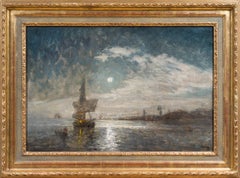


His office in Christie’s, London, where he is chairman, is suitably grand — with an ever-changing display of jaw-dropping fine art on the wall — but in truth he feels most at home in a workshop, surrounded by the smell of sawdust and beeswax. His own company, Linley, has been a lifeline to such workshops for the last 25 years, providing commissions for fine pieces of bespoke furniture that grace the homes of the rich, the famous and the also-royal around the world.

The son of Princess Margaret and Lord Snowdon (the eminent photographer), Linley was brought up in Kensington Palace — later also the home of Princess Diana — with regular trips to Buckingham Palace to play with his cousins. Not that he or his sister, the artist Lady Sarah Chatto, were spoiled. Both developed a strong work ethic, taught from an early age that they would be expected to make their way in the world and not rely on their ancestry for an income. Their parents were hugely hands-on, instilling them with a sensibility toward all aspects of the arts and a curiosity for learning. His maternal grandmother, the Queen Mother, was also a huge influence: “She would take me around Windsor Castle and encourage me to really look at what I was seeing — there is an ebony cabinet by Pierre Gole in the Royal Collection, for example, carved in bas-relief and showing allegorical stories. It made a deep impression on me that someone had not only carved it by hand, but carved it in relief.”

After attending Bedales School in Hampshire, Linley enrolled at Parnham College to learn furniture-making under the tutorship of John Makepeace. Wendell Castle was a visiting tutor, another inspirational figure in his life. In 1985, he set up the furniture business that bears his name, making the first pieces himself by hand. Once the company became established, he was forced to leave the workshop and take on the role of figurehead — one suspects he would, for much of the time, have stayed at the maker’s bench. Now his life is a complicated dance between his Christie’s role — which takes him all around the world — heading up his own company and the demands of family life. He and his wife, Serena, have two children — Charles, 10 and Margarita, 7 — and are very modern parents: “We practically live in one room in our apartment in London, with the children somersaulting around us or trampolining on the sofas. Family life is a huge influence on my design approach. When I am creating new products for the shop, I design with myself in mind and what I want is furniture that is fundamentally practical — lots of storage solutions, dual-functionality, clever mechanics — but which is also beautifully made, using traditional materials.” He cites the example of a new take on the Carlton House Desk, a piece that can metamorphose into a dining table or a television center at the press of a carefully concealed button.

Although best known for designs in the Neoclassical tradition, Linley furniture in fact encompasses many other design traditions and influences, such as the Aston chair that was inspired by the car that the dashing Snowdon drove when Linley was a boy. Extraordinary bespoke pieces are at the heart of the business, but there are also core ranges, including the contemporary Helix and Lizard collections. For those with a less than king-size budget, there is a gratifyingly affordable range of accessories too, with prices starting at less than a hundred pounds. The important thing to Linley himself is the craftsmanship involved, whatever the item may be: “All my working life I have been out of kilter with the idea that things should not be expected to last. We live in such a transitory age — fashions are over before they begin — but my own rather perverse motto is Always Do The Difficult Thing. And the difficult thing is to run a business where people will not have to replace what they have bought — ever.”

He is as passionate about furniture now as when he started his business all those years ago: “It is a triangle of inspiration, mechanics and materials. You need all three to create a piece that is really fine. You also need a sense of history. At college, I once designed an architect’s table that opened in a particularly clever way and thought I was a genius. Then I discovered ‘my’ design had been around for nearly two hundred years. The most crucial lesson for any furniture designer is if you want to move forward, first look backward.”

It is partly this idea that inspired the book that Linley and I have written with Charles Cator, deputy chairman of Christie’s International and respected furniture historian. Star Pieces: The Enduring Beauty of Spectacular Furniture (ITALICS), (The Monacelli Press, 2009) is a celebration of the golden eras of furniture-making, but also examines what makes furniture so special in terms of emotion, construction and ornamentation. For Linley it is a way of spreading the word about the beauty and craft of furniture and asking readers to take a fresh look at the pieces they might live with at home.

A passionate enthusiast for all things British — be it motorbikes, full English breakfasts or bespoke craftsmanship — David Linley is refreshingly unapologetic about the need for luxury in these difficult times: “To me, luxury is about time, be that time spent on producing a hand-crafted piece of furniture or time spent on taking a bike I love to pieces. It is about the enduring, but simple pleasures that life has to offer.”

David Linley
Q&A

How Green Are You?
I cycle to work in the morning – all my family use bicycles too. We also walk whenever we can. Linley is an eco aware company by its very nature – every time we make a piece of furniture, a tree is planted in its honour.

Fashion
I wear all sort of things that are made in England: suits by Richard James, polo necks from John Smedley and shoes by John Cleverley. I also buy outerwear from the Italian company Loro Piana – fantastic textiles for keeping warm in if I am on my bike.

Fabrics
Wool is definitely coming back into fashion – my cousin, the Prince of Wales, has been campaigning for people to start using wool again under the slogan “Give Fleece A Chance.” There is a move back towards more traditional fabrics and clothing.

Entertaining
I like to entertain as much as possible at home. My children and I make the bread ourselves using organic flour from Daylesford Organics. I go shooting, so in the autumn and winter, we make delicious slow-roasted stews from my own pheasants and partridges. The children also grow vegetables in our garden in France, so we use as much home-sourced produce as we can.

Color(s)
Navy blue is my own black – the shop is painted dark navy and most of my clothes are a combination of navy blue, dark blue and black.

Travel
A lot of my work take me to cities such as New York and Paris, so Serena and I like to take the children to less obvious places that we think might be of interest to them – we visited Avignon in France recently, which they loved.

Gardening
At our house in France we can only garden on the terraces because the wild boar come and dig everything up. We have created a series of parterres with clipped box, white standard roses and lavender. It looks beautiful and is also natural to the surroundings.

Art
I am a polymath and my job at Christie’s allows me to enjoy a real mix of art – in the last three months, I have had a Raphael on my office wall, a Roy Lichtenstein and a Monet. At home, we own a lot of art by friends, including work by my sister (Lady Sarah Chatto) and my old design partner, Matthew Rice. I also like to do the rounds of the graduate shows in London.

Book
The Art of Looking Sideways by Alan Fletcher, Phaidon.

Museum
The Sir John Soane Museum in London.

Restaurant
Tom’s Kitchen, Cale Street in Chelsea.

Hotel
The Lancaster Hotel, Paris.

Music
Radio 3 – the classical music station of the BBC.

Gift
Stephen Long on the Fulham Rd. in London for inspirational decorative antiques.

Shop
Selfridge’s in London.
THIS PAGE IS INTENDED FOR SEARCH ENGINES
click here to view the complete article with images.
1stdibs.com Inc. © 2001 - 2012