THIS PAGE IS INTENDED FOR SEARCH ENGINES
click here to view the complete article with images.

An Empire of His Own

Many are the talented designers who can look at a room and reorganize, reject, rehabilitate and re-imagine existing and new elements to create exactly their desired effect; far fewer are the individuals who can have similar effect on their own lives. Hutton Wilkinson can do both.
            Designer of interiors for the likes of Alida Davison Rockefeller and one-of-a-kind jewelry sold at Bergdorf’s, Saks and 1stdibs  (and disported on red carpets by Hollywood fashion pin-ups Reese Witherspoon and Drew Barrymore), creative director and president of Tony Duquette, Inc, president of The Anthony and Elizabeth Duquette Foundation for the Living Arts (a non-profit public foundation for presenting museum quality exhibitions of artistic, scientific and educational value and to purchasing, preserving the works of Tony Duquette) as well as The Elsie de Wolfe Foundation (a non-profit dedicated to furthering the decorative arts in America), best-selling decorative arts author (his Tony Duquette,  co-written with Wendy Goodman in 2007, is now in its fifth printing, and his More Is More, or Duquette part deux, is due out this October),  as well as raconteur, inter-continental philanthropist, and all around good fun, Wilkinson is also the recently re-invested head of an old and noble line, the successful claimant to a Spanish title reaching back unbroken to 1769.

Raise trumpets, cue dancing girls (and boys), serve the feast and get the costumed dwarves off their stools: The Ninth Count of Alastaya, Wilkinson this April received a Royal Letter of Succession from King Juan Carlos recognizing that his penchant for a pasha’s opulence and grandeur alongside Mame Dennis-style excitement and rarified kookiness is, actually, in his DNA. Wilkinson of course knew it all along. “I was raised by a Bolivian nurse named Isabel—pigtails, 100-color skirt, the whole package—who had been my mother’s nurse as well,” says Wilkinson, explaining how he grew up ensconced with his family of six in a grand Hancock Park house with five South American servants – and without a dime. “Any luxuries we had came either from South America when my grandmother set up a house here in the early 1930’s, or the goodies that were sent prior to 1938, when my grandfather died [in Arica, Chile] and the family learned that he’d spent not one but two fortunes.”
Grandpa, a.k.a. the Eighth Count of Alastaya, Doctor Jose Luis Tejada Sorzano, had been many things: a congressman, president of the senate, president of the Republic of Bolivia. Sadly, in terms of Swiss bank accounts and skiing vacations, he hadn’t been a thief, so Wilkinson’s grandma, Dona Elvira Flores y Artieda, had to make ends meet with whatever cash and jewels were on hand in California. “Not insubstantial piles,” reports Wilkinson. Still, by baby Hutton’s time, many of the trees in the cherry orchard had been felled, leaving attics filled with Baccarat (great grandfather apparently bought so much the company asked him to be its South American rep), handmade toys (“At Christmas Mom would just rummage around and open a crate – treasure!”), and nurse Isabel, who prepped Wilkinson to be a potentate, always whispering in his ear about the parties, the estates, the grandeur of a Bolivian yesterday.
Wilkinson’s mother, Elvira Argentina Tejada-Flores, couldn’t have cared less. Raised to be an aristo, she was far more interested in being, as Wilkinson says, a middle-class American housewife. “My siblings and I would put crystal stemware in sinks of steaming water, then switch them to cold water just so we could hear the ping when they broke. We were terrors of destruction and she wouldn’t so much as shrug.” Perfectly comfortable in any setting or milieu, she was, annoyingly and perhaps mystifyingly to Wilkinson, disinterested in all that glittered. “She’d come to the Duquette’s legendary, star-and-fantasy-filled soirees, in her couture and perfect poise, but it meant nothing to her.”
And while Dad – Marshall Philips Wilkinson, a scion of a southern California clan including a Confederate general, Spanish land grant recipients and founders of Pasadena – was a successful architect with a significant design library used often by colleagues such as Wallace Neff and Paul Williams, he was, in absolute terms for Wilkinson, a benchmark against which to measure the prosaic. “I was absolutely unfair about my father,” he says, noting that between the erstwhile lavish lifestyle described by the South American servants and the sky-high standards, expectations and fantasies such descriptions fostered in a kid, “Dad was bound to come off as a huge failure.”
But also as the ideal figure for an adolescent to react against – that necessary catalyst to get a rebel rolling. “When I was in seventh grade I saw Tony’s work in the Home Magazine section of the Los Angeles Times, and turned to my dad and said, ‘This is what I want to do.’ He looked at it and said, ‘You’re crazy.’” Perhaps even more significant, however, was Wilkinson’s reaction to the Duquette aesthetic, what he describes as Hollywood Chinoiserie and which by any standard, let alone a thirteen-year-old’s, is exotic. “To me it seemed absolutely normal,” Wilkinson says, “Not in the sense of being boring or expected, but in making sense and being something in which I felt totally in sync.”
So at 17, after his art teacher told him that Duquette was looking for volunteers, Wilkinson quit school and his part-time job, and spent the next two years working for Duquette for free, the following three years at $50 every two weeks, and the next 30 years working with Duquette in close collaboration. Projects included interiors for Norton Simon and Jennifer Jones, Doris Duke, Herb Albert, and John and Dodie Rosekrans; restaurants and hotels; costume and set design; real-estate development; museum installations; and party decors (the most eye-popping being their last, a deb party for Jenica Rosekrans held at San Francisco’s Palace of the Legion of Honor in 1996 at a cost of $1 million dollars); and the launch in 1998 of their first jewelry collection at Bergdorf Goodman.
Since Duquette’s death in 1999, Wilkinson has continued to design interiors – ideally one major project a year for “professional clients” (defined as persons who “know what they want, know their budgets, and who then leave you alone to Do It”) – and has embarked on numerous new business ventures, including “The Selected Works for Tony Duquette” collection with Baker Furniture; a textile collection with Jim Thompson (a second collection is in the works); as well as an upcoming lighting collection with Los Angeles-based Remains Lighting, and hand-knotted carpets and tapestries with Roubini. All of this in addition to the redecoration and expansion of Dawnridge, the Duquettes’ fantastical estate in Beverly Hills. Not only has every room in the main house been altered—many of the antiques having been sold at Christie’s three-day auction of “The Duquette Collections” in 2001, and replaced with both new pieces and original works by Duquette previously in storage – but a large pond has been added to the grounds and a contemporary, glass-walled four-bedroom house is being built on an escarpment above its north end, forming a courtyard of old house, new house and caretaker’s cottage.

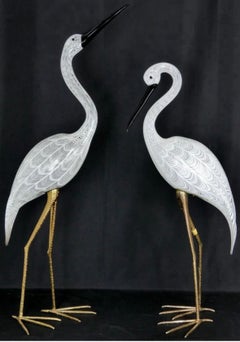
Perhaps nowhere is a joint Duquette-Wilkinson vision more readily evident than in a new room at Dawnridge, one Wilkinson fashioned out of an old garage and filled with sea shell etageres, faux malachite, miniature pagodas, Chinese panels and blow-ups of Duquette’s sketches of Venice. On the sofas and chairs are pillows proclaiming favorite shared maxims and expressions: Beyond the dreams of avarice!; We love trained seals; If there were only one abalone shell in the entire world, kingdoms would be won and lost fighting to possess it; Like it? I’m mad for it; Beauty over luxury; More is More!, and Here’s the deal!
Thus is a well and carefully designed life, one in which components are emphasized, deemphasized, added or subtracted, and always with an eye on the prize: the finished effect, or the fantasy underpinned by just enough reality to become real.

Style compass direction:

Fashion: 

One of a kind pieces of Tony Duquette jewelry which are the definition of luxury.  There are so many choices today; I don’t understand why anyone who can afford fine jewelry would want to buy something which has been made in multiples.  I like to say, “If it’s not fabulous, it’s meaningless!”

Fabrics:

I have just launched a collection of Tony Duquette designs for Jim Thompson Thai silk which are available around the country through Jim Thompson showrooms and professional interior designers.  These designs are a mixture of historic patterns designed by Tony Duquette since 1941 as well as my own Tony Duquette inspired patterns.

Entertaining:

I like to think that I have a sense of Southern hospitality – my great grandfather having been a rebel from Alabama who fought in the Civil War and my mother having been South American.  My wife and I always entertain “at home” with seated dinners from eight to thirty-two people seated at tables of eight, usually with an orchestra or some other type of divertissement.  For groups larger than thirty-two, we do buffet with people sitting all over the house or in the garden around the lake.  We always dress up, which for us means Chinese pajamas, caftans, and jewels.  For large groups, we always use the kitchen for exploring foods with our caterer, but for a table of 12 or less, our cook handles the cuisine.  It is not unusual for us to drape the entire house in Indian or Egyptian tent panels for the night.  Our help usually wears the house livery which consists of gold tunics made for us in India with matching turbans.  Casual entertaining is done at our ranch in Malibu where we do Sunday lunch for ten to fifty people depending on the occasion.  We rarely use flowers for centerpieces but rather use objects from around the house to create tablescapes for the pleasure of our guests.
Color:

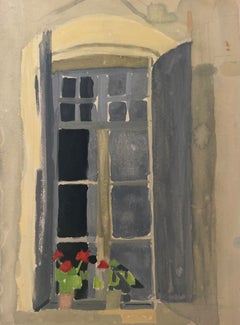
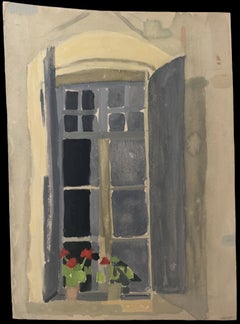
I like strong, clear, jewel colors, amethyst, peridot, citrine, ruby, emerald, sapphire… no muddy browns or reds – the color of dried blood please!  We like brilliant shiny gold, and sometimes a dull bronze to set things off.  My idea of a beige room is one painted coral with emerald green accents.  Tony Duquette used to say “Green is a neutral color.” I agree with him.

Travel:

I will not cross the Atlantic without visiting Venice, Italy.  I am on the board of “Save Venice” and the city has a special appeal for me.  I never go anywhere for less than five days and spend half of my year traveling.  Because my jewelry business is based in New York, I am there once a month or at least once every two months.  My favorite American city is Charleston, South Carolina where I am crazy to get an 18th century house.  India and South East Asia are also favorite destinations.  I like to go around the world at least once a year, Hong Kong, Bangkok, Rajasthan, Europe, and back home through New York.  I love London when I am there but don’t long for it.  La Paz, Bolivia … I long for… and Lima, Peru is terrific too… the best food in the world!!!  All of South America and Mexico enchant me!!!

Gardening and floral:

I do not garden… I have “black thumb!”  My wife is a gardener; I leave all that to her and to my three full time gardeners who take care of Tony Duquette’s garden at “Dawnridge” where we live and my ranch in Malibu where we have 100 acres to care for.  Fortunately we like agaves and cactus, oleander, and lilies which don’t require a lot of attention!  My wife takes care of the vegetable garden which is a very large lattice enclosed space covered with aviary wire to keep the birds out.  Anything that bears fruit or flowers is her domain, thank God!  As for flowers, I only use potted orchids in the house.  Usually white phalaenopsis in 18th century blue and white pots or moss covered baskets.

Art and design:

I don’t pretend to have any knowledge of fine art.  Although I have worked on dozens of design jobs where my clients were major collectors, such as Norton Simon, Charles and Palmer Ducommun, Alida Davison Rockefeller, or John and Dodie Rosenkranz whose paintings and sculptures I have helped to place, my passionate interest is in the decorative arts.   I learned this about myself when I inherited all of Tony and Elizabeth Duquette’s books.  Their books were all about fine art, sculpture, and paintings.  My own books are all about furniture, architecture, and décor.  Tony and Beegle were great artists… I have been told that I am a good designer.

Book:

Tony Duquette which I co-authored with Wendy Goodman is my favorite book right this minute.  My new book More is More, Tony Duquette will be in the bookstores this October.  It is being published by Abrams and will surely be my new favorite book.  I only read biographies, my favorite being John Adams by David McCoulloch.  I think this should be required reading in all schools.  Reading this book you live, breath, smell and taste the 18th century in America.  It is truly a masterpiece!

Museum:

The Carnavalet Museum in Paris… more specifically the Jose Maria Sert ballroom which is installed there!

Restaurant:

The Grill in Beverly Hills; the Dover sole there is amazing.
The Jockey Club in Madrid; the Dover sole there is  second best to The Grill in Beverly Hills.
Harry’s Bar in Venice; The tagliatelle verde gratinate and the people watching are superb.

Hotel:

The Bauer Il Palazzo in Venice, Italy where the owner, Francesca Possati, will make you feel right at home.

Also Number One Piazza Santa Maria Navona in Florence, one of the coziest stays of my life.

The Lake Palace in Udaipur, India; I could live there forever!!!

Music:

I don’t listen to music… I have it on only as background sound. I usually play instrumentals; singing gets in the way of conversation, but if I am driving I like Bobbie Short, and Billie Holiday, and Frank Sinatra… all that stuff.

Gift:

I like to get things that I hate paying for myself like scented candles, potted orchids, and caviar.  Whenever someone asks, “What can I bring?” (which always drives me crazy because our parties are never pot luck!) I always say “The caviar!” and, believe me, they never ask again!  I like to give jewels, jeweled boxes, and pretty useless things.

Shop:

I am really a recluse.  I stay at home and never get out to shop.  I like to shop on trips… like a madman… we often send home up to six containers of junk when we travel.  Therefore when I need things, I just look in the warehouse and hope for the best.  Usually something will materialize that I can use!

THIS PAGE IS INTENDED FOR SEARCH ENGINES
click here to view the complete article with images.
1stdibs.com Inc. © 2001 - 2010