THIS PAGE IS INTENDED FOR SEARCH ENGINES
click here to view the complete article with images.

STYLE COMPASS Ralph Rucci  by Andrew Myers

Designer Paradox, The Next Cut, An Artist’s Progress, Cuts Cruel and Kind

Ralph Rucci is the greatest American women’s wear designer that tabloid-reading, red carpet gawkers have never heard of — and therein lies both problem and opportunity.
            Rucci’s story is fairly well known amongst fashion cognoscenti. Born in 1957, he
did not grow up cutting paper dolls, dressing pets or sisters, or pouring over glossy periodicals. Rather, he was a thinker, intellectually inclined, a student who later studied English and philosophy at Temple University when, while researching an aesthetics paper, he came across two photographs by David Bailey of gowns by iconic Spanish couturier Cristóbal Balenciaga. They appealed on an artistic level—their shape, their form, they were sculpture, Rucci explains.
They also provoked questions, leading him to do what he’s always done when his interest is piqued: to research, and not casually; exhaustively. His Balenciaga bent soon led him to Halston, another Balenciaga disciple and then the king of American design. And so, on a trip to New York City in the late 1970s, Rucci stormed the castle at Madison and 68th Street, charging upward past the ground floor boutique and the made-to-order salon to the workroom itself, where he asked for a job.
That job came in 1980, after Rucci had finished school, moved to New York, taken several years of classes at New York’s Fashion Institute of Technology, and after he had interviewed with Halston himself, during which, after looking at Rucci’s sketch of a red faille dress, the sunglass-wearing designer asked about its pattern. Rucci’s unequivocal explanation — that the pattern was like an X-shaped sculpture by Ronald Bladen — sealed the seam.
Next, after staying in Halston’s atelier for less than a year and with a loan of $10,000 from an aunt and the help of his friend Vivian VanNatta (whom he met at F.I.T. and who now is the president of his company), Rucci launched his own eponymous collection. Entirely bias-cut, an homage to Paris couturier legend Madame Grès’ virtuosic technique, and sheared over a period of months in a one-room studio apartment by Rucci (who wore basketball-player knee pads to give his joints some relief)) and a few after-hours Seventh Avenue sample-makers, the fall 1981 collection was shown in the rented ballroom of the Westbury Hotel. A personal success d’estime for Rucci, it was a commercial disaster. Only two pieces sold, and only one journalist turned up.
Thus began a stretch in the wilderness that lasted over a decade. Rucci undertook a series of jobs — a hat collection for Joan Collins at the height of her “Alexis Carrington” fame, and design work for the Contessa Donina Cicogna in Milan among them. He created custom-made pieces for private clients. He designed both made-to-order and ready-to-wear collections. Never, despite hardships and setbacks, did his discipline or commitment to his craft desert him.
That resolve, as well as the fruits of the continual refinement of his skills and philosophical ruminations, found new, fresh form in 1993, when Rucci re-launched his company — calling it Chado, after a traditional Japanese tea ceremony requiring 331 precise steps, signifying poetry, integrity, and the numerous small components that must be perfected to achieve a near-perfect outcome. Inspiration, as always, came fast and furious — Baroque interiors and architecture, the décors of decorators such as Renzo Mongiardino and Henri Samuel, the very being of originals such as Pauline de Rothschild — with previously explored veins dug deeper and new shafts of interest opened.
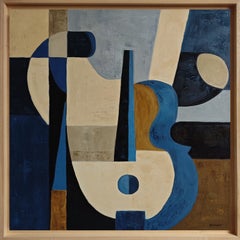
All the while, primary concerns remained consistent: shape, form, serenity and modernity. But modernity in the orthodox, minimal sense, translating to designs reflecting an interest in and respect for biomorphism; ease of natural, flowing movement; a lack of excess; linear cuts; and a paucity of superfluous adornment. A complicated simplicity where the detail is in, rather than on, the clothes. “Invisible luxury” is one phrase Rucci employs, aware of the parallels in modern architecture, such as Manhattan’s Seagram Building by Mies van der Rohe, modern and contemporary art, as well as Chinese art from the Han through the Song dynasties. “My designs always have an Asian sensibility,” explains Rucci, who in both his home and office has ancient and early Chinese sculpture, as well as contemporary pieces by Cy Twombly and Francis Bacon.
Complementing, and to a degree contrasting, his designs’ paired down purity is a voluptuousness of material, a no-holds-barred approach to luxury that includes double-faced cashmeres, charmeuse-lined pockets, jackets lined with iris-blue mink, latticed strips of alligator and real, albeit discreetly employed, jewels. The result is a synchronicity in the forms but a tension in the designs, an exciting, almost electrical surge that courses through the clothes, one that is not only facilitated but made possible by Rucci’s great conduit: craftsmanship.
The “C” word, a-never-cutting-corners meticulousness, led to a chorus of hosannas and support from fashion influentials, among them Joan Kaner (then fashion director at Neiman Marcus, which began carrying Rucci’s line in 1996) and fashion writer Cathy Horyn in The New York Times [ITALICS]. Eventually accolades, combined with the approbation of clients such as society hostess and style arbiter Catherine “Deeda” Blair (a former patron of Balenciaga), reached a level heard by the Chambre Syndicale de la Couture, which invited Rucci to show at the Paris couture shows. And in 2002, Rucci did — becoming the first American since Mainbocher in the 1930s to do so (from 2002-2004, Rucci showed four annual collections, two ready-to-wear in New York and two haute couture in Paris. Currently, Rucci shows two collections in New York — his last on September 12 — and naturally continues to design made-to-measure for his private clients).
Stories appeared in Vogue and Vivre, profiles in Harper’s Bazaar, W  and Town & Country  [Olga--magazine titles in ITALICS], and Rucci has since had his designs exhibited at the Metropolitan Museum of Art’s Costume Institute, been the subject of a major retrospective at F.I.T., and been the focus of a Sundance Channel documentary, “Ralph Rucci: A Designer and His House,” which debuted September 2008. Rucci has also been the headliner of single-designer exhibitions at Kent State (2005-2006) and the Phoenix Art Museum (2008); included in group shows at the Victoria and Albert Museum (1985), the Museum of Contemporary Art in Los Angeles (2006), and the Cooper-Hewitt Museum (in both 2006 and 2009); and the recipient of the Fashion Design Award from the Cooper-Hewitt Museum (2008).
So why is he not more widely known? Perhaps it’s because Rucci has never given clothes away for red carpets. Perhaps it’s because he’s spent his life’s capital working in the made-to-order couture tradition rather than trying to divine or shape the next style trend. Perhaps it’s because he’s uncompromising, even to a fault, and like Balenciaga and Madame Grès, monkish in his devotion to his ideal.
Men’s wear, house wares, freestanding boutiques, even a scent collection, all under the Chado Ralph Rucci banner? Time and the design deities will tell.


What’s currently on Ralph Rucci’s mood board? Images of:

  1. Maasai warriors.
  2. Dancers with scarification and bodies adorned with paint and flowers.
  3. Pauline de Rothschild.
  4. Balenciaga’s most severe designs.
  5. Japanese tea rooms.
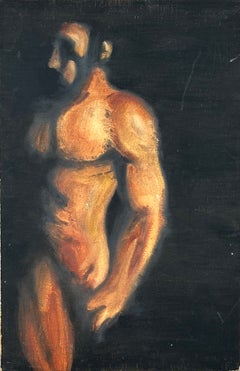
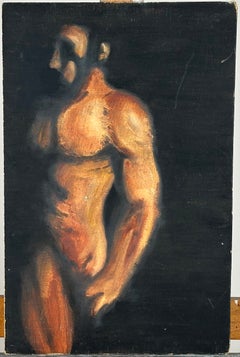
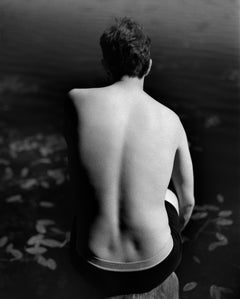
  6. Beautiful naked men.
  7. Japanese armor.
  8. Pina Bausch.
  9. The work of François-Joseph Graf.
THIS PAGE IS INTENDED FOR SEARCH ENGINES
click here to view the complete article with images.
1stdibs.com Inc. © 2001 - 2010