Post-Impressionist Art

POSTIMPRESSIONIST STYLE

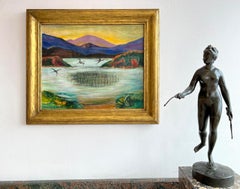
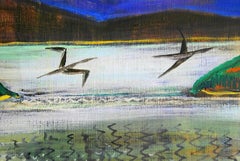
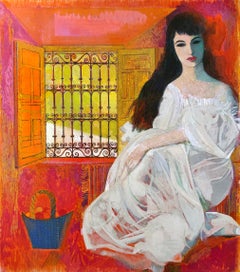
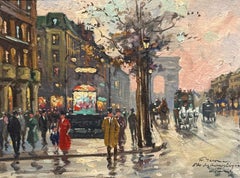
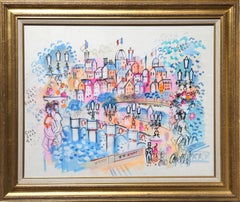
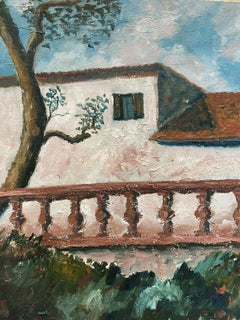
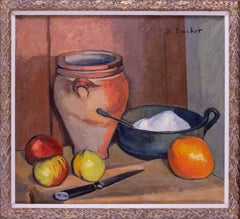
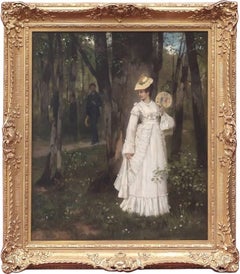
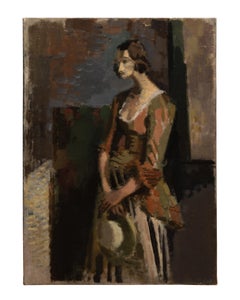
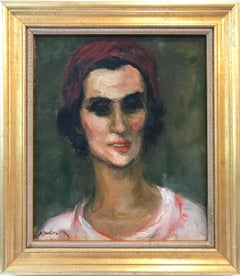
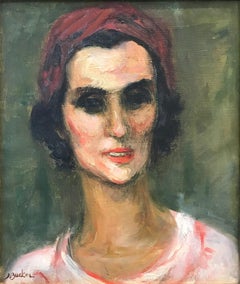
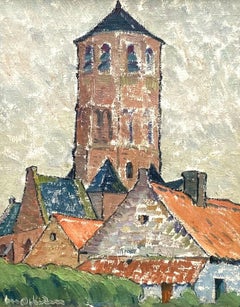
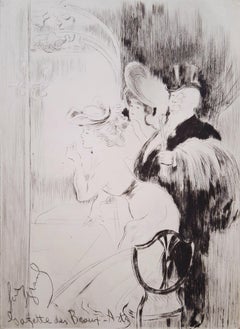
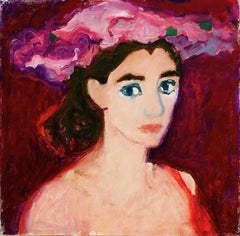
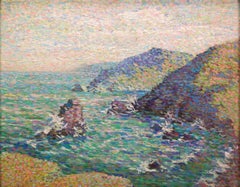
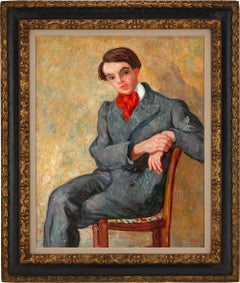
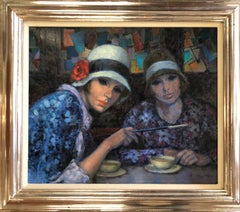
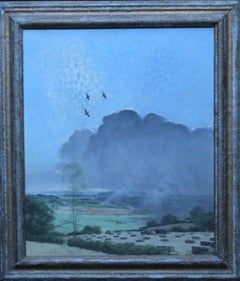
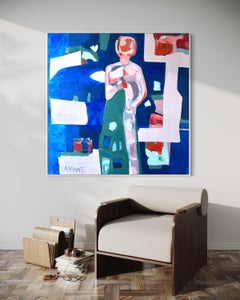
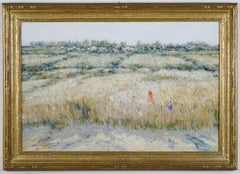
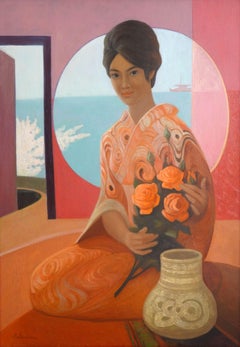
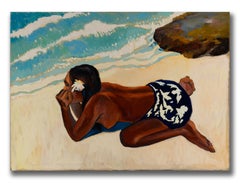
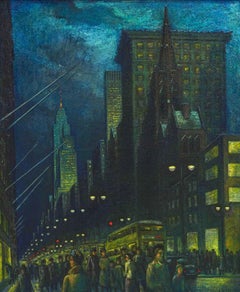
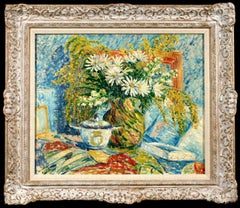
In the revolutionary wake of Impressionism, artists like Vincent van Gogh, Georges Seurat, Paul Cézanne and Paul Gauguin advanced the style further while firmly rejecting its limitations. Although the artists now associated with Postimpressionist art did not work as part of a group, they collectively employed an approach to expressing moments in time that was even more abstract than that of the Impressionists, and they shared an interest in moving away from naturalistic depictions to more subjective uses of vivid colors and light in their paintings.
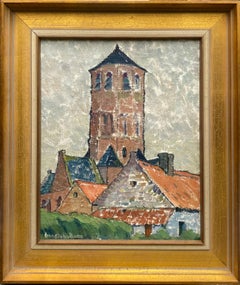
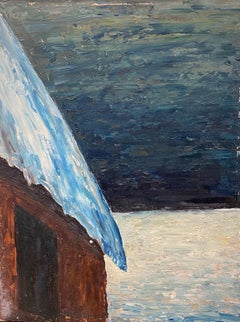
The eighth and final Impressionist exhibition was held in Paris in 1886, and Postimpressionism — also spelled Post-Impressionism — is usually dated between then and 1905. The term “Postimpressionism” was coined by British curator and art critic Roger Fry in 1910 at the “Manet and the Postimpressionists” exhibition in London that connected their practices to the pioneering modernist art of Édouard Manet. Many Postimpressionist artists — most of whom lived in France — utilized thickly applied, vibrant pigments that emphasized the brushstrokes on the canvas.

The Postimpressionist movement’s iconic works of art include van Gogh’s The Starry Night (1889) and Seurat’s A Sunday on La Grande Jatte (1884). Seurat’s approach reflected the experimental spirit of Postimpressionism, as he used Pointillist dots of color that were mixed by the eye of the viewer rather than the hand of the artist. Van Gogh, meanwhile, often based his paintings on observation, yet instilled them with an emotional and personal perspective in which colors and forms did not mirror reality. Alongside Mary Cassatt, Cézanne, Henri Matisse and Gauguin, the Dutch painter was a pupil of Camille Pissarro, the groundbreaking Impressionist artist who boldly organized the first independent painting exhibitions in late-19th-century Paris.
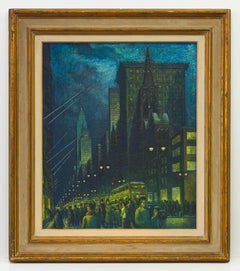
The boundary-expanding work of the Postimpressionist painters, which focused on real-life subject matter and featured a prioritization of geometric forms, would inspire the Nabis, German Expressionism, Cubism and other modern art movements to continue to explore abstraction and challenge expectations for art.

Find a collection of original Postimpressionist paintings, mixed media, prints and other art on 1stDibs.

to
2,615
2,865
1,143
1,331
665
634
Overall Width
to
Overall Height
to
158
5,202
1,281
115
142
399
243
315
529
308
290
166
150
114,022
62,370
57,494
27,233
14,660
9,387
5,675
4,318
3,094
2,417
2,352
2,163
604
3,433
2,913
273
2,646
1,397
864
855
718
694
651
647
566
347
291
276
272
257
244
236
235
208
206
202
4,626
3,243
1,708
1,682
983
529
202
179
169
50
2,188
558
3,779
2,659
Style: Post-Impressionist
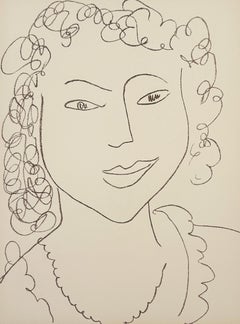
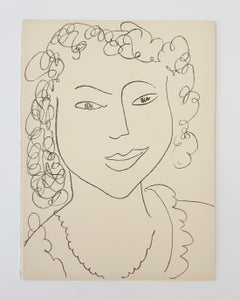
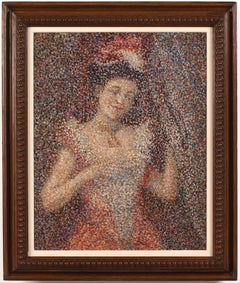
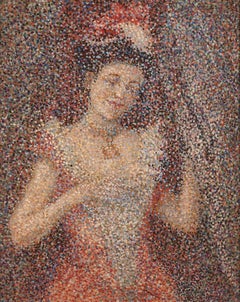
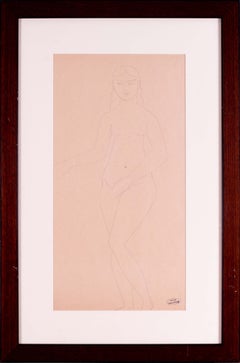
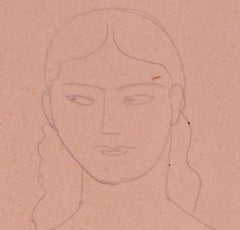
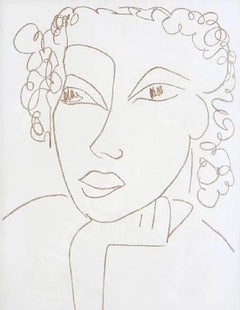
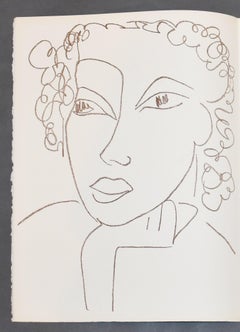
Portrait of Woman - Lithograph by Edouard Chimot  - Early 20th Century

Portrait of Woman - Lithograph by Edouard Chimot - Early 20th Century

By Édouard Chimot

Located in Roma, IT

Portrait of Woman is an Original Lithograph realized by Edouard Chimot. The very beautiful artwork is in good condition except for some spots on the yellowed paper, included a cardboard passpartout (34x26 cm). Hand-signed by the artist on the lower right corner. Represents a young lady with red hair...

Category

Early 20th Century Post-Impressionist Art

Materials

Lithograph

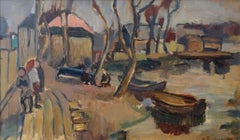
Hermanus Koekkoek Jr Dutch Harbor Scene Oil Jan van Couver Painting

Hermanus Koekkoek Jr Dutch Harbor Scene Oil Jan van Couver Painting

Located in Stockholm, SE

This atmospheric harbour scene by Hermanus Koekkoek Jr., working under the pseudonym Jan van Couver, exemplifies the artist’s mature approach to maritime and town views during his London period. The composition presents a Dutch waterfront animated by boats, windmills, and clustered buildings, all set beneath a vast and dynamic sky. The emphasis on shifting weather conditions and the interaction between water, light, and architecture reflects a deep engagement with both tradition and contemporary developments in nineteenth century painting. Koekkoek belonged to one of the most distinguished artistic dynasties in the Netherlands. As the son of Hermanus Koekkoek the Elder and nephew of Barend Cornelis Koekkoek, he inherited a strong foundation in landscape and marine painting. His early training within the family atelier in Amsterdam provided him with a disciplined understanding of composition and natural observation. However, his later move to London in 1869 marked a decisive shift in both style and market orientation. It was during this period that he adopted the name Jan van Couver, a strategic choice that aligned his work with a broader European appeal. The present painting reveals a confident and increasingly free handling of paint. The foreground water is rendered with swift horizontal strokes that capture the movement of the surface, while the boats and harbour structures are constructed through more concentrated applications of pigment. The use of impasto is particularly notable, lending the painting a tactile presence and enhancing the interplay between light and texture. This painterly richness contributes to a vivid sense of immediacy, as if the scene were observed directly on site. The sky dominates the composition, occupying a large portion of the pictorial space. Broad, swirling brushstrokes articulate the mass of clouds, which appear to gather and disperse in response to changing atmospheric conditions. This treatment reflects the influence of the Hague School, whose artists sought to convey the mood and variability of the Dutch landscape through tonal harmony and expressive brushwork. Koekkoek’s interpretation is more animated, however, suggesting an openness to impressionistic tendencies that were gaining ground across Europe. At the same time, the painting remains anchored in a clear compositional structure. The line of the harbour guides the viewer’s eye into the distance, where the forms dissolve into a softer haze. The presence of windmills, a quintessential feature of the Dutch landscape, reinforces the sense of place while also introducing vertical accents that balance the horizontal expanse of water and sky. The architecture is suggested rather than fully defined, allowing atmosphere and light to take precedence over detail. Koekkoek’s work occupies an interesting position between tradition and modernity. While rooted in the conventions of Dutch marine painting...

Category

Late 19th Century Post-Impressionist Art

Materials

Canvas, Oil

"Pink Beach French Riviera", Fauvist Acrylic on Canvas, 21st Century, Signed

"Pink Beach French Riviera", Fauvist Acrylic on Canvas, 21st Century, Signed

By Linda Clerget Studio

Located in JOINVILLE-LE-PONT, FR

This captivating artwork presents a vivid coastal landscape, dominated by a bold sky in striking shades of bubble-gum pink and deep violet. The clouds, rendered with a dynamic and ri...

Category

21st Century and Contemporary Post-Impressionist Art

Materials

Canvas, Acrylic

Modernist WILD THING Woman in Forest Oil Painting

Modernist WILD THING Woman in Forest Oil Painting

By Donald Roy Purdy

Located in Surfside, FL

Genre: Modern Subject: Figures Medium: Oil Surface: Board Country: United States signed lower left Donald Roy Purdy is an American painter whose work evolved through a range of styl...

Category

20th Century Post-Impressionist Art

Materials

Oil, Board

Fauvist Portrait of Ogden

Fauvist Portrait of Ogden

Located in Soquel, CA

Gorgeous fauvist portrait of man, in a vivd and expressive colorful palette, titled "Ogden" by Henri O’Connor (American, b. 1921), 1996. Signed and dated lower right corner and on verso. Condition: Professionally cleaned and restored three tears and inpainting. Presented in black painted wood frame. Image size: 16"H x 20"W. Framed size: 21.75"H x 17.75"W. Henri O’Connor, the son of an American father and a French mother was born in 1921 and grew up in Nantes, France. He attended the Ecole des Beaux Arts in Nantes and in the late 1930s, studied at the Beaux Arts, the Atelier de la Grande Chaumiere and the Academie de l’Arts et Publicite in Paris “He was basically one degree removed from all of the great masters of the turn of the century,” David Deitch, a freelance art curator in New York, says of O’Connor’s education. “His teachers were associates of Matisse, Derain — all of the big players at the time.” The curator says that the influences of O’Connor’s teachers, which reflect the Fauvist style in vogue at the time, is apparent in his paintings, particularly some of his later work. O’Connor and his parents and siblings left Europe at the beginning of World War II and moved to the United States, eventually settling in Sacramento, where O’Connor’s father had relatives. O’Connor was offered a job teaching art at the Sacramento Art...

Category

1990s Post-Impressionist Art

Materials

Canvas, Oil

Russian Post-impressionist Portrait of Maxim Gorky

Russian Post-impressionist Portrait of Maxim Gorky

By Russian School

Located in Zofingen, AG

This artwork features a striking woodcut-style portrait that commands attention with its bold expression and intricate detail. The subject's face is rendered with deep lines and a ru...

Category

1980s Post-Impressionist Art

Materials

Oil, Wood Panel

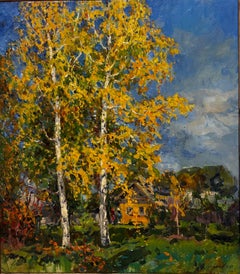
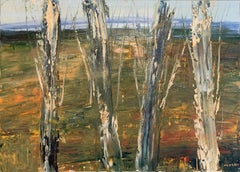
Vivid Abstracted Fauvist Birch Tree Landscape Painting, Signed, 1977

Vivid Abstracted Fauvist Birch Tree Landscape Painting, Signed, 1977

By Libby Beth Seligman

Located in Soquel, CA

Vivid abstracted landscape in vibrant fauvist hues of birch trees in green field by Libby Beth Seligman (American, b. 1958), 1977. Signed and dated lower right corner. Presented in...

Category

1970s Post-Impressionist Art

Materials

Canvas, Oil

Populus Impression
Populus Impression

Populus Impression

Located in New York, NY

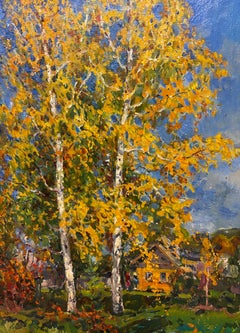
Title: Populus Impression Medium: Oil on canvas Size: 15.5 x 12inches Frame: Framing options available! Age: 2000s Condition: Painting appears to be in excellent condition. No...

Category

21st Century and Contemporary Post-Impressionist Art

Materials

Oil

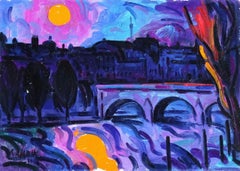
Post-Impressionist Colorful Oil Paint Landscape "Le Pont Neuf, Paris"

Post-Impressionist Colorful Oil Paint Landscape "Le Pont Neuf, Paris"

By Joan Raset

Located in Segovia, ES

Le Pont Neuf - Paris. Oil on canvas by Spanish artist Joan Raset. Dimension with frame 84 cm H x 104 cm W x 4 cm D Dimension without frame 73 cm H x 92 cm W x 2 cm D Beautiful Pa...

Category

Early 2000s Post-Impressionist Art

Materials

Canvas, Oil

Vintage Aladdin and The Lamp with Dragon and Cats

Vintage Aladdin and The Lamp with Dragon and Cats

By Ben Black

Located in Soquel, CA

A highly detailed India ink drawing with watercolor and Gouache. Each intricate circle and line is hand drawn to create a matrix within which the artist colors the scene to a fine realistic conclusion. Aladdin smiles at the Lantern that has given him his wishes, wealth and knowledge. Signed and dated "Ben Black 85" lower right. Image, 17"H x 27"L (portions of the work flow into the full mat length and width, which is: 20"H x 30"L). We have included a lower resolution image (#1) taken in subdued light to show the full range of colors we were unable to capture due to the extensive fine India ink designs throughout. Ben Black was born in Boston, he graduated from the Massachusetts College of Art 1947. He served in World War 2. He was an art director at one of Boston's leading advertising firms, later opened his own studio where his works were included in The New Yorker, Saturday Evening Post, Reader's Digest, establishing himself as a leading American Illustrator. He had many solo and group exhibitions throughout New England and his work is collected throughout the world. Originally known for his clowns, he created a limited edition series of plates for Royal Daulton as well as clown figurines...

Category

1980s Post-Impressionist Art

Materials

Gouache, India Ink, Watercolor

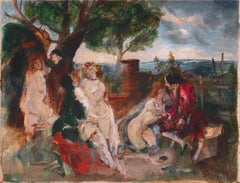
Bathers
Bathers

Bathers

By John Edward Costigan

Located in Sheffield, MA

John Edward Costigan, N.A. American, 1888-1972 Bathers Oil on canvas Signed ‘J.E. Costigan N.A.’ lower left 20 by 24 in. W/frame 26 by 30 in. John Costigan was born of Irish-American parents in Providence, Rhode Island, February 29, 1888. He was a cousin of the noted American showman, George M. Cohan, whose parents brought the young Costigan to New York City and was instrumental in starting him on a career in the visual arts. They were less successful in encouraging him to pursue formal studies at the Art Students League (where, however, he later taught) than in exposing him to the commercial art world through the job they had gotten him with the New York lithographing firm that made their theatrical posters. At the H. C. Miner Lithographing Company, Costigan worked his way up from his entry job as a pressroom helper, through various apprenticeships, to the position of sketch artist. In the latter capacity he was an uncredited designer of posters for the Ziegfeld Follies and for numerous silent films. Meanwhile, he had supplemented his very meager formal studies in the fine arts with a self-teaching discipline that led to his first professional recognition in 1920 with the receipt of prizes for an oil painting and watercolor in separate New York exhibitions. A year earlier, Costigan had wed professional model Ida Blessin, with whom he established residence and began raising a family in the sleepy little rural New York hamlet of Orangeburg, the setting for the many idyllic farm landscapes and wood interiors with which he was to become identified in a career that would span half a century. John Costigan’s first national recognition came in 1922 with his winning of the coveted Peterson Purchase prize of the Art Institute of Chicago for an oil on canvas, “Sheep at the Brook.” It marked the start of an unbroken winning streak that would gain him at least one important prize per year for the remainder of the decade. The nation’s art journalists and critics began to take notice, making him the recurring subject of newspaper features and magazine articles. The eminent author and critic Edgar Holger Cahill was just a fledgling reporter when he wrote his first feature, “John Costigan Carries the Flame,” for Shadowland Magazine in 1922. Costigan had his first one-man show of paintings at the Rehn Gallery on New York’s 5th Avenue in November, 1924, to be followed less than three years later by another at the Art Institute of Chicago. In addition, Costigan’s work has been—and continues to be included, side-by-side with that of some of America’s most high-profile artists, in museum and gallery exhibitions throughout the country. His renown had peaked in the early 1930s, by which time his work had been honored with nearly every major award then being bestowed in the fine arts and had been acquired for the permanent collections of several prestigious American museums, including New York’s Metropolitan (which only recently, in 1997, deaccessioned his “Wood Interior,” acquired in 1934). Although Costigan’s celebrity had ebbed by the late 1930s, the Smithsonian Institution saw fit in 1937 to host an exhibition exclusively of his etchings. And, in 1941, the Corcoran Gallery (also Washington, D.C.) similarly honored him for his watercolors. (Another Washington institution, the Library of Congress, today includes 22 Costigan etchings and lithographs in its permanent print collection.) During World War II, Costigan returned briefly to illustrating, mainly for Bluebook, a men’s pulp adventure magazine. A gradual revival of interest in his more serious work began at the end of the war, culminating in 1968 with the mounting of a 50-year Costigan retrospective at the Paine Art Center and Arboretum in Oshkosh, Wisconsin. Oils, watercolors and prints were borrowed from museums and private collections throughout the country, and the exhibition was subsequently toured nationally by the Smithsonian Institution. John Costigan died of pneumonia in Nyack, NY, August 5, 1972, just months after receiving his final prestigious award —the Benjamin West Clinedinst Medal of the Artist’s Fellowship, Inc., presented in general recognition of his “...achievement of exceptional artistic merit...” in the various media he had mastered in the course of his career. This painting depicts one of the artist's favorite themes --the farm family bathing...

Category

1950s Post-Impressionist Art

Materials

Oil

La Rivière by PAULÉMILE PISSARRO - Post Impressionist Landscape Painting, River

La Rivière by PAULÉMILE PISSARRO - Post Impressionist Landscape Painting, River

By Paul Emile Pissarro

Located in London, GB

La Rivière (The River) by PAULÉMILE PISSARRO (1884-1972) Oil on canvas 92 x 73 cm (36 1⁄4 x 28 3⁄4 inches) Signed and dated lower left Paulémile Pissarro 1932 Provenance Private col...

Category

1930s Post-Impressionist Art

Materials

Oil, Canvas

Portrait of a Mother and Child by Tsuguharu Foujita

Portrait of a Mother and Child by Tsuguharu Foujita

By Léonard Tsuguharu Foujita

Located in New Orleans, LA

Tsuguharu Foujita 1886-1968 Japanese-French Portrait of a Mother and Child Signed “Foujita / Paris” (lower left) Ink and watercolor on paper An artistic luminary well ahead of his time, Tsuguharu Foujita burst onto the international art scene in the early 20th century as one of the most important artists in early Japanese modernism...

Category

20th Century Post-Impressionist Art

Materials

Paper, Ink, Watercolor

“Summertime”
“Summertime”

“Summertime”

By William Jurian Kaula

Located in Southampton, NY

Great example of the the artistic excellence of William J. Kayla and his mastery of the watercolor. Circa 1925. Signed lower left. Condition is very go...

Category

1920s Post-Impressionist Art

Materials

Watercolor, Archival Paper

"Lake Tahoe" - Contemporary Lake Tahoe Mountain Landscape with a Green Forest

"Lake Tahoe" - Contemporary Lake Tahoe Mountain Landscape with a Green Forest

Located in Carmel, CA

Penny Whent (American, born 1949) "Lake Tahoe" 2021 Acrylic Paint, Canvas, Stretcher Bars The artist signed the bottom left of the painting. “Lake Tahoe” by Penny Whent captures the...

Category

2010s Post-Impressionist Art

Materials

Acrylic, Canvas, Stretcher Bars

Gauguin, The God (Te atua), Gauguin (after)

Gauguin, The God (Te atua), Gauguin (after)

By Paul Gauguin

Located in Southampton, NY

Woodcut on vélin Utopian paper. Unsigned and unnumbered, as issued. Good Condition. Notes: From the folio, Gauguin, A portfolio of 12 color woodblocks, Paul Gauguin, French, 1848-19...

Category

1940s Post-Impressionist Art

Materials

Woodcut

"Boats"

"Boats"

By Frederick Rhodes Sisson

Located in Southampton, NY

Frederick Rhodes Sisson was active in Rhode Inland and Massachusetts. He was known for etching, landscape painting and teaching. He was an apprentice and assistant of Abbott Handerson Thayer...

Category

1950s Post-Impressionist Art

Materials

Paper, Watercolor

Horses at the Gate - British 1912 Post Impressionist equine art exh oil painting

Horses at the Gate - British 1912 Post Impressionist equine art exh oil painting

By Edgar Downs

Located in Hagley, England

This wonderful Post Impressionist exhibited horses portrait oil painting is by noted British artist Edgar Downs. Painted in 1912 it was exhibited the same year at the Royal Academy London. The painting is of two magnificent horses, one white one brown, waiting patiently while a man leans over to open the gate. Beyond is a canopy of trees. The impressionist brushwork and strong impasto create a light which is vibrant and colourful. This is an excellent example of Downs' work and one can see his infinity with the natural world. Signed and date lower right. Provenance. Exhibited at the Royal Academy London 1912 no. 789. Condition. Oil on canvas, image size is 36 inches by 30 inches and in good condition. Frame. Housed in a complementary frame 44 inches by 38 inches and in good condition. Edgar Downs, ROI, (1876–1963) was a British painter, known for painting agricultural scenes. Downs was born on 12 October 1876 at Claughton, Birkenhead, the son of William Downs. He was educated at Birkenhead School and the Academy of Fine Arts, Munich, and received a silver medal there. He exhibited paintings called Our Daily Bread and The Edge of the Bog at the Royal Academy in 1911, when his address was given as 12 Bedford Gardens, Kensington, London. His other addresses included Arun House at Clymping, West Sussex, and latterly Mudeford, Hampshire where he died. During World War I, he served as a war artist, including spells at Gallipoli in 1915 and Salonica in 1916. He was assigned to the 1st County of London Yeomanry in July 1918. One of his paintings made at this time hangs in the Headquarters of the Inns of Court & City Yeomanry. Two of his works, Gathering Kelp (1914) and Cattle Ploughing in an Open Landscape (c. 1914), are in the collection of Fordingbridge Town Council at Fordingbridge Town Hall. He was a member of the Royal Institute of Oil Painters ("ROI"), the London Sketch...

Category

1910s Post-Impressionist Art

Materials

Oil

Modern Contemporary Fauvist Autumnal Landscape

Modern Contemporary Fauvist Autumnal Landscape

By Michael Eggleston

Located in Soquel, CA

Modern Contemporary Fauvist Autumnal Landscape by Michael William Eggleston Stunning contemporary fauvist autumnal oil painting landscape by San Francisco artist Michael William Egg...

Category

21st Century and Contemporary Post-Impressionist Art

Materials

Board, Oil

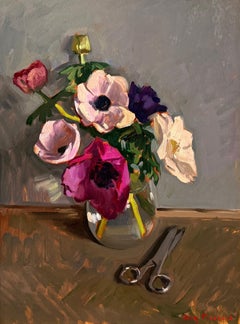
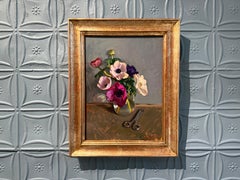
“Anemones and Scissors” impressionist still life, purple wildflowers in glass

“Anemones and Scissors” impressionist still life, purple wildflowers in glass

By Amy Florence

Located in Sag Harbor, NY

An oil painting by Amy Florence (b. 1989, London) of pink, purple, and white wildflowers cut and gathered in a round glass vase. A small pair of scissors rests beside them. Frame...

Category

21st Century and Contemporary Post-Impressionist Art

Materials

Oil, Panel

Sevillanas
Sevillanas

Sevillanas

Located in Fairlawn, OH

Sevillanas Etching and color aquatint on laid watermarked paper, c. 1900 Signed by the artist in pencil lower right (see photo) Editioned in pencil lower left corner of sheet Publish...

Category

Early 1900s Post-Impressionist Art

Materials

Aquatint

Fauvist Abstract Portrait

Fauvist Abstract Portrait

By Judy Gittelsohn

Located in Soquel, CA

Wonderful fauvist abstract expressionist painting of a face titled "Nice Dark Head" by Northern California artist Judy Gittelsohn (American, born 1958), 2019. Signed lower left corne...

Category

2010s Post-Impressionist Art

Materials

Canvas, Acrylic

'Delicate Irises' - still life - floral, botanical, impressionism

'Delicate Irises' - still life - floral, botanical, impressionism

Located in Atlanta, GA

This painting features vibrant hues of green and purple. Chattanooga-based artist Christina Renfer Vogel’s “Turning Towards the Sun” features paintings that reflect an intentional turn towards beauty in the face of the tension & uncertainty of recent years. Through nourishing periods of focused observation, she has allowed herself to delight in jubilant color, playful pattern & sensual gesture. Her works delight in the delicate unfurling of a tender leaf & the gentle turn towards an open window, as flowers seek warmth & stretch towards sunlight in the space of a painting session. “Bringing plants...

Category

2010s Post-Impressionist Art

Materials

Oil, Panel

Colorful View Oil Painting "Magical Sky" by Stella Burggraaf

Colorful View Oil Painting "Magical Sky" by Stella Burggraaf

Located in Winterswijk, NL

"Magical Sky" brings a surreal atmosphere to life, inspired by the serene beauty of Dutch wetlands. With dynamic pink and green tones, this post-impressionist oil painting creates a ...

Category

21st Century and Contemporary Post-Impressionist Art

Materials

Oil

Bougival
Bougival

Bougival

By Maurice de Vlaminck

Located in Fairlawn, OH

Bougival Woodcut, 1914 Signed and numbered in pencil Edition 30, this numberd 22 Printed on laid Van Gelder Zonen paper Published by Henri Kanweiler, Paris Printed by Paul Birault, P...

Category

1910s Post-Impressionist Art

Materials

Woodcut

"Peaceful Silent Landscape" - Original Luminous Post-Impressionist Landscape

"Peaceful Silent Landscape" - Original Luminous Post-Impressionist Landscape

By Masri Hayssam

Located in Carmel, CA

Masri Hayssam (Lebanese, born 1965) "Peaceful Silent Landscape" 2023 Oil paint, acrylic paint, mixed media, canvas, stretcher bars Signed by the artist on the bottom right of the pai...

Category

2010s Post-Impressionist Art

Materials

Canvas, Mixed Media, Oil, Acrylic, Stretcher Bars

Henri Matisse, Boat, from Last Works of Matisse, 1958 (after)

Henri Matisse, Boat, from Last Works of Matisse, 1958 (after)

By Henri Matisse

Located in Southampton, NY

This exquisite lithograph after Henri Matisse (1869–1954), titled Bateau (Boat), from Dernieres Oeuvres de Matisse 1950-1954 (Last Works of Matisse 1950-1954), Verve: Revue Artistiqu...

Category

1950s Post-Impressionist Art

Materials

Lithograph

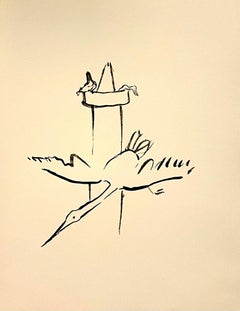
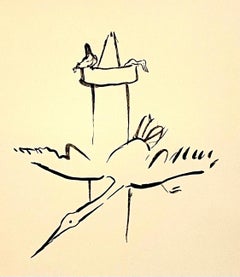
Henri Matisse, The Sadness of the King, from Last Works of Matisse, 1958 (after)

Henri Matisse, The Sadness of the King, from Last Works of Matisse, 1958 (after)

By Henri Matisse

Located in Southampton, NY

This exquisite lithograph after Henri Matisse (1869–1954), titled Tristesse du Roi (The Sadness of the King), from Dernieres Oeuvres de Matisse 1950-1954 (Last Works of Matisse 1950-...

Category

1950s Post-Impressionist Art

Materials

Lithograph

“A Norman Peasant’s Home”

“A Norman Peasant’s Home”

Located in Southampton, NY

"A Norman Peasant's Home," (Near Caudebec -en-Caux, Seine, France); and also identified as, "Peasant's Doorway." by Hezekiah Anthony Dyer. This area would be considered Normandy hence the title. Watercolor and gouache on archival paper. Signed lower left by the artist. Condition is very good. Included with the purchase is dated 1925 correspondence between the artist and purchaser of the painting with apologies from the artist for the painting not being shipped from Newport on time. Recently professionally custom double matted and framed under glass. Overall framed measurements are 19.25 by 15.5 inches. Provenance: Rhode Island collector. H. A. Dyer 1872 - 1943 Historical Rhode Island artist Hezekiah Anthony Dyer, son of Elisha and Nancy Anthony Dyer , was born into a prominent Rhode Island family, having both his grandfather and father serve as governor of the state. A descendent of the Hoppin family, known for their own artistic inclination, Dyer inherited both an interest in the arts as well as his father’s interest in public affairs. He fulfilled his destiny by becoming a notable figure in Rhode Island politics and public service as well as an accomplished artist. Dyer attended boarding school at St. Paul’s Church in Concord, New Hampshire and then went on to attend Brown University. Following his graduation from Brown in 1894, Dyer became serious about pursuing an art career and made the decision to travel abroad to Holland, Italy and France where he focused on refining his watercolor technique. Following his initial trip to Europe, Dyer returned to Providence and attended classes at the Rhode Island School of Design. By 1919 he received an Honorary Masters of Arts Degree from Brown University. Throughout his life, Dyer traveled to Europe for several months of each year to paint. He had a particular affinity for European seascapes and landscapes, as well as for picturesque scenes of old European villages. Dyer’s travels took him throughout the continent including Belgium, Brittany, Normandy, England and both the Swiss and Italian Alpine regions. Hezekiah was heavily influenced by the English School of painting, and in the early years of his career as a painter, worked exclusively in a deliberately realistic style. During this time, Dyer also began showcasing his paintings in exhibits that consisted of only his own work and which were very successful. As his painting progressed, Dyer allowed himself to experiment more in the field of watercolor. He developed a technique of painting on grey or tan paper and would paint everything lighter than the paper using an opaque gouache, and everything darker than the paper in transparent washes of color. This technique allowed Dyer to represent a great deal of detail not usually found in watercolor paintings. It also resulted in wonderfully vibrant colors that would not fade when dry. H. A. Dyer was a prominent member of both the art community and of Rhode Island public life. While he never held an office, Dyer became very involved in politics and from 1916 to 1919 was president of the Republican Club of Rhode Island. At the beginning of the First World War, Hezekiah was made chairman of the speaker’s bureau for the Food Administration of Rhode Island, and was later made chairman of the speaker’s bureau for the Council of Defense. Dyer also became a chairman for a philanthropic organization called Rhode Island of the Fatherless Children of France. In 1922, France presented both Hezekiah Dyer...

Category

1920s Post-Impressionist Art

Materials

Watercolor, Gouache, Archival Paper

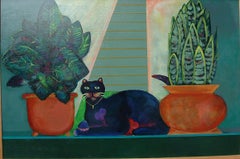
Red Couch, Black Cat - Contemporary Fauvist Interior Scene in Primary Colors

Red Couch, Black Cat - Contemporary Fauvist Interior Scene in Primary Colors

By Jonathan Taylor

Located in Soquel, CA

Fun and colorful contemporary Fauvist interior scene of a black cat lounging on a red couch in a brightly hued room in primary colors, by Jonathan Taylor (American, b.1966). Signed "J. Taylor" in bottom right. Displayed in a giltwood frame. Illustration board size: 16" H X 20" W. Artist Jonathan Taylor was born in 1966 and was raised in Bar Harbor Maine...

Category

2010s Post-Impressionist Art

Materials

Canvas, Oil, Cardboard

Portrait of Old Cowboy Holding Rifle, Cover for Zane Grey's Majesty's Rancho

Portrait of Old Cowboy Holding Rifle, Cover for Zane Grey's Majesty's Rancho

By Murray Tinkelman

Located in Miami, FL

Besides his insightful characterizations of American Life, legendary Illustrator Murray Tinkelman's contribution to art history is his unique style. Each work is composed of thousan...

Category

1970s Post-Impressionist Art

Materials

Ink, Watercolor, Illustration Board, Pencil

Post-impressionist art for sale on 1stDibs.

Find a wide variety of authentic Post-Impressionist art available for sale on 1stDibs. Works in this style were very popular during the 21st Century and Contemporary, but contemporary artists have continued to produce works inspired by this movement. If you’re looking to add art created in this style to introduce contrast in an otherwise neutral space in your home, the works available on 1stDibs include elements of blue, orange, purple, red and other colors. Many Pop art paintings were created by popular artists on 1stDibs, including Victor Di Gesu, Mitchell Funk, Maria Bertrán, and Rafael Duran Benet. Frequently made by artists working with Paint, and Oil Paint and other materials, all of these pieces for sale are unique and have attracted attention over the years. Not every interior allows for large Post-Impressionist art, so small editions measuring 0.1 inches across are also available. Prices for art made by famous or emerging artists can differ depending on medium, time period and other attributes. On 1stDibs, the price for these items starts at $1 and tops out at $2,835,000, while the average work sells for $2,250.