Post-Impressionist Art

POSTIMPRESSIONIST STYLE

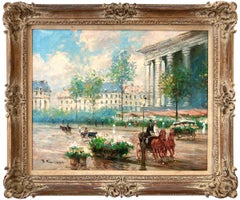
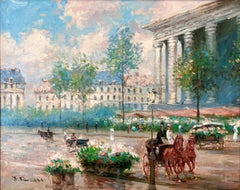
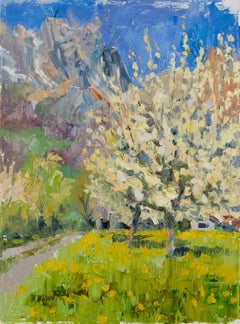
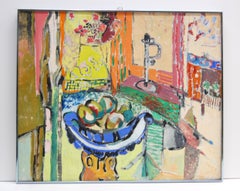
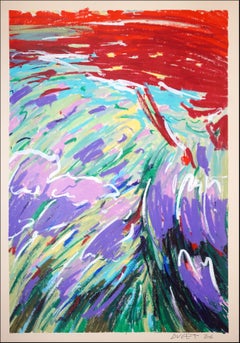
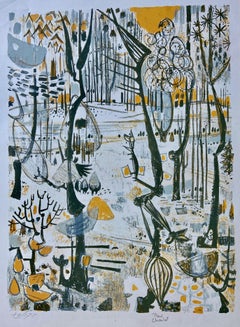
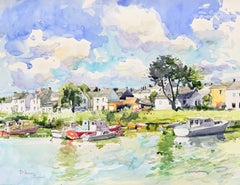
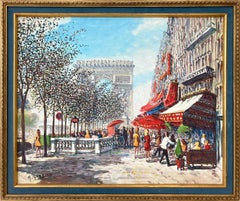
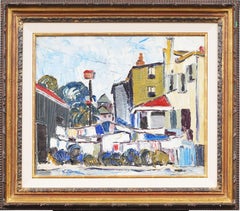
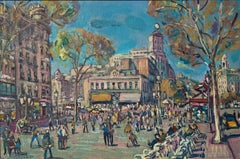
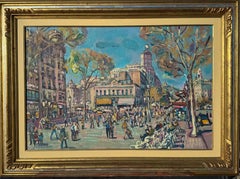
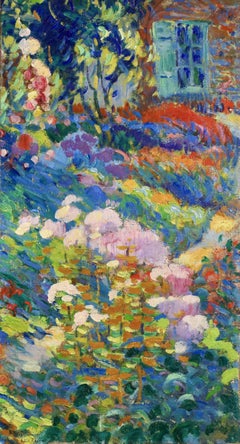
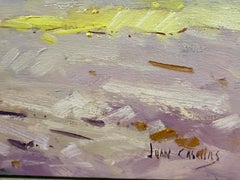
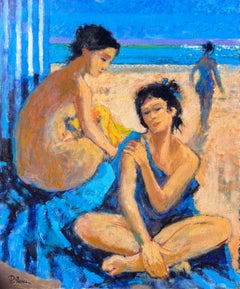
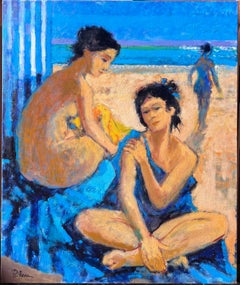
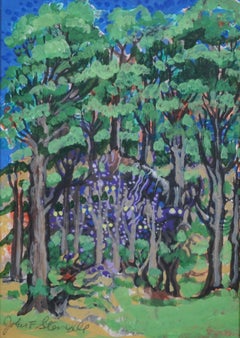
In the revolutionary wake of Impressionism, artists like Vincent van Gogh, Georges Seurat, Paul Cézanne and Paul Gauguin advanced the style further while firmly rejecting its limitations. Although the artists now associated with Postimpressionist art did not work as part of a group, they collectively employed an approach to expressing moments in time that was even more abstract than that of the Impressionists, and they shared an interest in moving away from naturalistic depictions to more subjective uses of vivid colors and light in their paintings.

The eighth and final Impressionist exhibition was held in Paris in 1886, and Postimpressionism — also spelled Post-Impressionism — is usually dated between then and 1905. The term “Postimpressionism” was coined by British curator and art critic Roger Fry in 1910 at the “Manet and the Postimpressionists” exhibition in London that connected their practices to the pioneering modernist art of Édouard Manet. Many Postimpressionist artists — most of whom lived in France — utilized thickly applied, vibrant pigments that emphasized the brushstrokes on the canvas.

The Postimpressionist movement’s iconic works of art include van Gogh’s The Starry Night (1889) and Seurat’s A Sunday on La Grande Jatte (1884). Seurat’s approach reflected the experimental spirit of Postimpressionism, as he used Pointillist dots of color that were mixed by the eye of the viewer rather than the hand of the artist. Van Gogh, meanwhile, often based his paintings on observation, yet instilled them with an emotional and personal perspective in which colors and forms did not mirror reality. Alongside Mary Cassatt, Cézanne, Henri Matisse and Gauguin, the Dutch painter was a pupil of Camille Pissarro, the groundbreaking Impressionist artist who boldly organized the first independent painting exhibitions in late-19th-century Paris.

The boundary-expanding work of the Postimpressionist painters, which focused on real-life subject matter and featured a prioritization of geometric forms, would inspire the Nabis, German Expressionism, Cubism and other modern art movements to continue to explore abstraction and challenge expectations for art.

Find a collection of original Postimpressionist paintings, mixed media, prints and other art on 1stDibs.

to
2,872
2,877
1,145
1,329
670
645
Overall Width
to
Overall Height
to
1
157
5,208
1,303
116
142
400
240
325
528
313
290
167
148
116,386
63,504
57,487
27,840
14,589
9,432
5,793
4,334
3,117
2,511
2,369
2,124
613
3,433
2,934
280
2,662
1,401
863
859
725
687
657
649
564
348
290
280
275
256
246
236
235
207
206
202
4,647
3,242
1,728
1,702
980
529
202
180
169
53
2,200
560
3,795
2,662
Style: Post-Impressionist
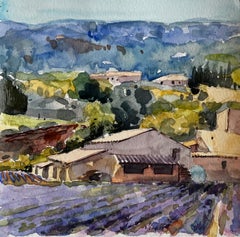
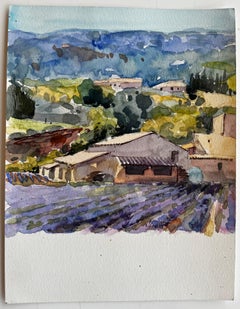
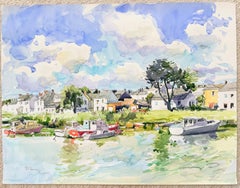
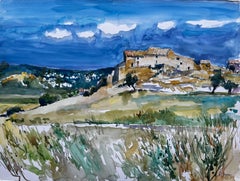
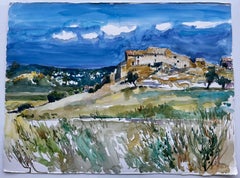
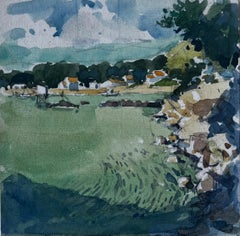
Cucuron Provence Village Rooftops Watercolor Gouache Pierre Neveu

Cucuron Provence Village Rooftops Watercolor Gouache Pierre Neveu

By Pierre Neveu

Located in Cirencester, Gloucestershire

Title: Cucuron Provence Village Rooftops Watercolor Gouache Pierre Neveu Artist: Pierre Neveu (French b.1929) Medium: Watercolour on thick paper, unframed Size (H x W): 21.75 x 29.25...

Category

Mid-20th Century Post-Impressionist Art

Materials

Watercolor, Gouache, Pencil

Provencal Coastal Garden Terrace Huge 20th Century French Impressionist Painting

Provencal Coastal Garden Terrace Huge 20th Century French Impressionist Painting

Located in Cirencester, Gloucestershire

Provence Coastal View from the Garden Terrace signed by Max Toutain (1935-2006) oil painting on canvas, unframed canvas : 35 x 51 inches Provenance: all the paintings we have by this...

Category

Mid-20th Century Post-Impressionist Art

Materials

Oil

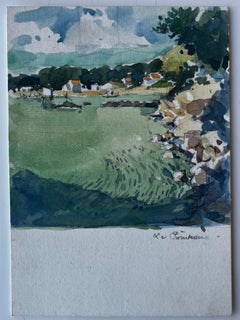
Lakeside Mountain Landscape French Modernist Watercolour by Pierre Neveu

Lakeside Mountain Landscape French Modernist Watercolour by Pierre Neveu

By Pierre Neveu

Located in Cirencester, Gloucestershire

Title: Lakeside Mountain Landscape French Modernist Watercolour by Pierre Neveu Artist: Pierre Neveu (French b.1929) Medium: Watercolour on artist paper, unframed Size (H x W): 6.25 ...

Category

Mid-20th Century Post-Impressionist Art

Materials

Watercolor

Original Oil Painting of a Vibrant Still Life with Lemons and Bottle

Original Oil Painting of a Vibrant Still Life with Lemons and Bottle

Located in Cirencester, Gloucestershire

Title: Original Oil Painting of a Vibrant Still Life with Lemons and Bottle Artist: Roland Pichard Signed: Bottom right Medium: Oil on oil paper, mounted on card Size: 14 (height...

Category

Mid-20th Century Post-Impressionist Art

Materials

Oil

Nature Morte - Post Impressionist Still Life Oil Painting by Georges D'Espagnat

Nature Morte - Post Impressionist Still Life Oil Painting by Georges D'Espagnat

By Georges d'Espagnat

Located in Marlow, Buckinghamshire

Signed oil on canvas still life circa 1902 by French post impressionist painter Georges D'Espagnat. The work depicts a table covered in a white cloth with red stripes. On top sit two...

Category

Early 1900s Post-Impressionist Art
Materials

Canvas, Oil

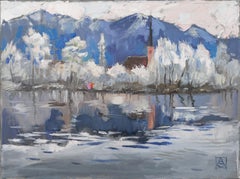
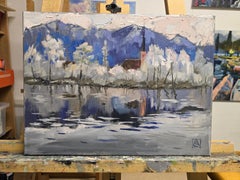
Israeli American school luminous mountain scene landscape, oil painting Signed

Israeli American school luminous mountain scene landscape, oil painting Signed

Located in Zofingen, AG

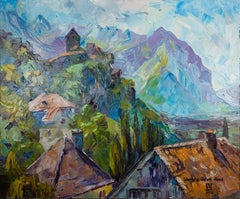
➡️ Mountain scene Landscape⬅️ ⏩It is signed J Rohr⏪ ⭐Medium:⭐ Oil on woodpanel ⭐Technique: ⭐Impasto painting with expressive brushwork. ⭐Size:⭐61x77.5cm / 24x 30.5inch with fram...

Category

Mid-20th Century Post-Impressionist Art

Materials

Gesso, Oil, Wood Panel, Stretcher Bars

Pierre Bonnard, Untitled, from Correspondances, 1944

Pierre Bonnard, Untitled, from Correspondances, 1944

By Pierre Bonnard

Located in Southampton, NY

This exquisite lithograph by Pierre Bonnard (1867–1947), titled Sans titre (Untitled), from the album Pierre Bonnard, Correspondances, originates from the 1944 edition published by E...

Category

1940s Post-Impressionist Art
Materials

Lithograph

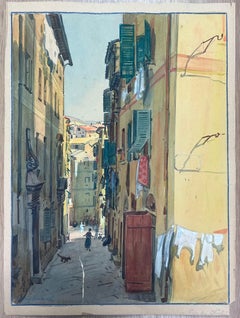
Castellar Village Street Scene Provence Watercolour French Post Impressionist

Castellar Village Street Scene Provence Watercolour French Post Impressionist

By Pierre Neveu

Located in Cirencester, Gloucestershire

Title: Castellar Village Street Scene Provence Watercolour French Post Impressionist Artist: Pierre Neveu (French b.1929) Medium: Watercolour on artists paper, unframed Size (H x W):...

Category

Mid-20th Century Post-Impressionist Art
Materials

Watercolor

Orange Sun
Orange Sun

Orange Sun

Located in Zofingen, AG

Small, sun-like fruits glow among the branches, creating a quiet sense of warmth and vitality. Set against a dense, textured orange field, the mandarin tree radiates light and inner ...

Category

2010s Post-Impressionist Art
Materials

Canvas, Oil

1940's Provence Painting French Lake Landscape  - Post Impressionist artist

1940's Provence Painting French Lake Landscape - Post Impressionist artist

By Louis Bellon

Located in Cirencester, Gloucestershire

Provencal Landscape by Louis Bellon (French 1908-1998) signed and dated 46' From a batch of similar work where most were dated 1942-1947 watercolour painting on paper, unframed meas...

Category

19th Century Post-Impressionist Art
Materials

Watercolor

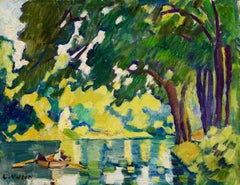
Bord De L'Oise
Bord De L'Oise

Bord De L'Oise

By Gustave Loiseau

Located in Belgravia, London, London

Oil on canvas Canvas size: 20 x 24 inches Framed size: 28 x 32 inches Signed lower right

Category

19th Century Post-Impressionist Art
Materials

Canvas, Oil

Mid 20th Century Post Impressionist Pastel Landscape of the Vosges Mountains

Mid 20th Century Post Impressionist Pastel Landscape of the Vosges Mountains

Located in Cirencester, Gloucestershire

Title: Mid 20th Century Post Impressionist Pastel Landscape of the Vosges Mountains by Anne Marie Migette Perard (French 1902-1977) Signed: Yes Medium: Pastel on unframed paper Size:...

Category

Mid-20th Century Post-Impressionist Art
Materials

Pastel

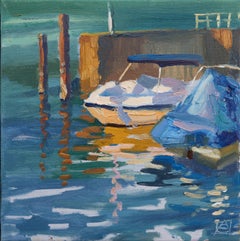
The Waters of Leith Scottish Impressionist Signed Oil Painting 20th Century

The Waters of Leith Scottish Impressionist Signed Oil Painting 20th Century

Located in Cirencester, Gloucestershire

'Waters of Leith' (Scotland) by William B Dealtry (British 1915-2007): signed oil on board, framed framed: 10 x 14 inches board : 8 x 11 inches Inscribed verso with title Provenance:...

Category

Mid-20th Century Post-Impressionist Art
Materials

Oil

Provence Village Flower Market Scene Watercolour French Post Impressionist

Provence Village Flower Market Scene Watercolour French Post Impressionist

By Pierre Neveu

Located in Cirencester, Gloucestershire

Title: Provence Village Flower Market Scene Watercolour French Post Impressionist Artist: Pierre Neveu (French b.1929) Medium: Watercolour on artists paper, unframed Size (H x W): 7 x 5 inches Condition: Good overall with light handling to the sheet edges and the natural deckle of the paper; colours remain fresh and surface is sound, consistent with age. Provenance: From the artist’s studio sale in France; all works by this artist in our collection originate from the artist’s estate. Description: A lively and colourful French market scene by Pierre Neveu, capturing the vibrancy of daily life in a Provençal village square. Executed in expressive watercolour, the composition centres around a tree-shaded market stall surrounded by vivid flower displays in pots and baskets. The artist’s confident brushwork and instinctive sense of colour bring the bustling charm of southern France to life—yellow, crimson, and violet blooms set against the warm ochre tones of sunlit village façades. Hints of figures, awnings, and architectural details evoke the gentle rhythm of a Mediterranean morning. Neveu’s fluid handling of the medium allows the paint to breathe and shimmer, suggesting movement, light, and atmosphere rather than rigid form. This scene is typical of his Post-Impressionist style—combining structure and spontaneity to celebrate the poetry of everyday French life. Collectors of French market paintings...

Category

Mid-20th Century Post-Impressionist Art
Materials

Watercolor

Oriental Landscapes With Palm Trees And Arab Houses. 1 Half Of The 20th Century.

Oriental Landscapes With Palm Trees And Arab Houses. 1 Half Of The 20th Century.

Located in Firenze, IT

Fauve landscape with palm trees and Arab houses. 1 half of the 20th century. Gouache paintings on cardboard. Paintings is signed with monogram. Dimensions with Passepartout 45.5cm x ...

Category

Early 20th Century Post-Impressionist Art
Materials

Paper, Watercolor, Gouache, Cardboard

Projet de Tissus - Fauvist Flowers Watercolor & Gouache by Raoul Dufy

Projet de Tissus - Fauvist Flowers Watercolor & Gouache by Raoul Dufy

By Raoul Dufy

Located in Marlow, Buckinghamshire

Botanical watercolour and gouache on paper circa 1920 by French fauvist painter Raoul Dufy. The work depicts flowers in red, blue and green. This work was executed by Dufy as a fabric design. Dimensions: Framed: 19.5"x19.5" Unframed: 12"x12" Provenance: Private collection of works by Raoul Dufy for Bianchini Ferier Bianchini Ferrier Collection - Christie's London - July 2001 SF Fall Show Raoul Dufy was one of a family of nine children, including five sisters and a younger brother, Jean Dufy, also destined to become a painter. Their father was an accountant in the employ of a major company in Le Havre. The Dufy family was musically gifted: his father was an organist, as was his brother Léon, and his youngest brother Gaston was an accomplished flautist who later worked as a music critic in Paris. Raoul Dufy's studies were interrupted at the age of 14, when he had to contribute to the family income. He took a job with an importer of Brazilian coffee, but still found time from 1892 to attend evening courses in drawing and composition at the local college of fine arts under Charles Marie Lhullier, former teacher of Othon Friesz and Georges Braque. He spent his free time in museums, admiring the paintings of Eugène Boudin in Le Havre and The Justice of Trajan in Rouen. A municipal scholarship enabled him to leave for Paris in 1900, where he lodged initially with Othon Friesz. He was accepted by the École des Beaux-Arts, where he studied under Léon Bonnat, whose innate conservatism prompted Dufy to remark later that it was 'good to be at the Beaux-Arts providing one knew one could leave'. And leave he did, four years later, embarking with friends and fellow students on the rounds of the major Paris galleries - Ambroise Vollard, Durand-Ruel, Eugène Blot and Berheim-Jeune. For Dufy and his contemporaries, Impressionism represented a rejection of sterile academism in favour of the open-air canvases of Manet, the light and bright colours of the Impressionists, and, beyond them, the daringly innovative work of Gauguin and Van Gogh, Seurat, Cézanne, Toulouse-Lautrec and others. Dufy was an out-and-out individualist, however, and was not tempted to imitate any of these artists. He produced, between 1935 and 1937, Fée Electricité (Spirit of Electricity), the emblem for the French utilities company Electricité de France (EDF). Dufy visited the USA for the first time in 1937, as a member of the Carnegie Prize jury. In 1940, the outbreak of war (and his increasingly rheumatic condition) persuaded him to settle in Nice. When he eventually returned to Paris 10 years later, his rheumatism had become so debilitating that he immediately left for Boston to follow a course of pioneering anti-cortisone treatment. He continued working, however, spending time first in Harvard and then in New York City before moving to the drier climate of Tucson, Arizona. The cortisone treatment was by and large unsuccessful, although he did recover the use of his fingers. He returned to Paris in 1951 and decided to settle in Forcalquier, where the climate was more clement. Within a short time, however, he was wheelchair-bound. He died in Forcalquier in March 1953 and was buried in Cimiez. Between 1895 and 1898, Raoul Dufy painted watercolours of landscapes near his native Le Havre and around Honfleur and Falaise. By the turn of the century, however, he was already painting certain subjects that were to become hallmarks of his work - flag-decked Parisian cityscapes, Normandy beaches teeming with visitors, regattas and the like, including one of his better-known early works, Landing Stage at Ste-Adresse. By 1905-1906 Friesz, Braque, Matisse, Derain, Vlaminck, Van Dongen and Rouault were described collectively as Fauves (the wild beasts). What they had in common was a desire to innovate, but they felt constrained nonetheless to meet formally to set out the guiding principles of what promised to be a new 'movement'. Dufy quickly established that those principles were acceptable; moreover, he was most impressed by one particular painting by Henri Matisse ( Luxury, Calm and Voluptuousness) which, to Dufy, embodied both novelty and a sense of artistic freedom. Dufy promptly aligned himself with the Fauves. Together with Albert Marquet in particular, he spent his time travelling the Normandy coast and painting views similar...

Category

1920s Post-Impressionist Art
Materials

Paper, Watercolor, Gouache

"View of Venice" Impressionist Oil Painting with Figures and Boats along Venice

"View of Venice" Impressionist Oil Painting with Figures and Boats along Venice

By Niek van der Plas

Located in New York, NY

This captivating scene of Venice from the 20th Century is a wonderful display of Van der Plas's true passion for outdoor genre paintings. The vibrant colors and impressionistic brush...

Category

21st Century and Contemporary Post-Impressionist Art
Materials

Board, Oil

A Mystic at Prayer - Post Impressionist Figurative Oil by Lucien Levy-Dhurmer

A Mystic at Prayer - Post Impressionist Figurative Oil by Lucien Levy-Dhurmer

By Lucien Levy-Dhurmer

Located in Marlow, Buckinghamshire

Signed post impressionist oil on canvas figure in landscape circa 1910 by French painter Lucien Levy-Dhurmer. The piece depicts a man in Arab dress seated on a high hillside platform praying amongst white clouds. We can see the faint online of a town below. Signature: Signed lower right Dimensions: Framed: 32"x40" Unframed: 24"x32" Provenance: Private French collection The authenticity of this work has been confirmed by Jean-David Jumeau-Lafond A certificate from Jean-David Jumeau-Lafond is available upon request Lucien Lévy-Dhurmer did not follow the conventional route for education in fine arts but was nevertheless a pupil of the painters Raphaël Collin, Vio and Wallet. He was an ornamental painter in an earthenware factory in Golfe-Juan from 1887 to 1895, which influenced his use of pastel. He travelled to Italy in 1895. Around 1902 he painted the portraits of Rodenbach, Pierre Loti and Marguerite Moreno. Although he had not been instructed by Puvis de Chavannes or Gustave Moreau, he seemed to have much in common with those visionary 'painters of the soul' who had been exhibiting at the Salon de la Rose-Croix for several years: Edmond Aman-Jean, Louis Welden Hawkins, Henri Martin, Charles Maurin and Alphonse Osbert. Following the example of some of these artists, Lévy-Dhurmer admired Italian Renaissance art, evidence of which can be seen in pastels such as Woman with a Medal, Medusa, Circes and Florence. His translation of the Symbolist themes in the scores of Beethoven ( Appassionata), Fauré or Debussy into different hues made him seem like a visionary, but his aesthetic seems to have changed to some extent after 1900, when his landscape painting became more prominent. In fact, only his presentation and style changed. He continued to suggest feelings, interpretations and emotions but without relying on any traditional allegories. He became involved in the Intimist movement, along with Ernest Laurent, Charles Cottet, Henri le Sidaner and René Ménard, whose pastels presaged the Classicism of the 1930s. He exhibited at the Salon des Artistes Français in Paris from 1882. From 1906 he was associated with the Salon de la Société Nationale des Beaux-Arts. He showed his works in individual exhibitions, notably in 1896 at the Galerie Georges Petit in Paris, which was a very successful exhibition and earned him admiration in artistic and literary circles alike. Several decades later the exhibition Around Lévy-Dhurmer ( Autour de Lévy-Dhurmer) at the Galeries du Grand Palais in Paris in 1973 revealed a tendency in art which had been largely unknown until then and which remained on the margins of the great innovative movements of the 20th century, but which was nonetheless of a quality which could not be ignored. Lévy-Dhurmer obtained a distinction from the Salon des Artistes Français in 1896 and a bronze medal at the 1900 Exposition Universelle in Paris. He became a Chevalier of the Légion d'Honneur in 1902. Museum and Gallery Holdings Bayonne (Mus. Basque): Portrait of Pierre Loti (1896, pastel) Brest (MBA): Circes Detroit (AI): Vase with Dragonflies (1890, earthenware with iridescent glaze) Mulhouse: Harvest New York (Metropolitan Mus. of Art): Flower Pot (c. 1893, earthenware with metallic glaze) Paris (Mus. d'Orsay): Portrait of Georges Rodenbach (c. 1895, pastel on paper); The Woman with a Medal (1896, pastel on paper on card); The Lost Explorer...

Category

1910s Post-Impressionist Art
Materials

Canvas, Oil

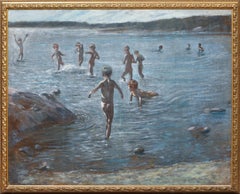
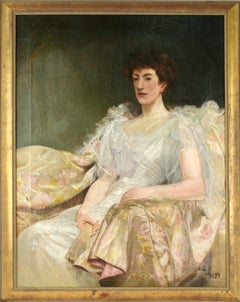
"View on Ormøya" Original landscape painting. Framed .Oil on hardboard

"View on Ormøya" Original landscape painting. Framed .Oil on hardboard

Located in Oslo, NO

In creating this oil painting, I immersed myself in capturing the essence of a tranquil waterfront scene. With every brush stroke, I aimed to convey the serene atmosphere and the gen...

Category

2010s Post-Impressionist Art
Materials

Oil, Board

Dick Beer Dancer Tying Her Shoes 1916 Swedish Modernist Oil Painting

Dick Beer Dancer Tying Her Shoes 1916 Swedish Modernist Oil Painting

Located in Stockholm, SE

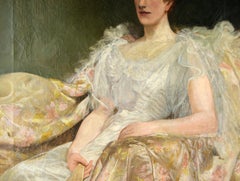
Dancer Tying Her Shoes, executed around 1916, stands as one of the most important works within Dick Beer’s oeuvre. Created during a pivotal moment in his life, shortly after the trau...

Category

1910s Post-Impressionist Art
Materials

Canvas, Oil

Chateauneuf de Grasse Provence Landscape Pastel Pierre Neveu

Chateauneuf de Grasse Provence Landscape Pastel Pierre Neveu

By Pierre Neveu

Located in Cirencester, Gloucestershire

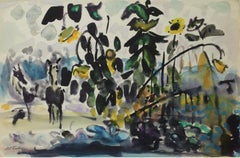
Title: Chateauneuf de Grasse Provence Landscape Pastel Pierre Neveu Artist: Pierre Neveu (French b.1929) Medium: Pastel and coloured pencil on paper, unframed Size (H x W): 19.75 x 2...

Category

Mid-20th Century Post-Impressionist Art
Materials

Pastel

Gauguin, The Long Night (Te Po), Gauguin (after)

Gauguin, The Long Night (Te Po), Gauguin (after)

By Paul Gauguin

Located in Southampton, NY

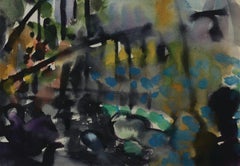
Woodcut on vélin Utopian paper. Unsigned and unnumbered, as issued. Good Condition. Notes: From the folio, Gauguin, A portfolio of 12 color woodblocks, Paul Gauguin, French, 1848-1903 from the collection of the Museum Of Fine Arts, Boston, 1946. Rendered by Albert Carman (1899-1949); published the Museum Of Fine Arts, Boston and The Studio Publications, Inc., New York and London; printed by Holme Press Inc., New York, in an edition of MMMD. Excerpted from the folio, Paul Gauguin and Emil Bernard at Pont-Aven, Brittany, in 1888, each made a bas-relief, wooden panel to decorate a piece of furniture for a friend. In order to keep a record of their designs, a few inked impressions were made on paper. The illustration at left is a reproduction of a print which is possibly one of the above mentioned. It is further possible that this experiment later gave Gauguin the idea of making woodcuts. Just as his work in painting expressed a revolt against the overemphasis on factual representation of the nineteenth century in favor of decorative pattern and color, so also his woodcuts leaned strongly to the same side of the balance. Ten of the cuts reproduced (all excepting Soyez Amoureuses and Changement de Residence), which constitute the whole of his best known series, were made at Pont-Aven beginning in the fall of 1894, after Gauguin's return from his first trip to Tahiti and after he broke his ankle. They were at first roughly cut with a common carpenter's gouge, and the flat surfaces sandpapered and engraved with a sharp in-strument, perhaps an engraver's burin. A few trial proofs were printed in black ink only. Then the hollows were deepened with a woodcutter's gouge and highlights were added. An edition of thirty to fifty impressions of each subject, with the addition of color blocks (one, two or three), was made by Louis Roy...

Category

1940s Post-Impressionist Art
Materials

Woodcut

Young Lady In The Landscape

Young Lady In The Landscape

Located in Lake Worth Beach, FL

Elegant Young Lady In The Landscape. Portrait depicting a beautiful young woman in the landscape dressed in a tulle dress and hat decorated with pink roses...

Category

1890s Post-Impressionist Art
Materials

Canvas, Oil

Fleurs et Papillons - Fauvist Flowers Watercolor & Gouache by Raoul Dufy

Fleurs et Papillons - Fauvist Flowers Watercolor & Gouache by Raoul Dufy

By Raoul Dufy

Located in Marlow, Buckinghamshire

Botanical watercolour and gouache on paper circa 1920 by French fauvist painter Raoul Dufy. The work depicts flowers in red and butterflies in blues, yellows, black and white. This work was executed by Dufy as a fabric design. Dimensions: Framed: 17"x27" Unframed: 10"x20" Provenance: Private collection of works by Raoul Dufy for Bianchini Ferier Bianchini Ferrier Collection - Christie's London - July 2001 SF Fall Show Raoul Dufy was one of a family of nine children, including five sisters and a younger brother, Jean Dufy, also destined to become a painter. Their father was an accountant in the employ of a major company in Le Havre. The Dufy family was musically gifted: his father was an organist, as was his brother Léon, and his youngest brother Gaston was an accomplished flautist who later worked as a music critic in Paris. Raoul Dufy's studies were interrupted at the age of 14, when he had to contribute to the family income. He took a job with an importer of Brazilian coffee, but still found time from 1892 to attend evening courses in drawing and composition at the local college of fine arts under Charles Marie Lhullier, former teacher of Othon Friesz and Georges Braque. He spent his free time in museums, admiring the paintings of Eugène Boudin in Le Havre and The Justice of Trajan in Rouen. A municipal scholarship enabled him to leave for Paris in 1900, where he lodged initially with Othon Friesz. He was accepted by the École des Beaux-Arts, where he studied under Léon Bonnat, whose innate conservatism prompted Dufy to remark later that it was 'good to be at the Beaux-Arts providing one knew one could leave'. And leave he did, four years later, embarking with friends and fellow students on the rounds of the major Paris galleries - Ambroise Vollard, Durand-Ruel, Eugène Blot and Berheim-Jeune. For Dufy and his contemporaries, Impressionism represented a rejection of sterile academism in favour of the open-air canvases of Manet, the light and bright colours of the Impressionists, and, beyond them, the daringly innovative work of Gauguin and Van Gogh, Seurat, Cézanne, Toulouse-Lautrec and others. Dufy was an out-and-out individualist, however, and was not tempted to imitate any of these artists. He produced, between 1935 and 1937, Fée Electricité (Spirit of Electricity), the emblem for the French utilities company Electricité de France (EDF). Dufy visited the USA for the first time in 1937, as a member of the Carnegie Prize jury. In 1940, the outbreak of war (and his increasingly rheumatic condition) persuaded him to settle in Nice. When he eventually returned to Paris 10 years later, his rheumatism had become so debilitating that he immediately left for Boston to follow a course of pioneering anti-cortisone treatment. He continued working, however, spending time first in Harvard and then in New York City before moving to the drier climate of Tucson, Arizona. The cortisone treatment was by and large unsuccessful, although he did recover the use of his fingers. He returned to Paris in 1951 and decided to settle in Forcalquier, where the climate was more clement. Within a short time, however, he was wheelchair-bound. He died in Forcalquier in March 1953 and was buried in Cimiez. Between 1895 and 1898, Raoul Dufy painted watercolours of landscapes near his native Le Havre and around Honfleur and Falaise. By the turn of the century, however, he was already painting certain subjects that were to become hallmarks of his work - flag-decked Parisian cityscapes, Normandy beaches teeming with visitors, regattas and the like, including one of his better-known early works, Landing Stage at Ste-Adresse. By 1905-1906 Friesz, Braque, Matisse, Derain, Vlaminck, Van Dongen and Rouault were described collectively as Fauves (the wild beasts). What they had in common was a desire to innovate, but they felt constrained nonetheless to meet formally to set out the guiding principles of what promised to be a new 'movement'. Dufy quickly established that those principles were acceptable; moreover, he was most impressed by one particular painting by Henri Matisse ( Luxury, Calm and Voluptuousness) which, to Dufy, embodied both novelty and a sense of artistic freedom. Dufy promptly aligned himself with the Fauves. Together with Albert Marquet in particular, he spent his time travelling the Normandy coast and painting views similar...

Category

1920s Post-Impressionist Art
Materials

Paper, Watercolor, Gouache

Coastal Estuary with Distant Boats and Tidal Posts Watercolour

Coastal Estuary with Distant Boats and Tidal Posts Watercolour

By Pierre Neveu

Located in Cirencester, Gloucestershire

Title: Coastal Estuary with Distant Boats and Tidal Posts Watercolour Artist: Pierre Neveu (French b.1929) Medium: Watercolour and Gouache on card, unframed Size (H x W): 6.75 x 11.7...

Category

Mid-20th Century Post-Impressionist Art
Materials

Watercolor, Gouache

Mediterranean Lighthouse Oil on Canvas, Signed, Circa 2000, 81x60 cm

Mediterranean Lighthouse Oil on Canvas, Signed, Circa 2000, 81x60 cm

Located in Sitges, Barcelona

Title: Mediterranean Lighthouse Artist: Kiku Poch (Barcelona, 1963) Medium: Oil on canvas Dimensions: 81 × 60 cm 31.9 × 23.6 in Format: 25 Landscape (P) Support: Stretched canvas Pe...

Category

Early 2000s Post-Impressionist Art
Materials

Canvas, Oil

Pommier en fleur - Post Impressionist Figures in Landscape Oil by Eugene Chigot

Pommier en fleur - Post Impressionist Figures in Landscape Oil by Eugene Chigot

By Eugene Henri Alexandre Chigot

Located in Marlow, Buckinghamshire

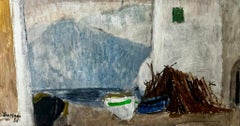
Signed post impressionist figures in landscape oil on panel circa 1910 by French painter Eugene Henri Alexandre Chigot. The work depicts a mother and child outside a thatched cottage beside a pond. In the centre of the painting is an apple tree in blossom - beautifully painted in pinks, blues and greens. Signature: Signed lower right Dimensions: Framed: 19"x22.5" Unframed: 12.5"x16" Provenance: Private French collection A pupil of his father Alphonse Chigot, Eugène Chigot...

Category

1910s Post-Impressionist Art
Materials

Oil, Panel

Mid Century French Impressionist Oil Painting Still Life Garden Wild Flowers

Mid Century French Impressionist Oil Painting Still Life Garden Wild Flowers

Located in Cirencester, Gloucestershire

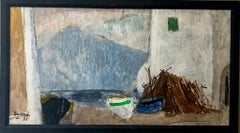
Artist/ School: Suzanne Dinkés (French, 1895 - 1984) Medium: oil on board, unframed Size : 9.5 x 7.5 inches Provenance: private collection, France Condition: The painting is in overa...

Category

Mid-20th Century Post-Impressionist Art
Materials

Oil

A Schooner off of the Coast

A Schooner off of the Coast

By Gordon Grant

Located in Wiscasett, ME

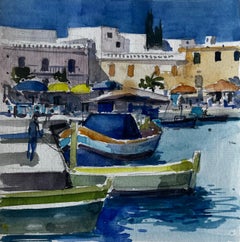
An oil on canvas by American artist Gordon Hope Grant featuring a schooner off of the coast. This painting is signed and dated i1945 n the lower left and measures 33.5" x 33.5" inclu...

Category

1940s Post-Impressionist Art
Materials

Oil

Post-impressionist art for sale on 1stDibs.
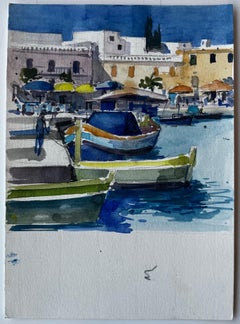
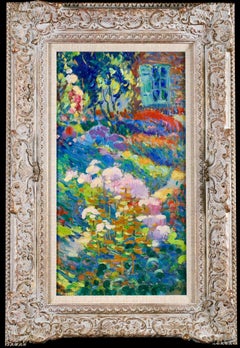
Find a wide variety of authentic Post-Impressionist art available for sale on 1stDibs. Works in this style were very popular during the 21st Century and Contemporary, but contemporary artists have continued to produce works inspired by this movement. If you’re looking to add art created in this style to introduce contrast in an otherwise neutral space in your home, the works available on 1stDibs include elements of blue, orange, purple, red and other colors. Many Pop art paintings were created by popular artists on 1stDibs, including Victor Di Gesu, Mitchell Funk, Maria Bertrán, and Rafael Duran Benet. Frequently made by artists working with Paint, and Oil Paint and other materials, all of these pieces for sale are unique and have attracted attention over the years. Not every interior allows for large Post-Impressionist art, so small editions measuring 0.1 inches across are also available. Prices for art made by famous or emerging artists can differ depending on medium, time period and other attributes. On 1stDibs, the price for these items starts at $1 and tops out at $2,835,000, while the average work sells for $2,250.