Surrealist Art

SURREALIST STYLE

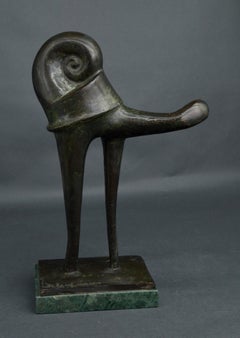
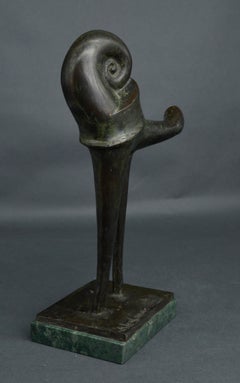
In the wake of World War I’s ravaging of Europe, artists delved into the unconscious mind to confront and grapple with this reality. Poet and critic André Breton, a leader of the Surrealist movement who authored the 1924 Surrealist Manifesto, called this approach “a violent reaction against the impoverishment and sterility of thought processes that resulted from centuries of rationalism.” Surrealist art emerged in the 1920s with dreamlike and uncanny imagery guided by a variety of techniques such as automatic drawing, which can be likened to a stream of consciousness, to channel psychological experiences.
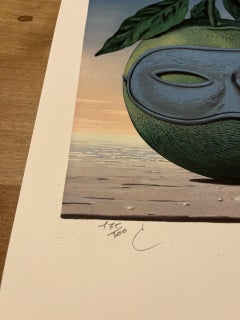
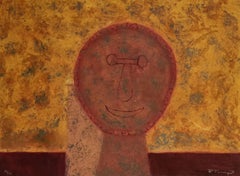
Although Surrealism was a groundbreaking approach for European art, its practitioners were inspired by Indigenous art and ancient mysticism for reenvisioning how sculptures, paintings, prints, performance art and more could respond to the unsettled world around them.

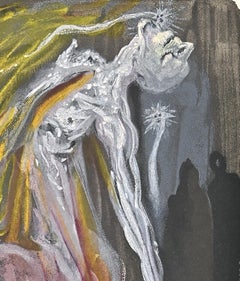
Surrealist artists were also informed by the Dada movement, which originated in 1916 Zurich and embraced absurdity over the logic that had propelled modernity into violence. Some of the Surrealists had witnessed this firsthand, such as Max Ernst, who served in the trenches during World War I, and Salvador Dalí, whose otherworldly paintings and other work responded to the dawning civil war in Spain.

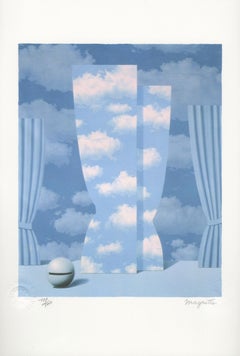
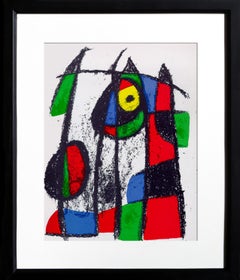
Other key artists associated with the revolutionary art and literary movement included Man Ray, Joan Miró, René Magritte, Yves Tanguy, Frida Kahlo and Meret Oppenheim, all of whom had a distinct perspective on reimagining reality and freeing the unconscious mind from the conventions and restrictions of rational thought. Pablo Picasso showed some of his works in “La Peinture Surréaliste” — the first collective exhibition of Surrealist painting — which opened at Paris’s Galerie Pierre in November of 1925. (Although Magritte is best known as one of the visual Surrealist movement’s most talented practitioners, his famous 1943 painting, The Fifth Season, can be interpreted as a formal break from Surrealism.)

The outbreak of World War II led many in the movement to flee Europe for the Americas, further spreading Surrealism abroad. Generations of modern and contemporary artists were subsequently influenced by the richly symbolic and unearthly imagery of Surrealism, from Joseph Cornell to Arshile Gorky.

Find a collection of original Surrealist paintings, sculptures, prints and multiples and more art on 1stDibs.

to
1,633
3,671
1,669
2,108
978
1,034
Overall Width
to
Overall Height
to
17
25
6,121
3,299
4
19
125
109
154
496
1,542
1,965
524
301
15
116,122
63,597
56,514
28,049
14,638
6,666
5,825
4,130
3,129
2,520
2,371
2,128
610
5,763
2,593
918
3,925
2,485
1,461
1,206
1,202
1,042
1,007
530
329
325
313
311
268
256
245
243
170
135
128
110
2,722
2,511
1,692
1,581
1,579
818
394
332
261
197
1,635
2,593
5,579
3,268
Style: Surrealist
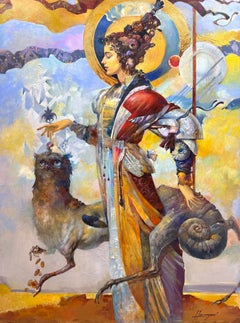
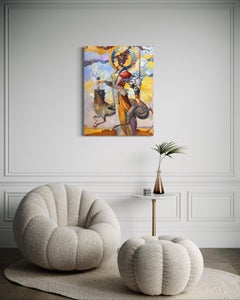
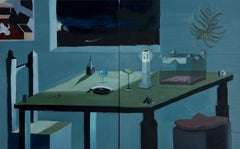
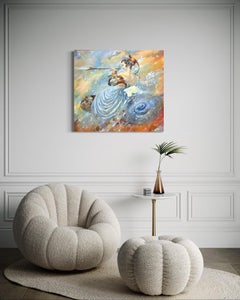
"Siren in Green Gold" (2024) Original Oil Painting on Panel

"Siren in Green Gold" (2024) Original Oil Painting on Panel

Located in Denver, CO

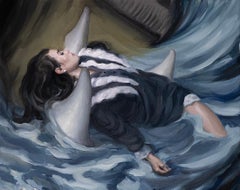
Nadezda's beautiful handmade oil on panel painting "Night Swim" (2024) is a portrait of a woman dressed in an intricate green-gold outfit, donning a headdress and resting in a conten...

Category

2010s Surrealist Art

Materials

Oil, Panel

Historical Document - Hunter Thompson

Historical Document - Hunter Thompson

By Ralph Steadman

Located in Hollywood, FL

Artist: Ralph Steadman Title: Historical Document - Hunter Thompson Medium: One color silkscreen on White Rising Stonehenge Deckle Edge Paper Size: 13 x 22 Inches Edition: of 300 Ye...

Category

2010s Surrealist Art

Materials

Silk, Screen

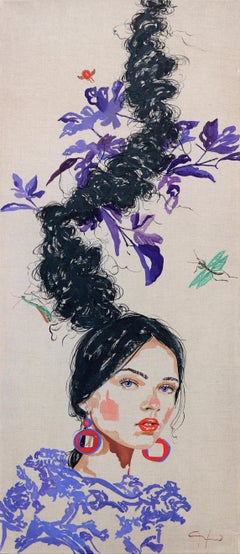
The Top Songbirds - Original Surrealist Figurative Portrait Painting on Canvas

The Top Songbirds - Original Surrealist Figurative Portrait Painting on Canvas

By Carlos Gamez de Francisco

Located in Los Angeles, CA

The figurative surrealistic paintings of Carlos Gamez de Francisco are heavily influenced by his Cuban upbringing in a Russian governed academia setting. This presence exposed Franci...

Category

21st Century and Contemporary Surrealist Art

Materials

Canvas, Acrylic

Femme Ecuyere
Femme Ecuyere

Femme Ecuyere

By Marc Chagall

Located in Columbia, MO

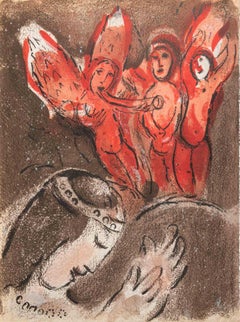
Marc Chagall (Russian-French-Jewish, 1887 - 1985) was a painter, illustrator, and designer whose work combined modernist experimentation with deep roots in Jewish folk culture and me...

Category

Mid-20th Century Surrealist Art

Materials

Lithograph

Gaze 1 - 21st Century, Contemporary, Figurative Portrait, Modern, Men

Gaze 1 - 21st Century, Contemporary, Figurative Portrait, Modern, Men

Located in Ibadan, Oyo

Shipping Procedure Ships in a well-protected tube from Nigeria This work is unique, not a print or other type of copy. Accompanied by a Certificate of Authenticity About Artist Oluw...

Category

21st Century and Contemporary Surrealist Art

Materials

Canvas, Acrylic

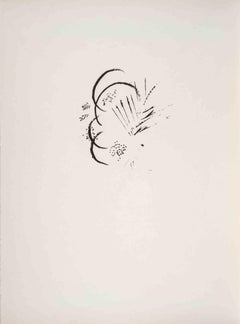
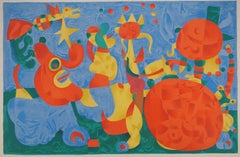
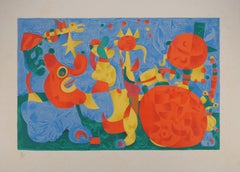
Untitled - Lithograph by J. Hérold - 1974

Untitled - Lithograph by J. Hérold - 1974

Located in Roma, IT

Original artwork realized by Jacques Hérold in 1974. Colored lithograph. Not signed, as issued. Printed by Mourlot , France. Excellent condition.  This lithograph was realized  b...

Category

1970s Surrealist Art

Materials

Lithograph

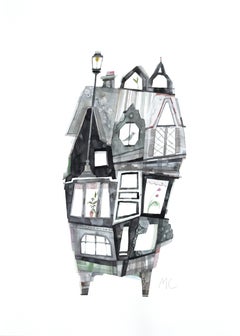
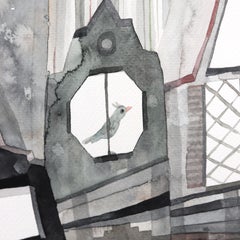
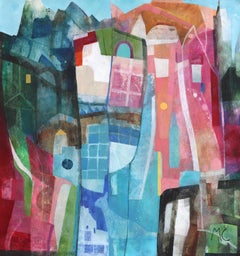
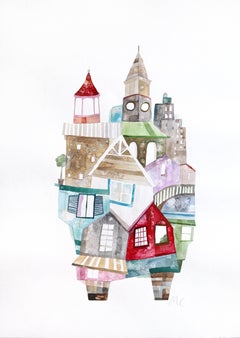
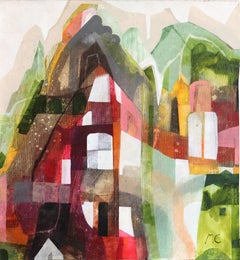
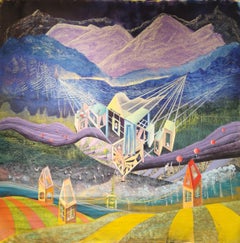
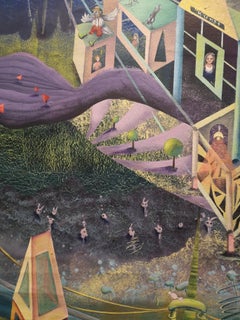
Sunrise - Original Cool Tone Abstract Urban Still Life Collage Artwork on Paper

Sunrise - Original Cool Tone Abstract Urban Still Life Collage Artwork on Paper

By Maria C. Bernhardsson

Located in Los Angeles, CA

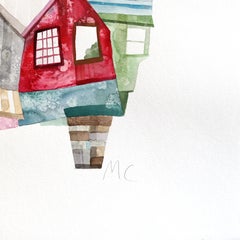
Maria C. Bernhardsson is a colorful artist who lives and paints in Sweden. Most of her works are influenced by the architecture and geometry of houses. Bernhardsson travels the world...

Category

21st Century and Contemporary Surrealist Art

Materials

Paper, Mixed Media

Man Ray, Rayograph, from Electa Editrice, 1980 (after)

Man Ray, Rayograph, from Electa Editrice, 1980 (after)

By Man Ray

Located in Southampton, NY

This exquisite heliogravure after Man Ray (1890–1976), titled Rayograph, originates from the 1980 folio Man Ray, Electa Editrice Portfolios. Published by Gruppo Editoriale Electra, Milano, and printed by Gruppo Editoriale Electra, Milano, 1980. This image exemplifies Man Ray’s pioneering “rayograph” technique—a cameraless photographic process in which objects were placed directly onto photosensitive paper and exposed to light, creating luminous abstract compositions that fused chance, intuition, and surrealist invention. Through this groundbreaking process, Man Ray transformed photography into pure visual poetry, redefining its potential as a form of modern art. Executed as a heliogravure on velin paper, this work measures 15.75 x 11.75 inches. Unsigned and unnumbered as issued. The edition exemplifies the refined craftsmanship of Gruppo Editoriale Electra, Milano. Artwork Details: Artist: After Man Ray (1890–1976) Title: Rayograph Medium: Heliogravure on velin paper Dimensions: 15.75 x 11.75 inches (40.01 x 29.84 cm) Inscription: Unsigned and unnumbered as issued Date: 1980 Publisher: Gruppo Editoriale Electra, Milano Printer: Gruppo Editoriale Electra, Milano Condition: Well preserved, consistent with age and medium Provenance: From the folio Man Ray, Electa Editrice Portfolios, published and printed by Gruppo Editoriale Electra, Milano, 1980 Notes: Excerpted from the folio (translated from Italian), Limited edition of M examples, drawn in heliogravure on special paper, designed specifically for the Portfolios Electa. Gruppo Editoriale Electra/Milan. Printed in Italy. About the Publication: The Man Ray, Electa Editrice Portfolio (1980) was published by Gruppo Editoriale Electra in Milan as part of the distinguished Electa Portfolios series, which celebrated the masters of 20th-century photography through the artisanal process of heliogravure printing. This edition was dedicated to Man Ray’s seminal body of photographic work from 1920 to 1934—an era in which he redefined modern image-making through technical invention, surrealist experimentation, and intellectual daring. Produced in collaboration with leading photographic historians and Italian master printers, the portfolio was printed on specially manufactured velin paper designed exclusively for the Electa Portfolios, ensuring tonal precision and textural depth true to the artist’s originals. The publication represents one of the most refined posthumous tributes to Man Ray’s legacy, combining Italian craftsmanship with avant-garde vision to preserve the luminous complexity of his photographs. Created with the same devotion to innovation and elegance that characterized Man Ray’s own practice, this edition remains an important intersection of fine art publishing and modernist history. About the Artist: Man Ray (1890–1976) was an American-born painter, sculptor, photographer, filmmaker, and conceptual visionary whose radical imagination and technical innovation transformed modern art and established him as one of the leading figures of the 20th century. Born Emmanuel Radnitzky in Philadelphia, he became a central force in both the Dada and Surrealist movements, defying artistic boundaries and redefining the relationship between art, technology, and the unconscious. After early involvement in New York’s avant-garde with Francis Picabia and Marcel Duchamp, Man Ray moved to Paris in 1921, where he joined a revolutionary circle of artists including Pablo Picasso, Alexander Calder, Alberto Giacometti, Salvador Dali, Joan Miro, Wassily Kandinsky, and Marcel Duchamp. There, he pioneered the “rayograph,” or photogram—a cameraless photographic technique that used light and shadow to create ethereal abstract compositions—and produced some of the most iconic images in art history, including Le Violon d’Ingres (1924) and Noire et Blanche (1926). His photography, distinguished by its fusion of elegance, surrealism, and psychological depth, captured the essence of modernist Paris and immortalized creative icons such as Kiki de Montparnasse, Gertrude Stein, and James Joyce. At the same time, Man Ray’s experimental films, including Le Retour a la Raison (1923) and L’Etoile de mer (1928), and his sculptural works like The Gift (1921) and Object to Be Destroyed (1923), expanded the possibilities of art itself, transforming ordinary objects into symbols of mystery and desire. His conceptual approach—viewing art as an idea rather than an object—anticipated later movements such as Pop Art, Minimalism, and Conceptual Art, profoundly influencing artists like Andy Warhol, Robert Rauschenberg, Jasper Johns, and Joseph Beuys, as well as photographers Helmut Newton, Guy Bourdin, Cindy Sherman, and Richard Avedon. Even in exile during World War II, while working in Los Angeles, he continued to innovate, blending Surrealist fantasy with the luminosity of the California landscape before returning to Paris, where he spent his final decades refining his poetic, intellectual, and sensuous vision. Exhibited in major institutions such as the Museum of Modern Art, the Tate Modern, and the Centre Pompidou, Man Ray’s work remains foundational to modern art history—bridging painting, photography, film, and sculpture in a body of work that continues to shape the language of visual culture. Standing alongside Pablo Picasso, Alexander Calder, Alberto Giacometti, Salvador Dali, Joan Miro, Wassily Kandinsky, and Marcel Duchamp, Man Ray endures as one of the most original and influential artists of the modern era. His highest auction record was achieved by Noire et Blanche (1926), which sold for 3.13 million USD at Christie’s, Paris, on November 9, 2017, confirming his status as a timeless innovator whose genius continues to inspire artists, collectors, and dreamers worldwide. Man Ray Rayograph...

Category

1980s Surrealist Art

Materials

Lithograph

Femme à l'escargot
Femme à l'escargot

Femme à l'escargot

By Salvador Dalí­

Located in OPOLE, PL

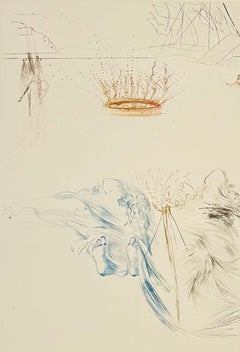
Salvador Dali (1904-1989) - Femme à l'escargot Etching from 1967. The edition of 122/145 on Japan paper. Enhanced with watercolor.. Dimensions of work: 38 x 28.5 cm. Hand signed....

Category

1960s Surrealist Art

Materials

Etching

The Petrified Origin: Surrealist Oil on Canvas, Signed, 1967

The Petrified Origin: Surrealist Oil on Canvas, Signed, 1967

By Antoni Pitxot

Located in Sitges, Barcelona

Title: The Petrified Origin Artist: Antoni Pitxot i Soler (1934–2015) Technique: Oil on canvas Dimensions: 25.6 x 31.9 in (65 x 81 cm) Date: 1967 Condition: Unframed Signature: Signed lower right: Pitxot Provenance: Private collection Notes: Early work from Pitxot’s mature period, featuring the symbolic and meticulously rendered stone forms that would define his artistic identity. 📝 Work Description In The Petrified Origin, Antoni Pitxot presents a haunting and timeless vision of a single, eroded rock suspended in a dreamlike, undefined space. The stone, modeled with sculptural precision, appears to float over a subtly reflective surface, devoid of background or narrative context. Its porous texture, cracks, and shadows evoke a fossilized memory — a silent relic of geological time. Painted in 1967, this piece exemplifies Pitxot's unique visual language, developed through his practice of collecting stones along the Costa Brava and transforming them into anthropomorphic and symbolic compositions. The result is both surreal and solemn, an ode to nature’s memory and the enduring presence of the inanimate. 👤 About the Artist Antoni Pitxot i Soler (born in Figueres, 1934 – died in Barcelona, 2015) was a Catalan painter deeply rooted in the surrealist tradition. Coming from an artistic family —his uncle was Ramon Pichot, a friend of Picasso and Dalí— Pitxot trained as a draughtsman and painter from a young age. In the 1960s, he settled in Cadaqués, where he developed his distinct artistic universe. His paintings revolve around stone as a symbol of permanence, transformation, and memory. Pitxot created sculptural assemblages from real coastal stones and later immortalized them in oil on canvas. His works often hint at human figures, ancient myths, and allegories of time. 🎭 Connection with Salvador Dalí Pitxot was not only a close friend of Salvador Dalí but also one of his closest collaborators. Dalí admired his work and invited him to co-design the Dalí Theatre-Museum in Figueres. After Dalí’s death...

Category

1960s Surrealist Art

Materials

Canvas, Oil

(after) Marino Marini - "Composition" pochoir

(after) Marino Marini - "Composition" pochoir

By Marino Marini

Located in Henderson, NV

Medium: pochoir (after the lithograph). Printed by the atelier of Daniel Jacomet, and published in Paris in 1955 by Heinz Berggruen. The image measures 5 x 3 1/2 inches (130 x 90 mm)...

Category

1950s Surrealist Art

Materials

Lithograph, Stencil

LE CHEVALET AUX FLEURS (MOURLOT 838)

LE CHEVALET AUX FLEURS (MOURLOT 838)

By Marc Chagall

Located in Aventura, FL

Hand signed and numbered by the artist. Lithograph in colors on wove paper. Mourlot 838. Sheet size 30.25 x 20 inches. Image size 22.5 x 14.75 inches. Frame size approx 36.5 x 26.5 inches. Edition 34/50. Artwork is in excellent condition. All reasonable offers will be considered. About the Artist: Marc Chagall (French/Russian, 1887–1985) was an artist whose work anticipated the dream-like imagery of Surrealism. Over the course of his career, Chagall developed the poetic, amorphous, and deeply personal visual language evident in paintings like I and the Village...

Category

1970s Surrealist Art

Materials

Paper, Lithograph

Surrealist Flying Fantasy Figure, Cleveland Woman Artist

Surrealist Flying Fantasy Figure, Cleveland Woman Artist

By Mary Spain

Located in Beachwood, OH

Mary Spain (American, 1934–1983) Flying Figure, 1970s Oil on canvas Signed lower right 17.5. x 21.5. inches 22 x 26 inches, framed Set in a realm of fantasy, Mary Spain’s work exhib...

Category

1970s Surrealist Art

Materials

Oil

Joan Miro, Bird Before the Sun, from Derriere le Miroir, 1961

Joan Miro, Bird Before the Sun, from Derriere le Miroir, 1961

By Joan Miró

Located in Southampton, NY

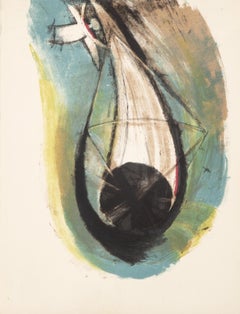
This exquisite lithograph by Joan Miro (1893–1983), titled Oiseau devant le solei (Bird Before the Sun), originates from the April 1961 folio Derriere le Miroir, No. 125-126, published by Maeght Editeur, Paris, under the direction of Aime Maeght, and printed by Imprimerie Arte, Paris, 1961. The composition exemplifies Miro’s poetic use of symbolic imagery, where the bird and sun function as elemental forces within his visual language. Through gestural line, saturated color, and spatial freedom, the work reflects Miro’s fusion of cosmic imagery, instinctive mark making, and lyrical abstraction. Executed on velin paper, this lithograph measures 33 x 15 inches (83.82 x 38.1 cm), with bifold, as issued. Unsigned and unnumbered as issued. The edition reflects the refined technical standards and craftsmanship of Imprimerie Arte, Paris. Artwork Details: Artist: Joan Miro (1893–1983) Title: Oiseau devant le solei (Bird Before the Sun), from Derriere le Miroir, No. 125-126, April 1961 Medium: Lithograph on velin paper Dimensions: 33 x 15 inches (83.82 x 38.1 cm), with bifold, as issued Inscription: Unsigned and unnumbered as issued Date: 1961 Publisher: Maeght Editeur, Paris Printer: Imprimerie Arte, Paris Catalogue raisonne reference: Miro, Joan, et al. Joan Miro Lithographe. Maeght, 1972–1992, illustration 1722 Condition: Well preserved, consistent with age and medium Provenance: From the April 1961 folio Derriere le Miroir, No. 125-126, published by Maeght Editeur, Paris About the Publication: Derriere le Miroir (translated as "Behind the Mirror") was an iconic French art periodical published from 1946 to 1982 by Maeght Editeur, one of the most influential art publishers of the twentieth century. Founded by Aime Maeght in Paris, the publication was conceived as a visual and literary collaboration between leading modern artists, poets, and critics. Each issue functioned as both an exhibition catalogue and an autonomous work of art, featuring original lithographs printed directly from the artists stones or plates alongside essays, poems, and critical texts. Over more than three decades, Derriere le Miroir produced over 250 issues and presented an extraordinary range of artists including Henri Matisse, Marc Chagall, Georges Braque, Alexander Calder, Fernand Leger, Pierre Bonnard, Alberto Giacometti, Eduardo Chillida, Ellsworth Kelly, Francis Bacon, Antoni Tapies, Pierre Alechinsky, Pol Bury, Bram van Velde, and many others. Printed by master ateliers such as Mourlot and Arte, the series established new standards of excellence in modern lithography and graphic design. Closely linked to exhibitions at Galerie Maeght, each issue served as a lasting document of postwar modernism, uniting image, text, and philosophy into a uniquely influential publication that remains among the most important and collectible achievements in twentieth century art publishing. About the Artist: Joan Miro (1893–1983) was a Catalan painter, sculptor, printmaker, and ceramicist whose visionary imagination and lyrical abstraction made him one of the most influential and beloved artists of the twentieth century. Born in Barcelona, Miro drew inspiration from Catalan folk art, Romanesque frescoes, and the luminous landscapes of Mont-roig del Camp, developing a deep connection to nature that infused his work with vitality and symbolism. After formal training at the Escola d'Art in Barcelona, he absorbed the lessons of Post-Impressionism and Cubism before moving to Paris in the early 1920s, where he became a leading figure in the Surrealist movement. There, Miro forged a personal visual language of biomorphic shapes, floating symbols, and radiant color harmonies that reflected both spontaneity and spiritual depth. In creative dialogue with peers such as Alexander Calder, Alberto Giacometti, Salvador Dali, Wassily Kandinsky, Marcel Duchamp, and Man Ray, he helped revolutionize modern art by dissolving the boundaries between abstraction and dream imagery. Miro's inventive approach extended far beyond painting, embracing sculpture, ceramics, and monumental public commissions that redefined how art could interact with space and emotion. His expressive freedom and gestural abstraction profoundly influenced later artists including Jackson Pollock, Mark Rothko, Alexander Calder, Jean Dubuffet, Antoni Tapies, and Joan Mitchell, inspiring generations who sought to merge instinct, color, and imagination. Today, Miro's work remains a cornerstone of modernism, prized by collectors and celebrated in major museums worldwide. His highest auction record was achieved by Peinture (Etoile Bleue) (1927), which sold for approximately 37 million USD at Sothebys, London, on June 19, 2012. Joan Miro Oiseau...

Category

1960s Surrealist Art

Materials

Lithograph

Les Archéologues IV

Les Archéologues IV

By Giorgio De Chirico

Located in Roma, IT

From the Series “Métamorphoses”, one of the most important graphic works of the founder of the “Metafisica” Movement. Original colour etching numbered and signed by the artist, reali...

Category

1920s Surrealist Art

Materials

Lithograph

The Pearl Necklace Story II - Surrealist Figurative Feminine Framed Portrait

The Pearl Necklace Story II - Surrealist Figurative Feminine Framed Portrait

By Carlos Gamez de Francisco

Located in Los Angeles, CA

The figurative surrealistic paintings of Carlos Gamez de Francisco are heavily influenced by his Cuban upbringing in a Russian-governed academic setting. This presence exposed Franci...

Category

21st Century and Contemporary Surrealist Art

Materials

Canvas, Acrylic

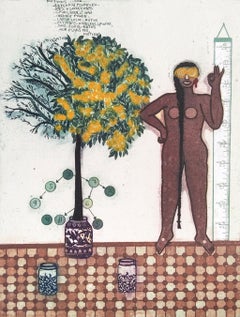
Surrealist Large Painting Royal College of Art LGBTQ+ Female Tree of Life Blue

Surrealist Large Painting Royal College of Art LGBTQ+ Female Tree of Life Blue

By Isabel Rock

Located in Norfolk, GB

Isabel Rock is a creator of contemporary fairy tales. A graduate of the Royal College of Art in London, her work is an explosion of strange occurrences while a surreal narrative takes the audience on a journey into the imagination. In October 2023 Isabel won the Evelyn Williams...

Category

2010s Surrealist Art

Materials

Paint, Mixed Media, Acrylic, Archival Paper, Pen

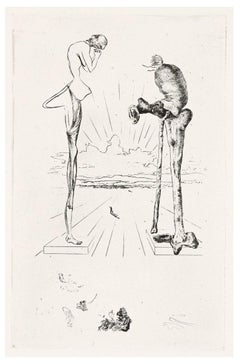
Faust Vignettes Faust Lisant

Faust Vignettes Faust Lisant

By Salvador Dalí­

Located in Hollywood, FL

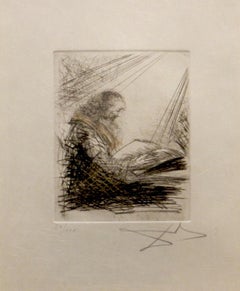
ARTIST: Salvador Dali TITLE: Faust Vignettes Faust Lisant MEDIUM: Etching SIGNED: Hand Signed PUBLISHER: Editions Argillet, Paris EDITION NUMBER: 24/100 MEASUREMENTS: 15" x 1...

Category

1960s Surrealist Art

Materials

Etching

"Les affinites ambigues" original lithograph

"Les affinites ambigues" original lithograph

By Wifredo Lam

Located in Henderson, NV

Medium: original lithograph. Printed in 1963 for the art revue XXe Siecle and published in Paris by San Lazzaro. Size: 12 1/4 x 9 1/4 inches (312 x 235 mm). Not signed.

Category

1960s Surrealist Art

Materials

Lithograph

TIE Fighter Beatles Large Oversize Pop Art Print Signed Limited Edition

TIE Fighter Beatles Large Oversize Pop Art Print Signed Limited Edition

By BATIK

Located in London, GB

TIE Fighter Beatles by B A T I K Pop art work featuring the Fab Four Paul McCartney , George Harrison, Ringo Starr and John Lennon running away from Star Wars TIE fighters chasing...

Category

2010s Surrealist Art

Materials

Black and White, Archival Pigment

Moses and Monotheism The Tear of Blood

Moses and Monotheism The Tear of Blood

By Salvador Dalí­

Located in Hollywood, FL

ARTIST: Salvador Dali TITLE: Moses & Monotheism The Tear of Blood MEDIUM: Etching on soft glove sheepskin SIGNED: Hand Signed PUBLISHER: Art et Valeur, Paris EDITION NUMBER: E...

Category

1970s Surrealist Art

Materials

Etching

Alexander Calder, Composition with Spirals, from Derriere le miroir, 1968

Alexander Calder, Composition with Spirals, from Derriere le miroir, 1968

By Alexander Calder

Located in Southampton, NY

This exquisite lithograph by Alexander Calder (1898–1976), titled Composition aux Spirales (Composition with Spirals), from the folio Derriere le miroir, No. 173, originates from the 1968 edition published by Maeght Editeur, Paris, and printed by Mourlot Freres, Paris, 1968. Composition aux Spirales exemplifies Calder’s mastery of rhythm and form, translating his sculptural language of balance and motion into vivid, dynamic compositions on paper that capture his signature sense of energy and harmony. Executed as a lithograph on velin paper, this work measures 15 x 22 inches, with centerfold, as issued. Unsigned and unnumbered as issued. The edition exemplifies the superb craftsmanship of Mourlot Freres, Paris. Artwork Details: Artist: Alexander Calder (1898–1976) Title: Composition aux Spirales (Composition with Spirals), from the folio Derriere le miroir, No. 173 Medium: Lithograph on velin paper Dimensions: 15 x 22 inches (38.1 x 55.88 cm), with centerfold, as issued Inscription: Unsigned and unnumbered as issued Date: 1968 Publisher: Maeght Editeur, Paris Printer: Mourlot Freres, Paris Condition: Well preserved, consistent with age and medium Provenance: From the folio Derriere le miroir, No. 173, published by Maeght Editeur, Paris; printed by Mourlot Freres, Paris, 1968 Notes: Excerpted from the folio (translated from French), The illustrations in this issue are original lithographs by Alexander Calder drawn in the workshops of the Arte printing shop. This issue of "Behind the Mirror" has a luxury edition drawn on velin de Lana and limited to CL examples numbered and signed by the artist on the colophon. The text of G. Carandente was translated from Italian by Alain Veinstein. About the Publication: Derriere le miroir (Behind the Mirror) was one of the most important art publications of the 20th century, created and published by Maeght Editeur in Paris from 1946 to 1982. Founded by the visionary art dealer and publisher Aime Maeght, the series served as both an exhibition catalogue and a work of art in its own right, uniting original lithographs by leading modern and contemporary artists with critical essays, poetry, and design of the highest quality. Printed by master lithographers such as Mourlot Freres and Arte, Derriere le miroir became synonymous with the artistic vanguard of postwar Europe. Each issue was devoted to a single artist or theme and published to accompany exhibitions at the Galerie Maeght in Paris, featuring works by Pablo Picasso, Henri Matisse, Georges Braque, Joan Miro, Marc Chagall, Alexander Calder, Fernand Leger, and Alberto Giacometti, among others. The publication reflected Maeght’s belief that art should be both accessible and elevated—an ideal realized through its luxurious production values, meticulous printing, and collaboration with the greatest creative minds of its time. About the Artist: Alexander Calder (1898–1976) was an American sculptor, painter, and printmaker whose pioneering innovations in kinetic art revolutionized 20th-century sculpture and transformed modern visual language. Born in Lawnton, Pennsylvania, into a family of artists, Calder initially trained as a mechanical engineer at the Stevens Institute of Technology before turning to art at the Art Students League in New York—a combination of technical precision and creative imagination that defined his career. Moving to Paris in 1926, he immersed himself in the avant-garde and formed friendships with Pablo Picasso, Alberto Giacometti, Joan Miro, Wassily Kandinsky, Salvador Dali, Marcel Duchamp, and Man Ray, whose ideas profoundly shaped his artistic philosophy. From Picasso, he absorbed structural invention; from Miro, lyrical abstraction; from Kandinsky, spiritual geometry; and from Duchamp and Man Ray, the courage to merge intellect and play. In Paris, Calder created his famous Cirque Calder, a miniature mechanical circus that introduced motion and performance as central components of sculpture, and by the early 1930s, he invented the mobile—a term coined by Duchamp—to describe his delicately balanced, moving sculptures that responded to air currents. Later, Jean Arp would name his stationary counterparts stabiles. These two inventions—sculptures that could either float and spin gracefully or stand monumentally still—transformed art into a dynamic dialogue between movement, balance, and space. Calder’s signature forms, painted in vivid reds, blacks, blues, and yellows, embodied both joy and precision, creating an art that was at once abstract, organic, and deeply human. Like Kandinsky and Miro, he viewed art as a form of rhythm and emotion; like Duchamp, he embraced innovation and humor; and like Giacometti and Dali, he was fascinated by perception, structure, and the unseen forces of motion. His monumental public sculptures—such as La Grande Vitesse (1969) in Grand Rapids and Flamingo (1973) in Chicago—redefined public art as a symbol of civic optimism and modern progress. A key bridge between European modernism and American abstraction, Calder’s influence extended to artists including Jean Tinguely, George Rickey, Donald Judd, Ellsworth Kelly, Richard Serra, and Olafur Eliasson, whose works in kinetic and spatial art continue to echo his vision. His gouaches, prints, and jewelry carried the same balance and movement as his sculptures, revealing a unified language of rhythm across media. Represented in every major modern museum—including MoMA, the Guggenheim, the Tate, and the Centre Pompidou—Calder remains celebrated for merging engineering, color, and poetry into an art of pure equilibrium. Standing alongside Pablo Picasso, Alexander Calder, Alberto Giacometti, Salvador Dali, Joan Miro, Wassily Kandinsky, Marcel Duchamp, and Man Ray, he remains one of the cornerstones of modern art—a visionary whose works breathe with motion, grace, and joy. His highest auction record was achieved by Poisson Volant (Flying Fish) (1957), which sold for $25.9 million at Christie’s, New York, on May 15, 2014, reaffirming Alexander Calder’s enduring legacy as one of the most inventive, dynamic, and collectible artists in the history of modern art. Alexander Calder Composition...

Category

1960s Surrealist Art

Materials

Lithograph

'Fantasia Americana, 1880' — Mid-Century American Surrealism

'Fantasia Americana, 1880' — Mid-Century American Surrealism

By Lawrence Kupferman

Located in Myrtle Beach, SC

Lawrence Kupferman, 'Fantasia Americana – 1880', drypoint etching with sandground, 1943. Signed, titled, and annotated 'Series A, 1971 2/6' in pencil. A superb, richly-inked impression, on heavy, cream wove paper, with full margins (2 1/2 to 3 1/2 inches); the paper slightly lightened within the original mat opening, otherwise in excellent condition. One of only 6 impressions printed in 1971, with the added sandground grey background tint. Archivally matted to museum standards, unframed. Image size 11 13/16 x 14 3/4 inches; sheet size 18 x 20 1/4 inches. Collections: National Gallery of Art, Zimmerli Art Museum (Rutgers University). ABOUT THE ARTIST Lawrence Kupferman (1909 - 1982) was born in the Dorchester neighborhood of Boston and grew up in a working-class family. He attended the Boston Latin School and participated in the high school art program at the Museum of Fine Arts, Boston. In the late 1920s, he studied drawing under Philip Leslie Hale at the Museum School—an experience he called 'stultifying and repressive'. In 1932 he transferred to the Massachusetts College of Art, where he first met his wife, the artist Ruth Cobb. He returned briefly to the Museum School in 1946 to study with the influential expressionist German-American painter Karl Zerbe. Kupferman held various jobs while pursuing his artistic career, including two years as a security guard at the Museum of Fine Arts, Boston. During the 1930s he worked as a drypoint etcher for the Federal Art Project, creating architectural drawings in a formally realistic style—these works are held in the collections of the Fogg Museum and the Smithsonian American Art Museum. In the 1940s he began incorporating more expressionistic forms into his paintings as he became progressively more concerned with abstraction. In 1946 he began spending summers in Provincetown, Massachusetts, where he met and was influenced by Mark Rothko, Hans Hofmann, Jackson Pollock, and other abstract painters. At about the same time he began exhibiting his work at the Boris Mirski Gallery in Boston. In 1948, Kupferman was at the center of a controversy involving hundreds of Boston-area artists. In February of that year, the Boston Institute of Modern Art issued a manifesto titled 'Modern Art and the American Public' decrying 'the excesses of modern art,' and announced that it was changing its name to the Institute of Contemporary Art (ICA). The poorly conceived statement, intended to distinguish Boston's art scene from that of New York, was widely perceived as an attack on modernism. In protest, Boston artists such as Karl Zerbe, Jack Levine, and David Aronson formed the 'Modern Artists Group' and organized a mass meeting. On March 21, 300 artists, students, and other supporters met at the Old South Meeting House and demanded that the ICA retract its statement. Kupferman chaired the meeting and read this statement to the press: “The recent manifesto of the Institute is a fatuous declaration which misinforms and misleads the public concerning the integrity and intention of the modern artist. By arrogating to itself the privilege of telling the artists what art should be, the Institute runs counter to the original purposes of this organization whose function was to encourage and to assimilate contemporary innovation.” The other speakers were Karl Knaths...

Category

1940s Surrealist Art

Materials

Drypoint, Etching

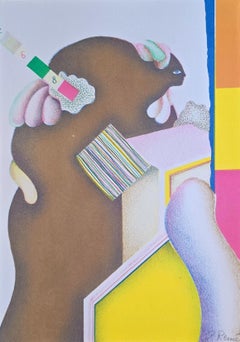
Untitled IV (Jörg Remé, Jörg Krichbaum, ~43% OFF - MUST GO)

Untitled IV (Jörg Remé, Jörg Krichbaum, ~43% OFF - MUST GO)

By Jörg Remé

Located in Kansas City, MO

Joerg Reme Untitled IV from "von den Stunden" Folio Color Lithograph on handmade paper with deckled edges 1972 Size: 11.75 x 8.325 inches (29.8 × 21.1 cm) Edition: 31 of 250 Signed i...

Category

1970s Surrealist Art

Materials

Lithograph

Space Time - Original handsigned lithograph

Space Time - Original handsigned lithograph

By Jean Allemand

Located in Paris, IDF

Jean Allemand Space Time Original lithograph Handsigned in pencil Limited /275 copies On vellum 76 x 56 cm (c. 29.9 x 22 in) Excellent condition

Category

Late 20th Century Surrealist Art

Materials

Lithograph

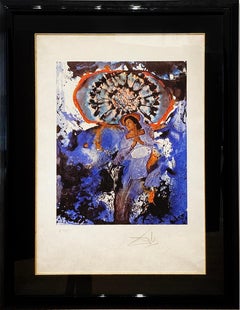
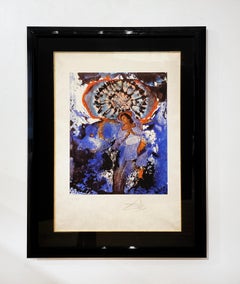
Visions Surrealiste Coronation of Gala

Visions Surrealiste Coronation of Gala

By Salvador Dalí­

Located in Hollywood, FL

ARTIST: Salvador Dali TITLE: Visions Surrealiste Coronation of Gala MEDIUM: Lithograph SIGNED: Hand Signed by Salvador Dali EDITION NUMBER: EA MEASUREMENTS: 21.37" x 29.75" YEA...

Category

1970s Surrealist Art

Materials

Lithograph

Dali  Avarice et prodigalité  Lithography

Dali Avarice et prodigalité Lithography

By Salvador Dalí­

Located in CORAL GABLES - MIAMI, FL

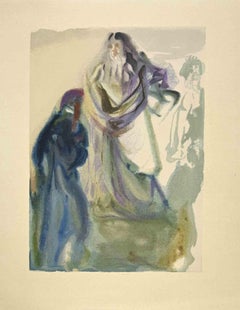
Part of the Divine Comedy collection. Paper dimensions: 65 x 50 cm; plate dimensions: 40 x 30 cm. Numbered in pencil and signed in the plate. 59/350 DALÍ, Salvador (Figueras, Gero...

Category

Late 20th Century Surrealist Art

Materials

Lithograph

'European Landscape' —Mid-century American Surrealism

'European Landscape' —Mid-century American Surrealism

By Lawrence Kupferman

Located in Myrtle Beach, SC

Lawrence Kupferman, 'European Landscape', drypoint, edition 50, 1942. Signed, dated, titled, and numbered '7/50' in pencil. A superb, finely nuanced impression, on cream wove paper; the full sheet with margins (1 to 1 3/4 inches); in excellent condition. Image size 10 7/8 x 13 3/8 inches; sheet size 13 1/8 x 16 1/2 inches. Archivally matted to museum standards, unframed. An impression of this work is included in the permanent collection of the Syracuse University Art Museum. ABOUT THE ARTIST Lawrence Kupferman (1909 - 1982) was born in the Dorchester neighborhood of Boston and grew up in a working-class family. He attended the Boston Latin School and participated in the high school art program at the Museum of Fine Arts, Boston. In the late 1920s, he studied drawing under Philip Leslie Hale at the Museum School—an experience he called 'stultifying and repressive'. In 1932 he transferred to the Massachusetts College of Art, where he first met his wife, the artist Ruth Cobb. He returned briefly to the Museum School in 1946 to study with the influential expressionist German-American painter Karl Zerbe. Kupferman held various jobs while pursuing his artistic career, including two years as a security guard at the Museum of Fine Arts, Boston. During the 1930s he worked as a drypoint etcher for the Federal Art Project, creating architectural drawings in a formally realistic style—these works are held in the collections of the Fogg Museum and the Smithsonian American Art Museum. In the 1940s he began incorporating more expressionistic forms into his paintings as he became progressively more concerned with abstraction. In 1946 he began spending summers in Provincetown, Massachusetts, where he met and was influenced by Mark Rothko, Hans Hofmann, Jackson Pollock, and other abstract painters. At about the same time he began exhibiting his work at the Boris Mirski Gallery in Boston. In 1948, Kupferman was at the center of a controversy involving hundreds of Boston-area artists. In February of that year, the Boston Institute of Modern Art issued a manifesto titled 'Modern Art and the American Public' decrying 'the excesses of modern art,' and announced that it was changing its name to the Institute of Contemporary Art (ICA). The poorly conceived statement, intended to distinguish Boston's art scene from that of New York, was widely perceived as an attack on modernism. In protest, Boston artists such as Karl Zerbe, Jack Levine, and David Aronson formed the 'Modern Artists Group' and organized a mass meeting. On March 21, 300 artists, students, and other supporters met at the Old South Meeting House and demanded that the ICA retract its statement. Kupferman chaired the meeting and read this statement to the press: “The recent manifesto of the Institute is a fatuous declaration which misinforms and misleads the public concerning the integrity and intention of the modern artist. By arrogating to itself the privilege of telling the artists what art should be, the Institute runs counter to the original purposes of this organization whose function was to encourage and to assimilate contemporary innovation.” The other speakers were Karl Knaths...

Category

1940s Surrealist Art

Materials

Drypoint

"just another..." - 1976 Surrealist Lithograph on Paper

"just another..." - 1976 Surrealist Lithograph on Paper

Located in Soquel, CA

"just another..." - 1976 Surrealist Lithograph on Paper 1976 surrealist lithograph on paper titled "just another..." by Jim Crabb (American, b. 1947). Small lithographic relief, fea...

Category

1970s Surrealist Art

Materials

Laid Paper, Lithograph

Mirage (ex Reader's Digest Art Collection) Op Art Surreal renowned female artist

Mirage (ex Reader's Digest Art Collection) Op Art Surreal renowned female artist

Located in New York, NY

Edna Andrade Mirage (de-accessioned from the Reader's Digest Art Collection), 1988 Original Collage painting on board Signed, titled & dated on the front; the back bears labels from Marian Locks Gallery & Readers Digest Association with inventory (RDA) number Original frame included with collection and gallery labels verso This is a unique work Exquisite 1980s collage on board painting (framed) titled "Mirage" by renowned female Op artist Edna Andrade...

Category

1980s Surrealist Art

Materials

Mixed Media, Acrylic, Board

Untitled (Two Birds) - Etching by Max Ernst - 1972

Untitled (Two Birds) - Etching by Max Ernst - 1972

By Max Ernst

Located in Roma, IT

Etching and aquatint on Japan paper, realized in 1972. Printed and published by Georges Visat, Paris. Edition of 100, numbered 99/100 and hand signed in pencil.

Category

1970s Surrealist Art

Materials

Etching

Surrealist art for sale on 1stDibs.

Find a wide variety of authentic Surrealist art available for sale on 1stDibs. Works in this style were very popular during the 21st Century and Contemporary, but contemporary artists have continued to produce works inspired by this movement. If you’re looking to add art created in this style to introduce contrast in an otherwise neutral space in your home, the works available on 1stDibs include elements of blue, orange, purple, red and other colors. Many Pop art paintings were created by popular artists on 1stDibs, including Salvador Dalí, Marc Chagall, Joan Miró, and Leonor Fini. Frequently made by artists working with Paint, and Lithograph and other materials, all of these pieces for sale are unique and have attracted attention over the years. Not every interior allows for large Surrealist art, so small editions measuring 1 inches across are also available. Prices for art made by famous or emerging artists can differ depending on medium, time period and other attributes. On 1stDibs, the price for these items starts at $1 and tops out at $1,450,000, while the average work sells for $1,426.