Surrealist Art

SURREALIST STYLE

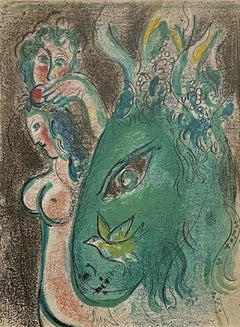
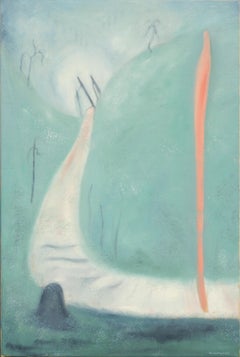
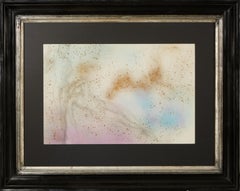
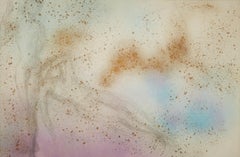
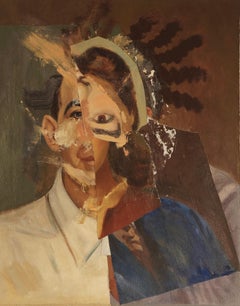
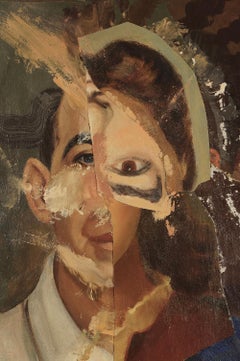
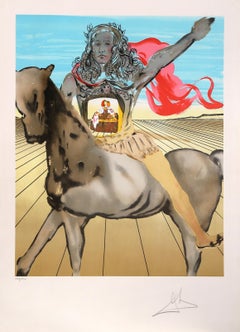
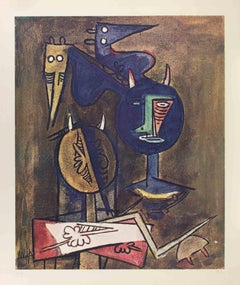
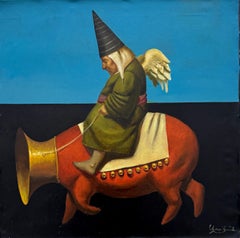
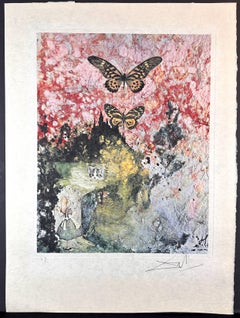
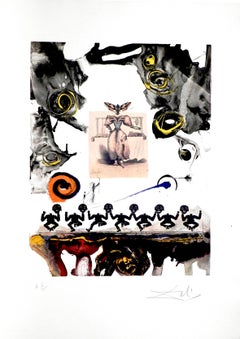
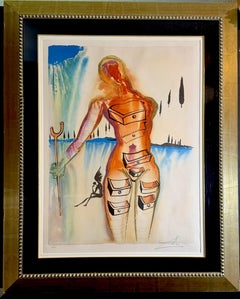
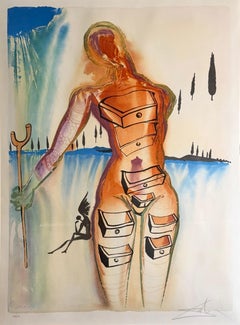
In the wake of World War I’s ravaging of Europe, artists delved into the unconscious mind to confront and grapple with this reality. Poet and critic André Breton, a leader of the Surrealist movement who authored the 1924 Surrealist Manifesto, called this approach “a violent reaction against the impoverishment and sterility of thought processes that resulted from centuries of rationalism.” Surrealist art emerged in the 1920s with dreamlike and uncanny imagery guided by a variety of techniques such as automatic drawing, which can be likened to a stream of consciousness, to channel psychological experiences.

Although Surrealism was a groundbreaking approach for European art, its practitioners were inspired by Indigenous art and ancient mysticism for reenvisioning how sculptures, paintings, prints, performance art and more could respond to the unsettled world around them.

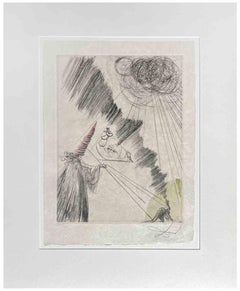
Surrealist artists were also informed by the Dada movement, which originated in 1916 Zurich and embraced absurdity over the logic that had propelled modernity into violence. Some of the Surrealists had witnessed this firsthand, such as Max Ernst, who served in the trenches during World War I, and Salvador Dalí, whose otherworldly paintings and other work responded to the dawning civil war in Spain.

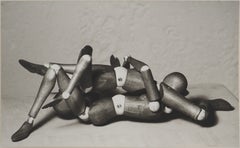
Other key artists associated with the revolutionary art and literary movement included Man Ray, Joan Miró, René Magritte, Yves Tanguy, Frida Kahlo and Meret Oppenheim, all of whom had a distinct perspective on reimagining reality and freeing the unconscious mind from the conventions and restrictions of rational thought. Pablo Picasso showed some of his works in “La Peinture Surréaliste” — the first collective exhibition of Surrealist painting — which opened at Paris’s Galerie Pierre in November of 1925. (Although Magritte is best known as one of the visual Surrealist movement’s most talented practitioners, his famous 1943 painting, The Fifth Season, can be interpreted as a formal break from Surrealism.)

The outbreak of World War II led many in the movement to flee Europe for the Americas, further spreading Surrealism abroad. Generations of modern and contemporary artists were subsequently influenced by the richly symbolic and unearthly imagery of Surrealism, from Joseph Cornell to Arshile Gorky.

Find a collection of original Surrealist paintings, sculptures, prints and multiples and more art on 1stDibs.

to
1,659
3,660
1,681
2,071
952
1,023
Overall Width
to
Overall Height
to
17
25
6,076
3,271
4
19
124
111
155
502
1,519
1,942
518
300
15
114,089
62,420
57,525
27,141
14,672
6,602
5,616
4,318
3,095
2,417
2,346
2,155
599
5,739
2,554
912
3,929
2,493
1,477
1,213
1,192
1,043
1,012
526
333
318
316
315
278
253
248
237
171
136
118
104
2,664
2,487
1,649
1,576
1,557
791
398
337
226
195
1,589
2,623
5,498
3,271
Style: Surrealist
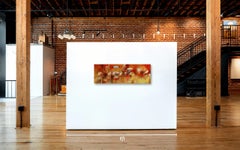
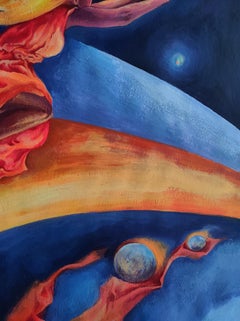
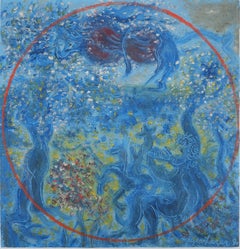
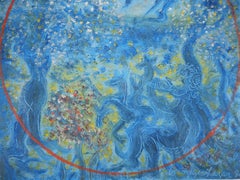
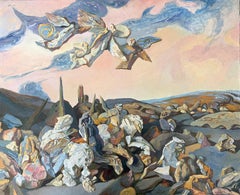
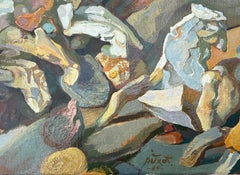
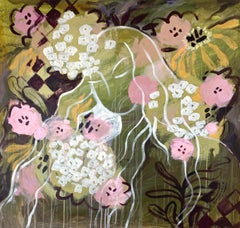
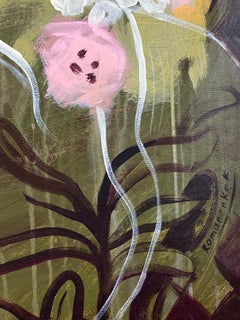
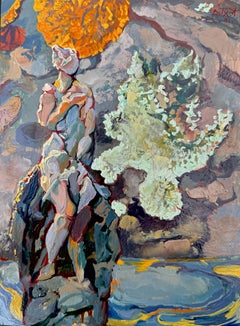
Israeli Large Vibrant Surrealist Flowers Oil Painting

Israeli Large Vibrant Surrealist Flowers Oil Painting

By Milia Laufer

Located in Surfside, FL

Milia Laufer, born Romania. From 1951 lived and worked in Safed. Together with her husband opened one of the earliest galleries in Israel, in Tiberias. Worked in watercolors and oils...

Category

1950s Surrealist Art

Materials

Canvas, Oil

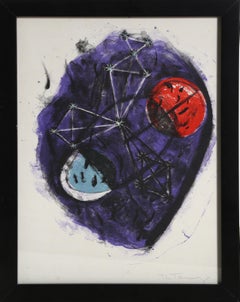
original lithograph

original lithograph

By Yves Tanguy

Located in Henderson, NV

Medium: original lithograph. Printed in Paris by Mourlot and published by Pierre à Feu and Maeght Editeur for the Marcel Duchamp / André Breton project "Surréalisme en 1947". Issued ...

Category

1940s Surrealist Art

Materials

Lithograph

LUVE
LUVE

LUVE

Located in Zofingen, AG

LUVE is a painterly work that uses the landscape of Volyn (Ukraine) as a point of departure for a much deeper exploration of inner space. Lutsk is not depicted literally; instead, it...

Category

2010s Surrealist Art

Materials

Canvas, Acrylic

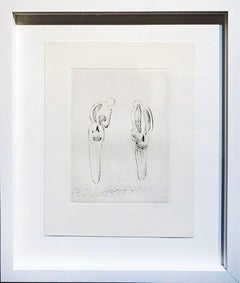
Henry Moore, Reclining Figure, from San Lazzaro et ses Amis, 1975

Henry Moore, Reclining Figure, from San Lazzaro et ses Amis, 1975

By Henry Moore

Located in Southampton, NY

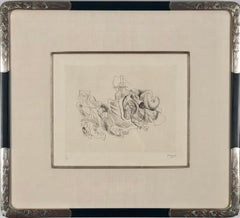
This exquisite lithograph by Henry Moore (1898–1986), titled Reclining Figure, from the album San Lazzaro et ses Amis, Hommage au fondateur de la revue XXe siecle (San Lazzaro and His Friends, Tribute to the Founder of the Journal XXe Siecle), originates from the 1975 edition published by XXe siecle, Paris, and printed by Curwen Studio, London, October 1975. Reclining Figure embodies Moore’s lifelong fascination with the human form in repose—a theme that became central to his sculptural and graphic work. Through elegant contours and balanced abstraction, the composition captures the harmony between body, landscape, and spirit that defined Moore’s artistic vision. Executed as a lithograph on velin d'Arches paper, this work measures 10.5 x 14 inches (26.67 x 35.56 cm). Unsigned and unnumbered as issued. The edition exemplifies the exceptional craftsmanship of the Curwen Studio in London, a distinguished atelier celebrated for its collaborations with the leading modern artists of the postwar period. Artwork Details: Artist: Henry Moore (1898–1986) Title: Reclining Figure, from San Lazzaro et ses Amis, Hommage au fondateur de la revue XXe siecle, 1975 Medium: Lithograph on velin d'Arches paper Dimensions: 10.5 x 14 inches (26.67 x 35.56 cm) Inscription: Unsigned and unnumbered as issued Date: 1975 Publisher: XXe siecle, Paris Printer: Curwen Studio, London Catalogue raisonne references: Moore, Henry, et al. Henry Moore, Catalogue of Graphic Work. Gerald Cramer, 1986, illustration 366. Condition: Well preserved, consistent with age and medium Provenance: From the album San Lazzaro et ses Amis, Hommage au fondateur de la revue XXe siecle, published by XXe siecle, Paris, October 1975 Notes: Excerpted from the folio (translated from French), Finished printing in Paris in October 1975. This album has been printed on velin d'Arches in DLXXV numbered examples. The LXXV original examples include a series of VIII original lithographs, signed and numbered by the artists. In addition, LV examples were printed for artists, authors, friends and collaborators of XXe siecle. The typography is from l'Imprimerie Union in Paris; the lithographs of Max Bill, Marc Chagall, Hans Hartung, Braque, Fontana, Magnelli, Picasso, Magritte and Poliakoff were printed by Fernand Mourlot in Paris; those of Alexander Calder and Joan Miro by l'imprimerie Arte in Paris; that of Max Ernst by Pierre Chave in Vence; that of Zao Wou-Ki by ateliers Bellin in Paris; and that of Henry Moore by the Curwen Studio in London. About the Publication: San Lazzaro et ses Amis, Hommage au fondateur de la revue XXe siecle (San Lazzaro and His Friends, Tribute to the Founder of the Journal XXe Siecle), published in 1975 by XXe siecle, Paris, represents one of the most significant collaborative tributes in modern art publishing. Created in honor of Gualtieri di San Lazzaro, the visionary editor and founder of the journal XXe Siecle, the folio unites original lithographs by the greatest modern masters—Picasso, Chagall, Miro, Calder, Hartung, Moore, and others. Printed by premier ateliers such as Mourlot, Arte, Bellin, and Curwen, the portfolio celebrates the spirit of artistic collaboration and innovation that defined mid-20th-century modernism. About the Artist: Henry Moore (1898–1986) was a British sculptor, draftsman, and modernist pioneer whose monumental bronzes and organic abstractions revolutionized 20th-century sculpture and made him one of the most influential artists of his time. Renowned for his reclining figures, mother-and-child compositions, and pierced biomorphic forms inspired by nature, Moore transformed traditional carving into a universal language of rhythm, balance, and humanity. Born in Castleford, Yorkshire, he studied at the Leeds School of Art and the Royal College of Art in London, absorbing the influences of classical sculpture, African and Pre-Columbian art, and the radical innovations of the European avant-garde. Inspired by Pablo Picasso’s Cubist fragmentation of form, Joan Miro’s lyrical biomorphism, Wassily Kandinsky’s spiritual abstraction, and Constantin Brancusi’s purity of shape, Moore developed a style rooted in the harmony between mass and void, structure and space. During the interwar years, he became part of an international circle that included Alexander Calder, Alberto Giacometti, Salvador Dali, Marcel Duchamp, and Man Ray—artists who, like Moore, expanded art’s boundaries through abstraction, surrealism, and conceptual experimentation. Like Calder, Moore explored balance and movement; like Giacometti, he sought the spiritual essence of humanity; and like Dali and Duchamp, he challenged perception and redefined modern form. His sculptures, carved in stone or cast in bronze, evoke both ancient and modern sensibilities—forms that appear to breathe with natural vitality while engaging directly with their surrounding landscapes. Moore’s “Shelter Drawings” (1940–41), created during the London Blitz, revealed his deep empathy for the human condition, marking a pivotal moment in his exploration of resilience and vulnerability. By the mid-20th century, Moore’s monumental bronzes had become landmarks around the world, from the Lincoln Center in New York to the UNESCO headquarters in Paris, embodying timeless symbols of endurance, renewal, and unity. His synthesis of organic abstraction and humanism influenced generations of sculptors including Barbara Hepworth, Isamu Noguchi, Eduardo Paolozzi, Antony Gormley, Anish Kapoor, and Rachel Whiteread. Like Kandinsky and Miro, he believed abstraction could transcend culture and time, while like Duchamp and Man Ray, he embraced experimentation as a pathway to new truths. Moore’s works, housed in major collections including the Museum of Modern Art in New York, the Tate in London, the Guggenheim Museum, and the Art Institute of Chicago, continue to define the landscape of modern sculpture for their elegance, power, and emotional depth. Standing alongside Pablo Picasso, Alexander Calder, Alberto Giacometti, Salvador Dali, Joan Miro, Wassily Kandinsky, Marcel Duchamp, and Man Ray, Henry Moore remains a cornerstone of modern art—a sculptor whose vision united nature, form, and spirit into a universal language of beauty and meaning. His highest auction record was achieved by Reclining Figure: Festival (1951), which sold for $33.1 million USD at Christie’s, London, on June 30, 2016, reaffirming Henry Moore’s enduring legacy as one of the most visionary, influential, and collectible sculptors in the history of modern art. Henry Moore Reclining Figure...

Category

1970s Surrealist Art

Materials

Lithograph

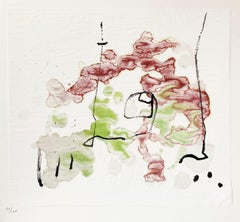
Joan Miro, Untitled, from Derriere le miroir, 1967 (after)

Joan Miro, Untitled, from Derriere le miroir, 1967 (after)

By Joan Miró

Located in Southampton, NY

This exquisite lithograph after Joan Miro (1893–1983), titled Sans titre (Untitled), originates from the 1967 folio Derriere le miroir, L'oiseau solaire, l'oiseau lunaire, etin-celle...

Category

1960s Surrealist Art
Materials

Lithograph

Joan Miro, Bird Before the Sun, from Derriere le Miroir, 1961

Joan Miro, Bird Before the Sun, from Derriere le Miroir, 1961

By Joan Miró

Located in Southampton, NY

This exquisite lithograph by Joan Miro (1893–1983), titled Oiseau devant le solei (Bird Before the Sun), originates from the April 1961 folio Derriere le Miroir, No. 125-126, published by Maeght Editeur, Paris, under the direction of Aime Maeght, and printed by Imprimerie Arte, Paris, 1961. The composition exemplifies Miro’s poetic use of symbolic imagery, where the bird and sun function as elemental forces within his visual language. Through gestural line, saturated color, and spatial freedom, the work reflects Miro’s fusion of cosmic imagery, instinctive mark making, and lyrical abstraction. Executed on velin paper, this lithograph measures 33 x 15 inches (83.82 x 38.1 cm), with bifold, as issued. Unsigned and unnumbered as issued. The edition reflects the refined technical standards and craftsmanship of Imprimerie Arte, Paris. Artwork Details: Artist: Joan Miro (1893–1983) Title: Oiseau devant le solei (Bird Before the Sun), from Derriere le Miroir, No. 125-126, April 1961 Medium: Lithograph on velin paper Dimensions: 33 x 15 inches (83.82 x 38.1 cm), with bifold, as issued Inscription: Unsigned and unnumbered as issued Date: 1961 Publisher: Maeght Editeur, Paris Printer: Imprimerie Arte, Paris Catalogue raisonne reference: Miro, Joan, et al. Joan Miro Lithographe. Maeght, 1972–1992, illustration 1722 Condition: Well preserved, consistent with age and medium Provenance: From the April 1961 folio Derriere le Miroir, No. 125-126, published by Maeght Editeur, Paris About the Publication: Derriere le Miroir (translated as "Behind the Mirror") was an iconic French art periodical published from 1946 to 1982 by Maeght Editeur, one of the most influential art publishers of the twentieth century. Founded by Aime Maeght in Paris, the publication was conceived as a visual and literary collaboration between leading modern artists, poets, and critics. Each issue functioned as both an exhibition catalogue and an autonomous work of art, featuring original lithographs printed directly from the artists stones or plates alongside essays, poems, and critical texts. Over more than three decades, Derriere le Miroir produced over 250 issues and presented an extraordinary range of artists including Henri Matisse, Marc Chagall, Georges Braque, Alexander Calder, Fernand Leger, Pierre Bonnard, Alberto Giacometti, Eduardo Chillida, Ellsworth Kelly, Francis Bacon, Antoni Tapies, Pierre Alechinsky, Pol Bury, Bram van Velde, and many others. Printed by master ateliers such as Mourlot and Arte, the series established new standards of excellence in modern lithography and graphic design. Closely linked to exhibitions at Galerie Maeght, each issue served as a lasting document of postwar modernism, uniting image, text, and philosophy into a uniquely influential publication that remains among the most important and collectible achievements in twentieth century art publishing. About the Artist: Joan Miro (1893–1983) was a Catalan painter, sculptor, printmaker, and ceramicist whose visionary imagination and lyrical abstraction made him one of the most influential and beloved artists of the twentieth century. Born in Barcelona, Miro drew inspiration from Catalan folk art, Romanesque frescoes, and the luminous landscapes of Mont-roig del Camp, developing a deep connection to nature that infused his work with vitality and symbolism. After formal training at the Escola d'Art in Barcelona, he absorbed the lessons of Post-Impressionism and Cubism before moving to Paris in the early 1920s, where he became a leading figure in the Surrealist movement. There, Miro forged a personal visual language of biomorphic shapes, floating symbols, and radiant color harmonies that reflected both spontaneity and spiritual depth. In creative dialogue with peers such as Alexander Calder, Alberto Giacometti, Salvador Dali, Wassily Kandinsky, Marcel Duchamp, and Man Ray, he helped revolutionize modern art by dissolving the boundaries between abstraction and dream imagery. Miro's inventive approach extended far beyond painting, embracing sculpture, ceramics, and monumental public commissions that redefined how art could interact with space and emotion. His expressive freedom and gestural abstraction profoundly influenced later artists including Jackson Pollock, Mark Rothko, Alexander Calder, Jean Dubuffet, Antoni Tapies, and Joan Mitchell, inspiring generations who sought to merge instinct, color, and imagination. Today, Miro's work remains a cornerstone of modernism, prized by collectors and celebrated in major museums worldwide. His highest auction record was achieved by Peinture (Etoile Bleue) (1927), which sold for approximately 37 million USD at Sothebys, London, on June 19, 2012. Joan Miro Oiseau...

Category

1960s Surrealist Art
Materials

Lithograph

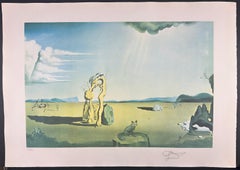
Spanish signed limited edition original art print engraving 21x15 in. n22

Spanish signed limited edition original art print engraving 21x15 in. n22

Located in Miami, FL

Andrés Barajas (Spain, 1941) 'Untitled from Portfolio "Los Deseos"', ca.1990-1999 mixed media on paper 20.9 x 15 in. (53 x 38 cm.) Edition of 200 ID: BAR1017-022-200 Hand-signed by a...

Category

20th Century Surrealist Art

Materials

Paper, Engraving, Screen

Untitled III (Jörg Remé, Jörg Krichbaum, ~34% OFF)

Untitled III (Jörg Remé, Jörg Krichbaum, ~34% OFF)

Located in Kansas City, MO

Joerg Reme Untitled III from "von den Stunden" Folio Color Lithograph on handmade paper with deckled edges 1972 Size: 11.75 x 8.325 inches (29.8 × 21.1 cm) Edition: 31 of 250 Signed ...

Category

1970s Surrealist Art

Materials

Lithograph

Spring Portrait Surrealism Original oil Painting, Ready to Hang

Spring Portrait Surrealism Original oil Painting, Ready to Hang

Located in Granada Hills, CA

Tigran Hovumyan Figurative Surrealist Oil Painter Artwork Title: Spring Medium: Original Oil on Linen Dimensions: 43" x 38" x 1" (109 x 97 x 3 cm) Year: 2017 Unframed, Stretched on ...

Category

2010s Surrealist Art

Materials

Canvas, Oil

Joan Miro, Lithograph II, from Lithographs III, 1977

Joan Miro, Lithograph II, from Lithographs III, 1977

By Joan Miró

Located in Southampton, NY

This exquisite lithograph by Joan Miro (1893–1983), titled Lithograph II, from the album Joan Miro Lithographs, Volume III 1964–1969, originates from the 1977 edition published by Maeght Editeur, Paris, and printed by Mourlot Freres, Paris, April 15, 1977. Lithograph II reflects Miros poetic mastery of line, movement, and color, capturing his lifelong pursuit of visual rhythm and lyrical abstraction. Combining spontaneity and control, this composition embodies Miros signature balance of playful geometry and poetic energy—translating instinct and imagination into a harmonious field of motion and light. Executed as a lithograph on velin paper, this work measures 12.5 x 9.625 inches. Unsigned and unnumbered as issued. The edition exemplifies the refined craftsmanship and technical mastery of Mourlot Freres, Paris, one of the foremost printmaking ateliers of the 20th century. Artwork Details: Artist: Joan Miro (1893–1983) Title: Lithograph II, from the album Joan Miro Lithographs, Volume III 1964–1969, 1977 Medium: Lithograph on velin paper Dimensions: 12.5 x 9.625 inches (31.8 x 24.4 cm) Inscription: Unsigned and unnumbered as issued Date: 1977 Publisher: Maeght Editeur, Paris Printer: Mourlot Freres, Paris Catalogue raisonne references: Cramer, Patrick, and Joan Miro. Joan Miro, Catalogue Raisonne Des Livres Illustres. P. Cramer, 1989, illustration 230. Miro, Joan, and Patrick Cramer: Volume VI 1976–1981. Maeght, 1992, illustration 1114. Condition: Well preserved, consistent with age and medium Provenance: From the album Joan Miro Lithographs, Volume III 1964–1969, published by Maeght Editeur, Paris; printed by Mourlot Freres, Paris, April 15, 1977 Notes: Excerpted from the album, Final printing in Paris on 15th April 1977 at Arte Adrien Maeght press. The wide margin lithographs as well as the supplementary lithographs were printed by the Mourlot press. V̅ examples of this English language edition, numbered I-V̅, have been printed. A deluxe edition of CL examples, numbered 1-CL, with II additional original lithographs signed by Joan Miro, and LXXX suites, numbered I-LXXX, containing the VIII original lithographs on velin with wide margins and with each lithograph signed by the artist, have also been printed. About the Publication: Joan Miro Lithographs, Volume III 1964–1969, published in 1977 by Maeght Editeur, Paris, represents the third installment in the definitive four-volume series documenting Miros original lithographic oeuvre. Printed by Mourlot Freres and completed on April 15, 1977, the album chronicles a pivotal decade in Miros artistic evolution—one marked by the synthesis of lyrical abstraction, calligraphic gesture, and radiant color that defined his mature style. The volume includes eight original lithographs, each printed under Miros supervision, demonstrating the technical excellence and chromatic brilliance characteristic of his late work. With essays, documentation, and scholarly commentary, the album stands as both a visual and historical testament to the collaboration between Miro, Maeght Editeur, and Mourlot Freres, whose joint contributions elevated fine art lithography to an unparalleled standard of creativity and craftsmanship. As part of the celebrated Maeght archive of artist albums, Volume III captures the enduring vitality of Miros vision and the timeless spirit of his contribution to modern art. About the Artist: Joan Miro (1893–1983) was a Catalan painter, sculptor, printmaker, and ceramicist whose visionary imagination and lyrical abstraction made him one of the most influential and beloved artists of the 20th century. Born in Barcelona, Miro drew inspiration from Catalan folk art, Romanesque frescoes, and the luminous landscapes of Mont-roig del Camp, developing a deep connection to nature that infused his work with vitality and symbolism. After formal training at the Escola d'Art in Barcelona, he absorbed the lessons of Post-Impressionism and Cubism before moving to Paris in the early 1920s, where he became a leading figure in the Surrealist movement. There, Miro forged a personal visual language of biomorphic shapes, floating symbols, and radiant color harmonies that reflected both spontaneity and spiritual depth. In creative dialogue with peers such as Alexander Calder, Alberto Giacometti, Salvador Dali, Wassily Kandinsky, Marcel Duchamp, and Man Ray, he helped revolutionize modern art by dissolving the boundaries between abstraction and dream imagery. Miros inventive approach extended far beyond painting, embracing sculpture, ceramics, and monumental public commissions that redefined how art could interact with space and emotion. His expressive freedom and gestural abstraction profoundly influenced later artists including Jackson Pollock, Mark Rothko, Alexander Calder, Jean Dubuffet, Antoni Tapies, and Joan Mitchell, inspiring generations who sought to merge instinct, color, and imagination. Today, Miros work remains a cornerstone of modernism, prized by collectors and celebrated in major museums worldwide. His highest auction record was achieved by Peinture (Etoile Bleue) (1927), which sold for 23,561,250 GBP (approximately 37 million USD) at Sotheby's, London, on June 19, 2012. Joan Miro Lithograph II...

Category

1970s Surrealist Art

Materials

Lithograph

Man Ray, Fashion Photography, Partial Solarization, 1980 (after)

Man Ray, Fashion Photography, Partial Solarization, 1980 (after)

By Man Ray

Located in Southampton, NY

This exquisite heliogravure after Man Ray (1890–1976), titled Fashion Photography, Partial Solarization, originates from the 1980 folio Man Ray, Electa Editrice Portfolios. Published...

Category

1980s Surrealist Art

Materials

Lithograph

Figurative Mixed Media Bust Sculpture in Ceramic Oxides and Carved Fir Wood

Figurative Mixed Media Bust Sculpture in Ceramic Oxides and Carved Fir Wood

By Óscar Aldonza Torres

Located in FISTERRA, ES

This figurative mixed media bust sculpture in ceramic, metallic oxides and carved fir wood opens with a strong emphasis on material expression and emotional tension. The work belongs to the Xentes series, a body of sculptures by the Spanish artist Óscar Aldonza Torres that explores the dialogue between individuality and collective identity. The piece combines high-temperature ceramic for the head—treated with oxides and imitation gold leaf—with a tall fir-wood torso...

Category

2010s Surrealist Art

Materials

Metal, Gold Leaf

Antonio Monasterio – Woman with a Large Hat and Table with Vase. Nr.2

Antonio Monasterio – Woman with a Large Hat and Table with Vase. Nr.2

Located in Firenze, IT

Antonio Monasterio – Woman with a Large Hat and Table with Vase. Nr.2 • Technique: Mixed media on paper (pastels, wax, and red pen) • Dimensions: 56 x 44 cm • Signature: Lower ri...

Category

Late 20th Century Surrealist Art

Materials

Paper, Crayon, Wax Crayon, Wax, Pen

SPIRIT OF GONZO
SPIRIT OF GONZO

SPIRIT OF GONZO

By Ralph Steadman

Located in Hollywood, FL

Artist: Ralph Steadman Title: Spirit of Gonzo Medium: One color silkscreen on White Rising Stonehenge Deckle Edge Paper Size: 22 x 30 Inches Edition: of 250 Year: 2006 Notes: Hand S...

Category

Early 2000s Surrealist Art

Materials

Silk, Screen

The Côte d'Azur. Sun, Sea and Sand. Mid-Century Oil on Canvas.

The Côte d'Azur. Sun, Sea and Sand. Mid-Century Oil on Canvas.

Located in Cotignac, FR

Mid-century oil on canvas of a summer scene on the Côte d'Azur. The work is signed but the artist unknown. This artwork is a vibrant and eclectic composition that captures the essen...

Category

Mid-20th Century Surrealist Art

Materials

Canvas, Oil

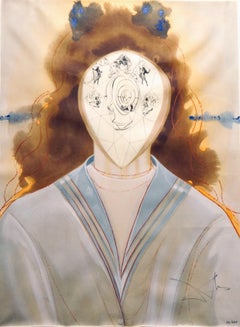
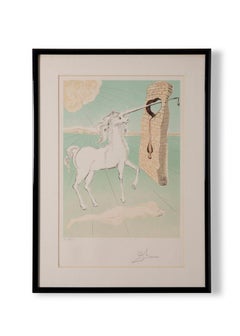
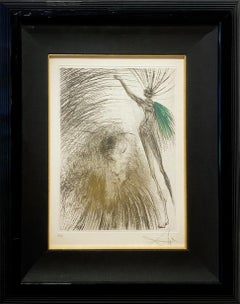
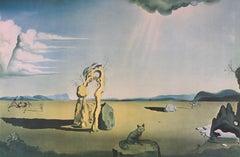
The Lucky Number of Dali

The Lucky Number of Dali

By Salvador Dalí­

Located in Hollywood, FL

ARTIST: Salvador Dali TITLE: The Lucky Number of Dali MEDIUM: Lithograph SIGNED: Hand Signed by Salvador Dali PUBLISHER: Sidney Lucas, New York EDITION NUMBER: 102/300 MEASURE...

Category

1960s Surrealist Art
Materials

Lithograph

Tristan & Isolde
Tristan & Isolde

Tristan & Isolde

By Salvador Dalí­

Located in Hollywood, FL

ARTIST: Salvador Dali TITLE: Tristan & Isolde MEDIUM: Lithograph on Rowlux with added color SIGNED: Hand Signed on seperate certificate with corresponding number PUBLISHER: Nabus Fine Art EDITION NUMBER: 307/500 MEASUREMENTS: 25" x 25" Framed: 36" x 40" YEAR: 1972 FRAMED: Yes, museum quality gold...

Category

1970s Surrealist Art

Materials

Lithograph

Man Ray, Rayograph to the Skein of Wool, from Electa Editrice, 1980 (after)

Man Ray, Rayograph to the Skein of Wool, from Electa Editrice, 1980 (after)

By Man Ray

Located in Southampton, NY

This exquisite heliogravure after Man Ray (1890–1976), titled Rayograph to the Skein of Wool, originates from the 1980 folio Man Ray, Electa Editrice Portfolios. Published by Gruppo Editoriale Electra, Milano, and printed by Gruppo Editoriale Electra, Milano, 1980. This work exemplifies Man Ray’s invention of the “rayograph,” a cameraless photographic technique in which objects are placed directly on light-sensitive paper and exposed to light. The resulting image, both abstract and tangible, transforms a simple skein of wool into a mysterious interplay of light, form, and shadow. The composition captures the poetic essence of Man Ray’s Surrealist experimentation—an alchemy of chance and precision that fuses everyday materials with pure visual abstraction. Executed as a heliogravure on velin paper, this work measures 15.75 x 11.75 inches. Unsigned and unnumbered as issued. The edition exemplifies the refined craftsmanship of Gruppo Editoriale Electra, Milano. Artwork Details: Artist: After Man Ray (1890–1976) Title: Rayograph to the Skein of Wool Medium: Heliogravure on velin paper Dimensions: 15.75 x 11.75 inches (40.01 x 29.84 cm) Inscription: Unsigned and unnumbered as issued Date: 1980 Publisher: Gruppo Editoriale Electra, Milano Printer: Gruppo Editoriale Electra, Milano Condition: Well preserved, consistent with age and medium Provenance: From the folio Man Ray, Electa Editrice Portfolios, published and printed by Gruppo Editoriale Electra, Milano, 1980 Notes: Excerpted from the folio (translated from Italian), Limited edition of M examples, drawn in heliogravure on special paper, designed specifically for the Portfolios Electa. Gruppo Editoriale Electra/Milan. Printed in Italy. About the Publication: The Man Ray, Electa Editrice Portfolio (1980) was published by Gruppo Editoriale Electra in Milan as part of the distinguished Electa Portfolios series, which celebrated the masters of 20th-century photography through the artisanal process of heliogravure printing. This edition was dedicated to Man Ray’s seminal body of photographic work from 1920 to 1934—an era in which he redefined modern image-making through technical invention, surrealist experimentation, and intellectual daring. Produced in collaboration with leading photographic historians and Italian master printers, the portfolio was printed on specially manufactured velin paper designed exclusively for the Electa Portfolios, ensuring tonal precision and textural depth true to the artist’s originals. The publication represents one of the most refined posthumous tributes to Man Ray’s legacy, combining Italian craftsmanship with avant-garde vision to preserve the luminous complexity of his photographs. Created with the same devotion to innovation and elegance that characterized Man Ray’s own practice, this edition remains an important intersection of fine art publishing and modernist history. About the Artist: Man Ray (1890–1976) was an American-born painter, sculptor, photographer, filmmaker, and conceptual visionary whose radical imagination and technical innovation transformed modern art and established him as one of the leading figures of the 20th century. Born Emmanuel Radnitzky in Philadelphia, he became a central force in both the Dada and Surrealist movements, defying artistic boundaries and redefining the relationship between art, technology, and the unconscious. After early involvement in New York’s avant-garde with Francis Picabia and Marcel Duchamp, Man Ray moved to Paris in 1921, where he joined a revolutionary circle of artists including Pablo Picasso, Alexander Calder, Alberto Giacometti, Salvador Dali, Joan Miro, Wassily Kandinsky, and Marcel Duchamp. There, he pioneered the “rayograph,” or photogram—a cameraless photographic technique that used light and shadow to create ethereal abstract compositions—and produced some of the most iconic images in art history, including Le Violon d’Ingres (1924) and Noire et Blanche (1926). His photography, distinguished by its fusion of elegance, surrealism, and psychological depth, captured the essence of modernist Paris and immortalized creative icons such as Kiki de Montparnasse, Gertrude Stein, and James Joyce. At the same time, Man Ray’s experimental films, including Le Retour a la Raison (1923) and L’Etoile de mer (1928), and his sculptural works like The Gift (1921) and Object to Be Destroyed (1923), expanded the possibilities of art itself, transforming ordinary objects into symbols of mystery and desire. His conceptual approach—viewing art as an idea rather than an object—anticipated later movements such as Pop Art, Minimalism, and Conceptual Art, profoundly influencing artists like Andy Warhol, Robert Rauschenberg, Jasper Johns, and Joseph Beuys, as well as photographers Helmut Newton, Guy Bourdin, Cindy Sherman, and Richard Avedon. Even in exile during World War II, while working in Los Angeles, he continued to innovate, blending Surrealist fantasy with the luminosity of the California landscape before returning to Paris, where he spent his final decades refining his poetic, intellectual, and sensuous vision. Exhibited in major institutions such as the Museum of Modern Art, the Tate Modern, and the Centre Pompidou, Man Ray’s work remains foundational to modern art history—bridging painting, photography, film, and sculpture in a body of work that continues to shape the language of visual culture. Standing alongside Pablo Picasso, Alexander Calder, Alberto Giacometti, Salvador Dali, Joan Miro, Wassily Kandinsky, and Marcel Duchamp, Man Ray endures as one of the most original and influential artists of the modern era. His highest auction record was achieved by Noire et Blanche (1926), which sold for 3.13 million USD at Christie’s, Paris, on November 9, 2017, confirming his status as a timeless innovator whose genius continues to inspire artists, collectors, and dreamers worldwide. Man Ray Rayograph...

Category

1980s Surrealist Art

Materials

Lithograph

Angels
Angels

Angels

Located in San Francisco, CA

This artwork "Angels" 1984 is a embossed paper bas-relief sculpture by Chilean artist Lucia Waiser, b. 1940. it is hand signed and inscribed A/P (Artist Proof) in white pencil by the artist. The size of the subject is 12.75 x 15 inches, over all size is 15 x 22 inches. It is in excellent condition. About the artist: Lucia Waiser Palombo was born in Santiago on September 30, 1940. She studied Design at the Art School of the University of Chile, from which he graduated in 1966. Later he moved to the United States to study drawing at Foothill College in California. In 1976 he traveled to England where he completed a Master in Art Theory and History at the University of Sussex. The following year he studied lithography at the Brighton Polytechnic Institute. In 1980 he returned to the United States and entered Stanford University to study sculpture with Richad Randell. In 1984, he completed his artistic apprenticeship at the University of Berkeley, California, conducting a paper workshop dictated by Joan Rhine. Selected museums and public collections: COLLECTION IBM, SANTIAGO, CHILE CEMENTO MELON SA, LA CALERA, CHILE WINTHERTUR MUSEUM, SWITZERLAND SOUTH MUSEUM, CHILOE, CHILE VALDIVIA MUSEUM, VALDIVIA, CHILE SALVADOR ALLENDE MUSEUM, SANTIAGO, CHILE CONSULATE OF CHILE IN NEW YORK, NEW YORK, UNITED STATES NORGLAS, SANTIAGO, CHILE PAPELES BIO-BIO SA, CONCEPCION, CHILE SCULPTURE PARK, PROVIDENCIA, SANTIAGO, CHILE Selected exhibitions 1981 Selected in Sculpture, Seventh National Securities Placement Contest, Chile. 1991 Honorable Mention, Parque Arauco Es-Cultura Contest, Santiago. 1966 University of Chile, School of Design, Santiago, Chile. 1968 Vidal, Zurich, Switzerland. 1978 Bell, Book and Candle, San Juan, Puerto Rico. 1978 Lou Henry Hoover House, Standford University, Standford, California, United States. 1981 For being a Woman, South Gallery, Santiago, Chile. 1982 San Francisco Museum Gallery, California, United States. 1983 Época Gallery, Santiago, Chile. 1984 Chilean-French Institute. 1987 Carmen Waugh Gallery, Santiago, Chile. 1988 Del Cerro Gallery, Santiago, Chile. 1990 Sculpture Park, Santiago, Chile. 1991 British Chilean Institute of Culture, Santiago, Chile. 1992 National Painting Competition El Color del Sur, Puerto Varas, Chile. 1995 Arte Actual Gallery, Santiago, Chile. 2009 Accomplices, sculptures 2009, Artespacio Gallery, Santiago, Chile. 1967 IL Principe, Florence, Italy. 1967 Bottega di Fulgenzi, Florence, Italy. 1979 Los Robles Gallery, Palo Alto, California, United States. 1980 Lou Henry Hoover House, Stanford University, Stanford, California, United States. 1980 Printers Inc., Palo Alto, California, United States. 1980 Palo Alto Cultural Center, Palo Alto, California, United States. 1981 VII National Securities Placement Contest, National Museum of Fine Arts, Santiago, Chile. 1982 Los Robles Gallery, Palo Alto, California, United States. 1982 Adam and Eve, Época Gallery, Santiago, Chile. 1982 Innate Harmony, London, England. 1982 Christie's Contemporary Art, London, England. 1983 Five Women Artists, Espacio Arte Gallery, Santiago, Chile. 1983 Contemporary Textile, Goethe Institut, Santiago, Chile. 1983 Third Anniversary Exhibition, The Moss Gallery, San Francisco, California, United States. 1983 Center Culturel de L'Amérique Latine, Paris, France. 1984 Bread in Art, South Gallery, Santiago, Chile. 1984 Small Format, South Gallery, Santiago, Chile. 1984 The Art and Survival of the Planet, National Museum of Natural History, Santiago, Chile. 1986 Nuestro Mundo Andino, Galería Arte Actual, Santiago, Chile. 1986 La Tertulia, Museum of Modern Art, Cali, Colombia. 1987 Carmen Waugh Gallery, Casa Larga, Santiago, Chile. 1987 The Couple, Época Gallery, Santiago, Chile. 1988 Exhibition and auction of works by national artists, Dutch Embassy, ​​Santiago, Chile. 1988 Painting the Painting, El Cerro Gallery, Santiago, Chile. 1988 Sculptors' Meeting, Plaza Mulato Gil de Castro...

Category

Late 20th Century Surrealist Art

Materials

Mixed Media

"L'été"

"L'été"

By Joan Miró

Located in Henderson, NV

Medium: lithograph and pochoir. Catalogue reference: Dupin 1310, Benhoura 396. This lithograph was printed in 1938 at the atelier Mourlot and published in Paris by Teriade for the ar...

Category

1930s Surrealist Art

Materials

Lithograph

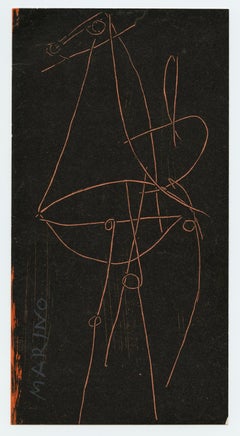
Homme baisant la chaussure

Homme baisant la chaussure

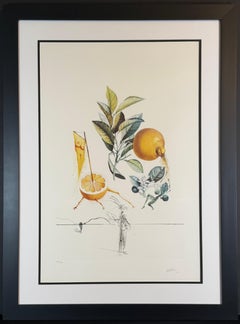
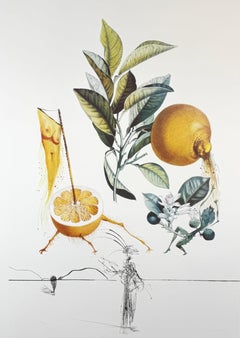
By Salvador Dalí­

Located in OPOLE, PL

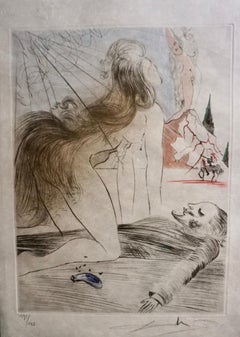
Salvador Dali (1904-1989) - Homme baisant la chaussure Etching from 1969. 109/145 on Japan paper. Dimensions of work: 38 x 28 cm. Hand signed. Publisher: Graphik Europa Anstalt....

Category

1960s Surrealist Art
Materials

Etching

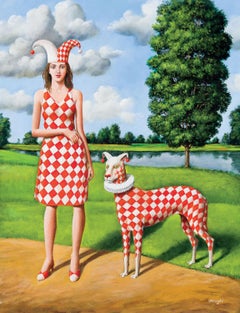
The Outfit - Original Colorful Floral Figurative Feminine Surrealist Framed Art

The Outfit - Original Colorful Floral Figurative Feminine Surrealist Framed Art

By Carlos Gamez de Francisco

Located in Los Angeles, CA

The figurative surrealistic paintings of Carlos Gamez de Francisco are heavily influenced by his Cuban upbringing in a Russian-governed academic setting. This presence exposed Franci...

Category

21st Century and Contemporary Surrealist Art

Materials

Canvas, Acrylic

La Maison Rouge - Abstract Warm Tone Color Drenched Landscape Painting on Canvas

La Maison Rouge - Abstract Warm Tone Color Drenched Landscape Painting on Canvas

By Maria C. Bernhardsson

Located in Los Angeles, CA

Maria C Bernhardsson's original artworks are influenced by the architecture and geometry of houses. Born in Sweden, Bernhardsson travels the world photographing and sketching houses ...

Category

2010s Surrealist Art
Materials

Canvas, Mixed Media

Untitled 3
Untitled 3

Untitled 3

By Roger Chapelain Midy

Located in San Francisco, CA

Artist: Roger Chapelain Midy (French, 1904-1992) Title: Untitled 3 Year : Circa 1975 Medium: Color lithograph Edition: Unknown Paper: Silk paper Image size: 18 x 25.25 inche...

Category

Late 20th Century Surrealist Art

Materials

Lithograph

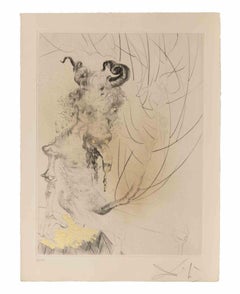
Memories of Surrealism Surrealist King

Memories of Surrealism Surrealist King

By Salvador Dalí­

Located in Hollywood, FL

ARTIST: Salvador Dali TITLE: Memories of Surrealism Surrealist King MEDIUM: Etching on Japon Paper SIGNED: Hand Signed by Salvador Dali EDITION NUMBER: A XXX/XL MEASUREMENTS: 29...

Category

1970s Surrealist Art
Materials

Etching

Dutress and Her Cat -21st Century, Contemporary, Figurative, Women, Animals

Dutress and Her Cat -21st Century, Contemporary, Figurative, Women, Animals

Located in Ibadan, Oyo

Shipping Procedure Ships in a well-protected tube from Nigeria This work is unique, not a print or other type of copy. Accompanied by a Certificate of Authenticity About Artist Oluw...

Category

21st Century and Contemporary Surrealist Art
Materials

Canvas, Acrylic

"Femme et Oiseaux dans la Nuit" original pochoir

"Femme et Oiseaux dans la Nuit" original pochoir

By Joan Miró

Located in Henderson, NV

Medium: original pochoir stencil print in four colors. Catalogue reference: Dupin 50. Printed in 1947 in an edition of 1500 by Meriden Gravure and published by Curt Valentin for the ...

Category

1940s Surrealist Art
Materials

Lithograph, Stencil

Surrealist art for sale on 1stDibs.
Find a wide variety of authentic Surrealist art available for sale on 1stDibs. Works in this style were very popular during the 21st Century and Contemporary, but contemporary artists have continued to produce works inspired by this movement. If you’re looking to add art created in this style to introduce contrast in an otherwise neutral space in your home, the works available on 1stDibs include elements of blue, orange, purple, red and other colors. Many Pop art paintings were created by popular artists on 1stDibs, including Salvador Dalí, Marc Chagall, Joan Miró, and Leonor Fini. Frequently made by artists working with Paint, and Lithograph and other materials, all of these pieces for sale are unique and have attracted attention over the years. Not every interior allows for large Surrealist art, so small editions measuring 1 inches across are also available. Prices for art made by famous or emerging artists can differ depending on medium, time period and other attributes. On 1stDibs, the price for these items starts at $1 and tops out at $1,450,000, while the average work sells for $1,426.