Surrealist Art

SURREALIST STYLE

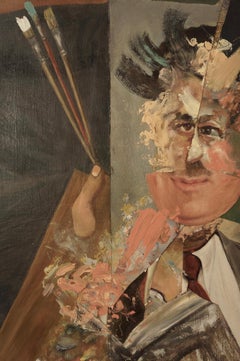
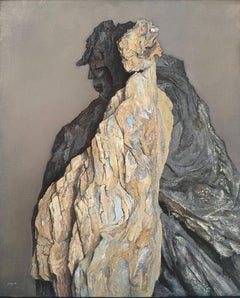
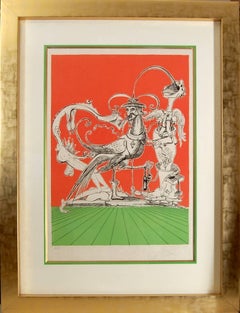
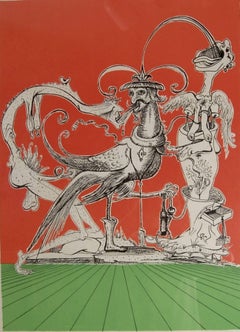
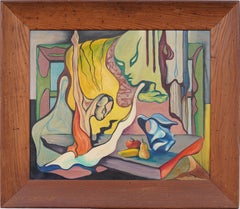
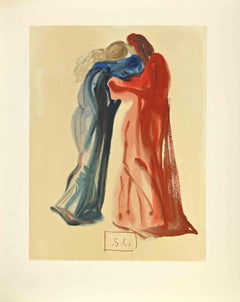
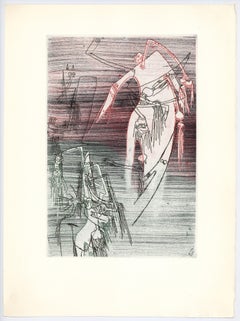
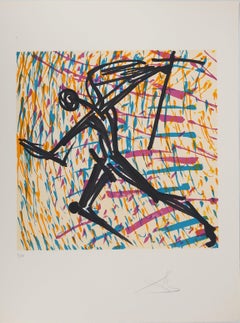
In the wake of World War I’s ravaging of Europe, artists delved into the unconscious mind to confront and grapple with this reality. Poet and critic André Breton, a leader of the Surrealist movement who authored the 1924 Surrealist Manifesto, called this approach “a violent reaction against the impoverishment and sterility of thought processes that resulted from centuries of rationalism.” Surrealist art emerged in the 1920s with dreamlike and uncanny imagery guided by a variety of techniques such as automatic drawing, which can be likened to a stream of consciousness, to channel psychological experiences.

Although Surrealism was a groundbreaking approach for European art, its practitioners were inspired by Indigenous art and ancient mysticism for reenvisioning how sculptures, paintings, prints, performance art and more could respond to the unsettled world around them.

Surrealist artists were also informed by the Dada movement, which originated in 1916 Zurich and embraced absurdity over the logic that had propelled modernity into violence. Some of the Surrealists had witnessed this firsthand, such as Max Ernst, who served in the trenches during World War I, and Salvador Dalí, whose otherworldly paintings and other work responded to the dawning civil war in Spain.

Other key artists associated with the revolutionary art and literary movement included Man Ray, Joan Miró, René Magritte, Yves Tanguy, Frida Kahlo and Meret Oppenheim, all of whom had a distinct perspective on reimagining reality and freeing the unconscious mind from the conventions and restrictions of rational thought. Pablo Picasso showed some of his works in “La Peinture Surréaliste” — the first collective exhibition of Surrealist painting — which opened at Paris’s Galerie Pierre in November of 1925. (Although Magritte is best known as one of the visual Surrealist movement’s most talented practitioners, his famous 1943 painting, The Fifth Season, can be interpreted as a formal break from Surrealism.)

The outbreak of World War II led many in the movement to flee Europe for the Americas, further spreading Surrealism abroad. Generations of modern and contemporary artists were subsequently influenced by the richly symbolic and unearthly imagery of Surrealism, from Joseph Cornell to Arshile Gorky.

Find a collection of original Surrealist paintings, sculptures, prints and multiples and more art on 1stDibs.

to
1,609
3,656
1,668
2,092
960
1,027
Overall Width
to
Overall Height
to
14
25
6,095
3,271
4
19
124
109
154
494
1,535
1,952
520
302
12
115,882
63,484
56,411
27,907
14,648
6,654
5,798
4,129
3,122
2,522
2,375
2,133
613
5,735
2,571
911
3,911
2,477
1,457
1,200
1,197
1,037
1,004
529
326
323
311
311
268
256
243
243
170
134
127
113
2,700
2,511
1,667
1,578
1,570
804
392
333
261
196
1,616
2,580
5,564
3,237
Style: Surrealist
La Petite Chouette Sculpture, Surrealist Ceramic, Circa 1960-1970

La Petite Chouette Sculpture, Surrealist Ceramic, Circa 1960-1970

Located in CANNES, FR

Jules Agard ( 1905 - 1986 ) " la petite chouette " circa 1960 - 1970 " Pièce unique " Sculpture en terre rouge de Salernes montée au tour représentant une petite chouette ( d...

Category

1960s Surrealist Art
Materials

Ceramic

Le Buste (The Bust)

Le Buste (The Bust)

By Salvador Dalí­

Located in OPOLE, PL

Salvador Dali (1904-1989) - Le Buste (The Bust) Drypoint etching with roulette from 1969. The edition 142/145. Dimensions of work: 38 x 28 cm. Hand signed. Publisher: Pierre Arg...

Category

1970s Surrealist Art

Materials

Drypoint, Etching

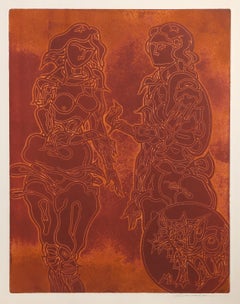
Les Négresses
Les Négresses

Les Négresses

By Salvador Dalí­

Located in OPOLE, PL

Salvador Dali (1904-1989) - Les Négresses Etching from 1969. 66/145 on Japan papaer. Dimensions of work: 38 x 28 cm. Hand signed. Publisher: Graphik Europa Anstalt. Reference: ...

Category

1960s Surrealist Art
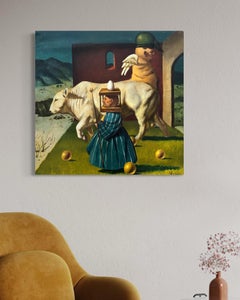
Materials

Etching

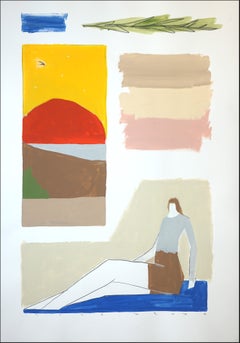
The Outfit - Original Colorful Floral Figurative Feminine Surrealist Framed Art

The Outfit - Original Colorful Floral Figurative Feminine Surrealist Framed Art

By Carlos Gamez de Francisco

Located in Los Angeles, CA

The figurative surrealistic paintings of Carlos Gamez de Francisco are heavily influenced by his Cuban upbringing in a Russian-governed academic setting. This presence exposed Franci...

Category

21st Century and Contemporary Surrealist Art

Materials

Canvas, Acrylic

1970’s French Surrealist Signed Oil Painting Abstract Cubist Shapes Patterns

1970’s French Surrealist Signed Oil Painting Abstract Cubist Shapes Patterns

Located in Cirencester, Gloucestershire

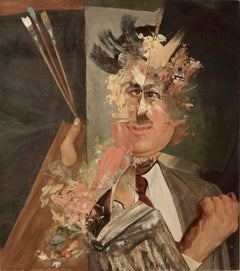
Tristan Fabris 1970's, French Surrealist artist Abstract Surrealist Figurative study signed & dated oil on canvas, unframed inscribed verso canvas: 32 x 25.5 inches private collectio...

Category

Late 20th Century Surrealist Art

Materials

Canvas, Oil

Plate VI, Le Cocu Magnifique

Plate VI, Le Cocu Magnifique

By Pablo Picasso

Located in Fairlawn, OH

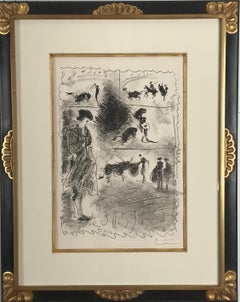
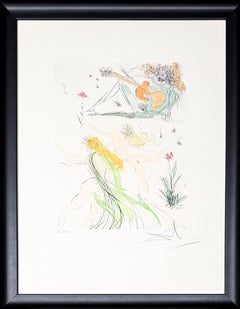
Plate VI, Le Cocu Magnifique etching & aquatint, 1968 Unsigned as usual From the unsigned edition of 200 impressions printed on Rives BFK paper There is also a signed edition of 30 i...

Category

1960s Surrealist Art
Materials

Etching, Aquatint

Bucéphale
Bucéphale

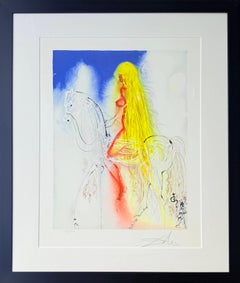
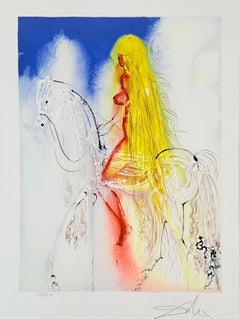
Salvador Dalí­Bucéphale, 1972

$6,615Sale Price|20% Off

Bucéphale

By Salvador Dalí­

Located in OPOLE, PL

Salvador Dali (1904-1989) - Bucéphale Lithograph from 1972 The edition of 187/250.. Dimensions of work: 68 x 50 cm On B.F.K Rives paper as stated in the Field catalogue. Referen...

Category

1970s Surrealist Art

Materials

Lithograph

Floral Still Life Postage Stamp Surrealist Collage painting

Floral Still Life Postage Stamp Surrealist Collage painting

Located in Wilton Manors, FL

Mabel Barnsbee (1892-1980). Miniature Watercolor Painting Surrealist Postage Stamp Collage. Image measures 4.5 x 6.5 inches. Measuring 11 x 13 inches in original frame. The Mysti...

Category

Mid-20th Century Surrealist Art

Materials

Paper, Watercolor

Installation, Oil Painting

Installation, Oil Painting

By Michael Wedge

Located in San Francisco, CA

Artist Comments
Part of artist Michael Wedge's series explores the contrast between urban and rural environments. This surrealist painting depicts the installation of some digital technology in an unlikely place in nature. A woman prepares to climb up the ladder while another approaches with an open laptop and an extension wire at hand. They are busy in the middle of an open field with a fox wandering between them and deers grazing in the distance.


About the Artist
Michael Wedge works in a variety of mediums: sculpture, painting, mixed media and more. He oftentimes starts with a mental image and creates digital collages, which become the basis for his paintings. A lot of his work references themes from his personal life, such as the experience of living in a city versus in the countryside. If his art seems mysterious, it;s because he enjoys making complex works. "I am attracted to images or moments that seem to have something subtle or hidden under the surface," he explains. When he;s not making art, he teaches it at an elementary school.


Words that describe this painting: surrealism...

Category

21st Century and Contemporary Surrealist Art

Materials

Oil

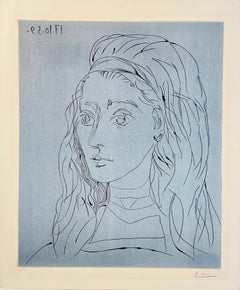
(after) Julio Gonzalez - "Tete aux cheveux defaits" pochoir

(after) Julio Gonzalez - "Tete aux cheveux defaits" pochoir

Located in Henderson, NV

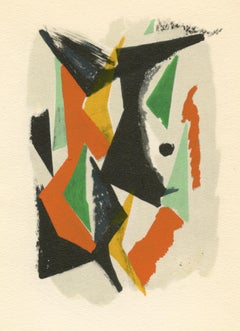
Medium: pochoir (after the watercolor). Printed in Paris in 1957 by Jacomet and published by the Galerie Berggruen for a rare catalogue. Image size: 5 1/2 x 4 inches (142 x 98 mm). S...

Category

1950s Surrealist Art

Materials

Lithograph, Stencil

LUVE
LUVE

LUVE

Located in Zofingen, AG

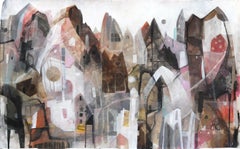
LUVE is a painterly work that uses the landscape of Volyn (Ukraine) as a point of departure for a much deeper exploration of inner space. Lutsk is not depicted literally; instead, it...

Category

2010s Surrealist Art

Materials

Canvas, Acrylic

Frontispiece
Frontispiece

Frontispiece

By Salvador Dalí­

Located in OPOLE, PL

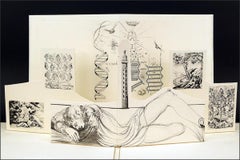
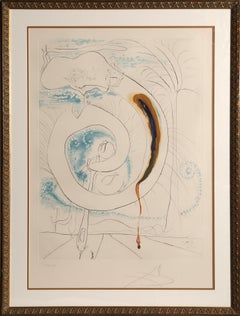
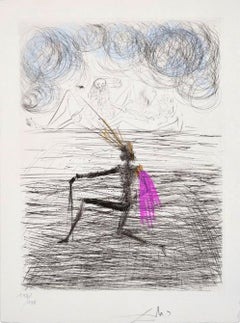
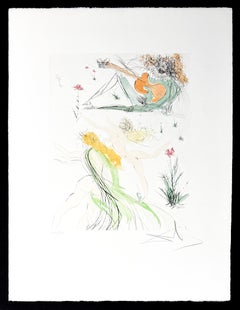
Salvador Dali (1904-1989) - Frontispiece Etching from 1967. Th edition of 122/145 on Japan paper. Enhanced with watercolor.. Dimensions of work: 38 x 28.5 cm Publisher: Graphik E...

Category

1960s Surrealist Art
Materials

Watercolor, Etching

Performance, Figurative, Original oil Painting, Ready to Hang

Performance, Figurative, Original oil Painting, Ready to Hang

Located in Granada Hills, CA

Work: Original Oil Painting, Handmade Artwork, One of a Kind Medium: Oil on Canvas Year: 2018 Style: Surrealism, Subject: Performance, Size: 47" x 29" x 2'' inch, 121x74.5x5 cm, Fram...

Category

2010s Surrealist Art

Materials

Canvas, Oil

The Madonna of Port Lligat Sculpture

The Madonna of Port Lligat Sculpture

By Salvador Dalí­

Located in Hollywood, FL

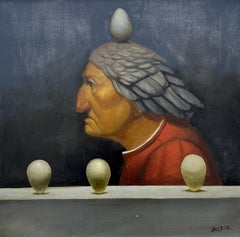
ARTIST: Salvador Dali TITLE: The Madonna of Port Lligat MEDIUM: Sculpture with Bronze Patina SIGNED: Engraved signature in the sculpture EDITION NUMBER: F 015/100 MEASUREMENTS...

Category

1960s Surrealist Art
Materials

Bronze

Dalia, Surrealist Lithograph by Andre Masson

Dalia, Surrealist Lithograph by Andre Masson

By André Masson

Located in Long Island City, NY

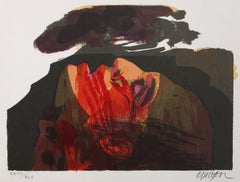
Andre Masson, French (1896 - 1987) - Dalia from Je Reve Portfolio, Year: 1975, Medium: Lithograph on Arches, Signed and numbered in pencil, Edition: 93/125, Size: 20 in. x 26 in....

Category

1970s Surrealist Art

Materials

Lithograph

Rene Magritte, The Beautiful Captive, 1968 (after)

Rene Magritte, The Beautiful Captive, 1968 (after)

By René Magritte

Located in Southampton, NY

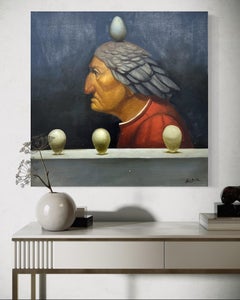
This exquisite lithograph after Rene Magritte (1898–1967), titled La Belle Captive (The Beautiful Captive), from the folio Les Enfants Trouves de Magritte (The Found Children of Magritte), 1968, originates from the edition published by A.C. Mazo et Cie, Paris, and printed by Mourlot Freres, Paris, on November 20, 1968. The work embodies Magrittes sustained inquiry into semiotics and visual epistemology, translating his characteristic strategies of displacement, symbolic inversion, and conceptual ambiguity into an image that operates as both a poetic metaphor and a philosophical proposition concerning the instability of meaning. Executed as a lithograph on grand velin dArches paper, this work measures 17.5 x 23.5 inches (44.5 x 59.7 cm). Signed in the plate by the artist; hand signed by Fernand Mourlot, Editeur. The edition exemplifies the technical mastery of the Mourlot atelier. Artwork Details: Artist: After Rene Magritte (1898–1967) Title: La Belle Captive (The Beautiful Captive), from the folio Les Enfants Trouves de Magritte (The Found Children of Magritte) Medium: Lithograph on grand velin dArches paper Dimensions: 17.5 x 23.5 inches (44.5 x 59.7 cm) Inscription: Signed in the plate by the artist; hand signed by Fernand Mourlot, Editeur Date: 1968 Publisher: A.C. Mazo et Cie, Paris Printer: Mourlot Freres, Paris Catalogue Raisonne: Magritte, Rene, et al. Rene Magritte: Catalogue Raisonne, Vol. 3. Menil Foundation; Philip Wilson Publishers; Distributed in the USA and Canada by Rizzoli International, 1992, nos. 791–792 and 1056; vol. 5, p. 218, Bibliography entry 68.28. Condition: Well preserved, consistent with age and medium Provenance: From the folio Les Enfants Trouves de Magritte, 1968 Notes: Excerpted from the folio (translated from French), Finished printing in Paris on November 20, 1968, on the presses of Mourlot, for the lithographs. The unpublished text by Louis Scutenaire was composed in Elzevir Casion corps 28 and printed by Fequet et Baudier, typographers. The unpublished compositions numbered from I to IV were specially made by Rene Magritte for this album. The compositions of the Enchanted Domain, are the renderings of the eight paintings of the mural of the Casino de Knokke. They were printed with the benevolent authorization of Mr. Gustave J. Nellens. Justification of the draw, this album was taken from CCCL examples on grand velin dArches numbered from I to CCCL, plus a few examples for collaborators and assistants. About the Publication: Les Enfants Trouves de Magritte (The Found Children of Magritte), published in 1968 by A.C. Mazo et Cie, Paris, represents one of the most significant late life print projects devoted to Rene Magrittes work. Conceived as both a literary and visual tribute, the folio pairs texts by the Belgian writer Louis Scutenaire, Magrittes close friend and fellow Surrealist, with lithographic interpretations produced at the Mourlot atelier, the premier lithographic workshop of twentieth century France. The album includes compositions by Magritte alongside lithographic renderings of the celebrated Enchanted Domain mural from the Casino de Knokke, printed with the authorization of Gustave J. Nellens, who commissioned the original mural. Issued in a single edition of CCCL examples on grand velin dArches, the folio stands as a testament to the collaboration between artist, writer, publisher, and master printer, and remains one of the most culturally important Surrealist print albums of the post war era. About the Artist: Rene Magritte (1898–1967) was a Belgian Surrealist painter whose visionary, intellectual, and poetic imagery redefined twentieth century art and forever changed how the world perceives reality and illusion. Celebrated for his calm precision and thought provoking juxtapositions of ordinary objects in extraordinary contexts, Magritte used painting as a philosophical tool, transforming the everyday into visual paradoxes that challenged the boundaries between what is seen and what is known. Born in Lessines, Belgium, and trained at the Academie Royale des Beaux Arts in Brussels, he absorbed early influences from Cubism, Futurism, and Symbolism before embracing Surrealism, where he found his true voice. In Paris, he became part of the avant garde circle that included Pablo Picasso, Alexander Calder, Alberto Giacometti, Salvador Dali, Joan Miro, Wassily Kandinsky, Marcel Duchamp, and Man Ray—all artists whose radical ideas helped him forge his distinctive synthesis of logic and mystery. Unlike Dalis dream...

Category

1960s Surrealist Art
Materials

Lithograph

Joan Miro, Miro in Ink I, from Indelible Miro, XXe Siecle, 1972

Joan Miro, Miro in Ink I, from Indelible Miro, XXe Siecle, 1972

By Joan Miró

Located in Southampton, NY

This exquisite lithograph by Joan Miro (1893–1983), titled Miro a l'encre I (Miro in Ink I), originates from the 1972 album Indelible Miro. Published by Societe Internationale d'Art ...

Category

1970s Surrealist Art

Materials

Lithograph

Alexander Calder, Composition with Spirals, from Derriere le miroir, 1968

Alexander Calder, Composition with Spirals, from Derriere le miroir, 1968

By Alexander Calder

Located in Southampton, NY

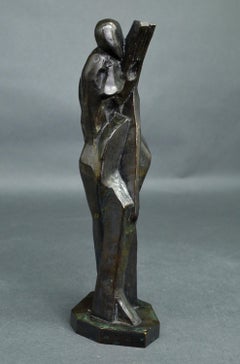
This exquisite lithograph by Alexander Calder (1898–1976), titled Composition aux Spirales (Composition with Spirals), from the folio Derriere le miroir, No. 173, originates from the 1968 edition published by Maeght Editeur, Paris, and printed by Mourlot Freres, Paris, 1968. Composition aux Spirales exemplifies Calder’s mastery of rhythm and form, translating his sculptural language of balance and motion into vivid, dynamic compositions on paper that capture his signature sense of energy and harmony. Executed as a lithograph on velin paper, this work measures 15 x 22 inches, with centerfold, as issued. Unsigned and unnumbered as issued. The edition exemplifies the superb craftsmanship of Mourlot Freres, Paris. Artwork Details: Artist: Alexander Calder (1898–1976) Title: Composition aux Spirales (Composition with Spirals), from the folio Derriere le miroir, No. 173 Medium: Lithograph on velin paper Dimensions: 15 x 22 inches (38.1 x 55.88 cm), with centerfold, as issued Inscription: Unsigned and unnumbered as issued Date: 1968 Publisher: Maeght Editeur, Paris Printer: Mourlot Freres, Paris Condition: Well preserved, consistent with age and medium Provenance: From the folio Derriere le miroir, No. 173, published by Maeght Editeur, Paris; printed by Mourlot Freres, Paris, 1968 Notes: Excerpted from the folio (translated from French), The illustrations in this issue are original lithographs by Alexander Calder drawn in the workshops of the Arte printing shop. This issue of "Behind the Mirror" has a luxury edition drawn on velin de Lana and limited to CL examples numbered and signed by the artist on the colophon. The text of G. Carandente was translated from Italian by Alain Veinstein. About the Publication: Derriere le miroir (Behind the Mirror) was one of the most important art publications of the 20th century, created and published by Maeght Editeur in Paris from 1946 to 1982. Founded by the visionary art dealer and publisher Aime Maeght, the series served as both an exhibition catalogue and a work of art in its own right, uniting original lithographs by leading modern and contemporary artists with critical essays, poetry, and design of the highest quality. Printed by master lithographers such as Mourlot Freres and Arte, Derriere le miroir became synonymous with the artistic vanguard of postwar Europe. Each issue was devoted to a single artist or theme and published to accompany exhibitions at the Galerie Maeght in Paris, featuring works by Pablo Picasso, Henri Matisse, Georges Braque, Joan Miro, Marc Chagall, Alexander Calder, Fernand Leger, and Alberto Giacometti, among others. The publication reflected Maeght’s belief that art should be both accessible and elevated—an ideal realized through its luxurious production values, meticulous printing, and collaboration with the greatest creative minds of its time. About the Artist: Alexander Calder (1898–1976) was an American sculptor, painter, and printmaker whose pioneering innovations in kinetic art revolutionized 20th-century sculpture and transformed modern visual language. Born in Lawnton, Pennsylvania, into a family of artists, Calder initially trained as a mechanical engineer at the Stevens Institute of Technology before turning to art at the Art Students League in New York—a combination of technical precision and creative imagination that defined his career. Moving to Paris in 1926, he immersed himself in the avant-garde and formed friendships with Pablo Picasso, Alberto Giacometti, Joan Miro, Wassily Kandinsky, Salvador Dali, Marcel Duchamp, and Man Ray, whose ideas profoundly shaped his artistic philosophy. From Picasso, he absorbed structural invention; from Miro, lyrical abstraction; from Kandinsky, spiritual geometry; and from Duchamp and Man Ray, the courage to merge intellect and play. In Paris, Calder created his famous Cirque Calder, a miniature mechanical circus that introduced motion and performance as central components of sculpture, and by the early 1930s, he invented the mobile—a term coined by Duchamp—to describe his delicately balanced, moving sculptures that responded to air currents. Later, Jean Arp would name his stationary counterparts stabiles. These two inventions—sculptures that could either float and spin gracefully or stand monumentally still—transformed art into a dynamic dialogue between movement, balance, and space. Calder’s signature forms, painted in vivid reds, blacks, blues, and yellows, embodied both joy and precision, creating an art that was at once abstract, organic, and deeply human. Like Kandinsky and Miro, he viewed art as a form of rhythm and emotion; like Duchamp, he embraced innovation and humor; and like Giacometti and Dali, he was fascinated by perception, structure, and the unseen forces of motion. His monumental public sculptures—such as La Grande Vitesse (1969) in Grand Rapids and Flamingo (1973) in Chicago—redefined public art as a symbol of civic optimism and modern progress. A key bridge between European modernism and American abstraction, Calder’s influence extended to artists including Jean Tinguely, George Rickey, Donald Judd, Ellsworth Kelly, Richard Serra, and Olafur Eliasson, whose works in kinetic and spatial art continue to echo his vision. His gouaches, prints, and jewelry carried the same balance and movement as his sculptures, revealing a unified language of rhythm across media. Represented in every major modern museum—including MoMA, the Guggenheim, the Tate, and the Centre Pompidou—Calder remains celebrated for merging engineering, color, and poetry into an art of pure equilibrium. Standing alongside Pablo Picasso, Alexander Calder, Alberto Giacometti, Salvador Dali, Joan Miro, Wassily Kandinsky, Marcel Duchamp, and Man Ray, he remains one of the cornerstones of modern art—a visionary whose works breathe with motion, grace, and joy. His highest auction record was achieved by Poisson Volant (Flying Fish) (1957), which sold for $25.9 million at Christie’s, New York, on May 15, 2014, reaffirming Alexander Calder’s enduring legacy as one of the most inventive, dynamic, and collectible artists in the history of modern art. Alexander Calder Composition...

Category

1960s Surrealist Art
Materials

Lithograph

Leonor Fini, Untitled, from Parallel, 1969

Leonor Fini, Untitled, from Parallel, 1969

By Leonor Fini

Located in Fairfield, CT

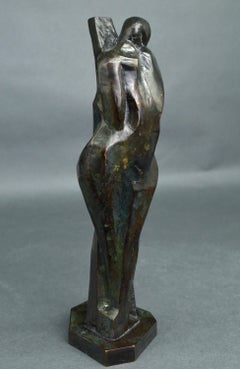
This exquisite lithograph by Leonor Fini (1907–1996), titled Sans titre (Untitled), from the folio Parallelement (Parallel), Paul Verlaine, illustre de lithographies originales de Le...

Category

1960s Surrealist Art
Materials

Lithograph

Rene Magritte, The Difficult Crossing, 1968 (after)

Rene Magritte, The Difficult Crossing, 1968 (after)

By René Magritte

Located in Southampton, NY

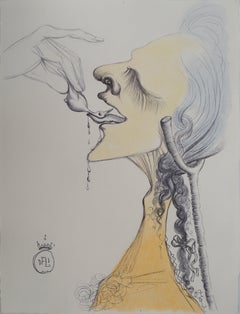
This exquisite lithograph after Rene Magritte (1898–1967), titled La Traversee Difficile (The Difficult Crossing), from the folio Les Enfants Trouves de Magritte (The Found Children ...

Category

1960s Surrealist Art
Materials

Lithograph

French Mod Surrealist Commedia dell'arte Circus Scene Oil Painting J.P. Serrier

French Mod Surrealist Commedia dell'arte Circus Scene Oil Painting J.P. Serrier

By Jean Pierre Serrier

Located in Surfside, FL

Jean Pierre Serrier (French, 1934-1989) Oil on canvas painting depicting four figures Hand signed lower right. Measures (frame) 26.5" x 30" wide, and (sight) 18.25." x 22.25" wide. Jean Pierre Serrier (1934 – 1989) was a French painter known for surrealism and absurdist art. Jean-Pierre Serrier was born in Montparnasse, Paris and attended the Académie des Beaux-Arts in Paris. the son of Louis and Solange Serrier. His father fought in World War II and became a prisoner of war. In 1940, as a six-year-old, he and his mother fled Paris for Corrèze in southwest France. Childhood memories of close escapes from German bombardments would later influence his absurdist philosophy of life. Passionate about drawing, in 1951 he applied and was admitted to the École nationale supérieure des arts appliqués et des métiers d'art in Paris. He shared an attic apartment in the 16th arrondissement with fellow student Jean-Baptiste Valadié. For income, he decorated shop windows. A trip to Spain provided motifs for early works. His student work might be characterized as art naïf (Naive art). While still a student, he sold a ceramic artwork to the poet and publisher Pierre Seghers, who would later commission drawings from him. He frequented jazz clubs in Saint-Germain des Près, and while listening to Sidney Bechet at the Vieux Colombier, he met his wife, Yvette.One of the last French Surrealist and follower of Nietzsche. His art conveyed the message to all of mankind that we are only human. The other Surrealist to center his art in philosophy was Rene Magritte whose paintings reflect his understanding of Sigmund Freud. He had his first exhibition in 1955, before being sent to Algeria to complete his military service. After graduating in 1955, he was drafted for military service, spent time in Germany and Morocco, and was sent to the front lines of the Algerian War. In 1959 he exhibited works at two Parisian galleries and at Juan-les-Pins on the Côte d'Azur. From 1961, he exhibited annually at the Salon des Artistes Français. In 1962, the City of Paris purchased his painting Un dimanche In 1961, Serrier made his first visit to the United States to exhibit at a New York gallery. In 1975 and 1979, he had successful exhibitions in New Orleans, and his work was included in art and news magazines, including Time and Newsweek. Beginning in the 1950s, his works included stylized portraits similar in some ways to the "big eyes" art of Margaret Keane, though it is uncertain that either artist influenced the other. Keane painted children, and so did Serrier, sometimes from life, but Serrier’s models are usually somewhat older, though uniformly slender and with androgynous features. A gallery owner introduced Serrier to American collectors Edgar Garbisch and his wife, Bernice Chrysler (daughter of Chrysler founder Walter P. Chrysler), who had a particular interest in naïve art; they commissioned a series of portraits from Serrier. At the same time, he met Reine Ausset in Paris, who in 1961 invited him to New York to take part in an exhibition at Galerie Norval on 57th Street. The show also included work by Moïse Kisling, and the exhibition program explicitly linked the two artists, saying that Serrier, who considered Moise Kisling "the Master," had found his own technique, but "the same vision joins the grand Kisling to the young Serrier: plenitude of shapes, sureness of palette, precision in outlines." In the 1960s he began painting slender, young, androgynous figures in groups, set in sparse landscapes with suggestions of the surreal and sometimes wearing costumes of the Commedia dell'arte. In some of these paintings the eyes of the figures are completely black, a motif that would continue in his later work. In 1965, he exhibited at Forest and Reed Gallery in London. Also in 1965, he discovered the small town of Martel, and with his old roommate Jean-Baptiste Valadié purchased a house that they opened as the gallery La Licorne (The Unicorn) in 1967. Responding to the political upheavals of May 1968 in France, and following the advice of Geneva gallery owner Roger Ferrero, Serrier's work became increasingly complex, idiosyncratic, and surreal. Imagery included the Tower of Babel, bodies suspended in space, and crowds of people all dressed alike, with identical features and entirely black eyes. Mannequins, playing cards, nudes, and levitating orbs also figured in the work. In a nod to Magritte, his men sometimes wear bowler hats. Another influence may have been the works of the Franco-Belgian surrealist Gaston Bogaert (1918-2008). Serrier's first major exhibit of these works, in Geneva in 1971, was titled Le Réalisme Fantastique. (Magic Realism) In 1972, he was made a member of the Société du Salon d'Automne, under whose auspices he was invited by the Polish government to exhibit in Warsaw in 1973, as part of a cultural exchange across the Iron Curtain. In 1976, he served on the jury of the Salon d'Automne. In 1975, New Orleans gallery owner Kurt E. Schon brought his work to several cities in the United States. A copiously illustrated monograph in English, Surrealism and the Absurd: Jean Pierre Serrier, was published in 1977. Author Thomas M. Bayer wrote: Serrier's world is one where—to use Friedrich Nietzche's term—the "human herd animal" is being confronted with the overwhelming task of coping with the world, his solitude, and at times, his resignation in the face of its monstrous size and duration. It is a world where the characterless, "blind" man faces the institutions, rules and symbols that made him into the being he now is…But Serrier does not lose himself in this world he portrays. He never forgets the old French tradition, the "black" humor, à la Molière. This classical humor at times is more felt than seen, in a manner that can be terribly funny, because it is horrifying, laughable, poignant and always true. Serrier told a friend, "In each of my paintings there's a message of hope amid the crowd of stereotypical figures. It could be an escaping dirigible, or a nymphet who flees like a deer under the red and blue trees of paradise...

Category

Mid-20th Century Surrealist Art

Materials

Canvas, Oil

"Figure on a blue background" original lithograph

"Figure on a blue background" original lithograph

By Joan Miró

Located in Henderson, NV

Medium: original lithograph. Catalogue reference: Mourlot 244. This charming Miro lithograph was printed by Mourlot for XXe Siecle in 1957 for issue number 8 "Art et humour au XXe Si...

Category

1950s Surrealist Art

Materials

Lithograph

Licone et Gangaride
Licone et Gangaride

Licone et Gangaride

By Salvador Dalí­

Located in Hollywood, FL

ARTIST: Salvador Dali TITLE: Licone et Gangaride MEDIUM: Etching SIGNED: Hand Signed by Salvador Dali EDITION NUMBER: 10/175 MEASUREMENTS: 20" x 26" YEAR: 1971 FRAMED: No CON...

Category

1970s Surrealist Art

Materials

Etching

Leonor Fini, Untitled, from Satiricon, 1970

Leonor Fini, Untitled, from Satiricon, 1970

By Leonor Fini

Located in Southampton, NY

This exquisite lithograph by Leonor Fini (1907–1996), titled Sans titre (Untitled), from the album Satiricon, originates from the 1970 edition published by Ariane Lancell, Editeur, P...

Category

1970s Surrealist Art

Materials

Lithograph

Joan Miro, Bird Before the Sun, from Derriere le Miroir, 1961

Joan Miro, Bird Before the Sun, from Derriere le Miroir, 1961

By Joan Miró

Located in Southampton, NY

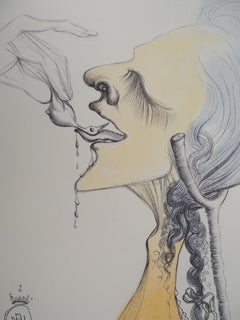
This exquisite lithograph by Joan Miro (1893–1983), titled Oiseau devant le solei (Bird Before the Sun), originates from the April 1961 folio Derriere le Miroir, No. 125-126, published by Maeght Editeur, Paris, under the direction of Aime Maeght, and printed by Imprimerie Arte, Paris, 1961. The composition exemplifies Miro’s poetic use of symbolic imagery, where the bird and sun function as elemental forces within his visual language. Through gestural line, saturated color, and spatial freedom, the work reflects Miro’s fusion of cosmic imagery, instinctive mark making, and lyrical abstraction. Executed on velin paper, this lithograph measures 33 x 15 inches (83.82 x 38.1 cm), with bifold, as issued. Unsigned and unnumbered as issued. The edition reflects the refined technical standards and craftsmanship of Imprimerie Arte, Paris. Artwork Details: Artist: Joan Miro (1893–1983) Title: Oiseau devant le solei (Bird Before the Sun), from Derriere le Miroir, No. 125-126, April 1961 Medium: Lithograph on velin paper Dimensions: 33 x 15 inches (83.82 x 38.1 cm), with bifold, as issued Inscription: Unsigned and unnumbered as issued Date: 1961 Publisher: Maeght Editeur, Paris Printer: Imprimerie Arte, Paris Catalogue raisonne reference: Miro, Joan, et al. Joan Miro Lithographe. Maeght, 1972–1992, illustration 1722 Condition: Well preserved, consistent with age and medium Provenance: From the April 1961 folio Derriere le Miroir, No. 125-126, published by Maeght Editeur, Paris About the Publication: Derriere le Miroir (translated as "Behind the Mirror") was an iconic French art periodical published from 1946 to 1982 by Maeght Editeur, one of the most influential art publishers of the twentieth century. Founded by Aime Maeght in Paris, the publication was conceived as a visual and literary collaboration between leading modern artists, poets, and critics. Each issue functioned as both an exhibition catalogue and an autonomous work of art, featuring original lithographs printed directly from the artists stones or plates alongside essays, poems, and critical texts. Over more than three decades, Derriere le Miroir produced over 250 issues and presented an extraordinary range of artists including Henri Matisse, Marc Chagall, Georges Braque, Alexander Calder, Fernand Leger, Pierre Bonnard, Alberto Giacometti, Eduardo Chillida, Ellsworth Kelly, Francis Bacon, Antoni Tapies, Pierre Alechinsky, Pol Bury, Bram van Velde, and many others. Printed by master ateliers such as Mourlot and Arte, the series established new standards of excellence in modern lithography and graphic design. Closely linked to exhibitions at Galerie Maeght, each issue served as a lasting document of postwar modernism, uniting image, text, and philosophy into a uniquely influential publication that remains among the most important and collectible achievements in twentieth century art publishing. About the Artist: Joan Miro (1893–1983) was a Catalan painter, sculptor, printmaker, and ceramicist whose visionary imagination and lyrical abstraction made him one of the most influential and beloved artists of the twentieth century. Born in Barcelona, Miro drew inspiration from Catalan folk art, Romanesque frescoes, and the luminous landscapes of Mont-roig del Camp, developing a deep connection to nature that infused his work with vitality and symbolism. After formal training at the Escola d'Art in Barcelona, he absorbed the lessons of Post-Impressionism and Cubism before moving to Paris in the early 1920s, where he became a leading figure in the Surrealist movement. There, Miro forged a personal visual language of biomorphic shapes, floating symbols, and radiant color harmonies that reflected both spontaneity and spiritual depth. In creative dialogue with peers such as Alexander Calder, Alberto Giacometti, Salvador Dali, Wassily Kandinsky, Marcel Duchamp, and Man Ray, he helped revolutionize modern art by dissolving the boundaries between abstraction and dream imagery. Miro's inventive approach extended far beyond painting, embracing sculpture, ceramics, and monumental public commissions that redefined how art could interact with space and emotion. His expressive freedom and gestural abstraction profoundly influenced later artists including Jackson Pollock, Mark Rothko, Alexander Calder, Jean Dubuffet, Antoni Tapies, and Joan Mitchell, inspiring generations who sought to merge instinct, color, and imagination. Today, Miro's work remains a cornerstone of modernism, prized by collectors and celebrated in major museums worldwide. His highest auction record was achieved by Peinture (Etoile Bleue) (1927), which sold for approximately 37 million USD at Sothebys, London, on June 19, 2012. Joan Miro Oiseau...

Category

1960s Surrealist Art
Materials

Lithograph

original etching

original etching

Located in Henderson, NV

Medium: original etching. Printed in Paris by Lacourière and published by Pierre à Feu and Maeght Editeur for the Marcel Duchamp / André Breton project Surréalisme en 1947. Issued in...

Category

1940s Surrealist Art

Materials

Etching

Parget in Chaos, Surrealist Etching by Jim McCormick

Parget in Chaos, Surrealist Etching by Jim McCormick

Located in Long Island City, NY

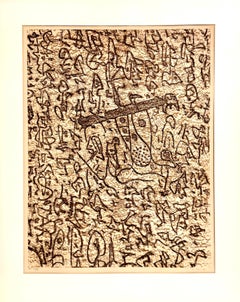
Jim McCormick, American - Parget in Chaos, Year: 1969, Medium: Etching on Arches, signed, titled, numbered and dated in pencil, Edition: 20, Image Size: 17.75 x 14.75 inches, Size:...

Category

1960s Surrealist Art
Materials

Etching

Surrealist art for sale on 1stDibs.
Find a wide variety of authentic Surrealist art available for sale on 1stDibs. Works in this style were very popular during the 21st Century and Contemporary, but contemporary artists have continued to produce works inspired by this movement. If you’re looking to add art created in this style to introduce contrast in an otherwise neutral space in your home, the works available on 1stDibs include elements of blue, orange, purple, red and other colors. Many Pop art paintings were created by popular artists on 1stDibs, including Salvador Dalí, Marc Chagall, Joan Miró, and Leonor Fini. Frequently made by artists working with Paint, and Lithograph and other materials, all of these pieces for sale are unique and have attracted attention over the years. Not every interior allows for large Surrealist art, so small editions measuring 1 inches across are also available. Prices for art made by famous or emerging artists can differ depending on medium, time period and other attributes. On 1stDibs, the price for these items starts at $1 and tops out at $1,450,000, while the average work sells for $1,426.