By Elisabeth Sabala
Located in Lake Worth Beach, FL
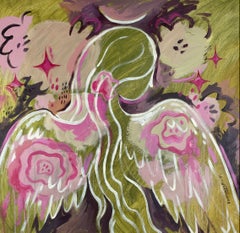
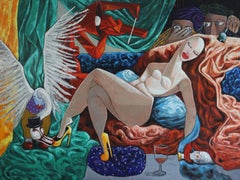
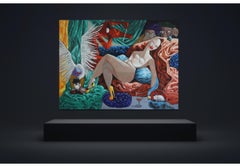
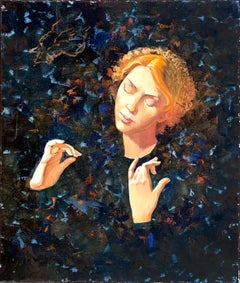
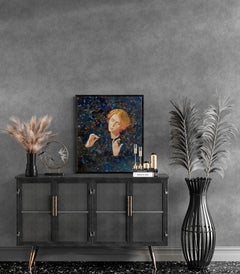
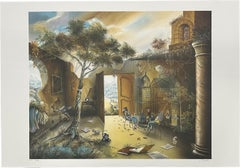
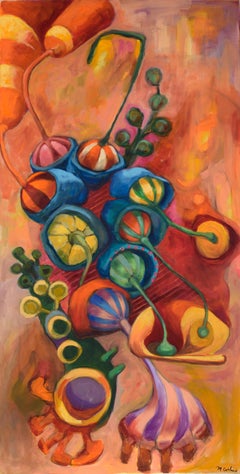
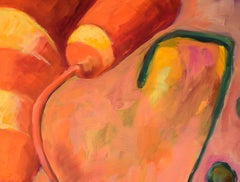
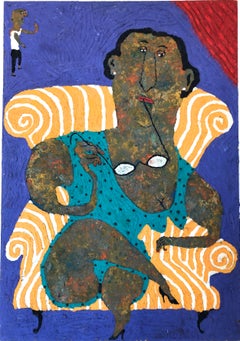
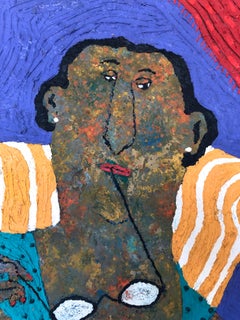
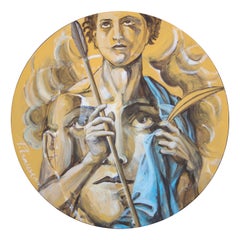
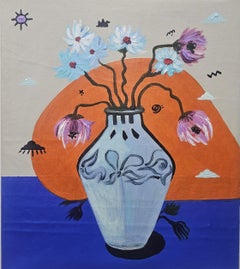
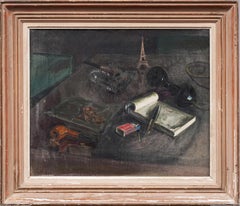
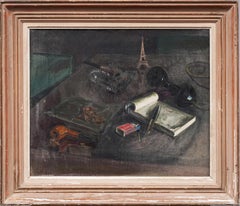
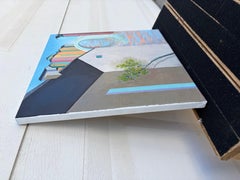
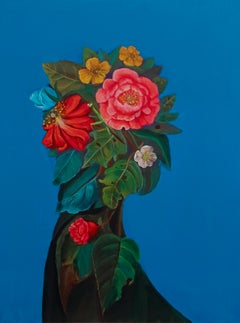
Woman in the chair, heavy oil impasto on canvas framed.
Elisabeth Sabala Abelló (Barcelona, 1956). She studied industrial design at the School of Arts and Crafts in Barcelona and has a degree in Fine Arts, a specialty in painting, from the Central University of the same city. Sabala is a convinced figurative who has given all the prominence of her work to the representation of the human being in its most trivial aspects. At a time when the artistic landscape extols abstract and conceptual art focused on the great universal themes, Sabala continues to focus on the small defects that bring us closer to the collective and the human. The artistic progression of Sabala takes place, at first, from a bleak period to another vitalist and, later, from the representation of isolated characters (In the super, Reading the stories of the paintings) to the recreation of great concentrations of its peculiar individuals characterized in an endless number of situations (The Great Dance, The Girls of the Choir). Sabala's work is vital and touching, as well as scathing and satirical: it confronts its characters in the most varied situations, capturing, at the same time, the viewer's attention with an unusual juxtaposition of colors that do not seek chromatic harmony, but expression and movement through matter. In 1980 he won the first prize of a painting of the City of Castelldefels, and the following year he debuted individually in the Caixa Catalunya room, in Barcelona. In 1984, she was selected for the XXIII Joan Miró Drawing Prize, taking part in a traveling exhibition in Japan. Sabala won the first prize in the International Painting Competition of Pollença (Mallorca) in 1985, and the following year she took part in a collective held at the Martano gallery in Turin. That same year of 1986 she obtained the Scholarship of Plastic Arts of the Generalitat de Catalunya. He continues to hold personal shows in Barcelona, Mallorca, Madrid, and Italy, and in 1989 he debuted in New York with an individual exhibition held at the Scott Alan Gallery. Since then she will reiterate his presence both in that city and in Paris, Berlin, Monaco, Amsterdam, Los Angeles, Mexico City, Hong Kong, etc. His works have been present at Interactive, ARCO, Art Forum, Art Jonction and New Art, as well as in various Spanish museums.
• Studies: Fine Arts, University of Barcelona
• Industrial Design, School of Arts and Crafts, Barcelona
Main exhibitions
Spain:
• Barcelona:
◦ Arcs & Cracks, 1990, 1992, Anna Benach 1993, Helena Ramos 1993
◦ Maria Jose Castellvi 1996, 1997, 1999, 2001 “a wedding is a wedding” + Performance “Ella”
◦ 2004, 2006 “Fashion satisfaction” + Performance
◦ 2008 “Women's weapons”
• Girona:
◦ Helena Ramos 1990, 1991, 1993, 1995
◦ Cyprus Art...
Category
1980s Surrealist Art
MaterialsCotton Canvas, Oil