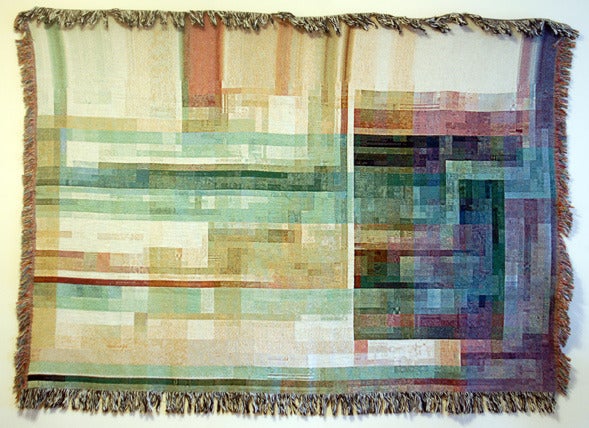
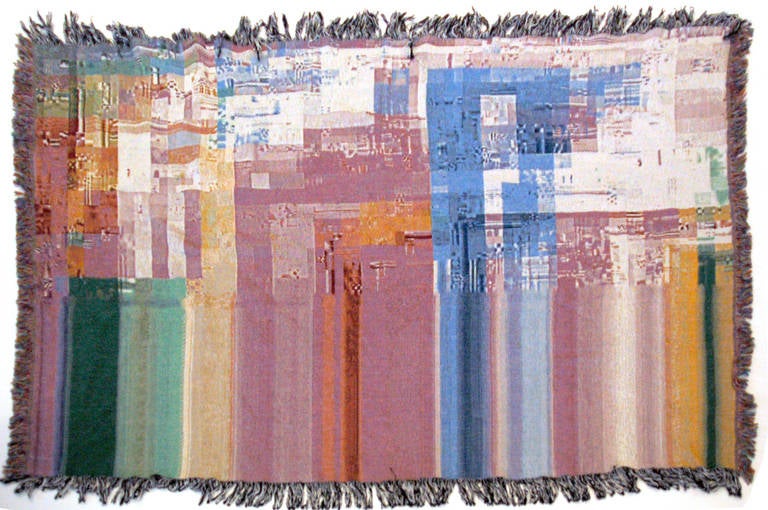
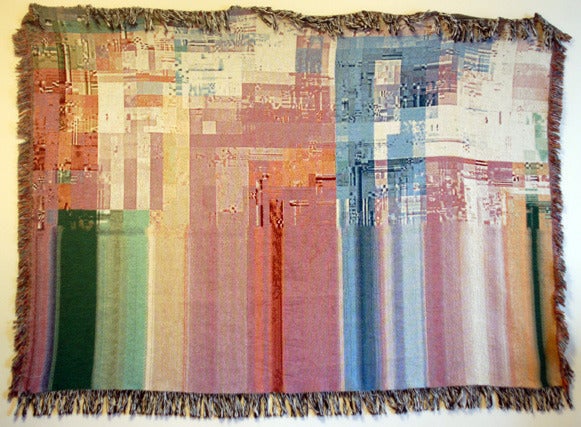
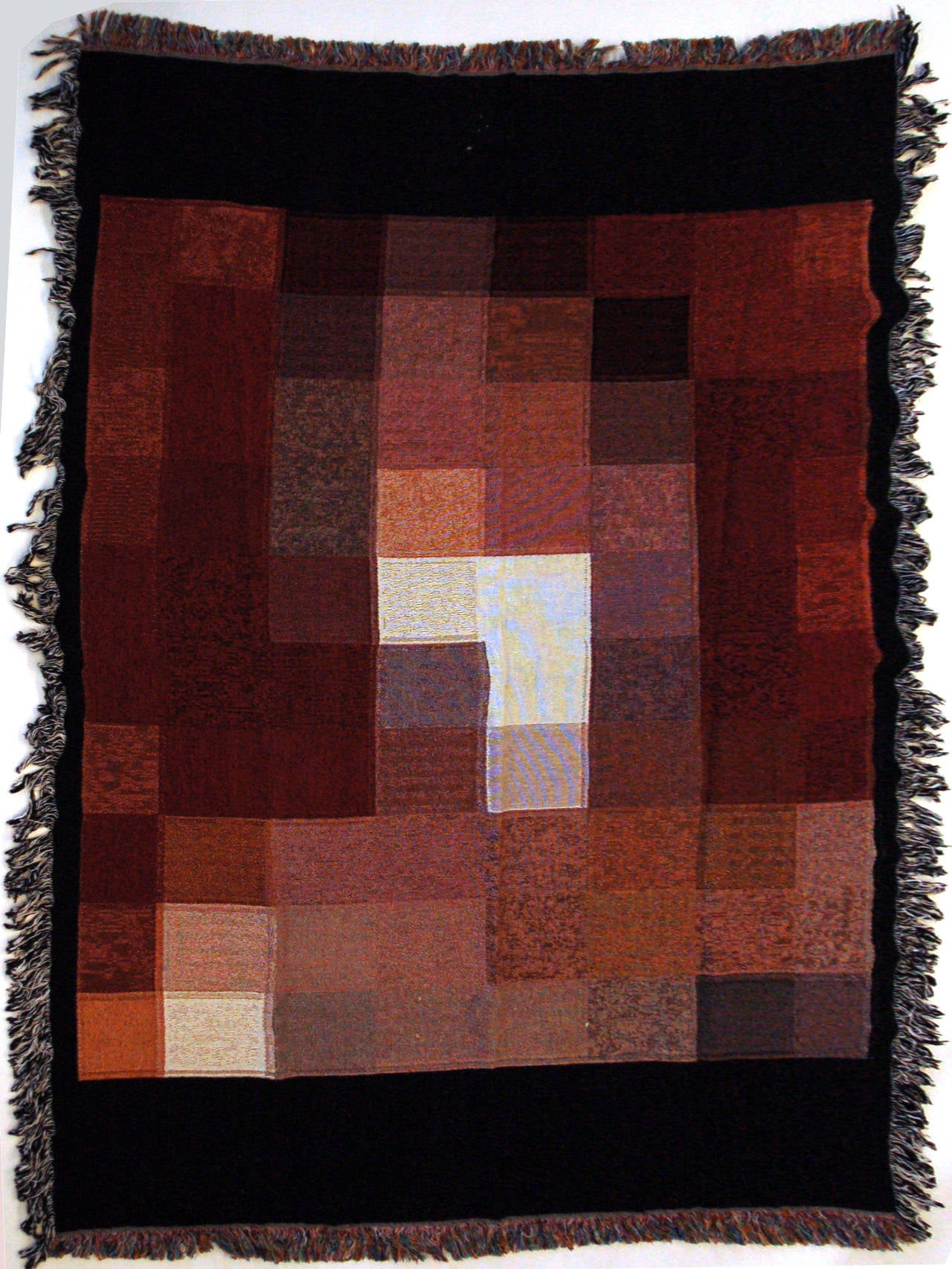
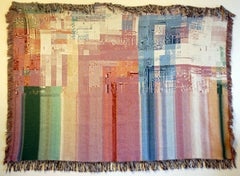
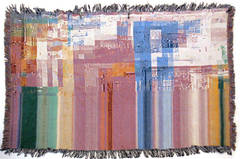
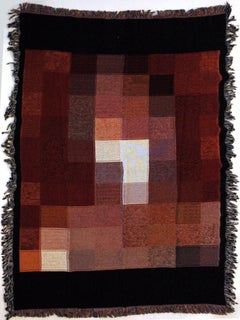
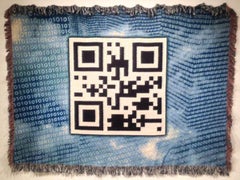
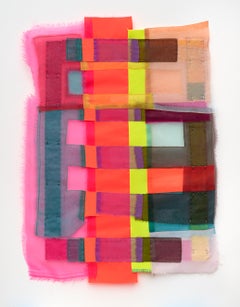
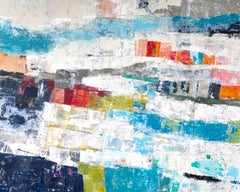
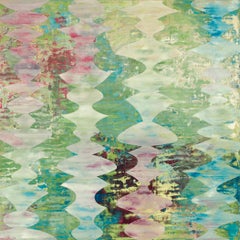
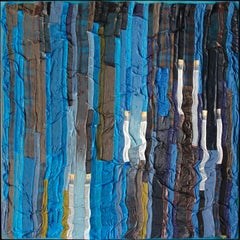
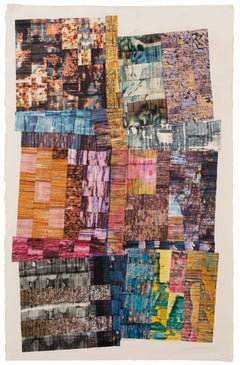
Glitch Tapestry 21, 2012
Jacquard woven tapestry made of dyed cotton thread.
60 x 80 inches
The Digital Tapestry Project continues my exploration of notions of materiality, craft, aouthorship, and the boundaries between the digital and physical. These works tie into many other bodies of work, like 8 Bits or Less, the Globalist Realism Project, and my AR explorations as an associate member of the collective Manifest.AR. Each panel is a 60"x80" digital Jacquard woven tapestry made of dyed cotton thread.
Originally inspired by the history of the tapestry as a monumental symbol, such as the Bayeuxs Tapestry's chronicle of the Battle of Hastings in 1066 and the Tapestry's subsequent creation and display in a cathedral as a function of power. As a matter of craft, I have been interested in the technology of digital Jacquard looms since I first saw one at Eastern Michigan University in 2005 and the history of Jacquard technology as the first industrial digital technology.
The adoption of the Jacquard loom in the early 1800's ignited some of the first controversies of labor, craftsmanship, and mechanization through the Luddites and the Saboteurs, and is relevant to the conversations of digital fabrication and elimination of labor through mechanization today. In addition, these tapestries call into question the ancient practice of the artist's atelier, and networked Free Market capitalism, as these pieces are outsourced through photo departments of many big-box retailers, such as Wal-Mart and Meier, who then subcontract to a loom in North Carolina run by Innovative Concepts, Inc.
Therefore, while the Digital Tapestry project shares a certain workflow and fabrication set, each questions the cultural context related to its form and history through each iteration.
Patrick is a conceptual artist, curator, and theorist exploring how media shape our perception of reality as well as the borders between the digital and the material. He is best known for his work with the virtual reality performance art group Second Front, and the animator of the activist group, The Yes Men.
He is a CalArts/Herb Alpert Fellow and Whitney Biennial exhibitor as part of the collective RTMark. He has presented and exhibited internationally at numerous biennials and triennials (Yokohama, Venice, Performa, Maribor, Turin, Sundance), and conferences (ISEA, SIGGRAPH, Popular Culture Association, SLSA, SxSW).
His recent book, “Variant Analyses: Interrogations of New Media Culture” was released by the Institute for Networked Culture, and is included in the Oxford Handbook of Virtuality. He is a Lecturer of Digital Studio Practice at the Peck School of the Arts in Milwaukee, Wisconsin.