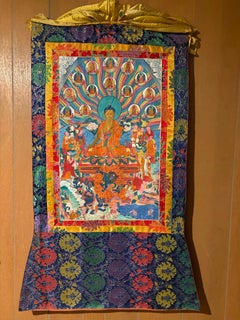
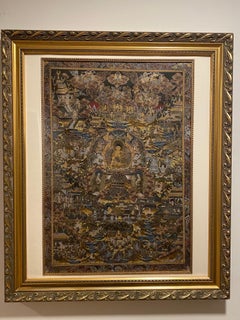
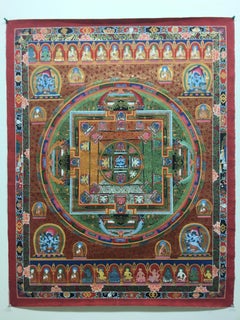
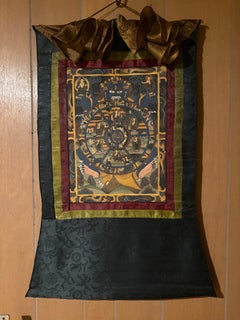
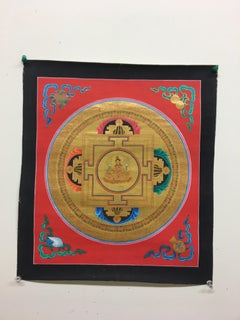
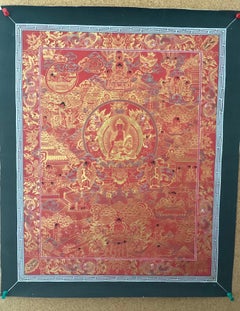
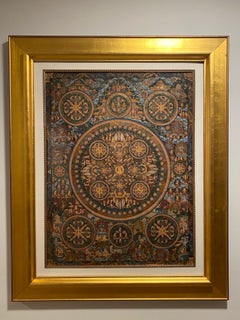
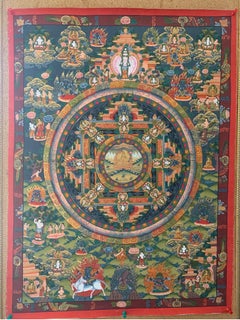
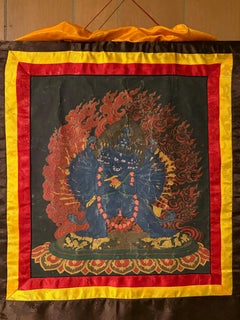
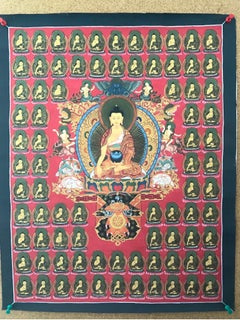
Thangka painting dates back to 7th century after Buddhism was spread in the Himalayan region (Nepal, Bhutan, Tibet and Northern India). In Eastern world Thangka is considered to be a part of Abhi-Dharma which means "The Art of Enlightenment". It is a scroll painting on canvas. Over the centuries Thangkas gradually acquired the status of collectible fine art from a purely spiritual art. Due to international museum shows and popularity of Buddhism Thangkas in particular are gaining a place on the art world's radar screen. The beauty and power of these intricate paintings are strong enough to stand up aesthetically for any viewer.
The thangka painting of the Life of Buddha narrates the most relevant episodes of the life of Siddhartha known as the “Twelve Great Deeds of Buddha”.
Life of Buddha Thangka Paintings are not just a mere illustration of the main episodes of the historical Siddhartha and his progress towards the achievement of spiritual enlightenment.
They are considered to be a visual representation of several philosophical aspects of the esoteric Buddhism...
Category
Late 20th Century Other Art Style More Art