Video Loading
Want more images or videos?
Request additional images or videos from the seller
1 of 15

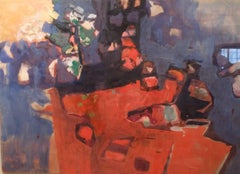
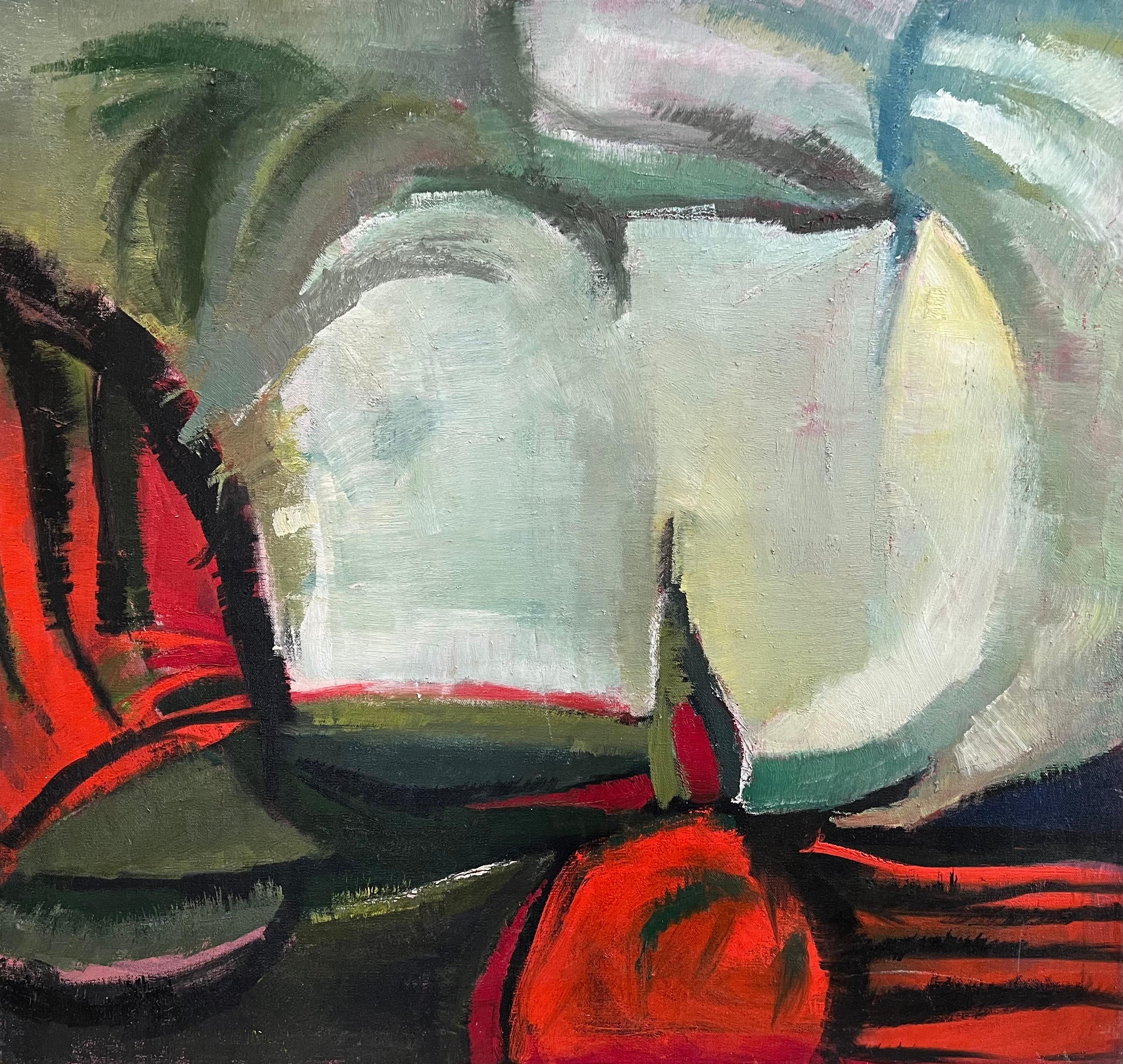
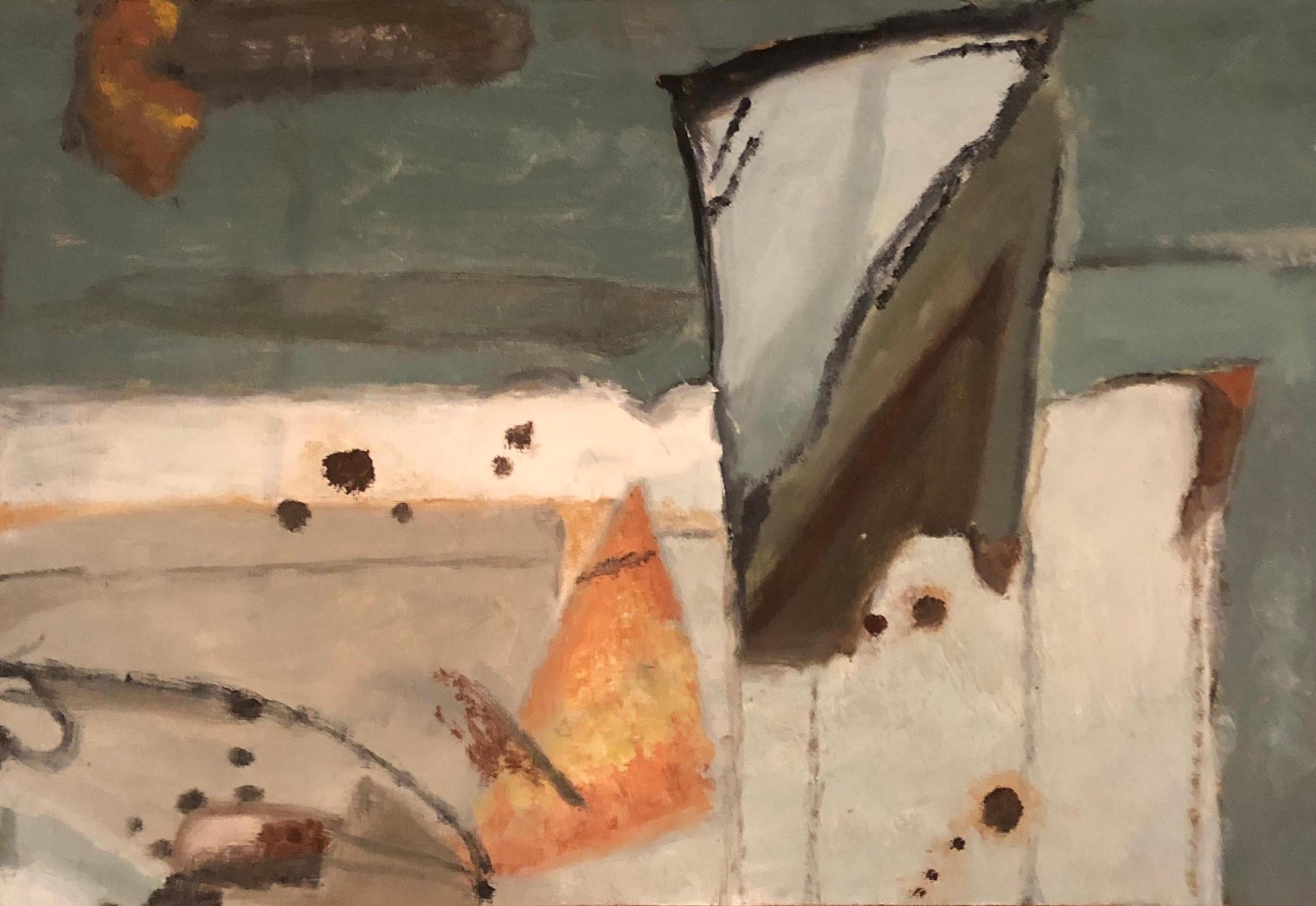
Ralph Eugene Della-Volpe
Docks and Clouds Abstract

1954-55

$9,800
£7,431.98
€8,584.75
CA$13,807.80
A$13,921.62
CHF 7,828.75
MX$173,341.13
NOK 92,459.81
SEK 92,528.50
DKK 64,163.58

About the Item

A rare period of Della-Volpe's early work - this painting is a marvelous example of his abstracted series of beach and dock scenes. During this time he used a painterly approach to abstracting that was in step with the New York school of Abstract Expressionism. In this work, his rich use of a deep red contrasted with the whites and other colors is great in any interior. It would sit well in a home that has mid-century modern leanings or needs the movement of a work from this time period. The canvas itself measures 22 x 28 so our posted size is the framed dimension. The work is signed by the artist in the lower left. It is in original condition and its provenance is directly from the artist. It will be accompanied by a catalogue done a number of years ago on the artist's work and exhibition at that time. Ralph Eugene Della-Volpe's semi-abstract paintings of often simplified beach scenes and anonymous portraits "convey profound awareness of mood and character", and his paintings are hardly as literal as they may first appear. Constantly transforming what is on the canvas, the artist is never sure himself of the final composition of each work until completion because, as he says, "Everything I paint is based on my own feelings about life, my own insights, my own observations and my own needs for expression." Della-Volpe first studied painting at the National Academy of Design before joining the Army during World War II. As a soldier, the artist saw action on Utah Beach, and his experiences undoubtedly affected his later artistic style. Tom Wolf, of Bard College, explained that the paintings Della-Volpe produced after his return from service in World War II “project feelings of melancholy.” expressed in the tense expressions in the figures’ faces. The “coloristic exuberance” found in the works beginning in the mid 1960’s, with their vibrant fuscias and yellows, seem to offset what could be an otherwise solemn tone to many of his works at the time. Upon his return from military service, Della-Volpe took a teaching position as the first artist-in-residence at Bennett College in Millbrook, New York where he remained for 28 years, serving as chairman of the Art Department for most of that time. Obviously influenced by impressionism's preoccupation with the treatment of light, Volpe's own works have a "faultless tonal quality, with its sense of failing light - the areas of silvery gray deepening into rosy tans". The simplified scenes and portraits express the artist's love of open space and his aim to evoke emotion through each piece rather than recognition of what exactly is painted on the canvas. Della-Volpe has exhibited widely throughout his career and has lectured on art at colleges, universities, and galleries across the country.
  • Creator:
    Ralph Eugene Della-Volpe (1923, American)
  • Creation Year:
    1954-55
  • Dimensions:
    Height: 26.5 in (67.31 cm)Width: 31.5 in (80.01 cm)Depth: 2 in (5.08 cm)
  • Medium:
  • Movement & Style:
  • Period:
  • Condition:
    Frame has some slight wear but it is ready and good for hanging.
  • Gallery Location:
    New York, NY
  • Reference Number:
    Seller: 154051stDibs: LU1413210575272

More From This Seller

View All
Sailing with Dark Cloud Overhead

Sailing with Dark Cloud Overhead

By Ralph Eugene Della-Volpe

Located in New York, NY

A romantic and marvelous small painting that will enliven any smaller wall in an interior! Historically, Della-Volpe is a similar artist to Milton Avery and Wolf Kahn. After the wa...

Category

Early 2000s Abstract Paintings

Materials

Oil, Board
Storm over the Water Abstract

Storm over the Water Abstract

By Ralph Eugene Della-Volpe

Located in New York, NY

This semi-abstract with wonderful red, orange coloration depicts a storm coming over a beach and the water. It has all the elements of abstraction desirable in the market currently...

Category

2010s Abstract Paintings

Materials

Canvas, Oil

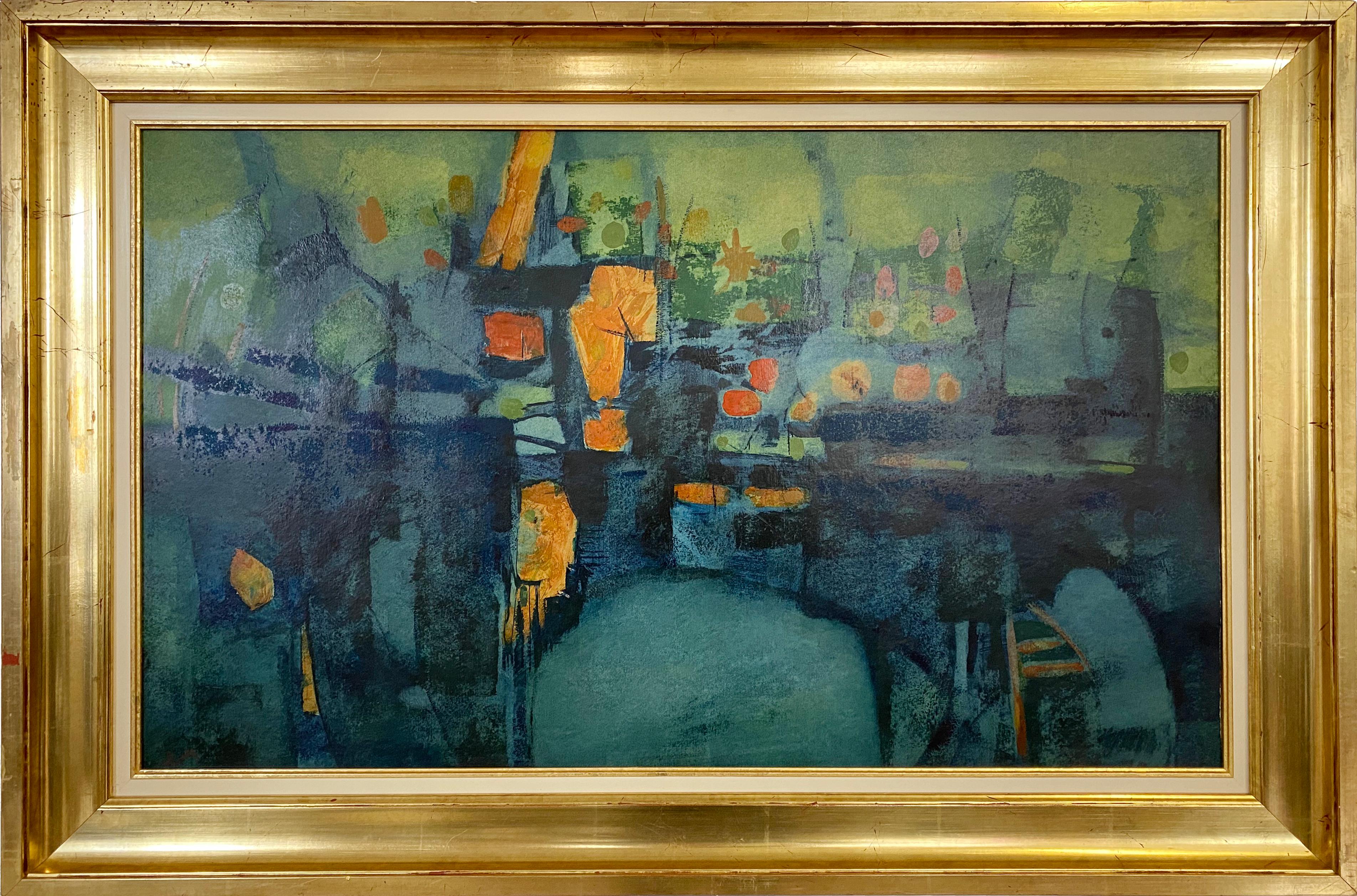
Harbor abstract in Deep Blues

Harbor abstract in Deep Blues

By Donald Roy Purdy

Located in New York, NY

Signed lower left: Purdy A very cool example of mid-century 50"s abstraction. Harbor is done in a style that was being experimented with particularly in the New York and California ...

Category

Mid-20th Century Abstract Landscape Paintings

Materials

Oil, Masonite

Head to Sea, Modernist sailing scene

Head to Sea, Modernist sailing scene

By Ralph Eugene Della-Volpe

Located in New York, NY

A vibrant and yet romantic sailing scene which was a favorite series by Della-Volpe. His compelling colorist approach has made his works desirable as he was one of the few artists post-war to be representative in style like Milton Avery and Wolf Kahn. Head to Sea has the hallmark intense and lovely coloration for which Della-Volpe is known. He came out of Abstract Expressionism in the New York school but then pivoted, like Milton Avery to representational, colorist work. The frame is a silvered gold leaf float frame of quality and has a rubbed, antiqued surface...

Category

Early 2000s American Modern Abstract Paintings

Materials

Oil, Board
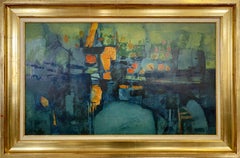
City Abstraction, mid modern abstract oil painting  Circa 1950’s

City Abstraction, mid modern abstract oil painting Circa 1950’s

By Donald Roy Purdy

Located in New York, NY

In the 1950’s Donald Purdy embraced an abstract style of painting which was pervasive at the time. This painting is a perfect compliment to a room with mide modern furniture. In Ci...

Category

Mid-20th Century Abstract Expressionist Figurative Paintings

Materials

Canvas, Oil

Clouds and Bird Over Rock Form

Clouds and Bird Over Rock Form

Located in New York, NY

This is a Post -Wa painting with a great date of 1957. The way he has abstracted the clouds and bird forms is typical of this time frame as artists were experimenting with symbols and forms in place of representational elements. It is atmospheric and a great size for certain mantles or spots that require or want a longer and thinner format!!! A great urban apartment painting that goes well with post modern furniture...

Category

1950s Post-Modern Paintings

Materials

Canvas, Oil

You May Also Like

Abstract Composition Painting, Oil on Canvas, Mid-20th Century, Framed

Abstract Composition Painting, Oil on Canvas, Mid-20th Century, Framed

Located in Genève, GE

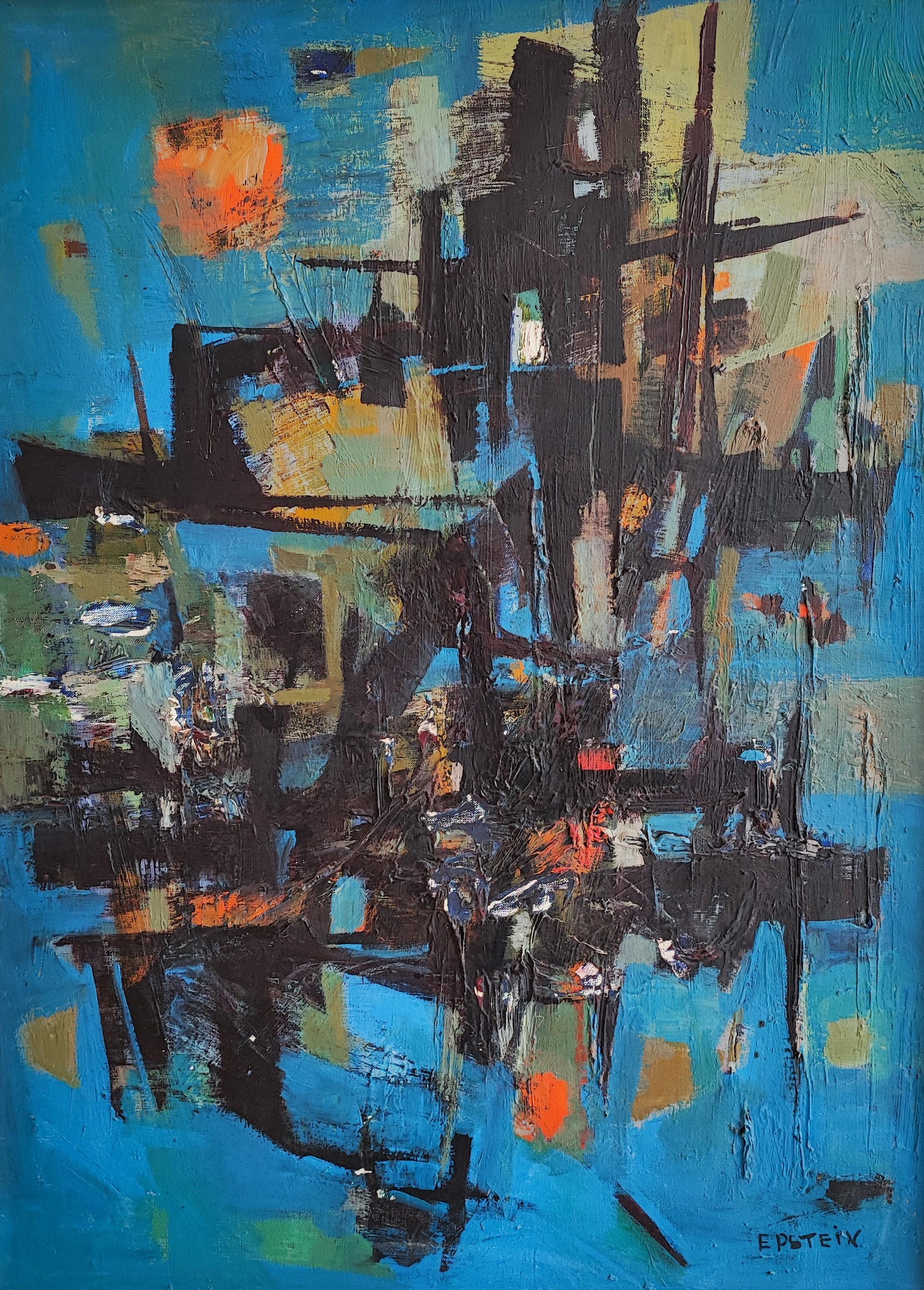
Work on canvas Beige frame Dimensions with frame : 92 x 71 x 2.5 cm This abstract work immediately captures attention with its bold interplay of colors and shapes. The vivid blue ba...

Category

Mid-20th Century Abstract Abstract Paintings

Materials

Canvas, Oil

Seaport 1 1957 - British Abstract art oil painting Suffolk artist

Seaport 1 1957 - British Abstract art oil painting Suffolk artist

By Robert Sadler

Located in Hagley, England

This superb British abstract expressionist oil painting is by noted Suffolk British artist Robert Sadler. Painted as oil on board it was painted in 1957 and is entitled Seaport 1 on ...

Category

1950s Abstract Abstract Paintings

Materials

Oil

1974 California Bay Area Abstract Expressionist Bold Oil Painting Don Clausen

1974 California Bay Area Abstract Expressionist Bold Oil Painting Don Clausen

By Don Clausen

Located in Surfside, FL

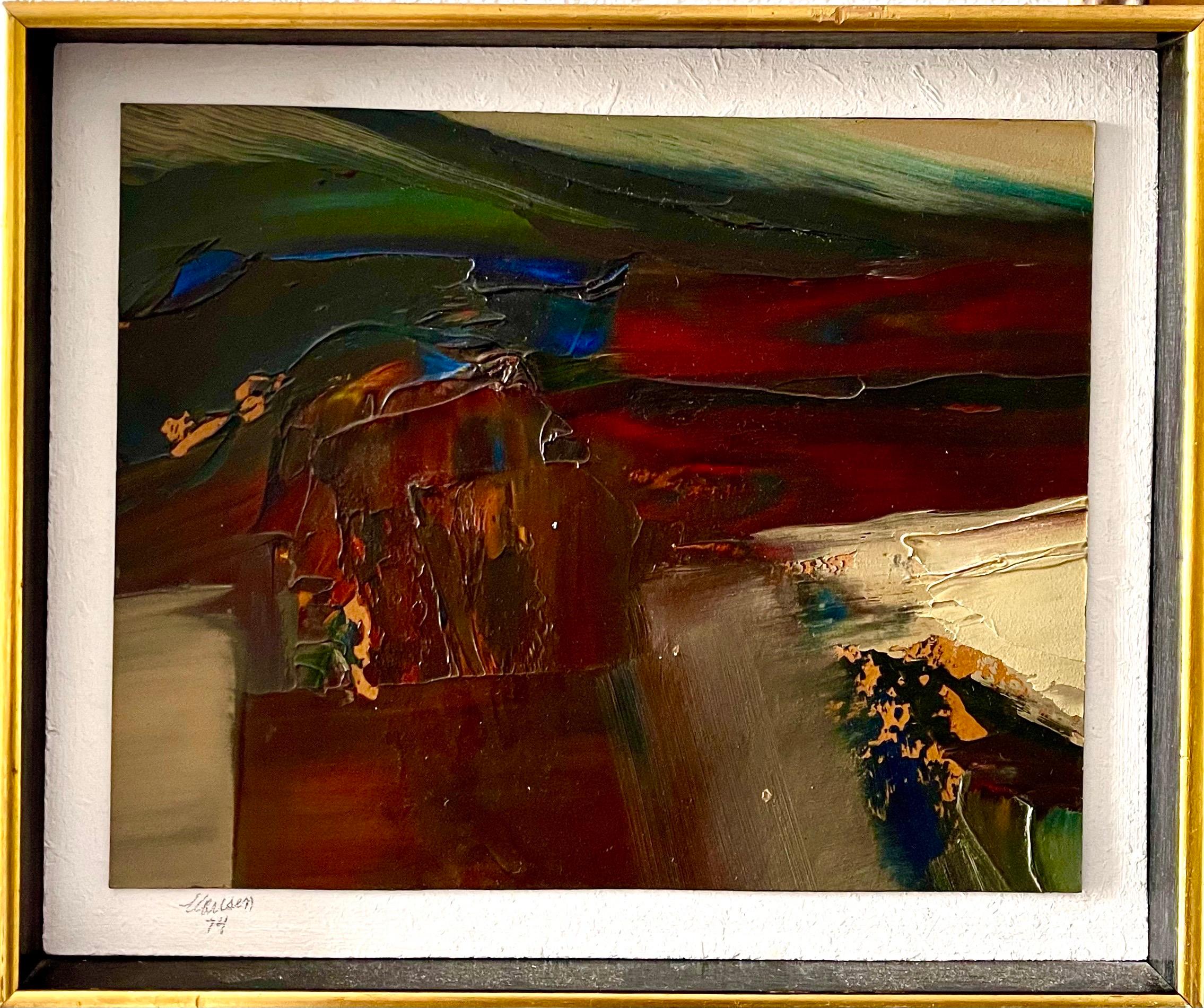
Don Clausen American (b. 1930) Untitled (1974) Oil on board Hand signed lower left and verso Framed 11.25 X 13.5 sight 9 x 11.25 inches Don Clausen is an American Postwar & Contem...

Category

1970s Abstract Expressionist Abstract Paintings

Materials

Oil, Board
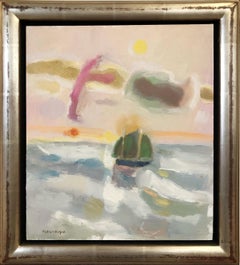
Expressionist Abstract #8, multi colored, Philadelphia artist, signed

Expressionist Abstract #8, multi colored, Philadelphia artist, signed

By Morris Lewis Blackman

Located in Doylestown, PA

"Expressionist Abstract #8" is a 50 x 28 inches oil on canvas work by Philadelphia artist Morris Lewis Blackman. The painting is signed in the artist's monogram "MLB" in the lower left and it is estate stamped on verso. Additional shipping options are available by contacting the seller via 1stDibs messaging system. Morris Blackman...

Category

1960s Abstract Abstract Paintings

Materials

Oil, Canvas

Contemporary art, Early Morning, Abstract expressionism.

Contemporary art, Early Morning, Abstract expressionism.

By Janet Hagopian

Located in La Canada Flintridge, CA

Titled Early Moring, the painting size is 32"x24", oil on canvas, with framed size is 36.5x26.5". In this enchanting artwork, "Early Morning," Janet Hagopian once again demonstrates...

Category

2010s Abstract Expressionist Abstract Paintings

Materials

Oil

“Multishore”

“Multishore”

By Syd Solomon

Located in Southampton, NY

Original oil on canvas painting titled “Multishore” by the well known American artist, Syd Solomon. Signed Syd Solomon lower right. Signed and dated Syd Solomon 1971 on the stretcher, inscribed as titled on the reverse 30 × 26 inches. Condition is excellent. The painting is housed in its original wood with silver reveal floating frame. Overall framed measurements are 32.75 by 28.75 inches. Provenance: A private collector. Syd Solomon was born near Uniontown, Pennsylvania, in 1917. He began painting in high school in Wilkes-Barre, where he was also a star football player. After high school, he worked in advertising and took classes at the Art Institute of Chicago. Before the attack on Pearl Harbor, he joined the war effort and was assigned to the First Camouflage Battalion, the 924th Engineer Aviation Regiment of the US Army. He used his artistic skills to create camouflage instruction manuals utilized throughout the Army. He married Ann Francine Cohen in late 1941. Soon thereafter, in early 1942, the couple moved to Fort Ord in California where he was sent to camouflage the coast to protect it from possible aerial bombings. Sent overseas in 1943, Solomon did aerial reconnaissance over Holland. Solomon was sent to Normandy early in the invasion where his camouflage designs provided protective concealment for the transport of supplies for men who had broken through the enemy line. Solomon was considered one of the best camoufleurs in the Army, receiving among other commendations, five bronze stars. Solomon often remarked that his camouflage experience during World War II influenced his ideas about abstract art. At the end of the War, he attended the École des Beaux-Arts in Paris. Because Solomon suffered frostbite during the Battle of the Bulge, he could not live in cold climates, so he and Annie chose to settle in Sarasota, Florida, after the War. Sarasota was home to the John and Mable Ringling Museum of Art, and soon Solomon became friends with Arthur Everett “Chick” Austin, Jr., the museum’s first Director. In the late 1940s, Solomon experimented with new synthetic media, the precursors to acrylic paints provided to him by chemist Guy Pascal, who was developing them. Victor D’Amico, the first Director of Education for the Museum of Modern Art, recognized Solomon as the first artist to use acrylic paint. His early experimentation with this medium as well as other media put him at the forefront of technical innovations in his generation. He was also one of the first artists to use aerosol sprays and combined them with resists, an innovation influenced by his camouflage experience. Solomon’s work began to be acknowledged nationally in 1952. He was included in American Watercolors, Drawings and Prints at the Metropolitan Museum of Art, New York. From 1952–1962, Solomon’s work was discovered by the cognoscenti of the art world, including the Museum of Modern Art Curators, Dorothy C. Miller and Peter Selz, and the Whitney Museum of American Art’s Director, John I. H. Baur. He had his first solo show in New York at the Associated American Artists Gallery in 1955 with “Chick” Austin, Jr. writing the essay for the exhibition. In the summer of 1955, the Solomons visited East Hampton, New York, for the first time at the invitation of fellow artist David Budd. There, Solomon met and befriended many of the artists of the New York School, including Jackson Pollock, Franz Kline, Willem de Kooning, James Brooks, Alfonso Ossorio, and Conrad Marca-Relli. By 1959, and for the next thirty-five years, the Solomons split the year between Sarasota (in the winter and spring) and the Hamptons (in the summer and fall). In 1959, Solomon began showing regularly in New York City at the Saidenberg Gallery with collector Joseph Hirshhorn buying three paintings from Solomon’s first show. At the same time, his works entered the collections of the Whitney Museum of American Art, the Solomon R. Guggenheim Museum, and the Wadsworth Athenaeum in Hartford, Connecticut, among others. Solomon also began showing at Signa Gallery in East Hampton and at the James David Gallery in Miami run by the renowned art dealer, Dorothy Blau. In 1961, the Guggenheim Museum’s H. H. Arnason bestowed to him the Silvermine Award at the 13th New England Annual. Additionally, Thomas Hess of ARTnews magazine chose Solomon as one of the ten outstanding painters of the year. At the suggestion of Alfred H. Barr, Jr., the Museum of Modern Art’s Director, the John and Mable Ringling Museum in Sarasota began its contemporary collection by purchasing Solomon’s painting, Silent World, 1961. Solomon became influential in the Hamptons and in Florida during the 1960s. In late 1964, he created the Institute of Fine Art at the New College in Sarasota. He is credited with bringing many nationally known artists to Florida to teach, including Larry Rivers, Philip Guston, James Brooks, and Conrad Marca-Relli. Later Jimmy Ernst, John Chamberlain, James Rosenquist, and Robert Rauschenberg settled near Solomon in Florida. In East Hampton, the Solomon home was the epicenter of artists and writers who spent time in the Hamptons, including Alfred Leslie, Jim Dine, Ibram Lassaw, Saul Bellow, Barney Rosset, Arthur Kopit, and Harold Rosenberg. In 1970, Solomon, along with architect Gene Leedy, one of the founders of the Sarasota School of Architecture, built an award-winning precast concrete and glass house and studio on the Gulf of Mexico near Midnight Pass in Sarasota. Because of its siting, it functioned much like Monet’s home in Giverny, France. Open to the sky, sea, and shore with inside and outside studios, Solomon was able to fully solicit all the environmental forces that influenced his work. His friend, the art critic Harold Rosenberg, said Solomon’s best work was produced in the period he lived on the beach. During 1974 and 1975, a retrospective exhibition of Solomon’s work was held at the New York Cultural Center and traveled to the John and Mable Ringling Museum in Sarasota. Writer Kurt Vonnegut, Jr. conducted an important interview with Solomon for the exhibition catalogue. The artist was close to many writers, including Harold Rosenberg, Joy Williams, John D. McDonald, Budd Schulberg, Elia Kazan, Betty Friedan...

Category

1970s Abstract Expressionist Abstract Paintings

Materials

Canvas, Oil