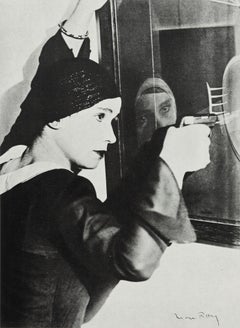
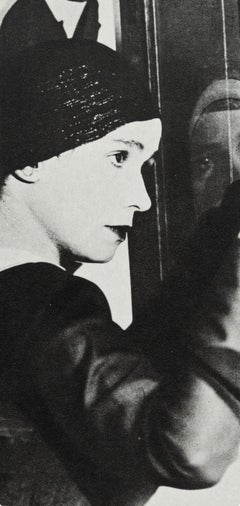
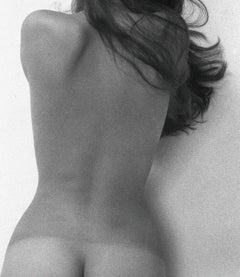
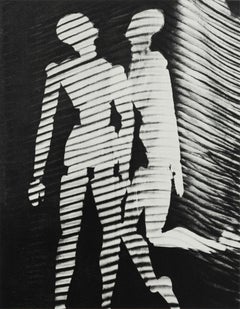
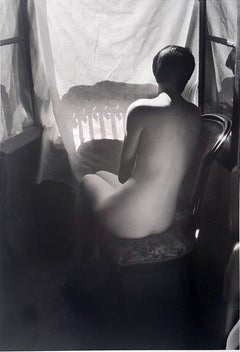
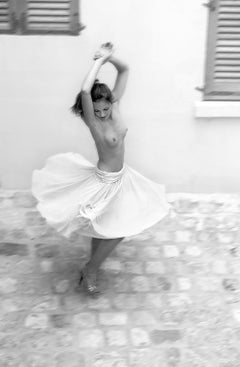
Photo of Iva Zanicchi - Vintage Photo - 1970s
Located in Roma, IT
Photo of Iva Zanicchi a Portrait is a vintage black and white photograph realized in the 1970s. Good conditions.
1970s Contemporary Figurative Photography
Photographic Paper
Photo of Iva Zanicchi - Vintage Photo - 1970s
Located in Roma, IT
Photo of Iva Zanicchi a Portrait is a vintage black and white photograph realized in the 1970s. Good conditions.
Photographic Paper
$1,350
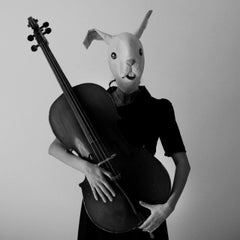
"Shot 2" Black & White Photography 24" x 24" in Edition 1/15 by Olha Stepanian
Located in Culver City, CA
"Shot 2" Black & White Photography 24" x 24" in Edition 1/15 by Olha Stepanian Printed on Epson Professional Paper Signed and numbered by the artist Comes with COA issued by th...
Photographic Paper
$1,350
"Play" Black & White Photography 24" x 24" inch Edition of 15 by Olha Stepanian
Located in Culver City, CA
"Play" Black & White Photography 24" x 24" inch Edition of 15 by Olha Stepanian Printed on Epson Professional Paper Signed and numbered by the artist Comes with COA issued b...
Archival Paper
$956Sale Price|20% Off
H 15.75 in W 11.75 in
Man Ray, Untitled, from Electa Editrice, 1980 (after)
By Man Ray
Located in Southampton, NY
This exquisite heliogravure after Man Ray (1890–1976), titled Untitled, originates from the 1980 folio Man Ray, Electa Editrice Portfolios. Published by Gruppo Editoriale Electra, Mi...
Lithograph
$2,973
H 22.05 in W 13.78 in D 0.08 in
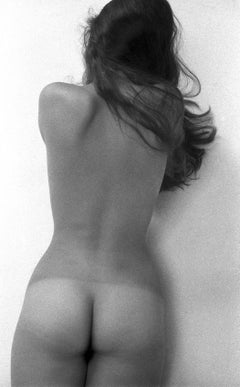
Figurative photo, Signed limited edition contemporary print, Black white-Raquel
Located in Sant Cugat del Vallès, Barcelona
An original signed archival pigment print on Hahnemühle Photo Rag® Baryta 315 gsm paper by Scottish artist Ian Sanderson (1951- 2020) titled ‘ Raquel ‘. This photograph is minimali...
Photographic Film, Archival Paper, Photographic Paper, Black and White, ...
$956Sale Price|20% Off
H 15.75 in W 11.75 in
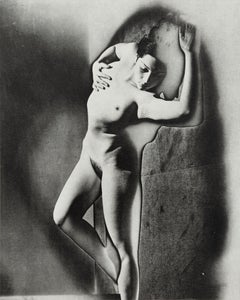
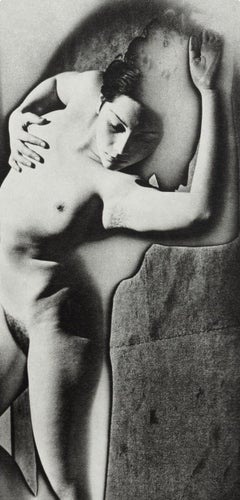
Man Ray, Preeminence of Matter Over Thought, from Electa Editrice, 1980 (after)
By Man Ray
Located in Southampton, NY
This exquisite heliogravure after Man Ray (1890–1976), titled Preeminence of Matter Over Thought, originates from the 1980 folio Man Ray, Electa Editrice Portfolios. Published by Gru...
Lithograph
$956Sale Price|20% Off
H 15.75 in W 11.75 in
Man Ray, Rayograph, from Electa Editrice, 1980 (after)
By Man Ray
Located in Southampton, NY
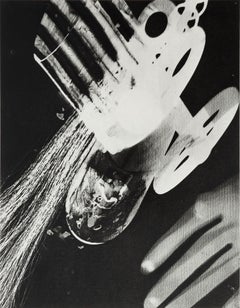
This exquisite heliogravure after Man Ray (1890–1976), titled Rayograph, originates from the 1980 folio Man Ray, Electa Editrice Portfolios. Published by Gruppo Editoriale Electra, Milano, and printed by Gruppo Editoriale Electra, Milano, 1980. This image exemplifies Man Ray’s pioneering “rayograph” technique—a cameraless photographic process in which objects were placed directly onto photosensitive paper and exposed to light, creating luminous abstract compositions that fused chance, intuition, and surrealist invention. Through this groundbreaking process, Man Ray transformed photography into pure visual poetry, redefining its potential as a form of modern art. Executed as a heliogravure on velin paper, this work measures 15.75 x 11.75 inches. Unsigned and unnumbered as issued. The edition exemplifies the refined craftsmanship of Gruppo Editoriale Electra, Milano. Artwork Details: Artist: After Man Ray (1890–1976) Title: Rayograph Medium: Heliogravure on velin paper Dimensions: 15.75 x 11.75 inches (40.01 x 29.84 cm) Inscription: Unsigned and unnumbered as issued Date: 1980 Publisher: Gruppo Editoriale Electra, Milano Printer: Gruppo Editoriale Electra, Milano Condition: Well preserved, consistent with age and medium Provenance: From the folio Man Ray, Electa Editrice Portfolios, published and printed by Gruppo Editoriale Electra, Milano, 1980 Notes: Excerpted from the folio (translated from Italian), Limited edition of M examples, drawn in heliogravure on special paper, designed specifically for the Portfolios Electa. Gruppo Editoriale Electra/Milan. Printed in Italy. About the Publication: The Man Ray, Electa Editrice Portfolio (1980) was published by Gruppo Editoriale Electra in Milan as part of the distinguished Electa Portfolios series, which celebrated the masters of 20th-century photography through the artisanal process of heliogravure printing. This edition was dedicated to Man Ray’s seminal body of photographic work from 1920 to 1934—an era in which he redefined modern image-making through technical invention, surrealist experimentation, and intellectual daring. Produced in collaboration with leading photographic historians and Italian master printers, the portfolio was printed on specially manufactured velin paper designed exclusively for the Electa Portfolios, ensuring tonal precision and textural depth true to the artist’s originals. The publication represents one of the most refined posthumous tributes to Man Ray’s legacy, combining Italian craftsmanship with avant-garde vision to preserve the luminous complexity of his photographs. Created with the same devotion to innovation and elegance that characterized Man Ray’s own practice, this edition remains an important intersection of fine art publishing and modernist history. About the Artist: Man Ray (1890–1976) was an American-born painter, sculptor, photographer, filmmaker, and conceptual visionary whose radical imagination and technical innovation transformed modern art and established him as one of the leading figures of the 20th century. Born Emmanuel Radnitzky in Philadelphia, he became a central force in both the Dada and Surrealist movements, defying artistic boundaries and redefining the relationship between art, technology, and the unconscious. After early involvement in New York’s avant-garde with Francis Picabia and Marcel Duchamp, Man Ray moved to Paris in 1921, where he joined a revolutionary circle of artists including Pablo Picasso, Alexander Calder, Alberto Giacometti, Salvador Dali, Joan Miro, Wassily Kandinsky, and Marcel Duchamp. There, he pioneered the “rayograph,” or photogram—a cameraless photographic technique that used light and shadow to create ethereal abstract compositions—and produced some of the most iconic images in art history, including Le Violon d’Ingres (1924) and Noire et Blanche (1926). His photography, distinguished by its fusion of elegance, surrealism, and psychological depth, captured the essence of modernist Paris and immortalized creative icons such as Kiki de Montparnasse, Gertrude Stein, and James Joyce. At the same time, Man Ray’s experimental films, including Le Retour a la Raison (1923) and L’Etoile de mer (1928), and his sculptural works like The Gift (1921) and Object to Be Destroyed (1923), expanded the possibilities of art itself, transforming ordinary objects into symbols of mystery and desire. His conceptual approach—viewing art as an idea rather than an object—anticipated later movements such as Pop Art, Minimalism, and Conceptual Art, profoundly influencing artists like Andy Warhol, Robert Rauschenberg, Jasper Johns, and Joseph Beuys, as well as photographers Helmut Newton, Guy Bourdin, Cindy Sherman, and Richard Avedon. Even in exile during World War II, while working in Los Angeles, he continued to innovate, blending Surrealist fantasy with the luminosity of the California landscape before returning to Paris, where he spent his final decades refining his poetic, intellectual, and sensuous vision. Exhibited in major institutions such as the Museum of Modern Art, the Tate Modern, and the Centre Pompidou, Man Ray’s work remains foundational to modern art history—bridging painting, photography, film, and sculpture in a body of work that continues to shape the language of visual culture. Standing alongside Pablo Picasso, Alexander Calder, Alberto Giacometti, Salvador Dali, Joan Miro, Wassily Kandinsky, and Marcel Duchamp, Man Ray endures as one of the most original and influential artists of the modern era. His highest auction record was achieved by Noire et Blanche (1926), which sold for 3.13 million USD at Christie’s, Paris, on November 9, 2017, confirming his status as a timeless innovator whose genius continues to inspire artists, collectors, and dreamers worldwide. Man Ray Rayograph...
Lithograph
$956Sale Price|20% Off
H 15.75 in W 11.75 in
Man Ray, Rayograph to the Skein of Wool, from Electa Editrice, 1980 (after)
By Man Ray
Located in Southampton, NY
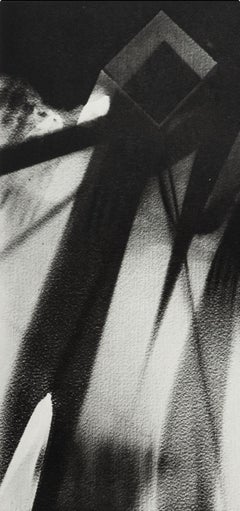
This exquisite heliogravure after Man Ray (1890–1976), titled Rayograph to the Skein of Wool, originates from the 1980 folio Man Ray, Electa Editrice Portfolios. Published by Gruppo Editoriale Electra, Milano, and printed by Gruppo Editoriale Electra, Milano, 1980. This work exemplifies Man Ray’s invention of the “rayograph,” a cameraless photographic technique in which objects are placed directly on light-sensitive paper and exposed to light. The resulting image, both abstract and tangible, transforms a simple skein of wool into a mysterious interplay of light, form, and shadow. The composition captures the poetic essence of Man Ray’s Surrealist experimentation—an alchemy of chance and precision that fuses everyday materials with pure visual abstraction. Executed as a heliogravure on velin paper, this work measures 15.75 x 11.75 inches. Unsigned and unnumbered as issued. The edition exemplifies the refined craftsmanship of Gruppo Editoriale Electra, Milano. Artwork Details: Artist: After Man Ray (1890–1976) Title: Rayograph to the Skein of Wool Medium: Heliogravure on velin paper Dimensions: 15.75 x 11.75 inches (40.01 x 29.84 cm) Inscription: Unsigned and unnumbered as issued Date: 1980 Publisher: Gruppo Editoriale Electra, Milano Printer: Gruppo Editoriale Electra, Milano Condition: Well preserved, consistent with age and medium Provenance: From the folio Man Ray, Electa Editrice Portfolios, published and printed by Gruppo Editoriale Electra, Milano, 1980 Notes: Excerpted from the folio (translated from Italian), Limited edition of M examples, drawn in heliogravure on special paper, designed specifically for the Portfolios Electa. Gruppo Editoriale Electra/Milan. Printed in Italy. About the Publication: The Man Ray, Electa Editrice Portfolio (1980) was published by Gruppo Editoriale Electra in Milan as part of the distinguished Electa Portfolios series, which celebrated the masters of 20th-century photography through the artisanal process of heliogravure printing. This edition was dedicated to Man Ray’s seminal body of photographic work from 1920 to 1934—an era in which he redefined modern image-making through technical invention, surrealist experimentation, and intellectual daring. Produced in collaboration with leading photographic historians and Italian master printers, the portfolio was printed on specially manufactured velin paper designed exclusively for the Electa Portfolios, ensuring tonal precision and textural depth true to the artist’s originals. The publication represents one of the most refined posthumous tributes to Man Ray’s legacy, combining Italian craftsmanship with avant-garde vision to preserve the luminous complexity of his photographs. Created with the same devotion to innovation and elegance that characterized Man Ray’s own practice, this edition remains an important intersection of fine art publishing and modernist history. About the Artist: Man Ray (1890–1976) was an American-born painter, sculptor, photographer, filmmaker, and conceptual visionary whose radical imagination and technical innovation transformed modern art and established him as one of the leading figures of the 20th century. Born Emmanuel Radnitzky in Philadelphia, he became a central force in both the Dada and Surrealist movements, defying artistic boundaries and redefining the relationship between art, technology, and the unconscious. After early involvement in New York’s avant-garde with Francis Picabia and Marcel Duchamp, Man Ray moved to Paris in 1921, where he joined a revolutionary circle of artists including Pablo Picasso, Alexander Calder, Alberto Giacometti, Salvador Dali, Joan Miro, Wassily Kandinsky, and Marcel Duchamp. There, he pioneered the “rayograph,” or photogram—a cameraless photographic technique that used light and shadow to create ethereal abstract compositions—and produced some of the most iconic images in art history, including Le Violon d’Ingres (1924) and Noire et Blanche (1926). His photography, distinguished by its fusion of elegance, surrealism, and psychological depth, captured the essence of modernist Paris and immortalized creative icons such as Kiki de Montparnasse, Gertrude Stein, and James Joyce. At the same time, Man Ray’s experimental films, including Le Retour a la Raison (1923) and L’Etoile de mer (1928), and his sculptural works like The Gift (1921) and Object to Be Destroyed (1923), expanded the possibilities of art itself, transforming ordinary objects into symbols of mystery and desire. His conceptual approach—viewing art as an idea rather than an object—anticipated later movements such as Pop Art, Minimalism, and Conceptual Art, profoundly influencing artists like Andy Warhol, Robert Rauschenberg, Jasper Johns, and Joseph Beuys, as well as photographers Helmut Newton, Guy Bourdin, Cindy Sherman, and Richard Avedon. Even in exile during World War II, while working in Los Angeles, he continued to innovate, blending Surrealist fantasy with the luminosity of the California landscape before returning to Paris, where he spent his final decades refining his poetic, intellectual, and sensuous vision. Exhibited in major institutions such as the Museum of Modern Art, the Tate Modern, and the Centre Pompidou, Man Ray’s work remains foundational to modern art history—bridging painting, photography, film, and sculpture in a body of work that continues to shape the language of visual culture. Standing alongside Pablo Picasso, Alexander Calder, Alberto Giacometti, Salvador Dali, Joan Miro, Wassily Kandinsky, and Marcel Duchamp, Man Ray endures as one of the most original and influential artists of the modern era. His highest auction record was achieved by Noire et Blanche (1926), which sold for 3.13 million USD at Christie’s, Paris, on November 9, 2017, confirming his status as a timeless innovator whose genius continues to inspire artists, collectors, and dreamers worldwide. Man Ray Rayograph...
Lithograph
$956Sale Price|20% Off
H 15.75 in W 11.75 in
Man Ray, Rayograph, from Electa Editrice, 1980 (after)
By Man Ray
Located in Southampton, NY
This exquisite heliogravure after Man Ray (1890–1976), titled Rayograph, originates from the 1980 folio Man Ray, Electa Editrice Portfolios. Published by Gruppo Editoriale Electra, Milano, and printed by Gruppo Editoriale Electra, Milano, 1980. This image exemplifies Man Ray’s pioneering “rayograph” technique—a cameraless photographic process in which objects were placed directly onto photosensitive paper and exposed to light, creating luminous abstract compositions that fused chance, intuition, and surrealist invention. Through this groundbreaking process, Man Ray transformed photography into pure visual poetry, redefining its potential as a form of modern art. Executed as a heliogravure on velin paper, this work measures 15.75 x 11.75 inches. Unsigned and unnumbered as issued. The edition exemplifies the refined craftsmanship of Gruppo Editoriale Electra, Milano. Artwork Details: Artist: After Man Ray (1890–1976) Title: Rayograph Medium: Heliogravure on velin paper Dimensions: 15.75 x 11.75 inches (40.01 x 29.84 cm) Inscription: Unsigned and unnumbered as issued Date: 1980 Publisher: Gruppo Editoriale Electra, Milano Printer: Gruppo Editoriale Electra, Milano Condition: Well preserved, consistent with age and medium Provenance: From the folio Man Ray, Electa Editrice Portfolios, published and printed by Gruppo Editoriale Electra, Milano, 1980 Notes: Excerpted from the folio (translated from Italian), Limited edition of M examples, drawn in heliogravure on special paper, designed specifically for the Portfolios Electa. Gruppo Editoriale Electra/Milan. Printed in Italy. About the Publication: The Man Ray, Electa Editrice Portfolio (1980) was published by Gruppo Editoriale Electra in Milan as part of the distinguished Electa Portfolios series, which celebrated the masters of 20th-century photography through the artisanal process of heliogravure printing. This edition was dedicated to Man Ray’s seminal body of photographic work from 1920 to 1934—an era in which he redefined modern image-making through technical invention, surrealist experimentation, and intellectual daring. Produced in collaboration with leading photographic historians and Italian master printers, the portfolio was printed on specially manufactured velin paper designed exclusively for the Electa Portfolios, ensuring tonal precision and textural depth true to the artist’s originals. The publication represents one of the most refined posthumous tributes to Man Ray’s legacy, combining Italian craftsmanship with avant-garde vision to preserve the luminous complexity of his photographs. Created with the same devotion to innovation and elegance that characterized Man Ray’s own practice, this edition remains an important intersection of fine art publishing and modernist history. About the Artist: Man Ray (1890–1976) was an American-born painter, sculptor, photographer, filmmaker, and conceptual visionary whose radical imagination and technical innovation transformed modern art and established him as one of the leading figures of the 20th century. Born Emmanuel Radnitzky in Philadelphia, he became a central force in both the Dada and Surrealist movements, defying artistic boundaries and redefining the relationship between art, technology, and the unconscious. After early involvement in New York’s avant-garde with Francis Picabia and Marcel Duchamp, Man Ray moved to Paris in 1921, where he joined a revolutionary circle of artists including Pablo Picasso, Alexander Calder, Alberto Giacometti, Salvador Dali, Joan Miro, Wassily Kandinsky, and Marcel Duchamp. There, he pioneered the “rayograph,” or photogram—a cameraless photographic technique that used light and shadow to create ethereal abstract compositions—and produced some of the most iconic images in art history, including Le Violon d’Ingres (1924) and Noire et Blanche (1926). His photography, distinguished by its fusion of elegance, surrealism, and psychological depth, captured the essence of modernist Paris and immortalized creative icons such as Kiki de Montparnasse, Gertrude Stein, and James Joyce. At the same time, Man Ray’s experimental films, including Le Retour a la Raison (1923) and L’Etoile de mer (1928), and his sculptural works like The Gift (1921) and Object to Be Destroyed (1923), expanded the possibilities of art itself, transforming ordinary objects into symbols of mystery and desire. His conceptual approach—viewing art as an idea rather than an object—anticipated later movements such as Pop Art, Minimalism, and Conceptual Art, profoundly influencing artists like Andy Warhol, Robert Rauschenberg, Jasper Johns, and Joseph Beuys, as well as photographers Helmut Newton, Guy Bourdin, Cindy Sherman, and Richard Avedon. Even in exile during World War II, while working in Los Angeles, he continued to innovate, blending Surrealist fantasy with the luminosity of the California landscape before returning to Paris, where he spent his final decades refining his poetic, intellectual, and sensuous vision. Exhibited in major institutions such as the Museum of Modern Art, the Tate Modern, and the Centre Pompidou, Man Ray’s work remains foundational to modern art history—bridging painting, photography, film, and sculpture in a body of work that continues to shape the language of visual culture. Standing alongside Pablo Picasso, Alexander Calder, Alberto Giacometti, Salvador Dali, Joan Miro, Wassily Kandinsky, and Marcel Duchamp, Man Ray endures as one of the most original and influential artists of the modern era. His highest auction record was achieved by Noire et Blanche (1926), which sold for 3.13 million USD at Christie’s, Paris, on November 9, 2017, confirming his status as a timeless innovator whose genius continues to inspire artists, collectors, and dreamers worldwide. Man Ray Rayograph...
Lithograph
$5,947
H 15.75 in W 11.82 in
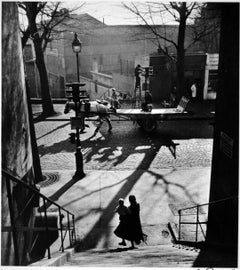
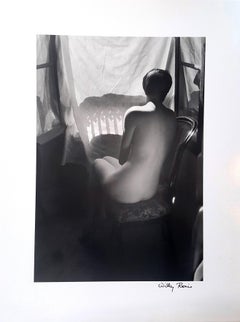
Deena's back - Willy Ronis, 20th Century, French Humanist Photography
By Willy Ronis
Located in Paris, FR
One of the most famous members of the Humanist photography in France. Signed lower right by the artist. Stamp of the artist's studio on the back.
Photographic Paper, Silver Gelatin
$2,974
H 20.48 in W 13.39 in D 0.08 in
Ariane - Signed limited edition fine art print, Contemporary, Romantic, Dancer
Located in Sant Cugat del Vallès, Barcelona
Ariane - Signed limited edition archival pigment print , 2005 - Edition of 5 This is an Archival Pigment print on fiber based paper ( Hahnemühle Photo Rag® Baryta 315 gsm , Acid-fr...
Archival Paper, Photographic Paper, Black and White, Giclée, Pigment, Ar...
$4,163
H 26.37 in W 40 in D 0.02 in
Figurative photo, Nude Limited edition print, Contemporary, Sexy sensual - Sofa
Located in Sant Cugat del Vallès, Barcelona
An original signed archival pigment print on Hahnemühle Photo Rag® Baryta 315 gsm paper by Scottish artist Ian Sanderson (1951- 2020) titled ‘ Sofa ‘ Nude and masked model on a lea...
Archival Paper, Photographic Paper, Black and White, Giclée, Pigment, Ar...
$3,568
H 21.66 in W 33.86 in D 0.08 in
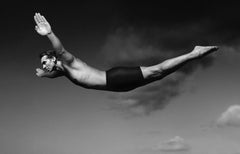
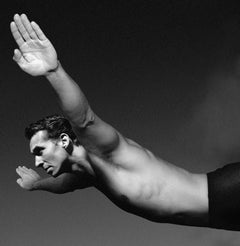
Diver - Signed limited edition fine art print, Black and white photo, Still life
Located in Sant Cugat del Vallès, Barcelona
Diver - Signed limited edition archival pigment print, 2002 - Edition of 5 Powerful photo of a man diving, in profile. This print that is being offered is a high-quality Archiv...
Archival Ink, Archival Paper, Photographic Paper, Black and White, Giclé...
$956Sale Price|20% Off
H 15.75 in W 11.75 in
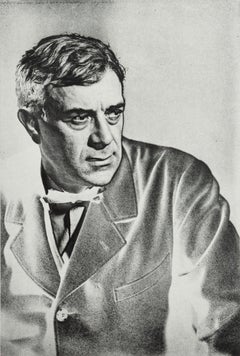
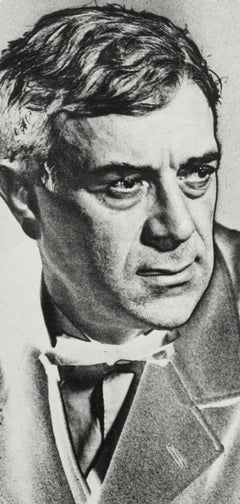
Man Ray, Solarized Portrait of Georges Braque, Electa Editrice, 1980 (after)
By Man Ray
Located in Southampton, NY
This exquisite heliogravure after Man Ray (1890–1976), titled Solarized Portrait of Georges Braque, originates from the 1980 folio Man Ray, Electa Editrice Portfolios. Published by G...
Lithograph
$5,829
H 15.75 in W 11.82 in
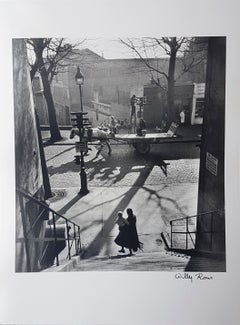
Avenue Simon Bolivar - Willy Ronis, 20th Century, French Humanist Photography
By Willy Ronis
Located in Paris, FR
One of the famous members of the Humanist photography in France. Signed lower right by the artist. Stamp of the artist's studio on the back.
Photographic Paper, Silver Gelatin
Sold
H 14 in W 11 in
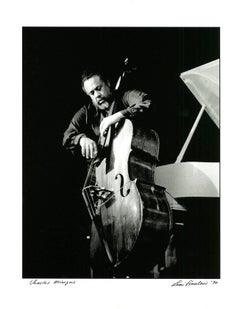
Leni Sinclair Charles Mingus photo Detroit 1974 (photographer Leni Sinclair)
Located in NEW YORK, NY
Charles Mingus by Leni Sinclair This elegant, well-defined photo of Jazz legend, Charles Mingus was shot by legendary Detroit photographer Leni Sinclai...
Inkjet