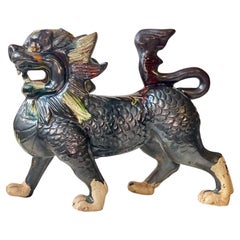
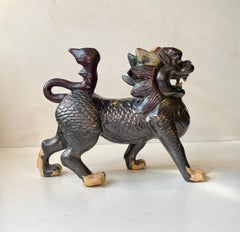
Edo Style Old Foo Dog in Glazed Ceramic
Located in Esbjerg, DK
Old - possibly antique Japanese Edo style Foo or Lion dog. It is executed in glazed ceramic or
Category
20th Century Asian Edo Figurative Sculptures
Materials
Ceramic
Edo Style Old Foo Dog in Glazed Ceramic
Located in Esbjerg, DK
Old - possibly antique Japanese Edo style Foo or Lion dog. It is executed in glazed ceramic or
Ceramic
$900
H 5 in W 7.5 in D 5.5 in
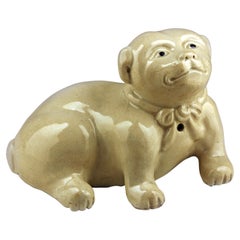
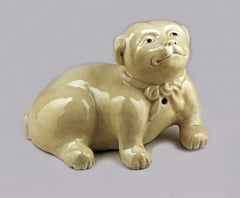
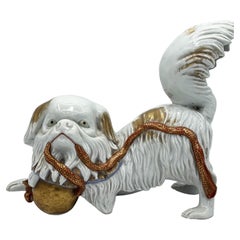
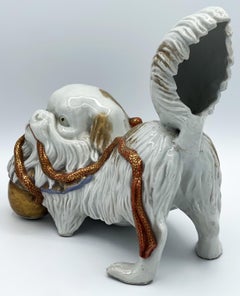
Late 18th Century/Edo-Meiji Period Japanese Glazed Porcelain Sculpture of a Dog
Located in North Miami, FL
Late 18th century/Edo-Meiji period japanese glazed porcelain sculpture of a dog By: unknown
Porcelain
$12,500
H 9.5 in W 5.5 in D 12 in
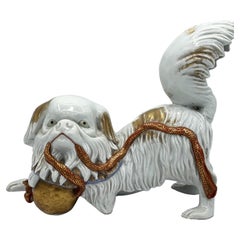
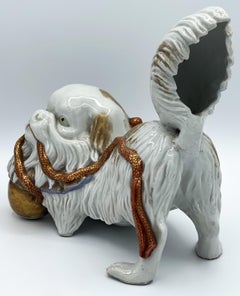
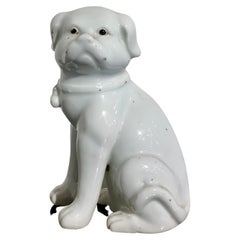
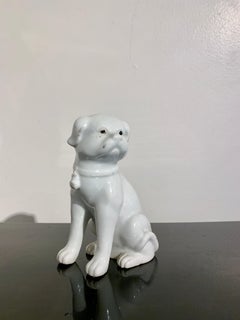
Japanese Late Edo/Early Meiji Period Kakiemon Porcelain Chin Dog, Ca. 1850-1870
Located in New York, NY
Japanese Late Edo/Early Meiji Period Kakiemon Porcelain Chin Dog, Ca. 1850-1870 DIMENSIONS Height
Porcelain
$12,500
H 9.5 in W 5.5 in D 5.5 in
Japanese Late Edo/Early Meiji Period Kakiemon Porcelain Chin Dog, Ca. 1850/1870
Located in New York, NY
Japanese Late Edo / Early Meiji Period Kakiemon Porcelain Chin Dog, Ca. 1850/1870 DIMENSIONS
Porcelain
$669Sale Price|20% Off
H 0.1 in W 4 in D 0.1 in
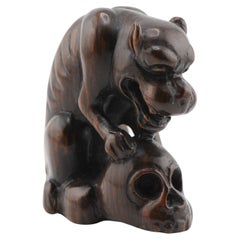
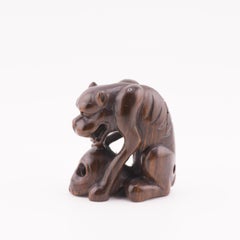
Netsuke Japanese Dog Eating Skull Sculpture, 20th Century
Located in Amsterdam, Noord Holland
: Material: Porcelain & Pottery Region of Origin: Japan Period: 18th century Japan Dynasty Period: Edo Period
Porcelain
$3,200
H 6 in W 4 in D 2.5 in
Japanese White Glazed Hirado Ware Puppy, Edo/Meiji Period, Mid 19th Century
By Hirado
Located in Austin, TX
An absolutely adorable Japanese Hirado Mikawachi ware white glazed porcelain model of a puppy dog
Porcelain
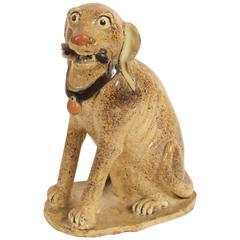
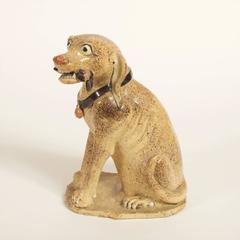
Pottery Dog from Edo Period
Located in NEW YORK, NY
Japanese late Edo period tan glazed pottery seated hound, with quail in his mouth, 10" high.
Pottery


Unavailable
H 14.3 in W 9.73 in D 0.04 in
Hiroshige, Original Japanese Woodblock Print, Dog, Rainbow, Ukiyo-e, Edo, Boats
By Utagawa Hiroshige (Ando Hiroshige)
Located in London, GB
Views of Edo Publisher: Uoya Eikichi Date: 1857 Dimensions: 24.7 x 36.3 cm Condition: Some minor tears
Handmade Paper, Mulberry Paper, Washi Paper, Pigment, Woodcut
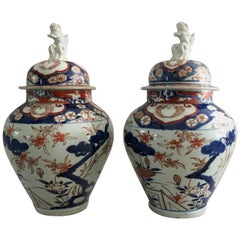
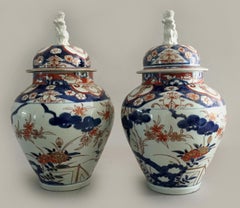
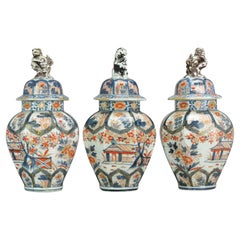
Pair of Imari Vases with Lids and Foo Dog Finials
Located in Sheffield, MA
Antique pair of Imari vases and covers with foo dog finials, the body decorated with cobalt blue
Porcelain
Sold
H 13.98 in W 6.7 in D 10.63 in
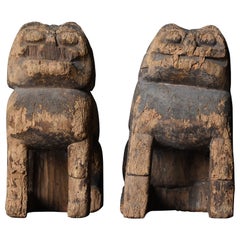
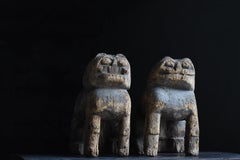
Japanese Antique 'KOMAINU' Shrine Guardian Dog Statues 1336s-1392s / Wabi Sabi
Located in Sammu-shi, Chiba
This is a very old Japanese "KOMAINU". It is an item from the early Muromachi period (Nanbokucho period, 1336s-1392s). It was carved from cedar wood. Komainu are guardian dogs. Koma...
Cedar
Sold
H 14.38 in W 5.12 in D 8.27 in
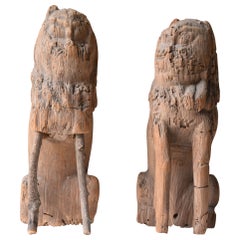
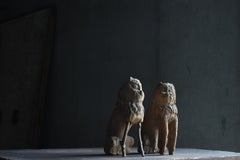
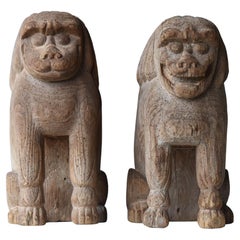
Japanese Old Wood Carving Guardian Dog KOMAINU 1336s-1573s/Antique Wabisabi Art
Located in Sammu-shi, Chiba
This is a very old Japanese "KOMAINU". It is an item from the Muromachi period (1336s-1573s). It was carved from cedar wood. Komainu are guardian dogs. Komainu exist in pairs. In Ja...
Cedar
Sold
H 11.82 in Dm 0.04 in
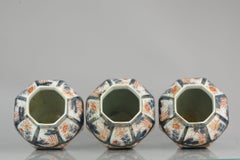
Antique Japanese Imari Garniture Set Colorfull Vases Japan Foo Dog, 18th Century
Located in Amsterdam, Noord Holland
Great piece of cloisonne. Additional information: Material: Bronze Region of Origin: Japan Original/Reproduction: Original Period: ca 1900 Condition: Overall Condition All damages a...
Bronze

Sold
H 14.18 in W 7.29 in D 9.45 in
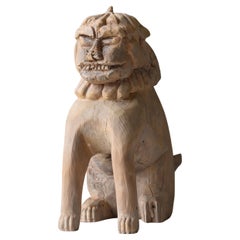
Japanese Antique 'KOMAINU' Shrine Guardian Dog Statues 1600s-1700s / Wabisabi
Located in Sammu-shi, Chiba
This is a very old Japanese "KOMAINU". It is an item from the early Edo period (1600s-1700s). It is
Cedar

Sold
H 13.78 in W 5.52 in D 9.85 in
Japanese Antique Shrine Guardian Dog Statues 'Komainu' 1800s-1860s/Mingei
Located in Sammu-shi, Chiba
This is an old Japanese wooden carved komainu. It is from the late Edo period (1800s-1860s). Made
Cedar
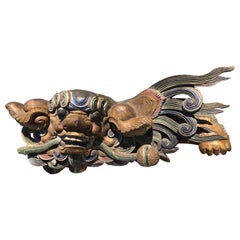

Japan Antique Big Ryukyu Lion Guardian Beast Dog koma-inu, 1850
Located in South Burlington, VT
fine condition with original painted surfaces Antique Japanese wooden temple carving of a fu dog (fu
Wood
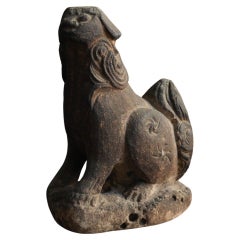
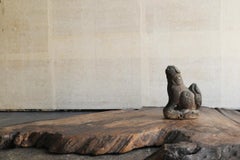
Sold
H 9.38 in W 6.5 in D 4.34 in
Rare Japanese stone guardian dog/1800s/Small "Koma-inu"/Lion figurine
Located in Sammu-shi, Chiba
familiar sight. In Japan, there are two divine beasts: [sisi] (lion) and [koma-inu] (guardian dog). [sisi
Sandstone
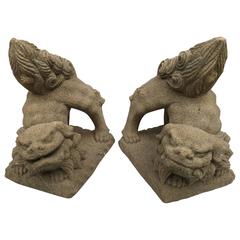

Sold
H 13 in W 10 in D 9 in
Antique Japanese Year of Dog Guardians Komainu Hand carved Stone Fine Details
Located in South Burlington, VT
Japan fine pair old Edo mid-19th century period hand carved sand stone Yokohama Komainu Lion-dog
Sandstone
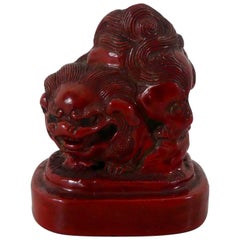

Japanese Lacquer Shishi Dog Netsuke, circa 1820, Edo Period
Located in Gargrave, North Yorkshire
Japanese red lacquer (tsuishu) Shishi dog netsuke, early 19th century, Edo Period. The finely
Lacquer
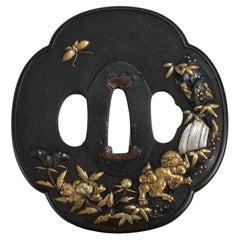
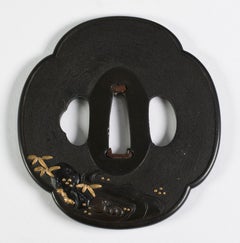
Japanese Mokko Shaped Shakudo Tsuba - Shi Shi Dog
Located in Christchurch, GB
As Part of our Japanese works of art collection we are delighted to offer this fine Edo/Meiji
Metal, Gold, Silver