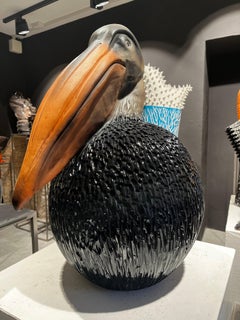
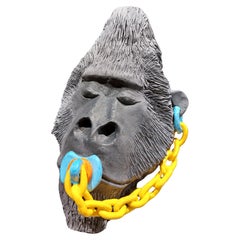
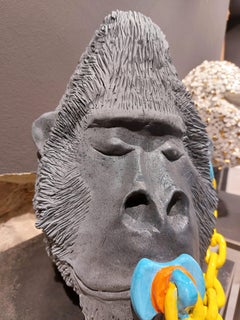
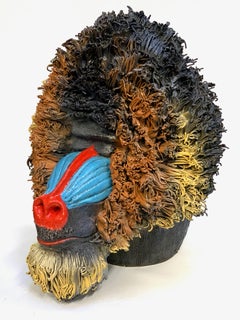
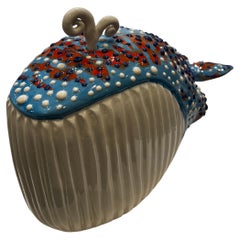
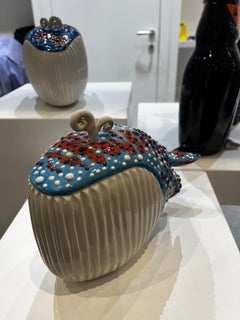
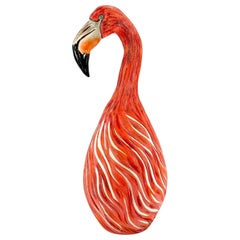
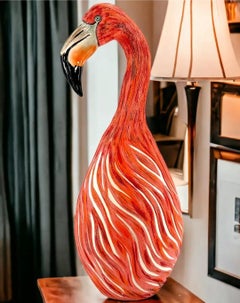
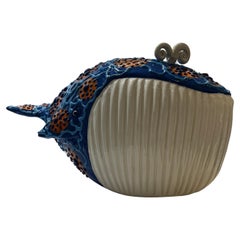
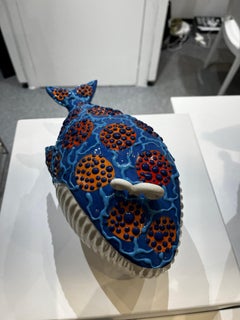
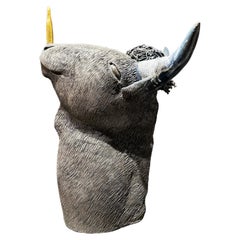
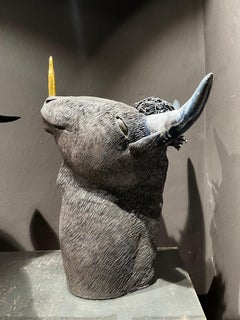
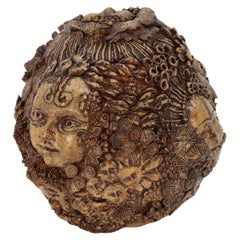
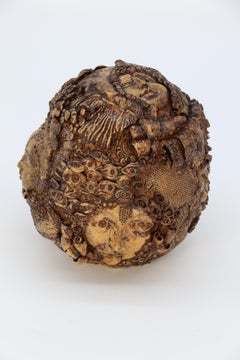
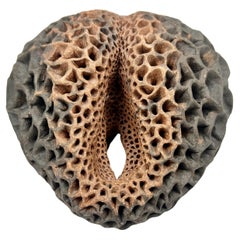
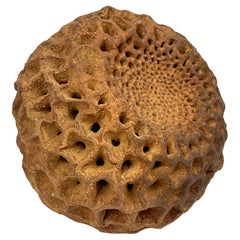
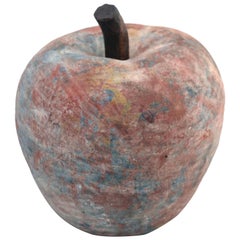
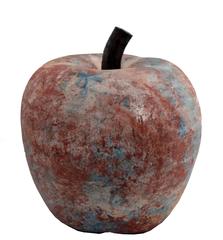
Stunning Raku pottery apple with hard wood stem by unknown artist. With a very modern, organic feel, this piece would be perfect in residential or commercial installation. Unsigned. Measures: 9" H x 8" W.
Raku is frequently associated with Zen Buddhism and the Japanese Tea Ceremony. It was developed in Japan in the 16th century. The word Raku means "joy" or "happiness". Raku became popular with American potters in the late 1950s with the help of Paul Soldner. Americans kept the general firing process, that is, heating the pottery quickly to high temperatures and cooling it quickly, but continued to form their own unique style of raku.
It is raku’s unpredictable results and intense color that attract modern potters. These patterns and color result from the harsh cooling process and the amount of oxygen that is allowed to reach the pottery. Depending on what effect the artist wants, the pottery is either instantly cooled in water, cooled slowly in the open air, or placed in a barrel filled with combustible material, such as newspaper, covered, and allowed to smoke. Water immediately cools the pottery, stopping the chemical reactions of the glaze and fixing the colors. The combustible material results in smoke, which stains the unglazed portions of the pottery black. The amount of oxygen that is allowed during the firing and cooling process affects the resulting color of the glaze and the amount of crackle.
Unlike traditional Japanese raku, which is mainly hand built bowls of modest design, western raku tends to be vibrant in color and comes in many shapes and sizes. Western raku can be anything from an elegant vase, to an eccentric abstract sculpture. Although some do hand build, most western potters use throwing...
Category
Early 2000s American Organic Modern Clay Natural Specimens