Julius Evola

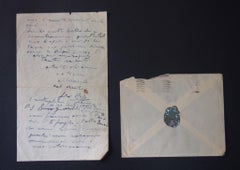
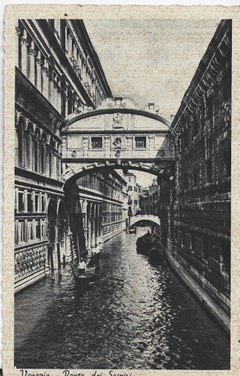
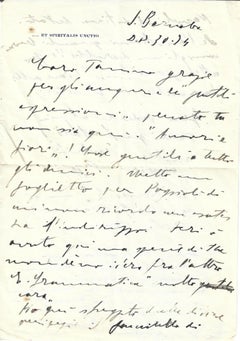
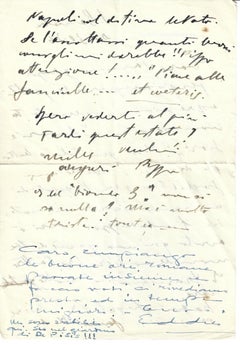
Autograph Letter by Filippo de Pisis - 1934

Autograph Letter by Filippo de Pisis - 1934

By Filippo De Pisis

Located in Roma, IT

"fly-paw painting". The friendship with Julius Evola allows him to deepen his esoteric interests and

Category

1930s More Art

Materials

Paper, Ink
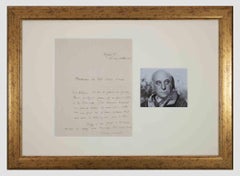
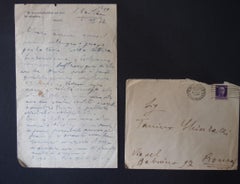
Autograph Letter Signed by Filippo de Pisis - 1947

Autograph Letter Signed by Filippo de Pisis - 1947

By Filippo De Pisis

Located in Roma, IT

, therefore, defined by Eugenio Montale as "fly-paw painting". The friendship with Julius Evola allows him to

Category

1940s Modern More Art

Materials

Paper

Recent Sales

Get Updated with New Arrivals
Save "Julius Evola", and we’ll notify you when there are new listings in this category.

Filippo De Pisis for sale on 1stDibs

Filippo De Pisis (11 May 1896 – 2 April 1956) was an Italian painter and poet. De Pisis was born Luigi Filippo Tibertelli in Ferrara, Italy. He studied literature and philosophy at the University of Bologna beginning in 1914. In 1919 he moved to Rome, where he started to paint. He published a collection of his writings, La città dalle 100 meraviglie, in 1920. While important editors of his time criticized De Pisis for producing overly-sentimental poetry, this emotional streak translated well on canvas. De Pisis is best known for his cityscapes, metaphysically-inspired maritime scenes, and still lifes, especially those depicting flowers. His work has a particularly airy, in-the-moment quality, and is laden with a sort of pathetic pleasure-pain. There are unexpected juxtapositions of scale and space, as when still-life objects are arranged on a surface that seems to join together with the seascape beyond. De Pisis also executed a large body of lesser-known work, comprising homoerotic sketches of the male nude. De Pisis spent his life in Rome, Paris and Venice. He lived a very extravagant lifestyle; he had a pet parrot named Coco, and in Venice he was one of a handful of residents at the time who used a gondola. He had two personal gondoliers on 24-hour duty, who wore black-and-gold livery. De Pisis's work was shown twice in the Venice Biennale: once during his life, and once posthumously. He died in Milan in 1956.