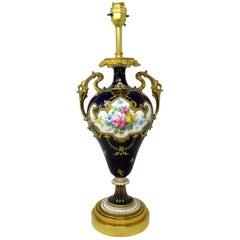
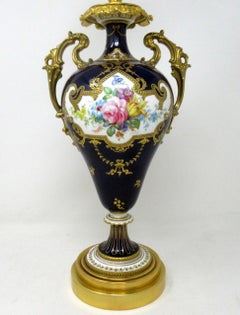
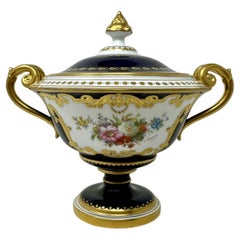
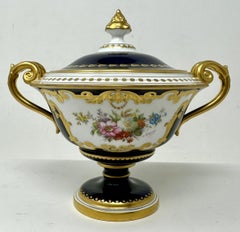
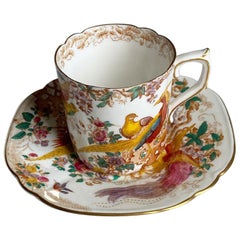
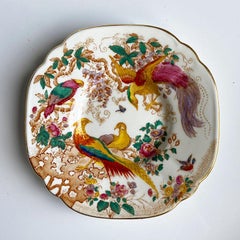
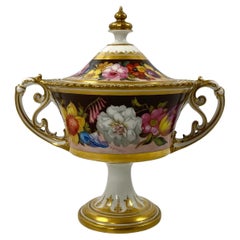
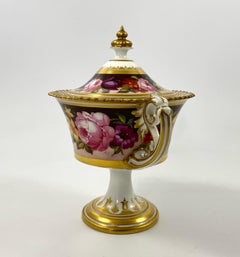
Find many varieties of an authentic royal albert derby available at 1stDibs. Frequently made of
ceramic,
porcelain and
gold, every royal albert derby was constructed with great care. There are many kinds of the royal albert derby you’re looking for, from those produced as long ago as the 18th Century to those made as recently as the 20th Century. A royal albert derby, designed in the
neoclassical or
Victorian style, is generally a popular piece of furniture.
Royal Crown Derby Porcelain,
Albert Gregory and
Francis Grant each produced at least one beautiful royal albert derby that is worth considering.
Prices for a royal albert derby can differ depending upon size, time period and other attributes — at 1stDibs, they begin at $125 and can go as high as $13,248, while the average can fetch as much as $1,850.
Founded in 1750 by Andrew Planche and William Duesbury in Derby, England, the Royal Crown Derby Porcelain Company is one of the oldest original English manufacturers of fine bone china. Dating to the Georgian era, it has operated for more than 265 years.
In 1761, the company, then called Derby Porcelain, created its first commemorative piece for the coronation of King George III. In 1775, King George III recognized the uniqueness and high quality of Derby Porcelain, giving the company the honor of using a crown on its back stamp. Queen Victoria gave further honors to the porcelain manufacturer in 1890, when she awarded the company a royal warrant and bestowed upon it the title of “The Royal Crown Derby Porcelain Company.”
In the years following the first royal appointment, the company employed some of its finest artistic creators, such as watercolor landscape painter Zachariah Boreman; flower painters William Billingsley, William Pegg and Walter Withers; and figure painters Richard Askew and James Banford. The company produced the most sought-after collectible pieces in its history under the direction of William Duesbury II. He died at 34 and his full vision for the company went unrealized; it subsequently entered a period of decline.
In 1811, Robert Bloor revived the company by employing excellent painters and producing exquisite serving pieces that featured the Japanese Imari style of bold colors and lavish details. The popular design continues to be produced today. Modern pieces such as the paperweight collection also remain in demand more than 40 years after their introduction.
Under the creative control of different partners over time, the company has had three main locations. Its current base of operations is in Derby, where it continues to produce fine ceramics and decorative collectibles.
On 1stDibs, find a selection of Royal Crown Derby Porcelain Company bowls and baskets, dinner plates, centerpieces and more.