By (after) Mark Rothko
Located in NEW YORK, NY
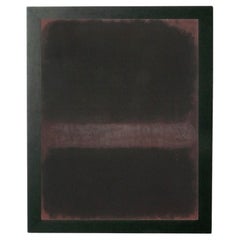
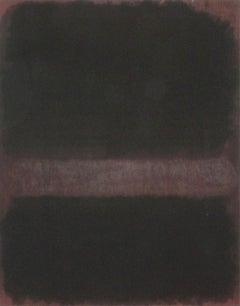
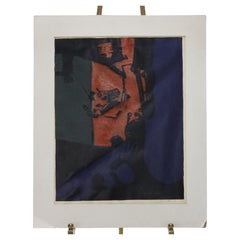
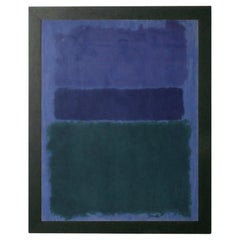
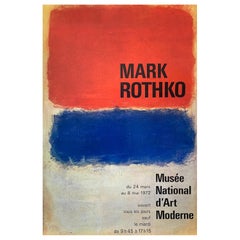
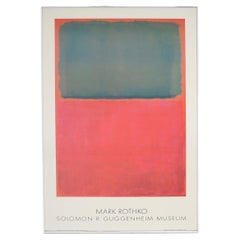
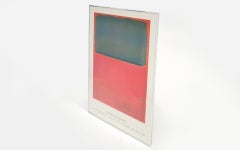
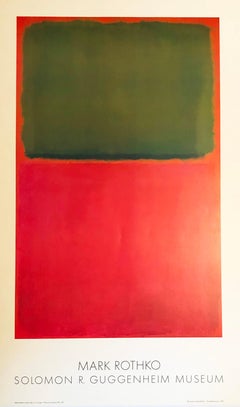
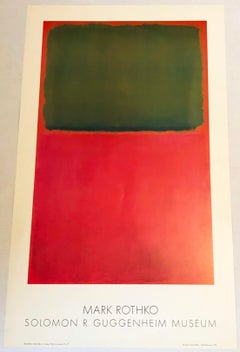
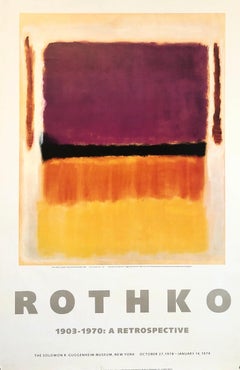
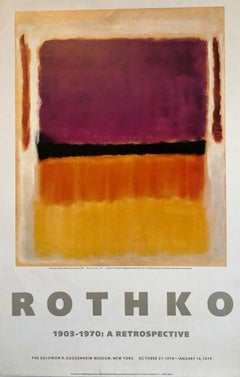
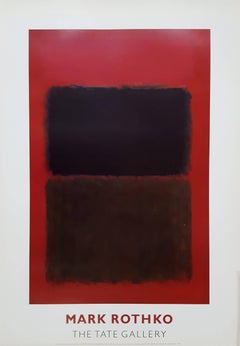
1978 Mark Rothko Guggenheim Museum exhibition poster:
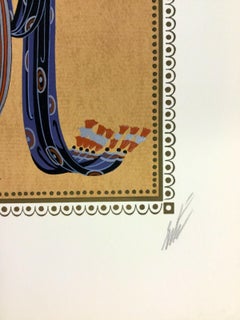
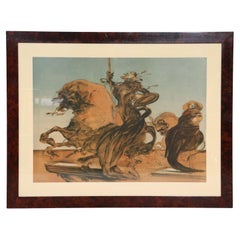
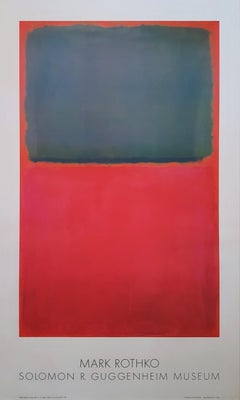
An original 1978 exhibition poster printed by Pace Editions New York and published by the Guggenheim Museum. Features copyright of the Estate of Mark Rothko at bottom right. Published in conjunction with 'Mark Rothko 1903–1970: A Retrospective' a major retrospective show organized by the Guggenheim Museum, New York NY, October 27, 1978–January 14, 1979. Image featured on the poster is that of Rothko's heralded 1950 work "Green, Red, on Orange".
Medium: Offset lithograph, 1978.
Dimensions: 38 x 23 inches.
In overall very good condition with the exception of some minor signs of handling (please excuse poor lighting in photos).
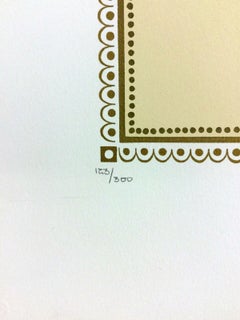
Unsigned from an edition of unknown; presumed scarce.
Estate copyright and publishing info found on lower right.
Mark Rothko (born 1903 Russia). In 1913 his family left Russia and settled in Portland, Oregon. Rothko attended Yale University, New Haven, on a scholarship from 1921 to 1923. He left Yale prematurely and moved to New York. In 1925 he studied under Max Weber at the Art Students League. During the early 1930s Rothko became a close friend of Milton Avery and Adolph Gottlieb. His first solo show took place at the Portland Art Museum, Oregon, in 1933.
Rothko’s first solo exhibition in New York was held at the Contemporary Arts Gallery in 1933. In 1935, together with William Baziotes, Gottlieb, and others, Rothko founded the Ten, a group of artists sympathetic to abstraction and expressionism that exhibited until 1940. He executed easel paintings for the Works Progress Administration Federal Art Project from 1936 to 1937. In the early 1940s he worked closely with Gottlieb, developing a painting style with mythological content, simple flat shapes, and imagery inspired by so-called primitive art. By mid-decade his work incorporated Surrealist techniques and images. Peggy Guggenheim gave Rothko a solo show at Art of This Century, New York, in 1945.
The late 1940s and early 1950s saw the emergence of Rothko’s mature style, in which frontal, luminous rectangles seem to hover on the canvas surface. In 1958 the artist began his first commission, monumental paintings for the Four Seasons Restaurant, New York. The Museum of Modern Art, New York, gave Rothko an important solo exhibition in 1961. He completed murals for Harvard University, Cambridge, Massachusetts, in 1962 and in 1964 accepted a mural commission for an interdenominational chapel in Houston. Rothko committed suicide on February 25, 1970, in his New York studio. A year later the Rothko Chapel...
Category
1950s Abstract (after) Mark Rothko Furniture