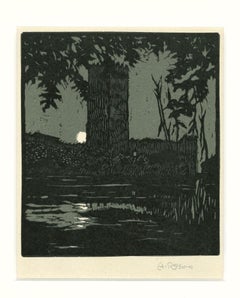
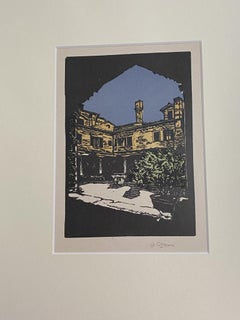
Angelo Rossini Art

to
2
2
2
Related Items
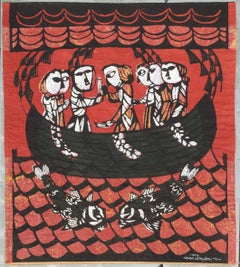
Jonah
Jonah

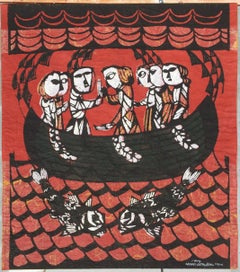
Sadao WatanabeJonah, 1959

$1,200Sale Price|20% Off

H 25.625 in W 22.625 in

Jonah

By Sadao Watanabe

Located in Santa Monica, CA

SADAO WATANABE (Japanese 1913-1996) JONAH, 1959 Color stencil, signed, numbered and dated in white ink. Sheet, 25 5/8 x 22 5/8 inches. Edition: 44/50. Good color and generally good ...

Category

1950s Modern Angelo Rossini Art

Materials

Woodcut, Stencil

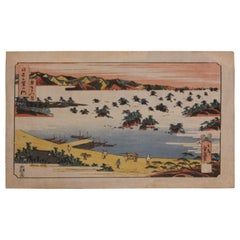
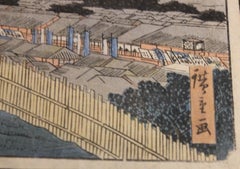
Edo Landscape Japanese Woodblock Print

Edo Landscape Japanese Woodblock Print

By Utagawa Hiroshige (Ando Hiroshige)

Located in Houston, TX

Edo Meisho woodblock print of a famous Japanese coastal dock. This woodblock is most likely apart of the series "One Hundred Famous Views of Edo." The woodblock print is printed on r...

Category

1850s Edo Angelo Rossini Art

Materials

Woodcut

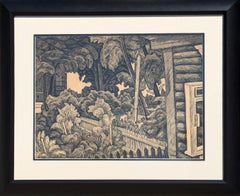
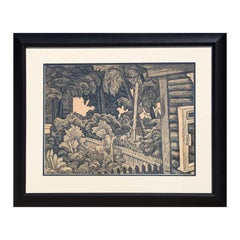
Modern Black and White Abstract Tropical Village Landscape Woodcut Print

Modern Black and White Abstract Tropical Village Landscape Woodcut Print

Located in Houston, TX

Modern black and white abstract woodcut print. The piece features lush trees and foliage growing in a yard behind a house. There are three central figures standing next to a pole and...

Category

20th Century Abstract Angelo Rossini Art

Materials

Woodcut

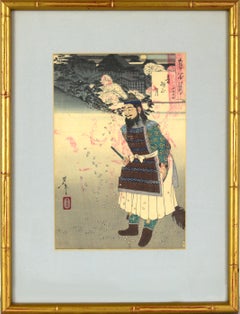
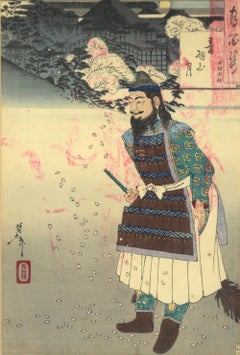
One Hundred Aspects of the Moon, Mt Otawa Moon - Bright God Tamura

One Hundred Aspects of the Moon, Mt Otawa Moon - Bright God Tamura

By Tsukioka Yoshitoshi

Located in Soquel, CA

"Mount Otawa Moon: Bright God Tamura" - Woodblock on Paper by Tsukioka Yoshitoshi From the series "One Hundred Aspects of the Moon" This piece depicts the general Sakanoe no Tamura...

Category

1880s Edo Angelo Rossini Art

Materials

Paper, Ink, Woodcut

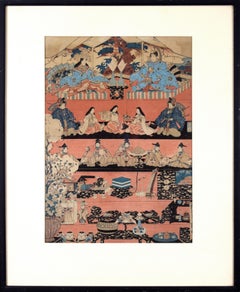
"Various Himochi" Wagashi Festival Japanese Woodblock Print by Utagawa Toyokuni

"Various Himochi" Wagashi Festival Japanese Woodblock Print by Utagawa Toyokuni

By Utagawa Toyokuni

Located in Soquel, CA

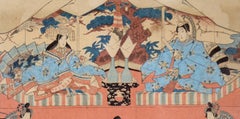
"Various Himochi" Wagashi Festival Japanese Woodblock Print by Utagawa Toyokuni Rare oversized early 19th century 5-tiered woodblock by Utagawa Ichiyosai Toyokuni, (Japan, 1769-1825), a Japanese lord and wife oversee a sekku festival of food, music, and dolls or toys. '"oshi" is the first day of “Mi (Snake)” in the third month of the lunar calendar. This day, known in modern Japan as the Girls' Festival, originated in China as a form of purification ceremony in which water and drinking peach blossom wine were used to drive away evil. Many kinds of hishi-mochi appear in this picture of hina ningyo (dolls associated with Hinamatsuri, or the Girl’s Day) from Omochae. The custom of eating special dishes at events throughout the year and at milestones in people's lives has existed since ancient times. This paragraph specifically focuses on the annual event called sekku, and life events that involve eating sweets. Joshi is the first day of “Mi (Snake)” in the third month of the lunar calendar. This day, known in modern Japan as the Girls' Festival, originated in China as a form of purification ceremony in which water and drinking peach blossom wine were used to drive away evil. According to the Keiso saijiki, in ancient China, on the third day of the third lunar month, people ate “ryuzetsuhan,” which is the juice of gogyo (Jersey cudweed) mixed with rice flour and nectar. In Japan, there is a record in the Heian period history book Nihon Montoku tenno jitsuroku [839-5] that it was an annual event to make kusamochi using gogyo on the third day of the third month of the lunar calendar, which may have been influenced by Chinese customs. The tradition of eating kusamochi on the third day of the third month of the lunar calendar continued after that. By the Edo period, however, hishimochi had come to be used as a sweet to serve on the third day of the third month. A picture of a hishimochi is included in the Morisada manko , which we mentioned in Part 1. According to it, hishimochi in the Edo period were often three layers of green-white-green instead of the now common red-white-green. However, it is possible to see from our collection that not all hishimochi were made in this way. Omochae published in 1857, is a good example. Omochae is a type of ukiyoe print...

Category

1820s Edo Angelo Rossini Art

Materials

Ink, Rice Paper, Woodcut

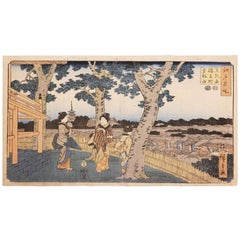
Saruwaka-machi District and Kinryûzan Temple Seen from Matsuchiyama

Saruwaka-machi District and Kinryûzan Temple Seen from Matsuchiyama

By Utagawa Hiroshige (Ando Hiroshige)

Located in Houston, TX

Three women in the Saruwaka-machi District with a view of Kinryûzan Temple seen from the famous landmark Matsuchiyama. The woodblock print is from the series "Famous Places in Edo". ...

Category

1850s Edo Angelo Rossini Art

Materials

Woodcut

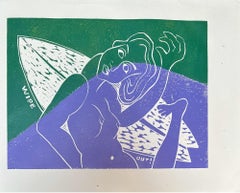
Wipe Out - Surfing Art -

Marc ZimmermanWipe Out - Surfing Art -, 2019

$480Sale Price|20% Off

H 15 in W 23 in

Wipe Out - Surfing Art -

By Marc Zimmerman

Located in Carmel, CA

Wipe Out - Surfing Art - Figurative - Woodcut Print By Marc Zimmerman Limited Edition 01/04 more colorways available This masterwork is exhibited in the Zimmerman Gallery, Carmel C...

Category

2010s Contemporary Angelo Rossini Art

Materials

Woodcut

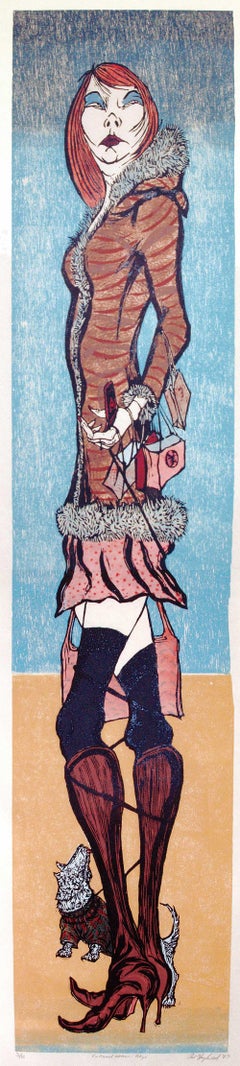
Cultured Woman - Tokyo, woodcut portrait by cultural satirist Art hazelwood

Cultured Woman - Tokyo, woodcut portrait by cultural satirist Art hazelwood

By Art Hazelwood

Located in Palm Springs, CA

This screenprint, Cultured Woman – Tokyo, is a sharp, knowing example of Art Hazelwood’s satirical voice—stylish, unsettling, and quietly biting. The elongated female figure dominates the composition, her body exaggerated into a narrow vertical column that reads as both fashionable and faintly grotesque. Her pose is elegant yet strained, chin lifted, gaze distant, projecting confidence that borders on caricature. Hazelwood’s line work is incisive and deliberate. The woman’s clothing—fur-trimmed coat, patterned dress, high boots—signals cosmopolitan sophistication, while the acid clarity of her facial features undermines any straightforward glamour. Makeup becomes mask-like; refinement tips into artifice. The palette is cool and controlled, reinforcing a sense of emotional remove beneath the polished surface. At her feet, the small dog functions as a critical counterpoint. It echoes her presence while subtly mocking it, grounding the image in Hazelwood’s characteristic irony. The pairing suggests themes of status, performance, and cultural self-consciousness, with Tokyo serving less as a literal place than as a symbol of globalized style and curated identity. Like much of Hazelwood’s work, the print resists easy judgment. It is neither cruel nor celebratory, but observant—a portrait of modern sophistication rendered with wit, skepticism, and a razor-edged sense of humor. Signed and numbered color woodcut from the edition of 15. Modern woman in Tokyo; signed and titled edition of 15. Art Hazelwood calls himself artist, instigator and impresario to define the three intertwining areas of his practice. He uses printmaking within a range of political allegory and satire making work from political posters to fine press edition artist books. He has curated and organized a range of exhibitions at venues from museums to immigrant centers. He has worked for over 20 years with homeless rights groups; creating prints, and street posters, and has authored one book and contributed to another on art and homelessness. He has been a regular visiting guest artist at San Quentin State Prison and teaches currently at the San Francisco Art Institute. He organized the San Francisco Poster...

Category

2010s Contemporary Angelo Rossini Art
Materials

Woodcut

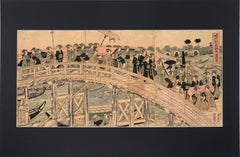
Mitate of a Daimyo's Procession Crossing Ryogoku Bridge - Woodblock Print

Mitate of a Daimyo's Procession Crossing Ryogoku Bridge - Woodblock Print

By Keisai Eisen

Located in Soquel, CA

Mitate of a Daimyo's Procession Crossing Ryogoku Bridge - Woodblock Print Woodblock print of a procession by Keisai Eisen (Japanese, 1790–1848). Terrific triptych of a procession of...

Category

Early 19th Century Edo Angelo Rossini Art

Materials

Ink, Rice Paper, Woodcut

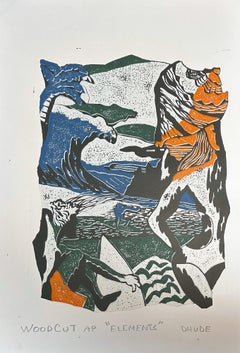
Elements - Surfing Art - Figurative -

Elements - Surfing Art - Figurative -

By Marc Zimmerman

Located in Carmel, CA

Elements - Surfing Art - Figurative - Woodcut Print By Marc Zimmerman Limited Edition 01/04 This masterwork is exhibited in the Zimmerman Gallery, Carmel CA. Immerse yourself in t...

Category

2010s Contemporary Angelo Rossini Art
Materials

Woodcut

In The Flow - Surfing Art - Figurative - Woodcut Print By Marc Zimmerman

In The Flow - Surfing Art - Figurative - Woodcut Print By Marc Zimmerman

By Marc Zimmerman

Located in Carmel, CA

In The Flow - Surfing Art - Figurative - Woodcut Print By Marc Zimmerman Limited Edition 01/04 This masterwork is exhibited in the Zimmerman Gallery, Carmel CA. Immerse yourself i...

Category

2010s Contemporary Angelo Rossini Art
Materials

Woodcut

Angelo Rossini art for sale on 1stDibs.

Find a wide variety of authentic Angelo Rossini art available for sale on 1stDibs. You can also browse by medium to find art by Angelo Rossini in woodcut print and more. Not every interior allows for large Angelo Rossini art, so small editions measuring 6 inches across are available. Angelo Rossini art prices can differ depending upon medium, time period and other attributes. On 1stDibs, the price for these items starts at $178 and tops out at $201, while the average work can sell for $189.