Antonio Ferretti Serveware, Ceramics, Silver and Glass

to
9
9
7
2
9
9
9
9
9
9
9
9
9
8
562
411
399
372
Creator: Antonio Ferretti
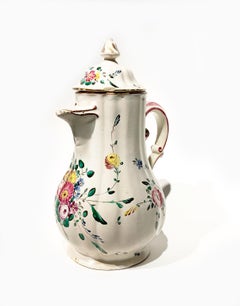
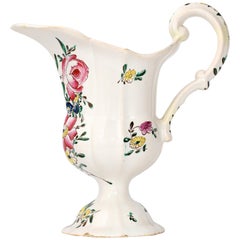
Italian Maiolica Pitcher by Antonio Ferretti, Lodi, Circa 1770-1780

Italian Maiolica Pitcher by Antonio Ferretti, Lodi, Circa 1770-1780

By Antonio Ferretti

Located in Milano, IT

Maiolica pitcher Antonio Ferretti Manufacture Lodi, circa 1770-1780 Maiolica polychrome decorated “a piccolo fuoco” (third fire). It measures 8.66 x 8.66 x 4.33 in (22 x 22 x 11 ...

Category

1770s Italian Rococo Antique Antonio Ferretti Serveware, Ceramics, Silver and Glass

Materials

Maiolica

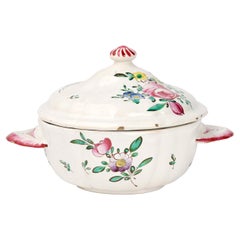
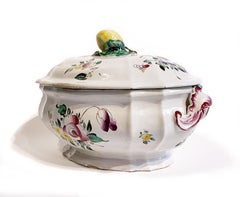
Antique Rococo Maiolica Tureen by Antonio Ferretti, Italy, 1770-1780

Antique Rococo Maiolica Tureen by Antonio Ferretti, Italy, 1770-1780

By Antonio Ferretti

Located in Milano, IT

Maiolica tureen Antonio Ferretti Manufacture Lodi, circa 1770-1780 Maiolica polychrome decorated “a piccolo fuoco” (third fire). It measures 9.05 x 12.59 x 9.05 in (23 x 32 x 23 cm) ...

Category

1770s Italian Rococo Antique Antonio Ferretti Serveware, Ceramics, Silver and Glass

Materials

Maiolica

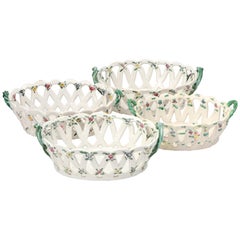
Four Antique Maiolica Dishes by Antonio Ferretti, Circa 1770-1780

Four Antique Maiolica Dishes by Antonio Ferretti, Circa 1770-1780

By Antonio Ferretti

Located in Milano, IT

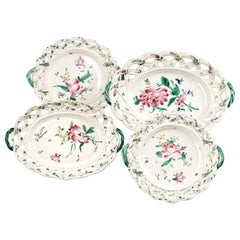
Assortment of 4 dishes with braided rim Antonio Ferretti Manufacture Lodi, circa 1770-1780 Maiolica polychrome decorated “a piccolo fuoco” (third fire). Measures: 14 x 10 in (35.5 x 25.5 cm); 12.2 x 8.39 in (31 x 21.3 cm); 10.4 x 9.65 in (26.5 x 24.5 cm); 10.8 x 9.61 in (27.5 x 24.4 cm). Weight: 4.4 lb (1.998 kg) State of conservation: some chips due to use on the edges and on the parts in relief. The four different dishes have a foot with a low lip from which extends a wide, flat, slanted rim resembling a basket weave. The small handles are painted green: they resemble wickerwork in the two oval dishes and take the form of a sinuous branch in the round ones. The third fire decoration is inspired by the naturalistic floral botanical patterns on the ceramics produced by the Hannong family in Strasbourg. Here the pattern is defined by the rapidity and subtlety of the brushstrokes and the result is particularly tasteful, characterized by compositional intelligence and pictorial expertise. A main corolla, either a wild or garden rose, is set slightly off center in each well. From this extends a thin stem holding a small secondary bud and there are small field florets dotting the composition to lend volume to the delicate bunch of flowers. On the brim, small polychrome flowers add color to the weave, accompanied by lanceolate leaves of a very intense green. There exist few and very rare examples for comparison with this morphology: a round plate - entirely consistent with those in question - has been dated to around 1775 (S. Levy, Maioliche settecentesche lombarde e venete, Milano 1962, tav. 200). Two other dishes with a basket rim, but with parallel striped brim decoration, were exhibited in the 1995 exhibition on Lodi ceramics; the attribution to the Lombard town near Milan is therefore almost exclusively derived from the decoration called "alla rosa contornata" or "alla vecchia Lodi" and constitutes one of the most popular decorations during the eighteenth century. (M. L. Gelmini, in Maioliche lodigiane del '700 (cat. mostra Lodi), Milano 1995, pp. 31 p. 162-163 nn. 181-182). This decorative choice represented a strong point of the Lodi factory, which established itself thanks to the vivid nature of the colors made possible by the introduction of a new technique perfected by Paul Hannong in Strasbourg and which Antonio Ferretti introduced in Italy. This production process, called “piccolo fuoco” (third fire), allowed the use of a greater number of colors than in the past; in particular, the purple of Cassius, a red made from gold chloride, was introduced. Its use allowed for many more tones and shades, from pink to purple. The Ferretti family had started their Maiolica manufacturing business in Lodi in 1725. The forefather Simpliciano had started the business by purchasing an ancient furnace in 1725 and, indeed, we have evidence of the full activity of the furnaces from April of the same year (Novasconi-Ferrari-Corvi, 1964, p. 26 n. 4). Simpliciano had started a production of excellence also thanks to the ownership of clay quarries in Stradella, not far from Pavia. The production was so successful that in 1726 a decree of the Turin Chamber came to prohibit the importation of foreign ceramics, especially from Lodi, to protect internal production (G. Lise, La ceramica a Lodi, Lodi 1981, p. 59). In its initial stages, the manufacture produced maolicas painted with the “a gran fuoco” (double fire) technique, often in turquoise monochrome, with ornamentation derived from compositional modules in vogue in Rouen in France. This was also thanks to the collaboration of painters like Giorgio Giacinto Rossetti, who placed his name on the best specimens next to the initials of the factory. In 1748 Simpliciano made his will (Gelmini, 1995, p. 30) appointing his son Giuseppe Antonio (known as Antonio) as universal heir. After 1750, when Simpliciano passed away, Antonio was directly involved in the Maiolica factory, increasing its fortunes and achieving a reputation on a European level. Particularly important was the aforementioned introduction in 1760 of the innovative “a piccolo fuoco” (third fire) processing, which, expanding the ornamental repertoire with Saxon-inspired floral themes, could commercially compete with the German porcelains that had one of its most renowned offerings in the naturalistic Deutsche Blumen. Antonio Ferretti understood and promoted this technique and this decoration, proposing it in a fresher and more corrective version, less linked to botanical tables...

Category

1770s Italian Neoclassical Antique Antonio Ferretti Serveware, Ceramics, Silver and Glass

Materials

Maiolica

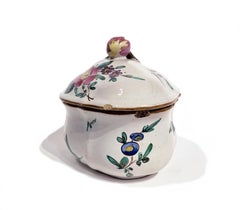
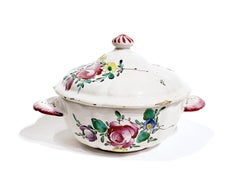
Antique Maiolica Sugar Bowl by Antonio Ferretti, Lodi, Circa 1770-1780

Antique Maiolica Sugar Bowl by Antonio Ferretti, Lodi, Circa 1770-1780

By Antonio Ferretti

Located in Milano, IT

Maiolica sugar bowl Antonio Ferretti Manufacture Lodi, Circa 1770-1780 Maiolica polychrome decorated “a piccolo fuoco” (third fire). It measures 3.54 x 4.52 x 3.54 in (9 x 11,5 x 9 cm) Weight: 0.394 lb (0.179 kg) State of conservation: small and slight chips on the edges. The small sugar bowl has a swollen and ribbed body resting on a flat base. The cap-shaped lid follows the rib of the container and is topped with a small knob in the shape of a two-colored fruit. The sugar bowl is painted “a piccolo fuoco” (third fire) with the characteristic floral motif of bunches and isolated semis. An example which closely corresponds to this one is kept at the Civic Museum in Lodi (G. Gregorietti, Maioliche di Lodi, Milano e Pavia, Catalogo della Mostra, Milano, 1964 n. 137). This decorative style represented a strong point of the Lodi factory, which established itself thanks to the vivid nature of the colors made possible by the introduction of a new technique perfected by Paul Hannong in Strasbourg and later introduced by Antonio Ferretti to Italy. The production process, called “piccolo fuoco” (third fire), allowed the use of a greater number of colors than in the past; in particular, the purple of Cassius, a red made from gold chloride, was introduced. Its use allowed for many more tones and shades, from pink to purple. The Ferretti family started their maiolica manufacturing business in Lodi in 1725. The forefather Simpliciano started the business by purchasing an ancient furnace in 1725 and, indeed, we have evidence of the full activity of the furnaces starting from April of the same year (Novasconi-Ferrari-Corvi, 1964, p. 26 n. 4). Simpliciano started a production of excellence also thanks to the ownership of clay quarries in Stradella, not far from Pavia. The production was so successful that in 1726 a decree of the Turin Chamber came to prohibit the importation of foreign ceramics, especially from Lodi, to protect internal production (G. Lise, La ceramica a Lodi, Lodi 1981, p. 59). In its initial stages, the manufacture produced maolicas painted with the “a gran fuoco” (double fire) technique, often in turquoise monochrome, with ornamentation derived from compositional modules in vogue in Rouen in France. This was also thanks to the collaboration of painters like Giorgio Giacinto Rossetti, who placed his name on the best specimens next to the initials of the factory. In 1748 Simpliciano made his will (Gelmini, 1995, p. 30) appointing his son Giuseppe Antonio (known as Antonio) as universal heir. After 1750, when Simpliciano passed away, Antonio was directly involved in the maiolica factory, increasing its fortunes and achieving a reputation on a European level. Particularly important was the aforementioned introduction in 1760 of the innovative “a piccolo fuoco” (third fire) processing, which, expanding the ornamental repertoire with Saxon-inspired floral themes, was able to commercially compete with the German porcelains that had one of its most renowned offerings in the naturalistic Deutsche Blumen. Antonio Ferretti understood and promoted this technique and this decoration, proposing it in a fresher and more corrective version, less linked to botanical tables, both with or without contour lines, as well as in purple or green monochrome. After efforts to introduce more industrial production techniques to the sector succeeded, even the Ferretti manufacture, in the last decade of the eighteenth century, started heading towards decline despite its attempts to adapt production to neoclassical tastes. In 1796 the Napoleonic battle for the conquest of the Lodi bridge over the Adda definitively compromised the furnaces. Production resumed, albeit in a rather stunted manner, until Antonio's death on 29 December 1810. (M. L. Gelmini, pp. 28-30, 38, 43 sgg., 130-136 (for Simpliciano); pp. 31 sgg., 45-47, 142-192 (for Antonio). Bibliography G. Gregorietti, Maioliche di Lodi Milano e Pavia Catalogo della Mostra, Milano, 1964 n. 137; C. Baroni, Storia delle ceramiche nel Lodigiano, in Archivio storico per la città e i comuni del circondario e della diocesi di Lodi, XXXIV (1915), pp. 118, 124, 142; XXXV (1916), pp. 5-8; C. Baroni, La maiolica antica di Lodi, in Archivio storico lombardo, LVIII (1931), pp. 453-455; L. Ciboldi, La maiolica lodigiana, in Archivio storico lodigiano, LXXX (1953), pp. 25 sgg.; S. Levy, Maioliche settecentesche lombarde e venete, Milano 1962, pp. 17 sgg.; A. Novasconi - S. Ferrari - S. Corvi, La ceramica lodigiana, Lodi 1964, ad Indicem; Maioliche di Lodi, Milano e Pavia (catal.), Milano 1964, p. 17; O. Ferrari - G. Scavizzi, Maioliche italiane del Seicento e del Settecento, Milano 1965, pp. 26 sgg.; G. C. Sciolla, Lodi. Museo civico, Bologna 1977, pp. 69-85 passim; G. Lise, La ceramica a Lodi, Lodi 1981; M. Vitali, in Storia dell'arte ceramica...

Category

1770s Italian Rococo Antique Antonio Ferretti Serveware, Ceramics, Silver and Glass
Materials

Maiolica

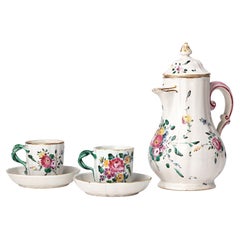
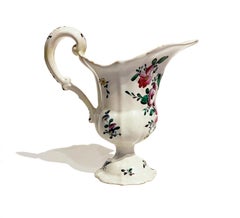
Antonio Ferretti Coffee Pot and Cups Set, Maiolica, Lodi, Circa 1765

Antonio Ferretti Coffee Pot and Cups Set, Maiolica, Lodi, Circa 1765

By Antonio Ferretti

Located in Milano, IT

A coffee pot and two cups with saucers Antonio Ferretti Manufacture Lodi, Circa 1765-1770 Maiolica polychrome decorated “a piccolo fuoco” (third fire). They measure: coffee pot: 9....

Category

1760s Italian Rococo Antique Antonio Ferretti Serveware, Ceramics, Silver and Glass
Materials

Maiolica

Italian Maiolica Puerperal Cup by Antonio Ferretti, Circa 1770

Italian Maiolica Puerperal Cup by Antonio Ferretti, Circa 1770

By Antonio Ferretti

Located in Milano, IT

Maiolica puerperal cup Antonio Ferretti Manufacture Lodi, Circa 1770 - 1780 Maiolica polychrome decorated “a piccolo fuoco” (third fire). It measures: 4.3 x 6.8 x 5.3 in (11 x 17,5 x 13,5 cm) Weight: 0.78 lb (358 g) State of conservation: some closed pass-through fêlures on the cup, barely visible on the outside. Some use chips on the edge of the lid, two of which are more marked. From about the mid-sixteenth century, the puerperal soup tureen or puerperal cup became one of the most popular wedding gifts in central Italy. As an auspicious symbol, it replaced the birth table (“desco da parto”) which, on the occasion of high-ranking marriages, from the thirteenth century, had been painted by famous artists, especially in Tuscany. In France this same tureen is called "écuelle de mariée", as it is given to spouses as a sign of fertility. During the eighteenth century this custom spread even outside Italy to all social levels. Depending on availability and rank, it was made of different materials: precious metals, maiolica, porcelain, glass, pewter, etc. Beginning in the mid-twentieth century, the custom of this symbolic homage gradually disappeared, although famous designers such as Gio Ponti and Giuseppe Gariboldi, even as recently as the 1940s, revisited a model of a small puerperal soup bowl for the Ginori and, also in Italy in 1940, in a national competition for young potters, one of the themes of the test was indeed a modern model of a puerperal cup as an auspicious gift. This particular cup was also called a "service cup" or "puerperal vase" or "stuffed cup" - the windows were sealed with straw to prevent drafts of air for women in labor. In the eighteenth century the line of the puerpera cup was simplified, so much so that it took the form of a small tureen with two handles - the typical broth cup...

Category

1770s Italian Rococo Antique Antonio Ferretti Serveware, Ceramics, Silver and Glass
Materials

Maiolica

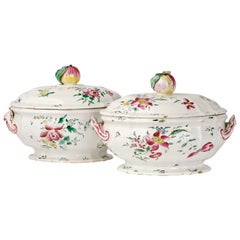
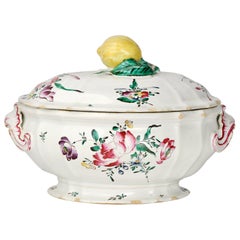
Pair of Antique Maiolica Tureens by Antonio Ferretti, Lodi, Circa 1770

Pair of Antique Maiolica Tureens by Antonio Ferretti, Lodi, Circa 1770

By Antonio Ferretti

Located in Milano, IT

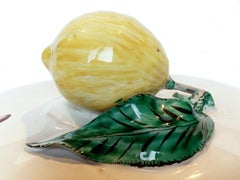
Pair of maiolica tureens Antonio Ferretti Manufacture Lodi, circa 1770-1780 Maiolica polychrome decorated “a piccolo fuoco” (third fire). a – 8.66 x 11.02 x 7.48 in (22 x 28 x 19...

Category

1770s Italian Rococo Antique Antonio Ferretti Serveware, Ceramics, Silver and Glass
Materials

Maiolica

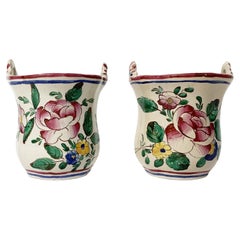
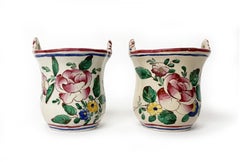
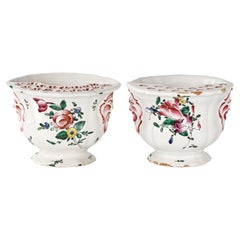
Antique Maiolica Flower Pots by Antonio Ferretti, Circa 1770-1780

Antique Maiolica Flower Pots by Antonio Ferretti, Circa 1770-1780

By Antonio Ferretti

Located in Milano, IT

Two maiolica flower pots Antonio Ferretti Manufacture Lodi, Circa 1770 - 1780 Maiolica polychrome decorated “a piccolo fuoco” (third fire) The...

Category

1770s Italian Rococo Antique Antonio Ferretti Serveware, Ceramics, Silver and Glass
Materials

Maiolica

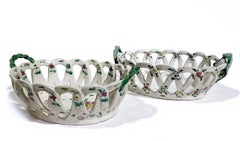
Antonio Ferretti Maiolica Baskets, Polychrome Decor, Lodi, Circa 1780

Antonio Ferretti Maiolica Baskets, Polychrome Decor, Lodi, Circa 1780

By Antonio Ferretti

Located in Milano, IT

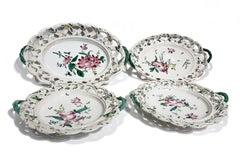
Two pairs of maiolica baskets Antonio Ferretti Manufacture Lodi, circa 1770-1790 Maiolica polychrome decorated “a piccolo fuoco” (third fire). Measures: A) Height 3.54 x 6.69 x 9.84 in (9 x 17 x 25 cm); B) Height 3.93 x 7.48 x 11.02 in (10 x 19 x 28 cm). Total weight 4.85 lb (2.200 kg) State of conservation: A) One of the smaller baskets has some areas of restoration, the other slight chipping from use; B) One of the larger baskets is intact and the other shows a clearly glued break. The mold with which the baskets were forged simulates a wicker weave. The two larger works have high, vertical walls, with branch-shaped handles penetrating the weave. The painted decorations, small polychrome flowers applied only externally, highlight the points where the weaves intersect. The decision to leave the center of the basket devoid of decoration is highly unusual, but given the size and complexity of the shape, as well as the quality of the enamel, it is possible to hypothesize that it represents a precise choice in manufacturing or for a particular client. The two smaller baskets have small, twisted handles and, on the outside, reproduce more decisively the characteristic wicker weave, obtained through thin molded lines. The interior exhibits a rich, typical decoration of naturalistic flowers: a bunch centered around a main flower and secondary stems accompanied by small “semis”. The exterior of these works is also adorned with small little flowers where the weaves intersect. The size and morphological characteristics of the baskets confirm their attribution to the Lodi factory of Antonio Ferretti between 1770 and 1790, during its most successful period; by this point his original reworking of the "Strasbourg" decoration, known as "old Lodi", had achieved great fame even outside Italy. This decorative choice represented a strong point of the Lodi factory, which established itself thanks to the vivid nature of the colors made possible by the introduction of a new technique perfected by Paul Hannong in Strasbourg and which Antonio Ferretti introduced in Italy. This production process, called “piccolo fuoco” (third fire), allowed the use of a greater number of colors than in the past; in particular, the purple of Cassius, a red made from gold chloride, was introduced. Its use allowed for many more tones and shades, from pink to purple. The Ferretti family had started their maiolica manufacturing business in Lodi in 1725. The forefather Simpliciano had started the business by purchasing an ancient furnace in 1725 and, indeed, we have evidence of the full activity of the furnaces from April of the same year (Novasconi-Ferrari-Corvi, 1964, p. 26 n. 4). Simpliciano had started a production of excellence also thanks to the ownership of clay quarries in Stradella, not far from Pavia. The production was so successful that in 1726 a decree of the Turin Chamber came to prohibit the importation of foreign ceramics, especially from Lodi, to protect internal production (G. Lise, La ceramica a Lodi, Lodi 1981, p. 59). In its initial stages, the manufacture produced maolicas painted with the “a gran fuoco” (double fire) technique, often in turquoise monochrome, with ornamentation derived from compositional modules in vogue in Rouen in France. This was also thanks to the collaboration of painters like Giorgio Giacinto Rossetti, who placed his name on the best specimens next to the initials of the factory. In 1748 Simpliciano made his will (Gelmini, 1995, p. 30) appointing his son Giuseppe Antonio (known as Antonio) as universal heir. After 1750, when Simpliciano passed away, Antonio was directly involved in the maiolica factory, increasing its fortunes and achieving a reputation on a European level. Particularly important was the aforementioned introduction in 1760 of the innovative “a piccolo fuoco” (third fire) processing, which, expanding the ornamental repertoire with Saxon-inspired floral themes, could commercially compete with the German porcelains that had one of its most renowned offerings in the naturalistic Deutsche Blumen. Antonio Ferretti understood and promoted this technique and this decoration, proposing it in a fresher and more corrective version, less linked to botanical tables...

Category

1770s Italian Neoclassical Antique Antonio Ferretti Serveware, Ceramics, Silver and Glass

Materials

Maiolica

Related Items
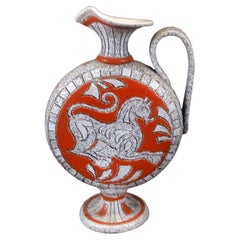
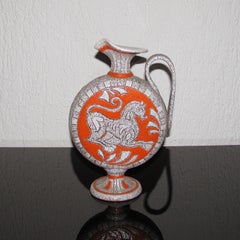
Mid-Century Modern Ceramic Pitcher By Fratelli Fanciullacci Italy

Mid-Century Modern Ceramic Pitcher By Fratelli Fanciullacci Italy

By Fratelli Fanciullacci

Located in Bochum, NRW

Beautiful pottery jug/handled vase, Italy late 1950s-1960s. Signed. A stunning form and décor, body shaped as a jug, glossy white spray-glaze has a mottled texture, decorated using ...

Category

1960s Italian Mid-Century Modern Vintage Antonio Ferretti Serveware, Ceramics, Silver and Glass

Materials

Ceramic

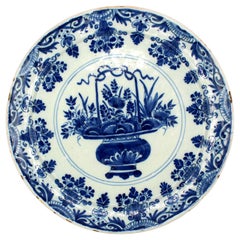
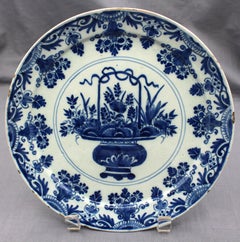
Circa 1770 Delft Blue & White Plate

Circa 1770 Delft Blue & White Plate

$236Sale Price|20% Off

H 0.75 in Dm 8.75 in

Circa 1770 Delft Blue & White Plate

Located in Chapel Hill, NC

Circa 1770 Delft blue & white plate. Central handled & footed basket vase overflowing with flowers, surrounded by alternating repetive floral vases & natura...

Category

1770s Dutch Antique Antonio Ferretti Serveware, Ceramics, Silver and Glass

Materials

Ceramic

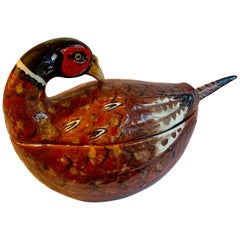
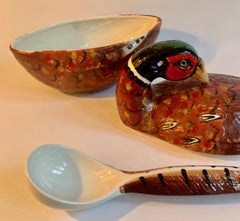
Italian Oggetti Porcelain Pheasant Soup Tureen with Ladle

Italian Oggetti Porcelain Pheasant Soup Tureen with Ladle

By Oggetti

Located in Los Angeles, CA

Italian hand painted Porcelain pheasant soup gravy tureen with ladle by Oggetti. A cleaver soup or gravy tureen covered by a hand painted bird like form. A wonderful piece for sharin...

Category

20th Century Italian Antonio Ferretti Serveware, Ceramics, Silver and Glass

Materials

Ceramic, Porcelain

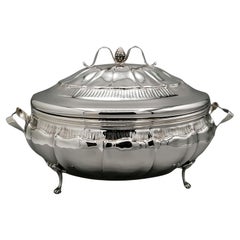
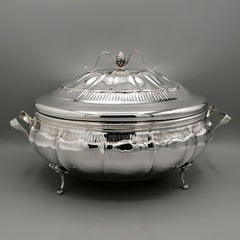
Italian solid silver 800's tureen in baroque style

Italian solid silver 800's tureen in baroque style

$3,235

H 7.49 in W 12.21 in D 8.08 in

Italian solid silver 800's tureen in baroque style

By Arval Argenti Valenza

Located in VALENZA, IT

Baroque style oval tureen, made entirely by hand. The baroque style of this tureen is very light with grooves typical of the style but not evident to allow the object to be easily pl...

Category

2010s Italian Baroque Antonio Ferretti Serveware, Ceramics, Silver and Glass

Materials

Silver

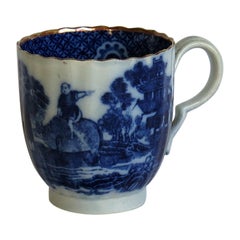
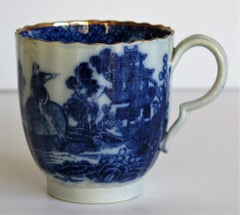
Early Coffee Cup Blue and White Boy on a Buffalo Ptn probably Spode, circa 1790

Early Coffee Cup Blue and White Boy on a Buffalo Ptn probably Spode, circa 1790

By Josiah Spode

Located in Lincoln, Lincolnshire

This is a good, very early, rare blue and white coffee cup in the "Boy on a Buffalo" pattern, probably from the factory of Josiah Spode, stoke on Trent, Staffordshire, England, made...

Category

Late 18th Century English Chinoiserie Antique Antonio Ferretti Serveware, Ceramics, Silver and Glass

Materials

Earthenware

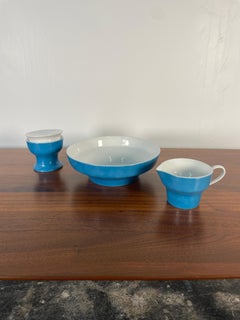
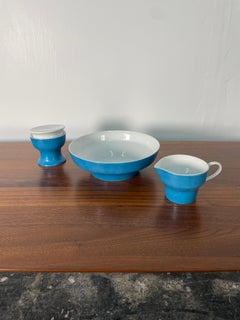
Set by Paul McCobb for Jackson China Ceramic Sugar Bowl, Milk Pitcher, and Bowl.

Set by Paul McCobb for Jackson China Ceramic Sugar Bowl, Milk Pitcher, and Bowl.

By Paul McCobb

Located in San Diego, CA

Who is ready for a mid-century modern tea party? This vintage set designed by Paul McCobb for Jackson China Ceramic Sugar Bowl, Milk Pitcher, and Bowl in rare vivid blue will make yo...

Category

1960s American Mid-Century Modern Vintage Antonio Ferretti Serveware, Ceramics, Silver and Glass

Materials

Ceramic

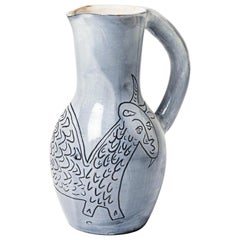
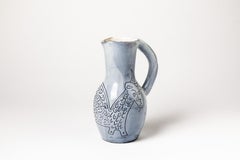
Ceramic Pitcher by Jacques Innocenti, to Vallauris, circa 1960-1970

Ceramic Pitcher by Jacques Innocenti, to Vallauris, circa 1960-1970

By Jacques Innocenti

Located in Saint-Ouen, FR

A ceramic pitcher by Jacques Innocenti to Vallauris. Perfect original conditions. Handwritten signature under the base "Innocenti Vallauris", circa 1960.

Category

20th Century French Beaux Arts Antonio Ferretti Serveware, Ceramics, Silver and Glass

Materials

Ceramic

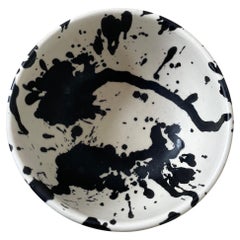
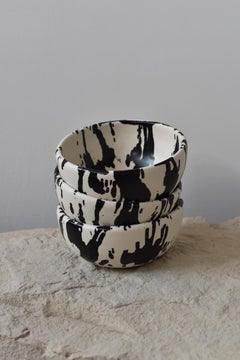
Rock Handmade Pottery Cereal/Soup Bowls - Set of 2 - Black & White Splatterware

Rock Handmade Pottery Cereal/Soup Bowls - Set of 2 - Black & White Splatterware

By OWO Ceramics

Located in Ciudad Autónoma de Buenos Aires, AR

Beautiful breakfast handmade ceramic bowls carefully crafted to meet the demands of everyday use. Designed to enrich your table setting and daily rituals, these handmade pottery bowls blur the line between functionality and ornament. Their size makes it perfect for serving cereals, fruits, snacks, soups or dips. Sold as a set of two, each pottery bowl is meticulously crafted by hand and coated in a matte glaze featuring hand-painted black splatters that evoke Pollock’s artistic work. Due to the handcrafted nature, each ceramic bowl is one-of-a-kind, and hand washing is recommended. Try combining them with our dipping and salad bowls from the Rock Collection to create your own unique handcrafted ceramic splatterware set...

Category

2010s South American Modern Antonio Ferretti Serveware, Ceramics, Silver and Glass

Materials

Ceramic, Clay, Pottery

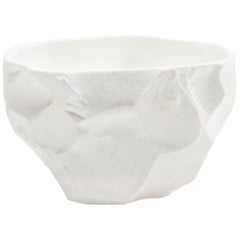
Fine Bone China Bowl Slip-Cast Hand Carved Plaster Models

Fine Bone China Bowl Slip-Cast Hand Carved Plaster Models

By Max Lamb

Located in London, GB

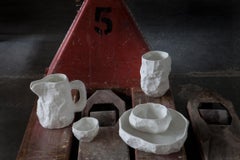
Crockery White, 1882 Ltd. with Max Lamb. A collection of fine bone china tableware slip-cast from plaster models carved by hand, with glazed interior for functionality and raw exteri...

Category

21st Century and Contemporary British Modern Antonio Ferretti Serveware, Ceramics, Silver and Glass

Materials

Ceramic

Fine Bone China Small Bowl Slip-Cast Hand Carved Plaster Models

Fine Bone China Small Bowl Slip-Cast Hand Carved Plaster Models

By Max Lamb

Located in London, GB

Crockery White, 1882 Ltd. with Max Lamb. A collection of fine bone china tableware slip-cast from plaster models carved by hand, with glazed interior for functionality and raw exteri...

Category

21st Century and Contemporary British Modern Antonio Ferretti Serveware, Ceramics, Silver and Glass

Materials

Ceramic

D. Peterson Ceramic Pitcher and Cups Set Dated 1956

D. Peterson Ceramic Pitcher and Cups Set Dated 1956

By D. Peterson

Located in Chicago, IL

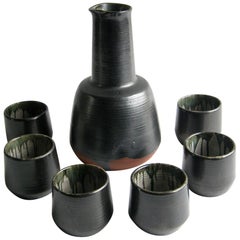
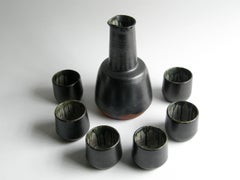
This handmade ceramic pitcher and cups set has classically simple forms. The glaze treatment is wonderfully irregular, embracing the spontaneity of the process. The darker glaze on t...

Category

1950s American Mid-Century Modern Vintage Antonio Ferretti Serveware, Ceramics, Silver and Glass

Materials

Ceramic

Contemporary Earthenware Large Bowl with Interpretation of Traditional Creamware

Contemporary Earthenware Large Bowl with Interpretation of Traditional Creamware

By Faye Toogood

Located in London, GB

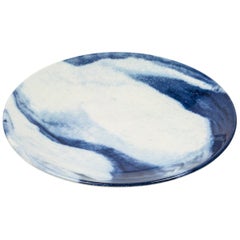
Indigo Storm, 1882 Ltd. with Faye Toogood. Faye Toogood’s range of ceramic designs for 1882 Ltd. celebrates the accidental beauty of natural imperfec...

Category

21st Century and Contemporary British Modern Antonio Ferretti Serveware, Ceramics, Silver and Glass

Materials

Ceramic

Previously Available Items
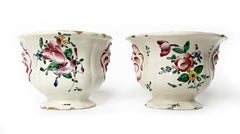
Pair of Italian Maiolica Flower Pots, Antonio Ferretti, Lodi, circa 1770 – 1780

Pair of Italian Maiolica Flower Pots, Antonio Ferretti, Lodi, circa 1770 – 1780

By Antonio Ferretti

Located in Milano, IT

Pair of flower pots Antonio Ferretti Manufacture Lodi, circa 1770 – 1780 Maiolica polychrome decorated “a piccolo fuoco” (third fire) They meas...

Category

1770s Italian Rococo Antique Antonio Ferretti Serveware, Ceramics, Silver and Glass
Materials

Maiolica

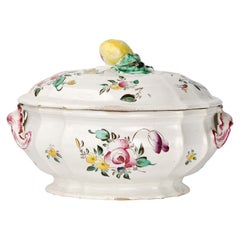
Italian Ancient Maiolica Tureen, Lodi, 1770-1780

Italian Ancient Maiolica Tureen, Lodi, 1770-1780

Sold

H 7.49 in W 11.03 in D 7.49 in

Italian Ancient Maiolica Tureen, Lodi, 1770-1780

By Antonio Ferretti

Located in Milano, IT

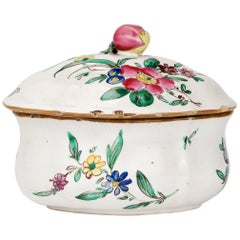
Maiolica tureen Antonio Ferretti Manufacture Lodi, Circa 1770 - 1780 Maiolica polychrome decorated “a piccolo fuoco” (third fire). It measures 7.48 x 7.48 x 11.02 in (19 x 19 x 2...

Category

1770s Italian Rococo Antique Antonio Ferretti Serveware, Ceramics, Silver and Glass
Materials

Maiolica

Antonio Ferretti serveware, ceramics, silver and glass for sale on 1stDibs.
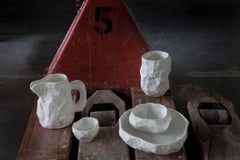
Antonio Ferretti serveware, ceramics, silver and glass are available for sale on 1stDibs. These distinctive items are frequently made of maiolica and are designed with extraordinary care. There are many options to choose from in our collection of Antonio Ferretti serveware, ceramics, silver and glass, although beige editions of this piece are particularly popular. Many of the original serveware, ceramics, silver and glass by Antonio Ferretti were created in the Rococo style in italy during the 18th century and earlier. If you’re looking for additional options, many customers also consider serveware, ceramics, silver and glass by Pasquale Rubati, Argenteria Auge, and Ilario Pradella. Prices for Antonio Ferretti serveware, ceramics, silver and glass can differ depending upon size, time period and other attributes — on 1stDibs, these items begin at $885 and can go as high as $12,802, while a piece like these, on average, fetch $3,912.