By Makuzu Kozan
Located in Atlanta, GA
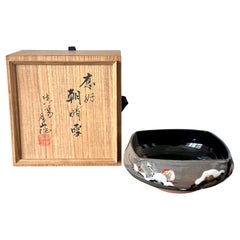
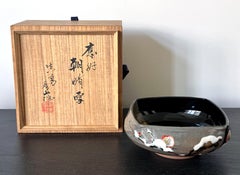
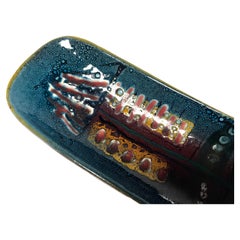
A rare published glazed ceramic bowl with surface paint decoration by Japanese imperial potter Makuzu Kozan ((1842–1916) with its original inscribed tomobako storage wood box. Unlike the better-known works Kozan made for the expositions in the west and export to the foreign market, this piece exemplifies his work for the domestic market and specifically, the tea ceremony. The bowl was made in the so called "Utusushi" Ogata Kenzan (1663-1743), a celebrated Edo painter and ceramicist. Utusushi is loosely translated as "in the spirit of". It is not at all a simple imitation of a master, but a Japanese concept of embracing the spiritual essence of a master while the creator is free to mix in his or her own unique artistic interpretation and flavor.
The bowl was made to hold sweet cakes during the tea ceremony. It has a very distinguished form with a circular swelled lower body morphing into a square upper portion that further opening with flared rim. The surface has a distinct glaze pattern partitioned diagonally in black and brown. On top, snow-covered branches of prunus flowers were painted overglaze in a poetic near-abstract fashion. Blooming in winter, prunus flower is the symbol of the season and cherished for its resistance to cold. The bowl was likely reserved for the tea ceremony during the winter months.
A white porcelain plaque with Kozan in black inlay was placed on the black glaze toward the bottom. Under the base, the bowl was further branded with two incised characters "Makuzu" as shown. The original tomobako bears ink inscription and paper slip label "Sweet Bowl...
Category
Early 1900s Japanese Meiji Antique Ardine Spitters Furniture