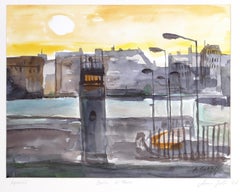
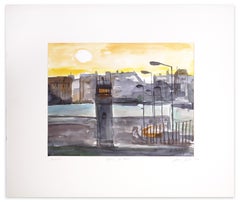
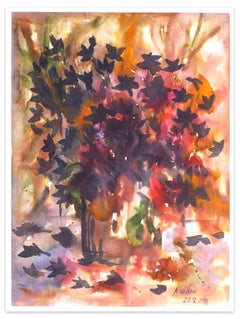
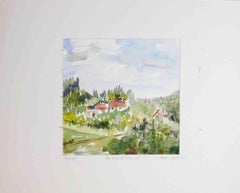
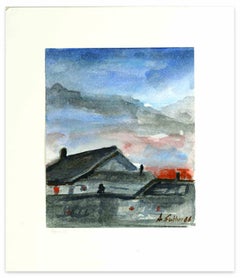
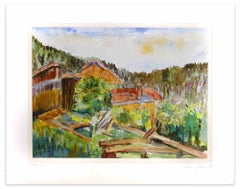
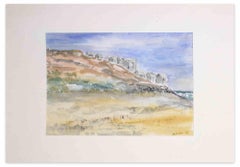
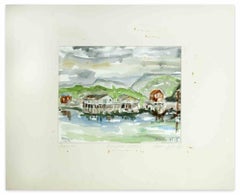
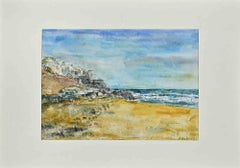
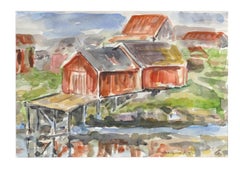
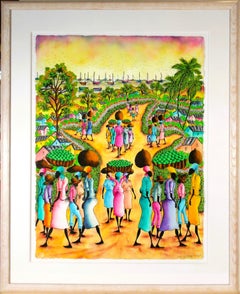
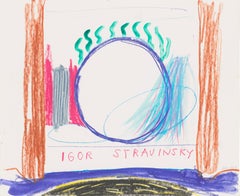
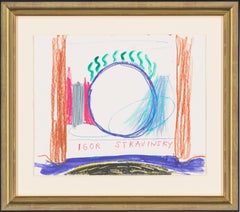
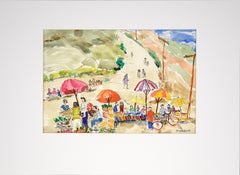
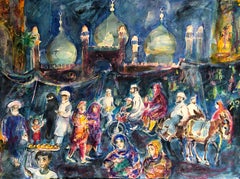
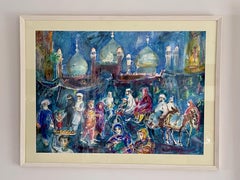
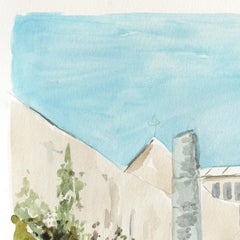
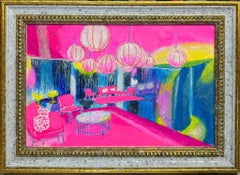
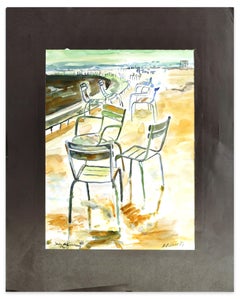
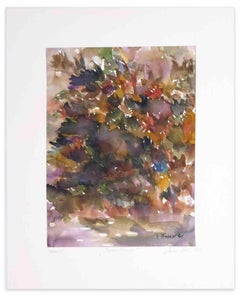
Very atmospheric night scene of Lahore. painted circa 2003
Watercolour and partel on paper. well framed
Framed 26.5" x 34.5". Image 21" x 29"
Signed and titled verso
Throughout the 1990s Robert Macdonald lived in an isolated cottage with no road access high in the hills overlooking the Usk Valley. His work became a meditation on the landscape, the farming life and also the legends of the Brecon Beacons area. Three years ago he became the first elected president of the Royal Watercolour Society of Wales and he is a past chair of the Welsh Group, the senior association of artists in Wales, and a director of the Swansea Print Workshop.
Before coming to Brecon he worked and painted for many years in London and his move to Wales, prompted by his Welsh-born wife Annie, was in a way a return to his own rural roots. Born in 1935, much of his early life was spent in rural communities, not in Wales but as a war-time evacuee on Somerset farms and, from the age of 10, in the New Zealand back country. His family emigrated to New Zealand in 1945 and lived on the Northland Peninsula where there was a considerable Maori presence. Maori carving...
Category
Early 2000s Contemporary Armin Guther Art
MaterialsPastel, Watercolor