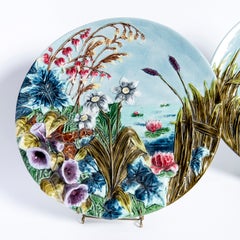
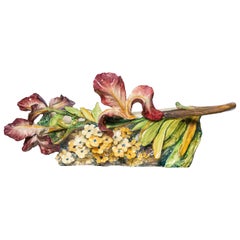
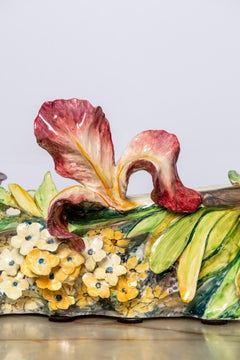
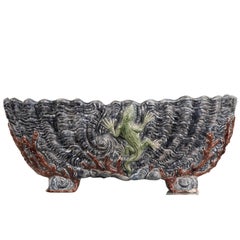
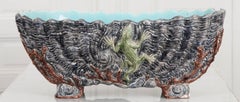
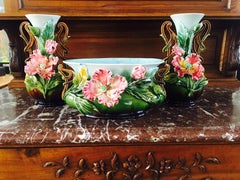
Pair of Barbotine Ceramic Dishes, Art Nouveau Period, France, circa 1890
By Barbotine
Located in Buenos Aires, Buenos Aires
Pair of Barbotine ceramic dishes, Art Nouveau Period, France, circa 1890.
1890s French Art Nouveau Antique Barbotine
Ceramic
Pair of Barbotine Ceramic Dishes, Art Nouveau Period, France, circa 1890
By Barbotine
Located in Buenos Aires, Buenos Aires
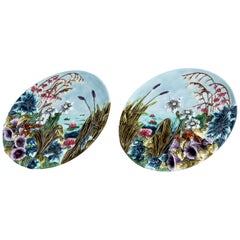
Pair of Barbotine ceramic dishes, Art Nouveau Period, France, circa 1890.
Ceramic
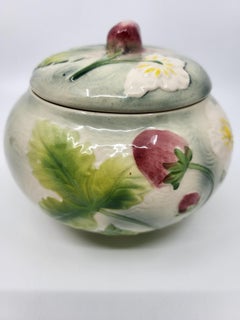
Boite en faïence barbotine Saint Clément décor Fraise et fleurs Francaise XIXe
By Barbotine, Saint-Clément
Located in London, England
La bonbonnière ou boîte à bijoux de Saint Clément, réalisée en faïence barbotine à la fin du XIXe siècle dans le style Art Nouveau, est une véritable œuvre d'art. Son décor délicat d...
Ceramic, Faience, Majolica
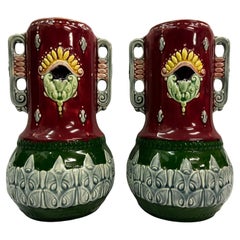
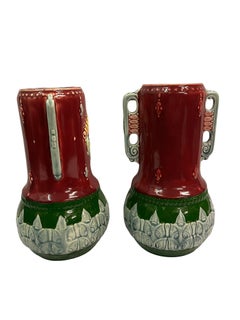
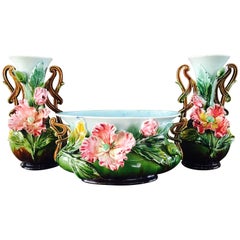
Set of two vases, barbotine, majolica, circa 1910, Art Nouveau, France
By Barbotine
Located in Wien, AT
Set of two handled vases, made of majolica, famous Barbotine, manufactured around 1910 in France. These particularly attractive vases are of exceptional quality and wonderful decor....
Majolica
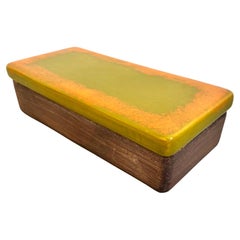
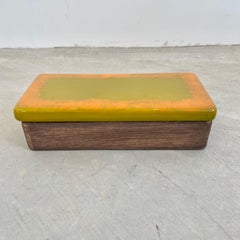
Ceramic Box, 1960s Italy
Located in Los Angeles, CA
Glaze ceramic box made in Italy, circa 1970s. Slime green glaze along the top with an orange ring around the edge of the lid. Base is painted a matte brown. Green glaze covers the in...
Ceramic
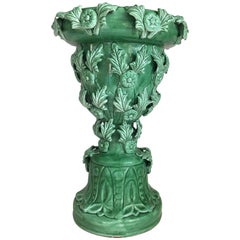
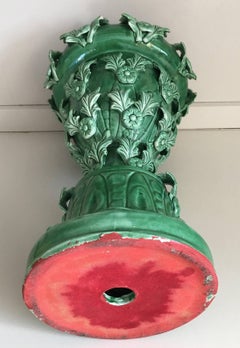
French Art Nouveau Ceramic Planter or Vase circa 1910
Located in Miami, FL
Art Nouveau Ceramic Planter or Vase circa 1910 Spectacular jardinière or centerpiece with relief flowers and leaves on the two sides
Ceramic
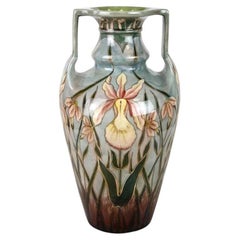
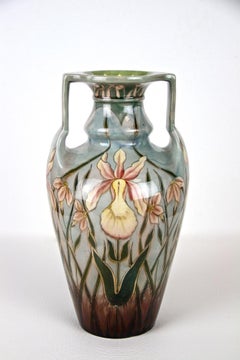
20th Century Art Nouveau Majolica Vase by Gerbing & Stephan, AT ca. 1910
By Gerbing & Stephan
Located in Lichtenberg, AT
Remarkable, rare Art Nouveau majolica vase by the world famous manufactory of Gerbing & Stephan from the early period in Austria around 1910. The beautiful shaped grey blue color...
Ceramic, Majolica
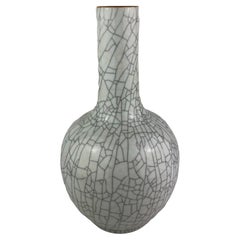
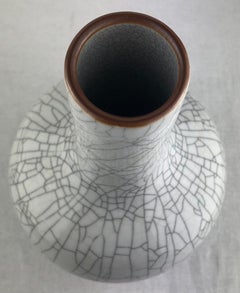
Mid-Century Modern Ceramic Vase, Saint Clément Style, 1960s
By Saint-Clément
Located in Miami, FL
French mid-century ceramic vase in the style of Saint Clement crackle finish pieces. Good quality craftsmanship. Unmarked. Measures: 6 1/8" diameter x 12" high.
Ceramic
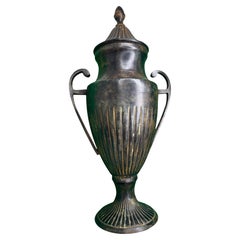
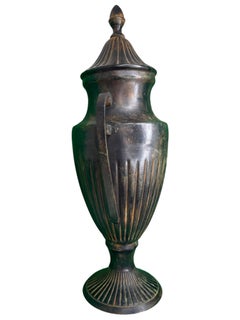
Beautiful Metal Art Nouveau Urne Mantel Vase circa 1910s
Located in Nuernberg, DE
Beautiful single mantel vase about 1910s or older. Made of metal, has some nice patina, but this is old-age. A beautiful piece for any room. Found at an Estate Sale in Nuremberg, Ger...
Metal
$655Sale Price / set|20% Off
H 22.45 in W 8.67 in D 8.67 in
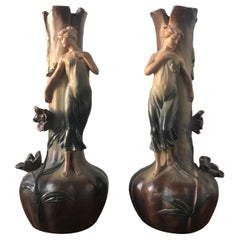
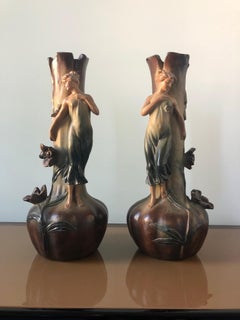
French Art Nouveau Pair of Large Terracotta Vases, circa 1910
Located in Traversetolo, IT
A stunning French Art Nouveau pair of large vases with female figures of the era, circa 1910.
Terracotta
$6,397Sale Price|30% Off
H 1.97 in Dm 10.24 in
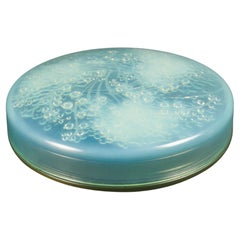
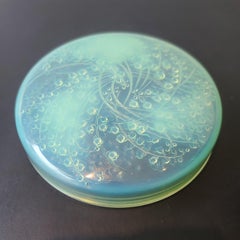
René Lalique (1860-1945) « Boite Ronde Grande Muguet » Mint Green 1921
By René Lalique
Located in Saint-Ouen, FR
René Lalique (1860-1945), Mint Opalescent Glass « Boite Ronde Grande Muguet » 1921 Mint green tinted molded-pressed opalescent glass box decorated with Lily of the Valley Extremel...
Art Glass
$1,760Sale Price|20% Off
H 3.5 in W 16 in D 6 in
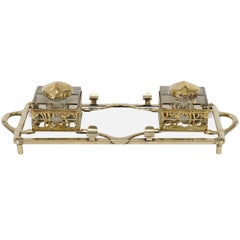
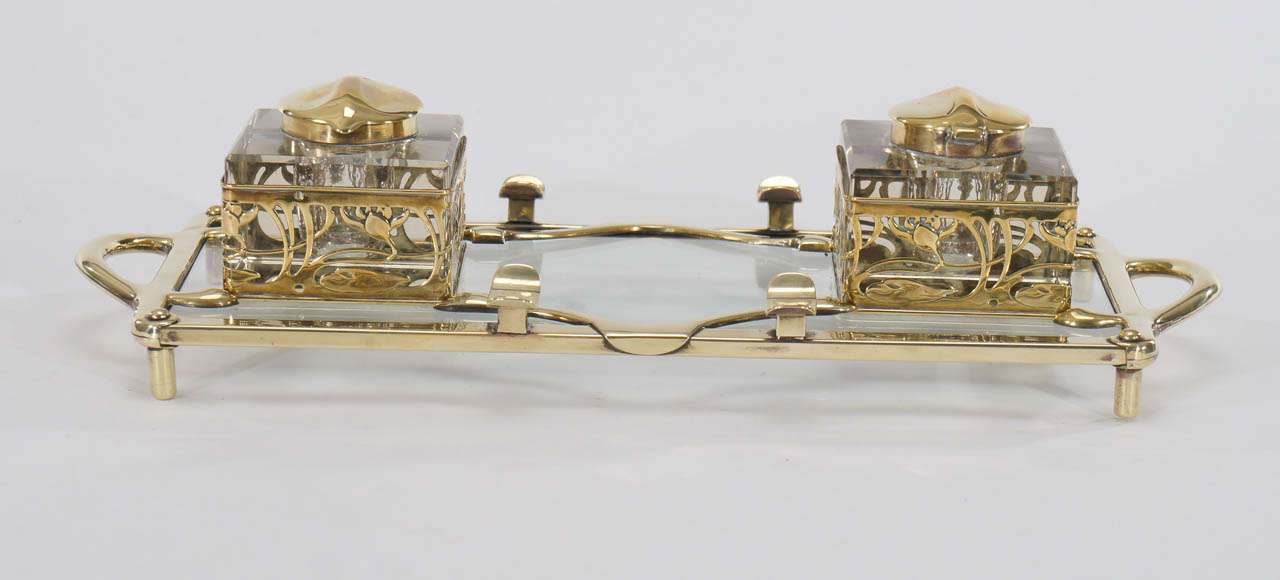
Art Nouveau Double Inkwell Brass & Solid Crystal circa 1890
Located in Great Barrington, MA
This is the perfect desk accessory for any decor but especially decorative in the Art Nouveau taste. The solid brass and crystal base supports 2 matching crystal inkwells which are s...
Brass
$1,400 / set
H 8 in W 5.5 in D 5 in
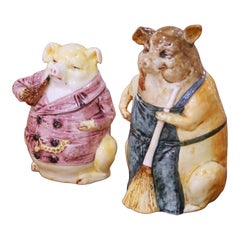
19th Century French Figural Barbotine Faience Pig Tobacco Jars, Set of 2
By Onnaing
Located in Dallas, TX
Crafted in Northern France circa 1880, this engaging pair of antique figural faience tobacco jars is executed in the manner of Onnaing, reflecting the lively humor and expressive mod...
Faience, Majolica
$1,681Sale Price|20% Off
H 8.47 in Dm 12.6 in
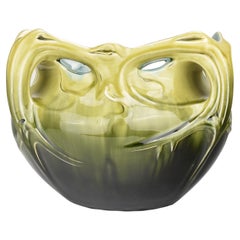
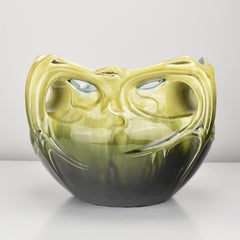
French Art Nouveau Majolica Planter Jardiniere by Hector Guimard Barbotine
By Gustave De Bruyn, Hector Guimard
Located in Bad Säckingen, DE
Hector Guimard was a renowned French architect and designer who is best known for his Art Nouveau style. He was born in Lyon in 1867 and later moved to Paris, where he became a promi...
Ceramic, Majolica
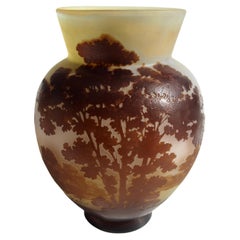
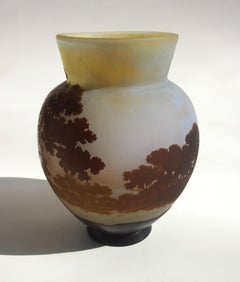
French Emile Galle Art Nouveau Cameo Glass Landscape Vase, circa 1910
By Émile Gallé, Louis Hestaux
Located in Worcester Park, GB
Impressive Art Nouveau Emile Galle Cameo landscape vase, 7 1/2 inches tall, in a variety browns and yellows with a hint of opal, signed in came...
Art Glass
Pierre-Adrien DALPAYRAT French Art Nouveau Stoneware Inkwell, 1890
By Pierre-Adrien Dalpayrat
Located in Saint-Amans-des-Cots, FR
French Art Nouveau Inkwell by Pierre-Adrien Dalpayrat, France, circa 1890. A rare and exquisite Art Nouveau inkwell by renowned French ceramist Pierre-Adrien Dalpayrat (1844–1910). This finely crafted piece showcases Dalpayrat’s signature red copper-glazed stoneware, especially rich and luminous near the base. Elegantly mounted in pewter, the design exemplifies the organic flow and refined detail of the Art Nouveau period. Dimensions: Height: 3.54 in. (9 cm) Diameter: 5.12 in. (13 cm) Materials: Stoneware with pewter mount Condition: Excellent+++++, museum-quality preservation Markings: Incised signature "Dalpayrat 1500" under the base (see photo) This inkwell is a collectible example of French ceramic art at the turn of the century—perfect for collectors of Art Nouveau, 19th-century French ceramics, or the works of Dalpayrat. Adrien Dalpayrat (1844–1910): A Pioneer of French Ceramic Innovation Adrien Dalpayrat was a French ceramicist and researcher who played a key role in the revival of stoneware at the end of the 19th century. Born in 1844 in Limoges, Dalpayrat studied drawing and porcelain painting in his hometown before beginning his professional career at the Jules Vieillard faience factory in Bordeaux. There, he met his wife, Marie Tallerie, with whom he had two sons—Albert and Adolphe—who would later become his primary collaborators. Throughout his early career, Dalpayrat worked for several major ceramic manufacturers, including Ashwin (Valentine), Fouquet (Toulouse), François Blanc (Monaco), and Léon Sazerat (Limoges). In 1889, seeking greater independence, he moved to the Paris region and established his own studio in Bourg-la-Reine. Collaborations and Artistic Evolution Dalpayrat’s creative vision expanded through his collaboration with sculptor Alphonse Voisin-Delacroix. Together, they explored neo-Gothic and Palissy-inspired motifs, creating a remarkable ceramic bestiary. Following Voisin-Delacroix’s death in 1893, Dalpayrat partnered with Adèle Lesbros, which marked a shift in his work toward simpler, more refined vase forms influenced by Japonism. Japanese art had been introduced to France during the 1867 Universal Exhibition, but it wasn’t until the 1878 Exhibition, particularly through the ceremonial stoneware used in the Japanese tea ceremony, that Japonism truly captivated French artists. This influence led Dalpayrat to create vessels with organic, vegetal, and animal-inspired forms. Technical Mastery: The Secrets of Copper Red Among all the ceramists of his time who sought to replicate the elusive Chinese “sang de boeuf” (oxblood) glaze, Adrien Dalpayrat was arguably the most successful. He didn’t simply reproduce the legendary copper red—he transformed it. By manipulating glaze thickness, firing temperature, atmosphere, and copper oxide content, he developed a unique palette of flamed and mottled red glazes that became his signature: the renowned Dalpayrat red. He further enriched his pieces by introducing streaks and inclusions of turquoise, blue, green, and yellow—freeing the red glaze from monochromy and turning it into an expressive, living surface. His work pushed stoneware beyond function into expressive art, merging form and glaze in bold, sculptural harmony. Beyond Ceramics: Bronze Mounts and Architectural Works Dalpayrat also collaborated with renowned jewelers such as Ernest Cardeilhac and Keller to produce pieces mounted in gilt bronze, blending ceramics with decorative arts at the highest level. In an effort to make his work more accessible, he opened a second faience workshop focused on simpler, more affordable pieces inspired by Nevers and Rouen ware. However, this venture faced financial difficulties and closed by 1900. The main family studio followed in 1906 as the popularity of Art Nouveau declined. Dalpayrat then returned to Limoges, devoting his final years to painting and drawing until his death in 1910. Legacy and Recognition Despite financial struggles during his lifetime, Dalpayrat’s ceramics were widely acclaimed at major international exhibitions: Bronze medal, World's Columbian Exposition, Chicago (1893) Silver medal, Antwerp International Exhibition (1894) Gold medal, Exposition Universelle, Paris (1900) Today, his work is part of prestigious museum collections. In 2020, the Petit Palais in Paris acquired a large bird motif vase created in collaboration with Voisin-Delacroix, now on view in Room...
Pewter
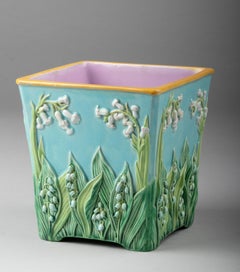
Late 19th Century Majolica Planter / Flower Pot Made Barbotine France
By Barbotine
Located in Casteren, Noord-Brabant
Cute little planter, made of glazed ceramic from the French maker Barbotine. Marked on the bottom with the blind mark from Barbotine. The planter is nicely decorated with lilies of t...
Ceramic
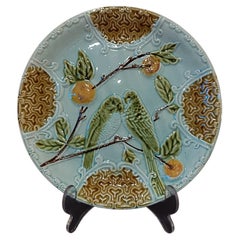
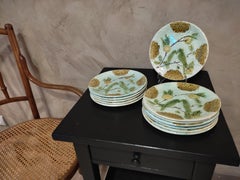
Early 20th Century Set of 12 Barbotine Desert Plates, 1900s
By Barbotine
Located in LEGNY, FR
Rare 20th century French Barbotine set of 12 desert plates. Nice Blue color with a couple of green parakeet on a lemon tree branch. Good condition.
Faience
Sold
H 9.45 in W 19.69 in D 7.88 in
Glazed Ceramic Barbotine Jardinière with Flowers, France, circa 1890
By Barbotine
Located in Buenos Aires, Buenos Aires
Glazed ceramic Barbotine jardinière with flowers. Art Nouveau period. France, circa 1890.
Ceramic
French 19th Century Ceramic Barbotine Planter
By Barbotine
Located in Baton Rouge, LA
A splendid glazed Barbotine ceramic planter, made at the end of the 19th century in France. The work has an aquatic or marine theme, with the bowl being formed from stacked oyster sh...
Ceramic
Set of 19th Century French Hand-Painted Barbotine Vases with Flowers
By Barbotine
Located in Sofia, BG
Perfect for a mantel or tabletop, this colorful set of antique Barbotine vases were made in France, circa 1870. It is embellished with large flowers in high relief in a pink, yellow...
Ceramic
French Provincial Barbotine Asparagus Platter, France
By Barbotine
Located in Paris, FR
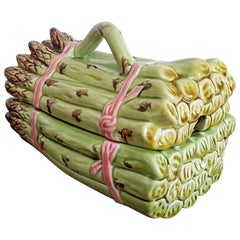
Green asparagus serving platter and cober top beautifully decorated by a pink rose ribbon in Barbotine ceramic in a excellent condition. Fra...
Faience, Majolica
Barbotine Majolica Faience Asparagus Serving Platter, France
By Barbotine
Located in Paris, FR
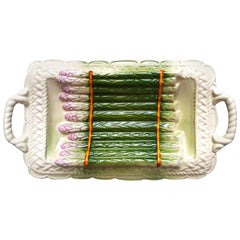
Beautiful French Barbotine Majolica faience asparagus serving platter, decorated with a lovely combination of colors in a very good condition...
Ceramic, Faience
Barbotine Majolica French Faience Asparagus Plate
By Barbotine
Located in Paris, FR
Beautiful original French Faience, Barbotine Majolica, asparagus plate with gorgeous colors and refined decoration. In excellent condition.
Ceramic, Faience