Barton Art

to
1
Overall Width
to
Overall Height
to
1
1
1
1
1
1
1
1
1
10,159
2,807
2,503
1,398
1
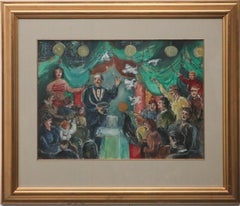
Artist: Barton
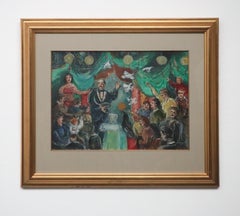
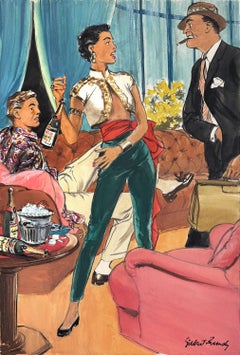
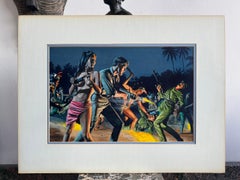
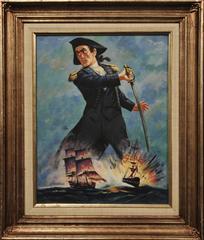
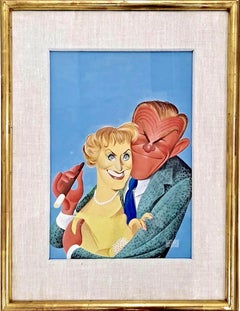
The Swashbuckler
The Swashbuckler

The Swashbuckler

By Barton

Located in Fort Washington, PA

Medium: Watercolor on Board Dimensions: 18.00" x 14.00" Signature: Signed Lower Right

Category

20th Century Barton Art

Materials

Board, Watercolor

Related Items
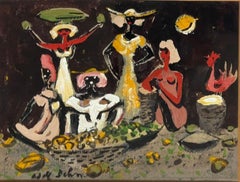
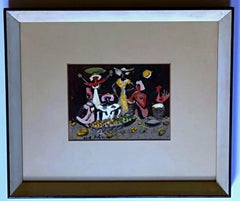
Adolf Dehn, Haitian Scene A, signed painting, Associated American Artists, 1950s

Adolf Dehn, Haitian Scene A, signed painting, Associated American Artists, 1950s

By Adolf Arthur Dehn

Located in New York, NY

Adolf Arthur Dehn Haitian Scene A, ca. 1951 Watercolor gouache on board Signed on the front Frame included: held in vintage modern frame Measurements: Framed: 11 inches vertical by 13 inches horizontal by .75 Painting 4.5 inches by 6 inches Watercolor gouache, hand signed; framed with AAA Gallery label verso Signed on the front bearing the original label on the verso of Dehn's longtime gallery, the prestigious Associated American Artists Gallery, New York City. Provenance Associated American Artists Frame included: held in vintage frame with original label as provenance Dehn, an influential artist and teacher (and author of the definitive textbook of his era on watercolor painting) joined Associated American Artists gallery in 1941. Although this painting is undated, it is likely circa early 1950s, as in 1951 Dehn won a Guggenheim Fellowship, which enabled him to travel to Haiti -- the subject of this work. It was part of a series inspired by Dehn's visit to Haiti. Dehn, an influential artist and teacher (and author of the definitive textbook of his era on watercolor painting) joined Associated American Artists gallery in 1941. Although this painting is undated, it is likely circa early 1950s, as in 1951 Dehn won a Guggenheim Fellowship, which enabled him to travel to Haiti. ADLOF DEHN Adolf Dehn, American Watercolorist and Printmaker, 1895-1968 Adolf Dehn was an artist who achieved extraordinary artistic heights, but in a very particular artistic sphere - not so much in oil painting as in watercolor and lithography. Long recognized as a master by serious print collectors, he is gradually gaining recognition as a notable and influential figure in the overall history of American art. In the 19th century, with the invention of the rotary press, which made possible enormous print runs, and the development of the popular, mass-market magazines, newspaper and magazine illustration developed into an artistic realm of its own, often surprisingly divorced from the world of museums and art exhibitions, and today remains surprisingly overlooked by most art historians. Dehn in many regards was an outgrowth of this world, although in an unusual way, since as a young man he produced most of his illustrative work not for popular magazines, such as The Saturday Evening Post, but rather for radical journals, such as The Masses or The Liberator, or artistic "little magazines" such as The Dial. This background established the foundation of his outlook, and led later to his unique and distinctive contribution to American graphic art. If there’s a distinctive quality to his work, it was his skill in introducing unusual tonal and textural effects into his work, particularly in printmaking but also in watercolor. Jackson Pollock seems to have been one of many notable artists who were influenced by his techniques. Early Years, 1895 - 1922 For an artist largely remembered for scenes of Vienna and Paris, Adolf Dehn’s background was a surprising one. Born in Waterville, Minnesota, on November 22, 1895, Dehn was the descendent of farmers who had emigrated from Germany and homesteaded in the region, initially in a one-room log cabin with a dirt floor. Adolf’s father, Arthur Clark Dehn, was a hunter and trapper who took pride that he had no boss but himself, and who had little use for art. Indeed, during Adolf’s boyhood the walls of his bedroom and the space under his bed were filled with the pelts of mink, muskrats and skunks that his father had killed, skinned and stretched on drying boards. It was Adolf’s mother, Emilie Haas Dehn, a faithful member of the German Lutheran Evangelical Church, who encouraged his interest in art, which became apparent early in childhood. Both parents were ardent socialists, and supporters of Eugene Debs...

Category

1950s Modern Barton Art

Materials

Watercolor, Gouache, Board

Portrait miniature, by F. Carbonara. Gabriel Verplanck Ludlow New York lawyer

Portrait miniature, by F. Carbonara. Gabriel Verplanck Ludlow New York lawyer

Located in GB

F. Carbonara was an Italian miniature portrait artist active in the early 19th century. There is an example by him at the Metropolitan Museum. Signed "Carbonara 1808", the sitter a...

Category

Early 19th Century Barton Art

Materials

Board, Watercolor

Mid Century Golden Age of Illustration- Narrative Art - Norman Rockwell School

Mid Century Golden Age of Illustration- Narrative Art - Norman Rockwell School

By Alex Ross

Located in Miami, FL

“Graduation Day” is emblematic of mid-century American Illustration. But the real story of this storytelling work is that it embodies the lost art of portrait painting and graphic design. Alex Ross borrows on the classical tradition and flaunts his skills as a narrative painter. In “Graduation Day”, he paints a complex composition involving at least thirteen portraits. The subjects are beautifully rendered and lit. They are set against a dark grey background and jump off the surface at the viewer. The composition is complexly designed. The future graduate in the red jacket engaging with a girl photographer is a compositional device that leads the viewer's eye to the main subject - a father congratulating his son on graduating from medical school. Creating art that relies on facial expressions and body gestures is a talent absent in contemporary art. Why? It’s very hard to do and takes years and training and practice to get it right. Despite Alex Ross's folksy subject matter, this work is a high example of naturalism and representation by an important member of the Golden Age of American Illustration. Signed lower right Born in the town of Dunfermline, Scotland, Alexander Sharpe Ross (1908-1990) moved with his family to Pittsburgh, Pennsylvania in 1911. After attending Carnegie Tech (now Carnegie Mellon University), Ross moved to New York and joined the Charles E. Cooper Studio, where he worked among such notable illustrators as Ward Brackett, Stevan Dohanos, J. Frederick Smith...

Category

1940s Barton Art

Materials

Gouache, Illustration Board

"Woman with a Cigarette", Hugo Scheiber (1873-1950)

"Woman with a Cigarette", Hugo Scheiber (1873-1950)

By Hugó Scheiber

Located in Paris, FR

Hugo Scheiber (1873-1950) was a Hungarian painter of Jewish origins. He started as a self-taught artist. He was initially inspired by Impressionism before evolving towards Expression...

Category

1920s Expressionist Barton Art

Materials

Gouache, Cardboard

Antique Illustration of a Golfer by Listed Illustrator for Vanity Fair

Antique Illustration of a Golfer by Listed Illustrator for Vanity Fair

Located in Buffalo, NY

Antique illustration of a golfer getting out of a sand trap by well listed illustrator Leslie Saalburg whose work appeared in Vanity Fair and Esquire.

Category

1910s Realist Barton Art

Materials

Gouache, Illustration Board

Almond-Eyed Brunette by Window, Watercolor on Board, Circa 1960

Almond-Eyed Brunette by Window, Watercolor on Board, Circa 1960

Located in Miami, FL

An almond-eyed brunette is depicted sitting pensively next to a window. She looks Mediterranean, perhaps Italian or Greek, and has a captivating face that one can fall in love with. ...

Category

1960s Post-Impressionist Barton Art

Materials

Mixed Media, Watercolor, Gouache, Illustration Board, Pencil
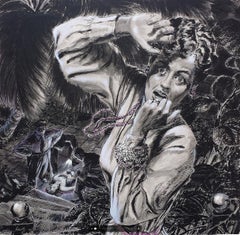
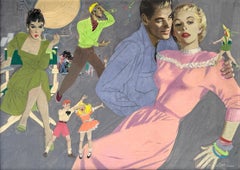
Sexy Blond Falls from Window - Noir Pulp Art

Sexy Blond Falls from Window - Noir Pulp Art

By Harry Barton

Located in Miami, FL

There is plenty of B-movie-like pulp illustration art out there to consider. This work, however, is fundamentally different. The main point about the Harry Barton...

Category

1950s Barton Art

Materials

Gouache, Illustration Board

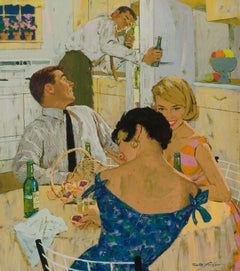
Mid-Century Cosmopolitan Illustration Surreal Family Narrative

Mid-Century Cosmopolitan Illustration Surreal Family Narrative

By Jon Whitcomb

Located in Miami, FL

A complex story is portrayed in one picture. American Glamour Illustrator Jon Whitcomb interprets a Mid-Century Cosmopolitan story about a beautiful blond actress who, on set, appea...

Category

1950s Surrealist Barton Art

Materials

Gouache, Illustration Board

Introspective Woman / Actress on Movie Set. Mid Century Art, Female Illustrator

Introspective Woman / Actress on Movie Set. Mid Century Art, Female Illustrator

By Lorraine Fox

Located in Miami, FL

Lorraine Fox was an American illustrator and commercial artist who illustrated magazines, book covers, and advertisements. Among the magazines, she illustrated for were Woman's Day, ...

Category

1960s Post-Impressionist Barton Art

Materials

Watercolor, Gouache, Board, Pencil

Highly Decorative Painting Of A Young Lady With Meadow Flowers In Her Straw Hat

Highly Decorative Painting Of A Young Lady With Meadow Flowers In Her Straw Hat

Located in Sutton Poyntz, Dorset

Alice Anne Renshaw. English ( b.1849 - d.1900 ). Young Lady With Meadow Flowers In Her Straw Hat. Watercolor & Gouache On Artist's Board. ( An impressed blind stamp in the top left hand corner reads 'Turnbull’s Superfine London Board' ) . Signed Lower Left. Image size 21.3 inches x 16.7 inches ( 54cm x 42.5cm ). Frame size 29.9 inches x 25.6 inches ( 76cm x 65cm ). Available for sale; this original painting is by Alice Anne Renshaw and dates from around 1880. The painting is presented and supplied in its original highly ornate...

Category

Late 19th Century Realist Barton Art

Materials

Watercolor, Gouache, Board

Previously Available Items
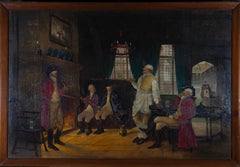
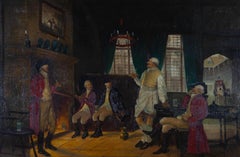
Barton - Large 20th Century Oil, Gathering at the Inn

Barton - Large 20th Century Oil, Gathering at the Inn

By Barton

Located in Corsham, GB

An eighteenth-century scene depicting gentlemen gathering around the fire at an inn. Presented in a wooden frame. Signed to the lower-right edge. On canvas on stretchers.

Category

21st Century and Contemporary Barton Art

Materials

Oil

Barton art for sale on 1stDibs.

Find a wide variety of authentic Barton available for sale on 1stDibs. You can also browse by medium to find art by Barton in paint, board, oil paint and more. Not every interior allows for large Barton, so small editions measuring 14 inches across are available. Customers who are interested in this artist might also find the work of Yangzi Xu, Kate Verrion, and Bob Pollack. Barton prices can differ depending upon medium, time period and other attributes. On 1stDibs, the price for these items starts at $500 and tops out at $606, while the average work can sell for $553.
Questions About Barton Art
  • 1stDibs ExpertAugust 20, 2024
    To identify a Reed & Barton pattern, you can do one of two things. First, you can compare your silverware to pictures published on trusted online resources and look for a match. To narrow down your search, look to see if your silverware has a date code next to the maker's name. If so, you can use this code to determine approximately when the silverware was produced and then focus on patterns produced during that time frame. Alternatively, you can take your silverware to a certified appraiser or knowledgeable antique dealer and have them assist you with the identification process. Explore a range of Reed & Barton silverware on 1stDibs.
  • 1stDibs ExpertAugust 17, 2021
    Yes, Reed & Barton pieces are made of sterling silver. The American brand was founded in 1824 and is highly regarded as one of the highest quality silver manufacturers in the world. The brand also makes more affordable silver-plated items too.
    1stDibs ExpertAugust 17, 2021
    Yes, Reed and Barton sells sterling silver. Reed and Barton is a prominent American silver manufacturer located in Massachusetts that is known for its sterling silver and silverplate. To determine if a Reed and Barton piece is sterling silver, look for the word “sterling” or the number “.925”. Shop Reed and Barton on 1stDibs.