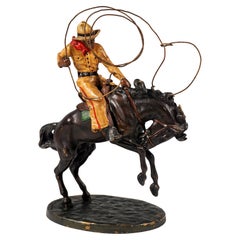
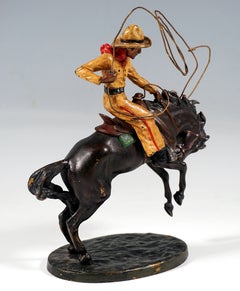
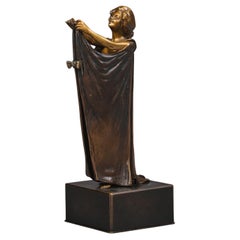
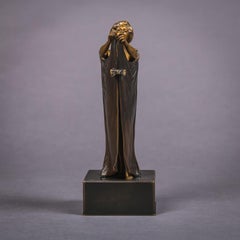
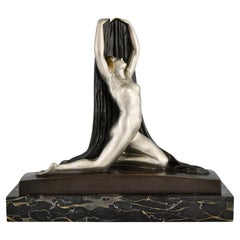
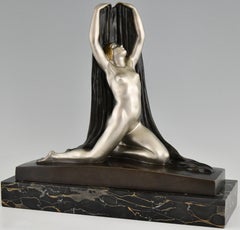
By Franz Bergmann, Carl Kauba
Located in Englewood, NJ
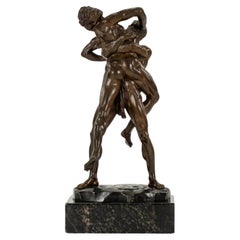
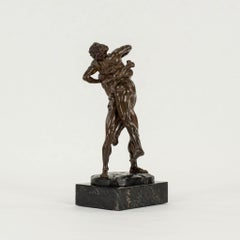
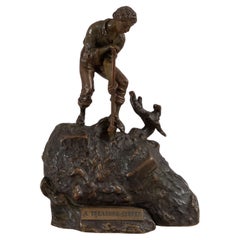
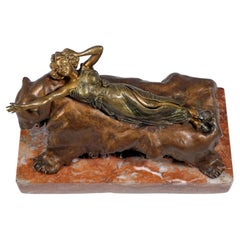
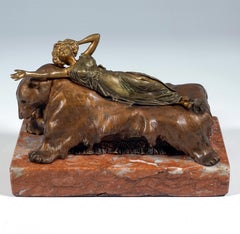
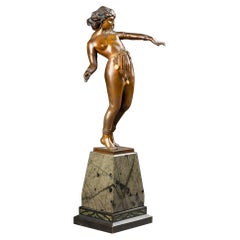
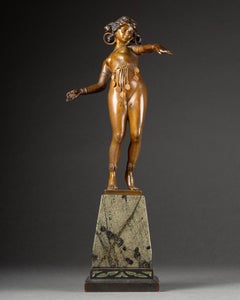
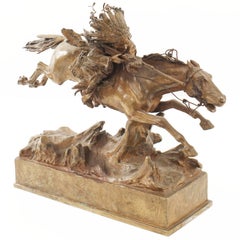
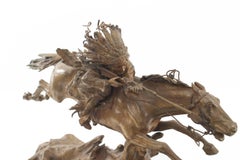
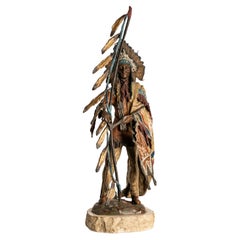
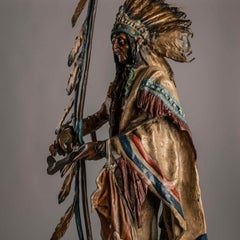
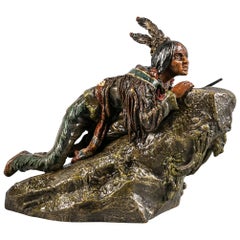
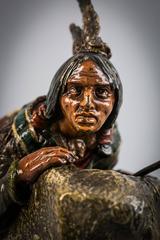
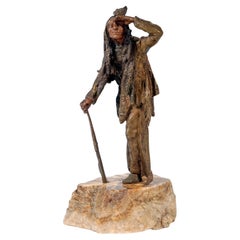
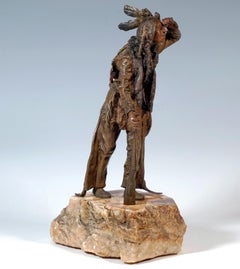
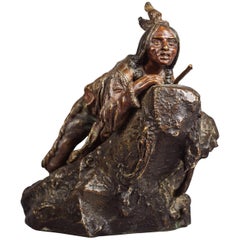
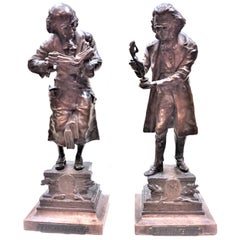
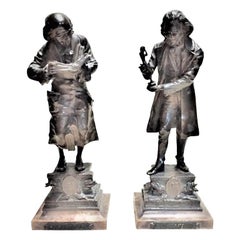
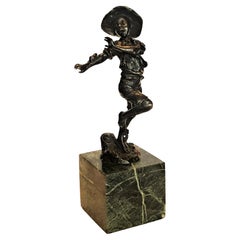
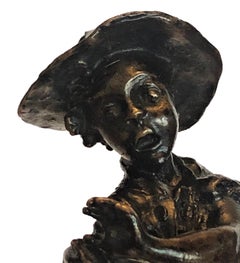
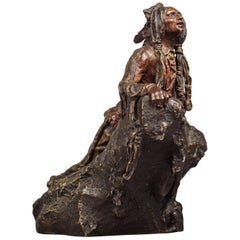
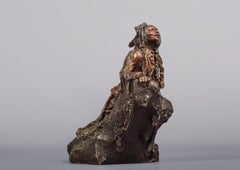
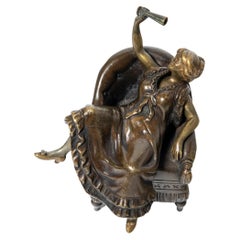
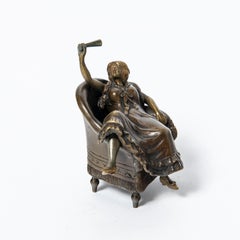
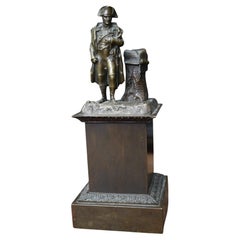
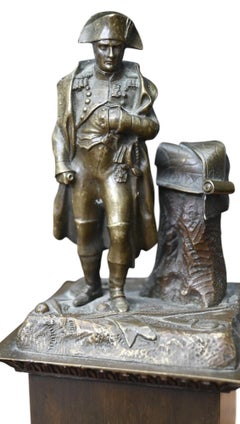
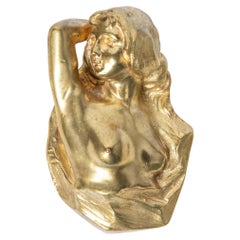
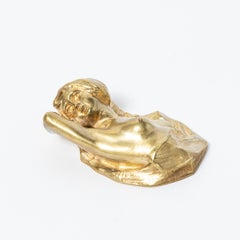
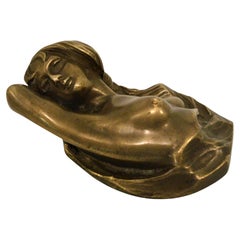
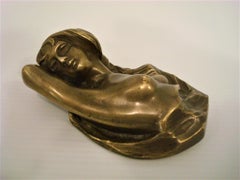
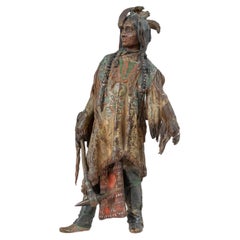
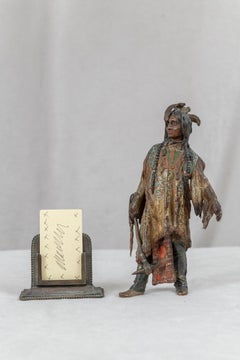
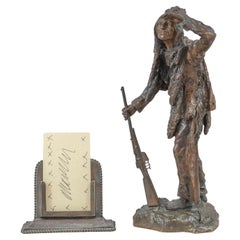
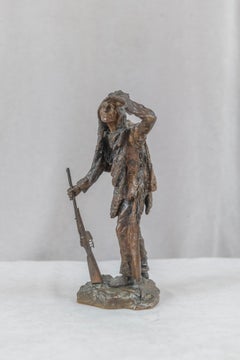
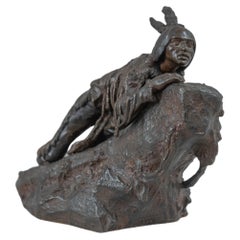
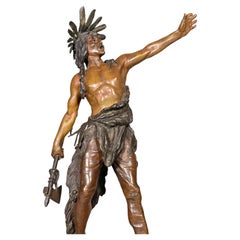
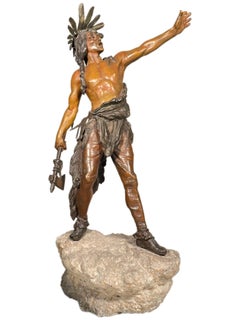
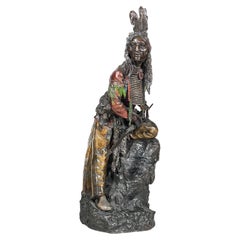
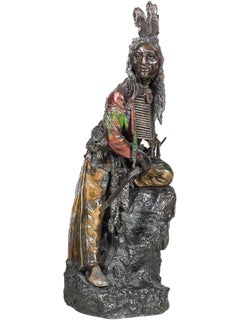
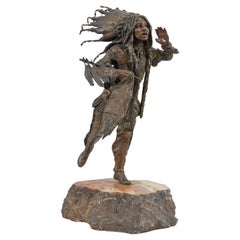
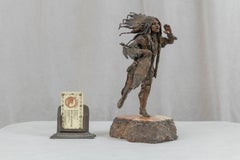
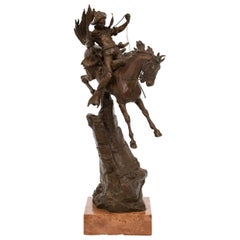
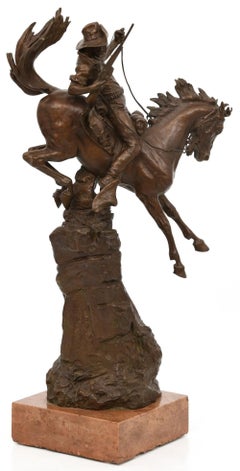
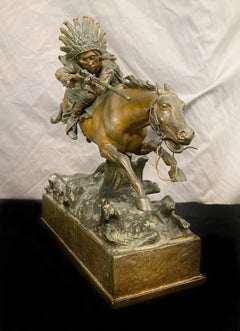
An early 20th century Austrian Art Nouveau cast bronze sculpture 'Battle Cry" by, Austrian Sculptor Carl Kauba depicting a scene from the American Wild West of a Native American Indian with tomahawk by his side and hand outstretched. The sculpture is of the highest quality finished with crisp, rich, and realistic details throughout, further finished in original brown patina a top a carved stone base. The sculpture is signed "GESCHUTZT 6639" and further impressed with the Bergmann Cartouche" - circa 1900
Measurements:
height: 22 in. x width: 12.5 in. x depth: 10.25 in.
Condition:
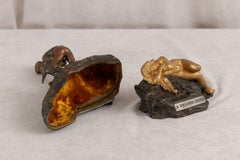
In very good condition with minimal wear to patina.
Biography:
Carl Kauba, Austrian (1865 - 1922)
Carl Kauba was born August 13, 1865 in Vienna, Austria. The son of a shoemaker, Kauba chose to follow his calling into the world of art. Collectors now rank him in a class with Remington and Russell as one of the great portrayers of American Western. His subjects were typically American Indians, calvarymen, cowboys, and roughriders. In addition to his American bronzes, Kauba produced a lifetime’s worth of Austrian statuary. His work has been fully appreciated on both sides of the Atlantic. Carl studied at the Academy of Fine Arts in Vienna under professor Laufenberg. Later he would study at the academies under Carl Waschmann and Stefan Schwartz and in Paris in 1886 to further study.
Kauba’s fascination with the West was fed by the stories of the German writer, Carl May, whose tales of Western adventures were known throughout Europe. It has been suggested that Kauba traveled to the American West when he was about twenty-five years old, possibly returning to Austria with voluminous notes, sketches, and several models of Western sculpture.
However the majority of scholars feel that the artist actually never traveled to the United States at all, but instead relied upon the accounts of others and first hand artifacts to execute his bronzes. Without a doubt, his work is most worthy of artistic merit. His bronzes, all produced in Austria, were of the American West. The polychrome finish, intricate detail, and the realistic forms make Kauba’s sculptures excellent examples of Viennese bronzes at the turn of the century. Most were cast for the American market between 1895 and 1912 and were widely advertised and sold by Latendorfer in New York during the 1950’s. In contrast to most artists, Kauba’s business successes were equal to his artistic achievement.
Kauba personally directed the casting of his clay models in local foundries. Kauba expressed a great affection for Indians of the American West. He loved ornament, and this detail is seen in the reins of his horses, Indian headdresses...
Category
Early 20th Century Austrian Art Nouveau Carl Kauba Sculptures