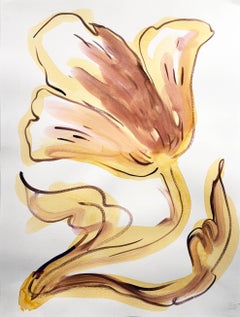
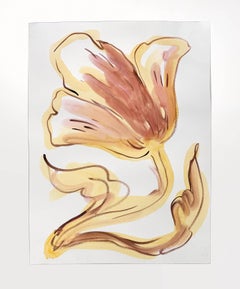
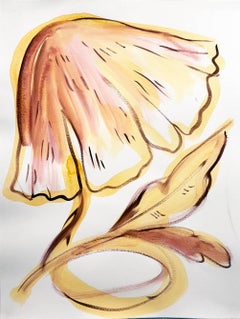
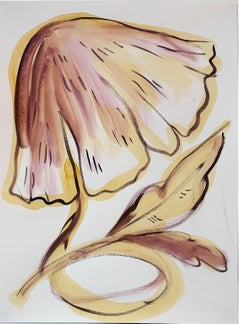
Chiura Obata Art

Japanese, 1885-1975
Chiura Obata ranks among the most significant California-based artists and Japanese American cultural leaders of the last century. Born in Okayama, Japan, Obata immigrated to San Francisco in 1903. By then, he was integrating Western practices into his art-making, and continued experimenting with new styles and methods throughout his seven-decade career. Today Obata is best known for majestic views of the American West, sketches based on hiking trips to capture what he called “Great Nature.” In 1903, Obata moved to San Francisco and began working as an illustrator for The New World and The Japanese American, two of the city's Japanese newspapers. He also did work as a commercial designer. Obata helped establish the East West Art Society in San Francisco in 1921, which sought to promote cross-cultural understanding through art. This goal was reflected in his embrace of the Nihonga style, which fused traditional Japanese sumi-e ink painting with the conventions of western naturalism. He spent much of the 1920s painting landscapes throughout California, and among his favorite subjects were mountain landscapes. In 1927, he visited Yosemite and the Sierra Nevada, creating over a hundred paintings and sketches of the high country. Obata stayed in the USA until the death of his father in 1928. In 1932 Obata Chiura returned to the U.S., and began work as an art instructor at the University of California, Berkeley. In April, 1942, Obata Chiura and his wife Haruko were among the more than 100,000 Japanese Americans who were moved from their homes along the West coast into ten relocation camps. He was first sent to Tanforan. In September, 1942, he was moved to the Topaz, Utah, internment camp. During his internment in different camps, the artist made about hundred sketches and paintings until his release in 1945. While confined at Topaz, he organized and acted as Director for the Topaz Art School for the 8,000 Japanese Americans in the camp. Obata's artwork from this time serves as a visual diary of the internees' daily life, and also as a powerful and lasting testament to the perseverance of the human spirit when confronted by prejudice. In 1943, he was released from Topaz, and moved with his family to St. Louis, where he found work with a commercial art company. When the military exclusion ban was lifted in 1945, he was reinstated to his position at the University of California, where he stayed until his retirement in 1954. Obata was a popular professor, and played a pivotal role in introducing Japanese art techniques and aesthetics that became one of the distinctive characteristics of the California Watercolor School. After his retirement he continued to paint, sketch and travel through the American countryside. In 1965 he received an order from the Japanese Emperor for promoting cultural exchange between the United States and Japan. A retrospective of his work was organized by the Smithsonian American Art Museum in 2019-2020.
to
2
2
2
2
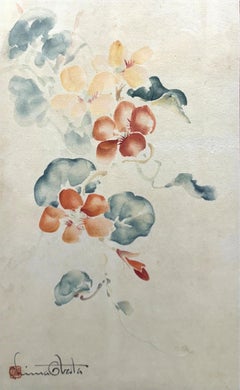
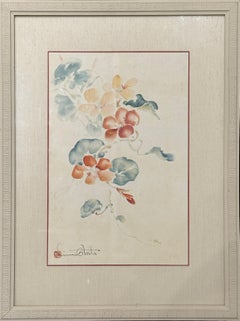
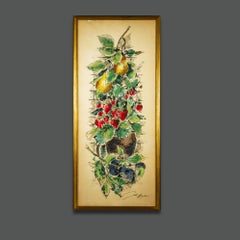
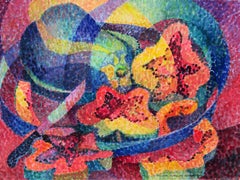
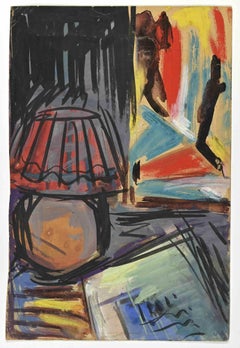
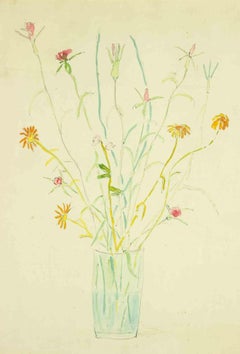
"Nasturtiums" Chiura Obata, Japanese American, Red and Blue Delicate Flowers

"Nasturtiums" Chiura Obata, Japanese American, Red and Blue Delicate Flowers

By Chiura Obata

Located in New York, NY

Chiura Obata Nasturtiums, circa 1940 Signed and stamped lower left Watercolor on paper 15 x 9 5/8 inches Born in the Okayama prefecture of Japan, Chiura Obata was adopted by his uncle, an artist. As a child he was trained in ink painting, and at 14 he was apprenticed to the painter Murata Tanryo in Tokyo. He also studied with Kogyo Terasaki and Goho Hasimoto. In 1903, Obata moved to San Francisco and began working as an illustrator for The New World and The Japanese American, two of the city's Japanese newspapers. He also did work as a commercial designer. Obata helped establish the East West Art Society in San Francisco in 1921, which sought to promote cross-cultural understanding through art. This goal was reflected in his embrace of the Nihonga style, which fused traditional Japanese sumi-e ink painting with the conventions of western naturalism. He spent much of the 1920s painting landscapes throughout California, and among his favorite subjects were mountain landscapes. In 1927, he visited Yosemite and the Sierra Nevada, creating over a hundred paintings and sketches of the high country. Obata stayed in the USA until the death of his father in 1928. Between 1928 and 1932, he worked in Tokyo as a painter and transformed his California landscape watercolors...

Category

1940s Modern Chiura Obata Art

Materials

Paper, Watercolor
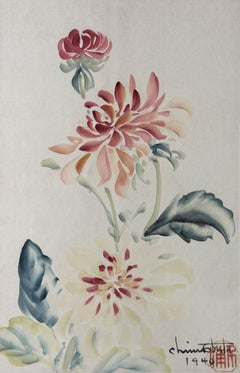
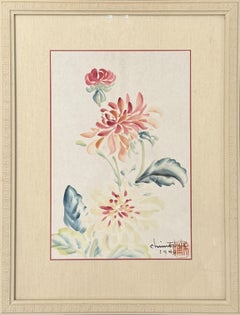
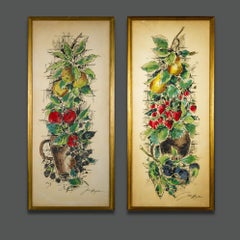
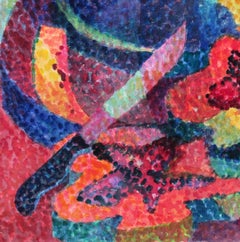
"Dahlias" Chiura Obata, Japanese American, Red and Blue Delicate Floral Work

"Dahlias" Chiura Obata, Japanese American, Red and Blue Delicate Floral Work

By Chiura Obata

Located in New York, NY

Chiura Obata Dahlias, 1940 Signed, dated and stamped lower right Watercolor on paper 15 x 9 5/8 inches Born in the Okayama prefecture of Japan, Chiura Obata was adopted by his uncle, an artist. As a child he was trained in ink painting, and at 14 he was apprenticed to the painter Murata Tanryo in Tokyo. He also studied with Kogyo Terasaki and Goho Hasimoto. In 1903, Obata moved to San Francisco and began working as an illustrator for The New World and The Japanese American, two of the city's Japanese newspapers. He also did work as a commercial designer. Obata helped establish the East West Art Society in San Francisco in 1921, which sought to promote cross-cultural understanding through art. This goal was reflected in his embrace of the Nihonga style, which fused traditional Japanese sumi-e ink painting with the conventions of western naturalism. He spent much of the 1920s painting landscapes throughout California, and among his favorite subjects were mountain landscapes. In 1927, he visited Yosemite and the Sierra Nevada, creating over a hundred paintings and sketches of the high country. Obata stayed in the USA until the death of his father in 1928. Between 1928 and 1932, he worked in Tokyo as a painter and transformed his California landscape watercolors...

Category

1940s Modern Chiura Obata Art

Materials

Paper, Watercolor
Related Items
Gun from Clue
Gun from Clue

A.J. FriesGun from Clue, 2016

$1,200

H 11 in W 14 in

Gun from Clue

By A.J. Fries

Located in Buffalo, NY

An original mixed media drawing by American artist A.J. Fries.

Category

21st Century and Contemporary Realist Chiura Obata Art

Materials

Gouache, Graphite, Paper

Charles Levier Modernist Artist Vase of Flowers by the Sea Paris Modernism

Charles Levier Modernist Artist Vase of Flowers by the Sea Paris Modernism

By Charles Levier

Located in Surfside, FL

Charles Levier (French, 1920-2003) Flowers by the sea Watercolor on paper Hand signed lower left, depicting a vase of pink, orange, green, red and yellow flowers at a window ledge ...

Category

Mid-20th Century Modern Chiura Obata Art

Materials

Paper, Watercolor
1920's Illustration of a Country Girl

1920's Illustration of a Country Girl

Located in Soquel, CA

Finely detailed figurative illustration of a young woman leaning against a fence. The woman is wearing a plaid dress and bonnet with a black ribbon. Some of the landscape has been il...

Category

1920s Realist Chiura Obata Art

Materials

Paper, Watercolor, Ink, Gouache

Dawn Chorus No. 15
Dawn Chorus No. 15

Dawn Chorus No. 15

By Rebecca Johnson

Located in Jersey City, NJ

The dawn chorus is the outbreak of birdsong at the start of a new day. This series pays homage to the mundane moments in nature that we often take for granted. Dawn Chorus No.15 is ...

Category

2010s Contemporary Chiura Obata Art

Materials

Ink, Acrylic, Watercolor, Archival Paper

A Stylish, Early 1940s Woman's Fashion Study Featuring Elizabeth Arden Cosmetics

A Stylish, Early 1940s Woman's Fashion Study Featuring Elizabeth Arden Cosmetics

Located in Chicago, IL

A stylish, vintage early 1940s fashion study featuring elegant designs for women's accessories and Elizabeth Arden cosmetics. Artwork size: 11 3/4 x 8 3/4 inches. Archivally ma...

Category

1940s Art Deco Chiura Obata Art

Materials

Paper, Pencil, Watercolor

Evening Stroll - Figurative Abstract Watercolor Still Life Painting on Paper

Evening Stroll - Figurative Abstract Watercolor Still Life Painting on Paper

By Ama Liyanage

Located in Los Angeles, CA

Ama Liyanage, a contemporary artist and printmaker, creates whimsical paintings from her home studio in Ontario, Canada. Each piece holds minuscule painted details waiting to be disc...

Category

2010s Contemporary Chiura Obata Art

Materials

Paper, Watercolor
Mid-Century Signed Still-Life Watercolor Drawing

Mid-Century Signed Still-Life Watercolor Drawing

By John Haymson

Located in Roma, IT

Wonderful and evocative watercolour on paper by the great Austrian-born artist who lived in the United States John Haymson (Vienna 1902 - New York 1980). This beautiful still life de...

Category

1940s Modern Chiura Obata Art

Materials

Paper, Watercolor
Mid-Century Signed Still-Life Watercolor on Paper, Modern Style, 1950s

Mid-Century Signed Still-Life Watercolor on Paper, Modern Style, 1950s

By John Haymson

Located in Roma, IT

Wonderful and evocative watercolour on paper by the great Austrian-born artist who lived in the United States John Haymson (Vienna 1902 - New York 1980). This beautiful still life de...

Category

1950s Modern Chiura Obata Art

Materials

Paper, Watercolor
4pm on a Wednesday - Figurative Abstract Watercolor Still Life Painting on Paper

4pm on a Wednesday - Figurative Abstract Watercolor Still Life Painting on Paper
By Ama Liyanage

Located in Los Angeles, CA

Ama Liyanage, a contemporary artist and printmaker, creates whimsical paintings from her home studio in Ontario, Canada. Each piece holds minuscule painted details waiting to be disc...

Category

2010s Contemporary Chiura Obata Art

Materials

Watercolor, Paper

"Brussels Excursion" (ca. 2011) By Naum Katsenelson, Watercolor Cityscape
"Brussels Excursion" (ca. 2011) By Naum Katsenelson, Watercolor Cityscape
Located in Denver, CO

"Brussels Excursion" (ca.2011) By Naum Katsenelson is a beautiful original watercolor painting done on watercolor paper, depicting a crowd of people walking up a staircase on a rainy...
Category

2010s Impressionist Chiura Obata Art

Materials

Watercolor, Archival Paper

Kutschen (carriages); Group of four designs for hansom cabs.

Kutschen (carriages); Group of four designs for hansom cabs.

By Alfred Juergens

Located in Middletown, NY

Four pencil drawings, each with hand coloring in watercolor, each 6 3/4 x 10 inches (sheet) (172 x 254 mm), full margins. Each with inscriptions and notations by the artist in the up...

Category

Mid-20th Century American Modern Chiura Obata Art

Materials

Handmade Paper, Watercolor, Pencil

Burmont and Crest (2021)

Burmont and Crest (2021)

By Rob Kaniuk

Located in Jersey City, NJ

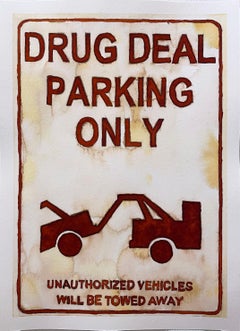
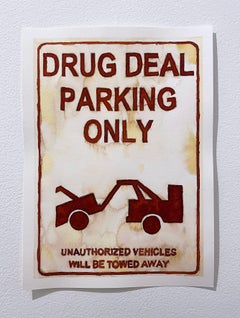
Watercolor on cold press paper Tongue in cheek text reading "Drug Dealer Parking Only" and "Unauthorized Vehicles Will Be Towed Away" on street sign in deep red - burgundy and white and off white to give impression of aging and weathering, with image of tow truck...

Category

21st Century and Contemporary Contemporary Chiura Obata Art

Materials

Watercolor, Archival Paper

Previously Available Items
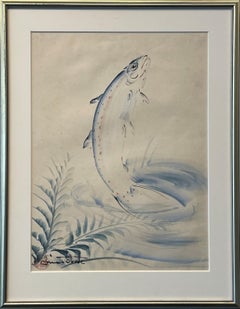
"Jumping Trout, " Chiura Obata, Fish, Japanese-American Artist, Watercolor

"Jumping Trout, " Chiura Obata, Fish, Japanese-American Artist, Watercolor

By Chiura Obata

Located in New York, NY

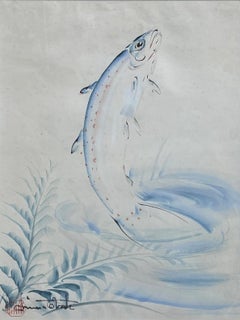
Chiura Obata (1885 - 1975) Leaping Trout, 1930 Watercolor on paper Sight 23 x 15 inches Signed and stamped lower left Provenance: Private Collection, Massachusetts Chiura Obata ranks among the most significant California-based artists and Japanese American cultural leaders of the last century. Born in Okayama, Japan, Obata immigrated to San Francisco in 1903. By then, he was integrating Western practices into his art-making, and continued experimenting with new styles and methods throughout his seven-decade career. Today Obata is best known for majestic views of the American West, sketches based on hiking trips to capture what he called “Great Nature.” Every work is grounded in close observation, rendered with calligraphic brushstrokes and washes of color. Born in the Okayama prefecture of Japan, Chiura Obata was adopted by his uncle, an artist. As a child he was trained in ink painting, and at 14 he was apprenticed to the painter Murata Tanryo in Tokyo. He also studied with Kogyo Terasaki and Goho Hasimoto. In 1903, Obata moved to San Francisco and began working as an illustrator for The New World and The Japanese American, two of the city's Japanese newspapers. He also did work as a commercial designer. Obata helped establish the East West Art Society in San Francisco in 1921, which sought to promote cross-cultural understanding through art. This goal was reflected in his embrace of the Nihonga style, which fused traditional Japanese sumi-e ink painting with the conventions of western naturalism. He spent much of the 1920s painting landscapes throughout California, and among his favorite subjects were mountain landscapes. In 1927, he visited Yosemite and the Sierra Nevada, creating over a hundred paintings and sketches of the high country. Obata stayed in the USA until the death of his father in 1928. Between 1928 and 1932, he worked in Tokyo as a painter and transformed his California landscape watercolors and sketches into a portfolio of 35 woodblock prints titled World Landscape Series - America, perhaps his most famous work. Obata's landscapes reveal his intensely personal and poetic vision of "Great Nature", a vision grounded in an underlying Zen philosophy of selflessness that accepts the insignificance of human affairs in relation to the timeless forces of nature. In 1932 Obata Chiura returned to the U.S., and began work as an art instructor at the University of California, Berkeley. In April, 1942, Obata Chiura and his wife Haruko were among the more than 100,000 Japanese Americans who were moved from their homes along the West coast into ten relocation camps. He was first sent to Tanforan. In September, 1942, he was moved to the Topaz, Utah, internment camp. During his internment in different camps, the artist made about hundred sketches and paintings until his release in 1945. The book, Topaz Moon, edited by his granddaughter Kimi Kodani Hill, is a documentation of his detention period and the works of art that he created during this time. While confined at Topaz, he organized and acted as Director for the Topaz Art School for the 8,000 Japanese Americans in the camp. The school had 16 artist instructors who taught 23 subjects to over 600 students. Obata's artwork from this time serves as a visual diary of the internees' daily life, and also as a powerful and lasting testament to the perseverance of the human spirit when confronted by prejudice. In 1943, he was released from Topaz, and moved with his family to St. Louis, where he found work with a commercial art company. When the military exclusion ban was lifted in 1945, he was reinstated to his position at the University of California, where he stayed until his retirement in 1954. Obata was a popular professor, and played a pivotal role in introducing Japanese art techniques and aesthetics that became one of the distinctive characteristics of the California Watercolor School...

Category

1930s American Modern Chiura Obata Art

Materials

Paper, Watercolor

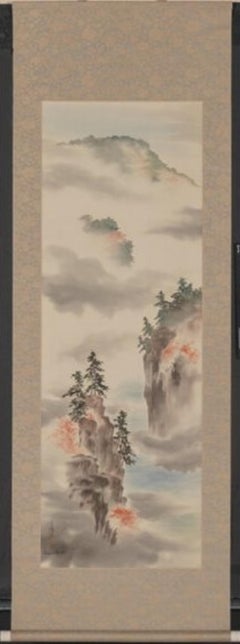
"Yosemite National Park, California Landscape, " Chiura Obata, Japanese-American

"Yosemite National Park, California Landscape, " Chiura Obata, Japanese-American

By Chiura Obata

Located in New York, NY

Chiura Obata (1885 - 1975) Yosemite National Park, California Landscape Watercolor on silk, mounted on paper Image 45 1/2 x 16 inches Stamped and signed lower left Chiura Obata ranks among the most significant California-based artists and Japanese American cultural leaders of the last century. Born in Okayama, Japan, Obata immigrated to San Francisco in 1903. By then, he was integrating Western practices into his art-making, and continued experimenting with new styles and methods throughout his seven-decade career. Today Obata is best known for majestic views of the American West, sketches based on hiking trips to capture what he called “Great Nature.” Every work is grounded in close observation, rendered with calligraphic brushstrokes and washes of color. Born in the Okayama prefecture of Japan, Chiura Obata was adopted by his uncle, an artist. As a child he was trained in ink painting, and at 14 he was apprenticed to the painter Murata Tanryo in Tokyo. He also studied with Kogyo Terasaki and Goho Hasimoto. In 1903, Obata moved to San Francisco and began working as an illustrator for The New World and The Japanese American, two of the city's Japanese newspapers. He also did work as a commercial designer. Obata helped establish the East West Art Society in San Francisco in 1921, which sought to promote cross-cultural understanding through art. This goal was reflected in his embrace of the Nihonga style, which fused traditional Japanese sumi-e ink painting with the conventions of western naturalism. He spent much of the 1920s painting landscapes throughout California, and among his favorite subjects were mountain landscapes. In 1927, he visited Yosemite and the Sierra Nevada, creating over a hundred paintings and sketches of the high country. Obata stayed in the USA until the death of his father in 1928. Between 1928 and 1932, he worked in Tokyo as a painter and transformed his California landscape watercolors and sketches into a portfolio of 35 woodblock prints titled World Landscape Series - America, perhaps his most famous work. Obata's landscapes reveal his intensely personal and poetic vision of "Great Nature", a vision grounded in an underlying Zen philosophy of selflessness that accepts the insignificance of human affairs in relation to the timeless forces of nature. In 1932 Obata Chiura returned to the U.S., and began work as an art instructor at the University of California, Berkeley. In April, 1942, Obata Chiura and his wife Haruko were among the more than 100,000 Japanese Americans who were moved from their homes along the West coast into ten relocation camps. He was first sent to Tanforan. In September, 1942, he was moved to the Topaz, Utah, internment camp. During his internment in different camps, the artist made about hundred sketches and paintings until his release in 1945. The book, Topaz Moon, edited by his granddaughter Kimi Kodani Hill, is a documentation of his detention period and the works of art that he created during this time. While confined at Topaz, he organized and acted as Director for the Topaz Art School for the 8,000 Japanese Americans in the camp. The school had 16 artist instructors who taught 23 subjects to over 600 students. Obata's artwork from this time serves as a visual diary of the internees' daily life, and also as a powerful and lasting testament to the perseverance of the human spirit when confronted by prejudice. In 1943, he was released from Topaz, and moved with his family to St. Louis, where he found work with a commercial art company. When the military exclusion ban was lifted in 1945, he was reinstated to his position at the University of California, where he stayed until his retirement in 1954. Obata was a popular professor, and played a pivotal role in introducing Japanese art techniques and aesthetics that became one of the distinctive characteristics of the California Watercolor School...

Category

Mid-20th Century Chiura Obata Art

Materials

Silk, Watercolor

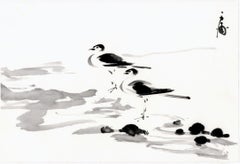
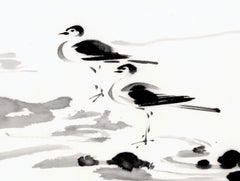
Ink Painting of two Shorebirds on the Beach

Ink Painting of two Shorebirds on the Beach

By Chiura Obata

Located in Burbank, CA

Ink painting of two seabirds on the shore. Following his internment during WWII, Obata chose to focus on sumi painting. He had many students over the decades, and one could guess tha...

Category

1930s Showa Chiura Obata Art

Materials

Sumi Ink

Before Singing: Madame Talia Savanieva.

Before Singing: Madame Talia Savanieva.

By Chiura Obata

Located in Burbank, CA

Print number 31 from the series of 35; it is the only portrait in the series. Madame Savanieva was an opera diva who sang in San Francisco in the late 1920s. This print reportedly re...

Category

1930s Showa Chiura Obata Art

Materials

Woodcut

Chiura Obata art for sale on 1stDibs.

Find a wide variety of authentic Chiura Obata art available for sale on 1stDibs.

Artists Similar to Chiura Obata