Dominique Alonzo Art

French

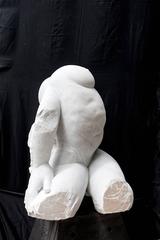
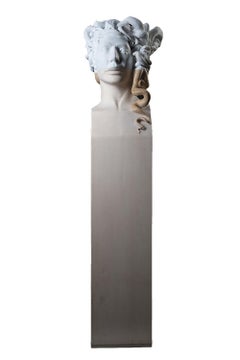
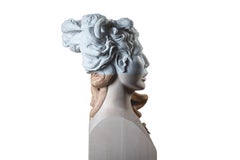
Dominique Alonzo was born in 1910 and was active in France. Alonzo was known for his modern sculptures. He passed away in 1930.

to
1
Overall Width
to
Overall Height
to
1
1
1
1
1
1
2
10,225
2,785
2,504
1,382
1
Artist: Dominique Alonzo
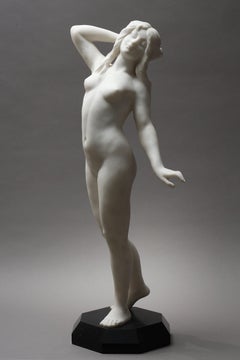
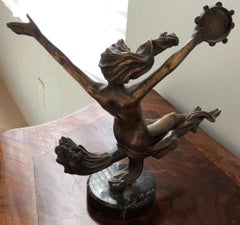
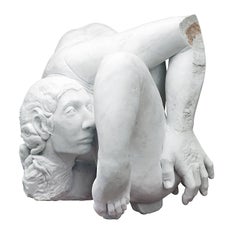
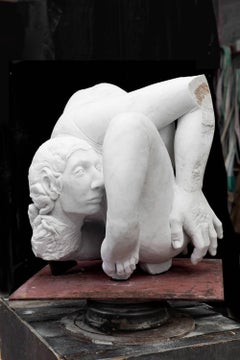
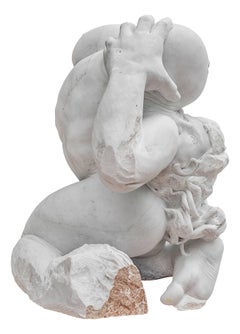
Dawn
Located in PARIS, FR
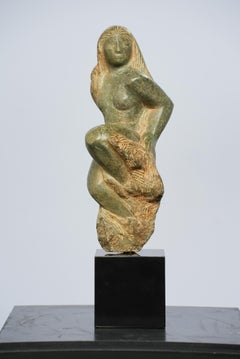
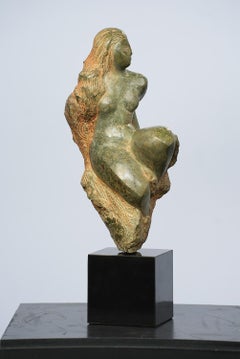
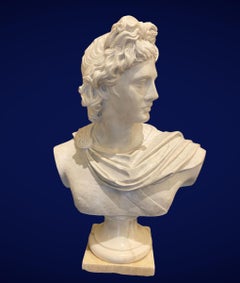
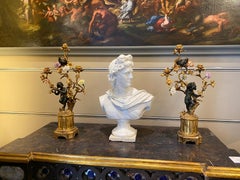
"Dawn" by Dominique ALONZO (Early 20th c.) Sculpture made in white Carrara marble standing on a black marble base signed on the base "Alonzo" France around 1920 height 83 cm width...
Category

Early 20th Century Art Nouveau Dominique Alonzo Art

Materials

Marble

Related Items
Leda and the Swan
Located in West Hollywood, CA
Presenting a magnificent early Art Nouveau bronze by Belgian artist Jef Lambeaux(1852-1908.) “Leda and the Swan”, is an original Art Nouveau Bronze,...
Category

1880s Art Nouveau Dominique Alonzo Art

Materials

Bronze

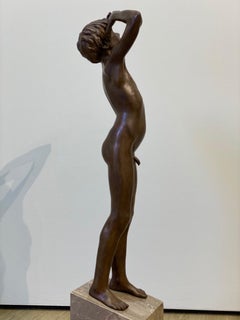
Gallulus Bronze Sculpture Nude Boy Male Figure Green Patina Marble Stone
By Wim van der Kant
Located in Utrecht, NL
Gallulus Bronze Sculpture Nude Boy Male Figure Green Patina Marble Stone Wim van der Kant (1949, Kampen) is a selftaught artist. Next to his busy profess...
Category

21st Century and Contemporary Contemporary Dominique Alonzo Art

Materials

Marble, Bronze

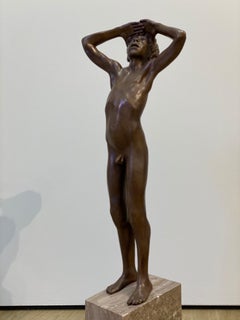
Bufo Contemporary Bronze Sculpture Nude Boy Marble Stone Male Figure
By Wim van der Kant
Located in Utrecht, NL
Bufo Contemporary Bronze Sculpture Nude Boy Marble Stone Male Figure Wim van der Kant (1949, Kampen) is a selftaught artist. Next to his busy profession as a teacher at a high school, he intensively practises his profession as a sculptor. Only when his work would measure up to his own standards, he decided to present it to the rest of the world. In 1995, he exhibited for the first time with Morren Galleries. Van der Kant desires to sculpt young people who still stand uninhibited and curiously in life. The reason he chooses to sculpt boys is, because he is one himself, this way the subject is closer to him. The anatomy of his figures testify of perfectionism. Van der Kant's subjects show similarities with the sculptures from the Greek and Roman antiquity...
Category

21st Century and Contemporary Contemporary Dominique Alonzo Art

Materials

Marble, Bronze

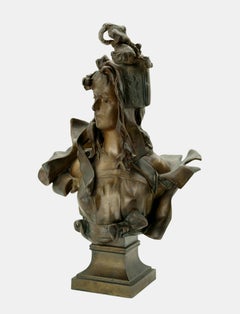
Bust of a young woman / - The Opulence of Beauty -
Located in Berlin, DE
Anton Nelson (i.e. Antoine Joseph van den Kerckhoven) (1849 Brussels - after 1910 ibid.), Bust of a young woman, c. 1890. Patinated bronze on cast base, 30 cm (total height) x 20 cm ...
Category

1890s Art Nouveau Dominique Alonzo Art

Materials

Bronze

After Botero - Horizontal Nude Woman Bronze Sculpture
By Fernando Botero
Located in Cuauhtemoc, Ciudad de México
After Fernando Botero – RECLINING NUDE Bronze Sculpture Edition of 50 This beautifully executed bronze sculpture is an After Fernando Botero work, created in faithful homage to th...
Category

20th Century Contemporary Dominique Alonzo Art

Materials

Marble, Bronze

After Botero - Horizontal Nude Woman Bronze Sculpture
$912 Sale Price
52% Off
H 7.5 in W 14.6 in D 6.5 in
Female Figure
By Lorrie Goulet
Located in New York, NY
It is marvelous to find discoveries such as Lorrie Goulet's female form, one of our few American women sculptors who direct carved in marble. Goulet has an attractive technique of u...
Category

1960s American Modern Dominique Alonzo Art

Materials

Marble

Female Figure
Female Figure
$5,000
H 14.25 in W 6 in D 8.25 in
Art Nouveau Italian Signed Dated and Inscribed Original Bronze
By Constantino Barbella
Located in Roma, IT
Wonderful Art Nouveau "Ebrezza" bronze sculpture of a woman lying on a bed of roses. It bears at the base the signature Barbella and the wording “Rome Palm Sunday 31 III 1912” Brand...
Category

Early 20th Century Art Nouveau Dominique Alonzo Art

Materials

Bronze

Bacio (Kiss) - hand carved Italian contemporary figurative rose marble sculpture
By Lorenzo Vignoli
Located in San Francisco, CA
Bacio (Kiss) by Lorenzo Vignoli striking hand carved marble sculpture of rare Portuguese rosa marble by contemporary Italian sculptor Lorenzo Vignoli, incorporating classical refere...
Category

21st Century and Contemporary Contemporary Dominique Alonzo Art

Materials

Stone, Marble, Carrara Marble

Apollo Marble Bust Sculpture of Grand Tour Mythological subject 1850'
Located in Rome, IT
Finely carved mythological subject in white Carrara marble of Apollo bust .
Category

20th Century Academic Dominique Alonzo Art

Materials

Marble

Mother Happiness / - The ecstasy of maternal joy -
Located in Berlin, DE
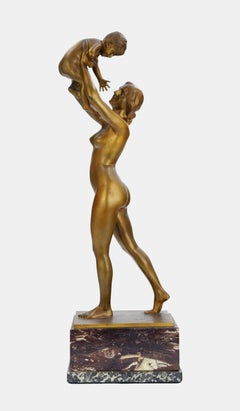
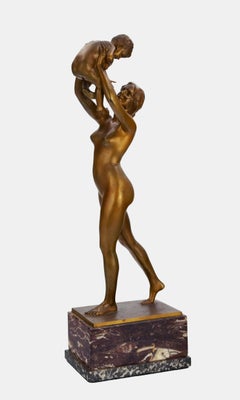
Johannes Boese (1856 Ostrog - 1917 Berlin), Mutterglück, um 1910. Goldbraun patinierte Bronze auf gegossener rechteckiger Plinthe, montiert auf zweifarbigem Marmorsockel (9,5 cm Höhe...
Category

1910s Art Nouveau Dominique Alonzo Art

Materials

Bronze

Forest idyll / - Soulmate -
By Rudolf Kaesbach
Located in Berlin, DE
Rudolf Kaesbach (1873 Gladbach - 1955 Berlin), Forest idyll, around 1915. Bronze, gold and golden brown patina, with cast plinth, mounted on a marble base (5 cm high), total height 36 cm, dimensions of the bronze: 31 cm (height) x 17 cm (length) x 12 cm (width). Weight 4,6 kg, signed on the plinth "R.[udolf] KAESBACH". - a few rubbed areas, overall in excellent condition for its age - Soulmate - The bronze sculpture depicts a young woman in an intimate exchange with a deer that accompanies her. The animal pauses to turn toward her, while the nude beauty slows her pace to look into the deer's eyes and tenderly caress it with her hand. The woman and the deer are in inner harmony. Even though her lips remain motionless, she speaks the language of the animal with which she is deeply connected. The golden patina, which contrasts with the more naturalistic coloring of the deer, gives the young woman the appearance of a saint, even if she cannot be identified as such. At the same time, she evokes memories of Diana, the goddess of the hunt, or a nymph. But she lacks the ferocity. In her innocent naivety, she is more like a vestal virgin, who is not at home in the solitude of the forest. And yet, the young beauty, moving unclothed in the heart of nature, looks like a priestess with her hair tied up and a carefully carried bowl on her way to a sacred grove. In order to open up the above-mentioned associations, Kaesbach deliberately designed the female figure in such a way that she cannot be identified as a specific person. He has created an allegory of natural femininity, characteristic of Art Nouveau, in which the deer is far more than a companion animal. It displays the same gracefulness as the young woman, and the inner resemblance between the two makes the deer appear as her other self. In animal terms, it embodies her inner being, which also gives the deer an allegorical character. About the artist Rudolf Kaesbach studied sculpture at the Hanau Academy and worked in a bronze foundry in Paris in 1900. In order to work as an independent artist, he opened a workshop in Düsseldorf, where he cast bronzes from models he designed. In 1902 he made his debut at the German National Art Exhibition in Düsseldorf. The following year Kaesbach went to the academy in Brussels. There he was inspired by contemporary Belgian sculpture, especially the work of Constantin Meunier. He moved to Berlin, where he opened a studio in the villa district of Grunewald and devoted himself to life-size marble sculptures and the design of bronzes. From 1911, he regularly presented his works at the major art exhibitions in Berlin, as well as in Düsseldorf and Malmö. Between 1936 and 1939, he also created models for the Rosenthal porcelain factory. From 1939 to 1944, Kaesbach was represented at the major German art exhibitions in Munich. GERMAN VERSION Rudolf Kaesbach (1873 Gladbach - 1955 Berlin), Waldidyll, um 1915. Gold und goldbraun patinierte Bronze mit gegossener Plinthe, auf einem Marmorsockel montiert (5 cm Höhe), Gesamthöhe 36 cm, Maße der Bronze: 31 cm (Höhe) x 17 cm (Länge) x 12 cm (Breite). Gewicht 4,6 kg, auf der Plinthe mit „R.[udolf] KAESBACH“ signiert. - vereinzele beriebene Stellen, insgesamt in einem altersgemäß ausgezeichneten Zustand - Seelenverwandtschaft - Die Bronzeplastik veranschaulicht eine junge Frau im innigen Austausch mit einem sie begleitenden Reh. Das Tier hält inne, um sich zu ihr hochzuwenden, während die nackte Schönheit ihren Schritt verlangsamt, um dem Reh ebenfalls in die Augen zu schauen und es zärtlich mit der Hand zu liebkosen. Die Frau und das Reh sind in einem inneren Gleichklang. Auch wenn ihre Lippen unbewegt bleiben, spricht sie die Sprache des Tieres, mit dem sie auf eine tief empfundene Weise verbunden ist. Die im Kontrast zur naturalistischeren Einfärbung des Rehs aufstrahlende goldfarbene Patina lässt die junge Frau wie eine Heilige erscheinen, auch wenn sich nicht als Heilige identifizierbar ist. Zugleich ruft sie Erinnerungen an die Jagdgöttin Diana oder eine Nymphe hervor. Dafür fehlt ihr allerdings die Wildheit. In ihrer unschuldigen Naivität gemahnt sie vielmehr an eine Vestalin, die freilich nicht in der Waldeinsamkeit zu Hause ist. Und doch wirkt die sich unbekleidet im Herzen der Natur bewegende junge Schönheit wie eine Priesterin, die sich mit hochgebundenem Haar und der vorsichtig getragenen Schale und dem Wege zu einem Heiligen Hain befindet. Um die gennannten Assoziationen zu eröffnen, hat Kaesbach die Frauenfigur bewusst so gestaltet, dass sie nicht als konkrete Person identifizierbar ist. Damit hat er eine für den Jugendstil charakteristische Allegorie natürlicher Weiblichkeit geschaffen, bei der das Reh weit mehr als ein Begleittier ist. Es weist dieselbe grazile Anmut wie die junge Frau auf und der innere Gleichklag der beiden lässt das Reh als ihr anderen Ich erscheinen. Es verkörpert – ins Animalische übertragen - ihr inneres Wesen, wodurch auch dem Reh ein allegorischer Charakter zukommt. zum Künstler Rudolf Kaesbach studierte an der Akademie Hanau Bildhauerei und war im Jahr 1900 in einer Pariser Bronzegießerei tätig. Um sich als eigenständiger Künstler betätigen zu können, eröffnete er in Düsseldorf eine Werkstatt, in der er Bronzen nach selbstentworfenen Modellen goss. 1902 debütierte er auf der Deutschen Nationalen Kunstaustellung in Düsseldorf. Im Folgejahr ging Kaesbach an die Akademie nach Brüssel. Dort wurde er von der zeitgenössischen belgischen Bildhauerei, insbesondere vom Werk Constantin Meuniers, inspiriert. Zurückgekehrt zog er nach Berlin, wo er im Villenviertel Grunewald ein Atelier eröffnete und sich neben dem Entwurf für Bronzen der lebensgroßen Marmorbildhauerei widmete. Ab 1911 präsentierte er seine Werke regelmäßig auf den Großen Berliner Kunstausstellungen, aber auch in Düsseldorf und Malmö. Zwischen 1936 und 1939 fertigte er zudem Modelle für die Porzellan-Manufaktur Rosenthal an. Von 1939 bis 1944 war...
Category

1910s Jugendstil Dominique Alonzo Art

Materials

Bronze

Forest idyll / - Soulmate -
$5,020
H 14.18 in W 6.7 in D 4.73 in
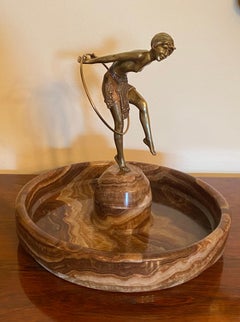
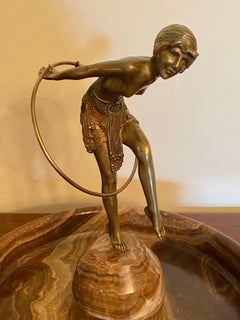
Hoop Dancer
By Demetre Chiparus
Located in Los Angeles, CA
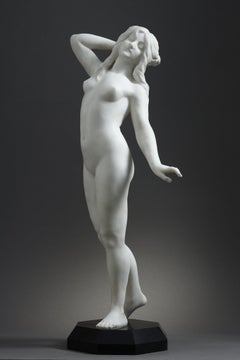
Demetre Haralamb Chiparus (also known as Dumitru Chiparus) (16 September 1886 in Dorohoi, Romania - 22 January 1947 in Paris, France) was a Romanian Art Deco* era sculptor who lived and worked in Paris. He was born in Romania, the son of Haralamb and Saveta. In 1909 he went to Italy, where he attended the classes of Italian sculptor Raffaello Romanelli. In 1912 he traveled to Paris to attend the Ecole des Beaux Arts* to pursue his art at the classes of Antonin Mercie and Jean Boucher. Demetre Chiparus died in 1947 and was buried in Bagneux cemetery, just south of Paris. The first sculptures of Chiparus were created in the realistic style and were exhibited at the Salon of 1914. He employed the combination of bronze and ivory, called chryselephantine*, to great effect. Most of his renowned works were made between 1914 and 1933. The first series of sculptures manufactured by Chiparus were the series of the children. The mature style of Chiparus took shape beginning in the 1920s. His sculptures are remarkable for their bright and outstanding decorative effect. Dancers of the Russian Ballet, French theatre, and early motion pictures were among his more notable subjects and were typified by a long, slender, stylized appearance. His work was influenced by an interest in Egypt, after Pharaoh Tutankhamen's tomb was excavated. He worked primarily with the Edmond Etling and Cie Foundry in Paris administrated by Julien Dreyfus. Les Neveux de J. Lehmann was the second foundry which constantly worked with Chiparus and produced the sculptures of his models. Chiparus rarely exhibited at the Salon. In 1923 he showed his Javelin Thrower, and in 1928 exhibited his Ta-Keo dancer. During the period of Nazi persecution and the World War II, the foundries discontinued production of work by Chiparus. The economic situation of that time was not favorable to the development of decorative arts and circumstances for many sculptors worsened. Since the early 1940s almost no works of Chiparus were sold, but he continued sculpting for his own pleasure, depicting animals in the Art Deco style. At the 1942 Paris Salon, the plaster sculptures Polar Bear and American Bison were exhibited, and in 1943 he showed a marble Polar Bear and plaster Pelican. Sculptures of Dimitri Chiparus represent the classical manifestation of Art Deco style in decorative bronze ivory sculpture. Traditionally, four factors of influence over the creative activity of the artist can be distinguished: Serge Diaghilev's Ballets Russes, ancient Egyptian art, and French theatre. Early motion pictures were among his more notable subjects and were typified by figures with a long, slender, stylized appearance. Some of his sculptures were directly inspired by Russian dancers. Quite often, Chiparus used the photos of Russian and French dancers, stars and models from fashion magazines of his time. After the tomb of Tutankhamun was discovered in 1922, the art of ancient Egypt...
Category

1920s Art Deco Dominique Alonzo Art
Materials

Marble, Bronze

Hoop Dancer
Hoop Dancer
$4,400 Sale Price
20% Off
H 12 in W 13 in

Dominique Alonzo art for sale on 1stDibs.

Find a wide variety of authentic Dominique Alonzo art available for sale on 1stDibs.