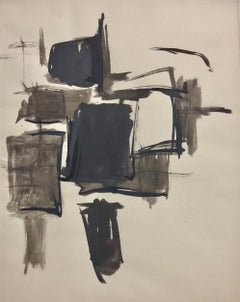
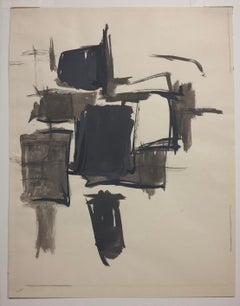
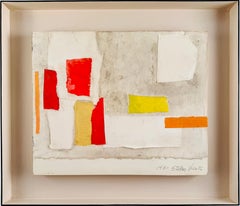
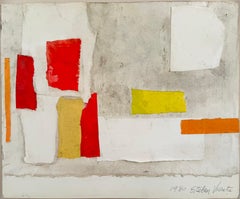
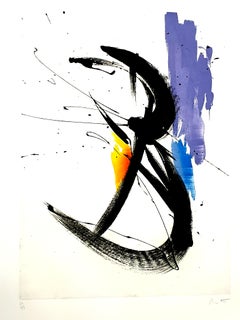
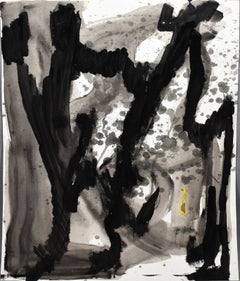
By Esteban Vicente
Located in Surfside, FL
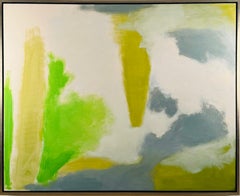
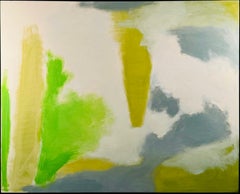
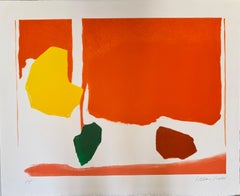
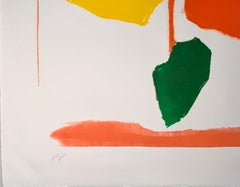
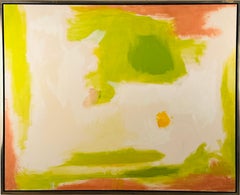
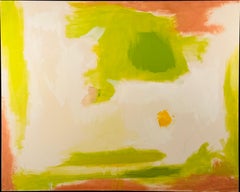
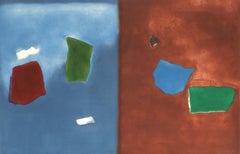
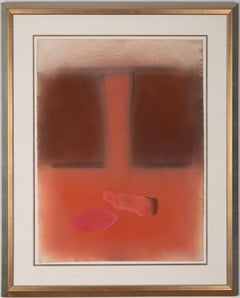
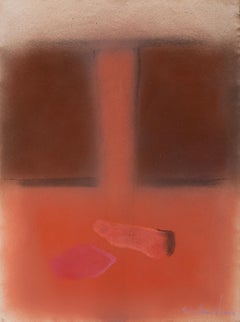
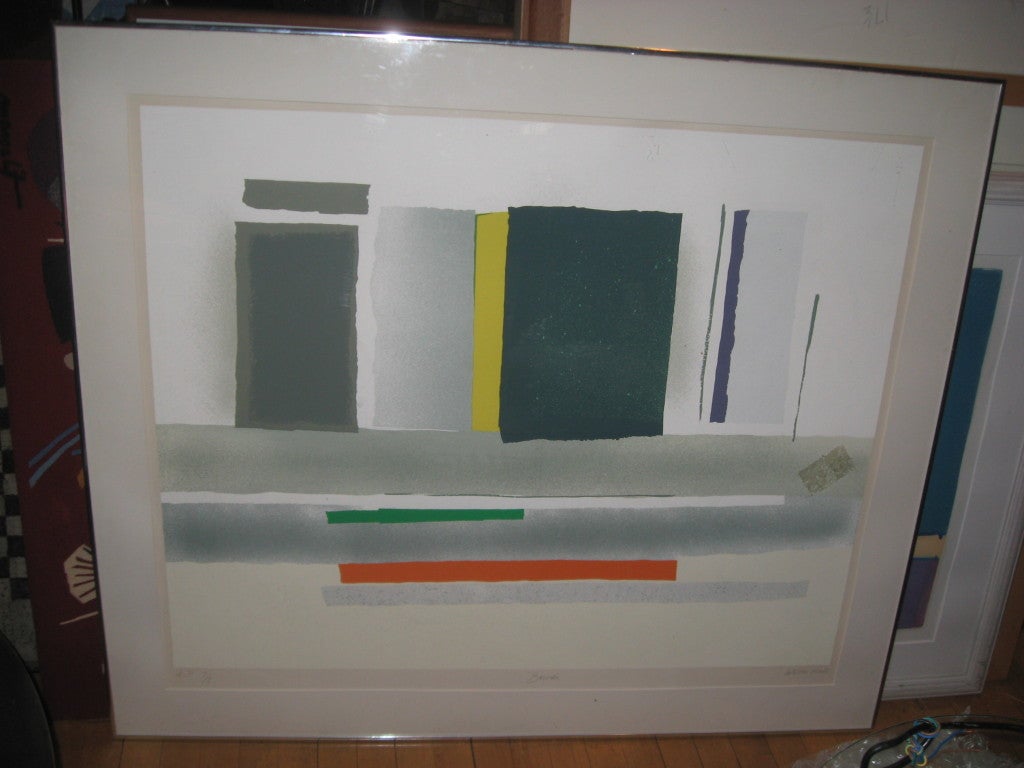
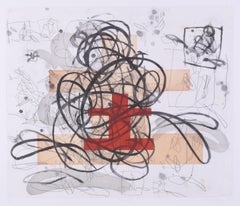
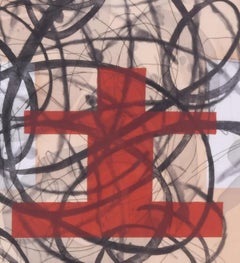
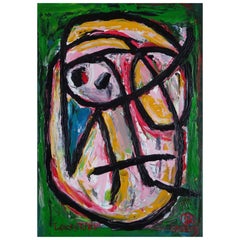
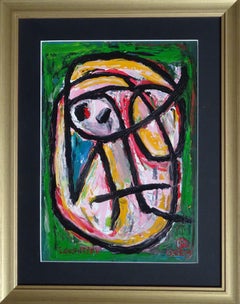
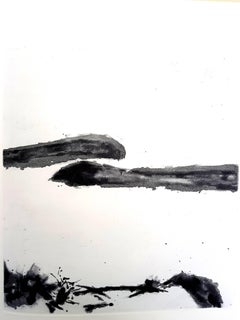
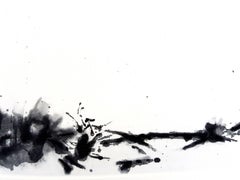
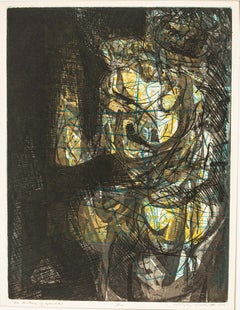
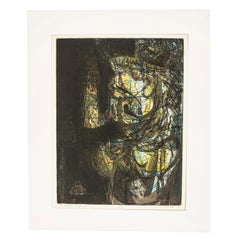
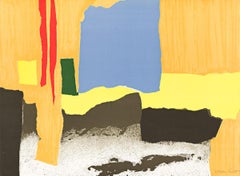
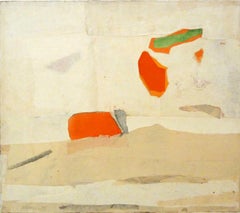
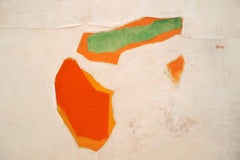
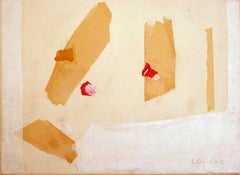
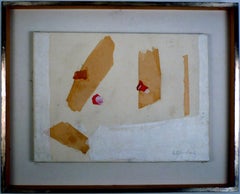
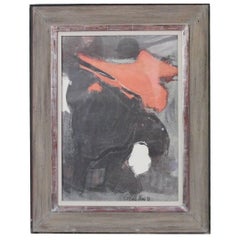
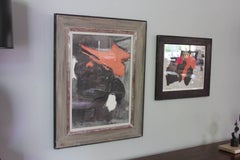
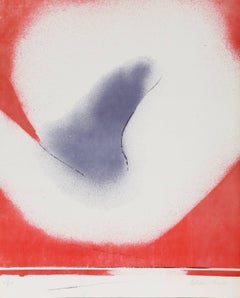
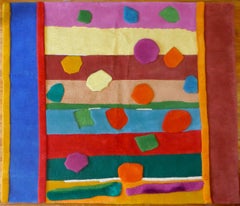
Very Rare Hand Woven Wool Tapestry Rug (edition called for 12 but this might have been the only one produced) Esteban Vicente carpet Tapestry produced by the Edward Fields workshops. This was written up in an article in New York magazine in the 1970s. In excellent condition this belonged to the Fields family. It is based on a torn paper collage. Related correspondence exists in the Esteban Vicente archives. (this is a pile weave not a flat weave like an Aubusson.
A member of the first generation of New York School Abstract Expressionists, Esteban Vicente was part of the most influential circles of his generation. During the course of his long and lauded career, he closely studied shape, light, and the possibilities of pigment.
Born in 1903 in Turégano, Spain, to a family that appreciated the arts, Vicente was raised in Madrid. He recalled being “bored” during visits to the Prado as a child. Vicente enrolled at the Real Academia de Bellas Artes in Madrid in 1921 intending to study sculpture. He completed his training in 1924. .
During this period, the mid- and late 1920s, Vicente became fully immersed in Madrid’s cultural milieu, including the “Generation of ‘27”, a group of poets, artists, and other intellectuals interested in the avant-garde. His circle included Luis Buñuel, and he met Pablo Picasso and Michael Sonnabend. After exhibiting for several years in Paris, Barcelona, and Madrid, Vicente moved to New York in 1936.
Vicente had ample time to continue with his art and had his first one-man show in New York at the Kleeman Gallery in 1937. After the fall of the Spanish Republic in 1939 he returned to New York City. During World War II he supported himself with portrait commissions and by teaching Spanish. A 1945 exhibition in Puerto Rico led in 1946 to a position at the University of Puerto Rico teaching painting. After his return to New York in 1947 he established relationships with most of the members of the nascent New York School, participating in their seminal exhibitions at the Kootz Gallery in 1950, in the 9th Street Art Exhibition in 1951 and in exhibitions at the Sidney Janis Gallery and Charles Egan Gallery. Subsequently he was represented by the Leo Castelli, André Emmerich and Berry-Hill Galleries in New York City. He was a founding member of the New York Studio School, where he taught for 36 years. Although he never exhibited in Spain during the rule of Francisco Franco, in 1998 the Spanish government opened the Esteban Vicente Museum of Contemporary Art in Segovia.
During his first decade in New York, Vicente exhibited at the Kleeman Galleries, the Bonestell Gallery, and the Pennsylvania Academy of the Fine Arts, and developed friendships with critic Walter Pach...
Category
20th Century Abstract Expressionist Esteban Vicente Art