Francesco Guardi Art

Italian, 1712-1792

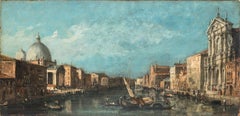
Francesco Lazzaro Guardi was the talented Venetian painter, unlike Canaletto, does not aim, in his paintings, at clear perception, but proposes an interpretation of the real subjective and evocative data, creating images of still lifes and evanescent cities, reaching pre-romantic moods, thanks to the crumbling forms and melancholy shadows. Francesco Guardi's most important later works include the Doge's Feasts, a series of twelve canvases celebrating the ceremonies held in 1763, for the election of Doge Alvise IV Mocenigo.

to
1
1
1
2
2
1
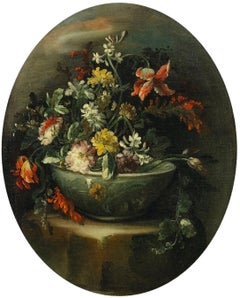
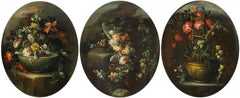
Still Lives Triptych - Oil on Canvas attr. to F. Guardi - Late 18th Century

Still Lives Triptych - Oil on Canvas attr. to F. Guardi - Late 18th Century

By Francesco Guardi

Located in Roma, IT

This is a wonderful Guardi's Triptyc, composed by three oval oil painted panels attributed by some of most reputable scholars to the Venetian old master Francesco Guardi (1712-1793)....

Category

Late 18th Century Francesco Guardi Art

Materials

Canvas, Oil

Related Items
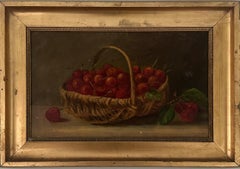
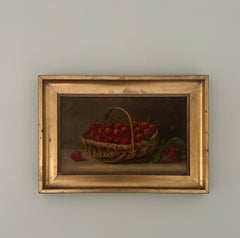
Basket Of Red Cherries Still-Life Oil Painting With Gilt Frame

Basket Of Red Cherries Still-Life Oil Painting With Gilt Frame

Located in Frederiksberg C, DK

This still life painting depicts a woven basket brimming with ripe cherries, delicately arranged on a tabletop against a subdued background. The cherries are rendered with a sheen, t...

Category

Late 19th Century Realist Francesco Guardi Art

Materials

Canvas, Oil

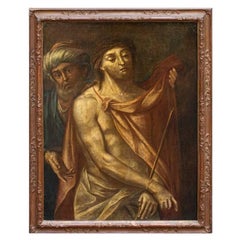
17th Century Christ in Chains Painting Oil on Canvas

17th Century Christ in Chains Painting Oil on Canvas

$2,824

H 43.31 in W 33.08 in D 1.97 in

17th Century Christ in Chains Painting Oil on Canvas

Located in Milan, IT

17th century Christ in chains Oil on canvas, 95 x 71 cm Frame 110 x 84 cm The figurative tradition representing Christ with chained hands can be traced back to the early Middle Ages, when an iconography of His pains spread widely. The need to translate the Passion into images aimed to raise awareness of the forgiveness that has occurred for all men, consequent to the Crucifixion. This painting depicts the moment before the audience before Pilate. Christ has not yet been cruelly mocked by the soldiers, despite the fact that he is already wearing the crown of thorns and the purple...

Category

17th Century Italian Antique Francesco Guardi Art

Materials

Canvas

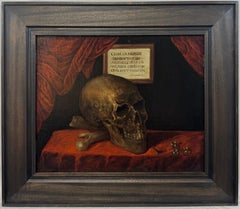
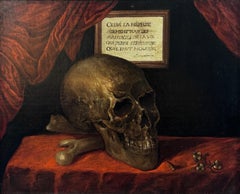
17th Century Memento Mori Vanitas Skull Old Master Oil Ex-Christie’s

17th Century Memento Mori Vanitas Skull Old Master Oil Ex-Christie’s

Located in Yardley, PA

This wonderful 17th-century French School vanitas painting is a meditation on mortality and the transience of earthly pleasures. The composition centers on a finely rendered human sk...

Category

17th Century Old Masters Francesco Guardi Art

Materials

Canvas, Oil

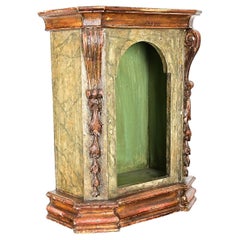
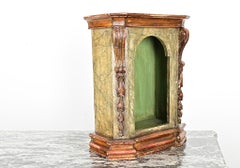
18th Century Portuguese Altar

18th Century Portuguese Altar

$2,650

H 23.88 in W 18.38 in D 9.5 in

18th Century Portuguese Altar

Located in Baton Rouge, LA

A fantastic oratory or tabletop altar from 18th century Portugal, made of carved, painted, and gilded wood taking the form of a small cabinet (where religious statuary would be displ...

Category

18th Century Portuguese Baroque Antique Francesco Guardi Art

Materials

Gold

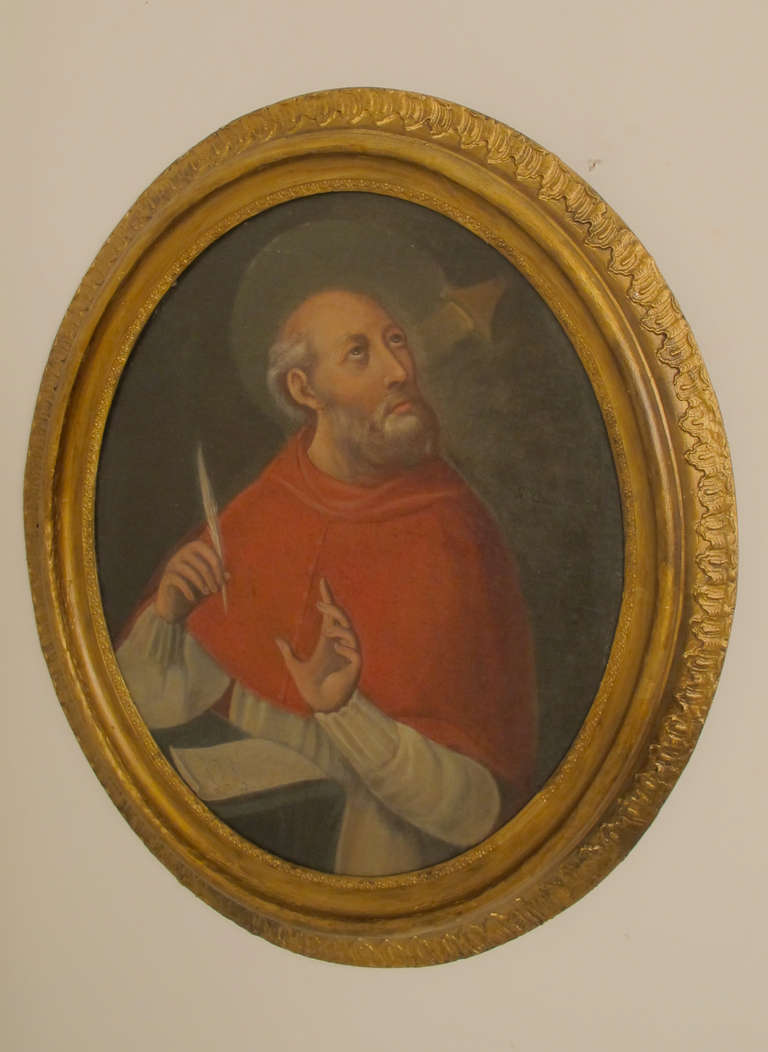
18th Century, Spanish Colonial Religious Painting of San Geronimo

18th Century, Spanish Colonial Religious Painting of San Geronimo

Located in San Francisco, CA

18th century painting of San Geronimo, oil on canvas laid on wood board. It was later placed in a restored 19th century wood and gesso frame. There is no signature.

Category

18th Century Unknown Spanish Colonial Antique Francesco Guardi Art

Materials

Canvas

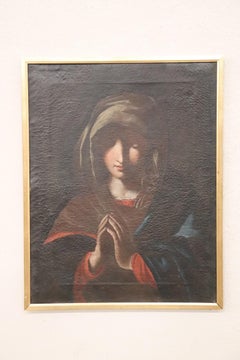
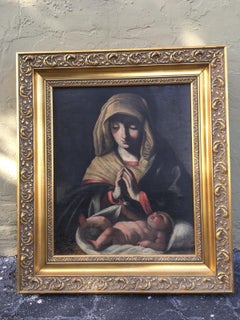
18th Century Italian Antique Oil Painting on Canvas, Madonna in prayer

18th Century Italian Antique Oil Painting on Canvas, Madonna in prayer

$2,353Sale Price|20% Off

H 25.6 in W 20.08 in D 0.99 in

18th Century Italian Antique Oil Painting on Canvas, Madonna in prayer

Located in Casale Monferrato, IT

We are pleased to present this captivating religious painting of the Italian school, painted in oil on canvas in the 18th century. This wonderful painting depicting the Madonna in pr...

Category

18th Century Italian Antique Francesco Guardi Art

Materials

Canvas

18th century Portrait of Lady Oil on Canvas in Giltwood Frame

18th century Portrait of Lady Oil on Canvas in Giltwood Frame

$3,900Sale Price|40% Off

H 37 in W 32 in D 2.25 in

18th century Portrait of Lady Oil on Canvas in Giltwood Frame

Located in Savannah, GA

English oil on canvas portrait dating from the late 1700s painted in the manor of Joshua Reynolds. We believe the giltwood frame could be the original as it is right for the period. ...

Category

1790s English Rococo Antique Francesco Guardi Art

Materials

Canvas, Wood

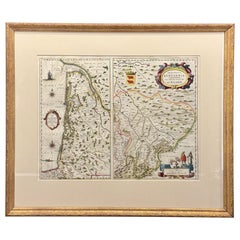
18th Century Map of French Pyrenees Region of France

18th Century Map of French Pyrenees Region of France

Located in Haddonfield, NJ

An antique map titled "Principatus Benearnia, La Principaute De Bearn" created by the renowned Dutch cartographer Willem Janszoon Blaeu. It depicts the Principality of Bearn, a histo...

Category

1880s Danish Baroque Antique Francesco Guardi Art

Materials

Wood, Paper

Madonna and Child, Classical 19th Century Painting

Madonna and Child, Classical 19th Century Painting

Located in Miami, FL

Madonna and child, Classical 19th century painting. This lovely oil painting was purchased in Spain. The artist is unknown. The painting still maintains its original finish and ha...

Category

Late 19th Century Italian Renaissance Antique Francesco Guardi Art

Fine Museum Quality Large Antique 18th Century Greek Orthodox Icon, Pentecost

Fine Museum Quality Large Antique 18th Century Greek Orthodox Icon, Pentecost

Located in New York, NY

An exceptional, museum quality very large 18th century Greek icon of the Pentecost. Egg tempera and gold leaf on wood, primed with gesso. Attributed to Mount Athos...

Category

18th Century Greek Antique Francesco Guardi Art

Materials

Wood

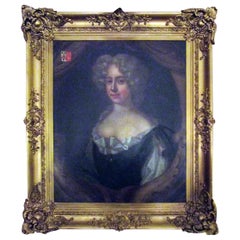
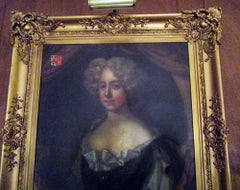
English Titled 18th c Lady with Coat of Arms  Portrait  Oil Painting Gilt Frame

English Titled 18th c Lady with Coat of Arms Portrait Oil Painting Gilt Frame

Located in Savannah, GA

18th century English noblewoman in a gold gilt ornate period frame. Lovely detail and color, coat of arms in corner. Unsigned. Without the frame the painting itself measures 29 inche...

Category

1790s English George III Antique Francesco Guardi Art

Materials

Giltwood, Canvas

Previously Available Items
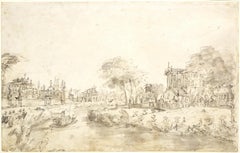
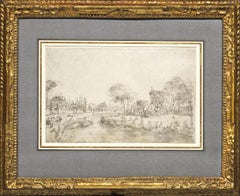
Villas on the Brenta, an ink wash on paper by Francesco Guardi, Venice 1712-1793

Villas on the Brenta, an ink wash on paper by Francesco Guardi, Venice 1712-1793

By Francesco Guardi

Located in PARIS, FR

Provenance: Dominique-Vivant Denon Collection (his stamp partly erased in the lower right corner). Denon sale on May 1er 1826 – part of lot 329 or lot 331 Marquet de Vasselot Collection - Sale of May 28-29 1891 - lot number 157 London private collection Laurin-Guilloux-Buffetaud sale of April 4, 1974 - lot number 25 Ader-Picard-Tajan sale June 7, 1989 Gilbert Butler Gallery - New York (from a label on the back) This drawing, which bears the signature "Fr Guardi", is included in the catalog raisonné of Guardi's drawings (Guardi - I designi) published by Antonio Morassi under number 435 (reproduction number 433). In this drawing, probably executed at the end of his life, Francesco Guardi (1712-1793) depicts a partly imaginary view of the villas located along the Brenta Canal. Those villas, set along the canal that connects Venice and Padua, were one of the traditional holiday destinations of Venetian aristocratic families. The long succession of sales in which this drawing appears allows us to trace it back to its first known owner, Dominique-Vivant Denon, who certainly bought it in Italy, either during his long stay in Venice (1786-1793), possibly from Guardi himself, or during the Napoleonic period. 1. Francesco Guardi, a protean artist Francesco Guardi was born into a family of artists: his father Domenico (1678 - 1716) was also a painter, as were his two brothers Gianantonio, known as Antonio (1699 - 1760) and Nicolò. His sister Cecilia married the painter Giovanni Battista Tiepolo. Art historians estimate that Francesco Guardi painted his first vedute around 1755-1756; the painting of vedute heralded therefore the second stage in his life as a painter, as he was in his mid-forties. His first views of Venice were painted under the influence of Canaletto, whose studio he may have attended. In 1760, as he took over the family workshop on the death of his brother, who until then had run it focusing largely on the production of religious and historical scenes, allowed him to discover and flourish in this pictorial genre. His second son Giacomo (1764 - 1835) joined him and was the last painter of the family. Until his death Francesco remained a fertile painter who painted with extreme ease and speed, and this explains the large number of canvases (over a thousand) that constitute his corpus. The themes explored by Guardi in this second part of his life are multiple but can be classified in three broad categories, which are quite permeable: beside the views of Venice, which constitute the most well-known part of his drawn and painted work, Guardi was a great illustrator of the Venetian festivals and breathed new life into to the Caprice, a pictorial genre that mixes imaginary representations of architectural landscapes, often inspired by the sites of the lagoon and scenes de genre. In its Vedute, Guardi succeeds in the tour de force of radically renewing a genre in which Canaletto had excelled. Moving away from the descriptive reality of his predecessor, he created a new, magical vision. Reversing the general tendencies of European art marked by the advent of the neo-clacissism, during the last thirty years of his life, Guardi developed a more and more personal style, gradually freeing itself from the framework of strict figuration by privileging evocations rather than representations. In his Vedute, Guardi sometimes abandons the narrow frame of the lagoon for firm ground, as in 1778 at the time of his voyage to Trentino, or when carrying out a series of paintings representing Venetian villas which were accompanied by some drawings, following the request of John Strange, the British "Resident" in Venice. 2. Description of the artwork This drawing, recognized by Antonio Morassi as an autograph work by Francesco Guardi, is a unicum in the artist's corpus. Although it may be similar to other drawings of Venetian villas commissioned by John Strange, it is likely to be a later work, mixing real and imaginary elements. At a bend of the Brenta, on the right we can see an imposing Palladian villa and on the other bank two villas separated by a sort of nymphaeum. They are isolated from the road that runs along the canal by high walls in which three monumental portals open, one of which is decorated with statues. In the middle of the canal the Burchiello advances. It was a river boat with a large wooden cabin, finely painted and decorated and lit by windows on each side. This boat was used by the wealthiest Venetians to travel from Venice to their country villas. Boats like this were rowed from St. Mark's to Fusina, from where they were then pulled by horses to Padua. The absence of horses tells us that the boat is probably on its way down the canal to Venice. In an amusing detail at the far left of the drawing, Guardi has elliptically depicted a horse-drawn carriage, pulled by a single horse that seems to be at full gallop, as if trying to catch up with the Burchiello. The villa on the right has a majestic peristyle from which a flight of steps emerges. The composition seems largely fanciful since these steps stop on a balustrade located at mid-height and do not appear to give access to the garden below. The garden is embellished with kiosks, as if for a waterside party, with a circular fountain...

Category

1790s Old Masters Francesco Guardi Art
Materials

Paper, Ink

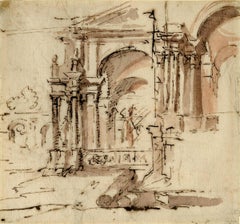
Architectural Sketch

Francesco GuardiArchitectural Sketch, c. 1700's

Sold

H 13.25 in W 13.75 in D 0.38 in

Architectural Sketch

By Francesco Guardi

Located in Fairlawn, OH

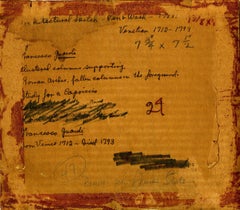
After Francesco Guardi, Janos Scholz is said to have suggested Giovanni Paolo Panini (1692-1765) for this drawing.

Category

18th Century Renaissance Francesco Guardi Art

Materials

Ink

Francesco Guardi art for sale on 1stDibs.

Find a wide variety of authentic Francesco Guardi art available for sale on 1stDibs. You can also browse by medium to find art by Francesco Guardi in canvas, fabric, oil paint and more. Not every interior allows for large Francesco Guardi art, so small editions measuring 24 inches across are available. Customers who are interested in this artist might also find the work of Duilio Barnabé, Margherita Leoni, and Gianluca Corona. Francesco Guardi art prices can differ depending upon medium, time period and other attributes. On 1stDibs, the price for these items starts at $140,173 and tops out at $140,173, while the average work can sell for $140,173.