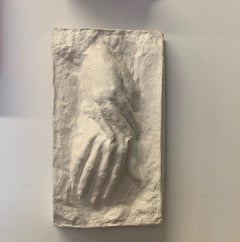
TWO HANDS I
By George Segal
Located in Santa Monica, CA
Cast paper
Category
1970s George Segal Sculptures
Materials
Paper
TWO HANDS I
By George Segal
Located in Santa Monica, CA
Cast paper
Paper
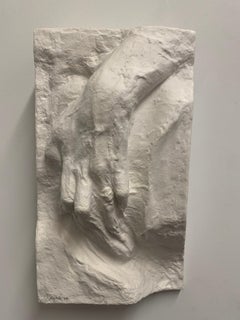
Woman's Hands
By George Segal
Located in Santa Monica, CA
Cast paper, edition 16/50.
Paper
Price Upon Request
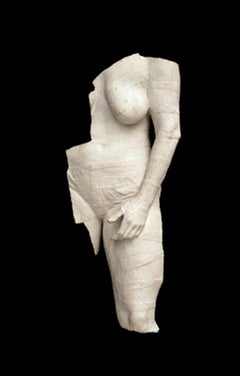
Untitled (Fragment)
By George Segal
Located in New York, NY
Although Segal started his art career as a painter, his best known works are cast life-size figures and the tableaux the figures inhabited. In place of traditional casting techniques...
Plaster
$2,354Sale Price|20% Off
H 21.66 in W 11.03 in D 6.7 in
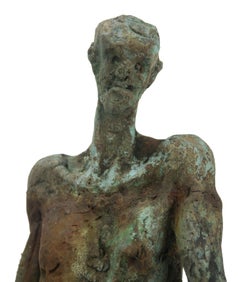
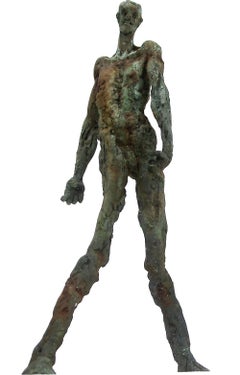
Expressionist Heavy Bronze Sculpture in Lost Wax Casting Containing the Rage
By Óscar Aldonza Torres
Located in FISTERRA, ES
Expressionist bronze sculpture in lost wax casting exploring contained emotion and inner tension. Containing the Rage is a unique figurative work by Galician sculptor Óscar Aldonza, ...
Bronze
$5,652Sale Price|20% Off
H 46.46 in W 20.08 in D 10.24 in
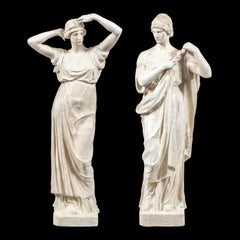
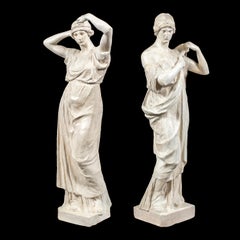
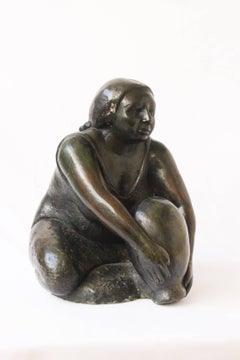
Pair of 19th century scagliola sculptures (Italian Neoclassicism) - Roman figure
Located in Varmo, IT
Pair of scagliola sculptures - Roman figures. Italian manufacture, 19th century. 51 x 26 x h 118 cm (left) - 41 x 28 x h 118 cm (right). Made entirely of scagliola. Depicting two f...
Plaster
$2,800
H 17.72 in W 13.78 in D 13.78 in
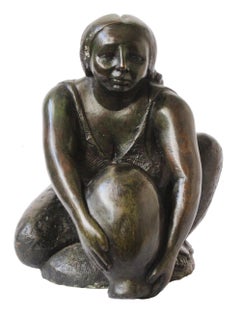
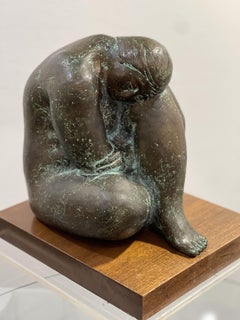
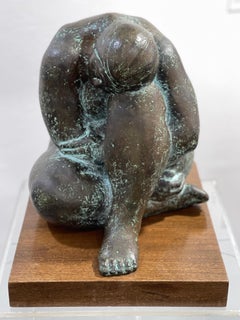
Mexican indian woman with Water Pot (In the style of Francisco Zúñiga)
Located in Guadalajara, Jalisco
Mexican Indian Woman with Water Pot (In the style of Francisco Zúñiga) Unknow Artis Lost Wax Bronze 45 x 35 x 35 cm 1960, MX No base
Bronze
$12,000Sale Price|20% Off
H 12 in W 9.5 in D 11.5 in
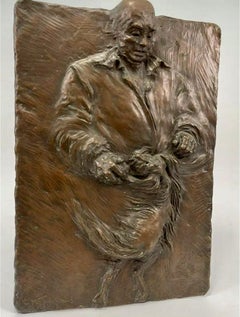
"Crouching Woman" Bronze Sculpture by Felipe Castañeda, Circa 1972, III/VI
By Felipe Castañeda
Located in San Francisco, CA
Felipe Castañeda Mujer Agachada (Crouching Woman), 1972 Bronze, wood base 12 x 9.5 x 11.5 inches Edition III/VI Most recent owners acquired this limited-edition bronze sculpture fro...
Bronze
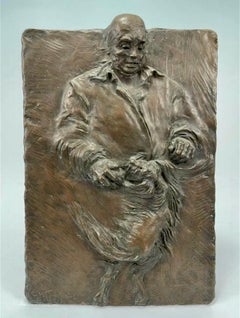
$850
H 16 in W 10.5 in D 1.5 in
German Expressionist Bronze Relief Plaque Mans Best Friend, a Man and His Dog
Located in Surfside, FL
Mans Best Friend C.M. Junghans 1985 This is done in a German Expressionist style. It is bronze over some sort of fill. It depicts a man gentleman and his dog. a Cocker Spaniel or Co...
Bronze
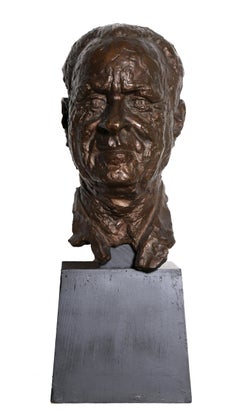
$4,500
H 12.5 in W 6.5 in D 8.5 in
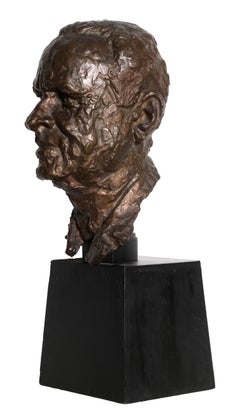
Bust of Yitzhak Rabin, Expressionist Bronze Sculpture by Chaim Gross
By Chaim Gross
Located in Long Island City, NY
Artist: Chaim Gross, Austrian/American (1904 - 1991) Title: Bust of Yitzhak Rabin Year: 1967 Medium: Bronze Sculpture, signature inscribed Size: 12.5 x 6.5 x 8.5 in. (31.75 x 16.51 x...
Bronze
$3,500
H 45.5 in W 22 in D 1.25 in
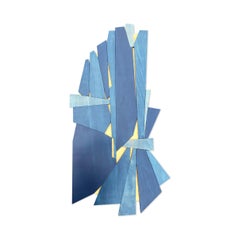
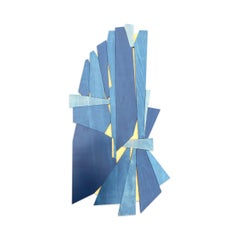
American Contemporary Sculpture by Scott Troxel - Ultra Marine
By Scott Troxel
Located in Paris, IDF
Artwork made with birch, acrylic, satin lacquer & metallic gold venetian plaster UltraMarine is a mixed media wall sculpture. Made from acrylic washes on birch, MDF and gold metallic Venetian plaster paint. Finished with an elegant satin clear lacquer to enhance the wood grain. The multiple opacities of navy and indigo are almost denim-like in color and allow the brown wood grain to add texture and interest to the piece. Ultramarine takes on the abstract form of a soaring building or perhaps a church spire or other tall building in form. Ultramarine is a monochromatic piece which is minimalistic in nature, so the form, composition and the balance of the piece trump a definitive subject matter. However, the shape is reminesent of mid-century modernism, the sputnik design movement and futurism. The result is an elegant wall sculpture...
Metal, Gold
$3,000
H 21 in W 10.25 in D 10.25 in
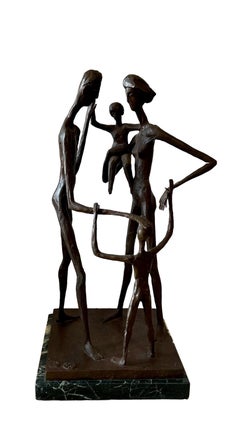
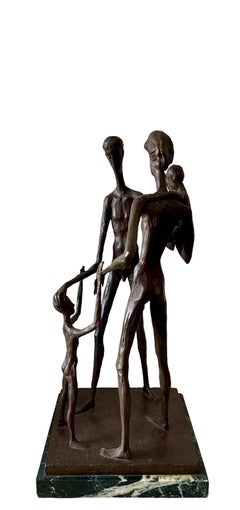
Large Modernist Bronze Abstract Figural Sculpture "Family" Wolfgang Behl
Located in Surfside, FL
This is a mid 20th century mod abstract large bronze sculpture by Wolfgang Behl (German/American, 1918-1994). The sculptural group titled "The Family" features a mother and father with two children. Numbered 20/20. Signed. 21" H x 10 1/4" x 10 1/4 Wolfgang (Johann Wolfgang) Behl (1918 - 1994) was active/lived in Connecticut, Illinois / Germany. Known for Sculpture and as an architectural carver. A carver,designer, and teacher, Wolfgang Behl was born in Berlin, Germany where he studied at the Berlin Academy of Fine Arts. His teacher was otto Hitzberger, sculptor and architecture carver. I have seen some his work, particularly in carved wood compared to Constantin Brancusi although this one seems way more reminiscent of Alberto Giacometti. In 1939, Behl came to the United States and taught briefly in Pennsylvania at the Perkiomen School and in Rhode Island at the Rhode Island School of Design. There in 1943, he won the Joseph N. Eisendrath prize for sculpture. He also became a friend of Louis Mayer, sculptor from Milwaukee. In 1944, Behl took a job as Art Director at the Lake Forest Academy in Lake Forest, Illinois, and he also began a one-year teaching assignment at the Layton School of Art in Milwaukee. The last years of his life until his death were in Hartford, Connecticut. Source: Peter C. Merrill, "German-Immigrant Artists in Early Milwaukee" Originally from Berlin, Germany, Mr. Behl immigrated to the United States in 1939 and became a citizen in 1947. He studied with Waldemar Raemisch at the Academy of Fine Arts in Berlin, and later at the Rhode Island School of Design. He began teaching at the Hartford Art School in 1955, retiring in 1983 to devote his time to sculpting. Mr. Behl had exhibitions throughout the United States and Germany. Some of his solo exhibitions include the Arts Exclusive in Simsbury from 1976 to 1981, and the Bertha Schaefer Gallery in New York City from 1950 to 1973. He showed at the New Britain Museum of American Art, in New Britain, Connecticut in 1969. He also had several retrospectives, including one at the Greater Hartford Jewish Community Center in West Hartford until the end of this month. His works in bronze have a German Expressionist quality to them a pathos found in the works of Kathe Kollwitz and the Expressionist movement. He was known for his classically inspired, but often surrealist sculpture. Among his most-well known pieces are a series of sculptures done for the University of Connecticut Health Center. Several examples of Behl’s work are found on the campus of the University of Hartford. He was included in the show Monumentality in Modern Sculpture at the Contemporary Arts Museum Houston, Texas, 1957. Artists featured in the exhibition: Kenneth Armitage, Hans Arp, Ernst Barlach, Wolfgang Behl, Dorothy Dehner, Edgar Degas, José de Rivera, Max Ernst, Alberto Giacometti, Joseph Glasco, Julio González, Paul Granlund...
Marble, Bronze
$1,083Sale Price|20% Off
H 13.78 in W 10.63 in D 9.06 in
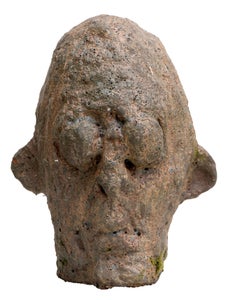
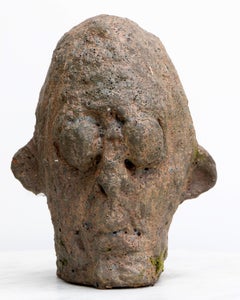
Brutalist Expressionist Ceramic Head Sculpture Testa Nº12 – Refractory Stoneware
By Óscar Aldonza Torres
Located in FISTERRA, ES
This ceramic head sculpture from the Testas series, titled Testa Nº12, is an expressionist exploration of the human face in refractory stoneware fired in reduction. The sculpture pre...
Clay, Glaze
$1,200
H 11.25 in W 16 in D 5.5 in
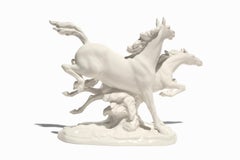
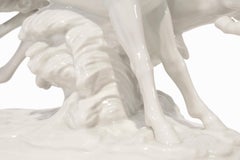
"In Freiheit (In Freedom)", White Porcelain Horses
Located in Detroit, MI
This gorgeous porcelain sculpture from Hutschenreuther porcelain is of two galloping horses, sculpted in exquisite detail and signed by the sculptor, Max Hermann Fritz...
Porcelain
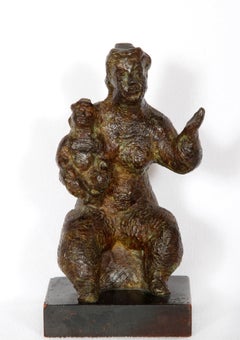
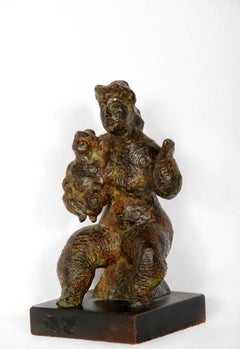
Mother and Child, Modern Bronze Sculpture by Chaim Gross
By Chaim Gross
Located in Long Island City, NY
Artist: Chaim Gross, Austrian (1904 - 1991) Title: Mother and Child Medium: Bronze Sculpture, signature inscribed Size: 10 x 5 x 5 in. (25.4 x 12.7 x ...
Bronze
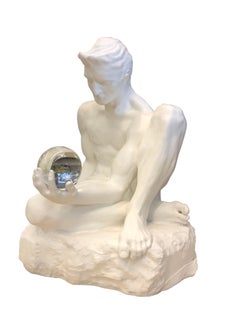
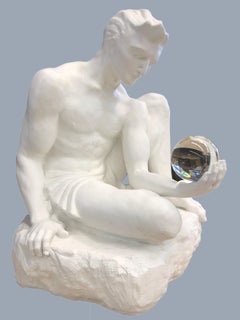
Nude Man Figure Holding Crystal Ball
Located in Lake Worth Beach, FL
Nude Man Holding Crystal Ball White Sculpture Modern cement, plaster, clay sculpture of a man holding crystal ball painted white, Signature not found. Ab...
Plaster, Acrylic, Clay, Glass
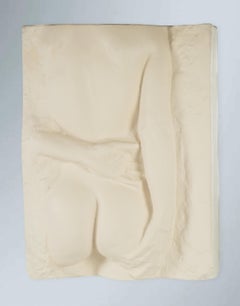
Gazing Woman
By George Segal
Located in New York, NY
Resin relief cast from the edition of 175. Published by Transworld Art, New York. From "An American Portrait."
Resin