By Harriet Whitney Frishmuth
Located in Atlanta, GA
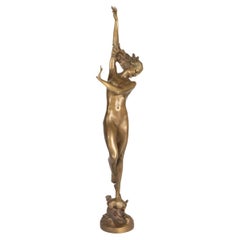
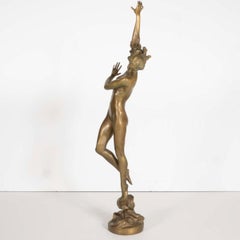
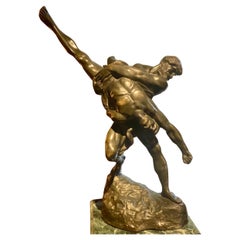
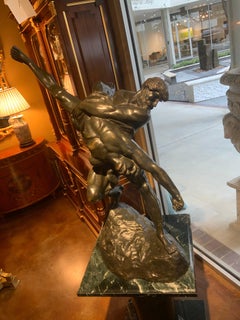
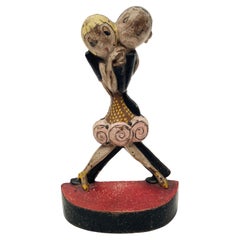
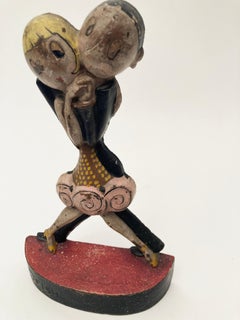
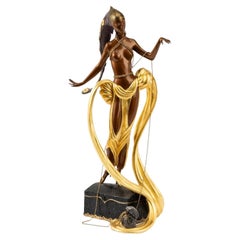
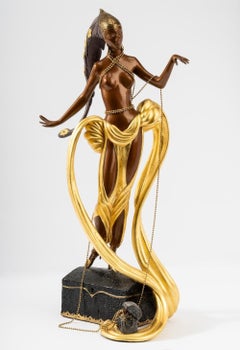
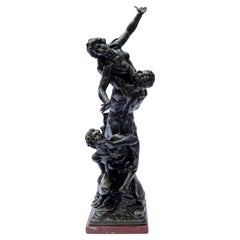
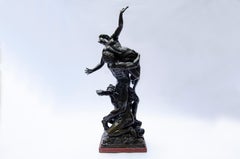
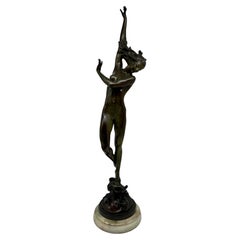
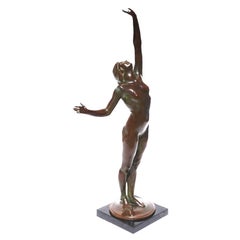
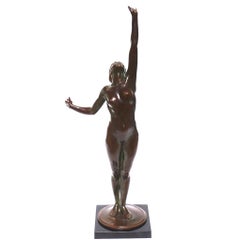
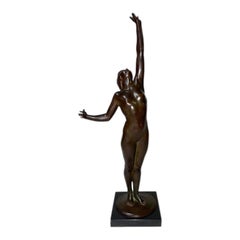
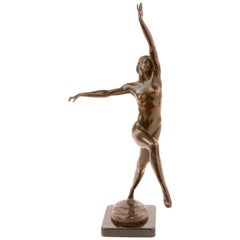
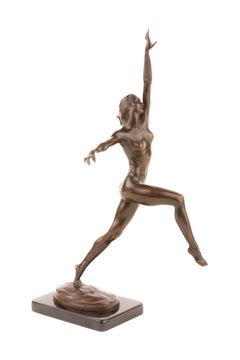
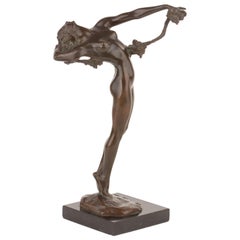
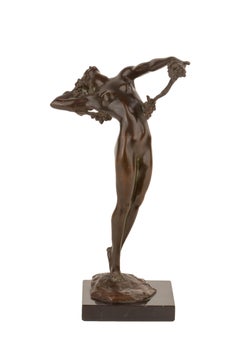
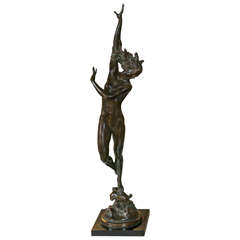
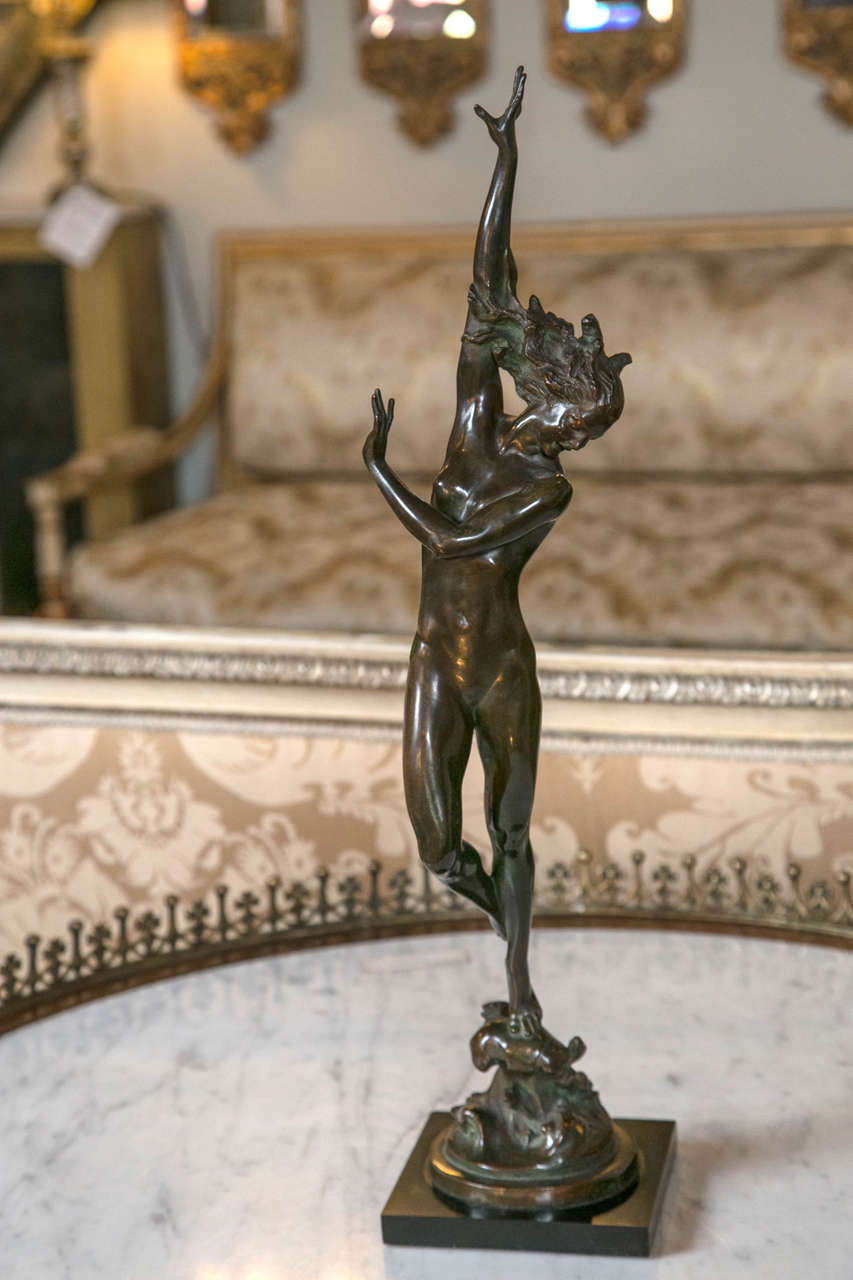
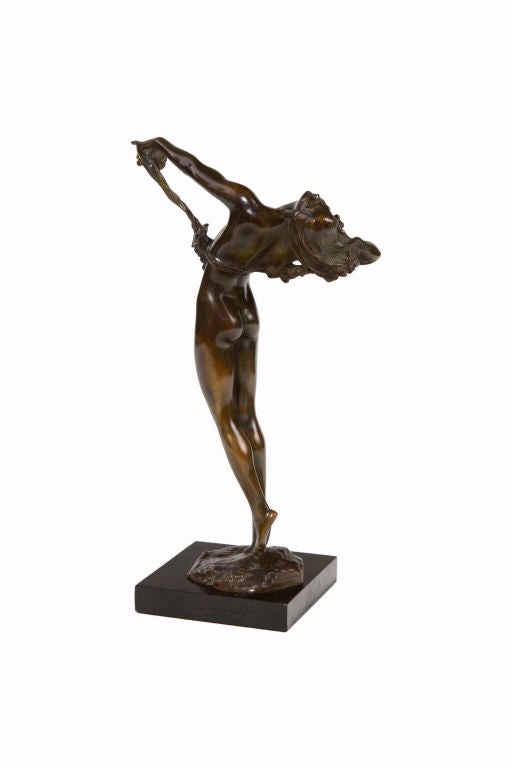
This exquisite bronze sculpture, Crest of the Wave, by celebrated American sculptor Harriet Whitney Frishmuth, is a masterful example of her ability to capture movement, grace, and the beauty of the human form. Created originally in 1925 and cast by the renowned Gorham Foundry, this work exemplifies the sophisticated craftsmanship and attention to detail for which Frishmuth and Gorham were known.
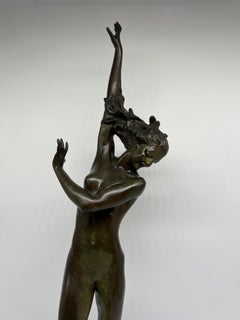
The sculpture depicts a dynamic female figure in a moment of radiant triumph, her lithe body arched as if carried forward by the energy of the wave beneath her. Frishmuth’s meticulous attention to anatomy and fluidity of form is evident in every contour, from the elegant curve of the figure’s posture to the textured ripples of the wave. The surface patina adds warmth and depth, enhancing the lifelike vitality of the piece.
The Gorham Foundry mark further attests to the piece’s provenance and high-quality execution, aligning with the finest traditions of American bronze sculpture in the early 20th century. Crest of the Wave is a quintessential representation of Frishmuth’s artistic vision, combining classical influences with the vibrant energy of the Art Deco period.
Measures: 21.5" h x 5" w
"She was born in Philadelphia, Pennsylvania. Her parents divorced when she was in her teens, and she moved to Europe with her mother and sisters, living there for eight years. She studied briefly with Auguste Rodin at the École des Beaux-Arts in Paris, and for two years with Cuno von Uechtritz-Steinkirch in Berlin. She returned to the United States and studied at the Art Students League of New York under Gutzon Borglum and Hermon Atkins MacNeil. While in New York, she worked as an assistant to the sculptor Karl Bitter, and performed dissections at the College of Physicians and Surgeons.
Her first commissioned piece was a bas-relief for the New York County Medical Society in 1910. She also modeled ashtrays, bookends, and small figures for the Gorham Manufacturing Company. Her career grew steadily, and she became well known for her beautiful renderings of females in bronze, particularly dancers (Desha Delteil frequently modeled for her). Her small bronzes were sought by private collectors and museums alike, and her large bronzes often were placed in elaborate garden settings or as the centerpieces of fountains.[3] She also taught; among her pupils were Maude Sherwood Jewett[4] and Eleanor Mary Mellon.[5]
Her work was exhibited at the National Academy of Design, the Pennsylvania Academy of the Fine Arts in Philadelphia, the Salon in Paris, the Golden Gate International Exposition (1939–1940) and the National Association of Women Painters and Sculptors. She also exhibited with the Philadelphia Ten, the renowned group of women artists. She had a studio at Sniffen Court in New York City. One of her last exhibitions was in 1929, though she remained active in the art world for decades afterwards. The Great Depression affected her livelihood; she closed her New York studio in the 1930s, and returned to Philadelphia. She died in 1980 in Waterbury, Connecticut.
Frishmuth scorned modern art and was quite outspoken on the subject, calling it "spiritless" (she was equally outspoken in her dislike of the word "sculptress"). She received a number of recognitions and honors over the course of her career: the St. Gaudens Medal from the Art Students League of New York (while still a student), several awards from the National Academy of Design, a prize from the Grand Central Art Galleries, an honorable mention from the Golden Gate International Exposition, and the Joan of Arc Silver...
Category
20th Century American Art Deco Harriet Whitney Frishmuth Decorative Objects