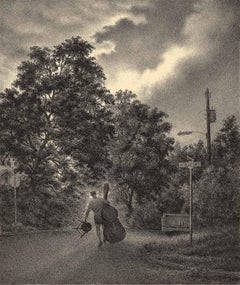
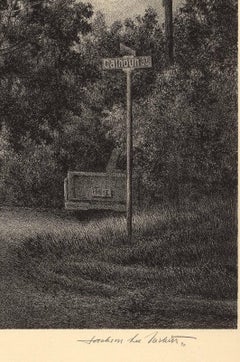
By Jackson Lee Nesbitt
Located in New Orleans, LA
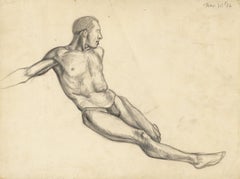
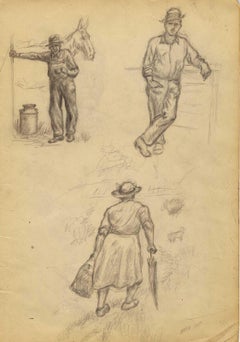
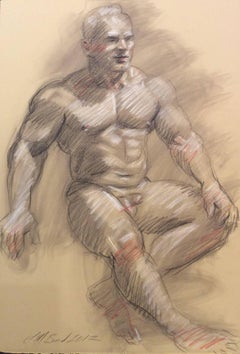
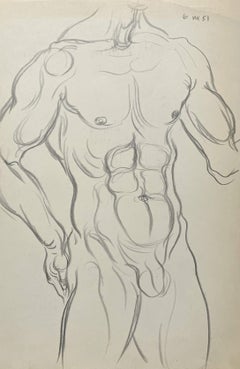
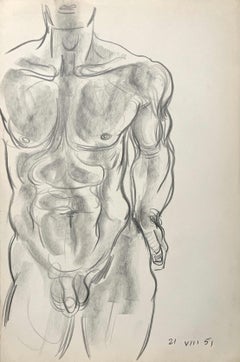
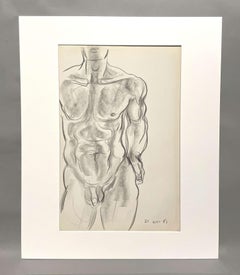
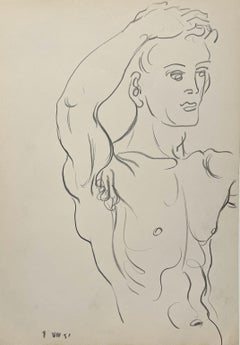
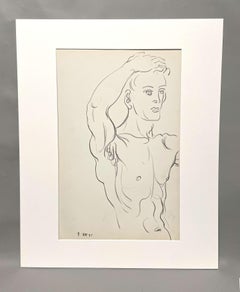
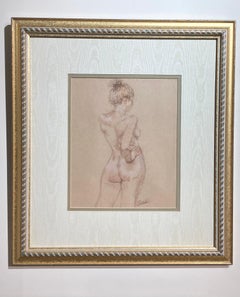
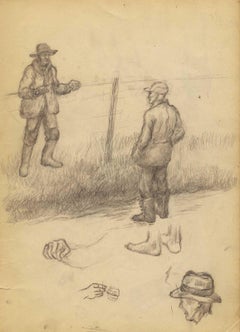
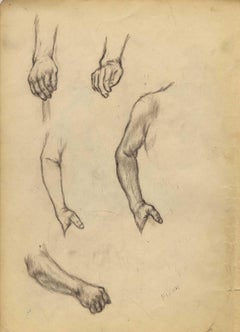
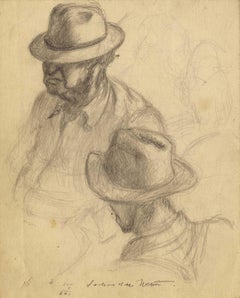
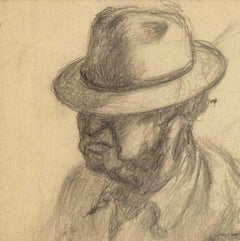
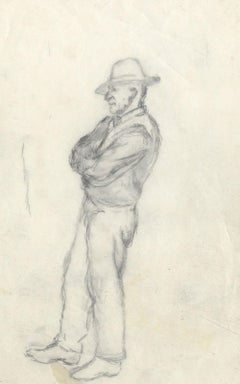
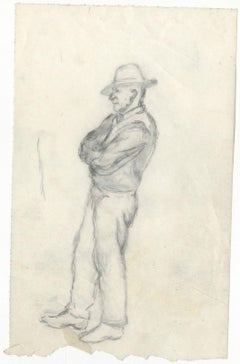
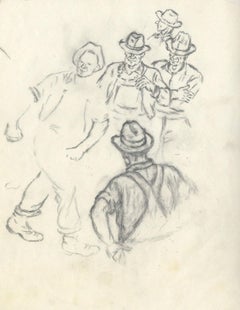
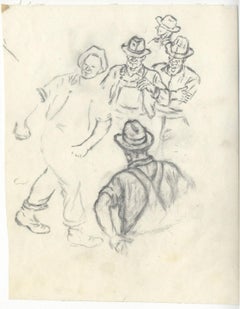
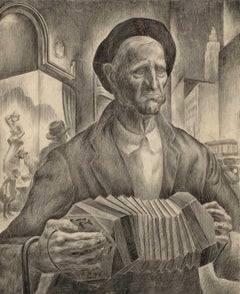
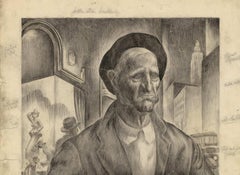
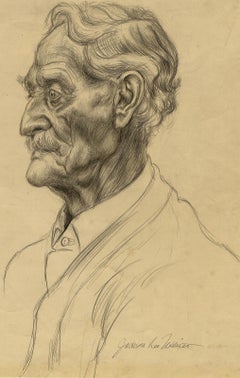
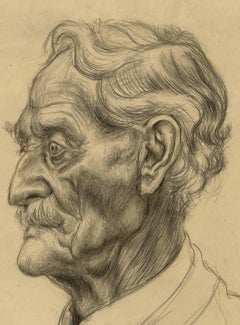
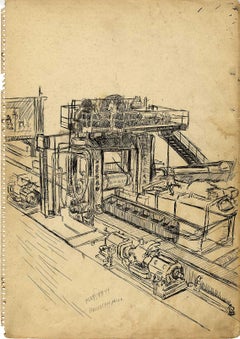
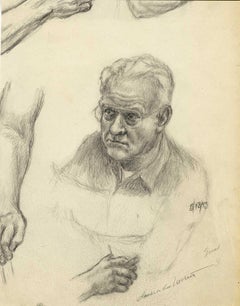
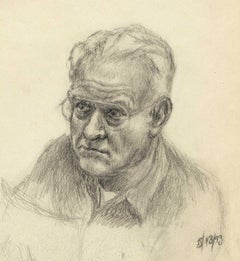
This pencil drawing is a finished portrait of "Old Chris" who arrived in 1941 at the Kansas City Art Institute as a model. He appeared in numerous images by Thomas Hart Benton, John DeMartelly and Jackson Lee Nesbitt . Nesbitt was always drawing and sketching. He filled books with sketches of characters and objects he'd seen on the off chance that he might use them one day.
Jackson Lee Nesbitt, a noted printmaker and painter of the American Scene, dedicated his artistic career to the portrayal of ordinary people going about the business of their lives. A native of Oklahoma, Nesbitt created scenes from the Midwest during the 1930s and 1940s, but in the 1950s, when interest in his work diminished, he moved to Atlanta and established a second career in advertising. Thirty years later, Nesbitt sold his business and resumed his artistic career from Atlanta.
Jackson Lee Nesbitt, pictured circa 1955, was a native of the Midwest and a well-regarded printmaker and painter for much of the twentieth century. In 1957 he moved to Atlanta and gave up his art to work in advertising, but in 1987 he resumed printmaking at Rolling Stone Press in Atlanta.
Jackson Lee Nesbitt was born in McAlester, Oklahoma, on June 16, 1913, the only child of LuCena Grant and Howard Nesbitt. The family resided in Muskogee, Oklahoma, where his father owned a commercial printing business. Jack, as Nesbitt was known, helped out in the family business until 1931, when he enrolled at the University of Oklahoma in Norman.
Two years later Nesbitt enrolled at the Kansas City Art Institute in Missouri. As a first-year student, he learned etching from John deMartelly, attended Ross Braught's painting class, and met his future wife, Elaine Thompson, who was a costume design student. Thomas Hart Benton, who joined the faculty in the fall of 1935, quickly became a close friend and mentor to the younger artist.
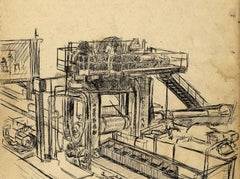
In 1937 the management of the Sheffield Steel Corporation contacted deMartelly concerning an etching commission. Because Nesbitt was an outstanding student, his teacher suggested him for the job. When Nesbitt arrived at the plant one afternoon, he was taken to the open-hearth furnace area, where he diligently sketched anonymous workers in that dramatic setting until five o'clock the following morning. On the strength of his sketches, he was commissioned to create a series of etchings illustrating different phases of the steel industry. The commission launched Nesbitt's career as a professional artist.
The commission with Sheffield Steel Corporation provided the financial security that enabled Jack and Elaine Nesbitt to marry on June 1, 1938. He graduated from the Kansas City Art Institute about the same time. Working as a freelance artist, Nesbitt augmented his commissioned work with genre scenes of the Midwest, and he routinely went with Benton on sketching trips to rural Arkansas. The landscape and people of the Ozarks often appear in the
Jackson Lee Nesbitt's 1990 lithograph The Matthew W. Johnston Family (12 1/4" x 15") is composed of a mother and daughter whom Nesbitt knew during his childhood in Oklahoma. The man in the image was a model from the Kansas City Art Institute, where Nesbitt studied from 1933 to 1938.
Beginning in 1939 Nesbitt's work gained widespread recognition. Open Hearth Door, a Sheffield Steel Corporation painting, was chosen to represent Missouri in the American Art Today exhibition at the New York World's Fair. Associated American Artists selected one of his etchings, Watering Place, for an edition of 250 prints that were sold through subscription. Having a print published by the association ensured national distribution, and four more of Nesbitt's works, all of rural southern genre scenes, were later selected by the print publisher.
Over the next decade Nesbitt's work was exhibited in California, Colorado, Illinois, Missouri, New York, and Oklahoma. He was awarded the Eames Prize by the Society of American Etchers in 1946, and his work was included in the book American Prize Prints of the Twentieth Century, by Albert Reese. Major corporations with operations in the Midwest, including Brown and Bigelow, Butler Manufacturing Company, Humble Oil and Refining Company, Omaha Steel Works, Pratt and Whitney...
Category
1950s American Modern Jackson Lee Nesbitt Art
MaterialsPencil, Graphite