Jean de Botton Art

to
1
Overall Width
to
Overall Height
to
1
1
1
1
1
1
10,539
2,810
2,500
1,412
1
1
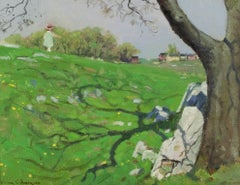
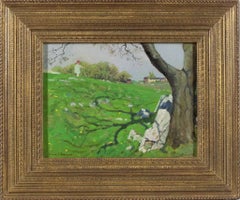
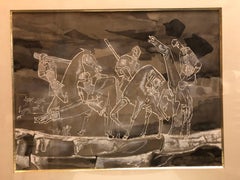
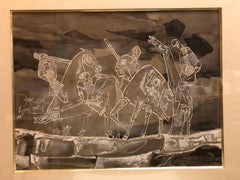
Artist: Jean de Botton
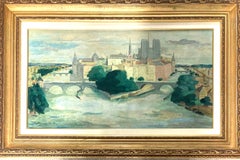
“Lile De la Cite”
“Lile De la Cite”

“Lile De la Cite”

By Jean de Botton

Located in Warren, NJ

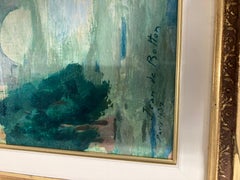
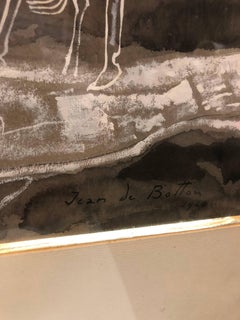
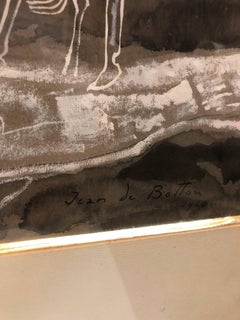
This is an signed and dated lower left corner and with title and date on the back. Painting is oil on board Measurements Image size: 16 by 29 1/4; overall: 25 1/4 by 38 3/4 inches

Category

Mid-20th Century Jean de Botton Art

Materials

Oil, Board

Related Items
Mid-20th Century Oil on Board Abstract Impressionist Maritime Scene, René Genis

Mid-20th Century Oil on Board Abstract Impressionist Maritime Scene, René Genis

By René Genis

Located in Berlin, MD

Step into the bustling energy of a portside moment with René Genis’ “Les Grues” (The Cranes)”, a captivating oil-on-mat-board painting that transforms the in...

Category

Late 20th Century Abstract Impressionist Jean de Botton Art

Materials

Oil, Illustration Board

Untitled
Untitled

André CottavozUntitled, 1990

$3,890

H 20.5 in W 22 in D 1.25 in

Untitled

By André Cottavoz

Located in Berlin, MD

Andre Cottavoz (French, 1922-2012) Untitled, Paris scene with multitude of French flags. Canvas on board, framed. Frame: 20 1/2" x 22" x 1 1/4, Board 13 3/4" x 15"

Category

1990s Abstract Jean de Botton Art

Materials

Oil, Board

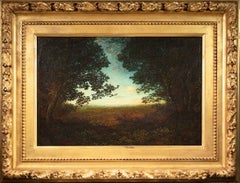
Dusk Forest Scene, Catskills by Lockwood DeForest (American, 1850-1932)

Dusk Forest Scene, Catskills by Lockwood DeForest (American, 1850-1932)

Located in New York, NY

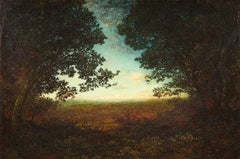
"Dusk Forest Scene, Catskills," 1875 by Hudson River School painter Lockwood DeForest (American, 1850-1932) is oil on artists card-stock and measures 9.5 x 7 inches. The work is signed by DeForest, and dated May 13, 1875 at lower right. The work is framed in an elegant, period appropriate frame, and ready to hang. Lockwood DeForest was born in New York in 1850 to a prominent family. He grew up in Greenwich Village and on Long Island at the family summer estate in Cold Spring Harbor. As was customary for a cultivated family in the Gilded Age, the DeForests made frequent trips abroad. Excursions to the great museums, which were prominent on the DeForests agenda, deepened the young Lockwood's familiarity with European painting and sculpture. Though he had begun drawing and painting somewhat earlier, it was during a visit to Rome in 1868 that nineteen-year-old DeForest first began to study art seriously, taking painting lessons from the Italian landscapist Hermann David Salomon Corrodi (1844–1905). More importantly, on the same trip, Lockwood met one of America’s most celebrated painters, (and his maternal great- uncle by marriage) Frederic Edwin Church (1826–1900), who quickly became his mentor. DeForest accompanied Church on sketching trips around Italy and continued this practice when they both returned to America in 1869. Early on in his career, de Forest made a habit of recording the date and often the place of his oil sketches, as to create a visual diary of his travels. Lockwood’s profession as a landscape painter can be primarily attributed to Frederic E. Church and his belief in the young artist’s talent. DeForest often visited Church in the Hudson River community of Catskill where, in addition to sketching trips and afternoons of painting, he assisted with the architectural drawings and planning of Olana. In 1872, DeForest took a studio at the Tenth Street Studio Building in New York. During these formative years DeForest counted among his friend’s artists such as Sanford Robinson Gifford (1823–80), George Henry Yewell (1830–1923), John Frederick Kensett (1816–72), Jervis McEntee (1828–91), and Walter Launt Palmer (1854–1932). Over the next decade DeForest experienced success as a painter. He exhibited for the first time at the National Academy of Design in 1872, and made two more painting trips abroad, in 1875–76 and 1877–78, traveling to the major continental capitals but also the Middle East and North Africa. His trip to the Middle East and the library at Church’s home, Olana, established his interest in design during his mid-twenties. From about 1878 to 1902, landscape painting was overshadowed by his activities and preoccupation with East Indian architecture and décor, a style that became quite fashionable in late nineteenth century America. From 1879-1883, de Forest founded Associated Artists along with Louis Comfort Tiffany, Candace Wheeler...

Category

19th Century Hudson River School Jean de Botton Art

Materials

Oil, Board

Amercan Merchant Ship in Philadelphia Harbor

Amercan Merchant Ship in Philadelphia Harbor

By Thomas Birch

Located in Costa Mesa, CA

Thomas Birch is considered one of the earliest American Marine painters of importance both in his own time and historically, forming the foundation of what would become a great American Maritime movement in the successive years of the 19th century. Born in England, Birch started as a landscape painter but after the War of 1812 he turned to marine subjects, taking inspiration from the best of both English and Dutch maritime traditions but refining these techniques into a very recognizable style all his own. The work featured here is a classic of Birch's later period, when he focused specifically on maritime subjects, mainly the busy waterways of Philadelphia Harbor. Here we see one of those scenes- a series of ships plying their trade, all framed by the city as it sits across the Delaware River, with the tall, white spire of what is either Independence Hall or Christ Church to the left of the main vessel. The details of the city are particularly good in this painting, with the wharf building to the left and the long line of buildings all along the shore. The American Merchant Bark at the center of this painting is rendered in excellent detail, from her house flag and pennant, to her rigging and sails, and down to her deck filled with the activity of crewmembers readying the ship to head out, her gilt billet...

Category

1840s Other Art Style Jean de Botton Art

Materials

Canvas, Oil, Board

Italian Impressionist Oil on Board Marine Landscape Painting Naples Bay View

Italian Impressionist Oil on Board Marine Landscape Painting Naples Bay View

By Francesco Coppola Castaldo

Located in Firenze, IT

Everyday fishermen life is captured in this wonderful Italian impressionist late 19th century oil painting on thin board titled fishermen ashore. We love the neutral and natural colo...

Category

Late 19th Century Impressionist Jean de Botton Art

Materials

Oil, Board

Joy Bomb Triptych, Colorful Abstract Landscape, Oil on Boards Ready to Hang

Joy Bomb Triptych, Colorful Abstract Landscape, Oil on Boards Ready to Hang

By Alex K. Mason

Located in Versailles, KY

Three colorful oil paintings on finished boards and ready to hang by Alex K. Mason. Lush foliage, vivid sky, bees circling flowers "Joy Bomb Tripytch" is painted in vivid pinks, blu...

Category

2010s Abstract Expressionist Jean de Botton Art

Materials

Oil, Board

Adirondack Stream by Hudson River artist Joseph Antonio Hekking (1830-1903)

Adirondack Stream by Hudson River artist Joseph Antonio Hekking (1830-1903)

By Joseph Antonio Hekking

Located in New York, NY

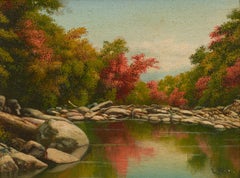
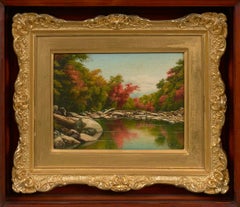
Painted by Hudson River School artist Joseph Antonio Hekking (1830-1903), "Adirondack Stream in Fall" is oil on board and measures 8.5 x 6.5 inches. The painting is signed at the low...

Category

19th Century Hudson River School Jean de Botton Art

Materials

Oil, Board

New England Sunrise, 1910 by Lockwood DeForest (American, 1850-1932)

New England Sunrise, 1910 by Lockwood DeForest (American, 1850-1932)

Located in New York, NY

"New England Sunrise," 1910 by Hudson River School painter Lockwood DeForest (American, 1850-1932) is oil on artists card-stock and measures 9.75 x 14 inches. The work is signed by DeForest and dated Sept. 17, 1910 at lower left. The work is framed in an elegant, period appropriate frame, and ready to hang. Lockwood de Forest was born in New York in 1850 to a prominent family. He grew up in Greenwich Village and on Long Island at the family summer estate in Cold Spring Harbor. As was customary for a cultivated family in the Gilded Age, the de Forests made frequent trips abroad. Excursions to the great museums, which were prominent on the de Forests agenda, deepened the young Lockwood's familiarity with European painting and sculpture. Though he had begun drawing and painting somewhat earlier, it was during a visit to Rome in 1868 that nineteen-year-old de Forest first began to study art seriously, taking painting lessons from the Italian landscapist Hermann David Salomon Corrodi (1844–1905). More importantly, on the same trip, Lockwood met one of America’s most celebrated painters, (and his maternal great- uncle by marriage) Frederic Edwin Church (1826–1900), who quickly became his mentor. DeForest accompanied Church on sketching trips around Italy and continued this practice when they both returned to America in 1869. Early on in his career, de Forest made a habit of recording the date and often the place of his oil sketches, as to create a visual diary of his travels. Lockwood’s profession as a landscape painter can be primarily attributed to Frederic E. Church and his belief in the young artist’s talent. De Forest often visited Church in the Hudson River community of Catskill where, in addition to sketching trips and afternoons of painting, he assisted with the architectural drawings and planning of Olana. In 1872, de Forest took a studio at the Tenth Street Studio Building in New York. During these formative years de Forest counted among his friend’s artists such as Sanford Robinson Gifford (1823–80), George Henry Yewell (1830–1923), John Frederick Kensett (1816–72), Jervis McEntee (1828–91), and Walter Launt Palmer (1854–1932). Over the next decade de Forest experienced success as a painter. He exhibited for the first time at the National Academy of Design in 1872, and made two more painting trips abroad, in 1875–76 and 1877–78, traveling to the major continental capitals but also the Middle East and North Africa. His trip to the Middle East and the library at Church’s home, Olana, established his interest in design during his mid-twenties. From about 1878 to 1902, landscape painting was overshadowed by his activities and preoccupation with East Indian architecture and décor, a style that became quite fashionable in late nineteenth century America. From 1879-1883, de Forest founded Associated Artists along with Louis Comfort Tiffany, Candace Wheeler...

Category

Early 20th Century Hudson River School Jean de Botton Art

Materials

Oil, Board

Abstract
Abstract

Abstract

By Frederick Conway

Located in New Orleans, LA

Frederick Conway (1900-1973) was a painter, educator, and lecturer. From 1929 to 1970, Conway was a member of the faculty of the Washington University Art School. When Max Beckmann was in residence at Washington University, he and Conway became close associates. Conway was one of the first to realize the importance and seriousness of Beckmann's teaching. In 1949, Beckmann painted Conway's portrait. Conway was born in Saint Louis, Missouri, and studied at the Saint Louis School of Fine Arts and in Paris at the Academie Julian, the Academy Moderne, and the Academy Grande Chaumiere. He painted murals for the WPA (Works Progress Administration...

Category

1960s Abstract Jean de Botton Art

Materials

Oil, Board

Hudson Highlands by Lockwood DeForest (American, 1850-1932)

Hudson Highlands by Lockwood DeForest (American, 1850-1932)

Located in New York, NY

"Hudson Highlands," by Hudson River School painter Lockwood DeForest (American, 1850-1932) is oil on artists card-stock and measures 9.5 x 14 inches. The work is framed in an elegant, period appropriate frame, and ready to hang. Lockwood de Forest was born in New York in 1850 to a prominent family. He grew up in Greenwich Village and on Long Island at the family summer estate in Cold Spring Harbor. As was customary for a cultivated family in the Gilded Age, the de Forests made frequent trips abroad. Excursions to the great museums, which were prominent on the de Forests agenda, deepened the young Lockwood's familiarity with European painting and sculpture. Though he had begun drawing and painting somewhat earlier, it was during a visit to Rome in 1868 that nineteen-year-old de Forest first began to study art seriously, taking painting lessons from the Italian landscapist Hermann David Salomon Corrodi (1844–1905). More importantly, on the same trip, Lockwood met one of America’s most celebrated painters, (and his maternal great- uncle by marriage) Frederic Edwin Church (1826–1900), who quickly became his mentor. DeForest accompanied Church on sketching trips around Italy and continued this practice when they both returned to America in 1869. Early on in his career, de Forest made a habit of recording the date and often the place of his oil sketches, as to create a visual diary of his travels. Lockwood’s profession as a landscape painter can be primarily attributed to Frederic E. Church and his belief in the young artist’s talent. De Forest often visited Church in the Hudson River community of Catskill where, in addition to sketching trips and afternoons of painting, he assisted with the architectural drawings and planning of Olana. In 1872, de Forest took a studio at the Tenth Street Studio Building in New York. During these formative years de Forest counted among his friend’s artists such as Sanford Robinson Gifford (1823–80), George Henry Yewell (1830–1923), John Frederick Kensett (1816–72), Jervis McEntee (1828–91), and Walter Launt Palmer (1854–1932). Over the next decade de Forest experienced success as a painter. He exhibited for the first time at the National Academy of Design in 1872, and made two more painting trips abroad, in 1875–76 and 1877–78, traveling to the major continental capitals but also the Middle East and North Africa. His trip to the Middle East and the library at Church’s home, Olana, established his interest in design during his mid-twenties. From about 1878 to 1902, landscape painting was overshadowed by his activities and preoccupation with East Indian architecture and décor, a style that became quite fashionable in late nineteenth century America. From 1879-1883, de Forest founded Associated Artists along with Louis Comfort Tiffany, Candace Wheeler...

Category

19th Century Hudson River School Jean de Botton Art

Materials

Oil, Board

VOLUNTEER Off Sandy Hook,  Heading Out to Race in the Goelet Cup

VOLUNTEER Off Sandy Hook, Heading Out to Race in the Goelet Cup

By James Edward Buttersworth

Located in Costa Mesa, CA

This atmospheric painting by James E. Butterworth depicts a group of yachts leaving New York Harbor on the annual New York Yacht Club cruise. In 1887, when this was painted, upon arr...

Category

1880s Other Art Style Jean de Botton Art

Materials

Oil, Board

Previously Available Items
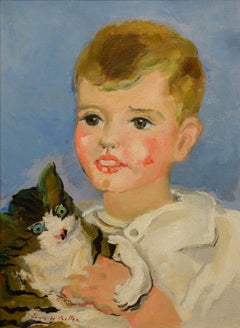
Boy with Cat

Jean de BottonBoy with Cat

Sold

H 16 in W 12 in

Boy with Cat

By Jean de Botton

Located in Wiscasset, ME

Born in 1898, French painter, illustrator and muralist, Jean de Botton studied at the École des Beaux-Arts in Paris under Antoine Bourdelle and Bernard Naudin. De Botton exhibited regularly at the Salon d’Automne and the Salon des Indépendants and participated in exhibitions in Spain, at the Carnegie Institute Internationals in Pittsburgh, Boston and Chicago and in French Art Exhibitions in Tokyo, Brussels and Antwerp. In 1937, de Botton was the only non-British painter invited to attend and paint the Coronation of King George VI. A year later, his Coronation paintings...

Category

1940s Modern Jean de Botton Art

Materials

Canvas, Oil

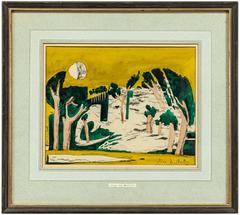
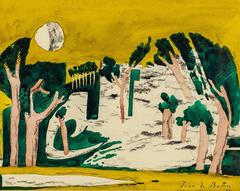
Trees in Vibrant Spring, Watercolor and Gouache

Trees in Vibrant Spring, Watercolor and Gouache

By Jean de Botton

Located in Surfside, FL

Jean de Botton (1898-1978). Jean Isy De Botton was part of the Ecole de Paris or School of Paris, a group of both French and non-French artists livi...

Category

20th Century Modern Jean de Botton Art

Materials

Gouache, Paper, Watercolor

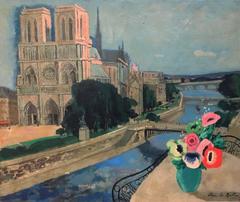
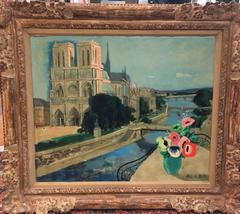
Notre Dame
Notre Dame

Notre Dame

By Jean de Botton

Located in Los Angeles, CA

JEAN DE BOTTON "NOTRE DAME" OIL ON CANVAS, SIGNED FRANCE, DATED 1939-1937 PROVENANCE: KNOEDLER GALLERY 25 X 30 INCHES Jean de Botton 1898-1978 Jean de Botton had a long and p...

Category

1930s Modern Jean de Botton Art

Materials

Canvas, Oil

Jean De Botton art for sale on 1stDibs.

Find a wide variety of authentic Jean de Botton art available for sale on 1stDibs. You can also browse by medium to find art by Jean de Botton in gouache, paint, paper and more. Much of the original work by this artist or collective was created during the 20th century and is mostly associated with the modern style. Not every interior allows for large Jean de Botton art, so small editions measuring 32 inches across are available. Customers who are interested in this artist might also find the work of Roger Lersy, Louis Berthomme Saint-Andre, and Yves Brayer. Jean de Botton art prices can differ depending upon medium, time period and other attributes. On 1stDibs, the price for these items starts at $2,600 and tops out at $2,600, while the average work can sell for $2,600.
Artists Similar to Jean de Botton