Jessie Arms Botke Paintings

American, 1883-1971
Few artists can develop a style of their own and at the same time be accepted as part of a group of artists or art movement. Yet, Jessie Hazel Arms Botke did just that. She was a woman artist at a time when the art world was dominated by men. She was strong and outspoken, yet much of her work was gentle and demure. Today, Botke is recognized as an influential part of the California School of Impressionism, but a large body of her work doesn’t exactly fit that category. Through her paintings, she created her own unique world filled with peace, harmony, and beauty. Jessie Hazel Arms was born in Chicago on May 27, 1883. Her parents were Martha Cornell and William Aldis Arms, both of English descent. Her father’s family roots date back to 1630 Colonial America as among the earliest settlers in Massachusetts. After graduating from Lakeview High School, Jessie Arms received a scholarship to Chicago University, but at age nineteen chose to attend the Art Institute of Chicago. At the Institute, she studied under portrait, landscape, and interior scene painter John C. Johansen (1876-1964) who was trained under American academician Frank Duveneck (1848-1919). Johansen also studied in Paris at the Académie Julian and James Whistler’s Académie Carmen. Arms also took a summer class in Ogunquit, Maine where she studied with plein-air artist Charles Herbert Woodbury (1864-1940) who had the distinction of teaching more than 4,000 students, in addition to being the youngest artist ever elected to the Boston Art Club and a graduate of Massachusetts Institute of Technology (MIT). In creating her art, Jessie Arms Botke was bold and original. She explored various media and materials, including working with color woodcuts, gouaches, mural paintings, watercolors, oils, and she frequently combined gold and silver leaf in her backgrounds. Her most celebrated subjects depict various exotic birds in Edenic settings. In her works, Jessie Arms Botke had the ability to convey beauty, elegance, tranquility, and a sense of her own idea of paradise.
to
1
1
Overall Width
to
Overall Height
to
2
1
2
1
1
1
1
1
1
1
2
1
1
1
1
4
773
758
736
678
2
2
Artist: Jessie Arms Botke
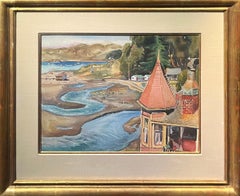
Bodega Bay, c 1906
Bodega Bay, c 1906

Bodega Bay, c 1906

By Jessie Arms Botke

Located in Pasadena, CA

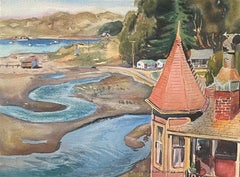
Consigned to the gallery, Pasadena, California; By descent to a private collector, Encino, California; Acquired in 1998 by a private collector, San Carlos, Palo Alto, and Oceanside, California; From William A. Karges Fine Art, Carmel, California Signed "Jesse Arms Botke" on lower right Description This charming watercolor captures a sweeping view of Bodega Bay, California, rendered with the refined draftsmanship and decorative sensibility for which Jessie Arms Botke is renowned. While best known for her gilded avian compositions, Botke’s landscapes are comparatively rare and reveal a more personal side of her artistic vision. Here, the viewer peers over the distinctive red turret of a Victorian home toward the curving estuary, where land meets sea beneath a soft blue sky. Delicate washes and crisp detailing convey the texture of the shoreline, the undulating water, and the surrounding structures, evoking the calm yet lively spirit of a coastal fishing village in the early 20th century. The warm terracotta tones of the foreground architecture contrast beautifully with the cool blues of the water and the distant hills, creating a balanced, harmonious scene. Although no journal entry or record confirms a specific trip to Bodega Bay, Botke may have painted this work, circa 1906, during the period when she was offered a round-trip passage from the Atchison, Topeka & Santa Fe Railway to travel from Chicago to Arizona and California in exchange for paintings depicting scenes of the West. The style and vantage point suggest direct observation, making it likely that she visited the town and painted the scene en plein air. With its architectural detail, vibrant palette, and compositional harmony, this work stands as a significant example of Botke’s lesser seen yet highly collectible works on paper. Jessie Arms Botke is recognized as one of the most important women artists in the early California art...

Category

Early 1900s Impressionist Jessie Arms Botke Paintings

Materials

Paper, Watercolor
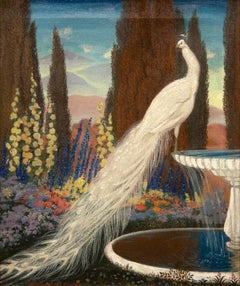
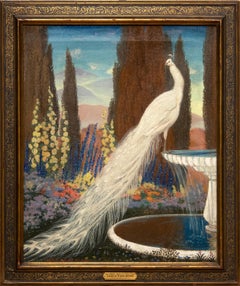
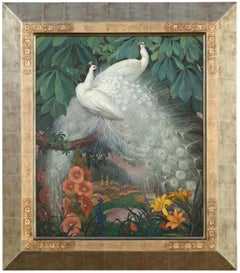
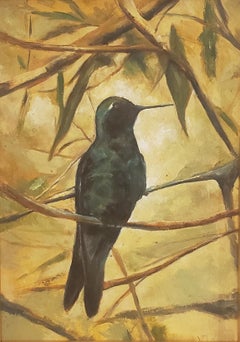
The White Peacock
The White Peacock

The White Peacock

By Jessie Arms Botke

Located in Palm Desert, CA

A painting by Jessie Arms Botke. "The White Peacock" is a wildlife impressionist painting, oil on canvas in a palette of whites, blues, and browns by...

Category

Early 20th Century Impressionist Jessie Arms Botke Paintings

Materials

Canvas, Oil

Related Items
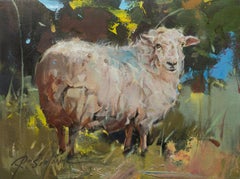
Ray Simonini, "Meryl" 12x16 Impressionist Sheep Farm Animal Oil Painting

Ray Simonini, "Meryl" 12x16 Impressionist Sheep Farm Animal Oil Painting

By Ray Simonini

Located in Saratoga Springs, NY

This painting by artist Ray Simonini titled "Meryl" is a 12x16 farm animal oil painting on canvas featuring a portrait of a white sheep against a colorful green background. Afternoon...

Category

2010s Impressionist Jessie Arms Botke Paintings

Materials

Canvas, Oil

"Train Station, " Max Kuehne, Industrial City Scene, American Impressionism

"Train Station, " Max Kuehne, Industrial City Scene, American Impressionism

By Max Kuehne

Located in New York, NY

Max Kuehne (1880 - 1968) Train Station, circa 1910 Watercolor on paper 8 1/4 x 10 1/4 inches Signed lower right Provenance: Private Collection, Illinois Max Kuehne was born in Halle, Germany on November 7, 1880. During his adolescence the family immigrated to America and settled in Flushing, New York. As a young man, Max was active in rowing events, bicycle racing, swimming and sailing. After experimenting with various occupations, Kuehne decided to study art, which led him to William Merritt Chase's famous school in New York; he was trained by Chase himself, then by Kenneth Hayes Miller. Chase was at the peak of his career, and his portraits were especially in demand. Kuehne would have profited from Chase's invaluable lessons in technique, as well as his inspirational personality. Miller, only four years older than Kuehne, was another of the many artists to benefit from Chase's teachings. Even though Miller still would have been under the spell of Chase upon Kuehne's arrival, he was already experimenting with an aestheticism that went beyond Chase's realism and virtuosity of the brush. Later Miller developed a style dependent upon volumetric figures that recall Italian Renaissance prototypes. Kuehne moved from Miller to Robert Henri in 1909. Rockwell Kent, who also studied under Chase, Miller, and Henri, expressed what he felt were their respective contributions: "As Chase had taught us to use our eyes, and Henri to enlist our hearts, Miller called on us to use our heads." (Rockwell Kent, It's Me O Lord: The Autobiography of Rockwell Kent. New York: Dodd, Mead and Co., 1955, p. 83). Henri prompted Kuehne to search out the unvarnished realities of urban living; a notable portion of Henri's stylistic formula was incorporated into his work. Having received such a thorough foundation in art, Kuehne spent a year in Europe's major art museums to study techniques of the old masters. His son Richard named Ernest Lawson as one of Max Kuehne's European traveling companions. In 1911 Kuehne moved to New York where he maintained a studio and painted everyday scenes around him, using the rather Manet-like, dark palette of Henri. A trip to Gloucester during the following summer engendered a brighter palette. In the words of Gallatin (1924, p. 60), during that summer Kuehne "executed some of his most successful pictures, paintings full of sunlight . . . revealing the fact that he was becoming a colorist of considerable distinction." Kuehne was away in England the year of the Armory Show (1913), where he worked on powerful, painterly seascapes on the rocky shores of Cornwall. Possibly inspired by Henri - who had discovered Madrid in 1900 then took classes there in 1906, 1908 and 1912 - Kuehne visited Spain in 1914; in all, he would spend three years there, maintaining a studio in Granada. He developed his own impressionism and a greater simplicity while in Spain, under the influence of the brilliant Mediterranean light. George Bellows convinced Kuehne to spend the summer of 1919 in Rockport, Maine (near Camden). The influence of Bellows was more than casual; he would have intensified Kuehne's commitment to paint life "in the raw" around him. After another brief trip to Spain in 1920, Kuehne went to the other Rockport (Cape Ann, Massachusetts) where he was accepted as a member of the vigorous art colony, spearheaded by Aldro T. Hibbard. Rockport's picturesque ambiance fulfilled the needs of an artist-sailor: as a writer in the Gloucester Daily Times explained, "Max Kuehne came to Rockport to paint, but he stayed to sail." The 1920s was a boom decade for Cape Ann, as it was for the rest of the nation. Kuehne's studio in Rockport was formerly occupied by Jonas Lie. Kuehne spent the summer of 1923 in Paris, where in July, André Breton started a brawl as the curtain went up on a play by his rival Tristan Tzara; the event signified the demise of the Dada movement. Kuehne could not relate to this avant-garde art but was apparently influenced by more traditional painters — the Fauves, Nabis, and painters such as Bonnard. Gallatin perceived a looser handling and more brilliant color in the pictures Kuehne brought back to the States in the fall. In 1926, Kuehne won the First Honorable Mention at the Carnegie Institute, and he re-exhibited there, for example, in 1937 (Before the Wind). Besides painting, Kuehne did sculpture, decorative screens, and furniture work with carved and gilded molding. In addition, he designed and carved his own frames, and John Taylor Adams encouraged Kuehne to execute etchings. Through his talents in all these media he was able to survive the Depression, and during the 1940s and 1950s these activities almost eclipsed his easel painting. In later years, Kuehne's landscapes and still-lifes show the influence of Cézanne and Bonnard, and his style changed radically. Max Kuehne died in 1968. He exhibited his work at the National Academy of Design, the Art Institute of Chicago, the Carnegie Institute in Pittsburgh, the Memorial Art Gallery of the University of Rochester, and in various New York City galleries. Kuehne's works are in the following public collections: the Detroit Institute of Arts (Marine Headland), the Whitney Museum (Diamond Hill...

Category

1910s American Impressionist Jessie Arms Botke Paintings

Materials

Paper, Watercolor
"Nogent-le-Roi" Frank Myers Boggs, Atmospheric French Urban Landscape

"Nogent-le-Roi" Frank Myers Boggs, Atmospheric French Urban Landscape

By Frank Myers Boggs

Located in New York, NY

Frank Myers Boggs Nogent-le-Roi Signed and titled lower left Graphite and watercolor on paper 13 1/2 x 10 1/4 inches The Impressionist Frank Myers Boggs spent his formative and mat...

Category

Early 1900s Impressionist Jessie Arms Botke Paintings

Materials

Paper, Watercolor
Antique American Vermont Landscape Framed Cow Grazing Barn Scene Oil Painting

Antique American Vermont Landscape Framed Cow Grazing Barn Scene Oil Painting

Located in Buffalo, NY

Vintage American modernist abstract oil painting. Oil on canvas. Framed. Signed. Measuring: 30 by 35 inches overall, and 25 by 30 painting alone.. In excellent original condition. H...

Category

1910s Impressionist Jessie Arms Botke Paintings

Materials

Canvas, Oil

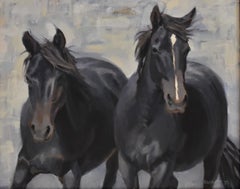
Antique American Framed Impressionist Horse Portrait Equestrian Oil Painting

Antique American Framed Impressionist Horse Portrait Equestrian Oil Painting

Located in Buffalo, NY

Antique American impressionist horse portrait painting. Oil on canvas. Framed. Unsigned. Measuring: 33 by 30 inches overall, and 26 by 24 painting alone. In excellent original con...

Category

1890s Impressionist Jessie Arms Botke Paintings

Materials

Canvas, Oil

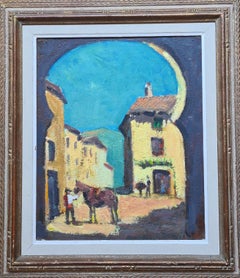
Rue Royale
Rue Royale

Pierre Eugène MontezinRue Royale

$132,451

H 27 in W 36 in D 2 in

Rue Royale

By Pierre Eugène Montezin

Located in Belgravia, London, London

Gouache on paper, Paper size: 16 x 25.5 inches Framed size: 27 x 36 inches Signed lower right

Category

20th Century Impressionist Jessie Arms Botke Paintings

Materials

Paper, Gouache

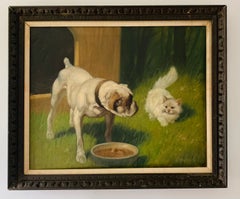
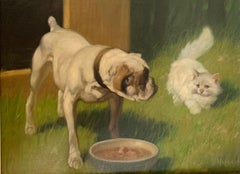
Vintage American Impressionist Dog Portrait Landscape Signed Framed Oil Painting

Vintage American Impressionist Dog Portrait Landscape Signed Framed Oil Painting

Located in Buffalo, NY

Vintage American impressionist landscape with dog portrait oil painting. Oil on canvas. Signed verso. Framed. Provenance from a Sag Harbor, NY collection. Measuring: 31 by 37 inches ...

Category

1950s Impressionist Jessie Arms Botke Paintings

Materials

Oil, Canvas

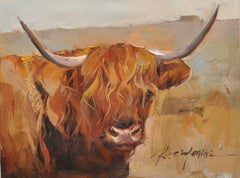
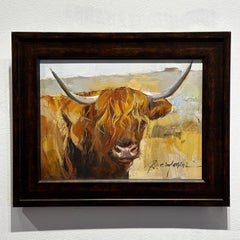
Ray Simonini, "Dante" 24x24 Long Horn Bull Oil Painting on Canvas

Ray Simonini, "Dante" 24x24 Long Horn Bull Oil Painting on Canvas

By Ray Simonini

Located in Saratoga Springs, NY

This painting by artist Ray Simonini titled "Dante" is a 24x24 oil painting on canvas featuring a portrait of a long horned bull standing facing forward. Soft light from an afternoon sun glows...

Category

2010s Impressionist Jessie Arms Botke Paintings

Materials

Canvas, Oil

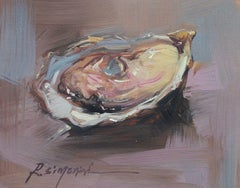
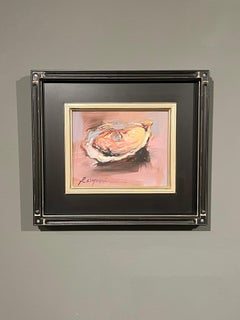
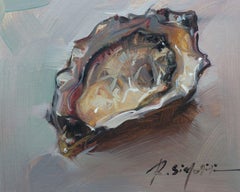
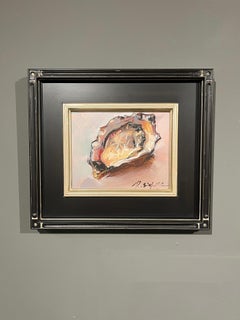
Ray Simonini "Taste the Ocean" 8x10 Oyster Shell Impressionist Oil Painting

Ray Simonini "Taste the Ocean" 8x10 Oyster Shell Impressionist Oil Painting

By Ray Simonini

Located in Saratoga Springs, NY

This painting by artist Ray Simonini titled "Taste the Ocean" is a 8x10 nautical oil painting on canvas featuring a close-up of an oyster shell against a calm soft grey and beige bac...

Category

2010s Impressionist Jessie Arms Botke Paintings

Materials

Canvas, Oil

Le Quai de Tournelle - Impressionist Cityscape Gouache by Eugene Galien-Laloue

Le Quai de Tournelle - Impressionist Cityscape Gouache by Eugene Galien-Laloue

By Eugene Galien-Laloue

Located in Marlow, Buckinghamshire

Signed impressionist gouache on paper figures in landscape circa 1910 by French painter Eugene Galien-Laloue. The piece depicts a street scene at the Quai de la Tournelle...

Category

1910s Impressionist Jessie Arms Botke Paintings

Materials

Gouache, Paper

Previously Available Items
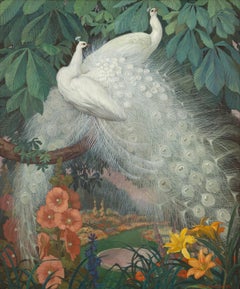
Two White Peacocks
Two White Peacocks

Two White Peacocks

By Jessie Arms Botke

Located in Palm Desert, CA

"Two White Peacocks" is an Impressionist animal oil on board painting by Jessie Arms Botke in c. 1925. The artwork is 29 1/4 x 24 1/2 inches and 39 3/8 x 34 1/2 x 2 inches with the f...

Category

Early 20th Century Impressionist Jessie Arms Botke Paintings

Materials

Oil

Jessie Arms Botke paintings for sale on 1stDibs.

Find a wide variety of authentic Jessie Arms Botke paintings available for sale on 1stDibs. You can also browse by medium to find art by Jessie Arms Botke in canvas, fabric, oil paint and more. Much of the original work by this artist or collective was created during the 20th century and is mostly associated with the Impressionist style. Not every interior allows for large Jessie Arms Botke paintings, so small editions measuring 21 inches across are available. Customers who are interested in this artist might also find the work of Francis Luis Mora, Guy Carleton Wiggins, and Everett Shinn. Jessie Arms Botke paintings prices can differ depending upon medium, time period and other attributes. On 1stDibs, the price for these items starts at $60,000 and tops out at $60,000, while the average work can sell for $60,000.