Joseph Hirsch Art
American, 1910-1981
Joseph Hirsch was a member of the American Academy-Institute of Arts and Letters and a well-known realistic artist who came to national attention as a muralist for the Federal Works Progress Administration in the 1930's.
Of his own work, Mr. Hirsch wrote: ''I believe that some day the fabric of art will be threaded with morality, enabling us to distinguish evil from good. Today, this is unthinkable, in the delightful art world where, excepting censorship, anything goes. But anything goes does not accord with the more discriminating ethics of our civilized code which rules out what is socially destructive.''
Mr. Hirsch is represented in the Metropolitan Museum of Art, the Museum of Modern Art and the Whitney in New York; the National Gallery, the Corcoran and the Hirshhorn in Washington; the Boston Museum of Fine Arts, and in many major collections in the United States.
Joseph Hirsch was born on April 25, 1910 in Philadelphia, Pennsylvania. Hirsch studied at the Philadelphia Museum School, with Henry Hensche in Provincetown, Mass., and with George Luks in New York. In addition to formal study,
He participated in the Works Project Administration in the easel painting division, with occasional work in the mural division, where he painted murals in the Amalgamated Clothing Workers Building and the Municipal Court. During World War II, Joseph Hirsch took part in the war effort, as an artist war correspondent, recording significant battles and events.
He taught at the Chicago Art Institute, the American Art School, University of Utah, and had a significant tenure at the Art Students League in New York. He also won many awards, among them were a fellowship at the American Academy in Rome, the Walter Lippincott Prize, First Prize at the New York World's Fair (1939), the Guggenheim Foundation Fellowship (1942, 1943), and the Fulbright Fellowship (1949). In 1954 he was elected into the National Academy of Design as an Associate member and became a full Academician in 1958
Early in his career, Hirsch was introduced to the movement of Social Realism through George Luks, who was one of "The Eight". This group of painters, at the beginning of the century, chose to depict ordinary and everyday scenes. From this movement stemmed the Social Realism genre of the 1920s and 1930s. Social commentary was the backbone for the majority of Joseph Hirsch's paintings.
During World War II, Mr. Hirsch went to the South Pacific, North Africa and Italy as an artist-correspondent for the Navy, and his paintings and drawings are in the Museum of Military History. . In Major Collections. Hirsch's work is represented in the Metropolitan Museum of Art, the Museum of Modern Art and the Whitney in New York; the National Gallery, the Corcoran and the Hirshhorn in Washington; the Boston Museum of Fine Arts, and other collections in the USA. He was elected to membership in the National Institute of Arts and Letters in 1967. Hirsch died in New York, NY on September 21, 1981.to
1
22
22
17
7
5
5
3
1
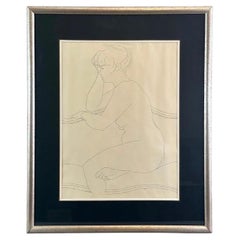
Joseph Hirsch Signed Seated Nude Pen and Ink Drawing
By Joseph Hirsch
Located in Wichita, KS
An original drawing by acclaimed American artist Joseph Hirsch (1910–1981), depicting a seated nude figure rendered in pen and ink on paper. Known for his expressive figurative work ...
Category
Mid-20th Century American Mid-Century Modern Joseph Hirsch Art
Materials
Paper, Wood
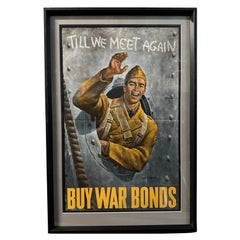
"Till We Meet Again. Buy War Bonds" WWII Poster by Joseph Hirsch, Circa 1942
By Joseph Hirsch
Located in Colorado Springs, CO
Presented is an original WWII poster from 1942, promoting the purchase of War Bonds. The poster depicts a smiling soldier in khaki uniform and cap, as he waves from a ship’s porthole...
Category
1940s American Mid-Century Modern Vintage Joseph Hirsch Art
Materials
Paper
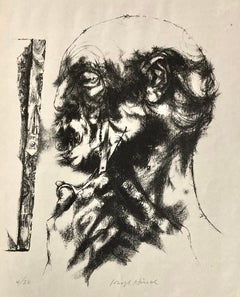
Joseph Hirsch, (Cutting the Beard)
By Joseph Hirsch
Located in New York, NY
A man with lots of whiskers is trimming his facial hair while looking in a mirror. The male figure and his beard are carefully drawn but Hirsch has cleverly just briefly sketched in ...
Category
Mid-20th Century Ashcan School Joseph Hirsch Art
Materials
Lithograph
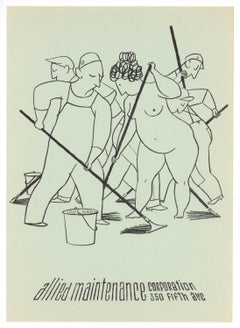
original lithograph
By Joseph Hirsch
Located in Henderson, NV
Medium: original lithograph. This lithograph was printed in 1958 for the "Improvisations" portfolio, published by the Artists Equity Association of New York on the occasion of the 19...
Category
1950s Joseph Hirsch Art
Materials
Lithograph
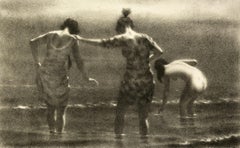
September Morn - In Celebration of Pride Month
By Joseph Hirsch
Located in New Orleans, LA
Stone and Press Gallery is excited to offer several works in celebration of the LGBTQ community.
Three women strolling on a beach. This impression is one of the rare impressions p...
Category
1960s American Modern Joseph Hirsch Art
Materials
Lithograph
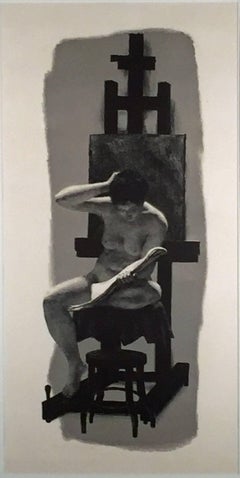
MODEL AND EASEL
By Joseph Hirsch
Located in Portland, ME
Hirsch, Joseph. MODEL AND EASEL. Lithograph, 1952. Cole 25.
21 3/4 x 8 1/2 in.
Edition of 50 on Arches paper, printed by Gaston Dorfinant, Paris, using two inks.
Signed in pencil...
Category
Mid-20th Century Joseph Hirsch Art
Materials
Lithograph
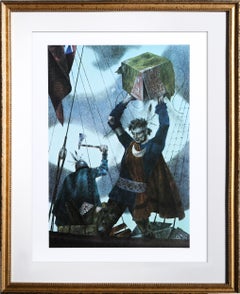
The Boston Tea Party, American Art Lithograph by Joseph Hirsch
By Joseph Hirsch
Located in Long Island City, NY
The Boston Tea Party by Joseph Hirsch, American (1901–1981)
Date: 1975
Offset Lithograph (unsigned as issued)
Size: 17 x 14 in. (43.18 x 35.56 cm)
Frame Size: 20 x 17 inches
An orig...
Category
1970s American Modern Joseph Hirsch Art
Materials
Lithograph
$360 Sale Price
20% Off
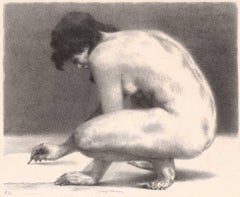
Nude drawing (Nude on her haunches draws ) - In Celebration of Pride Month
By Joseph Hirsch
Located in New Orleans, LA
Stone and Press Gallery is excited to offer several works in celebration of the LGBTQ community.
A nude woman squats on her haunches as she draws an image on a sheet of paper. Jos...
Category
1960s American Modern Joseph Hirsch Art
Materials
Lithograph
Painted Man, American Realist Lithograph by Joseph Hirsch
By Joseph Hirsch
Located in Long Island City, NY
Joseph Hirsch, American (1901 - 1981) - Painted Man, Year: 1963, Medium: Lithograph, signed in pencil, Edition: 250, Image Size: 9.25 x 9 inches, Size: 14 x 13 in. (35.56 x 33.0...
Category
1960s American Realist Joseph Hirsch Art
Materials
Lithograph
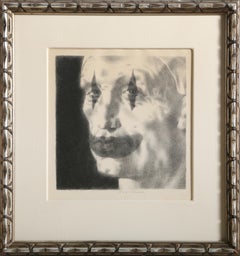
Joseph Hirsch, Beard
By Joseph Hirsch
Located in New York, NY
Joseph Hirsch had such empathy for his subjects! But he was also an amazingly skilled lithographer who could get extremely delicate details out of the stone. Signed and numbered in p...
Category
Mid-20th Century American Modern Joseph Hirsch Art
Materials
Lithograph
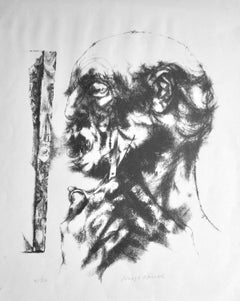
Joseph Hirsch "September Morn" Rare Variant Signed / Numbered, circa 1960s
By Joseph Hirsch
Located in San Francisco, CA
Joseph Hirsch (1910-1981) "September Morn" rare variant signed / numbered, circa 1960s
"September Morn" is most recognized in its color variant. This is the much rarer non color var...
Category
Mid-20th Century Other Art Style Joseph Hirsch Art
Materials
Lithograph
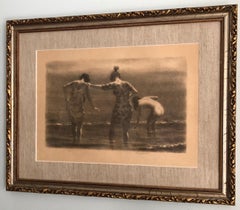
Resting Girl, Modern Pastel on Paper by Joseph Hirsch
By Joseph Hirsch
Located in Long Island City, NY
Joseph Hirsch, American (1901 - 1981) - Resting Girl, Year: circa 1960, Medium: Pastel on Paper, signed in pencil top left, Size: 12.25 x 19.75 in. (31.12 x 50.17 cm), Frame Siz...
Category
1960s Modern Joseph Hirsch Art
Materials
Pastel
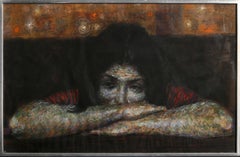
The Crucifixion, Realist Lithograph by Joseph Hirsch
By Joseph Hirsch
Located in Long Island City, NY
Artist: Joseph Hirsch, American (1901 - 1981)
Title: The Crucifixion
Year: circa 1979
Medium: Lithograph, Signed and Numbered in Pencil
Edition: 100
Si...
Category
1960s American Realist Joseph Hirsch Art
Materials
Lithograph
Man with Mask
By Joseph Hirsch
Located in Fairlawn, OH
Man with Mask
Lithograph, 1969
Signed in pencil by the artist
95/100
Printed by Lucien Detruit, Paris
Published by AAA, New York
Reference: AAA Index No. 60
Condition: Mint
Image siz...
Category
1960s American Modern Joseph Hirsch Art
Materials
Lithograph
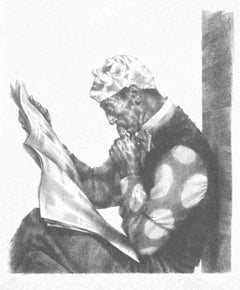
Joseph Hirsch Original Lithograph, Pencil Signed, 1961, "Coffee"
By Joseph Hirsch
Located in Phoenix, AZ
Joseph Hirsch (American, 1910-1981) original lithograph, pencil signed.
Title: Coffee. Edition size: 250. Catalog raisonne reference: Cole 38.
Image size: 13"H x 10"W.
Published by A...
Category
Mid-20th Century Joseph Hirsch Art
Materials
Paper
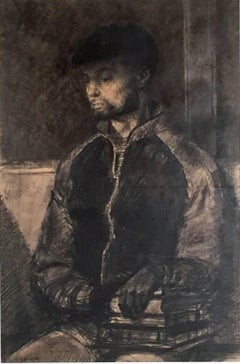
STUDENT
By Joseph Hirsch
Located in Portland, ME
Hirsch, Joseph (American, 1910-1980). STUDENT. Charcoal drawing on paper, not dated, but before 1980. Signed lower left, "J Hirsch." 17 1/2 x 11 1/4 inches (framed to 25 x 19 inches)...
Category
1970s American Realist Joseph Hirsch Art
Materials
Charcoal

$1,200
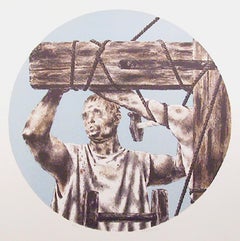
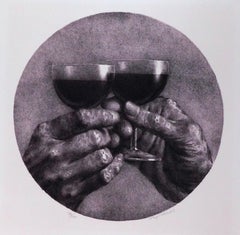
Joseph Hirsch Original Lithograph Signed in Pencil - The Toast
By Joseph Hirsch
Located in Phoenix, AZ
Joseph Hirsch (1910-1981) Philadelphia/New York artist - Pencil signed lithograph
Title: The Toast. Signed lower right and numbered lower left 79 of 100.
The tondo work is 11 1/2 inc...
Category
1970s Joseph Hirsch Art
Materials
Paper, Lithograph
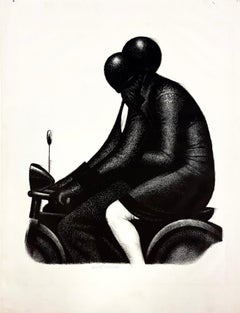
MOTO
By Joseph Hirsch
Located in Portland, ME
Hirsch, Joseph. MOTO. Cole 20. Lithograph, 1950. 18 1/2 x 16 1/4 inches; 470 x 413 mm. Edition of 75, signed in pencil. Printed on Arches paper by Gaston Dorfinant, Paris. A fine imp...
Category
1950s Joseph Hirsch Art
Materials
Lithograph
$2,500
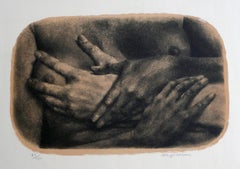
UNTITLED (WOMAN WITH HANDS ACROSS BREASTS)
By Joseph Hirsch
Located in Portland, ME
Hirsch, Joseph. UNTITLED (WOMAN WITH HANDS ACROSS BREASTS). Lithograph in two colors, not dated, but between 1970/80. Not in Cole. Edition of 100. Signed and numbered 85/100 in penci...
Category
1970s Joseph Hirsch Art
Materials
Lithograph
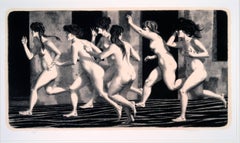
RUNNING WOMEN.
By Joseph Hirsch
Located in Portland, ME
Hirsch, Joseph. RUNNING WOMEN. Lithograph 1973. Not in Cole. 16 x 29 1/2 in. An Artist's Proof aside from the edition of 95, signed in pencil, inscribed ...
Category
1970s Joseph Hirsch Art
Materials
Lithograph
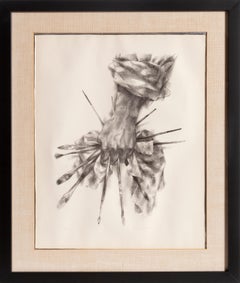
Artist's Hand, Framed Realist Lithograph by Joseph Hirsch
By Joseph Hirsch
Located in Long Island City, NY
Artist: Joseph Hirsch, American (1901 - 1981)
Title: Artist's Hand (Cole 51)
Year: 1966
Medium: Lithograph, signed and numbered in pencil
Edition: 30/200
Image Size: 19 x 15 inches
F...
Category
1960s American Realist Joseph Hirsch Art
Materials
Lithograph
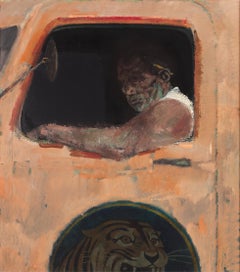
Blue Collar Gritty Truck Driver with Tiger - Color field meets Social Realism
By Joseph Hirsch
Located in Miami, FL
Gritty working class truck driver with tiger painting on truck door, is rendered in a flat and quick style with rapid brushstrokes defining the trucker. The tiger is painted in a t...
Category
1950s Color-Field Joseph Hirsch Art
Materials
Canvas, Oil
Related Items
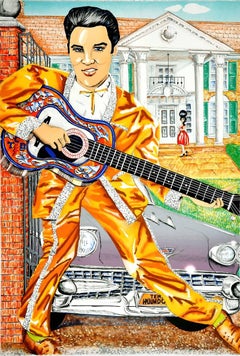
Elvis
By Red Grooms
Located in Lyons, CO
Color lithograph, Edition 75
Red Grooms and Master printer Bud Shark began their many print collaborations in 1981 with "Mountaintime", followed in 1982 by their first three-dimensional lithograph, "Ruckus...
Category
1990s Contemporary Joseph Hirsch Art
Materials
Lithograph
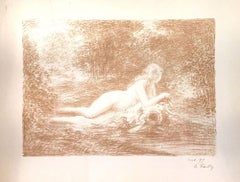
La Source dans les Bois - Lithograph by Henri Fantin-Latour - 1898
By Henri Fantin-Latour
Located in Roma, IT
Autographie (Calcography on paper transfer and Lithograph).
Beautiful Proof in sanguine on China paper.
In Excellent conditions and full margins.
Ref. Cat. Hédiart-Mason n.139; Jo...
Category
1890s Modern Joseph Hirsch Art
Materials
Lithograph
$1,146
H 11.82 in W 16.62 in D 0.04 in
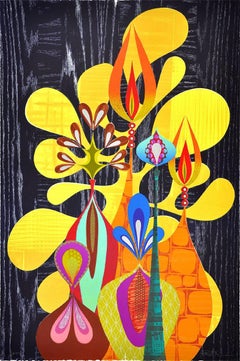
Pyzinerol
By Rex Ray
Located in Lyons, CO
Color lithograph, Edition 30
In 2010, Ray made his first lithographs at Shark’s Ink., Pyzinerol and Pyzinerol II. Ambitious prints with 18 colors from 15...
Category
21st Century and Contemporary Contemporary Joseph Hirsch Art
Materials
Lithograph
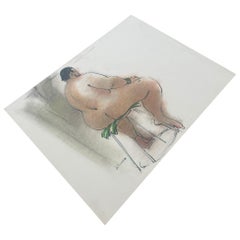
Vintage Signed Male Seated Nude Portrait
Located in Seattle, WA
Vintage Nude Portrait Study of a Sitting Man.Appears to be Pastel on Paper.Signed JP Gaston as Pictured. Wear and Tear Consistent with Age.
Dimensions. 26 W ; 20 H
Category
1970s Mid-Century Modern Vintage Joseph Hirsch Art
Materials
Paper
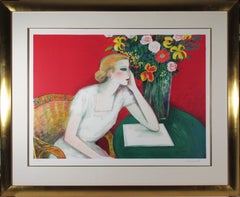
"La Conversation" Large original lithograph
By Jean-Pierre Cassigneul
Located in San Francisco, CA
This art work titled "La Conversation" 1991 is an original color lithograph on wove paper by French artist, Jean Pierre Cassigneul, born 1935. It is h...
Category
Late 20th Century Post-Impressionist Joseph Hirsch Art
Materials
Lithograph
$4,500
H 37.15 in W 44.5 in D 1 in
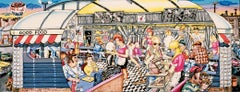
Red Bud Diner
By Red Grooms
Located in Lyons, CO
Color lithograph, Edition 75
Red Grooms and Master printer Bud Shark began their many print collaborations in 1981 with "Mountaintime", followed in 1982 by their first three-dimen...
Category
1990s Contemporary Joseph Hirsch Art
Materials
Lithograph
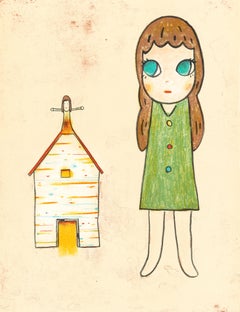
Untitled (2005), Lithograph by Yoshitomo Nara and Hiroshi Sugito Edition of 100
By Yoshitomo Nara
Located in Hong Kong, HK
Yoshitomo Nara and Hiroshi Sugito
Untitled (2005), Edition 26/100.
Lithograph in colours on wove paper.
Image: 29.6 x 22.8 cm.
Sheet: 42.7 x 33 cm.
Framed: 47.6 x 37.7 x 2.4 cm.
Hand...
Category
Early 2000s Contemporary Joseph Hirsch Art
Materials
Lithograph
$16,000
H 16.82 in W 13 in
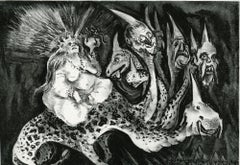
The Whore of Babylon
By Adolf Dehn
Located in Middletown, NY
A scarce impression by Dehn, the spirit of sedultive culture personified.
Lithograph on white wove paper with deckle edges, 13 1/2 x 17 1/8 inches (343 x 435 mm), full margins. Sign...
Category
Mid-20th Century American Modern Joseph Hirsch Art
Materials
Handmade Paper, Lithograph
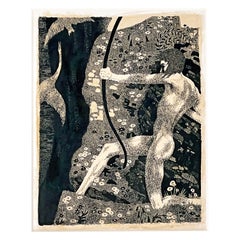
"Nude Archer, " Bold Ink Drawing with Male Nude, Influenced by Klimt
By Erwin Stolz
Located in Philadelphia, PA
Bold and atmospheric, this ink drawing depicts a kneeling nude male figure, his bow arched and his arrow ready to spring forward, surrounded by a flower-bedecked landscape that clearly draws its inspiration from Gustav Klimt's work. To the left, silhouetted against the dark background, a pair of stylized geese -- evidently his target -- are shown flying upward. The sun which dapples the figure of the archer highlights his lithe musculature, and the artist -- Erwin Stolz -- gives the same close attention to the landscape behind. Stolz was well connected to the artistic elite of Vienna, and was friends with Alexander Rothaug...
Category
1920s Art Deco Vintage Joseph Hirsch Art
Materials
Paper
$3,400
H 14.75 in W 13 in D 0.5 in
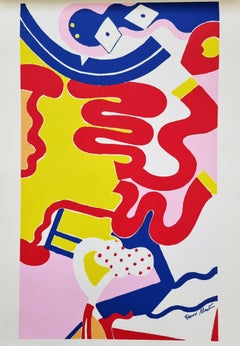
Untitled
By Knox Martin
Located in Kansas City, MO
Knox Martin
Untitled
Offset lithograph
Year: 1977
Size: 21 x 14 in
Edition: 1,500
Signed in the plate
Publisher: HMK Fine Arts, New York
COA provided
Ref.: 924802-924
Knox Martin (born February 12, 1923) is an American painter, sculptor and muralist.
Born in Barranquilla, Colombia, he studied at the Art Students League of New York from 1946 till 1950. He is one of the leading members of the New York School of artists and writers. He lives and works in New York City.
Collections:
Martin's work is included in the collections of Whitney Museum of American Art,[15] Museum of Modern Art,[16] Hirshhorn Museum and Sculpture Garden,[17] Art Students League of New York, Brooklyn Museum of Art, National Academy of Design,[18] National Arts Club, New York University, Addison Gallery of American Art, Albright-Knox Art Gallery, Art Institute of Chicago, Art Museum of Southeast Texas, Baltimore Museum of Art, Berkeley Art Museum, Blanton Museum of Art, Boca Raton Museum of Art, Chrysler Museum of Art, Corcoran Gallery of Art, Dallas Museum of Art, Davis Museum at Wellesley College, Denver Art Museum, Hand Art Center, Herbert F. Johnson Museum of Art, Heckscher Museum of Art, Hofstra University Museum, Indianapolis Museum of Art,[19] Ithaca Museum, Lowe Art Museum, George Washington University, Montclair Art Museum, Minneapolis Institute of Arts,[20] Newark Museum, Oklahoma City Museum of Art, Portland Art Museum, Provincetown Art Association and Museum,[21] Reading Public Museum, Southern Alleghenies Museum of Art, Springfield Art Museum, The Museum of Fine Arts, Houston,[22] Toledo Museum of Art, University of Kentucky Art...
Category
1970s Modern Joseph Hirsch Art
Materials
Lithograph
'Eyes for the Night' — Mid-century American Surrealism
By Benton Murdoch Spruance
Located in Myrtle Beach, SC
Benton Spruance, 'Eyes for the Night', lithograph, 1947, edition 35, Fine and Looney 260. Signed, dated, titled, and annotated 'Ed 35' in pencil. A fine impression, on heavy, cream ...
Category
1940s American Modern Joseph Hirsch Art
Materials
Lithograph
$720 Sale Price
20% Off
H 18.88 in W 12.88 in
Fire Opal
By Robert Kushner
Located in Lyons, CO
Color lithograph, Edition 30
Kushner has collaborated with Master printer Bud Shark since 1982 on various monotypes and lithographs. These exuberant, sensuous prints often include...
Category
21st Century and Contemporary Contemporary Joseph Hirsch Art
Materials
Lithograph
Previously Available Items
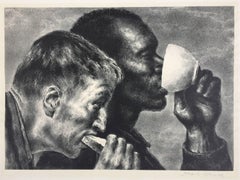
BANQUET
By Joseph Hirsch
Located in Santa Monica, CA
JOSEPH HIRSCH (1919 - 1981)
BANQUET 1945 (Cole 11)
Lithograph, 9 3/4 x 13 3/4 inches. Signed in pencil.. Edition 250 as published by Associated American Artists. Full margins with...
Category
1940s American Realist Joseph Hirsch Art
Materials
Lithograph
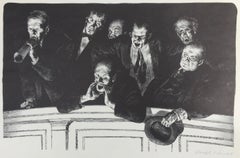
THE HECKLERS
By Joseph Hirsch
Located in Santa Monica, CA
JOSEPH HIRSCH (American 1910 - 1981)
THE HECKLERS 1943-4
Lithograph as published by Associated American Artists (AAA). Edition c. 250. 9 3/4 x 15 1/4 Inches. Signed in pencil. Full ...
Category
1940s Realist Joseph Hirsch Art
Materials
Lithograph
20th century lithograph black and white stylistic figurative print signed
By Joseph Hirsch
Located in Milwaukee, WI
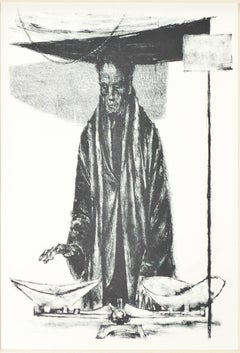
"Man with Scales" is an original lithograph by Joseph Hirsch. The artist signed the piece in pencil lower left. This piece depicts a man in a black robe examining the balance of the ...
Category
1950s Surrealist Joseph Hirsch Art
Materials
Lithograph
Hammock (A nude couple frolics in a hammock on a lazy summer day)
By Joseph Hirsch
Located in New Orleans, LA
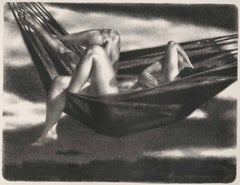
A couple enjoys a relaxing day of play in a hammock on a warm summer day. It must be warm as this couple cavorts sans clothing. Joseph Hirsch created this lithograph as part of a C...
Category
1960s American Modern Joseph Hirsch Art
Materials
Lithograph
Nude drawing
By Joseph Hirsch
Located in New Orleans, LA
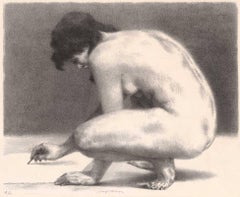
A nude woman squats on her haunches as she draws an image on a sheet of paper. Joseph Hirsch created this lithograph in 1963 in an edition of 50. It was printed by Lucien Dutruit i...
Category
1960s American Modern Joseph Hirsch Art
Materials
Lithograph
BANQUET
By Joseph Hirsch
Located in Santa Monica, CA
JOSEPH HIRSCH (1919 - 1981)
BANQUET 1945 (Cole 11)
Lithograph, 9 3/4 x 13 3/4 inches. Signed in pencil.. Edition 250 as published by Associated American Artists. Full margins with...
Category
1940s American Realist Joseph Hirsch Art
Materials
Lithograph
LUNCH HOUR
By Joseph Hirsch
Located in Santa Monica, CA
JOSEPH HIRSCH (1910 - 1981)
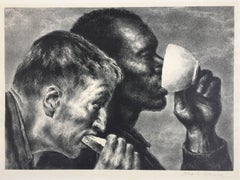
LUNCH HOUR, 1942 (Cole 5)
Lithograph, signed in pencil. Edition 250 as published by Associated
American A...
Category
1940s American Realist Joseph Hirsch Art
Materials
Lithograph
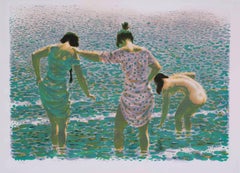
SEPTEMBER MORN
By Joseph Hirsch
Located in Portland, ME
Hirsch, Joseph. SEPTEMBER MORN. Cole 53. Lithograph in six colors, 1966. Edition of 90 printed on Arches paper by Lucien Detruit, Paris. 17 1/2 x 24 3/4...
Category
1960s American Realist Joseph Hirsch Art
Materials
Lithograph
Joseph Hirsch art for sale on 1stDibs.
Find a wide variety of authentic Joseph Hirsch art available for sale on 1stDibs. You can also browse by medium to find art by Joseph Hirsch in lithograph, archival paper, canvas and more. Much of the original work by this artist or collective was created during the 20th century and is mostly associated with the modern style. Not every interior allows for large Joseph Hirsch art, so small editions measuring 11 inches across are available. Customers who are interested in this artist might also find the work of Kerr Eby, Isabel Bishop, and Carlo Carrà. Joseph Hirsch art prices can differ depending upon medium, time period and other attributes. On 1stDibs, the price for these items starts at $575 and tops out at $12,500, while the average work can sell for $975.