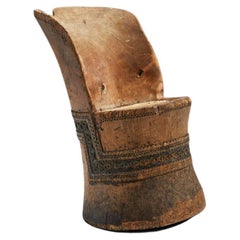
This “kubbstol” or “kubbestol” is a traditional Scandinavian chair made from a log. The kubbestol was quite common in some districts of Norway from about 1750 to 1960, where it was usually made from logs with significant girth and three to four feet in length.
The tree trunk was hollowed out so that the base (from the seat down) would be cylindrical while the back of the chair continues upward from the seat in a curved shield that makes the chair both snug and comfortable. Most, but not all, kubbestols were decorated with carving, painting, or some combination of the two. This chair has beautiful folk patterns hand carved into it, with visible, raw craftsmanship. Carved and painted decorations would differ from district to district and styles changed over time. While the log is seemingly roughly shaped, this chair is surprisingly comfortable, as functionality has been historically important for Scandinavian furniture makers. The kubbestol was often placed next to the open-hearth fireplace or next to the bed, and it was reserved for the head of the household. Large, impressive farmhouses might have had several richly carved and painted kubbestols as a display of wealth and status.
These days the log chair has become a symbol of Scandinavian roots for many families with ties to Norway, Sweden, or Denmark. The kubbestol is a reminder of our rural heritage and a time when most things in and around the home were made by hand from materials found in nature. Essentially a chair hewn from a tree trunk, this chair is as closely associated with Norway as Peer Gynt...
Category
19th Century Norwegian Brutalist Antique Karl Sorlie Seating