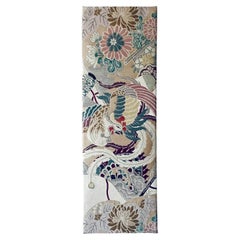
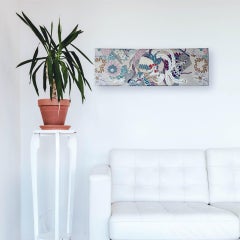
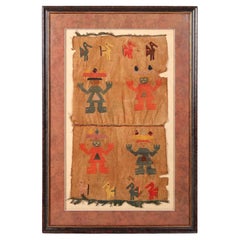
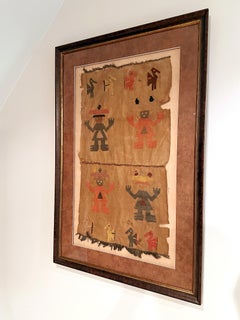
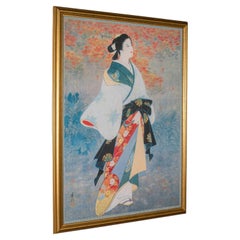
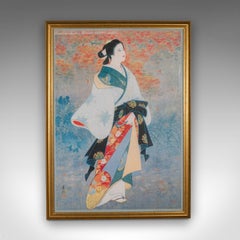
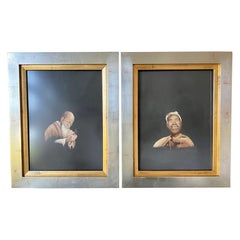
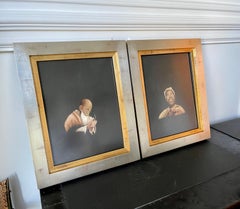
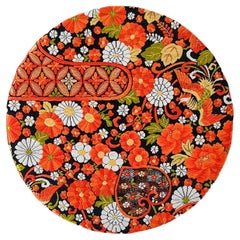
Artistically framed for display in a slight shadow frame with non-reflective pixie glass, these pair of embroidery art panels from Japan are dated circa 1910-1930s, end of Meiji to early Taisho period. This period was the peak of the Japanese oversea expositions, when all things Japonisme took Europe and America by storm and left long-lasting impact on western art and design. The influence, however, was clearly not one-directional; As when Japanese artists, artisans and dealers experienced western art, it in turn inspired and impacted on the aesthetics of the Japanese art made for the western tastes. An interesting crop of art forms quickly emerged with a particular outlook that bridged the east and west, with the fundamental techniques still rooted in Japanese traditions. These rare hyper-realistic embroidered portraits were such an example. They took the essential format of the western portrait that permeated the Victoria and Edwardian Society, but substituted with exotic Japanese subjects and executed in traditional embroidery techniques which had been perfected for centuries by the natives.
The two portraits on offer, one an elder man with long white beards and a pair of round spectacles lighting a pipe, and the other a grinning man with a peasant attire, were both set in black background, stimulating an appearance of Classic western oil painting or perhaps even the photograph. The fine stiches were maneuvered into an impressively hyper-realistic imagery that was far removed from the traditional Japanese embroidery...
Category
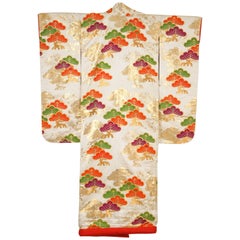
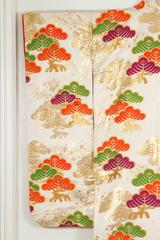
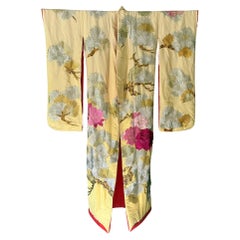
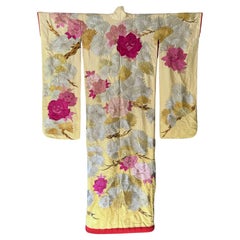
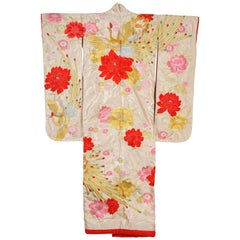
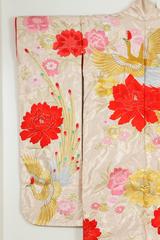
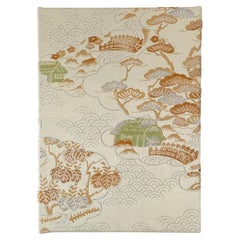
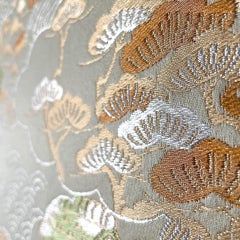
Early 20th Century Japanese Japonisme Kimono ikasu Wall Decorations