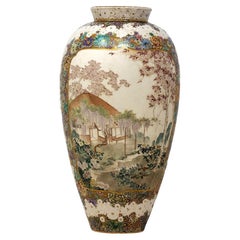
By Kinkozan
Located in Newark, England
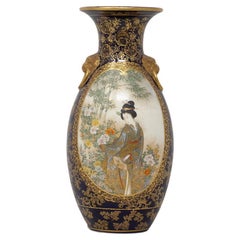
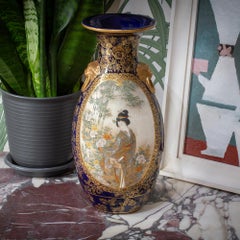
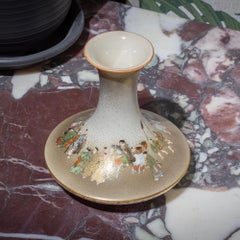
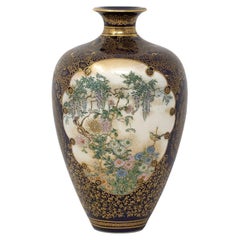
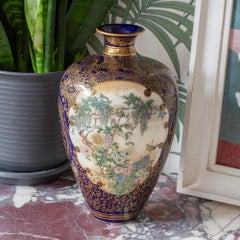
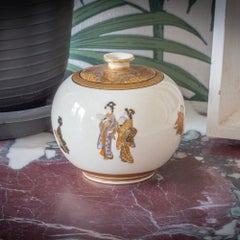
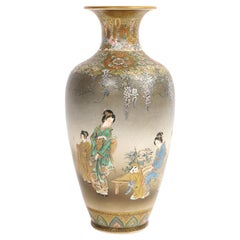
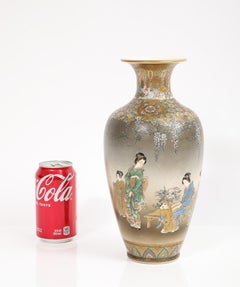
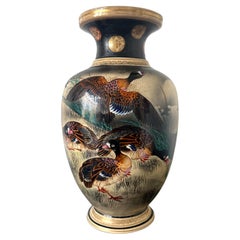
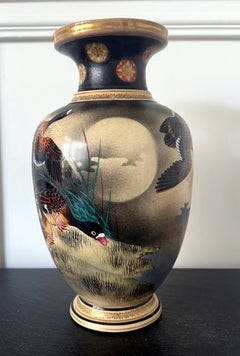
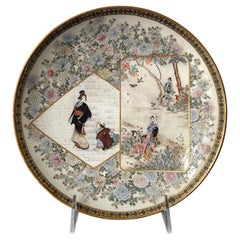
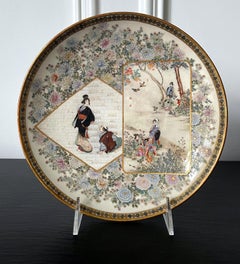
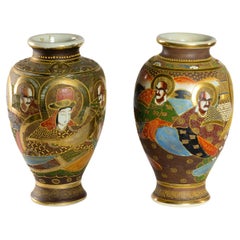
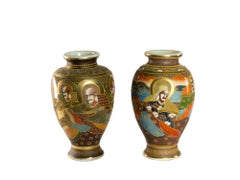
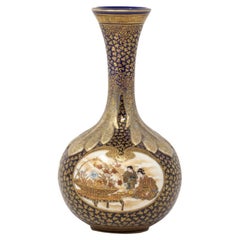
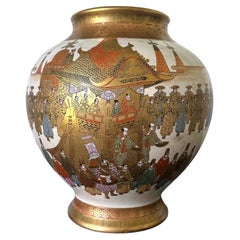
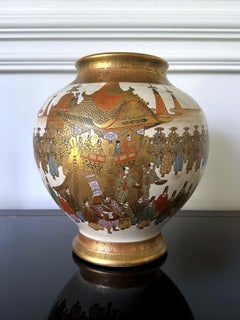
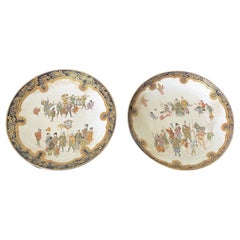
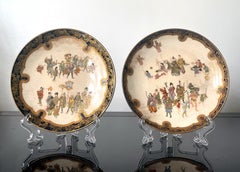
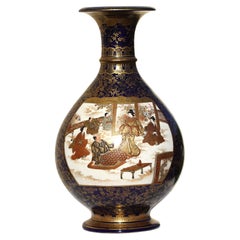
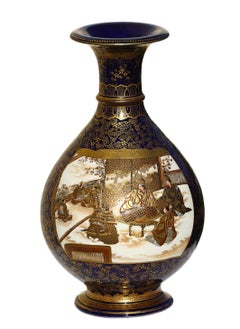
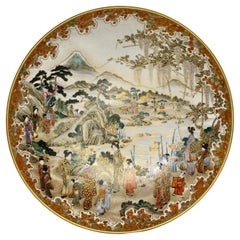
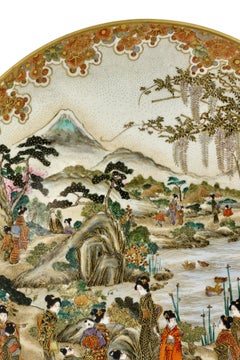
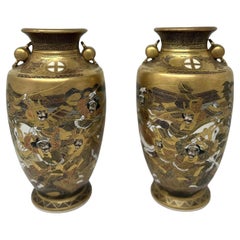
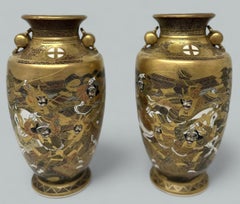
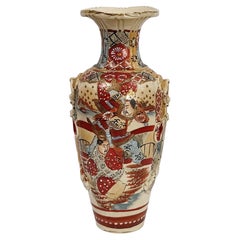
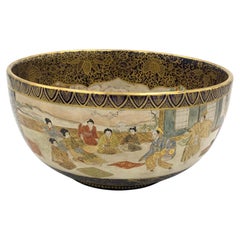
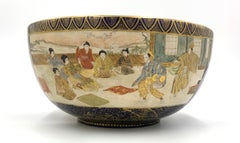
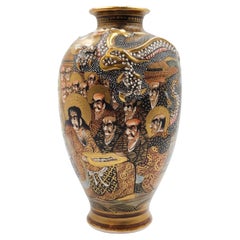
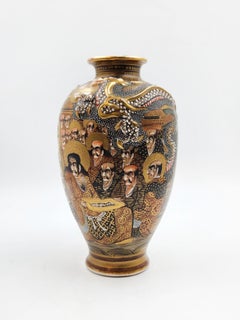
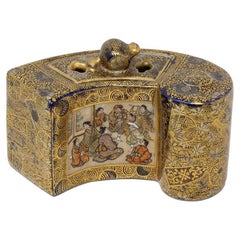
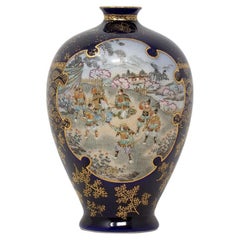
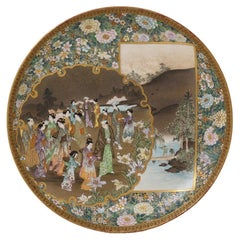
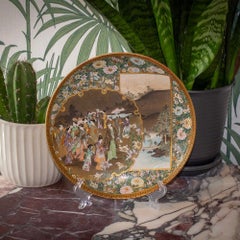
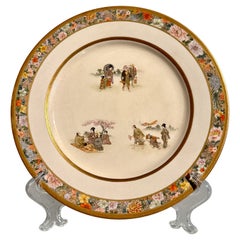
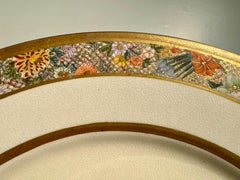
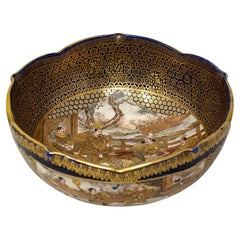
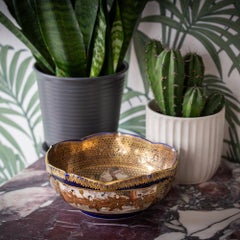
From our Japanese collection, we are delighted to offer this Japanese Meiji period Satsuma Bowl by Kinkozan. The earthenware bowl with pinched rim extensively decorated on both the exterior and interior. The bowl with a cobalt blue base glaze decorated to the borders with gilt shippo-tsunagi (linked-cash) with scattered medallion roundells. Around the exterior two elongated scenes are featured, one with boys playing games in a courtyard with the other featuring seated scholars in full dress both with raised enamel decoration. The interior features a central scene with Samurai warriors in training fully armoured with swords in a courtyard with landscapes scenes to the background. The central scene bordered by further stylised shippo-tsunagi type decoration with a greek key rim border. The bowl signed to the base Kinkozan dating to the Meiji Period (1868-1912) circa 1900.
Shippo-Tsunagi (linked-cash) or seven treasures, is a traditional Japanese geometric pattern that combines four ellipses in a circle. These ellipses repeat outward to then create more circles, symbolising eternal peace and happiness.
Kinkozan the Kinkozan family have been associated with pottery dating back to 1645. They went on to become the largest producer of Satsuma ware by one individual company, from the end of the 19th century until 1927 after which the factory closed. By the 1850s Kobayashi Sobei (1824-84), Kinkozan Sobei...
Category
Early 1900s Japanese Meiji Antique Kinkozan Furniture
MaterialsCeramic, Earthenware, Pottery, Faux Leather