Leo Brooks Art

to
1
Overall Width
to
Overall Height
to
1
1
1
1
1
1
1
10,582
2,818
2,500
1,410
1
1
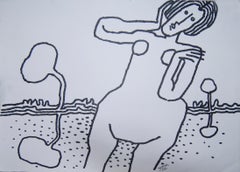
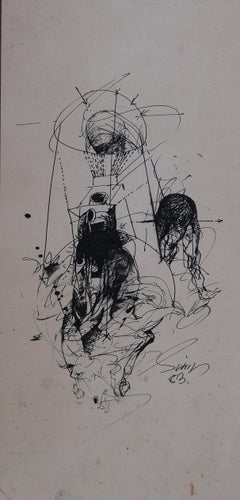
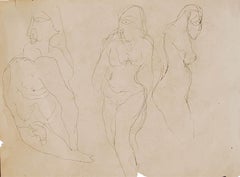
Artist: Leo Brooks
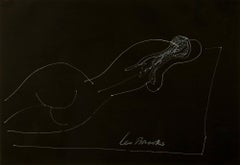
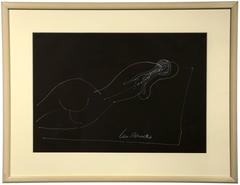
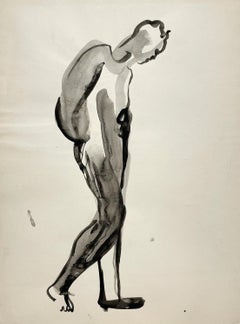
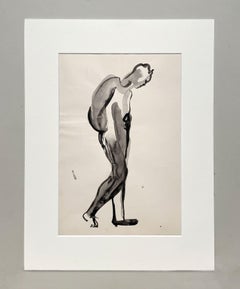
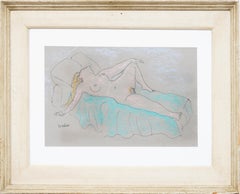
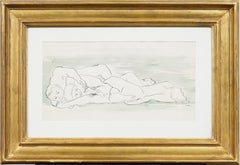
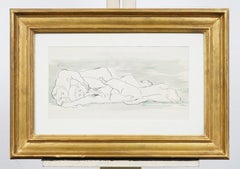
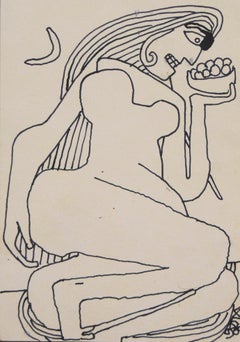
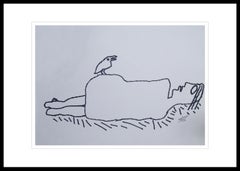
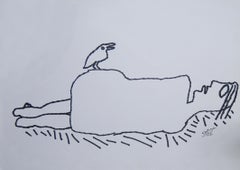
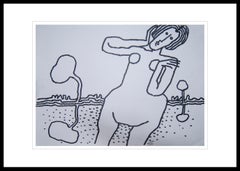
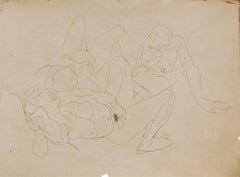
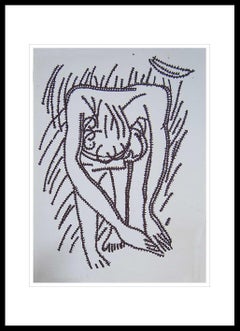
Sleeping Nude
Sleeping Nude

Sleeping Nude

By Leo Brooks

Located in Wiscasset, ME

Born in New York City in 1909, artist Leo Brooks spent the majority of his life working as a linotype operator for the New York Times before turning to painting at the age of 60 upon...

Category

1960s Modern Leo Brooks Art

Materials

Paper, Ink

Related Items
A Fine, Stylish 1930s Modern Figure Study Drawing of a Standing Male Nude Model

A Fine, Stylish 1930s Modern Figure Study Drawing of a Standing Male Nude Model

By Francis Chapin

Located in Chicago, IL

A Fine, Stylish 1930s Modern Figure Study Drawing of a Standing Male Nude Model (Back) by Famed Chicago Artist Francis Chapin (Am. 1899-1965). A wonderful, early example of Chapin's...

Category

1930s American Modern Leo Brooks Art

Materials

Paper, Watercolor, Ink

A Striking 1950s Mid-Century Modern Ink Drawing of a Standing Female Nude

A Striking 1950s Mid-Century Modern Ink Drawing of a Standing Female Nude

By Harold Haydon

Located in Chicago, IL

A Striking 1950s Mid-Century Modern Ink Drawing of a Standing Female Nude by Noted Chicago Artist, Harold Haydon (Am. 1909-1994). Exhibiting a spare and exceptional use of brushwork...

Category

Mid-20th Century American Modern Leo Brooks Art

Materials

Ink, Paper

A Fine, Stylish 1930s Modern Figure Study Drawing of a Standing Male Nude Model

A Fine, Stylish 1930s Modern Figure Study Drawing of a Standing Male Nude Model

By Francis Chapin

Located in Chicago, IL

A Fine, Stylish 1930s Modern Figure Study Drawing of a Standing Male Nude Model by Famed Chicago Artist Francis Chapin (Am. 1899-1965). A wonderful, early example of Chapin's figura...

Category

1930s American Modern Leo Brooks Art

Materials

Paper, Ink, Watercolor

A Stunning, Finely Drawn 1940s Modern Female Figure Study, Standing Nude

A Stunning, Finely Drawn 1940s Modern Female Figure Study, Standing Nude

By Harold Haydon

Located in Chicago, IL

A Stunning, Finely Drawn 1940s Modern Female Nude Figure Study by Notable Chicago Artist, Harold Haydon (Am. 1909-1994). The drawing is ink on sepia toned paper and dates from 1946....

Category

1940s American Modern Leo Brooks Art

Materials

Paper, Ink

A Fabulous 1950s Mid-Century Modern Standing Female Nude Figure Study

A Fabulous 1950s Mid-Century Modern Standing Female Nude Figure Study

By Harold Haydon

Located in Chicago, IL

A Fabulous 1950s Mid-Century Modern Standing Female Nude Figure Study by Notable Chicago Artist, Harold Haydon (Am. 1909-1994). Artwork Size: 18 x 12, unframed, mounted / floated t...

Category

Mid-20th Century American Modern Leo Brooks Art

Materials

Paper, Ink

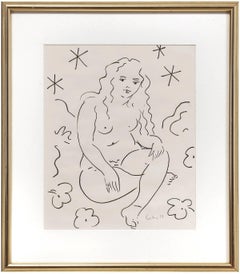
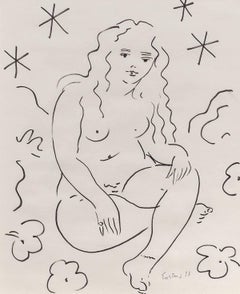
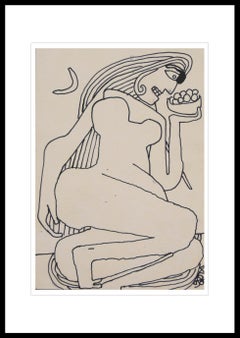
Sitting Nude, Drawing in Ink

Sitting Nude, Drawing in Ink

By Wayne Ensrud

Located in Surfside, FL

The artist renders the image of a sitting woman using delicate contour lines similar to Matisse. The artist avoids use of color, light and shadow emphasizing the contour of the figure.

Category

Late 20th Century Modern Leo Brooks Art

Materials

Paper, Ink

Modern Dancers
Modern Dancers

Mick MicheylModern Dancers, 1964

$1,384Sale Price|50% Off

H 29.53 in W 24.02 in

Modern Dancers

By Mick Micheyl

Located in London, GB

'Modern Dancers', pastel, ink and gouache on fine art paper by French artist, singer and sculptor, Mick Micheyl (1964). Two elegant young men are depicted in a graceful dancing pose, arms outstretched, their lithe bodies so agile and limber. Perhaps one of the dancers was her friend, Philippe, to whom the painting is dedicated on the bottom. The dedication says: 'For you Philippe, all my friendship'. Signed: 'Mick Micheyl'. The work has been newly framed and glazed after having been acquired in the S. of France. It is in good vintage condition commensurate with age showing minor blemishing on the paper. Upon request a video of the piece can be provided. Dimensions with Frame: H 75 cm / 29.5" W 61 cm / 24" Dimensions without Frame: H 56 cm / 22" W 42 cm / 16.5" About the Artist: Mick Micheyl (1922 - 2019) was born in Lyon and had a busy and rewarding artistic career as a singer, producer, reviewer, metal sculptor, artist. After having received training at the School of Fine Arts in Lyon she became a painter and decorator in the theatre but then commenced a career in the musical activities of a theatrical troupe. She won the ABC competition in Paris in 1949 with a song, Le Marchand de Poésie, which she composed herself. She then performed in many cabarets: L'Échelle de Jacob, Harlequin and Liberty's. In the 1950s she was one of the most important French cabaret singers of that period. One of her titles, 'Un Gamin de Paris', became one of the French standards and also performed by Yves Montand and Robert Clary...

Category

1960s Modern Leo Brooks Art

Materials

Paper, Pastel, Ink, Gouache

Vintage American Erotic Nude Mid-Century Watercolor Original Painting

Vintage American Erotic Nude Mid-Century Watercolor Original Painting

By Joseph Wolins

Located in Buffalo, NY

A rare nude watercolor and ink painting from noted WPA artist Joseph Wolins (1915-1999). Beautifully framed in an antique white wood frame. Measuring: 22 by 27 inches overall and 12c...

Category

20th Century Modern Leo Brooks Art

Materials

Ink, Watercolor, Paper

1970s Renato Guttuso Signed Classical Drawing Venus of Milo

1970s Renato Guttuso Signed Classical Drawing Venus of Milo

By Renato Guttuso

Located in Roma, IT

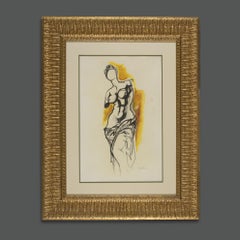
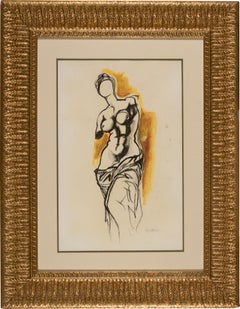
Wonderful Renato Guttuso drawing of the Venus de Milo A sensual evocation of antiquity: the classical Muse in Guttuso’s mature period A fine original drawing on paper by the painter Renato Guttuso (1911–1987), probably created in the 1970s, a period in which the artist produced numerous drawings on paper inspired by the female figure and classical sculpture, with an expressionist approach. Mixed media: ink and tempera. The work is enhanced by an Empire-style frame in gilded wood with gold leaf. The black line is bold and vigorous, typical of Guttuso’s drawings, whilst the colouring is fluid, expressive and non-realistic. Signed lower right "Guttuso" Our company has been present on this platform for many years, with more than 100 sales made and just as many excellent reviews received that you can under our Furniture account. Dimensions are frame included The painting is also protected by glass Aldo Renato Guttuso (26 December 1911 – 18 January 1987) was a very important Italian painter He is considered to be among the most important Italian artists of the 20th century and is among the key figures of Italian expressionism. His best-known works include Flight from Etna (1938–39), Crucifixion (1941), and La Vucciria (1974). Guttuso also designed for the theatre (including sets and costumes for Histoire du Soldat, Rome, 1940) and did illustrations for books. Those for Elizabeth David’s Italian Food (1954),introduced him to many in the English-speaking world. A fierce anti-Fascist, "he developed out of expressionism and the harsh light of his native land to paint landscapes and social commentary". Guttuso was born on 26 December, 1911 in Bagheria, near Palermo. He was the son of Gioacchino Guttuso, land surveyor and amateur watercolorist, and Giuseppina d'Amico. Guttuso's birth date is often incorrectly listed as January 2, 1912, as this is when Giuseppina reported his birth to the registry office. Guttuso began signing and dating his works at the age of thirteen. They were mostly copies of nineteenth-century Sicilian landscape painters as well as French painters such as Millet and contemporary artists such as Carrà, but there were also original portraits. In 1928 he participated in his first collective exhibition in Palermo. Guttuso lived close to a house amongst the Valguarnera villas and Palagonia, which he would soon represent in paintings inspired by the cliffs of Aspra. In Palermo and Bagheria Guttuso observed the dereliction of 18th-century villas previously belonging to the nobility, abandoned to decay as a consequence of political infighting within the municipal chambers. At the same time, his family suffered a period of economic stress because of the hostility shown by Fascists and the clergy towards his father. Guttuso finished the Umberto I classical high school in Palermo and continued his studies at the University of Palermo, where his development was modelled according to the European figurative trends of the day, from Courbet to Van Gogh and to Picasso. In the early 1930s Guttuso was a frequent visitor to the studio of one of the most prolific futuristic painters, Pippo Rizzo. In 1929 he began contributing to newspapers and periodicals and in 1933 his first article on Picasso was targeted by Fascist censorship and caused the suspension of his contribution to the Palermo newspaper L’ora. In 1931 two of his paintings were accepted by the jury of the Quadriennale di Roma and were included in a collective exhibition of six Sicilian painters at the Galleria del Milione, Milan, which aroused great interest among the Milanese artistic milieu. The paintings were acclaimed by critic Franco Grasso as a "disclosure, a Sicilian affirmation". Back in Palermo Guttuso opened a studio in Pisani street and together with painter Lia Pasqualino and sculptors Barbera and Nino Franchina formed the Gruppo dei Quattro (The Group of Four). In 1937 Guttuso moved to Rome and opened his first studio in Piazza Melozzo. Due to his exuberant lifestyle, his friend Marino Mazzacurati nicknamed him "Unbridled Guttuso". He lived close to significant artists of the time: Mario Mafai, Corrado Cagli, Antonello Trombadori, also keeping in contact with the group from Milan of Giacomo Manzù and Aligi Sassu. Having rejected every academic canon, Guttuso joined the Corrente movement and wrote for Corrente di Vita in Milan. The movement was characterized by its strong opposition to Fascist rule and its influence on culture. Here he developed his "social" art, with his political attitudes evident in paintings such as Fucilazione in Campagna (1938) and Escape from Etna, the former dedicated to the poet Federico García Lorca, who had been shot by Franco's supporters during the Spanish Civil War. Guttuso continued painting during World War II, with his work ranging from landscape glimpses of the Gulf of Palermo to a collection of drawings entitled Massacri ("Massacres"), which implicitly denounced slaughters such as the Adreatine massacre. In 1940 he joined the clandestine Italian Communist Party and briefly took refuge in Genova, later returning to Rome. Crocifissione ("Crucifixion"), painted in 1940, is the painting for which he is best remembered and which earned him the second prize in the fourth Bergamo Prize in 1942. At the time it was derided by the clergy, who labelled Guttuso a "pictor diabolicus" ("devilish painter"). The Fascists also denounced it for depicting the horrors of war through the lens of religion. Guttuso wrote in his diary: "this is a time of war. I wish to paint the torment of Christ as a contemporary scene... as a symbol of all those who, because of their ideas, endure outrage, imprisonment and torment". He became an active participant in the partisan struggle in 1943. After the war, in 1945, Guttuso, along with artists Birolli, Marchiori, Vedova and others, founded the Fronte Nuovo delle Arti (New Arts Front) as a vessel for the promotion of the work of those artists who had previously been bound by Fascist rule. He also collaborated on the magazine Il Calendario del Popolo, established the same year. During this time he also met and befriended Pablo Picasso. Their friendship would last until Picasso's death in 1973. Socio-political themes dominated Guttuso's work during this time, depicting the day-to-day lives of peasants and blue-collar workers. Guttuso finished Muratori in riposo ("Builders resting"), an artwork in china ink and watercolour that he had started during the war, a symbol of rebirth of which Pier Paolo Pasolini wrote in 1962: The shapes of ten workers
emerge white over white masonry
the noon is that of the summer.
But the humiliated flesh
projects a shadow; is the disarranged order
of the white colors, that is faithfully followed
by the black ones. The noon is a peaceful one. In the following years Guttuso painted Contadino che zappa (1947) and Contadini di Sicilia (ten drawings published in Rome in 1951), in which his pictorial language became clear and free of all superfluous elements. Guttuso wrote that these were preparatory sketches for his 1949...

Category

1970s Modern Leo Brooks Art

Materials

Watercolor, Pencil, Paper, Ink
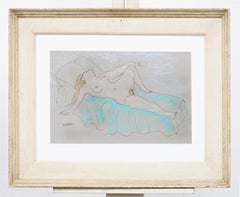
A Stunning, Finely Drawn 1930s Modern Female Figure Study, Standing Nude

A Stunning, Finely Drawn 1930s Modern Female Figure Study, Standing Nude

By Harold Haydon

Located in Chicago, IL

A Stunning, Finely Drawn 1930s Modern Female Nude Figure Study by Notable Chicago Artist, Harold Haydon (Am. 1909-1994). The drawing is ink on paper and dates from 1930. Artwork si...

Category

1930s American Modern Leo Brooks Art

Materials

Ink, Paper

Leo Brooks art for sale on 1stDibs.

Find a wide variety of authentic Leo Brooks art available for sale on 1stDibs. You can also browse by medium to find art by Leo Brooks in ink, paper and more. Much of the original work by this artist or collective was created during the 1960s and is mostly associated with the modern style. Not every interior allows for large Leo Brooks art, so small editions measuring 20 inches across are available. Customers who are interested in this artist might also find the work of Donald Stacy, Jackson Lee Nesbitt, and William Grauer. Leo Brooks art prices can differ depending upon medium, time period and other attributes. On 1stDibs, the price for these items starts at $1,200 and tops out at $1,200, while the average work can sell for $1,200.

Artists Similar to Leo Brooks